
Medically reviewed by Dr. Tom Biernacki, DPM
Board-Certified Podiatric Surgeon | Balance Foot & Ankle
Last reviewed: May 2026 | 3,000+ surgeries performed
Quick Answer
Foot pain affects more than 75% of adults over age 65 and is a leading contributor to falls, reduced mobility, and loss of independence. The most common causes in older adults are different from younger patients — osteoarthritis, fat pad atrophy, bunions, hammertoes, and peripheral neuropathy dominate the picture. Most elderly foot pain improves significantly with appropriate footwear, orthotics, and targeted treatment — but because consequences of untreated foot problems are more severe in older adults (falls, diabetic ulcers, functional decline), earlier and more aggressive evaluation is warranted than in younger patients.
Foot pain in older adults is one of the most common and most underestimated medical problems in geriatric care. Studies consistently show that more than three-quarters of adults over 65 experience foot problems — yet the majority have never seen a podiatrist, and many have simply accepted pain as an inevitable part of aging. It isn’t. While feet do change with age in predictable, physiological ways, the pain that accompanies those changes is largely treatable. More importantly, in older adults, foot pain carries consequences that younger patients don’t face: the relationship between foot pain, altered gait, reduced activity, and falls is direct and well-documented. Addressing foot pain in an elderly patient is not just about comfort — it’s a fall prevention and functional independence intervention.
Why Feet Change with Age: The Physiology
Understanding the physiological changes in aging feet clarifies why specific interventions help:
Fat pad atrophy (30–40% reduction by age 70): The cushioning beneath the heel and ball of the foot — the plantar fat pads — thin significantly with age, reducing the foot’s natural shock absorption. Every step on a hard surface produces a bone stress that younger feet barely register. This is why elderly patients often describe their feet as “aching all over” after walking — the cushioning is simply gone.
Arch collapse (progressive flatfoot): The posterior tibial tendon weakens with age, allowing the medial arch to progressively flatten. Ligaments become less elastic, unable to maintain arch height under load. The foot lengthens and widens — by 1–2 full sizes in some patients by their 70s — meaning shoes purchased even 5–10 years ago may now be too narrow and too short.
Skin changes: Skin loses elasticity and moisture, becoming thin, fragile, and prone to cracking (xerosis), blistering, and pressure wounds. Healing time is prolonged. In diabetic patients, these changes combine with neuropathy and vascular disease to create extraordinary wound-healing impairment.
Toenail changes: Nails thicken, become harder to cut, and develop fungal infections (onychomycosis) more readily. Ingrown toenails are more common. In patients with impaired vision or limited flexibility who cannot safely perform their own nail care, professional nail care becomes a medical necessity rather than a luxury.
Reduced proprioception: Sensory nerve function declines with age, reducing the foot’s ability to detect ground surface variations and provide balance feedback. Combined with reduced muscle strength and slower reaction time, this proprioceptive decline is a major contributor to falls.
Circulatory changes: Peripheral arterial disease (PAD) becomes more prevalent with age, particularly in smokers and diabetics. Reduced blood flow impairs healing and increases the risk of serious complications from minor foot injuries. Venous insufficiency causes chronic dependent edema that makes footwear fit challenging and increases ulcer risk.
Most Common Causes of Foot Pain in Older Adults
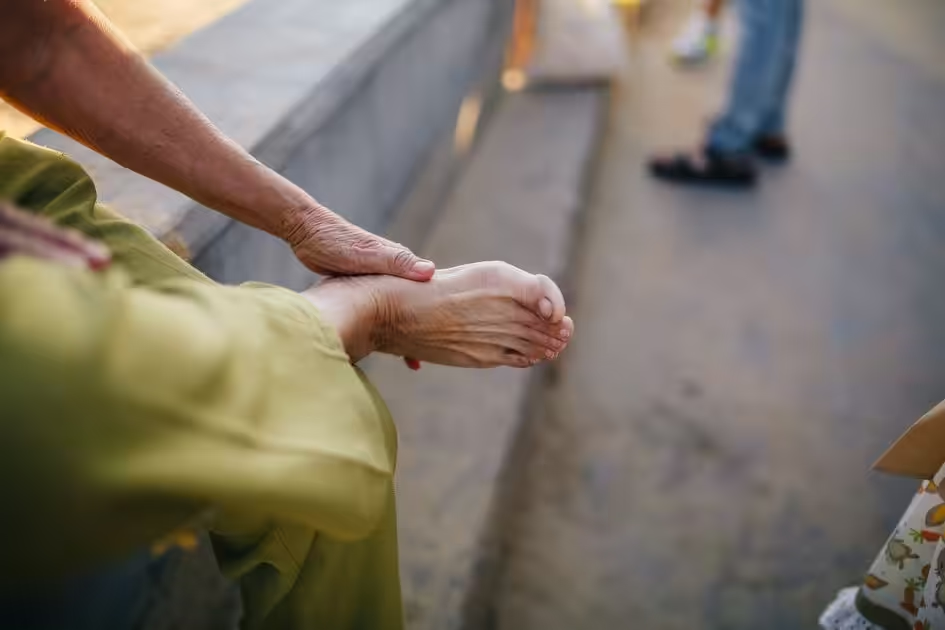
Thick, overgrown toenails are one of the most common — and most overlooked — problems in older adults, especially when reaching the feet becomes difficult.
Osteoarthritis
The most prevalent musculoskeletal condition in older adults, osteoarthritis affects the big toe (first MTP joint — hallux rigidus), the midfoot (tarsometatarsal joints), and the ankle. Big toe arthritis specifically causes pain and stiffness with every push-off — the joint normally dorsiflexes 60–70° during gait, and arthritic restriction of this motion forces compensatory adjustments throughout the entire kinetic chain. Stiff-soled rocker shoes reduce big toe joint loading dramatically. Midfoot arthritis causes arch aching and a dorsal bony bump; treatment mirrors the approach detailed in our midfoot arthritis guide.
Bunions (Hallux Valgus)
Bunions — the progressive lateral deviation of the big toe with medial prominence of the first metatarsal head — become more common and symptomatic with age. Decades of footwear pressure, arch collapse, and joint laxity progressively worsen the deformity. In older adults, footwear accommodation (wide, round toe box), toe spacers, and padding are the primary treatment goals. Surgery is a good option for significantly symptomatic bunions even in older patients — modern minimally invasive bunion surgery has rapid recovery and excellent outcomes in patients through their 80s.
Hammertoes
Contractures of the lesser toes — where the toe buckles at the first joint, creating a claw or hammer configuration — cause dorsal corn formation (where the knuckle rubs against shoes), tip pain, and progressive footwear difficulty. In older adults, hammertoes that cause skin breakdown or ulceration in diabetic patients require prompt surgical correction. Flexible hammertoes (correctable by passive pressure) can be managed with deep toe box footwear; rigid deformities typically require surgery for definitive relief.
Peripheral Neuropathy
Neuropathy — damage to the peripheral nerves causing burning, tingling, numbness, or electrical sensations in the feet — has multiple causes in older adults: diabetes (most common), chemotherapy-induced, idiopathic (no identifiable cause in 30% of cases), nutritional deficiency (B12), alcohol-related, and autoimmune. Neuropathic pain is often worst at night. The danger of neuropathy is not just the pain — it’s the loss of protective sensation that makes patients unable to feel when a blister is forming, a wound is deepening, or a shoe is rubbing. This sensory loss is the primary mechanism of diabetic foot ulcers.
Plantar Fasciitis
While plantar fasciitis is classically a condition of active middle-aged adults, it persists into older age, and the clinical presentation changes. Older patients often have less of the classic morning startup pattern and more of a constant aching fatigue from fat pad atrophy and concurrent arch collapse. Treatment in older adults emphasizes cushioning and accommodation over the aggressive stretching protocols appropriate for younger patients.
Metatarsalgia and Morton’s Neuroma
Ball-of-foot pain from metatarsal head pressure (metatarsalgia) is nearly universal in older patients with fat pad atrophy — the metatarsal heads are now essentially unprotected from ground pressure. Morton’s neuroma (nerve enlargement between the 3rd and 4th metatarsals causing burning, electric pain in the ball of the foot) is also more symptomatic in older adults whose narrow, rigid shoes compress the forefoot. Metatarsal pads and wide-toe-box footwear address both conditions effectively.
The Foot Pain–Falls Connection
Falls are the leading cause of injury-related death in adults over 65 in the United States — and the foot-falls relationship is direct and quantifiable. Research consistently shows:
- Adults with foot pain have 1.9× higher fall risk than age-matched controls without foot pain
- Poor footwear (slippers, backless shoes, worn soles) is cited as a contributing factor in up to 25% of falls in community-dwelling older adults
- Hallux valgus specifically is associated with significantly impaired balance
- Reduced ankle flexibility (below 10° dorsiflexion) independently predicts fall risk
- Footwear interventions — specifically providing firm-soled shoes with good heel counter support — reduce fall rate by approximately 30% in community-dwelling adults
A 2011 BMJ study (Spink et al.) demonstrated that a multifaceted podiatry intervention — combining appropriate footwear, customized foot orthoses, calf stretching, and balance exercises — reduced falls by 36% in older adults with disabling foot pain. This is equivalent to or better than many fall prevention drug interventions.
In our clinic, we consider fall risk assessment a standard component of every visit for an older patient with foot pain. Footwear evaluation, single-leg balance testing, and gait observation are as clinically relevant as the primary complaint.
Diabetes & Neuropathy: Special Considerations in Elderly Feet
The combination of age-related skin fragility, neuropathy, and peripheral arterial disease creates a wound environment in elderly diabetics where minor injuries become life-threatening. Key principles:
- Daily foot inspection is non-negotiable — patients who cannot see their soles should use a magnifying mirror or have a family member check. A new callus, blister, or skin break may be completely painless and discovered only by inspection.
- No barefoot walking, even indoors — falls risk, thermal injury (hot floors), and pressure injury from sharp objects are all eliminated by wearing shoes at all times
- Professional nail care — elderly diabetics with thickened nails, limited vision, or reduced hand dexterity should not perform their own nail trimming; inadvertent nail cuts can cause ulcers that progress to amputation
- Any wound, blister, or skin breakdown requires same-day evaluation — this is a medical emergency in the diabetic foot context, not a “wait and see” situation
- Annual comprehensive foot exam — monofilament testing for protective sensation, ankle-brachial index (ABI) for circulation, skin integrity assessment, footwear review. Medicare covers this annually for diabetic patients.
Treatment Approach in Older Adults
Footwear modification first: As detailed in our guide to best shoes for seniors, switching to appropriate footwear — wide toe box, cushioned rocker-soled shoe, secure closure, adequate depth for orthotics — is the highest-impact single intervention. Many elderly patients experience 40–60% pain reduction from footwear change alone before any other treatment.
Accommodative orthotics: In older adults, the primary orthotic goal is often accommodation (cushioning and protecting sensitive areas) rather than correction (attempting to reposition the foot). Total contact orthoses for diabetic patients, accommodative foam devices for atrophic feet, and custom-molded orthotics that redistribute pressure are more appropriate than the rigid corrective devices used in younger patients.
Targeted treatment of specific conditions: Corticosteroid injection for acute arthritis flares and bursitis; shockwave therapy for insertional Achilles or plantar fasciitis; nail debridement and antifungal treatment for onychomycosis; surgical repair for significantly symptomatic bunions and hammertoes that limit function.
Physical therapy for balance and strength: Ankle dorsiflexion exercises, intrinsic foot muscle strengthening, and progressive balance training (single-leg stance, tandem stance) directly address fall risk. In patients with impaired proprioception, supervised balance training on firm and unstable surfaces rebuilds compensatory mechanisms.
Wound care integration: For patients with active wounds, diabetic ulcers, or Charcot joints, podiatric wound care — debridement, offloading, advanced wound dressings, vascular referral when indicated — becomes the primary management priority.
Products That Help Elderly Foot Pain
🦶 Dr. Tom’s Elderly Foot Pain Essentials
Maximum-cushion, rocker-soled, wide toe box — the HOKA Bondi 9 addresses the three most important footwear needs in elderly foot pain (fat pad replacement, midfoot joint offloading, and toe accommodation) in a single shoe. Available in 2E and 4E widths. The most consistent shoe recommendation in our practice for patients 65 and older with general foot pain, plantar fasciitis, and metatarsalgia.
Check Price on Amazon →An over-the-counter arch support with genuine biomechanical value — the firm heel cup, structured arch, and metatarsal support address the three key load distribution points affected by age-related foot changes. Fits into the HOKA or any lace-up shoe. A practical first step before investing in custom orthotics, and effective as a standalone solution for many older patients with mild-to-moderate arch and heel pain.
Check Price on Amazon →Sock selection is underappreciated in older adults. Thorlo’s extra-cushion platform beneath the heel and ball of the foot adds shock absorption where the fat pad has thinned. Seamless toe prevents blisters in insensate feet. Non-binding top prevents tourniquet effect on compromised circulation. Machine washable. A simple, inexpensive daily intervention that meaningfully reduces cumulative foot stress in older adults.
Check Price on Amazon →When a patient needs maximum stability rather than maximum cushion — particularly those with flatfoot, significant overpronation, or high fall risk — the New Balance 928v3’s ROLLBAR stability post and Velcro closure make it our top stability recommendation. The hook-and-loop closure is essential for patients with arthritic hands who cannot tie laces. Available up to 6E width for severely edematous or deformed feet. APMA Seal of Acceptance.
Check Price on Amazon →Footwear does a great deal of the work here. Our review site’s orthopaedic shoe guide covers the features that matter with age — a firm heel counter, a fastening that can be managed sitting down, and enough depth for an insert.
When to See a Podiatrist: Urgent vs. Routine
⚠️ Seek same-day evaluation for an elderly patient with:
- Any open wound, blister, skin breakdown, or nail injury in a diabetic patient — this is a medical emergency; diabetic foot wounds can progress to limb-threatening infection within 24–48 hours without proper treatment
- Sudden foot or ankle warmth, redness, and swelling in a diabetic patient without apparent injury — acute Charcot arthropathy requires immediate offloading to prevent catastrophic foot collapse
- Any fall with foot or ankle pain afterward — stress fractures in osteoporotic bone may not be visible on initial X-ray; persistent post-fall pain requires follow-up
- New foot pain limiting ambulation in a patient who was previously walking normally — sudden functional change in an elderly patient always warrants prompt evaluation
- Blackened or darkened toes in a patient with known vascular disease — may indicate critical ischemia or dry gangrene requiring urgent vascular and podiatric evaluation
Routine podiatry visits are appropriate (and preventive) for: annual diabetic foot exams, toenail care in patients who cannot safely manage their own nails, callus and corn management, footwear and orthotic evaluation, and monitoring of known foot conditions like bunions or hammertoes that haven’t yet required surgical intervention.
Frequently Asked Questions
Is foot pain normal in elderly people?
Common, yes. Normal and inevitable, no. While the physiological changes of aging do increase foot pain prevalence, the majority of elderly foot pain is diagnosable, treatable, and significantly improvable with appropriate intervention. The biggest barrier to treatment is the false belief that foot pain is “just part of getting old” — a belief that leads many older adults to tolerate significant pain and functional limitation that could be meaningfully addressed.
Can elderly patients have foot surgery?
Yes — age alone is not a contraindication to foot surgery. The relevant considerations are overall medical health, anesthetic risk, bone quality, vascular supply, and rehabilitation capacity. Many patients in their 70s and 80s are excellent surgical candidates and achieve excellent outcomes. Modern minimally invasive techniques (particularly for bunion surgery) have shorter recovery times and lower complication rates that make surgery viable for older patients who previously would have been considered too high risk. The decision is individualized based on the specific procedure, the patient’s health status, and the functional impact of the condition.
Does Medicare cover podiatric care?
Medicare Part B covers most podiatric services for conditions that require medical treatment. This includes evaluation and treatment of foot conditions (plantar fasciitis, bunions, hammertoes, arthritis, neuropathy), routine foot care for patients with systemic conditions affecting the lower extremity (diabetes, peripheral arterial disease, chronic venous insufficiency), and diabetic therapeutic footwear (up to one pair annually, covered under the diabetic shoe benefit). Purely cosmetic procedures are not covered. Verify specific coverage with your Medicare plan before scheduling.
The Bottom Line
Foot pain in older adults is one of the most treatable and most consequential medical problems that consistently goes undertreated. Treatable because the causes are well-understood and respond well to targeted interventions. Consequential because the downstream effects — falls, reduced activity, functional decline, loss of independence — are disproportionately severe compared to the seemingly minor initial complaint. The entry point is simple: appropriate footwear, a podiatric evaluation, and a plan that addresses the specific cause rather than just accepting discomfort as inevitable. Healthy, comfortable feet are possible at any age.
Sources
- Spink MJ, et al. Effectiveness of a multifaceted podiatry intervention to prevent falls in community dwelling older people with disabling foot pain. BMJ. 2011;342:d3411.
- Menz HB, Morris ME. Footwear characteristics and foot problems in older people. Gerontology. 2005;51(5):346-51.
- Menz HB, Lord SR. The contribution of foot problems to mobility impairment and falls in community-dwelling older people. J Am Geriatr Soc. 2001;49(12):1651-6.
- Dunn JE, et al. Prevalence of foot and ankle conditions in a multiethnic community sample of older adults. Am J Epidemiol. 2004;159(5):491-8.
- Burns SL, et al. Older people and ill fitting shoes. Postgrad Med J. 2002;78(920):344-346.
Foot Pain Limiting Your Independence or Activity?
Comprehensive podiatric evaluation for seniors in Howell and Bloomfield Township, MI. We address the specific causes of elderly foot pain with individualized treatment plans.
📞 Howell: (810) 206-1402
📞 Bloomfield Township: (810) 206-1402
⭐⭐⭐⭐⭐ 4.9 Stars | 1,123+ Reviews | 3,000+ Surgeries Performed
Related Articles from Dr. Biernacki
- Foot Pain When Walking: Location-Based Diagnosis Guide
- Foot Pain at Night: Causes, Diagnosis & Treatment
- Foot Pain During Pregnancy: Causes, Relief & When to See a Podiatrist
- Foot Pain from Standing All Day: Causes, Relief & Best Shoes
- Foot Pain After Running: Causes, Diagnosis & Treatment
- Foot Cramps: Causes, Instant Relief & Prevention
📋 Dr. Tom Biernacki, DPM, FACFAS answers:
Foot health in older adults is something I am deeply committed to because the consequences of neglected foot problems extend far beyond pain — they directly increase fall risk, reduce mobility and independence, and in diabetic patients, create pathways to amputation that are entirely preventable. Several physiological changes make elderly feet uniquely vulnerable: the plantar fat pad thins with age, removing the natural cushioning over the metatarsal heads and heel; peripheral circulation decreases, slowing healing; skin becomes thinner and more fragile; proprioception declines, reducing the foot reflex responses that prevent falls; and decades of shoe wear accumulate deformity in bunions, hammertoes, and arthritic joints. The fall risk connection is one I emphasize constantly: foot pain changes gait in ways that dramatically increase fall probability. Patients shorten their step length, shift weight away from painful areas, and lose the confident heel-to-toe roll that underlies stable walking. One of the most effective and underutilized interventions for fall prevention in older adults is comprehensive podiatric care — treating pain sources, fitting proper footwear, prescribing orthotics for stability, and trimming nails that patients can no longer safely reach. For elderly diabetic patients, I schedule them every 8 to 10 weeks regardless of symptoms, because the combination of neuropathy, circulation changes, and skin fragility means problems can develop faster than annual checkups can catch.
What foot problems are most common in elderly adults?
The most prevalent foot conditions in adults over 65 include: toenail thickening and fungal infection (onychomycosis affects 48% of adults over 70), plantar fasciitis and heel pain from fat pad atrophy, bunions and hammertoes from decades of footwear use, peripheral neuropathy from diabetes or age-related nerve changes, venous insufficiency causing chronic edema, osteoarthritis of foot joints, and skin fragility predisposing to tears and ulcers. Most elderly adults have multiple concurrent foot conditions.
How often should elderly people see a podiatrist?
Most older adults benefit from podiatric evaluation at least annually for preventive assessment. Those with diabetes, peripheral arterial disease, or history of foot ulcers require visits every 1–3 months. Regular professional nail care, callus management, and footwear assessment by a podiatrist significantly reduces falls (from poor-fitting shoes), hospitalization-level infections, and the foot-related functional decline that reduces independence in older adults.
How can elderly adults prevent foot pain?
Preventive strategies: wear properly fitting shoes with adequate width and depth (feet widen and lengthen with age — have feet measured annually), use cushioned insoles or custom orthotics to compensate for fat pad atrophy, wash and inspect feet daily, keep nails trimmed straight across, moisturize feet to prevent skin cracking, wear non-slip socks at home, and maintain lower-body strength to support foot arches. A podiatrist can recommend specific footwear and preventive interventions based on individual risk assessment.
In-Office Treatment at Balance Foot & Ankle
Dr. Tom Biernacki DPM provides expert in-office evaluation and treatment at Balance Foot & Ankle, serving Howell and Bloomfield Township, Michigan. Learn more about scheduling your appointment at Balance Foot & Ankle. Same-day appointments available. (810) 206-1402 | New Patient Information

Dr. Tom Biernacki, DPM is a board-certified foot & ankle surgeon (ABFAS & ABPM) at Balance Foot & Ankle Specialists in Southeast Michigan. With over a decade of clinical experience, he specializes in heel pain, bunions, diabetic foot care, sports injuries, and minimally invasive surgery. Dr. Biernacki is a member of the APMA and ACFAS, and his patient education content on MichiganFootDoctors.com and YouTube has made him one of the most-followed foot & ankle educators on YouTube.