Board Certified Podiatrists | Expert Foot & Ankle Care
(810) 206-1402 Patient Portal

Foot Pain from Walking on Sand 2026 | Podiatrist

Medically reviewed by Dr. Tom Biernacki, DPM

Board-certified podiatric surgeon | Balance Foot & Ankle, Howell & Bloomfield Hills, MI
Last reviewed: May 2026

Foot Pain From Walking on Sand - Michigan podiatrist, Balance Foot & Ankle
Foot Pain From Walking on Sand treatment | Balance Foot & Ankle, Michigan
Sand TypeSurface StabilityFoot DemandInjury RiskRecommendation
Wet packed sand (waterline)High — firm surfaceModerate — softer than pavementLow-ModerateBest zone for foot pain patients
Damp mid-beach sandModerateModerate-High — some sinkingModerateAcceptable with gradual adaptation
Dry deep sand (upper beach)Low — very unstableVery High — 2× firm surface effortHighAvoid until fully adapted; use footwear
Hot dry sand (summer)LowVery High + burn riskVery HighAlways wear footwear; heat-related foot burns possible
Beach Foot InjuryMechanismOnsetPreventionTreatment
Plantar FasciitisArch strain on unstable surfaceDuring or day after beach walkGradual adaptation; arch support footwearIce, rest, night splint, orthotics
Achilles TendinopathyIncreased calf load on yielding surfaceHours to days post-walkCalf stretch pre/post; gradual distance increaseEccentric calf protocol; heel lift
Calf Muscle StrainOverload of gastrocnemius on deep sandDuring walk or next morningWarm-up; shorter first sessionsRICE; gentle stretch after acute phase
Sand Abrasion / BlistersSand particles friction between toesDuring/after walkWaterproof sandals; toe socksClean, cover, protect; prevent infection
Ankle SprainInversion on unstable shifting sandImmediateAnkle brace if history of sprainsRICE; evaluation if severe

Quick answer: Foot Pain From Walking On Sand has multiple potential causes including mechanical, neurological, vascular, and inflammatory. The most common causes we identify are overuse, ill-fitting shoes, and biomechanical imbalance. Red flags requiring urgent evaluation: warmth/redness (infection), inability to bear weight (fracture), and unilateral swelling without injury (DVT). Call (810) 206-1402.
foot pain from walking on sand - podiatrist guide from Balance Foot and Ankle

Watch: How to Cure Plantar Fasciitis in One Week? [FAST Heel Pain Relief!] — MichiganFootDoctors YouTube

MICHIGAN PODIATRIST INSIGHT

The most important clinical decision with Foot Pain From Walking On Sand isn’t which treatment to start with — it’s identifying the correct subtype. That changes everything. Call (810) 206-1402.

Foot Pain From Walking On Sand: Quick Answer

Beach sand walking causes specific foot pain – the unstable surface, increased muscle work, and often barefoot exposure create unique challenges. We help dozens of beachgoers yearly at Balance Foot and Ankle. Here is the comprehensive sand walking foot pain guide.

Watch: Foot & ankle health tips from Dr. Biernacki

Why Sand Walking Causes Foot Pain

Sand walking demands: Unstable surface (foot sinks); increased muscle work to stabilize; uneven landing; sometimes hot sand burns; barefoot exposure to debris; long beach distances; sometimes wet sand jamming; calf and intrinsic foot muscle work increased dramatically. Compared to firm surface walking: 1.5-2x energy expenditure; significantly more foot/leg work.

Most Common Sand Walking Foot Issues

1. Achilles tendinitis: Common; from increased calf work in sand. 2. Foot fatigue: Universal complaint. 3. Plantar fasciitis flare: From increased plantar fascia stress. 4. Calf cramps: Common from increased work. 5. Foot/ankle sprains: Unstable surface. 6. Sunburn (tops of feet): Common; often forgotten. 7. Foot cuts: Glass, shells, debris. 8. Sand jamming injuries: Toe injuries from hard sand. 9. Athletes foot: From wet sand exposure. 10. Stress fractures (rare): From sudden activity increase.

Wet vs Dry Sand

Wet sand (firm): Easier to walk on; more like firm surface; less foot stress; better for distance walking. Dry sand (loose): Foot sinks more; increased muscle work; significantly more demanding; more foot fatigue; harder workout. For walking comfort: Wet sand near water typically best. For exercise challenge: Dry sand significantly harder workout.

Achilles Tendinitis from Sand Walking

Beach Achilles issues: Very common after long beach days. Why: Foot sinks into sand requiring stronger push-off; calf works much harder; cumulative stress over hours. Symptoms: Achilles pain (back of ankle); morning stiffness; pain with walking. Prevention: Gradual exposure; firm sand walking; alternate beach and other terrain; calf stretching; quality footwear off beach. Treatment: Rest, ice, eccentric calf strengthening if persistent.

Beach Sandals and Foot Health

Beach footwear options: Flip-flops (popular but problematic); supportive sandals (Vionic, Birkenstock, Olukai – better); water shoes (debris protection); barefoot. For long beach walks: Supportive sandals significantly better than flip-flops. Best beach sandals: Vionic Tide; Olukai Ohana; Birkenstock Arizona; Chaco Z/Cloud. Avoid for distance: Flip-flops cause major foot problems with long walks.

Sun Protection for Feet

Beach sunburn: Tops of feet often burn. Why: Often forgotten; reflective sand intensifies; long exposure. Prevention: Sunscreen SPF 30+ on tops of feet; reapply every 2 hours; especially after swimming; sometimes beach footwear with foot coverage. Beach foot care: Aloe vera if burned; hydration; avoid further sun exposure.

Beach Foot Injury Prevention

Foot injury risks: Cuts from shells, glass, debris; punctures; crab/insect bites; jellyfish stings (foot exposure); hot sand burns. Prevention: Inspect beach area; consider water shoes for debris-prone beaches; tetanus current; address minor injuries immediately; foot care kit at beach. For diabetics: Especially careful; daily foot inspection critical.

Long Beach Walks and Athletes

Beach walking workout: Excellent cardio and foot/leg strength. Considerations: Gradual exposure (start with shorter walks); supportive footwear; address developing foot pain; cross-train; calf stretching post-walk; address pre-existing conditions. For runners: Beach running excellent strengthening but high injury risk if not progressive.

Vacation Beach Foot Care

Beach vacation foot care strategies: Pre-trip foot evaluation if conditions; quality beach sandals; sunscreen routine; foot care kit; daily foot inspection; address developing pain immediately; rest periods between long beach activities; supportive shoes for off-beach time. Many vacation foot pain incidents: preventable with planning.

When to See a Podiatrist

See us if: beach walking foot pain persists more than 1 week; suspected Achilles tendinitis from beach walking; recurring beach-related foot injuries; need pre-vacation foot evaluation; chronic conditions affecting beach activity; need supportive sandal recommendations; suspected stress fracture. Same-week appointments at Balance Foot and Ankle. Schedule online.

When Shoes Aren’t Enough — Dr. Tom’s Top 9 Orthotics

About 30% of patients I see for foot pain need MORE than a great shoe — they need a structured insole. Below: my complete 2026 orthotic ranking with pros, cons, and the specific patient I’d give each one to.

★ DR. TOM’S COMPLETE 2026 ORTHOTIC RANKING

9 Best Prefab Orthotics by Use Case

PowerStep, CURREX, Spenco, Vionic, and Tread Labs — every orthotic I’ve fitted to thousands of patients across both Michigan offices. Each card includes pros, cons, and the specific patient I’d give it to. Real Amazon ratings, review counts, and prices below.

★ EDITOR’S CHOICE · BEST OVERALL

Best All-Purpose Orthotic for Most Patients

Semi-rigid arch shell + dual-layer cushion + deep heel cup. The orthotic I’ve fitted to more patients than any other for 15 years. APMA-accepted. Trim-to-fit design works in athletic shoes, casual shoes, and most work boots.

✓ Pros

  • Semi-rigid arch shell provides true biomechanical correction
  • Deep heel cup centers the heel and reduces lateral instability
  • Dual-layer cushion (top + bottom) lasts 9-12 months daily wear
  • Available in 8 sizes for precise fit
  • APMA-accepted and clinically validated
  • APMA-accepted with superior cushioning versus rigid alternatives

✗ Cons

  • Too thick for most dress shoes (use ProTech Slim instead)
  • Some break-in period required (3-7 days for arch tolerance)
  • Not enough correction for severe pes planus or rigid pes cavus

Dr. Tom’s Recommendation: If a patient has run-of-the-mill plantar fasciitis, mild flat feet, or arch fatigue, this is the first orthotic I try. Better value than most premium alternatives for 90% of patients, which is why it’s the first orthotic I reach for in the clinic. Sub-$50 typically.

BEST FOR FLAT FEET

Maximum Motion Control · Flat Feet & Severe Over-Pronation

PowerStep’s most aggressive stability orthotic. Adds a 2°-7° medial heel post on top of the standard PowerStep platform — designed specifically for flat-footed patients and severe pronators who need real corrective force.

✓ Pros

  • 2°-7° medial heel post adds aggressive pronation control
  • Same trusted PowerStep arch shell, more correction
  • Built specifically for flat-foot biomechanics
  • Excellent for posterior tibial tendon dysfunction (PTTD)
  • Removable top cover for cleaning

✗ Cons

  • Too aggressive for neutral-arch patients
  • Needs longer break-in (10-14 days) due to stronger correction
  • Adds 2-3 mm of stack height — won’t fit slim dress shoes

Dr. Tom’s Recommendation: When a patient comes in with significant flat feet AND symptoms (heel pain, arch pain, knee pain), the Original PowerStep isn’t aggressive enough. The Maxx is what gets prescribed. About 25% of my flat-footed patients end up here.

BEST SLIM FIT · DRESS SHOES

Low-Profile · Fits Dress Shoes & Narrow Casuals

3 mm slim profile with podiatrist-designed tri-planar arch technology. Engineered specifically to fit inside dress shoes, oxfords, loafers, and women’s flats without crowding the toe box. Vionic was founded by an Australian podiatrist.

✓ Pros

  • 3 mm slim profile (vs 7-10 mm for standard orthotics)
  • Tri-planar arch technology adds support without bulk
  • Built-in deep heel cup despite slim design
  • Fits dress shoes WITHOUT having to remove the factory insole
  • Trim-to-fit · APMA-accepted

✗ Cons

  • Less arch support than full-volume orthotics
  • Top cover wears faster than thicker alternatives
  • Not enough correction for severe foot deformities

Dr. Tom’s Recommendation: My default when a patient says ‘I need orthotics but I have to wear dress shoes for work.’ Slim enough to fit in oxfords and pumps without the heel sliding out. The single highest-impact change you can make for office workers with foot pain.

BEST FOR FOREFOOT PAIN

Built-In Metatarsal Pad · Morton’s Neuroma · Ball-of-Foot Pain

Standard Pinnacle orthotic with a built-in metatarsal pad positioned proximal to the metatarsal heads — the exact location that offloads neuromas and metatarsalgia. No need for separate met pads or pad placement guesswork.

✓ Pros

  • Built-in met pad eliminates DIY pad placement errors
  • Specifically designed for Morton’s neuroma + metatarsalgia
  • Same trusted PowerStep arch + heel cup platform
  • Top cover protects sensitive forefoot skin
  • Faster relief than orthotics + add-on met pads

✗ Cons

  • Met pad position is fixed (can’t fine-tune individual placement)
  • Some patients with very small or very large feet need custom
  • Slightly thicker than the standard Pinnacle

Dr. Tom’s Recommendation: If a patient has Morton’s neuroma, sesamoiditis, or generalized ball-of-foot pain (metatarsalgia), this saves a clinic visit and a prescription. The built-in pad placement is anatomically correct for 80% of feet. Way better than DIY met pads.

BEST DYNAMIC ARCH · CURREX

Adaptive Dynamic Arch · Athletic & Daily Wear

Currex’s flagship adaptive arch technology — the orthotic flexes with your gait instead of fighting it. Different stiffness zones along the length give you targeted support at the heel, midfoot, and forefoot. Available in three arch heights (low/medium/high).

✓ Pros

  • Dynamic flex zones adapt to natural gait cycle
  • Three arch heights ensure precise fit
  • Lighter than rigid orthotics (no ‘heavy foot’ feel)
  • Excellent for runners and athletic walkers
  • European podiatric design (German engineering)

✗ Cons

  • More expensive than PowerStep Original ($55-65 typically)
  • Less aggressive correction than Pinnacle Maxx for severe cases
  • Three arch heights means you must self-select correctly

Dr. Tom’s Recommendation: I started recommending Currex three years ago for runners who said PowerStep felt ‘too rigid.’ The dynamic flex zones respect natural gait. Best for active patients who walk 8K+ steps daily and don’t need maximum motion control.

BEST FOR RUNNERS · CURREX RUNPRO

Running-Specific · Heel Strike + Forefoot Strike Compatible

Currex’s purpose-built running orthotic. The midfoot flex zone is positioned for runner’s gait mechanics, with a flared heel cushion for heel strikers and a forefoot rocker for midfoot/forefoot strikers. Tested on 1000+ runners during product development.

✓ Pros

  • Designed by German biomechanics lab specifically for runners
  • Dynamic arch flexes with running gait (not static like PowerStep)
  • Three arch heights (low/medium/high)
  • Reduces overuse injury risk in mid-distance runners
  • Lightweight (no impact on cadence)

✗ Cons

  • Premium price ($60-75)
  • Not aggressive enough for severe over-pronators (use Pinnacle Maxx)
  • Runner-specific design = less ideal for daily walking shoes

Dr. Tom’s Recommendation: If a patient runs 20+ miles per week and has plantar fasciitis or shin splints, this is the orthotic I prescribe. The dynamic flex zones respect running biomechanics in a way that no rigid PowerStep can match. Pricier but worth it for serious runners.

BEST FOR HIGH ARCHES

Cavus Foot & High-Arch Patients

Polyurethane base with a deeper heel cup and higher arch profile than PowerStep — built for cavus (high-arched) feet that need maximum cushion and support. The 5-zone cushioning system addresses the unique pressure points of high-arch feet.

✓ Pros

  • Deeper heel cup centers the heel for cavus foot stability
  • Higher arch profile fills the void under high arches
  • 5-zone cushioning addresses cavus foot pressure points
  • Polyurethane base lasts 12+ months
  • Available in Wide width

✗ Cons

  • Too tall/aggressive for normal or low arches
  • Won’t fit slim dress shoes
  • Pricier than PowerStep Original
  • Some patients find the arch height uncomfortable initially

Dr. Tom’s Recommendation: Cavus foot patients are often misdiagnosed and given low-arch orthotics — that makes everything worse. Spenco’s Total Support has the arch profile that high-arch feet actually need. About 15% of my patients have cavus feet; this is what they wear.

BEST GEL CUSHION

Cushion Layer · Standing All Day · Gel Pressure Relief

NOT a true biomechanical orthotic — this is a cushion insole. But for patients who want gel pressure relief instead of arch correction (or to add ON TOP of factory insoles in work boots), this is the best gel option on Amazon.

✓ Pros

  • Genuine gel cushioning (not foam pretending to be gel)
  • Targeted gel waves under heel and ball of foot
  • Trim-to-fit · works in most shoe types
  • Sub-$15 price (most affordable option in this list)
  • Massaging texture is genuinely soothing

✗ Cons

  • ZERO arch support — this is cushion only
  • Won’t fix plantar fasciitis or flat-foot issues
  • Compresses faster than PowerStep (4-6 months)
  • Top cover wears through in high-mileage applications

Dr. Tom’s Recommendation: I recommend these to patients who tell me ‘I just want my feet to stop hurting at the end of my shift’ and who don’t have a biomechanical issue. Construction workers, factory workers, retail. Pure cushion does the job for them.

BEST LOW-PROFILE · TREAD LABS

Tight-Fitting Shoes · Cycling Shoes · Hockey Skates

Tread Labs Pace insole with firm orthotic arch support for flat feet and plantar fasciitis relief. The replaceable top cover design makes it one of the most durable picks in this guide — backed by a million-mile guarantee and recommended for tight-fitting athletic footwear.

✓ Pros

  • Firm orthotic arch support shell (podiatrist-grade)
  • Slim profile fits tight athletic footwear
  • Lasts 12+ months daily wear
  • Excellent for cycling shoes specifically
  • Built-in odor-control treatment

✗ Cons

  • Premium price ($45-55)
  • Less cushion than PowerStep equivalents
  • Not as aggressive correction as Pinnacle Maxx for flat feet
  • The signature ‘heel cup feel’ takes 1-2 weeks to adapt to

Dr. Tom’s Recommendation: If you’re a cyclist with foot numbness, hot spots, or knee pain — this is the orthotic. The stabilizer cap solves cycling-specific biomechanical issues that no other orthotic addresses. Worth the premium for athletes.

None of these solving your foot pain?

Some patients (about 30%) need custom-molded prescription orthotics. We make 3D-scanned custom orthotics in our Howell and Bloomfield Hills offices — specifically built for your foot mechanics.

Schedule a Custom Orthotic Fitting →

FSA/HSA eligible · Most insurance accepted · (810) 206-1402

Podiatrist-Recommended Products

Best Medium to Heavy Duty Heel Pain Orthotics:
Best Overall Orthotic For Everything (Medium Thick Fit)
Best Heavy Duty Orthotic (Thickest Fit)
Best SOFTER Choice For Sensitive Feet (Medium Thick Fit)
Best Women’s Orthotics
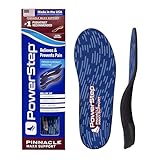
PowerStep Original Insoles, Arch Pain Relief Orthotics, Tight Shoes, Foot Support for Plantar Fasciitis, Mild Pronation, Foot & Arch Support Inserts, Shoe Inserts, Made in the USA (M 8-8.5, F 10-10.5)
PowerStep Pinnacle Maxx Orthotic Insoles, Maximum Stability & Comfort, Firm & Flexible Angled Heel, Flat Feet & Overpronation, Heavy Duty Shoe Inserts for Men & Women, Made in USA (M 10-10.5, W 12)
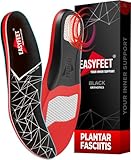
220+ lbs Plantar Fasciitis High Arch Support Insoles Men Women - Flat Feet Orthotic Inserts Standing All Day - Work Boot Shoe Insoles - Shoe Sole Flat Foot Heavy Men
Superfeet All-Purpose Women's High Impact Support Insoles (Berry) for Active Lifestyle with High Arch Support - Size 8.5-10 Women
Price:
$44.99
$54.95
Price not available
Price not available
Overview:
These work best in shoes with laces and running shoes. Not good for dress shoes or women’s cute shoes.
Biggest and most corrective option. Only use for running shoes or work boots. Not cute shoes.
These are full length inserts, but softer. Great if you can’t tolerate the firmer ones. Best for very sore and sensitive feet.
Great Support & Better Fit
Pros:
Pretty much guaranteed to help you if it fits in your shoes and you give it 2 weeks to get used to. 5,000+ amazon reviews, great track record.
My personal favorite, but not for everyone. Amazing reviews over 3,500. But not for everyone. Only for bigger shoes that can fit them
They are softer and the initial break in time is AMAZING. But longer term benefits are less. >500 Almost 5 star amazon rating.
Sleek, supportive and have a better fit than the orthotics above.
Cons:
Do not wear these in cute or dress shoes!
Bigger and bulkier than all the other ones. You will be disappointed if you have a cute women’s shoe or dress shoe. This is meant for running shoes and boots.
Great to start with, but don’t correct long term as much as the other ones.
A little bit more expensive.
Crucial Tips:
Ease in to these, 1-2hrs a day. They are like braces for your teeth, they suck at the beginning! But they will make your feet pain free as 1-2 weeks go by. Don’t give up on them after 1 or 2 days. Everyone feels off at the beginning!
This has the most correction, but hardest break in time! IF SENSITIVE, USE A SOFTER PAIR FIRST! But if you get these, you must break them in. Give it 1-2 hours a day, but then you will start to have excellent results. The bad reviews are all people who couldn’t fit it into their shoes and gave up too quickly. You have been WARNED!
If you are very sore, TRY THESE FIRST! These are easiest to break in with initially. If you are very sore and rigid, don’t use the heavy duty ones to start with.
These will have a harder time fitting in flats and pointed shoes.
Affiliate Link (Buying through these links will connect you to Amazon):
Best Medium to Heavy Duty Heel Pain Orthotics:
Best Overall Orthotic For Everything (Medium Thick Fit)
PowerStep Original Insoles, Arch Pain Relief Orthotics, Tight Shoes, Foot Support for Plantar Fasciitis, Mild Pronation, Foot & Arch Support Inserts, Shoe Inserts, Made in the USA (M 8-8.5, F 10-10.5)
Price:
$44.99
Overview:
These work best in shoes with laces and running shoes. Not good for dress shoes or women’s cute shoes.
Pros:
Pretty much guaranteed to help you if it fits in your shoes and you give it 2 weeks to get used to. 5,000+ amazon reviews, great track record.
Cons:
Do not wear these in cute or dress shoes!
Crucial Tips:
Ease in to these, 1-2hrs a day. They are like braces for your teeth, they suck at the beginning! But they will make your feet pain free as 1-2 weeks go by. Don’t give up on them after 1 or 2 days. Everyone feels off at the beginning!
Affiliate Link (Buying through these links will connect you to Amazon):
Best Medium to Heavy Duty Heel Pain Orthotics:
Best Heavy Duty Orthotic (Thickest Fit)
PowerStep Pinnacle Maxx Orthotic Insoles, Maximum Stability & Comfort, Firm & Flexible Angled Heel, Flat Feet & Overpronation, Heavy Duty Shoe Inserts for Men & Women, Made in USA (M 10-10.5, W 12)
Price:
$54.95
Overview:
Biggest and most corrective option. Only use for running shoes or work boots. Not cute shoes.
Pros:
My personal favorite, but not for everyone. Amazing reviews over 3,500. But not for everyone. Only for bigger shoes that can fit them
Cons:
Bigger and bulkier than all the other ones. You will be disappointed if you have a cute women’s shoe or dress shoe. This is meant for running shoes and boots.
Crucial Tips:
This has the most correction, but hardest break in time! IF SENSITIVE, USE A SOFTER PAIR FIRST! But if you get these, you must break them in. Give it 1-2 hours a day, but then you will start to have excellent results. The bad reviews are all people who couldn’t fit it into their shoes and gave up too quickly. You have been WARNED!
Affiliate Link (Buying through these links will connect you to Amazon):
Best Medium to Heavy Duty Heel Pain Orthotics:
Best SOFTER Choice For Sensitive Feet (Medium Thick Fit)
220+ lbs Plantar Fasciitis High Arch Support Insoles Men Women - Flat Feet Orthotic Inserts Standing All Day - Work Boot Shoe Insoles - Shoe Sole Flat Foot Heavy Men
Price:
Price not available
Overview:
These are full length inserts, but softer. Great if you can’t tolerate the firmer ones. Best for very sore and sensitive feet.
Pros:
They are softer and the initial break in time is AMAZING. But longer term benefits are less. >500 Almost 5 star amazon rating.
Cons:
Great to start with, but don’t correct long term as much as the other ones.
Crucial Tips:
If you are very sore, TRY THESE FIRST! These are easiest to break in with initially. If you are very sore and rigid, don’t use the heavy duty ones to start with.
Affiliate Link (Buying through these links will connect you to Amazon):
Best Medium to Heavy Duty Heel Pain Orthotics:
Best Women’s Orthotics
Superfeet All-Purpose Women's High Impact Support Insoles (Berry) for Active Lifestyle with High Arch Support - Size 8.5-10 Women
Price:
Price not available
Overview:
Great Support & Better Fit
Pros:
Sleek, supportive and have a better fit than the orthotics above.
Cons:
A little bit more expensive.
Crucial Tips:
These will have a harder time fitting in flats and pointed shoes.
Affiliate Link (Buying through these links will connect you to Amazon):

Frequently Asked Questions About Foot Pain From Walking On Sand

Why does walking on sand hurt my feet?

Unstable surface (foot sinks); increased muscle work to stabilize; uneven landing; sometimes hot sand burns; barefoot exposure to debris; long beach distances; calf and intrinsic foot muscle work increased dramatically. 1.5-2x energy expenditure vs firm surface.

Is wet or dry sand easier to walk on?

Wet sand (firm) easier – more like firm surface; less foot stress; better for distance walking. Dry sand (loose) more demanding – foot sinks more; increased muscle work; harder workout but more foot fatigue. Beach walks: wet sand near water typically best.

Why do my Achilles hurt after walking on the beach?

Beach Achilles issues very common. Foot sinks into sand requiring stronger push-off; calf works much harder; cumulative stress over hours. Prevention: gradual exposure; firm sand walking; alternate beach and other terrain; calf stretching.

Are flip-flops OK for beach walking?

NOT IDEAL for distance walking. Cause major foot problems: plantar fasciitis; toe gripping; falls. Better options: Vionic Tide; Olukai Ohana; Birkenstock Arizona; Chaco Z/Cloud (supportive sandals). For brief beach walks: flip-flops OK; for distance: supportive sandals.

Should I wear sunscreen on my feet at the beach?

YES – tops of feet often burn. Why: often forgotten; reflective sand intensifies; long exposure. Prevention: sunscreen SPF 30+ on tops of feet; reapply every 2 hours; especially after swimming; sometimes beach footwear with foot coverage.

Should diabetics walk on the beach?

POSSIBLE WITH CAUTION. Avoid barefoot walking; wear protective footwear; daily foot inspection critical (cant feel injuries adequately); minor injuries can become serious infections; address any foot injury immediately. Consider closed-toe water shoes.

When should I see a podiatrist about beach walking foot pain?

Beach walking foot pain persists more than 1 week; suspected Achilles tendinitis from beach walking; recurring beach-related foot injuries; need pre-vacation foot evaluation; chronic conditions affecting beach activity; need supportive sandal recommendations.

Related Resources from Balance Foot & Ankle

Still Dealing With Foot Pain From Walking On Sand?

Same-week appointments at Balance Foot & Ankle in Howell & Bloomfield Hills, MI.

Book Your Appointment

(810) 206-1402

⚕ Doctor Recommended

Doctor Hoy’s Natural Pain Relief

Topical relief for foot & ankle pain

View Product →

APMA: Foot Pain Relief and Activity-Related Causes

Ready to Get Relief?

Same-day appointments available in Howell & Bloomfield Hills, MI

4.9★ | 1,123 Reviews | 3,000+ Surgeries

Or call: (810) 206-1402

Balance Foot & Ankle surgeons are affiliated with Trinity Health Michigan, Corewell Health, and Henry Ford Health — three of Michigan’s largest health systems.