


Quick answer: Foot Pain Standing Work Causes Solutions has multiple potential causes including mechanical, neurological, vascular, and inflammatory. The most common causes we identify are overuse, ill-fitting shoes, and biomechanical imbalance. Red flags requiring urgent evaluation: warmth/redness (infection), inability to bear weight (fracture), and unilateral swelling without injury (DVT). Call (810) 206-1402.
Watch: How to Cure Plantar Fasciitis in One Week? [FAST Heel Pain Relief!] — MichiganFootDoctors YouTube
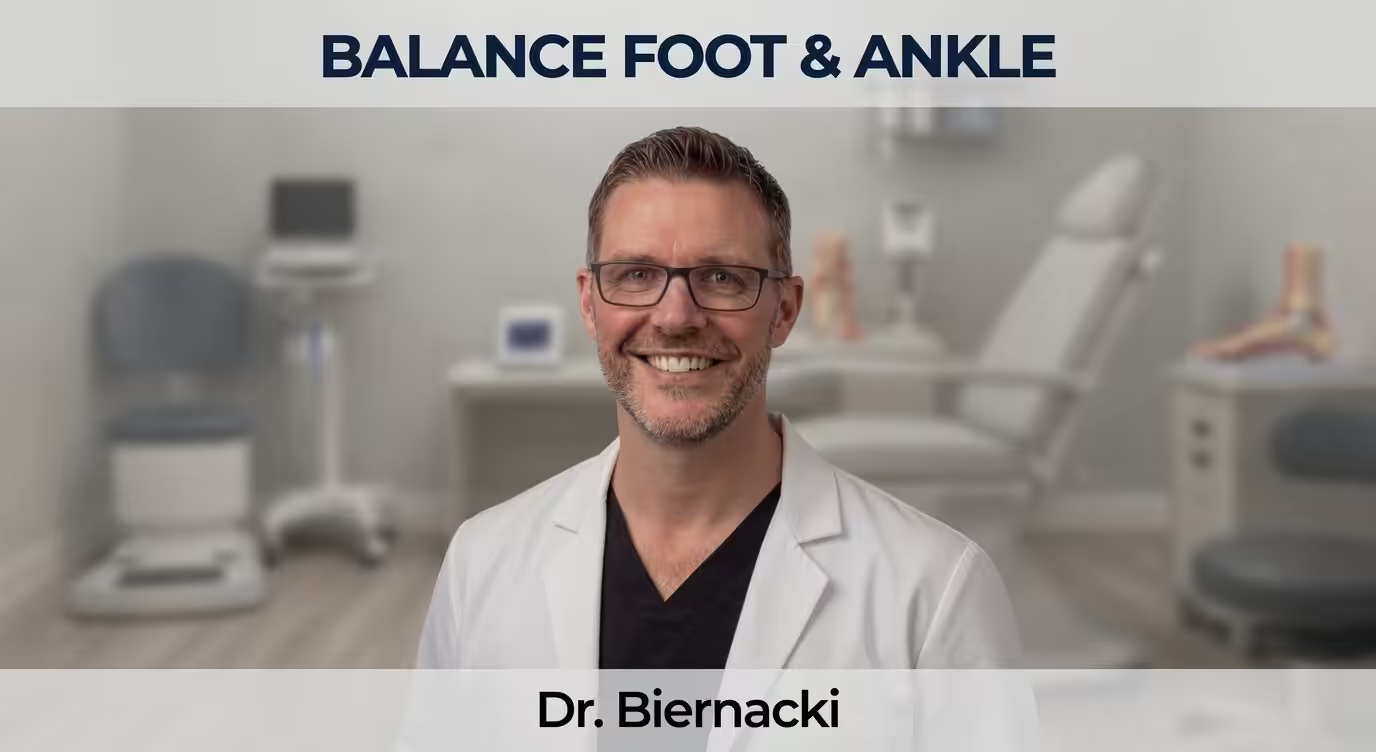
Medically Reviewed by Dr. Tom Biernacki, DPM, FACFAS — Board-certified podiatrist & foot surgeon | Balance Foot & Ankle | Last updated: May 2026
Quick Answer: Foot Pain From Standing at Work
Prolonged standing at work — common in nursing, retail, manufacturing, teaching, and food service — produces foot pain through cumulative mechanical overload of the plantar fascia, metatarsal heads, and ankle tendons. The most common presentations are plantar fasciitis (arch and heel pain worst in the morning), metatarsalgia (ball-of-foot burning during standing), and Achilles tendinopathy. Proper footwear, anti-fatigue mats, compression socks, and custom orthotics reduce pain and prevent structural injury. Most cases respond well to conservative management.
Standing for 8–12 hours per shift is one of the most demanding mechanical environments a foot can experience. Unlike walking — which distributes force across each step — prolonged standing loads the same anatomical structures repetitively with minimal variation. The plantar fascia, metatarsal fat pads, posterior tibial tendon, and Achilles tendon all accumulate microtrauma faster than they can repair during a sustained standing shift.
I see a high concentration of nurses, teachers, retail workers, and factory employees in our Howell and Bloomfield Township practices. The interventions that reliably reduce occupational foot pain are well-established — but they require implementation before symptoms progress to structural injury.
Foot Conditions Common in Standing Workers
| Condition | Symptoms | Standing Mechanism | Best Intervention |
|---|---|---|---|
| Plantar fasciitis | Heel/arch pain after rest; worsens over the shift | Static arch loading → fascial insertion microtrauma | Custom orthotics, supportive shoes, stretching |
| Metatarsalgia | Ball-of-foot burning/aching; worse at end of shift | Fat pad atrophy + metatarsal head pressure | Metatarsal pad, cushioned insole, wider shoe toe box |
| Achilles tendinopathy | Posterior heel/tendon stiffness and aching | Static calf tension from prolonged standing on hard floors | Heel lift, calf stretching, eccentric exercise |
| Morton’s neuroma | Electric/burning pain 3rd–4th toe space; worse in tight shoes | Repetitive metatarsal compression of interdigital nerve | Wide toe box shoe, metatarsal pad, injection |
| Posterior tibial tendinopathy | Inner ankle aching; arch fatigue; flat foot progression | Tendon overwork anti-pronation on flat floors | Medial arch support orthotic, UCBL, ankle brace |
| Foot/ankle swelling | Visible swelling, heaviness, shoe tightness end-of-shift | Dependent edema from reduced calf pump activity | Compression socks 15–20 mmHg, elevation during breaks |
The Anti-Fatigue Mat: The Most Underused Occupational Intervention
Anti-fatigue mats are one of the highest-return interventions for standing workers and one of the most consistently neglected. Hard floor surfaces — concrete, tile, linoleum — do not absorb any ground reaction force. Anti-fatigue mats (3/4-inch to 1-inch thick foam or rubber) reduce plantar pressure by 25–35%, reduce perceived fatigue by 50%, and have been shown in occupational health studies to significantly reduce lower extremity musculoskeletal complaints over 6-month periods. In my experience, patients who implement proper mat coverage in their standing workstation and combine it with supportive footwear frequently avoid the need for orthotics entirely.
The shoes that feel most comfortable in the store after a 5-minute try-on are not necessarily the shoes that protect your feet during a 10-hour standing shift. Ultra-soft, highly cushioned shoes with no arch support — popular “comfort” brands that feel cloud-like in the morning — often bottom out under sustained standing load and provide less mechanical protection than a firm, structured shoe by hour 4. The key features for standing workers are: removable footbed (to accommodate an orthotic), firm midsole that does not compress flat, sufficient toe box width to prevent forefoot compression, and a heel counter that maintains the heel in alignment. I assess shoe selection as part of every occupational foot pain consultation.
Watch: Best Insoles for Standing & Work Shoes — Dr. Tom Biernacki
Book a work foot pain consultation → | (810) 206-1402
Custom Orthotics for Standing Workers
Off-the-shelf insoles provide a meaningful improvement over no support, but custom orthotics are the gold standard for workers with persistent occupational foot pain. A custom orthotic is fabricated from a three-dimensional impression of your foot in a corrected position — it provides arch support contoured to your specific anatomy rather than a generic approximation. For plantar fasciitis, a custom orthotic with medial heel skive and deep heel cup significantly reduces fascial tension. For metatarsalgia, a custom device with metatarsal pad repositions forefoot pressure away from the painful metatarsal heads. Most custom orthotics last 3–5 years with proper care. Michigan workers in physically demanding occupations often qualify for orthotic coverage under their occupational health or workers’ compensation benefits — I provide documentation for qualifying cases.
Frequently Asked Questions
How long should I stand at work before taking a break?
Occupational health guidelines recommend a sit/stand ratio of approximately 1:1 to 3:1 (standing to sitting) throughout a shift, with movement breaks every 20–30 minutes. Completely static standing without any weight shifting or movement for periods exceeding 30 minutes significantly increases plantar pressure and fatigue. Even brief calf raises (10–15 repetitions), weight-shifting, or walking 2 minutes per 30-minute standing period significantly reduces cumulative tissue stress and swelling.
What are the best work shoes for nurses and healthcare workers?
Healthcare workers benefit from shoes with excellent arch support, a wide toe box to accommodate foot swelling over long shifts, slip-resistant outsoles, and a removable footbed for custom orthotic insertion. Consistently high-performing brands for clinical use include Hoka (Bondi and Clifton models), Brooks (Adrenaline GTS for overpronators), New Balance (928 for wider feet), and Dansko (particularly their XP 2.0 professional). I evaluate footwear in clinic and can make specific recommendations based on your arch type and shift demands.
Do compression socks help with foot pain from standing?
Yes — compression socks at 15–20 mmHg provide meaningful benefit for two components of standing worker foot problems: they reduce dependent edema (swelling from fluid pooling) by 30–40% over a shift, and they provide mild plantar and arch proprioceptive support that reduces fatigue. They are not a substitute for structural arch support but are a complementary intervention. Graduated compression — tighter at the foot and ankle, looser at the calf — is the correct design. Socks with compression only at the calf do not adequately address foot and ankle swelling.
When should a standing worker see a podiatrist?
See a podiatrist when foot or heel pain has been present for more than 4–6 weeks despite footwear changes, when pain prevents you from completing your full shift, when you notice changes in your walking pattern or gait to compensate for pain, or when swelling does not resolve overnight after elevation. Early intervention prevents progression from tendinopathy to partial tears and from plantar fasciitis to heel spur syndrome. Balance Foot & Ankle offers same-week appointments in Howell and Bloomfield Township — call (810) 206-1402.
Are standing desks good for foot health?
Sit-stand desks are beneficial for overall musculoskeletal health when used correctly — alternating between sitting and standing rather than exclusively standing. Pure standing-desk use without sit breaks is not healthier than pure sitting and may be worse for foot and lower extremity outcomes. The optimal approach is varied posture throughout the day: 30–45 minutes standing, 30 minutes sitting, walking breaks. Standing desks should always be paired with anti-fatigue mats and appropriate footwear to achieve their health benefits.
Occupational Foot Pain — Custom Orthotics & Work Shoe Consultation
Nurse, teacher, retail, factory worker foot pain — Howell & Bloomfield Township, MI
Book Appointment (810) 206-1402Related: Custom Orthotics Michigan | Plantar Fasciitis Treatment | Podiatrist-Recommended Shoes
In-Office Treatment at Balance Foot & Ankle
If home treatment isn’t providing relief for your foot and ankle conditions, our podiatry team at Balance Foot & Ankle can help with same-week evaluations and advanced in-office care.
Same-week appointments available. (810) 206-1402
VitaMedica Arnica Gel
Arnica gel plus 15 plant compounds for sore feet, plantar fasciitis flares and post-activity soreness. Apply a thin layer to the sore area.
Shop VitaMedica Arnica Gel →Frequently Asked Questions
When should I see a doctor?
See a podiatrist if pain persists past 2 weeks, prevents normal activity, or is accompanied by red-flag symptoms (warmth, swelling, numbness, inability to bear weight).
Can I treat this at home?
Mild cases respond to RICE protocol (rest, ice, compression, elevation), supportive shoes, and OTC anti-inflammatories. Persistent symptoms need professional evaluation.
How long does it take to heal?
Most soft tissue injuries resolve in 2-6 weeks with appropriate care. Bone injuries take 6-12 weeks. Chronic conditions need longer-term management.
Ready to feel better?
Same-week appointments available in Howell and Bloomfield Township, Michigan.
Book Your VisitGet Expert Care at Balance Foot & Ankle
Same-week appointments at our Howell and Bloomfield Township offices. Board-certified podiatric surgeons. Most insurance accepted.

Dr. Tom Biernacki, DPM is a board-certified foot & ankle surgeon (ABFAS & ABPM) at Balance Foot & Ankle Specialists in Southeast Michigan. With over a decade of clinical experience, he specializes in heel pain, bunions, diabetic foot care, sports injuries, and minimally invasive surgery. Dr. Biernacki is a member of the APMA and ACFAS, and his patient education content on MichiganFootDoctors.com and YouTube has made him one of the most-followed foot & ankle educators on YouTube.