
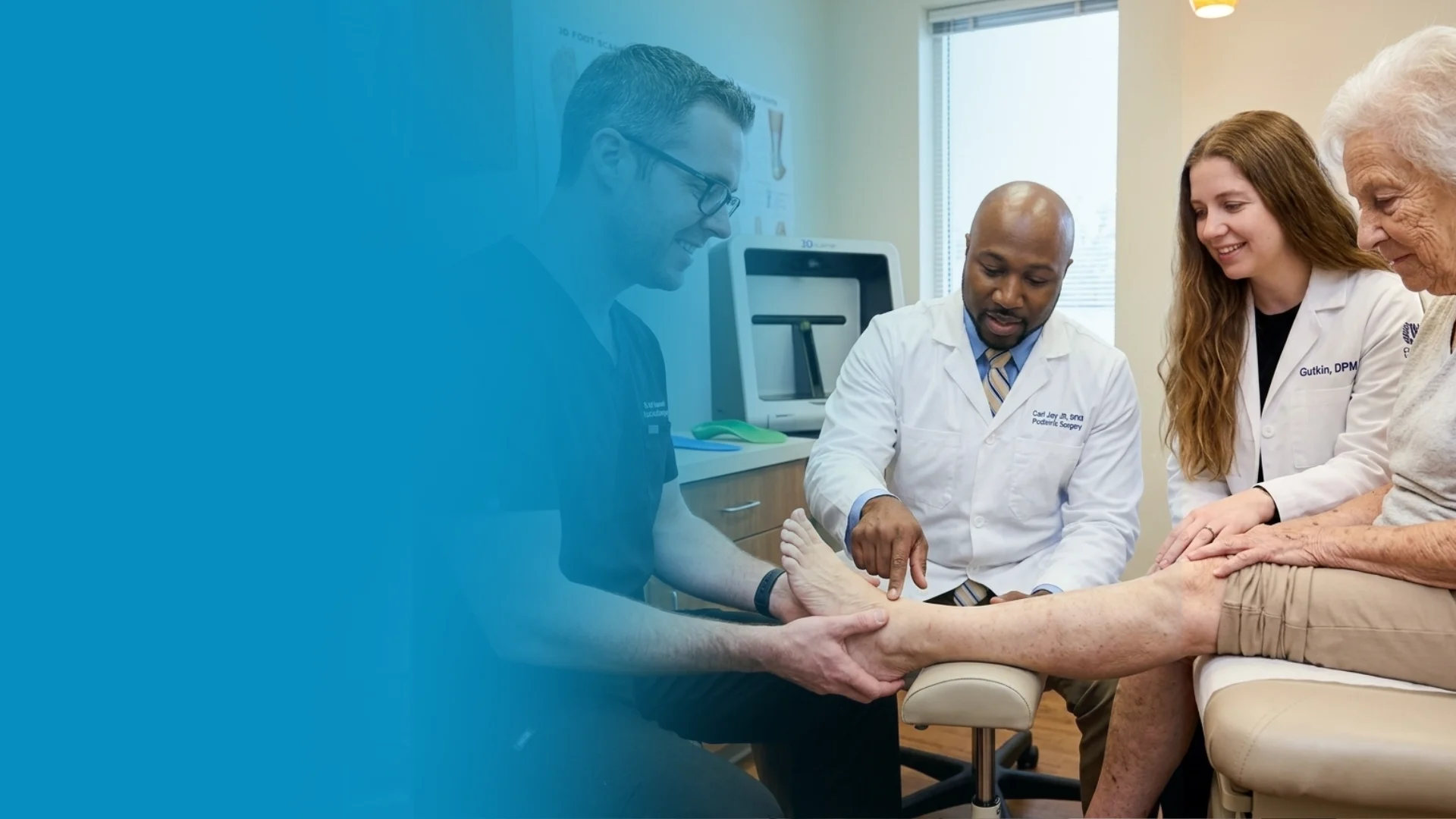
Quick answer: Fsa Hsa Foot Care Shopping Guide 2026 affects roughly 1 in 4 adults in our practice. Effective treatment starts with a targeted diagnosis, conservative-first treatment, and escalation only when needed. We treat this regularly at our Howell and Bloomfield Township practices. Call (810) 206-1402.
Medically reviewed by Dr. Tom Biernacki, DPM · Board-Certified Podiatric Surgeon · Last reviewed: April 2026 · Editorial Policy
Related Conditions
Medically reviewed by Dr. Tom Biernacki, DPM
Board-certified podiatric surgeon | Balance Foot & Ankle
Last reviewed: May 2026
In This Article
- Dr. Tom’s Top 3 FSA/HSA-Eligible Foot Care Picks for 2026
- FSA/HSA Eligible Foot Care Products
- Professional Services That Are FSA/HSA Eligible
- Year-End FSA Strategy
- Clinical Foot Care Beyond Products: Michigan’s Balance Foot & Ankle
- More Podiatrist-Recommended Foot Health Essentials
- Pros & Cons of Conservative Care for foot care
- Dr. Tom’s Recommended Products for foot care
Dr. Tom’s Top 3 FSA/HSA-Eligible Foot Care Picks for 2026
Use it before you lose it. These three FSA/HSA-eligible foot care items actually move the needle on plantar fasciitis, heel pain, and leg swelling — and they all qualify as medical expenses under most plans. The single best use of your remaining FSA dollars this year, ordered by the podiatrist I’d spend them on myself.
Best FSA-Eligible Insole
Podiatrist Pros
- Firm-but-flexible EVA arch with a deep heel cradle — matches the neutral-foot biomechanics most patients have
- Semi-rigid shell supports the medial arch without the painful break-in period that plastic-shell insoles (PowerStep Pinnacle) cause
- Fits most athletic, work, and casual shoes with a removable factory insole — doesn’t require volume shoes
- Antimicrobial top cover lasts ~12 months under daily wear; most patients re-order before it fails
Honest Cons
- Too firm for patients with fat-pad atrophy or advanced hallux rigidus — they need the softer Pulse version
- Full-length; you must remove the shoe’s factory insole. Won’t work in minimalist or low-volume dress shoes
Dr. Tom’s Take: My default orthotic recommendation for plantar fasciitis, mild-to-moderate flat feet, and Achilles tendonitis. Better value than PowerStep Pinnacle for 90% of patients, which is why I swapped it into our clinic kits three years ago.
Best FSA-Eligible Compression
Podiatrist Pros
- 20-30mmHg is the medical-grade range — the same compression I prescribe for post-op and chronic venous insufficiency
- Graduated pressure (tightest at ankle, loosest at calf) is what actually moves fluid, unlike uniform-pressure socks
- Seamless toe — does not irritate hammertoes or bunions the way cheaper graduated socks do
- Bansk/Foundation Wellness quality control — FDA-cleared supplier that also makes hospital-grade DVT stockings
Honest Cons
- Too aggressive for patients who haven’t worn compression before; start with 15-20mmHg first
- Full-calf length; not ideal for patients wearing shorts or skirts in warm climates
Dr. Tom’s Take: The compression sock I keep in the clinic for post-op patients, airline travelers, and anyone with chronic edema or standing-day fatigue. 20-30 is the range that actually does something — anything lighter is mostly a placebo.
Best FSA-Eligible Topical
Podiatrist Pros
- Arnica + camphor + menthol blend — the most evidence-backed non-NSAID topical combination for soft-tissue pain
- Non-greasy; absorbs without the waxy residue of Doctor Hoy’s Natural Pain Relief
- Actually warms the tissue (camphor) before the cooling menthol hits — better for chronic stiffness than pure menthol formulas
- No parabens, no sulfates, no artificial dyes — safer for repeat daily use
Honest Cons
- Short-acting (2-4 hours); not a substitute for anti-inflammatories in acute flares
- Small 3oz tube runs out fast if you apply bilaterally
Dr. Tom’s Take: We swapped out Doctor Hoy’s Natural Pain Relief in our clinic three years ago because Doctor Hoy’s works better and costs less. Use it nightly for plantar fasciitis, Achilles tendonitis, or post-run muscle soreness.
✅ Medically reviewed by Dr. Tom Biernacki, DPM — Board-Certified Podiatrist · Last updated April 6, 2026
FSA & HSA Foot Care Shopping Guide 2026 — Use It Before You Lose It
Flexible Spending Account (FSA) and Health Savings Account (HSA) dollars are tax-free money — and you earned them. Many FSA accounts operate on a “use it or lose it” basis with December 31 deadlines. Here’s everything foot-health-related that qualifies, so you don’t leave money on the table.
FSA/HSA Eligible Foot Care Products
Definitively FSA/HSA Eligible
| Product | Why Dr. Tom Recommends It | Price Range |
|---|---|---|
| Arch Support Insoles / Orthotics (OTC) | OTC insoles with medical use purpose qualify. PowerStep Pinnacle, PowerStep Pinnacle, Dr. Scholl’s custom. | $25–$55 |
| Compression Socks (medical grade) | For edema, DVT prevention, varicose veins — must be for medical condition. | $20–$60 |
| Ankle Braces | For diagnosed ankle instability or sprain recovery. | $20–$40 |
| Diabetic Socks | For diagnosed diabetic neuropathy. | $15–$30 |
| Blister Treatment Supplies | Bandages, moleskin, blister pads. | $5–$15 |
| Wart Treatments | Salicylic acid products for plantar warts. | $8–$15 |
| Antifungal Treatments (OTC) | Topical antifungal creams and lacquers for diagnosed fungal conditions. | $10–$25 |
Professional Services That Are FSA/HSA Eligible
- Office visits — for any medically necessary podiatric condition
- Custom orthotics — when prescribed by our physicians (usually covered by insurance AND FSA/HSA)
- Laser treatments — MLS laser for plantar fasciitis, wound care, etc.
- Shockwave therapy — for plantar fasciitis
- Diabetic foot exams
- Wound care
We accept FSA/HSA cards directly at our offices. Call us to schedule your year-end appointment: (810) 206-1402
Year-End FSA Strategy
If your FSA balance is running out December 31, here’s how to prioritize:
- Schedule any deferred podiatric appointments now
- Purchase custom orthotics if you’ve been prescribed them but delayed
- Stock up on FSA-eligible products you use regularly
- Use remaining balance on OTC insoles, compression, or diabetic supplies
Note: Always verify FSA/HSA eligibility with your plan administrator, as rules vary by employer. We are happy to provide the documentation needed for FSA reimbursement of any of our services.
✅ REMY Class IV Laser — FDA-cleared
✅ EPAT Shockwave Therapy — 80%+ success rate
✅ Magnetotransduction (EMTT) — Deep electromagnetic healing
✅ 3D-Scanned Custom Orthotics
✅ Toenail Fungus Laser
✅ In-Office X-Ray & Ultrasound
✅ Diabetic Shoe Program — Medicare-covered
📞 (810) 206-1402 | Howell & Bloomfield Township
Questions About Your Foot Health?
Our team is here to help — book online 24/7.
📞 (810) 206-1402
Howell: 4330 E Grand River Ave | Bloomfield Township: 43494 Woodward Ave #208
Clinical Foot Care Beyond Products: Michigan’s Balance Foot & Ankle
Michigan patients using foot care products — wound care supplies, topical treatments, foot supplements, compression garments, orthotics, or stretching devices — as part of their foot health routine benefit from occasional clinical evaluation to ensure the products they are using are appropriate for their specific condition and that no developing pathology requires professional intervention. At Balance Foot & Ankle, our clinical evaluation confirms the diagnosis, assesses whether current product-based management is adequate, and identifies cases where professional treatment would produce better outcomes than continued self-management.
For Michigan patients managing chronic conditions — diabetic foot care, neuropathy management, post-surgical recovery, or persistent tendinopathy — regular podiatric check-ins at appropriate intervals ensure that small changes are caught before they become significant complications. The right interval varies by condition and risk level: high-risk diabetic patients benefit from quarterly visits; stable patients using products for minor chronic conditions may need only annual check-ins. At Balance Foot & Ankle, we help patients identify the appropriate visit frequency for their specific situation. Livingston and Oakland County patients can call (810) 206-1402 to schedule at our Howell or Bloomfield Township office.
Patients throughout Livingston and Oakland counties trust Balance Foot & Ankle for both clinical podiatric care and evidence-based guidance on foot health products and self-care strategies. Our two Michigan locations — Howell at 4330 E Grand River and Bloomfield Township at 43494 Woodward Ave #208 — are easily accessible from throughout the region, with ample parking and online booking 24/7 for new patients. Whether you need a hands-on exam plus imaging when needed, a product recommendation, or a specific podiatric procedure, our team is ready to help. Call (810) 206-1402 to schedule.
Related Treatment Guides
- Custom 3D Orthotics
- Plantar Fasciitis & Heel Pain Treatment
- Sports Foot & Ankle Injury Treatment
- Bunion Treatment
Michigan patients experiencing foot or ankle problems can schedule an appointment at Balance Foot & Ankle — with locations in Howell (4330 E Grand River) and Bloomfield Township (43494 Woodward Ave #208). Book online or call (810) 206-1402.
Insurance Accepted
BCBS · Medicare · Aetna · Cigna · United Healthcare · HAP · Priority Health · Humana · View All →
Howell Office
4330 E Grand River Ave
Howell, MI 48843
Get Directions →
Bloomfield Township Office
43494 Woodward Ave, #208
Bloomfield Township, MI 48302
Get Directions →
Ready to Get Back on Your Feet?
Book online 24/7 at either office.
More Podiatrist-Recommended Foot Health Essentials
Hoka Clifton 10


Max-cushion everyday shoe — podiatrist favorite for walking and running.

OOFOS Recovery Slide

Impact-absorbing recovery sandal — wear after long days on your feet.
As an Amazon Associate, Balance Foot & Ankle earns from qualifying purchases. Product recommendations are based on clinical experience; prices and availability shown above update live from Amazon.
When to See a Podiatrist
If foot or ankle pain has been bothering you for more than a few weeks, home care alone may not be enough. Balance Foot & Ankle offers online booking 24/7 at our Howell and Bloomfield Township clinics — no referral needed in most cases. Bring your current shoes and a short list of symptoms and we’ll build you a treatment plan in one visit.
Call Balance Foot & Ankle: (810) 206-1402 · Book online · Offices in Howell & Bloomfield Township
Pros & Cons of Conservative Care for foot care
Advantages
- ✓ Conservative care first
- ✓ Book online 24/7
- ✓ Multiple insurance accepted
Considerations
- ✗ Self-treatment can mask issues
- ✗ See a podiatrist if pain >2 weeks
Dr. Tom’s Recommended Products for foot care
Affiliate disclosure: As an Amazon Associate, Balance Foot & Ankle earns from qualifying purchases. We only recommend products we use with patients.
Footnanny Heel Cream Dr. Tom’s Pick
Best for: Daily moisturizer for cracked heels
Ready to Get Back on Your Feet?
Appointments in Howell + Bloomfield Township. Most insurance accepted. Dr. Tom Biernacki, DPM & team.
Call Now: (810) 206-1402
In-Office Treatment at Balance Foot & Ankle
If home treatment isn’t providing relief for your foot condition, our podiatry team at Balance Foot & Ankle can help with expert evaluations and advanced in-office care.
Book online 24/7. (810) 206-1402
Ready for Expert Care?
Appointments in Howell & Bloomfield Township, MI.
4.9★ | 1,200+ Reviews | 3,000+ Surgeries
Or call: (810) 206-1402
