
You are in the right place. Dr. Tom Biernacki, DPM, FACFAS — board-certified foot & ankle surgeon with 3,000+ surgeries — explains exactly what hammer toe causes & treatment means and what actually works. Call (810) 206-1402 for a same-day appointment at our Howell or Bloomfield Township office.
Quick answer: Treatment for hammer toe causes treatment follows a stepwise approach: 1) conservative care first (rest, ice, supportive footwear, OTC anti-inflammatories), 2) physical therapy and targeted exercises, 3) in-office treatments (injections, custom orthotics) if conservative fails at 4-6 weeks, 4) surgery for refractory cases. Most patients resolve at step 1 or 2. Call (810) 206-1402.
✅ Medically Reviewed by Dr. Tom Biernacki, DPM
Board-certified podiatric physician & surgeon | Balance Foot & Ankle | Updated April 2026
In This Article
- Watch Dr. Tom Explain Hammertoe Treatment
- What Is a Hammer Toe?
- Hammer Toes: Why They Form and How to Stop Them
- What Is a Hammer Toe?
- What Causes Hammer Toes?
- Conservative Treatment (Early Stage, Flexible Toe)
- When Surgery Is Needed
- Products Our Doctors Recommend
- More Podiatrist-Recommended Hammertoe Essentials
- In-Office Treatment at Balance Foot & Ankle
- Dr. Tom’s Recommended Products for Hammertoes
Medically reviewed by Dr. Tom Biernacki, DPM · Board-Certified Podiatric Surgeon · Last reviewed: April 2026 · Editorial Policy
The most important clinical decision with Hammer Toe Causes Treatment isn’t which treatment to start with — it’s identifying the correct subtype. That changes everything. Call (810) 206-1402.
Related Conditions
✅ Medically reviewed by Dr. Tom Biernacki, DPM — Board-Certified Podiatrist · Last updated April 6, 2026
Last Updated: March 2026 | Reading Time: 8 min
This article is for informational purposes only and does not replace professional medical advice. Schedule an appointment for personalized care.
Watch Dr. Tom Explain Hammertoe Treatment
Watch Dr. Tom demonstrate how to fix hammer toes at home — exercises, splints, and when to consider surgery:
Toe getting more rigid? Book an appointment · (810) 206-1402
What Is a Hammer Toe?
A hammer toe is a deformity where the toe bends abnormally at the middle joint, creating a hammer-like shape. It most commonly affects the second through fourth toes and is caused by ill-fitting shoes, muscle imbalances, or arthritis. Early treatment with padding, orthotics, and proper footwear can prevent the need for surgical correction.
Hammer Toes: Causes, Treatment & When You Need Surgery
Hammer Toes: Why They Form and How to Stop Them
Hammer toes are one of the most progressive toe deformities I treat — and one of the most preventable if caught early. The frustrating truth is that most hammer toes start as flexible deformities that can be managed conservatively, but become rigid, painful, and surgical problems because patients wait too long. Here’s what you need to know.
What Is a Hammer Toe?
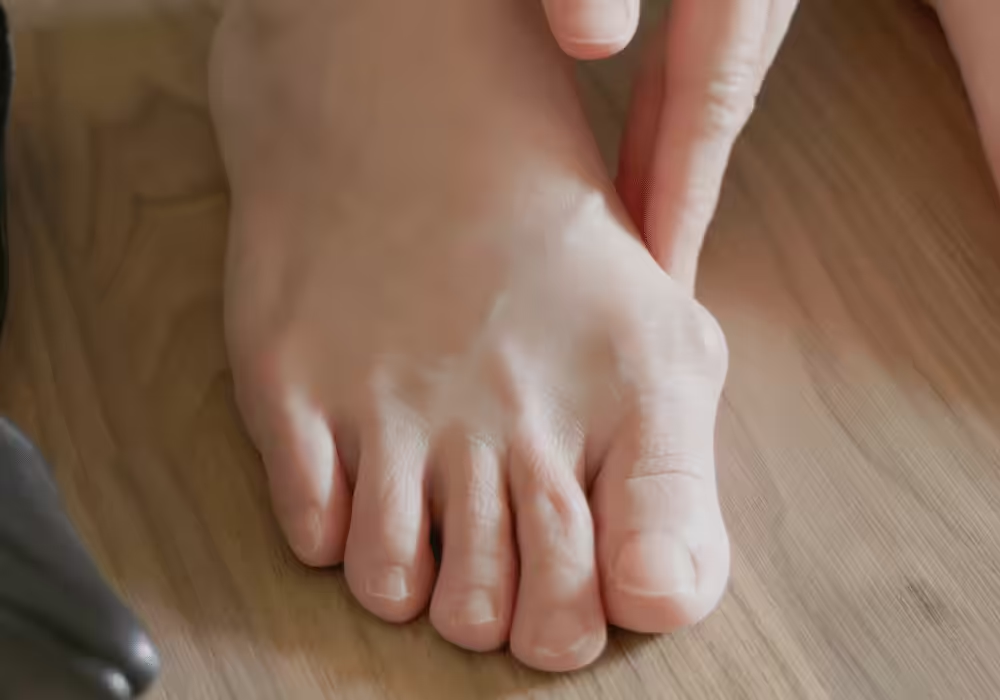
A hammer toe occurs when the proximal interphalangeal (middle) joint of a toe buckles upward, creating a hammer or claw shape. The most commonly affected toes are the second and third. In early (flexible) stages, you can manually straighten the toe. In late (rigid) stages, the joint is fixed and can no longer be straightened without surgery.
The deformity creates pressure problems: the bent knuckle presses on the top of the shoe (causing painful corns), and the tip of the toe contacts the ground at a poor angle (causing tip calluses and nail damage). Over time, the imbalanced forces accelerate the deformity.
What Causes Hammer Toes?
The primary cause is a muscle imbalance — the tendons that flex the toe become relatively stronger than the tendons that extend it, pulling the joint into the flexed position. Contributing factors: narrow, pointed toe-box shoes that compress and force toes into bent positions; high heels that load the forefoot; flat feet and bunions that alter toe mechanics; neurological conditions; and genetic predisposition.
The bunion connection is important — as a bunion pushes the big toe toward the second toe, it crowds the second toe, which then has nowhere to go except to buckle. This is why bunion surgery often needs to address adjacent hammer toe deformity at the same time.
Conservative Treatment (Early Stage, Flexible Toe)
In the flexible stage, conservative care can manage symptoms and slow progression. Toe separators and padding protect the buckled joint from shoe contact. Hammer toe splints or straighteners hold the toe in extended position and can be worn in shoes or at night. Wide, deep toe-box shoes dramatically reduce pressure on the affected joints. Metatarsal pads shift pressure away from the forefoot. Orthotics correct the underlying biomechanical drivers. Stretching and taping techniques can help maintain flexibility.
When Surgery Is Needed
Surgery is appropriate when: the toe is rigid (cannot be manually straightened), conservative care has failed to control pain and function, corns or calluses cause persistent pain, the deformity is causing nail damage or gait problems. Modern hammer toe surgery typically involves a small incision, tendon release, and sometimes pin or implant fixation. Recovery for minimally invasive techniques: 2-4 weeks in a post-surgical shoe.
Products Our Doctors Recommend
- Toe Separators & Hammer Toe Splints
- Wide Toe Box Shoes — essential for hammer toe management
- Browse All Products →
📧 Get Dr. Tom’s Free Lab Test Guide
Discover the 5 lab tests every person over 35 should ask their doctor about — explained in plain English by a board-certified physician.
Hammer toes getting worse? Early intervention gives the best non-surgical outcomes. Schedule an evaluation today.
📞 Call (810) 206-1402 | 📅 Book Online →
Serving Howell, Bloomfield Township, and communities across Livingston & Oakland Counties.
More Podiatrist-Recommended Hammertoe Essentials
Extra-Depth Orthopedic Shoe
Orthofeet Sprint — tall toe box prevents hammertoe rubbing and friction.
Wide-Toe-Box Walking Shoe
New Balance 990v6 — accommodates curled toes without pressure.
Supportive Insole


PowerStep Pinnacle — reduces forefoot pressure that drives hammertoe.
As an Amazon Associate, Balance Foot & Ankle earns from qualifying purchases. Product recommendations are based on clinical experience; prices and availability shown above update live from Amazon.
When to See a Podiatrist
Rigid hammertoes don’t reduce with splinting alone — the tendon and capsule have contracted. If the toe no longer straightens passively, surgical correction restores alignment in one short outpatient visit. Call Balance Foot & Ankle to see whether your deformity is still flexible (and responsive to the conservative tools above) or if it’s time for a 20-minute in-office correction.
Call Balance Foot & Ankle: (810) 206-1402 · Book online · Offices in Howell & Bloomfield Township
Frequently Asked Questions
Can hammer toes be reversed without surgery?
In the flexible stage — yes, to some degree. Splinting, stretching, and toe exercises can maintain and potentially improve flexibility. However, once the toe becomes rigid (contracture), non-surgical approaches can only manage symptoms, not correct the deformity. This is why early treatment matters.
Do hammer toe splints work?
Hammer toe splints are most effective in the early flexible stage. They hold the toe in correct alignment during wear and may help slow progression. They provide symptomatic relief by reducing pressure on the buckled joint. They will not correct a rigid, fixed hammer toe.
How long is hammer toe surgery recovery?
For minimally invasive procedures: 2-4 weeks in a post-surgical shoe, then transitioning to wide shoes. Traditional open procedures with pin fixation: 4-6 weeks before resuming normal footwear. Most patients return to normal activity within 6-8 weeks. Swelling and residual tenderness can persist for several months.
Are hammer toes genetic?
Yes — there is a clear genetic component. Foot type (particularly flat feet and high arches), toe length ratios (a long second toe “Morton’s foot” is at higher risk), and family history all influence hammer toe predisposition. However, footwear choices dramatically influence whether genetic predisposition becomes clinical deformity.
What shoes should I avoid with hammer toes?
Avoid narrow-toed shoes, pointed toe boxes, and high heels. Any shoe that compresses the toes or places excessive load on the forefoot accelerates hammer toe progression. Look specifically for a wide, deep toe box with at least 1 inch of vertical depth in the toe area.
About the Author: Dr. Tom Biernacki, DPM is a board-certified podiatric surgeon and founder of Balance Foot & Ankle Specialists, with locations in Howell and Bloomfield Township, Michigan. He has treated over 5,000 patients.
Related Treatment Guides
- Toe Deformity Treatment
- Plantar Fasciitis & Heel Pain Treatment
- Custom 3D Orthotics
- Sports Foot & Ankle Injury Treatment
Related Guides
- Hammertoe Treatment Options
- How to Remove a Corn
- Bunion Causes & Treatment
- Podiatrist-Recommended Shoes 2026
- Custom Orthotics Guide
Serving Howell, MI 48843 and Bloomfield Township, MI 48302. Schedule your appointment today · (810) 206-1402
Hammertoe Getting Worse? Early Treatment Helps
Flexible hammertoes respond well to conservative treatment including orthotics, splints, and shoe modifications. Rigid hammertoes may need minimally invasive correction. Either way, we can help.
Clinical References
- Coughlin MJ, et al. “Lesser toe deformities.” Journal of Bone and Joint Surgery. 2002;84(8):1446-1469.
- Schrier JC, et al. “Hammertoe correction with K-wire fixation of the proximal interphalangeal joint.” Foot and Ankle International. 2009;30(12):1183-1189.
- Thomas JL, et al. “Diagnosis and treatment of forefoot disorders: digital deformities.” Journal of Foot and Ankle Surgery. 2009;48(2):230-238.
Insurance Accepted
BCBS · Medicare · Aetna · Cigna · United Healthcare · HAP · Priority Health · Humana · View All →
Howell Office
4330 E Grand River Ave
Howell, MI 48843
Get Directions →
Bloomfield Township Office
43494 Woodward Ave, #208
Bloomfield Township, MI 48302
Get Directions →
Your Board-Certified Podiatrists



Ready to Get Back on Your Feet?
Same-week appointments available at both locations.
Book Your AppointmentPros & Cons of Conservative Care for foot care
Advantages
- ✓ Conservative care first
- ✓ Same-week appointments
- ✓ Multiple insurance accepted
Considerations
- ✗ Self-treatment can mask issues
- ✗ See a podiatrist if pain >2 weeks
Dr. Tom’s Recommended Products for foot care
Affiliate disclosure: As an Amazon Associate, Balance Foot & Ankle earns from qualifying purchases. We only recommend products we use with patients.
Footnanny Heel Cream Dr. Tom’s Pick
Best for: Daily moisturizer for cracked heels
Ready to Get Back on Your Feet?
Same-day appointments in Howell + Bloomfield Township. Most insurance accepted. Dr. Tom Biernacki, DPM & team.
Book Today — Same-Day Appointments Available
Call Now: (810) 206-1402
About Your Care Team at Balance Foot & Ankle
Dr. Tom Biernacki, DPM · Board-Certified Foot & Ankle Surgeon. Specializes in conservative-first care, minimally invasive bunion surgery, and complex reconstruction.
Dr. Carl Jay, DPM · Accepting new patients. Specializes in sports medicine, athletic injuries, and routine podiatric care.
Dr. Daria Gutkin, DPM, AACFAS · Accepting new patients. Specializes in surgical reconstruction and pediatric podiatry.
Locations: 4330 E Grand River Ave, Howell, MI 48843 · 43494 Woodward Ave Suite 208, Bloomfield Township, MI 48302
Hours: Mon–Fri 8:00 AM – 5:00 PM · (810) 206-1402
What is Hammertoe?
Hammertoe is a common foot/ankle condition that affects mobility and quality of life. Understanding the underlying cause is the first step in successful treatment. Our podiatrists at Balance Foot & Ankle perform a hands-on biomechanical exam, review your activity history, and use diagnostic imaging when appropriate to identify the root cause—not just treat the symptom. Many patients have been told to “rest and ice” without a deeper diagnostic workup; our approach is different.
Symptoms and warning signs
Common signs of hammertoe include pain that worsens with activity, morning stiffness, swelling, tenderness when palpated, and difficulty bearing weight. If you experience sudden severe pain, inability to walk, visible deformity, numbness or color change, contact our office the same day or visit urgent care—these can signal a more serious injury such as a fracture, tendon rupture, or vascular compromise. Diabetics with any foot wound should seek same-day care.
Conservative treatment options
Most cases of hammertoe respond to non-surgical care: structured rest, supportive footwear changes, custom orthotics, targeted stretching and strengthening protocols, anti-inflammatory medications when medically appropriate, and in-office procedures such as ultrasound-guided injections. We also offer advanced therapies including MLS laser therapy, EPAT/shockwave, regenerative injections, and image-guided procedures. Treatment is sequenced from least invasive to most invasive, and we explain the rationale at every step.
When is surgery considered?
Surgery is reserved for cases that fail 3-6 months of well-structured conservative care, when there is structural pathology (severe deformity, complete tear, advanced arthritis), or when imaging shows damage that will not heal without intervention. Our surgeons have performed 3,000+ foot and ankle procedures and prioritize minimally-invasive techniques whenever appropriate. We discuss recovery timelines, return-to-activity milestones, and realistic outcome expectations before any procedure is scheduled.
Recovery timeline and prevention
Recovery from hammertoe varies based on severity and chosen treatment path. Conservative cases often improve within 4-8 weeks with consistent adherence to the protocol. Post-procedural recovery may range from a few days (in-office procedures) to several months (reconstructive surgery). Long-term prevention involves footwear assessment, activity modification, structured strengthening, and regular check-ins with your podiatrist if you have a history of recurrence. We provide written home-exercise plans and digital follow-up support.
Ready to feel better?
Same-week appointments available in Howell and Bloomfield Township, Michigan.
Book Your Visit🏥 Dr. Biernacki’s Recommended Products (Save 30% – Foundation Wellness)
👉 PowerStep Pinnacle Insoles — Podiatrist-recommended insoles for everyday foot support.
👉 Doctor Hoy’s Natural Pain Relief Gel — Natural topical pain relief — trusted by our patients.
Ready to fix this for good?
Reading goes only so far. The fastest path to relief is a 30-minute office visit with Dr. Biernacki — same-day Howell or Bloomfield Township. Call (810) 206-1402 or use our online booking.
Frequently Asked Questions
Will my bunion get worse over time?
In most cases, yes — gradually. Bunions are progressive deformities; without intervention, the metatarsal bone continues to drift outward over years. The rate of progression varies enormously: some bunions are stable for decades; others worsen significantly within 5 years. Wearing narrow, pointed-toe footwear accelerates progression. If your bunion is causing pain or limiting footwear choices and is still mild-to-moderate, earlier surgical correction has better outcomes than waiting for severe deformity.
Can I fix a bunion without surgery?
Conservative treatment manages symptoms but cannot structurally correct the deformity. Wide toe-box shoes, bunion pads, toe separators, and orthotics reduce pain and slow progression. They cannot realign the metatarsal bone because the deviation involves structural changes to the joint capsule and ligaments. If the goal is permanent cosmetic and functional correction, surgery is the only option. If the goal is pain management and living comfortably with the bunion, conservative care can be effective for years.
Can splints or bunion braces straighten a bunion?
No — this is one of the most common misconceptions. Bunion splints maintain toe alignment while being worn and may slow progression, but cannot reverse the bony deviation. The first metatarsal has physically rotated and shifted laterally — no external splint can move bone. Studies show splints worn nightly improve comfort and reduce inflammation but do not change bunion angle on X-ray. They’re a useful adjunct for pain management, not correction.
What causes bunions? Are they genetic?
Bunions have a strong genetic component — about 70% of patients with bunions have a first-degree relative with bunions. The underlying cause is a biomechanical instability of the first metatarsophalangeal joint, likely inherited. Footwear doesn’t cause bunions but accelerates them — tight, narrow shoes in a genetically predisposed person progress much faster than in someone who wears supportive shoes. Women develop bunions more often than men largely due to footwear choices over decades.
What shoes should I wear with a bunion?
Wide toe box is non-negotiable — the box must accommodate the bunion without compressing it. Avoid anything with a tapered or pointed toe, stiletto heels, or thin canvas uppers that press against the bump. Best options: Hoka Bondi, New Balance 574, Brooks Ghost (wide), Altra (all models have anatomical toe box). For dress occasions, Vionic and Orthofeet make supportive wide-toe options. The general rule: your toes should never feel compressed.
How long is recovery from bunion surgery?
Recovery depends on the procedure. Simple bunionectomy (soft tissue only): 4–6 weeks. Osteotomy (bone cut and realignment, the most common modern approach): 6–12 weeks non-weight-bearing in a boot, full recovery 4–6 months. Lapidus procedure (fusion at the base of the first metatarsal): 6–8 weeks non-weight-bearing, 6–9 months full recovery. The Lapidus has the lowest recurrence rate and is preferred for severe bunions or hypermobile first rays. We discuss the specific procedure during your surgical consultation.
Will I be able to walk after bunion surgery?
Yes — most patients walk in a surgical boot immediately or within 1–2 weeks. Full return to regular shoes takes 6–12 weeks depending on the procedure. Return to athletic activity typically takes 4–6 months. The question we hear most often is whether the foot will be comfortable and functional long-term — the answer is yes for the vast majority. Over 90% of patients are satisfied with bunion surgery outcomes at 5-year follow-up.
Can bunions come back after surgery?
Yes — recurrence is possible, especially without lifestyle changes. With modern osteotomy procedures, recurrence runs 5–10% at 10 years. The Lapidus procedure has the lowest recurrence rate (2–5%) because it addresses the hypermobility at the metatarsal base. The single biggest recurrence factor is returning to narrow, pointed-toe shoes within 6 months of surgery. We follow patients for 2 years post-surgery specifically to catch early recurrence signs.
Does insurance cover bunion surgery?
Most PPO and Medicare plans cover bunion surgery when it’s functionally necessary — meaning pain limits daily activity, conservative care has been attempted, and X-rays show a meaningful deformity. Purely cosmetic bunionectomy is not covered. We document conservative treatment failure and functional limitation prior to surgery to build the strongest possible insurance case. Call our office at (810) 206-1402 and we’ll verify your coverage before your consultation.
Can children get bunions?
Yes — juvenile bunions account for about 10% of all bunions and are typically bilateral and genetic. They’re most common in girls aged 10–15. Treatment in growing children is conservative whenever possible — wide-toe-box shoes and monitoring. Surgical correction is generally delayed until skeletal maturity (16–18) because operating on open growth plates increases recurrence risk. If your child has a painful or rapidly progressing bunion, evaluation is warranted to track progression.
When is bunion surgery actually necessary?
Surgery is appropriate when: pain is consistent and limits daily activities despite 3–6 months of conservative care, footwear options are severely restricted, there’s a secondary deformity (hammer toe, crossover toe) being driven by the bunion, or joint arthritis is developing. Mild, painless bunions don’t require surgery even if they look significant on X-ray. The decision is always functional, not cosmetic — we operate on pain, not appearance.
Ready for Expert Care?
Same-day appointments in Howell & Bloomfield Township, MI.
4.9★ | 1,123 Reviews | 3,000+ Surgeries
Or call: (810) 206-1402

Dr. Tom Biernacki, DPM is a board-certified foot & ankle surgeon (ABFAS & ABPM) at Balance Foot & Ankle Specialists in Southeast Michigan. With over a decade of clinical experience, he specializes in heel pain, bunions, diabetic foot care, sports injuries, and minimally invasive surgery. Dr. Biernacki is a member of the APMA and ACFAS, and his patient education content on MichiganFootDoctors.com and YouTube has made him one of the most-followed foot & ankle educators on YouTube.
More questions patients ask
Can hammer toes be fixed without surgery?
Yes — mild and flexible hammer toes (that still straighten with manual pressure) respond well to non-surgical treatment: wider shoes with a deep toe box; toe splints and straightening pads; stretching exercises; physical therapy; and custom orthotics to address underlying biomechanics. Rigid hammer toes (that won't straighten) typically require surgical correction. Early treatment before the toe becomes rigid is most effective.
Are hammer toes painful?
Hammer toes cause several types of pain: corns and calluses on top of the bent joint from shoe friction; pain at the ball of the foot from altered weight distribution; joint pain and stiffness; and occasionally nerve irritation causing burning or numbness. Pain varies from mild discomfort with specific shoes to constant pain affecting walking. See a podiatrist if hammer toe pain limits your daily activities.
When should I see a podiatrist for hammer toes?
See a podiatrist if: the toe is progressively worsening; you have pain that limits daily activities or shoe choices; you develop corns or calluses that don't respond to padding; the toe is becoming rigid; or you have diabetes (hammer toes increase ulcer risk). Dr. Tom Biernacki at Balance Foot & Ankle (810-206-1402) offers comprehensive hammer toe treatment including minimally invasive surgical options with rapid recovery.
Can hammer toes be treated without surgery?
Yes. Flexible hammer toes — those that can still be straightened manually — respond well to conservative treatment at Balance Foot & Ankle. This includes toe exercises and stretching, padding to relieve pressure and friction, wider footwear with adequate toe box height, custom orthotics to address underlying biomechanical imbalances, and splints or pads to maintain alignment. Surgery is reserved for rigid, painful hammer toes that fail conservative care.
What is the difference between a hammer toe and a mallet toe?
A hammer toe involves bending at the first (proximal interphalangeal) joint of the toe, causing a raised hump shape. A mallet toe involves bending at the second (distal interphalangeal) joint near the toenail. Both are caused by muscle-tendon imbalances. Balance Foot & Ankle treats both conditions and distinguishes between them during clinical evaluation.
At what point do hammer toes need surgery?
Hammer toe surgery becomes appropriate when: the deformity is rigid and cannot be manually straightened, pain is severe despite conservative treatment, open sores develop from pressure, or the condition significantly impairs walking. Balance Foot & Ankle performs minimally invasive hammer toe correction that produces excellent outcomes with minimal scarring and faster recovery than traditional procedures.
How can I slow the progression of hammer toes?
Slowing hammer toe progression at Balance Foot & Ankle involves: wearing shoes with wide, high toe boxes, avoiding pointed or high-heeled footwear, performing daily toe stretching exercises, using custom orthotics to address biomechanical drivers, and toe splints to gently maintain alignment. Early intervention during the flexible phase produces the best long-term outcomes. Call (810) 206-1402 for a hammer toe evaluation.
Still have a question about coverage or cost? Book online and we will check your benefits before your visit: Book in Howell · Book in Bloomfield Township. Prefer to talk it through first? Call (810) 206-1402.