
You are in the right place. Dr. Tom Biernacki, DPM, FACFAS — board-certified foot & ankle surgeon with 3,000+ surgeries — explains exactly what hammertoe correction means and what actually works. Call (810) 206-1402 for a same-day appointment at our Howell or Bloomfield Township office.
The most important clinical decision with Hammertoe Correction Michigan isn’t which treatment to start with — it’s identifying the correct subtype. That changes everything. Call (810) 206-1402.
Dr. Tom’s Top Pain Relief Picks — Dr. Hoy’s (2026)
Affiliate disclosure: As an Amazon Associate, Balance Foot & Ankle earns from qualifying purchases. I personally use Dr. Hoy’s in my practice for patients who need topical relief.
| Product | Best For | Dr. Tom’s Take | Get It |
|---|---|---|---|
| Dr. Hoy’s Natural Pain Relief Gel 3.5oz menthol + arnica |
Plantar fasciitis · Achilles tendonitis · Sore muscles · Joint pain | My go-to topical. Cooling-then-warming sensation. No greasy residue. Non-NSAID alternative. | Buy Now |
| Dr. Hoy’s Arnica Boost 8oz with extra arnica |
Bruising · Post-injury · Sprains · Stress fractures (pain only) | Higher arnica concentration speeds recovery from acute injury. Use 4x daily for first 7 days. | Buy Now |
| Dr. Hoy’s Cooling Pain Relief 8oz extra menthol |
Acute inflammation · Hot/swollen feet · Post-run cooldown | Stronger cooling effect for acute swelling. Pair with ice for first 48 hours after injury. | Buy Now |
| Dr. Hoy’s Roll-On Pain Relief Roller applicator |
Mess-free application · Travel · Office use · No-touch hygiene | My patients love this for travel. Glides on without hand contact — cleanest application available. | Buy Now |
| Dr. Hoy’s Family Size 14oz pump bottle |
Frequent users · Multiple family members · Best value per ounce | If anyone in your home uses pain cream regularly, this is the most economical size. Same formula. | Buy Now |
Why I recommend Dr. Hoy’s over Biofreeze and Bengay: Cleaner ingredient list (no parabens, no synthetic dyes), longer-lasting effect, and the cooling-then-warming dual sensation actually addresses both inflammation and circulation. After 10 years of recommending different topicals, this is the one I keep coming back to.
Medically reviewed by Dr. Tom Biernacki, DPM · Board-Certified Podiatric Surgeon · Last reviewed: April 2026 · Editorial Policy
Related Conditions
Quick Answer
Hammertoe Correction in Michigan Surgery, Recovery & R relates to toe deformity — typically caused by imbalanced muscles + footwear. Most patients improve in depends on severity with conservative care. Same-week appointments in Howell + Bloomfield Township: (810) 206-1402.
Quick Answer
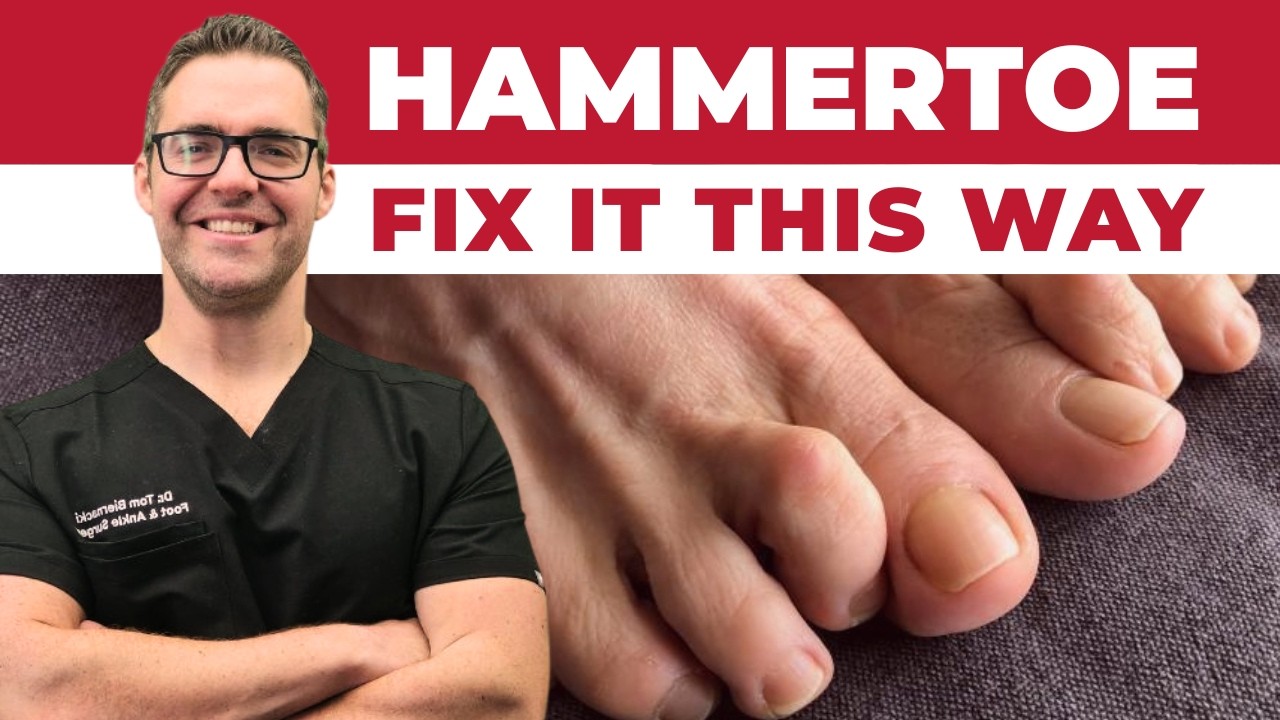
Hammertoe is an abnormal bend at the middle joint of the toe that can become fixed over time. Flexible hammertoes respond to toe pads, splints, and roomier shoes. Rigid hammertoes that are causing corns or pain often require surgical straightening.
Medically reviewed by Dr. Tom Biernacki, DPM — Board-Certified Podiatric Surgeon — Balance Foot & Ankle, Howell & Bloomfield Township, MI. Last updated April 2026.
Watch: Dr. Tom Biernacki, DPM
👟 Dr. Tom Also Recommends
Podiatrist Recommended Shoes 2026: Dr. Tom’s Top Picks for Every Condition
The right footwear can make or break your recovery. Dr. Tom’s complete guide to the best shoes for plantar fasciitis, flat feet, neuropathy, bunions & more — with clinical picks for every foot type.
See Dr. Tom’s Top Shoe Picks →Hammertoes are among the most common structural deformities of the foot — and one of the most reliably correctable through podiatric surgery. At Balance Foot & Ankle, our Michigan podiatrists correct hammertoes in-office or in an outpatient setting, with most patients walking the same day and returning to normal shoes within 4–6 weeks.
What Is a Hammertoe?
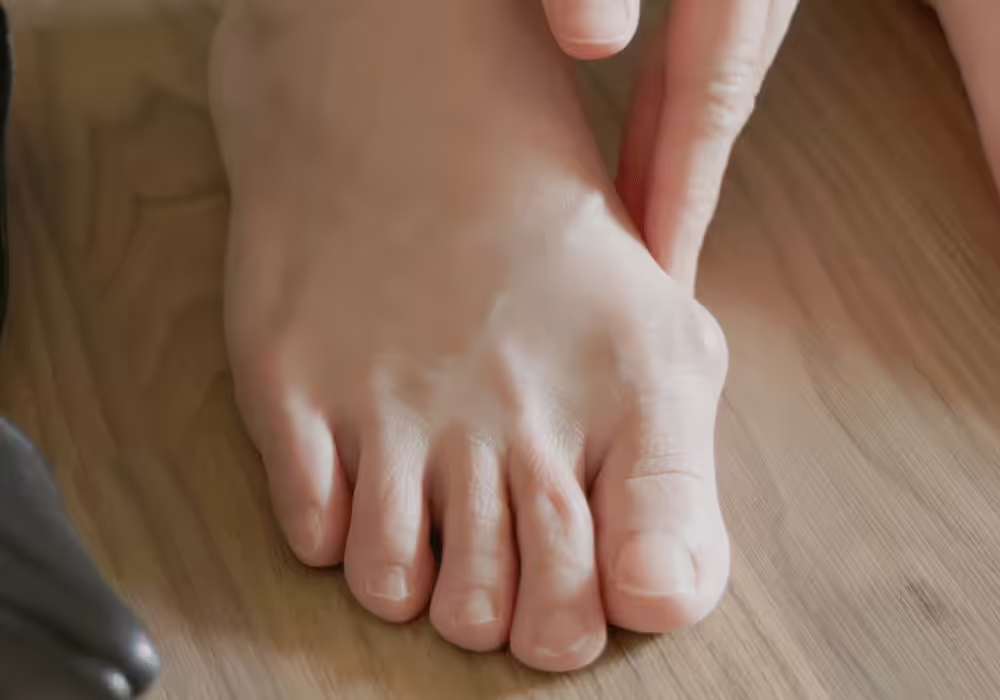
A hammertoe is a contracture deformity of one or more of the lesser toes (typically the 2nd through 5th) in which the toe bends abnormally at the proximal interphalangeal (PIP) joint, causing the toe to assume a hammer-like shape. Related deformities include mallet toe (contracture at the distal IP joint) and claw toe (contracture at both IP joints with MTP joint extension). All are caused by muscle and tendon imbalance.
Flexible hammertoes can still be passively straightened by hand. Rigid hammertoes are fixed in their contracted position and cannot be straightened — these are more symptomatic and require surgical correction.
Causes
Hammertoes develop from an imbalance between the intrinsic muscles (inside the foot) and extrinsic muscles (in the leg). Contributing factors include:
- Poorly fitting footwear: Shoes that are too narrow or too short force the toes into a contracted position; high heels transfer pressure to the forefoot and accelerate deformity
- Bunion deformity: The displaced big toe crowds the second toe, pushing it into a hammertoe position — the second toe becomes a “secondary hammertoe”
- Flat feet or high arches: Both alter the mechanical balance of the foot tendons
- Nerve damage: Peripheral neuropathy (especially Charcot-Marie-Tooth disease) weakens intrinsic muscles, allowing extrinsic tendons to overpower them
- Second toe longer than first: The “Morton’s toe” anatomical variant is associated with higher hammertoe risk
Symptoms
Hammertoes cause corns on the top of the PIP joint where the toe rubs against the shoe, pain with shoe-wearing (especially closed-toe dress shoes), calluses under the metatarsal head from abnormal weight distribution, nail problems from the toe tip pressing down, and difficulty finding comfortable footwear. Crossover toes — where the second toe overlaps the big toe — can occur in severe cases.
Conservative Treatment
Conservative measures reduce symptoms but cannot correct established deformity — they are most effective for flexible hammertoes in early stages:
- Wide toe-box footwear to reduce dorsal pressure on the contracted joint
- Toe splints and padding to cushion corns and reduce friction
- Corn debridement in-office
- Stretching exercises for flexible hammertoes to maintain passive range of motion
- Metatarsal pads to offload the plantar callus
- Custom orthotics to address underlying flat foot or biomechanical imbalance
Surgical Correction
Surgery provides permanent structural correction and is typically recommended for rigid hammertoes, painful flexible hammertoes failing conservative care, and hammertoes associated with a bunion repair. Common procedures include:
Proximal Interphalangeal (PIP) Joint Arthroplasty
The most common procedure — the articular surface of the PIP joint is removed, creating a fibrous (non-bony) connection as the joint heals in a straightened position. A temporary K-wire pin is often placed through the toe to hold alignment during healing. The pin is removed in-office at 4–6 weeks. Highly effective for flexible and semi-rigid hammertoes.
PIP Joint Fusion (Arthrodesis)
The joint surfaces are prepared and the joint is fused in a straight position using a small intramedullary implant (e.g., Nextra, StayFuse) or temporary K-wire. Fusion is more stable and has a lower recurrence rate than arthroplasty. The toe becomes slightly shorter and has no PIP joint motion, but this is rarely functional noticeable.
Flexor Tendon Transfer (Girdlestone-Taylor)
For flexible hammertoes with a strong extrinsic flexor driving the deformity — the flexor digitorum longus tendon is transferred to the dorsum of the toe, converting it from a deforming force to a corrective one. Excellent outcomes when properly selected.
Associated MTP Joint Correction
When the metatarsophalangeal joint is also contracted or subluxated (crossover toe), additional releases — plantar plate repair, extensor tenotomy, or Weil metatarsal osteotomy (shortening the metatarsal bone) — are performed alongside the PIP correction for complete realignment.
Recovery Timeline
Hammertoe surgery is performed outpatient under local or regional anesthesia. Most patients walk in a surgical shoe immediately after surgery. Swelling and some discomfort are expected for 4–8 weeks. K-wire removal (if used) occurs at 4–6 weeks as an in-office procedure. Return to regular shoes typically occurs at 6–8 weeks; athletic shoes at 8–12 weeks. Final cosmetic result takes 3–6 months as residual swelling resolves.
Frequently Asked Questions
Does hammertoe surgery hurt?
The surgery itself is performed under local/regional anesthesia and is not painful. Post-operative soreness is typically managed with over-the-counter pain medication (ibuprofen, acetaminophen). Most patients rate their post-operative pain 3–4/10 for the first 2–3 days, decreasing significantly after the first week. Many patients are surprised by how comfortable their recovery is compared to expectations.
Can a hammertoe come back after surgery?
Recurrence is uncommon but possible, particularly if the underlying cause (e.g., bunion deformity, tight footwear habits, or neuromuscular imbalance) is not also addressed. Fusion procedures have lower recurrence rates than arthroplasty. Simultaneously correcting a bunion when it is driving the second toe hammertoe significantly reduces recurrence risk.
Is hammertoe surgery covered by insurance in Michigan?
Hammertoe correction is covered by major Michigan insurance plans — including Blue Cross Blue Shield, Aetna, Priority Health, HAP, and Medicare — when the hammertoe causes symptoms (corns, pain, functional limitation) and conservative treatment has been tried. Prior authorization is required from most insurers. Our office handles all authorization paperwork. See our Insurance & Costs page for details.
Where can I get hammertoe surgery near me in Michigan?
📧 Get Dr. Tom’s Free Lab Test Guide
Discover the 5 lab tests every person over 35 should ask their doctor about — explained in plain English by a board-certified physician.
Balance Foot & Ankle performs hammertoe correction at our clinics in Howell and Brighton, with surgery at a nearby outpatient center. Dr. Tom Biernacki is a board-qualified podiatric surgeon with extensive experience in hammertoe correction, including simultaneous bunion and hammertoe repair. Call us or book online for a consultation.
For insurance and cost information, visit our Insurance & Costs page.
Dr. Tom’s Recommended Products for Hammertoes
📍 Located in Michigan?
Our board-certified podiatrists treat this condition at two convenient locations. Same-day appointments often available.
These are products I personally use and recommend to my patients at Balance Foot & Ankle.
- PediFix Hammer Toe Crest Pad — Loops over curled toe to straighten and cushion — reduces corns on dorsal PIP joint against shoe box
- Correct Toes Toe Spacers — Realigns all five toes to anatomical position — slows hammertoe progression and reduces forefoot crowding
- Wide Toe Box Shoes — New Balance 574 — Wider last accommodates hammer toe deformity without friction — significantly extends time between surgical intervention
Affiliate disclosure: As an Amazon Associate, Balance Foot & Ankle earns from qualifying purchases. We only recommend products we trust for our own patients.
Dr. Tom’s Recommended Insoles
PowerStep is the brand I prescribe most — medical-grade OTC support without the custom orthotic price tag.
- PowerStep Pinnacle Insoles — The OTC orthotic I recommend most — medical-grade arch support at a fraction of custom orthotic cost. Works in most shoes.
- PowerStep Maxx Insoles — For severe arch pain or flat feet — maximum correction and support when Pinnacle isn’t enough.
Affiliate disclosure: As an Amazon Associate, Balance Foot & Ankle earns from qualifying purchases. We only recommend products we trust for our own patients.
Join 950,000+ Learning About Foot Health
Dr. Tom shares honest medical advice, supplement reviews, and treatment guides you won’t find anywhere else.
Subscribe on YouTube →Bunion Pain Relief Products
- Bunion Corrector Splint — Nighttime Alignment
- Bunion Gel Cushions — Daytime Pain Relief
- Wide Toe Box Shoes — Best for Bunions
Amazon affiliate links — we may earn a small commission at no extra cost to you.
Insurance Accepted
BCBS · Medicare · Aetna · Cigna · United Healthcare · HAP · Priority Health · Humana · View All →
Howell Office
4330 E Grand River Ave
Howell, MI 48843
Get Directions →
Bloomfield Township Office
43494 Woodward Ave, #208
Bloomfield Township, MI 48302
Get Directions →
Your Board-Certified Podiatrists



Ready to Get Back on Your Feet?
Same-week appointments available at both locations.
Book Your AppointmentDifferential Diagnosis: What Else Could It Be?
Several conditions share symptoms with Hammertoe and are commonly misdiagnosed in the first office visit. Considering these alternatives is part of every Balance Foot & Ankle exam:
- Mallet toe. Bend at the distal joint only (DIP), not the middle joint.
- Claw toe. Both joints (PIP + DIP) bent — usually multiple toes, often diabetic.
- Crossover toe (2nd MTP). Drift across the big toe — often plantar plate tear underneath.
If your symptoms don’t fit the textbook pattern, ask your podiatrist which differentials they ruled out — that conversation often shortcuts months of trial-and-error treatment.
In Our Clinic
Hammertoes come to our clinic in two flavors: flexible (the toe still passively straightens) and rigid (it doesn’t). For flexible hammertoes we use gel toe crests, roomier toe boxes, custom orthotics to address the underlying instability, and sometimes night splints. Rigid hammertoes with a corn on top of the PIP joint, or a callus under the metatarsal head, usually need a minor outpatient procedure (PIP arthroplasty or fusion) to straighten the toe. The patients who wait too long develop fixed deformities and skin breakdown — we would much rather address a flexible hammertoe early.
Most Common Mistake We See
The most common mistake we see is: Cutting corns at home with scissors or razors. Fix: professional podiatric enucleation with sterile instruments prevents infection and recurrence.
Warning Signs That Need Same-Day Care
Seek immediate evaluation at Balance Foot & Ankle if you experience any of the following:
- Open wound under the bent toe
- Inability to straighten the toe even passively
- Diabetic skin breakdown at the toe joint
- Cold or blue discolouration of the toe
Call (810) 206-1402 — same-day and next-day appointments at our Howell and Bloomfield Township offices.
In-Office Treatment at Balance Foot & Ankle
When conservative care isn’t enough, Dr. Tom Biernacki and the team at Balance Foot & Ankle offer advanced, same-day options — including Hammertoe Treatment Michigan at our Howell and Bloomfield Township clinics.
Same-day appointments available. Call (810) 206-1402 or book online.
Pros & Cons of Conservative Care for foot care
Advantages
- ✓ Conservative care first
- ✓ Same-week appointments
- ✓ Multiple insurance accepted
Considerations
- ✗ Self-treatment can mask issues
- ✗ See a podiatrist if pain >2 weeks
In This Article
- Quick Answer
- Differential Diagnosis: What Else Could It Be? Several conditions share symptoms with Hammertoe and are commonly misdiagnosed in the first office visit. Considering these alternatives is part of every Balance Foot & Ankle exam: Mallet toe. Bend at the distal joint only (DIP), not the middle joint. Claw toe. Both joints (PIP + DIP) bent — usually multiple toes, often diabetic. Crossover toe (2nd MTP). Drift across the big toe — often plantar plate tear underneath. If your symptoms don’t fit the textbook pattern, ask your podiatrist which differentials they ruled out — that conversation often shortcuts months of trial-and-error treatment. In Our Clinic Hammertoes come to our clinic in two flavors: flexible (the toe still passively straightens) and rigid (it doesn’t). For flexible hammertoes we use gel toe crests, roomier toe boxes, custom orthotics to address the underlying instability, and sometimes night splints. Rigid hammertoes with a corn on top of the PIP joint, or a callus under the metatarsal head, usually need a minor outpatient procedure (PIP arthroplasty or fusion) to straighten the toe. The patients who wait too long develop fixed deformities and skin breakdown — we would much rather address a flexible hammertoe early. Most Common Mistake We See
- Warning Signs That Need Same-Day Care
- In-Office Treatment at Balance Foot & Ankle
- Frequently Asked Questions
Dr. Tom’s Recommended Products for foot care
Affiliate disclosure: As an Amazon Associate, Balance Foot & Ankle earns from qualifying purchases. We only recommend products we use with patients.
Footnanny Heel Cream Dr. Tom’s Pick
Best for: Daily moisturizer for cracked heels
Ready to Get Back on Your Feet?
Same-day appointments in Howell + Bloomfield Township. Most insurance accepted. Dr. Tom Biernacki, DPM & team.
Book Today — Same-Day Appointments Available
Call Now: (810) 206-1402
About Your Care Team at Balance Foot & Ankle
Dr. Tom Biernacki, DPM · Board-Certified Foot & Ankle Surgeon. Specializes in conservative-first care, minimally invasive bunion surgery, and complex reconstruction.
Dr. Carl Jay, DPM · Accepting new patients. Specializes in sports medicine, athletic injuries, and routine podiatric care.
Dr. Daria Gutkin, DPM, AACFAS · Accepting new patients. Specializes in surgical reconstruction and pediatric podiatry.
Locations: 4330 E Grand River Ave, Howell, MI 48843 · 43494 Woodward Ave Suite 208, Bloomfield Township, MI 48302
Hours: Mon–Fri 8:00 AM – 5:00 PM · (810) 206-1402

Dr. Tom Biernacki, DPM is a board-certified foot & ankle surgeon (ABFAS & ABPM) at Balance Foot & Ankle Specialists in Southeast Michigan. With over a decade of clinical experience, he specializes in heel pain, bunions, diabetic foot care, sports injuries, and minimally invasive surgery. Dr. Biernacki is a member of the APMA and ACFAS, and his patient education content on MichiganFootDoctors.com and YouTube has made him one of the most-followed foot & ankle educators on YouTube.
More questions patients ask
Can hammertoes be fixed without surgery?
Flexible hammertoes (those that can still be straightened manually) often respond to conservative treatment including toe splints, padding, shoe modifications, custom orthotics, and stretching exercises. Once a hammertoe becomes rigid, surgery may be necessary. Early intervention provides the best outcomes for non-surgical management.
What does hammertoe surgery involve?
Modern hammertoe correction typically involves a minimally invasive approach where Dr. Biernacki releases the contracted tendon and removes a small bone segment through a tiny incision. Recovery involves wearing a surgical shoe for 3-4 weeks with most patients returning to regular shoes within 6 weeks. Success rates exceed 90% with low recurrence rates.
Still have a question about coverage or cost? Book online and we will check your benefits before your visit: Book in Howell · Book in Bloomfield Township. Prefer to talk it through first? Call (810) 206-1402.