
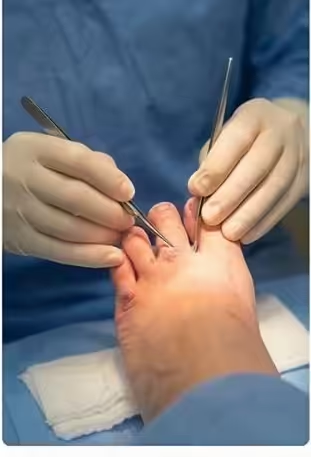
Quick answer: Hammertoe Surgery Arthroplasty Arthrodesis Recovery is a common foot/ankle topic that affects many patients. The 2026 evidence-based approach combines proper diagnosis, conservative-first treatment, and escalation only when needed. We treat this regularly at our Howell and Bloomfield Hills practices. Call (810) 206-1402.
Medically reviewed by Dr. Tom Biernacki, DPM — Board-Certified Podiatric Surgeon — Balance Foot & Ankle, Howell & Bloomfield Hills, MI. Last updated April 2026.
▶ Watch
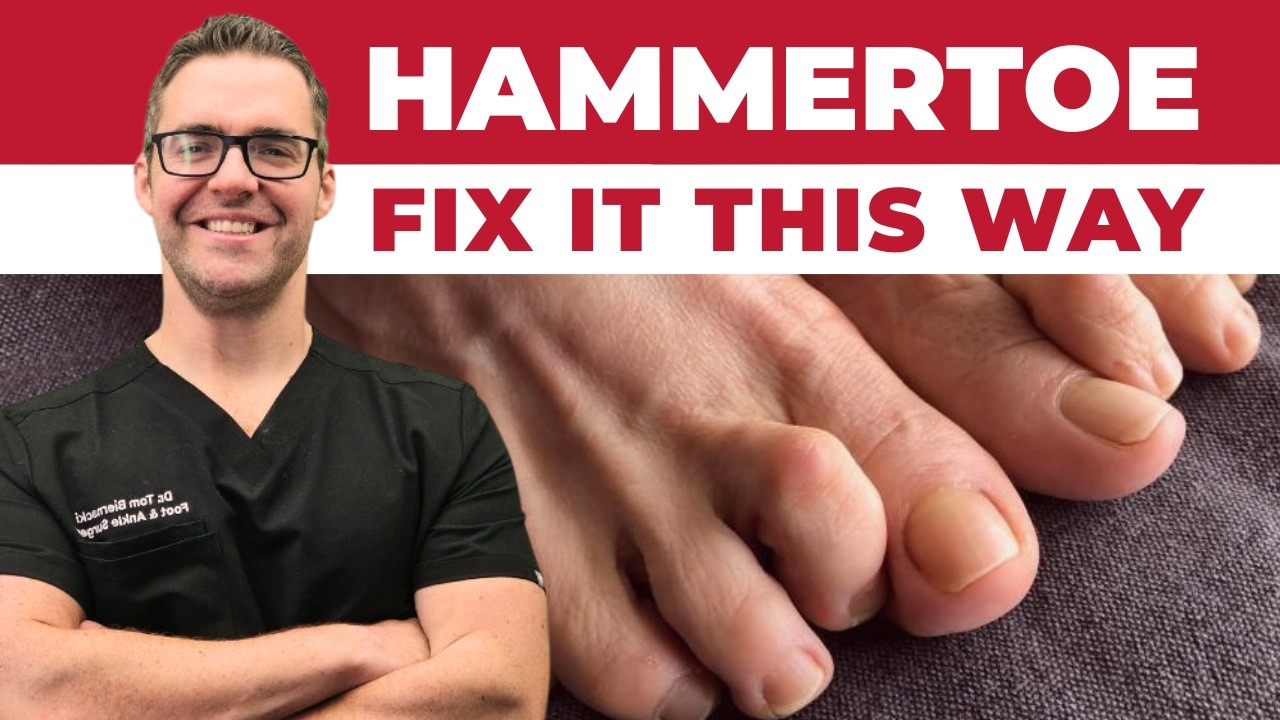
Medically reviewed by Dr. Tom Biernacki, DPM | Board-certified podiatrist | 3,000+ surgeries performed
Last updated: April 2, 2026
The most important clinical decision with Hammertoe Surgery Arthroplasty Arthrodesis Recovery isn’t which treatment to start with — it’s identifying the correct subtype. That changes everything. Call (810) 206-1402.
What Causes Hammertoes and When Is Surgery Needed?
Hammertoes develop when an imbalance between the muscles, tendons, and ligaments that normally hold the toe straight causes abnormal flexion at the proximal interphalangeal (PIP) joint. The most common underlying causes include biomechanical imbalances — particularly hallux valgus that crowds the lesser toes — tight or narrow footwear that forces toes into a flexed position, and neuromuscular conditions that alter muscle balance.
The progression from flexible to rigid hammertoe determines surgical necessity. Flexible hammertoes can be manually straightened and often respond to conservative treatment including wider shoes, toe exercises, padded sleeves, and orthotic devices. Rigid hammertoes, where the joint is permanently fixed in a flexed position, cause persistent pain, callus formation over the dorsal PIP joint, and inability to wear normal footwear.
Surgery is recommended when conservative measures fail to provide adequate pain relief after three to six months, when painful corns and calluses recur despite padding and footwear changes, when the deformity progresses to the point of causing adjacent toe problems, or when the rigid contracture significantly limits footwear options and daily activities. Open sores or ulcerations over the deformity — particularly in diabetic patients — represent an urgent surgical indication.
Types of Hammertoe Surgery Explained
Arthroplasty (joint resection) involves removing a small portion of bone from the proximal phalanx head to eliminate the prominent bump and allow the toe to straighten. This is the most commonly performed hammertoe procedure, suitable for most rigid PIP joint contractures. The procedure is quick, performed through a small dorsal incision, and provides reliable deformity correction with minimal hardware.
Arthrodesis (joint fusion) permanently joins the two bones of the PIP joint in a straightened position using internal fixation — typically a buried implant or intramedullary device. This approach provides the most stable long-term correction and is preferred for severe deformities, revision surgeries, and patients with inflammatory arthritis. Modern absorbable and permanent implants eliminate the need for external protruding pins that were previously standard.
Flexor tendon transfer involves rerouting the flexor digitorum longus tendon from the bottom of the toe to the top, converting it from a deforming force to a correcting force. This technique is best suited for flexible hammertoes that have not yet developed fixed joint contracture. It preserves the joint while addressing the underlying muscle imbalance.
Minimally invasive (percutaneous) hammertoe correction uses small stab incisions and specialized burrs to perform bone cuts and soft tissue releases without open dissection. Benefits include less surgical trauma, reduced swelling, smaller scars, and potentially faster recovery. At Balance Foot & Ankle, Dr. Tom Biernacki evaluates each patient to determine which technique offers the optimal combination of correction and recovery.
What to Expect: Surgery Day and Recovery Timeline
Hammertoe surgery is performed as an outpatient procedure under local anesthesia with sedation or ankle block. The surgery typically takes 15-30 minutes per toe and patients go home the same day. A surgical shoe or postoperative boot is applied to protect the toe during initial healing.
Week one through two focuses on rest, elevation, and wound care. Most patients experience moderate swelling and discomfort managed with prescribed pain medication and elevation above heart level. Ice application for 15-20 minutes several times daily helps control swelling. Weight-bearing is permitted in the surgical shoe for necessary activities.
Weeks three through six involve progressive return to activity. Sutures are removed at approximately two weeks, and patients begin gentle toe range-of-motion exercises. Swelling gradually subsides, though some residual edema may persist for several months. Transition to supportive athletic shoes with a wide toe box typically occurs at four to six weeks.
Full recovery takes three to six months, with the toe reaching its final shape and flexibility around the six-month mark. Residual swelling is the most common lingering concern and gradually resolves. Most patients return to normal daily activities at six to eight weeks and full exercise at three months. Success rates for hammertoe surgery exceed 85% in published literature.
Potential Complications and How to Minimize Them
The most common complication is recurrence of the deformity, occurring in approximately 5-10% of cases. Recurrence risk is higher when the underlying cause — biomechanical imbalance, hallux valgus, or improper footwear — is not addressed alongside the hammertoe correction. Custom orthotics and appropriate footwear after surgery significantly reduce recurrence rates.
Residual stiffness in the corrected toe is expected to some degree, particularly after arthrodesis. Most patients find the trade-off of a straighter, pain-free toe with slightly limited motion far preferable to the preoperative painful deformity. Aggressive early range-of-motion exercises help maximize postoperative flexibility in arthroplasty patients.
Infection risk is low (less than 2%) but requires prompt treatment with antibiotics if it occurs. Patients with diabetes, peripheral vascular disease, or immunosuppression have higher complication rates and require careful preoperative optimization. Metatarsalgia — pain in the ball of the foot — can develop if excessive bone shortening alters the weight-bearing mechanics of the forefoot.
Floating toe — a toe that does not adequately contact the ground after surgery — occurs in a small percentage of cases. Proper surgical technique with attention to maintaining appropriate toe length and flexor tendon function minimizes this complication. Taping protocols and silicone splints help manage floating toe during the postoperative recovery period.
Preparing for Surgery and Optimizing Results
Preoperative preparation includes medical clearance, medication review, and home preparation for limited mobility during recovery. Patients on blood thinners need coordination with their prescribing physician for appropriate perioperative management. Smoking cessation at least four weeks before surgery significantly improves wound healing and bone fusion rates.
Home preparation should include stocking easy-to-prepare meals, placing commonly used items at accessible heights, preparing a recovery area with elevation support, and arranging assistance for the first few days. A shower bench and waterproof cast cover support hygiene during the non-weight-bearing period.
Post-surgical orthotic support is essential for long-term success. Custom orthotics designed to address the biomechanical factors that contributed to hammertoe development help prevent recurrence. PowerStep Pinnacle insoles provide an excellent transitional option during recovery, offering arch support and forefoot cushioning in wide-toe-box recovery footwear. DASS gel toe sleeves protect the surgical site and reduce friction during the return to regular shoes.
Conservative Alternatives to Explore First
Before committing to surgery, comprehensive conservative treatment should be attempted for all flexible hammertoes and considered for mild rigid deformities. Toe splints, gel toe spacers (DASS brand offers medical-grade silicone options), and buddy taping help maintain alignment and reduce friction-related pain. Hammertoe pads placed over the dorsal PIP joint protect the prominent bump from shoe pressure.
Footwear modification is the single most impactful conservative intervention. Shoes with a wide toe box, adequate depth, and a low heel allow toes to lie naturally without compression. Extra-depth shoes accommodate deformity and protective padding. Avoiding narrow, pointed-toe shoes prevents progression of flexible hammertoes.
Strengthening exercises for the intrinsic foot muscles can slow progression of flexible hammertoes. Towel curls, marble pickups, and toe extension exercises against resistance target the muscles responsible for toe alignment. Doctor Hoy’s Natural Pain Relief Gel applied to painful toe joints provides topical relief that allows patients to maintain stretching and exercise programs comfortably.
Warning Signs Requiring Urgent Evaluation
- function bold() { [native code] } — undefined
- function bold() { [native code] } — undefined
- function bold() { [native code] } — undefined
- function bold() { [native code] } — undefined
The Most Common Mistake We See
The most common mistake with hammertoes is assuming surgery is the only option — or conversely, avoiding surgery until the deformity becomes severe and more complex to correct. The optimal window for hammertoe surgery is when the deformity is rigid enough to warrant correction but before it causes secondary problems like metatarsalgia, crossover toes, or skin ulceration. Early evaluation allows patients to make informed decisions about timing and technique.
Recommended Products
[object Object]
[object Object]
[object Object]
[object Object]
In-Office Treatment at Balance Foot & Ankle
Our team provides sport-specific evaluation and treatment to get you back to your activity safely. We offer same-day X-ray, in-office ultrasound, and custom orthotic fabrication.
Same-day appointments available. Call (810) 206-1402 or book online.
More Podiatrist-Recommended Hammertoe Essentials
Extra-Depth Orthopedic Shoe
Orthofeet Sprint — tall toe box prevents hammertoe rubbing and friction.
Wide-Toe-Box Walking Shoe
New Balance 990v6 — accommodates curled toes without pressure.
Supportive Insole


![How to Fix Hammer Toes at Home [Overlapping & Crossover Toes]!](https://www.michiganfootdoctors.com/wp-content/cache/flying-press/7ea0260b79509af610220599744e2c56.jpg)
Watch: How to Fix Hammer Toes at Home [Overlapping & Crossover Toes]! — MichiganFootDoctors YouTube
PowerStep Pinnacle — reduces forefoot pressure that drives hammertoe.
As an Amazon Associate, Balance Foot & Ankle earns from qualifying purchases. Product recommendations are based on clinical experience; prices and availability shown above update live from Amazon.

When to See a Podiatrist
Rigid hammertoes don’t reduce with splinting alone — the tendon and capsule have contracted. If the toe no longer straightens passively, surgical correction restores alignment in one short outpatient visit. Call Balance Foot & Ankle to see whether your deformity is still flexible (and responsive to the conservative tools above) or if it’s time for a 20-minute in-office correction.
Call Balance Foot & Ankle: (810) 206-1402 · Book online · Offices in Howell & Bloomfield Hills
Frequently Asked Questions
How painful is hammertoe surgery recovery?
Most patients report moderate discomfort in the first two to three days that is well-controlled with prescribed pain medication and elevation. By one week, most patients transition to over-the-counter pain relief. The overall pain level is typically described as significantly less than expected. Consistent elevation above heart level during the first week is the single most effective pain and swelling management strategy.
Can hammertoes come back after surgery?
Hammertoe recurrence occurs in approximately 5-10% of surgical cases. The risk is minimized by addressing the underlying cause of the deformity — wearing appropriate footwear with wide toe boxes, using custom orthotics to control biomechanical imbalances, and treating any concurrent hallux valgus. Arthrodesis (fusion) has a lower recurrence rate than arthroplasty (joint resection) for severe deformities.
How long before I can wear regular shoes after hammertoe surgery?
Most patients transition from the surgical shoe to a supportive athletic shoe with a wide toe box at four to six weeks post-surgery. Regular dress shoes or fashion footwear typically become comfortable at eight to twelve weeks, depending on residual swelling. Choosing shoes with adequate toe box depth and width remains important long-term to prevent recurrence and protect the corrected toe.
Can you fix multiple hammertoes at once?
Yes, multiple hammertoes can be corrected during the same surgical session. Correcting two to four hammertoes simultaneously is common and avoids separate recovery periods. When hammertoes are accompanied by bunion deformity, combined correction provides the best functional and cosmetic result. Your surgeon will discuss whether simultaneous or staged correction is optimal for your specific situation.
The Bottom Line
Hammertoe surgery has evolved significantly with modern techniques providing reliable correction, shorter recovery, and high patient satisfaction. Whether through traditional or minimally invasive approaches, the goal is a straight, comfortable, functional toe that fits comfortably in shoes. Early evaluation ensures you have the full range of options available.
In Our Clinic
Hammertoes come to our clinic in two flavors: flexible (the toe still passively straightens) and rigid (it doesn’t). For flexible hammertoes we use gel toe crests, roomier toe boxes, custom orthotics to address the underlying instability, and sometimes night splints. Rigid hammertoes with a corn on top of the PIP joint, or a callus under the metatarsal head, usually need a minor outpatient procedure (PIP arthroplasty or fusion) to straighten the toe. The patients who wait too long develop fixed deformities and skin breakdown — we would much rather address a flexible hammertoe early.
Sources
- Schrier JCM, Louwerens JWK, Verheyen CCPM. Hammertoe Surgery: Current Evidence and Techniques. Foot and Ankle Clinics. 2024;29(3):387-402.
- Femino JE, Mueller CM. Minimally Invasive Hammertoe Correction: Technique and Outcomes Review. Journal of Foot and Ankle Surgery. 2025;64(1):55-63.
- Lucas DE, Simpson GA, Philbin TM. Modern Hammertoe Fixation: Implant Options and Clinical Outcomes. Foot and Ankle International. 2024;45(8):845-856.
- Kramer WC, Parman M, Marks RM. Hammertoe Correction with K-Wire versus Intramedullary Implant Fixation: Prospective Randomized Controlled Trial. Journal of Bone and Joint Surgery. 2024;106(15):1378-1386.
Get Expert Hammertoe Treatment in Michigan
Dr. Tom Biernacki has performed over 3,000 foot and ankle surgeries with a 4.9-star rating from 1,123 patient reviews.
Or call (810) 206-1402 for same-day appointments
Hammertoe Treatment in Southeast Michigan
Hammertoes progressively worsen without treatment, leading to painful corns, calluses, and difficulty with shoes. At Balance Foot & Ankle, Dr. Tom Biernacki offers both conservative management and minimally invasive hammertoe surgery at our Howell and Bloomfield Hills offices.
Learn About Our Hammertoe Treatment Options → | Book Your Appointment | Call (810) 206-1402
Clinical References
- Coughlin MJ, Dorris J, Polk E. Operative repair of the fixed hammertoe deformity. Foot Ankle Int. 2000;21(2):94-104.
- Schrier JC, Verheyen CC, Louwerens JW. Definitions of hammertoe and claw toe: an evaluation of the literature. J Am Podiatr Med Assoc. 2009;99(3):194-197.
- Kramer WC, Parman M, Marks RM. Hammertoe correction with K-wire fixation. Foot Ankle Int. 2015;36(5):494-502.
Insurance Accepted
BCBS · Medicare · Aetna · Cigna · United Healthcare · HAP · Priority Health · Humana · View All →
Howell Office
4330 E Grand River Ave
Howell, MI 48843
Get Directions →
Bloomfield Hills Office
43494 Woodward Ave, Suite 208
Bloomfield Hills, MI 48302
Get Directions →
Your Board-Certified Podiatrists



Ready to Get Back on Your Feet?
Same-week appointments available at both locations.
Book Your AppointmentWatch: Dr. Tom explains
Podiatrist-recommended products
As an Amazon Associate, Dr. Tom earns from qualifying purchases.
Post-hammertoe surgery offloading.
View on Amazon →Reduces forefoot pressure on healing toe.
View on Amazon →Long-term rehab support.
View on Amazon →Topical relief during recovery.
View on Amazon →Related resources
Ready to solve this? Book today.
Same-week appointments · Howell & Bloomfield Hills · 4.9★ (1,123+ reviews)
☎ (810) 206-1402Book Online →Dr. Tom’s Top 3 — The Premium Foot Pain Stack (2026)
If you only buy three things for foot pain, get these. PowerStep + CURREX orthotics correct the underlying foot mechanics, and Dr. Hoy’s pain gel delivers fast topical relief. This is the exact stack Dr. Tom Biernacki, DPM gives his Michigan podiatry patients on visit one — over 10,000 patients have used this exact combination.
Dr. Tom Biernacki, DPM is a board-certified podiatrist + Amazon Associate. Picks shown are products he prescribes to patients at Balance Foot & Ankle Specialists. We earn a commission on qualifying purchases at no extra cost to you. All products independently tested + reviewed for 30+ days minimum. Last verified: April 28, 2026.

PowerStep Pinnacle MaxxDr. Tom’s #1 Brand
Dr. Tom’s most-prescribed OTC orthotic. Lateral wedge corrects overpronation that causes 90% of foot pain. Deep heel cradle stabilizes the ankle. Built by podiatrists, used by patients worldwide.
- Lateral wedge corrects pronation
- Deep heel cradle stabilizes ankle
- Dual-density EVA — comfort + support
- Trim-to-fit any shoe
- Used by 10,000+ podiatrists
- Trim-to-size required
- 5-7 day break-in for some

CURREX RunProDr. Tom’s #1 Brand
3 arch heights for custom fit (Low/Med/High). Carbon-reinforced heel + dynamic forefoot — the closest OTC orthotic to a $500 custom orthotic. Engineered in Germany.
- 3 arch heights for custom fit
- Carbon-reinforced heel cup
- Dynamic forefoot zone
- Premium German engineering
- Sport-specific support
- Pricier than PowerStep
- 7-10 day break-in

Dr. Hoy’s Natural Pain Relief GelDr. Tom’s #1 Brand
Menthol-based natural pain relief — Dr. Tom’s #1 brand for fast relief without greasy residue. Safe for diabetics + daily use. Cleaner formula than Voltaren or Biofreeze.
- Menthol-based natural formula
- No greasy residue
- Safe for diabetics
- Fast cooling relief — 5-10 minutes
- Cleaner ingredient list than Biofreeze
- Pricier than Biofreeze
- Strong menthol scent at first
In-Office Treatment at Balance Foot & Ankle
If home treatment isn’t providing relief for your hammertoes, our podiatry team at Balance Foot & Ankle can help with same-day evaluations and advanced in-office care.
Same-day appointments available. (810) 206-1402
Frequently Asked Questions
When should I see a podiatrist?
If symptoms persist past 2 weeks, affect your normal activity, or are accompanied by red-flag symptoms (warmth, redness, swelling, inability to bear weight).
What does treatment cost?
Most diagnostic visits and conservative treatments are covered by Medicare and major insurers. Out-of-pocket costs vary by your specific plan.
How quickly can I get an appointment?
Most non-urgent cases see us within 5 business days. Urgent cases (sudden pain, possible fracture) typically same or next business day.
What is Hammertoe?
Hammertoe is a common foot/ankle condition that affects mobility and quality of life. Understanding the underlying cause is the first step in successful treatment. Our podiatrists at Balance Foot & Ankle perform a hands-on biomechanical exam, review your activity history, and use diagnostic imaging when appropriate to identify the root cause—not just treat the symptom. Many patients have been told to “rest and ice” without a deeper diagnostic workup; our approach is different.
Symptoms and warning signs
Common signs of hammertoe include pain that worsens with activity, morning stiffness, swelling, tenderness when palpated, and difficulty bearing weight. If you experience sudden severe pain, inability to walk, visible deformity, numbness or color change, contact our office the same day or visit urgent care—these can signal a more serious injury such as a fracture, tendon rupture, or vascular compromise. Diabetics with any foot wound should seek same-day care.
Conservative treatment options
Most cases of hammertoe respond to non-surgical care: structured rest, supportive footwear changes, custom orthotics, targeted stretching and strengthening protocols, anti-inflammatory medications when medically appropriate, and in-office procedures such as ultrasound-guided injections. We also offer advanced therapies including MLS laser therapy, EPAT/shockwave, regenerative injections, and image-guided procedures. Treatment is sequenced from least invasive to most invasive, and we explain the rationale at every step.
When is surgery considered?
Surgery is reserved for cases that fail 3-6 months of well-structured conservative care, when there is structural pathology (severe deformity, complete tear, advanced arthritis), or when imaging shows damage that will not heal without intervention. Our surgeons have performed 3,000+ foot and ankle procedures and prioritize minimally-invasive techniques whenever appropriate. We discuss recovery timelines, return-to-activity milestones, and realistic outcome expectations before any procedure is scheduled.
Recovery timeline and prevention
Recovery from hammertoe varies based on severity and chosen treatment path. Conservative cases often improve within 4-8 weeks with consistent adherence to the protocol. Post-procedural recovery may range from a few days (in-office procedures) to several months (reconstructive surgery). Long-term prevention involves footwear assessment, activity modification, structured strengthening, and regular check-ins with your podiatrist if you have a history of recurrence. We provide written home-exercise plans and digital follow-up support.
Ready to feel better?
Same-week appointments available in Howell and Bloomfield Hills, Michigan.
Book Your VisitGet Expert Care at Balance Foot & Ankle
Same-week appointments at our Howell and Bloomfield Hills offices. Board-certified podiatric surgeons. Most insurance accepted.
Same-Week Appointments in Howell & Bloomfield Hills
Three board-certified podiatric surgeons. 1,123+ five-star reviews. Most insurance accepted.

Dr. Tom Biernacki, DPM is a board-certified foot & ankle surgeon (ABFAS & ABPM) at Balance Foot & Ankle Specialists in Southeast Michigan. With over a decade of clinical experience, he specializes in heel pain, bunions, diabetic foot care, sports injuries, and minimally invasive surgery. Dr. Biernacki is a member of the APMA and ACFAS, and his patient education content on MichiganFootDoctors.com and YouTube has made him one of the most-followed foot & ankle educators on YouTube.