

Medically reviewed by Dr. Tom Biernacki, DPM
Board-certified podiatric surgeon | Balance Foot & Ankle, Howell & Bloomfield Township, MI
Last reviewed: May 2026
Heel pain that wakes you up at night is a different clinical entity from the morning heel pain that characterizes plantar fasciitis. Night pain that is constant or throbbing can indicate heel spur irritation, calcaneal stress fracture, tarsal tunnel syndrome, or in some cases a space-occupying lesion. Treating night heel pain as plantar fasciitis delays the correct diagnosis. The pattern of the pain — when it occurs, what makes it better or worse — tells an experienced podiatrist which diagnostic path to take. Call (810) 206-1402 — we assess heel pain pattern and order imaging on the first visit when indicated.
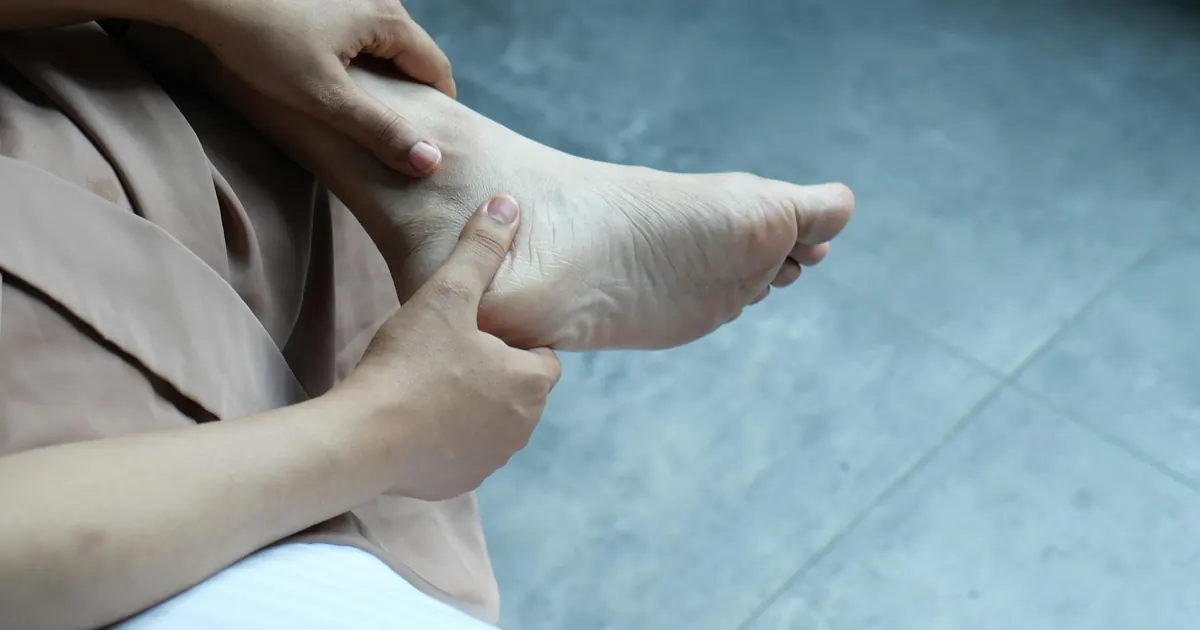
Daytime heel pain is miserable. Nighttime heel pain that disrupts sleep is on another level — and the two don’t always have the same cause. In fact, the timing and character of heel pain at night is one of the most clinically informative details we gather in our workup. Pain that’s worst at the first step in the morning after rest (plantar fasciitis) is mechanically different from pain that burns and tingles through the night while you’re lying still (tarsal tunnel), which is different again from throbbing inflammatory pain that woke you from deep sleep (gout, stress fracture, infection).
Getting this distinction right changes the treatment completely. Here’s how to decode what’s happening in your heel at night.
Plantar Fasciitis: Why It’s Worst in the Morning
Plantar fasciitis is the most common cause of heel pain in adults, and while it’s technically a “morning pain” condition, the night plays a crucial role in the cycle. Here’s what happens: during sleep and prolonged rest, the plantar fascia — the thick connective tissue band connecting your heel bone to your toe bases — naturally tightens into a shortened position, especially if you sleep with your feet plantarflexed (toes pointing downward, as most people do under a blanket).
When you take your first steps in the morning, that tight, contracted fascia is suddenly placed under full tensile load — causing micro-tears at the calcaneal insertion and the characteristic “first step” stabbing pain. The pain often eases after 10–15 minutes of walking as the fascia warms and lengthens, but returns after prolonged rest (sitting at a desk, a long car ride) and at the end of a long day.
Where does nighttime factor in? Patients with moderate-to-severe plantar fasciitis often experience aching in the heel late in the evening after a full day of activity — not sharp, but a dull throbbing that makes it hard to get comfortable. And the fascia tightening during sleep sets up the vicious morning pain cycle. Breaking this cycle is the purpose of the plantar fasciitis night splint.
Tarsal Tunnel Syndrome: The Nerve That Burns at Night
Tarsal tunnel syndrome is the most important cause of true nighttime heel pain — pain that wakes patients from sleep, that is burning or electric in quality, and that is present even without activity. The posterior tibial nerve runs through a narrow fibrous tunnel behind the inside ankle bone, and when compressed there, produces burning, tingling, and numbness that radiates from the medial ankle down into the heel, arch, and sometimes the toes.
Why does it worsen at night? Two mechanisms: First, venous pooling and tissue swelling increase during the day and compress the nerve further by the time the patient lies down. Second, the reduced musculoskeletal activity during sleep eliminates the natural decompression that walking provides (walking actually pumps fluid out of the tunnel with each step). The result: burning heel and arch pain precisely when the patient is trying to sleep.
Distinguishing features from plantar fasciitis: the pain is burning and tingling rather than sharp and stabbing; it is present at rest and not specifically triggered by the first steps; it often extends into the arch and toes rather than being isolated to the heel; and Tinel’s sign (tapping behind the inner ankle bone reproduces the distal tingling) is positive. Musculoskeletal ultrasound can directly visualize posterior tibial nerve thickening and identify compressing structures.
Treatment differs significantly from plantar fasciitis: custom orthotics that support the arch and reduce tension on the nerve’s course; corticosteroid injection into the tunnel (ultrasound-guided for precision); and surgical tarsal tunnel release when conservative care is insufficient. Night splints designed for plantar fasciitis do not help tarsal tunnel — a neutral position ankle splint may be preferred instead.
Inflammatory and Systemic Causes of Nighttime Heel Pain
Gout
Gout most commonly attacks the big toe, but the heel — specifically the Achilles insertion or the plantar heel — is the second most common site. Gout attacks classically begin at night, partly because urate crystals form more readily at lower temperatures and partly because uric acid levels are highest during fasting sleep. The attack develops rapidly — the heel goes from fine to exquisitely painful in hours, with redness, heat, swelling, and tenderness so intense that blanket contact is intolerable.
A gout attack in the heel is frequently mistaken for a severe plantar fasciitis flare or Achilles bursitis — the rapid onset, inflammatory heat, and dramatic severity are the differentiating features. Serum uric acid (though it can be normal during an acute attack), joint fluid analysis, or diagnostic ultrasound (double contour sign on the Achilles or plantar fascia insertion) confirms the diagnosis. Colchicine or NSAIDs abort an acute attack; long-term urate-lowering therapy (allopurinol) prevents recurrence.
Reactive Arthritis and Seronegative Spondyloarthropathy
A group of inflammatory arthritis conditions — reactive arthritis (formerly Reiter’s syndrome), psoriatic arthritis, and ankylosing spondylitis — characteristically cause enthesopathy: inflammation at tendon and ligament insertion sites. The Achilles and plantar fascia insertions at the heel bone are the most common sites of enthesitis, producing heel pain that is typically worse in the morning and at night and associated with generalized joint stiffness lasting more than 60 minutes on waking (unlike osteoarthritis, which stiffens briefly then improves).
Key clues: bilateral heel pain (plantar fasciitis is usually unilateral initially); associated eye redness, skin lesions, or joint involvement in other areas; history of recent infection (reactive arthritis follows GI or urogenital infection); family history of psoriasis or ankylosing spondylitis; male gender under 40 with severe inflammatory heel pain. HLA-B27 genetic marker, ESR, CRP, and rheumatology referral are appropriate when seronegative arthropathy is suspected. NSAIDs and disease-modifying agents (sulfasalazine, TNF inhibitors for severe cases) are the treatment pathway.
Serious Causes of Heel Pain at Night Not to Miss
Calcaneal stress fracture: A stress fracture in the heel bone from overuse (military recruits, new runners, workers who suddenly increase time on feet) causes persistent heel pain that is worse with activity and develops a nocturnal throbbing component as the fracture worsens. The “heel squeeze test” — compressing the heel from both sides — reproduces the pain with high sensitivity. MRI is the definitive imaging test (X-ray misses early stress fractures). Walking on an unrecognized calcaneal stress fracture risks fracture displacement and dramatically prolonged recovery.
Night Splints for Heel Pain: Do They Work?
Night splints work specifically for plantar fasciitis — and the evidence is clear. A night splint holds the ankle in 5 degrees of dorsiflexion and maintains a gentle passive stretch on the plantar fascia throughout sleep. This prevents the fascia from contracting overnight, significantly reducing the morning “first step” pain by keeping the tissue at a more functional length before the first weight-bearing load of the day.
Multiple randomized controlled trials confirm that night splints reduce plantar fasciitis morning pain more effectively than stretching alone when used consistently. The challenge is compliance — rigid posterior shell splints are uncomfortable and frequently abandoned. Two design alternatives have higher compliance rates:
Sock-type night splints: A stretchy compression sock with a dorsal strap that holds the toes back — far more comfortable than rigid splints, and compliance studies show 85%+ completion vs 60% for rigid designs. Appropriate for mild-to-moderate plantar fasciitis.
Dorsal (anterior) shell splints: A padded brace on the top of the foot and shin rather than the bottom — maintains dorsiflexion without the pressure of a posterior shell on the heel. Higher compliance than posterior designs, effective for patients who are particularly sensitive to heel pressure.
Night splints are not appropriate for tarsal tunnel syndrome (where the nerve compression rather than fascial contracture is the problem) or inflammatory causes of heel pain (gout, reactive arthritis).
Products for Nighttime Heel Pain Relief
Frequently Asked Questions
Why does my heel hurt more at night than during the day?
This pattern — worse at night, possibly improving with movement — strongly suggests either tarsal tunnel syndrome or an inflammatory condition. In tarsal tunnel, the nerve is compressed by swelling that accumulates throughout the day and isn’t relieved by sleep position. Inflammatory conditions (gout, reactive arthritis, RA) are classically worse at rest because inflammatory mediators and cytokines accumulate in joint fluid without the pumping action of activity to clear them. In contrast, plantar fasciitis is typically worst at the first steps after rest, then eases with movement — heel pain that continuously worsens during rest and throughout the night is a red flag for nerve or inflammatory pathology rather than simple mechanical plantar fasciitis.
Should I wear a night splint every night?
For plantar fasciitis, yes — consistency is what makes night splints effective. Studies show results are proportional to compliance: nightly use for 4–8 weeks produces significant reduction in morning pain; intermittent use produces minimal benefit. The Strassburg sock design has the highest compliance rates and is comfortable enough that most patients can tolerate it nightly. Give the night splint a full 4-week trial before concluding it’s not working — some patients need that long to see the morning pain change. If morning pain is unchanged after 6 weeks of nightly use, revisit the diagnosis — night splints only work for plantar fasciitis, not for the other causes of heel pain.
Can plantar fasciitis cause heel pain at night in bed?
Plantar fasciitis can cause evening heel aching after a long day on your feet — this is common and represents end-of-day fascia fatigue. However, true nighttime pain that wakes you from sleep is less typical for classic plantar fasciitis and should prompt evaluation for tarsal tunnel syndrome or an inflammatory cause. If your plantar fasciitis is producing significant nighttime pain, it may indicate a more severe presentation (partial fascial tear, rather than pure degenerative fasciosis) that warrants imaging and more aggressive intervention than stretching and insoles alone.
What stretches help heel pain at night?
For plantar fasciitis specifically, the most effective pre-sleep and pre-step stretches are: the plantar fascia stretch (cross the affected foot over the opposite knee, pull the toes back, and hold 30 seconds × 3 repetitions before getting out of bed); the standing calf stretch (knee straight, heel on the floor, lean into a wall — 30 seconds × 3, both gastrocnemius and Achilles); and the seated towel stretch (loop a towel around the foot and pull toward you while keeping the knee straight). Doing the plantar fascia stretch before the first step in the morning is the single highest-yield stretching intervention for reducing plantar fasciitis morning pain — it pre-lengthens the contracted fascia before weight-bearing load is applied.
The bottom line: Heel pain at night is never just “my feet are tired.” It has a specific cause — and the distinction between plantar fasciitis, tarsal tunnel, gout, stress fracture, and inflammatory arthritis changes the treatment fundamentally. A burning, electric nighttime heel pain needs nerve evaluation. A rapid-onset, intensely inflamed heel needs gout workup. A dull aching evening heel that’s worst at the first morning step is most likely plantar fasciitis — the most treatable of all these conditions when caught and managed correctly.
Ready to Get Relief?
Same-week appointments available in Howell & Bloomfield Township, MI
4.9★ | 1,123 Reviews | 3,000+ Surgeries
Or call: (810) 206-1402
📚 Heel Pain Causes & Treatment Guide
This article is part of our Heel Pain Causes & Treatment Guide — complete podiatrist resource for every heel pain condition.
The American Academy of Orthopaedic Surgeons confirms that night splints are an effective adjunct treatment for plantar fasciitis — maintaining the foot in dorsiflexion during sleep reduces first-step morning pain by preventing overnight fascia contracture. (AAOS: Plantar Fasciitis)
Related Articles from Dr. Biernacki
- Heel Spur Treatment: What a Podiatrist Actually Does
- Plantar Fasciitis Exercises: The Exact Protocol That Works
- Posterior Heel Pain: Insertional Achilles, Haglund’s & More
- Calcaneal Fracture (Broken Heel Bone): Treatment & Recovery
- What Happens If You Ignore Heel Spurs?
- Plantar Fasciitis Walking Boot: When You Need One
- How Long Does Plantar Fasciitis Last? A Podiatrist Explains Recovery Timelines
📋 Dr. Tom Biernacki, DPM, FACFAS answers:
Night splints are one of the most evidence-backed treatments for plantar fasciitis causing morning heel pain. They work by keeping the foot dorsiflexed at 90 degrees during sleep, maintaining a gentle continuous stretch on the plantar fascia and Achilles tendon. This prevents the overnight shortening that causes the notorious first-step pain. Studies show 80% of patients improve with consistent night splint use. Sock-style splints (such as Strassburg Sock or Swede-O Plantar Fasciitis Wrap) are more comfortable and better tolerated than rigid boot-style splints. Pain that occurs throughout the night rather than just in the morning may indicate a different condition — tarsal tunnel syndrome, nerve entrapment, or stress fracture — which a podiatrist should evaluate.
Why does heel pain get worse at night?
Heel pain at night — different from the classic morning plantar fasciitis pain — often indicates a neurological or inflammatory cause. Tarsal tunnel syndrome (compression of the posterior tibial nerve) causes burning, shooting, or electrical pain in the heel and arch that worsens with rest and at night. Inflammatory conditions (rheumatoid arthritis, reactive arthritis, ankylosing spondylitis) also cause night pain and morning stiffness. Diabetic neuropathy characteristically causes night-time burning foot pain.
Do night splints actually help heel pain?
Yes — night splints are one of the most evidence-supported treatments for plantar fasciitis. They maintain the ankle in 5–10 degrees of dorsiflexion overnight, keeping the plantar fascia and Achilles tendon gently stretched. This prevents the fascia from contracting during sleep, dramatically reducing the excruciating first-step morning pain. Studies show night splints reduce plantar fasciitis symptoms in 80% of patients who use them consistently for 8 weeks.
When should I see a podiatrist for nighttime heel pain?
See a podiatrist if nighttime heel pain is severe, prevents sleep, is accompanied by swelling or warmth, radiates into the ankle or arch, or persists despite 2 weeks of anti-inflammatory treatment and footwear changes. Night pain with systemic symptoms (joint swelling in other locations, skin rash, fever) should be evaluated promptly for inflammatory arthritis or infection.
In-Office Treatment at Balance Foot & Ankle
Dr. Tom Biernacki DPM provides expert in-office care at Balance Foot & Ankle, serving Howell and Bloomfield Township, Michigan. Learn more about scheduling your appointment at Balance Foot & Ankle. Same-week appointments: (810) 206-1402 | New Patient Information
One practical note: if you’re reading this at 2 AM because your heel woke you up, our online scheduling is open 24/7 — you can pick a real appointment time right now and be seen this week, often sooner.
Recommended Footwear for Heel & Arch Pain

Dr. Tom Biernacki, DPM is a board-certified foot & ankle surgeon (ABFAS & ABPM) at Balance Foot & Ankle Specialists in Southeast Michigan. With over a decade of clinical experience, he specializes in heel pain, bunions, diabetic foot care, sports injuries, and minimally invasive surgery. Dr. Biernacki is a member of the APMA and ACFAS, and his patient education content on MichiganFootDoctors.com and YouTube has made him one of the most-followed foot & ankle educators on YouTube.