

✅ Medically reviewed by Dr. Thomas Biernacki, DPM — Board-Certified Podiatrist · Last updated April 6, 2026
How to Exfoliate Your Feet
How to Exfoliate Your Feet: A Podiatrist’s Complete Guide
We review the best products and techniques for exfoliating your feet — including how to safely remove thick calluses, tackle toenail fungus, and keep your feet baby soft year-round.
How Often Should You Exfoliate Your Feet?
- For most people: 1–2 times per week is sufficient
- For heavily calloused feet or athletes: up to 3 times per week
- For diabetic patients: consult your podiatrist first — aggressive exfoliation can cause breaks in skin that increase infection risk
Technique: How to Exfoliate Without Causing Damage
Step 1: Soak feet in warm water for 10–15 minutes to soften skin before exfoliating — this makes the process far more effective and reduces risk of tearing.
Step 2: Apply your chosen exfoliating tool with gentle, circular pressure. Never scrub aggressively — thinning the skin too quickly creates soreness and re-thickening rebound.
Step 3: Rinse and dry thoroughly, especially between the toes.
Step 4: Apply a thick foot cream or urea-based lotion immediately while skin is still slightly damp. This is the most important step most people skip.
Best Products for Exfoliating Your Feet
Foot Peel Mask — The Easiest Way to Remove Dead Skin
Foot peel masks use gentle acids (glycolic, lactic, salicylic) to chemically dissolve dead skin over 1–2 weeks. You simply wear the booties for 60 minutes, then over the next week the outer skin layer peels off naturally. Best for full-foot smoothness.

- POWERFUL EXFOLIATION FORMULA - Our foot peel features a powerful blend of lactic acid, glycolic acid, and 16 botanical extracts, meticulously formulated to effectively remove dead skin layers, leaving your feet feeling exceptionally smooth and soft.
- SPA-LIKE EXPERIENCE AT HOME - Indulge in a spa-like experience from the comfort of your home. With a simple three-step process, enjoy the luxury of flawless feet without the need for scrubbing or enduring any discomfort.
- ONE-HOUR TREATMENT - Experience the transformation in just one hour. Slip your feet into the included booties, relax for the duration of the treatment, and rinse away for remarkably soft and rejuvenated feet.
- LUXURIOUS LAVENDER SCENT & IDEAL GIFT - Enjoy the soothing aroma of lavender while treating your feet to a spa-like experience. Baby Foot Peel Mask makes the perfect gift, offering both relaxation and rejuvenation for loved ones.
- LONG-LASTING RESULTS - Bid farewell to dry, cracked feet for weeks to come. Our foot peel provides long-lasting results, ensuring that your feet stay soft and beautiful until your next treatment.
Foot Peel Mask — Value 2-Pack

- SOFT SMOOTH FEET: Treat your dry, hard, scaly, cracked feet to some tender love and self-care with our foot peeling mask that will leave your skin satisfyingly soft and silky smooth.
- EASY EXFOLIATING: Achieve professional results at home. Wear the mask socks for 60 minutes and relax. Peeling begins in 6–11 days (varies by person). For best results, during peeling period :Skip moisturizing, Do not use more than once per month
- BOTANICAL BLEND: Made with a blend of fruit acids and extracts, our feet mask works to slough away dead skin cells on your soles to help repair rough heels.
- UNIVERSAL SIZE FOR ALL: Designed to comfortably fit both men and women. The masks accommodate most foot shapes and sizes up to 29.2 cm (11.5 in), which fits up to a Men’s Size 10 or Women’s Size 11.
- HOME SPA & GIFTING: A versatile addition to any self-care routine or a gift for friends and family. This foot peeling treatment is suitable for holiday stocking stuffers and personal pampering. We focus on quality to support your skin goals.
Electric Callus Remover — Best for Thick, Stubborn Calluses
Electric callus removers are more effective than manual files for deep, hardened calluses — especially on heels. Use on dry feet before soaking for best results.
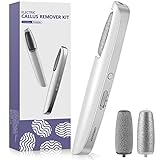
- Your At Home Shower Foot Scrubber:This electric foot callus remover does everything you need: It protects healthy foot skin with automatic pressure adaptive technology which removes calluses and dry cracked skin painlessly in a safe way
- Electric Pedicure kit includes 2 roller heads with different roughness: One fine roller for polishing and everyday maintenance and one coarse roller for smoothing stubborn calluses and dead skin. Powerful 360°rotating roller heads automatically run at high speed to efficiently remove stubborn dead skin and rough horny skin, leaving your feet looking clean, smooth
- Package: Electric Foot Callus Remover manicure set comes with 1 handle, 2 roller heads and a USB charging cord that works with any wall adapter (wall adapter not included)
- Fantastic Foot Callus Remover Pedicure Tool Power Source. Battery Rechargeable and water resistant. Pedicure has 3 speeds,F&R rotation, allow for easy or more powerful maintenance. Full charging only 1 hours, can last 100 minutes running
- Pedicure Callus Remover Tool Easy to use on both feet, front to back -heels, toes, sides, and balls of feet Ergonomic wand design for a more natural back-and-forth motion, which is good for friends, family and loved ones, taking good care for the skin of the feet
PowerStep Electronic Foot File
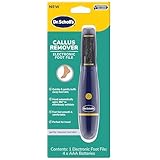
- Remove Callused Skin: Effortlessly buff away tough, callused skin with the Dr. Scholl's Callus Remover Electronic Foot File, designed for gentle and quick revitalization.
- Rotating Roller Head: Glide the electronic file over your feet as the 360-degree rotating roller head works its magic, eliminating rough, hard skin and leaving your feet smooth and comfortable.
- Compact Design: The Dr. Scholl's Callus Remover Electronic Foot File is the perfect size for travel so you can achieve soft, smooth feet wherever you go
- Hassle-Free: Conveniently includes 4 AAA Batteries

Tea Tree Oil — Add to Your Foot Soak for Antifungal Action
If your thick skin or calluses are accompanied by athlete’s foot or toenail fungus, adding tea tree oil to your soak water provides antifungal benefit while you exfoliate.

- 100% Pure Melaleuca Oil (Tea Tree Oil)
- Steam Distilled From Leaves & Twigs
- Earthy, Warm, Spicy Aroma
- 1 Fl Oz (30 ml)
- Manufactured In a GMP Compliant, FDA Registered Facility
Doctor Hoy’s Natural Pain Relief Gel — Post-Exfoliation Recovery
Apply to heels and sore areas after exfoliating to reduce inflammation and speed recovery — especially helpful after removing large plantar calluses.

- NATURAL, SAFE and EFFECTIVE PAIN RELIEF - Doctor Hoy's Natural Pain Relief Gel combines arnica, a powerful, natural anti-inflammatory, with camphor and encapsulated menthol for deep pain relief from arthritis, sprains, muscle strains, simple backaches, and joint pain. Dries clean with no oils and has a vanishing scent. Pain Relief Gel, for topical use, has a vanishing scent, dries clean with no oils and is safe for repeated use with relief lasting hours.
When Exfoliating Isn’t Enough
Some calluses keep returning no matter how diligently you exfoliate — because there’s an underlying pressure point, gait issue, or biomechanical cause. If you have calluses that:
- Come back within 2–3 weeks of removal
- Are painful when walking
- Have a dark center (may be a plantar wart)
- Are accompanied by cracking or bleeding
…it’s time to see a podiatrist. Professional callus debridement takes minutes and removes much more tissue than home exfoliation can safely achieve.
📧 Get Dr. Tom’s Free Lab Test Guide
Discover the 5 lab tests every person over 35 should ask their doctor about — explained in plain English by a board-certified physician.
Persistent calluses, heel cracks, or foot pain? Our podiatry team provides professional foot care with same-day appointments available.
📞 Call (810) 206-1402 | 📅 Book Online →
Howell and Bloomfield Hills, MI — most insurance accepted.
Related: How to Soak Your Feet the Right Way | All Recommended Foot Care Products
Getting Expert Foot and Ankle Care in Michigan: Balance Foot & Ankle
Michigan patients with any foot or ankle concern — from chronic pain and structural deformity to wound care, nail problems, and sports injuries — can receive expert podiatric evaluation at Balance Foot & Ankle. Our fellowship-trained podiatric surgeons provide the full spectrum of podiatric care, combining conservative and surgical options tailored to each patient’s specific diagnosis, activity level, and treatment goals. We are in-network with major Michigan insurance plans including Blue Cross Blue Shield of Michigan, Aetna, UnitedHealthcare, Cigna, Medicare, and most Medicare Advantage plans. Both of our Michigan offices — Howell at 4330 E Grand River (serving Livingston County) and Bloomfield Hills at 43494 Woodward Ave #208 (serving Oakland County and northern Metro Detroit) — offer same-week new patient appointments, in-office digital X-ray, and dedicated parking. Michigan patients ready to address their foot or ankle problem can call (810) 206-1402 to schedule with Balance Foot & Ankle.
Michigan Podiatry: Connecting Whole-Body Health to Foot and Ankle Outcomes
Related Treatment Guides
- Corn & Callus Treatment
- Toenail Treatment
- Plantar Fasciitis & Heel Pain Treatment
- Custom 3D Orthotics
Foot and ankle health does not exist in isolation from the rest of the body — conditions including diabetes, peripheral arterial disease, obesity, rheumatoid arthritis, and gout have significant and direct effects on the foot. At Balance Foot & Ankle, we understand the intersection between systemic health and podiatric outcomes and coordinate with our patients’ primary care physicians, endocrinologists, rheumatologists, and vascular surgeons when managing complex conditions. Michigan patients managing chronic systemic conditions who have developed foot complications — neuropathy, circulatory insufficiency, inflammatory arthritis of the foot joints, or gout attacks — can receive coordinated podiatric care that integrates with their existing medical management. Our goal is to optimize foot function and prevent complications within the context of the patient’s overall health picture. Michigan patients with complex health histories affecting their foot and ankle health can call Balance Foot & Ankle at (810) 206-1402 to schedule at our Howell or Bloomfield Hills office.
Medical References & Sources
- American Podiatric Medical Association — Patient Education
- American Orthopaedic Foot & Ankle Society — Foot Conditions
📍 Located in Michigan?
Our board-certified podiatrists treat this condition at two convenient locations. Same-day appointments often available.
Want Smoother, Healthier Feet?
Our podiatrists provide professional foot care including safe callus removal, skin treatments, and personalized maintenance plans for soft, healthy feet.
Clinical References
- Freeman DB. “Corns and calluses resulting from mechanical hyperkeratosis.” Am Fam Physician. 2002;65(11):2277-2280.
- Bristow I. “Non-ulcerative skin pathologies of the diabetic foot.” Diabetes Metab Res Rev. 2008;24(S1):S84-S89.
- Menz HB, et al. “Foot problems in older people: associations with incident falls.” Maturitas. 2019;118:61-66.
Insurance Accepted
BCBS · Medicare · Aetna · Cigna · United Healthcare · HAP · Priority Health · Humana · View All →
Howell Office
3980 E Grand River Ave, Suite 140
Howell, MI 48843
Get Directions →
Bloomfield Hills Office
43700 Woodward Ave, Suite 207
Bloomfield Hills, MI 48302
Get Directions →
Your Board-Certified Podiatrists



Ready to Get Back on Your Feet?
Same-week appointments available at both locations.
Book Your Appointment
Dr. Tom Biernacki, DPM is a double board-certified podiatrist and foot & ankle surgeon at Balance Foot & Ankle Specialists in Southeast Michigan. With over a decade of clinical experience, he specializes in heel pain, bunions, diabetic foot care, sports injuries, and minimally invasive surgery. Dr. Biernacki is a member of the APMA and ACFAS, and his patient education content on MichiganFootDoctors.com and YouTube has reached over one million views.