


You are in the right place. Dr. Tom Biernacki, DPM, FACFAS — board-certified foot & ankle surgeon with 3,000+ surgeries — explains exactly what foot fungus treatment means and what actually works. Call (810) 206-1402 for a same-day appointment at our Howell or Bloomfield Hills office.
Quick answer: Treatment for foot fungus treatment follows a stepwise approach: 1) conservative care first (rest, ice, supportive footwear, OTC anti-inflammatories), 2) physical therapy and targeted exercises, 3) in-office treatments (injections, custom orthotics) if conservative fails at 4-6 weeks, 4) surgery for refractory cases. Most patients resolve at step 1 or 2. Call (810) 206-1402.
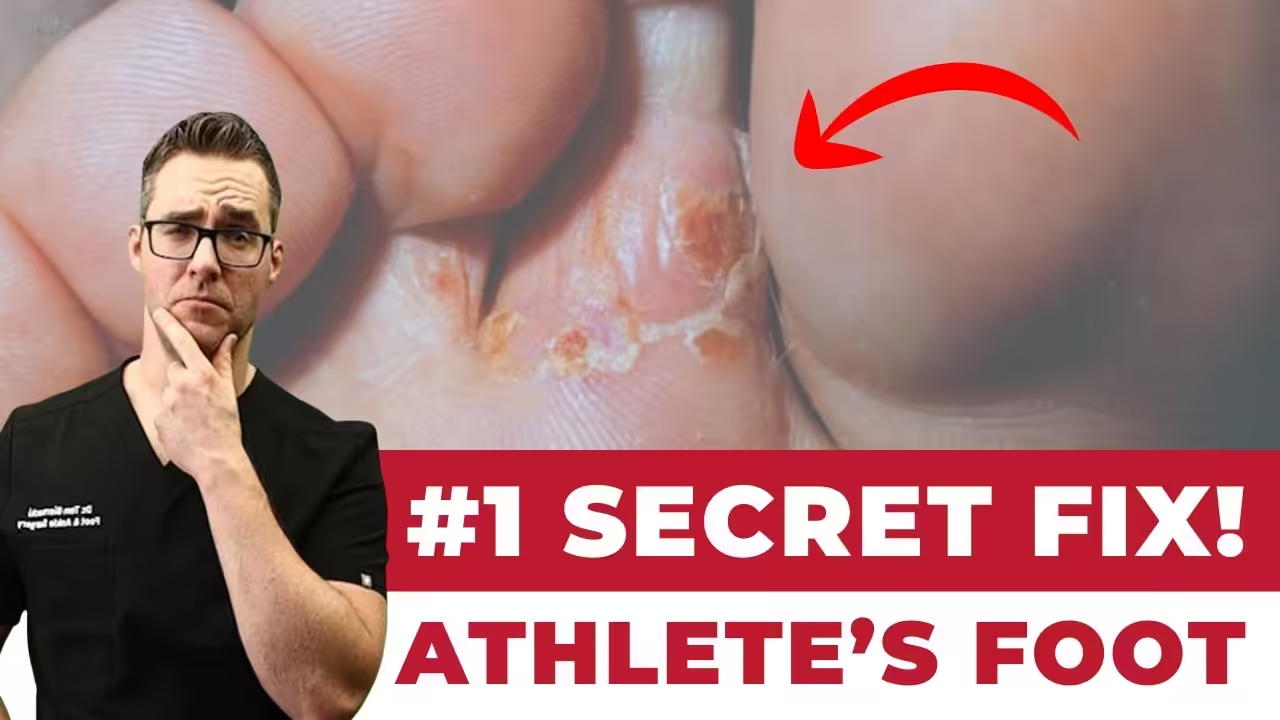
![BEST Toenail Fungus Treatment 2024 [+4 BIG SECRETS]](https://www.michiganfootdoctors.com/wp-content/cache/flying-press/b57e36a42ee446108a7ec3058217b512.jpg)
Foot Fungus Treatment: The Complete Guide (Remedies, Cures & Best Medicines)
Foot fungus (tinea pedis or athlete’s foot) is one of the most common foot conditions — and one of the most commonly mistreated. People reach for the wrong products, stop treatment too early, or ignore the reinfection sources that cause it to keep coming back. This complete guide covers everything from the best home remedies to prescription options and the key secrets that actually make treatment work.
What Is Foot Fungus?
Foot fungus is a superficial infection of the skin caused by dermatophyte fungi — primarily Trichophyton rubrum. The fungus feeds on keratin in the dead outer layer of skin (stratum corneum), living off this dead tissue rather than penetrating live cells. This is actually good news: it means the infection is always near the surface and accessible to treatment — if you know the secret.
The Podiatrist’s Secret to Treating Foot Fungus
The secret most people miss: you can’t effectively treat fungus that’s sitting on dead skin that doesn’t have blood flow. Anti-fungal medications need to reach the fungus, but dead, dry, thick skin acts as a barrier. This is why treatment fails when people just apply cream without addressing the dead skin first.
Effective treatment requires three concurrent steps:
- Exfoliate the dead skin — remove the habitat where fungus lives
- Apply antifungal treatment — kill the fungus in the fresh skin underneath
- Control moisture and environment — eliminate the conditions that allow regrowth
Step-by-Step Treatment Protocol
Step 1: Exfoliate with a Daily Foot Soak
- Soak feet for 15 minutes in warm water (add Listerine, ACV, or Epsom salt for enhanced antifungal effect)
- Use a pumice stone or foot file to remove dead, scaling skin while it’s soft
- Focus on the soles, heels, and between the toes
- Dry thoroughly — especially between all toes
Step 2: Apply Antifungal Treatment
OTC options (start here):
- Terbinafine 1% cream (Lamisil AT) — best OTC antifungal for dermatophytes; apply twice daily for 2–4 weeks
- Clotrimazole 1% cream (Lotrimin) — broad-spectrum, also covers Candida; twice daily for 4 weeks
- Miconazole 2% (Desenex, Micatin) — effective and often inexpensive
Home remedy options (use alongside, not instead of, antifungal cream):
- Vicks VapoRub — nightly application; thymol and camphor have real antifungal activity
- Tea tree oil (100%) — apply twice daily; comparable to clotrimazole in some studies
- Listerine soaks — amber formula; eucalyptol and thymol provide antifungal benefit
Prescription options (when OTC fails):
- Oral terbinafine (2-week course) — achieves 70–90% cure for moccasin-type
- Prescription-strength topicals (econazole, ketoconazole cream)
Step 3: Eliminate the Environment
- Switch to moisture-wicking socks (merino wool or synthetic, not cotton)
- Rotate shoes daily — give each pair 24 hours to fully dry
- Spray shoes with antifungal spray weekly
- Use foot powder (zinc oxide or miconazole-based) between toes daily
- Wear sandals or flip-flops in shared showers and locker rooms
- Treat toenails if infected — fungal nails are a reservoir that continuously re-seeds the skin
How Long Does Treatment Take?
Skin regenerates completely every 28–30 days. Treatment must run for at least one full skin cycle to be effective — meaning a minimum of 4 weeks of consistent daily application. Most cases of interdigital (between-the-toes) athlete’s foot clear within 4–6 weeks. Moccasin-type (sole-covering) infections typically require 6–12 weeks, and often need prescription oral antifungals.
The most common reason treatment fails: Stopping after 1–2 weeks when symptoms improve. The fungus is still present — it’s just temporarily suppressed. Treatment must continue through the full cycle.
⚠️ When to See a Podiatrist for Foot Fungus
See a podiatrist when home and OTC treatment isn’t working:
- Infection persists after 6 weeks of consistent treatment
- Moccasin-type infection covering the entire sole
- Blistering, skin breakdown, or signs of bacterial infection
- Diabetes or poor circulation — any fungal foot infection needs professional attention
- Toenails are also infected (requires separate prescription treatment)
- Recurring infections that clear then come right back
Book your foot fungus evaluation at Balance Foot & Ankle →
Podiatrist-Recommended Products for Foot Fungus Treatment
Foot Fungus Won’t Go Away? Get Expert Diagnosis & Treatment.
Our podiatrists at Balance Foot & Ankle Specialist provide accurate diagnosis of fungal skin and nail infections and prescribe the most effective treatment — including oral antifungals for resistant moccasin-type cases.
Or call us at (810) 206-1402
Related Articles
- How to Cure Athlete’s Foot Fungus Fast
- Foot Fungus Home Cures: What a Podiatrist Recommends
- Toenail Fungus: The Real Cause and Cure
- Severe Athlete’s Foot: When Basic Creams Aren’t Enough
Written by Dr. Tom Biernacki, DPM — Board-certified podiatrist at Balance Foot & Ankle Specialist, serving Howell and Bloomfield Hills, Michigan.
Related Treatment Guides
- Corn & Callus Treatment
- Plantar Fasciitis & Heel Pain Treatment
- Custom 3D Orthotics
- Sports Foot & Ankle Injury Treatment
Need Effective Foot Fungus Treatment?
Our podiatrists offer the full range of antifungal treatments — from prescription topicals to oral medications to laser therapy — matched to the type and severity of your infection.
📞 Or call us directly: (810) 206-1402
Clinical References
- Gupta AK, et al. Therapies for the management of onychomycosis. Dermatol Clin. 2015;33(2):185-195.
- Ely JW, et al. Diagnosis and management of tinea infections. Am Fam Physician. 2014;90(10):702-710.
- Westerberg DP, Voyack MJ. Onychomycosis: current trends in diagnosis and treatment. Am Fam Physician. 2013;88(11):762-770.
Insurance Accepted
BCBS · Medicare · Aetna · Cigna · United Healthcare · HAP · Priority Health · Humana · View All →
👟 Dr. Tom Also Recommends
Podiatrist Recommended Shoes 2026: Dr. Tom’s Top Picks for Every Condition
The right footwear can make or break your recovery. Dr. Tom’s complete guide to the best shoes for plantar fasciitis, flat feet, neuropathy, bunions & more — with clinical picks for every foot type.
See Dr. Tom’s Top Shoe Picks →Howell Office
4330 E Grand River Ave
Howell, MI 48843
Get Directions →
Bloomfield Hills Office
43494 Woodward Ave, #208
Bloomfield Hills, MI 48302
Get Directions →
Your Board-Certified Podiatrists



Ready to Get Back on Your Feet?
Same-week appointments available at both locations.
Book Your AppointmentPodiatrist-Recommended Products for Toenail Conditions
These are the products we recommend most often in our clinic for toenail health, fungus treatment, and nail recovery:
🏆 Doctor Hoy’s Natural Pain Relief Gel — Our top recommendation for topical nail and skin care. Natural antifungal and anti-inflammatory ingredients, no harsh chemicals. Apply nightly around and under the nail.
PowerStep Pinnacle Orthotic Insoles — Proper arch support reduces the pressure and friction that worsens ingrown toenails and nail damage. Fits most shoe types.
Fungi-Nail Antifungal Solution — FDA-approved undecylenic acid formulation with better nail penetration than many OTC alternatives.
More Podiatrist-Recommended Fungus Essentials
Breathable Diabetic Shoe
Orthofeet Sprint — deep, breathable design reduces fungal growth.
Moisture-Wicking Sock

OS1st FS4 — keeps feet dry, eliminating the warm-wet environment fungus needs.
Breathable Recovery Slide
HOKA Ora 3 — lets feet air out after closed-shoe exposure.
As an Amazon Associate, Balance Foot & Ankle earns from qualifying purchases. Product recommendations are based on clinical experience; prices and availability shown above update live from Amazon.
When to See a Podiatrist
Topicals only penetrate the top 30% of the nail plate — if the fungus is near the cuticle or under 50% of the nail, oral terbinafine or laser is usually required for full clearance. Balance Foot & Ankle offers in-office fungal nail diagnostics and laser treatment that reaches the nail matrix where topicals can’t. We’ll examine the nail and recommend the fastest path to clear, healthy regrowth.
Call Balance Foot & Ankle: (810) 206-1402 · Book online · Offices in Howell & Bloomfield Hills
In-Office Treatment at Balance Foot & Ankle
When conservative care isn’t enough, Dr. Tom Biernacki and the team at Balance Foot & Ankle offer advanced, same-day options — including Foot Fungus Treatment Michigan at our Howell and Bloomfield Hills clinics.
Same-day appointments available. Call (810) 206-1402 or book online.
What is Foot pain?
Foot pain is a common foot/ankle condition that affects mobility and quality of life. Understanding the underlying cause is the first step in successful treatment. Our podiatrists at Balance Foot & Ankle perform a hands-on biomechanical exam, review your activity history, and use diagnostic imaging when appropriate to identify the root cause—not just treat the symptom. Many patients have been told to “rest and ice” without a deeper diagnostic workup; our approach is different.
Symptoms and warning signs
Common signs of foot pain include pain that worsens with activity, morning stiffness, swelling, tenderness when palpated, and difficulty bearing weight. If you experience sudden severe pain, inability to walk, visible deformity, numbness or color change, contact our office the same day or visit urgent care—these can signal a more serious injury such as a fracture, tendon rupture, or vascular compromise. Diabetics with any foot wound should seek same-day care.
Conservative treatment options
Most cases of foot pain respond to non-surgical care: structured rest, supportive footwear changes, custom orthotics, targeted stretching and strengthening protocols, anti-inflammatory medications when medically appropriate, and in-office procedures such as ultrasound-guided injections. We also offer advanced therapies including MLS laser therapy, EPAT/shockwave, regenerative injections, and image-guided procedures. Treatment is sequenced from least invasive to most invasive, and we explain the rationale at every step.
When is surgery considered?
Surgery is reserved for cases that fail 3-6 months of well-structured conservative care, when there is structural pathology (severe deformity, complete tear, advanced arthritis), or when imaging shows damage that will not heal without intervention. Our surgeons have performed 3,000+ foot and ankle procedures and prioritize minimally-invasive techniques whenever appropriate. We discuss recovery timelines, return-to-activity milestones, and realistic outcome expectations before any procedure is scheduled.
Recovery timeline and prevention
Recovery from foot pain varies based on severity and chosen treatment path. Conservative cases often improve within 4-8 weeks with consistent adherence to the protocol. Post-procedural recovery may range from a few days (in-office procedures) to several months (reconstructive surgery). Long-term prevention involves footwear assessment, activity modification, structured strengthening, and regular check-ins with your podiatrist if you have a history of recurrence. We provide written home-exercise plans and digital follow-up support.
Ready to feel better?
Same-week appointments available in Howell and Bloomfield Hills, Michigan.
Book Your VisitReady to fix this for good?
Reading goes only so far. The fastest path to relief is a 30-minute office visit with Dr. Biernacki — same-day Howell or Bloomfield Hills. Call (810) 206-1402 or use our online booking.
In-Office Treatment at Balance Foot & Ankle
If home treatment isn’t providing relief for your toenail condition, our podiatry team at Balance Foot & Ankle can help with same-day evaluations and advanced in-office care.
Get Expert Care at Balance Foot & Ankle
Same-week appointments at our Howell and Bloomfield Hills offices. Board-certified podiatric surgeons. Most insurance accepted.
For a complete guide to nail and skin fungal infections, see our Toenail Fungus & Nail Condition Treatment Guide.
What kills foot fungus fast?
Prescription-strength terbinafine cream or clotrimazole applied twice daily for 2–4 weeks clears most athlete’s foot cases. Severe or chronic cases may require oral terbinafine for 2–6 weeks. OTC sprays reduce symptoms but rarely eradicate the fungus — prescription treatment is more reliable.
Is foot fungus the same as athlete’s foot?
Athlete’s foot (tinea pedis) is the most common form of foot fungus — a dermatophyte infection of the skin on the sole and between the toes. Foot fungus can also include tinea unguium (nail fungus) and candidal intertrigo. Each requires different treatment approaches.
How do you stop foot fungus from coming back?
Dry feet thoroughly after bathing (especially between toes), change socks daily, rotate shoes to allow them to dry, use antifungal powder in footwear, and avoid walking barefoot in communal showers. UV shoe sanitizers reduce fungal load in shoes between wearings.

Dr. Tom Biernacki, DPM is a board-certified foot & ankle surgeon (ABFAS & ABPM) at Balance Foot & Ankle Specialists in Southeast Michigan. With over a decade of clinical experience, he specializes in heel pain, bunions, diabetic foot care, sports injuries, and minimally invasive surgery. Dr. Biernacki is a member of the APMA and ACFAS, and his patient education content on MichiganFootDoctors.com and YouTube has made him one of the most-followed foot & ankle educators on YouTube.