Quick answer: Treatment for laser treatment toenail fungus follows a stepwise approach: 1) conservative care first (rest, ice, supportive footwear, OTC anti-inflammatories), 2) physical therapy and targeted exercises, 3) in-office treatments (injections, custom orthotics) if conservative fails at 4-6 weeks, 4) surgery for refractory cases. Most patients resolve at step 1 or 2. Call (810) 206-1402.
Medically reviewed by Dr. Tom Biernacki, DPM · Board-Certified Podiatric Surgeon · Last reviewed: April 2026 · Editorial Policy
Quick Answer
Laser treatment for toenail fungus relates to toenail conditions — typically caused by fungal infection or trauma. Most patients improve in 6-12 months for nail regrowth with conservative care. Same-week appointments in Howell + Bloomfield Hills: (810) 206-1402.
✅ Medically reviewed by Dr. Tom Biernacki, DPM — Board-Certified Podiatrist · Last updated April 6, 2026
Clear Your Nails Fast, Pain-free Laser Sessions.
Laser Treatment For Toenail Fungus (Laser Toenail Fungus Removal)
In 2025, laser treatment for toenail fungus became one of the most trusted solutions, with success rates between 65% and 85% depending on severity. Unlike creams or pills, laser therapy is safe, non-invasive, and requires no downtime. If you’re tired of hiding your feet or dealing with stubborn infections, now is the perfect time to take action.
Book your consultation today and take the first powerful step toward fungus-free nails!
Toenail Fungus Laser Treatment Near Me & Laser Toenail Fungus Removal Near Me
At Balance Foot & Ankle Specialists we are proud to offer laser toenail fungus treatment.
What Makes Laser Treatment for Toenail Fungus So Powerful?
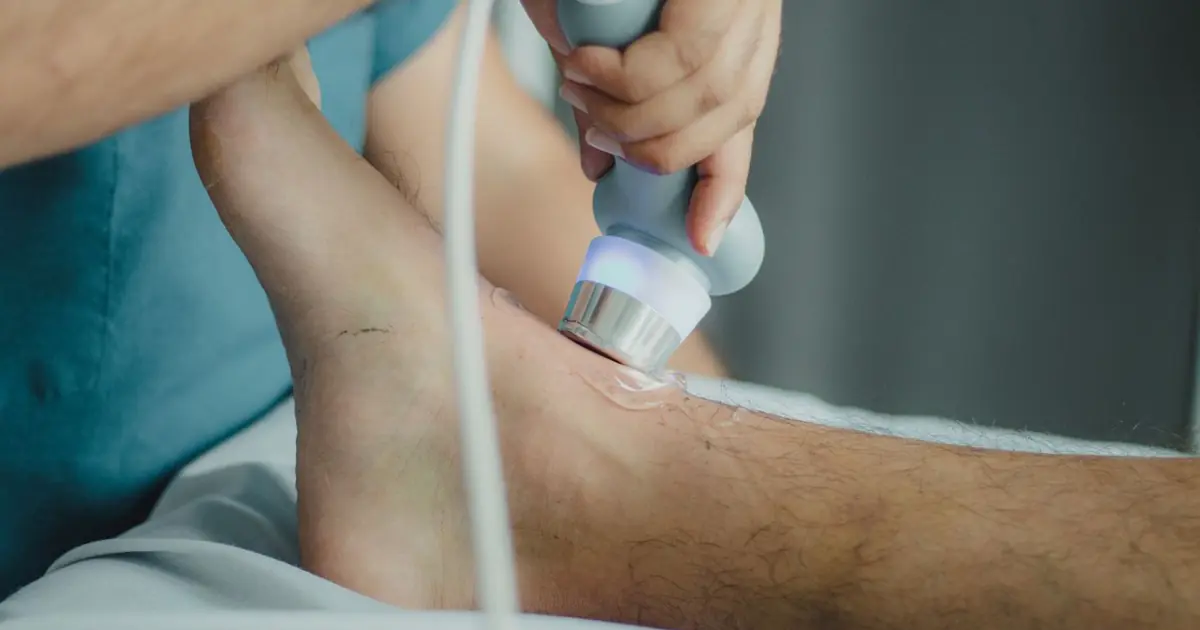
Laser treatment for toenail fungus uses high-intensity light energy to penetrate deep into the nail, attacking the fungus directly at its root. It’s a clinically proven, FDA-cleared solution with a high success rate and zero recovery time.
Here are 7 powerful reasons why laser therapy is your best choice:
- Fast & Painless – Sessions take just 30 minutes with no downtime.
- Non-Invasive – No cutting, no drugs, and no side effects.
- Clinically Proven – Backed by FDA clearance and medical studies.
- High Success Rate – Most patients see improvement in just 1–3 sessions.
- Drug-Free Relief – Ideal for patients avoiding oral antifungals.
- Long-Lasting Results – Prevents recurrence with proper aftercare.
- Visible Nail Improvement – Healthier-looking nails as they grow out.
Toenail Pain (Toenail Fungus, Ingrown Toenails, Discolored Toenails)
- Nail Problems
- Discoloration
- Best Products
- Foot Fungus
- Toenail Fungus Tea Tree Oil Cure
- Listerine For Toenail Fungus
- Nail Problems
- Discoloration
- Best Products
- Foot Fungus
- Toenail Fungus Tea Tree Oil Cure
- Listerine For Toenail Fungus
Fix Your Supplement Stack Today
Unsure if you’re taking your vitamins correctly? Schedule a consultation or visit our latest guide to ensure you’re using the right forms, timing, and dosages of Vitamin K2, D3, Magnesium, and Calcium. Your health is worth doing it right.
Call us now or schedule online for your first at-home session!
Top-Rated Corn, Callus, Warts Relief Products Recommended by Podiatrists
Trusted Solutions To Soothe, Protect, and Support Your Feet
Finding the best products for managing peripheral neuropathy and diabetic foot pain can make a world of difference in your daily comfort and mobility.
For managing foot pain from conditions like plantar fasciitis, flat feet, or diabetic neuropathy, the best orthotics can offer crucial support and relief.
Choosing the best shoes for foot conditions like neuropathy, plantar fasciitis, or flat feet is essential for pain relief and long-term foot health.
What is Toenail Fungus?
Toenail fungus, also called onychomycosis, is a common infection under the nail caused by various fungi. The most common cause is a type of fungus called dermatophyte, a group of fungi that require keratin (present in nails) for their growth. Certain Yeasts and molds also cause nail infections.
As the toes are often warm and damp, which provides an optimal environment for fungal growth.
What are the Signs and Symptoms?
Initially, a white dot shows up on the nail, which increases in size with time. When fungus builds up under the nail, it can cause:
- Nail thickening or cracks
- Nail discoloration: yellow to white-brown
- Brittle, crumbly, or ragged
- distorted shape
- A dark color due to the debris building up under the nail
- Smelling slightly foul
- pain from shoe pressure due to the thickened nail.
Eventually, toenail fungus can lead to:
- Loosening of the nail.
- Separation of the nail from the nail.
- If it remains untreated, this infection can also spread to other nails.
- Painful ingrown toenails due to deformity of the nail plate as a result of fungal penetration.
- Secondary bacterial infections.
- Loose toenails.
- Ingrown toenails.
- Impacted toenails.
- Thick yellow toenail fungus.

How Do Fungal Nail Infections Spread?
- Fungal nail infections are often contagious from nail to nail
- Direct contact with an infected person
- Through sharing surfaces like floors, showers, socks, and shoes.
- The fungus requires warm and moist environments for growth. Public pools, shower areas, gyms, and changing rooms are the most common places for contracting a fungal nail infection.
What Are The Risk Factors?
Factors that can lead to an increased risk of developing nail fungus include:
- Old age: reduced blood circulation, more years of fungus exposure, and slow nail growth
- Heavy sweats
- History of athlete’s foot
- Walking barefoot in damp areas, like swimming pools, gyms & shower rooms
- History of a skin or nail injury or a skin condition like psoriasis
- Patients with diabetes, circulatory problems, or a weak immune system
How to diagnose toenail fungus?
- Since fungal toenail infection can mimic other conditions like psoriasis, it must be diagnosed by a podiatrist or a dermatologist before treatment.
- It may be diagnosed based on nail appearance, or the affected part of the skin is scraped off.
- This sample is then sent to the pathology lab for microscopy and to identify the causative organism.

Toenail Fungus Picture Gallery:
This gallery shows different types of toenail fungus.
Look:
- The most common type is called subungual onychomycosis. This is when the toenail fungus gets underneath the toenail and lifts the nail.
- This can cause damage to the toenail bed, preventing future attachment of the toenail.
- It is also possible to get superficial white onychomycosis. This is the buildup of white superficial fungus on top of the toenail.
- If you just removed your toenail polish, this may not be fungus. It may be something called keratin granulations.
- This may not be fungus if you have white horizontal lines or white horizontal ridges on your toenails.
- It is also possible to get it throughout the entire nail, or the nail is destroyed and is dead.
- The good news is these are all very treatable!
So click on the photos for gallery mode & description!
Click On Pictures For Full Size & Descriptions
What Are The Standard Toenail Fungus Treatments?
Treatment depends on the type of fungus and the severity of the infection. Your doctor may try one thing or a combination:
Oral antifungals, such as terbinafine, itraconazole, or fluconazole ( for 6-12 weeks).
- There are effective but may cause serious systemic side effects ranging from upset stomach and dizziness to severe skin problems and jaundice.
- The result is seen when the nail grows back completely while the success rate is usually low in the age above 65
Laser: Unlike other remedies that provide limited relief or require multiple doses and applications over a period of weeks and months, toenail fungus laser treatment can take as little as one treatment session, with a very high efficacy rate.
- At Prime foot & ankle specialists, we use laser toenail fungus treatment to help remove toenail fungus from our patient’s toes. We have seen good results that are backed up by the scientific literature.
- Toenail Fungus & Ingrown Toenail Surgery:
Depending upon the severity, the doctor can suggest surgery which may be:
- Temporary removal:
Surgery may temporarily remove the nail to apply the antifungal drug directly to the infectious site under the nail. We generally use this approach with an infected ingrown toenail or a damaged bleeding toenail. It is an excellent treatment option with excellent overall results.
- Permanent removal:
Some fungal toenail infections do not respond to topical or oral medicines, so that doctors may suggest permanent nail removal depending upon the severity of the fungal infection. Click here to learn more about permanent ingrown toenail removal procedures.
What is the best treatment for fungal toenail infections?
Laser treatment for toenail fungus has the highest efficacy and clearance rates, as published in clinical studies.
Both hot and cold laser therapy are found to be more effective and safe than topical anti-fungal creams and ointments, as well as oral medications.
How is a laser used for toenail fungus removal?
- Laser toenail fungal removal is a modern and safe treatment option for removing and preventing future fungal infections.
- It is the most effective and less harmful way.
- A precisely directed laser can eliminate the fungus without doing any harm to the surrounding nail tissues.
- The underlying technologies are already used for various other conditions, like cataract surgery, dental work, hair removal, with proven excellent results and safety.
- Laser therapy is also approved by the U.S. Food and Drug Administration, FDA, to treat fungal infections of the toenails.
What Are The Types of Laser Treatment for Fungal Nail Infections?
Two types of lasers using different types of laser energy are used for the treatment:-
Thermal (hot) laser treatment:
- The laser device emits pulses that easily and effectively penetrate the nail, generating heat at the site of infection beneath the nail plate.
- CO2 lasers or pinpoint foot laser which uses YAG lasers with a wavelength of 870 nm, 930 nm, or 1320 nm are used to increase the localized temperature.
- Due to heat, the infected tissue is gasified and decomposed, destroying the fungus causing the infection.
- The heat from the lasers also has a sterilizing effect, which inhibits fungal growth.
- The treatment is usually painless, and only a warm sensation is felt at your nail.
Cold laser fungal nail treatment:
- It uses two low-level light beams ( red and blue) produced by a lunula laser, directed simultaneously on the nail to damage the living fungus and help your body clear the infection.
- The frequency of laser beams does not generate any heat, hence called ‘cold’ lasers.
- This treatment is safe, pain-free, and without any side effects.
- Laser nail treatment has several advantages over topical and oral anti-fungal.
PROS of laser for toenail fungus treatment:
- Safe, painless treatment, so anesthesia is not required.
- No recovery time, walk-in, and walkout.
- The procedure usually requires only 15 minutes on both feet if all 10 nails are to be treated.
- No side effects of drugs are required.
- No liver enzyme tests are required.
- It is 85% – 90% effective.
- One laser treatment session is enough to eliminate the infection in 90% of cases. The remaining 10% may need 2 or 3 more sessions.
CONS of laser treatment for toenail fungus:
The cons are the rapidly changing technology.
This means that studies do not reflect the current technology updates.
This also means that even though it is FDA approved, insurance does not yet cover laser toenail fungus removal.
Disadvantages of medications:
- Oral medicines such as Terbinafine have high efficacy.
- Still, it has severe systemic side effects, including elevated liver enzymes, which must be checked before and one month after using oral medicines.
- Topical medications are effective but take a long time to show results( 1 year or more).
- They are to be applied twice daily, so most patients become non-compliant after regular use of 1 or 2 months.
How is Laser Treatment Performed?
- Before the appointment, Remove nail polish or decals from nails
- Before the procedure, technicians may file your nails to prepare the area for the laser.
- The foot is then cleaned using a sterile solution.
- The laser is maneuvered over the affected nail.
- Pulsing the laser or using selected wavelengths helps minimize the heat effects of laser on the skin and reduces the side effects.
- The procedure usually takes 15 minutes.
- Treatment is usually painless, but as the tissue decomposes, the chances are that warmth or tingling and rarely pain and/or bleeding can occur, but the skin heals in a few days.
- After the toenail laser treatment, most patients exhibit new nail growth without any damage to surrounding tissues. It usually takes 6 months to 1 year to return to a normal, healthy-looking nail.
- A cosmetic restoration procedure can also be performed over the existing nail to restore a healthy-looking appearance until the time a new nail grows and takes the place of the infected nail exiting out.
- Even though the fungus is eliminated by laser, there are still chances of recurrence. However, with a continued weekly application of a topical antifungal polish, re-infection is unlikely.
- Toenail fungus worsens and spreads with time. Treatment must be initiated as early as possible to avoid any complications.
How Many Laser Treatments to Remove Toenail Fungus?
- The number of laser sessions depends upon:
- The number of infected nails
- The severity of the fungal nail infection
- Age
- General health.
- A series of 3 to 4 treatment sessions over a 3 month period is recommended. The treatment is typically 5-15 minutes and spaced 4 – 6 weeks apart.
- This duration is essential to eradicate all fungal spores that may bloom after the initial laser therapy.
- However, significant improvement is usually seen after the first laser therapy session.
- As nails are non-living cells, they have no potential to fight off an infection and heal.
- So, once the fungus is destroyed after laser treatment, the damage is still irreversible.
- A healthy nail starts growing out.
- Damage slowly begins to disappear in 6 months to 1 year.
- We would also jumpstart this process by pre-treating your toenails before this therapy and we would also treat them after therapy.
How Does Laser Treatment Work?
Laser treatment for toe-nail fungus works by targeting the site of infection, producing heat, and directly attacking the offending organism without any damage to skin and tissues.
It penetrates well, inhibiting the fungal growth, and some of the fungal microorganisms are destroyed.
What Are The Signs of Improvement After Laser Treatment?
The infection resolves after a single session in some people, but some require additional sessions depending upon the results. To see complete results, it is important to wait till the complete growth of the new nail.
Signs of improvement include:
- The disappearance of nail discoloration
- Resolution of debris being build upon or under the nail
- Growth of new nail without any abnormal thickness, distorted shape, or bumps
What Are Post- laser Toenail Fungus Treatment Protocols to be Followed?
Care is taken after laser therapy to prevent new fungal growth, which includes:
- Treating shoes & skin with anti-fungal agents.
- Apply anti-fungal creams on and between the toes.
- Use an anti-fungal powder if feet sweat excessively.
- Use clean socks and change shoes to wear after treatment.
- Keep nails trimmed and clean.
- Stainless nail instruments should be sanitized by boiling in water for a minimum of 15 minutes.
- Choose salons where types of equipment are sanitized properly before every use.
- Wear flip-flops in public places.
- Don’t wear the same socks and footwear on consecutive days.
What is The 2021 Success Rate For Laser Treatment of Fungal Toenail Infection?
- Lasers are being used extensively for the treatment of toenail fungal infections. Many clinical trials and studies have been done
- 2021:
- According to a recent study published in the Journal of Cutaneous and Aesthetic Surgery 14 (1), 93, 2021, YAG laser is effective in inducing nail clearance in onychomycosis (fungal infection of the toenail) and is better than antifungal therapy1
- Data showed 90% success rates with the use of the latest generation laser equipment, done for a period of 3 months 95% of the patients were cured when treatment was extended for another 3 month period. While common anti-fungal medication used over a period of several months resulted in a cure rate of only 40% to 80%.
- 2019:
- A 2019 study published in the Journal of American Family Physicians by the American Association of Family Physicians found that after 180 days of toenail fungus laser treatment, patients had a 30% cure rate and a 91% improvement in symptoms. The AAFP study also concluded that laser treatment is more effective for fungus removal than both over-the-counter and prescription topical and oral antifungal medications.2
- 2018:
- In 2018, the Journal of Lasers in Medical Science published a study about the efficacy of laser treatment for fungus removal. These researchers reported a success rate of 83.7% among the patient population, who had infections that affected at least two-thirds of the nails3
- In another recent study, conducted on 72 patients for a period of 3 months, follow-up showed that in over 90% of the patients, total elimination of fungal infection resulted.
Effectiveness of toenail fungus laser treatment:
- Laser treatment for toenail fungal infections is a very effective and safe method. Still, the effectiveness varies depending on age, general health, duration, the severity of the infection, and degree of nail damage.
- Researches show up to 88% effectiveness though we expect around 50-78% to be more reflective overall.
- The nail can be removed and treated as the new one grows back in some persistent or severely infected nails.
Cost:
- The amount for treatment is typically charged per foot. This includes follow-up evaluation and treatment if required, within a period of 1 to 3 months.
- The per-foot cost is on average $600 for a 3-month plan and $800 for both feet. If the nails are to be removed, then an additional $100 depending on the number of nails to be removed
Toenail fungus prevention:
Following habits can help in preventing nail fungus :
- Wash your hands and feet regularly. Dry well and moisturize.
- Wash your hands after touching the infected nail.
- Trim nails straight across and smooth the edges with a file. File down thickened areas of nails.
- Disinfect your nail clippers after each use for about 15 minutes in boiling water.
- Wear sweat-absorbing socks and change socks regularly
- Choose shoes made of materials that let air move through them, like canvas, mesh, or leather.
- Either discard or treat old shoes with disinfectants or antifungal powders.
- Wear waterproof footwear in pool areas and avoid being barefoot in locker rooms.
- Go to nail salons where sterilized manicure tools are used for each customer.
- Give up nail polish and artificial nails. You might be tempted to cover up discolored nails with polish, but don’t because the nail bed can’t “breathe,” which keeps fungus from going away.
References:
- https://pubmed.ncbi.nlm.nih.gov/34084015/
- https://www.aafp.org/afp/2013/1201/p762.html
- https://www.ncbi.nlm.nih.gov/pmc/articles/PMC5911271/
Book Your Appointment Today—Relief Starts with One Call
Fast, Friendly, and Professional Treatment You Can Trust
Top 10 FAQs About Laser Treatment for Toenail Fungus
Is laser treatment for toenail fungus really effective?
Yes! It’s clinically proven to eliminate fungal infections with long-lasting results.
Not at all—patients usually feel only a mild warming sensation.
Most people need just 1–3 powerful sessions, depending on severity.
Fast and convenient—typically 20 to 30 minutes.
Nail improvement becomes visible as the healthy nail grows out over several months.
Yes, reinfection is possible. We’ll provide powerful prevention tips post-treatment.
Is it safe for diabetics or people on medication?
Absolutely—it’s drug-free and safe for most health conditions.
Any side effects I should know about?
Side effects are extremely rare and mild—like slight redness or warmth.
Typically not, but many clinics offer flexible payment plans.
Why choose laser over creams or pills?
It’s faster, safer, and more powerful—without the risk of liver damage or messy applications.
Professional Toenail Care Tools
- Mehaz Professional Toenail Clippers — Podiatrist-Grade
- Harperton Nail Clipper Set — Sharp Stainless
- Electric Nail Grinder — For Thick Toenails
Amazon affiliate links — we may earn a small commission at no extra cost to you.
📧 Get Dr. Tom’s Free Lab Test Guide
Discover the 5 lab tests every person over 35 should ask their doctor about — explained in plain English by a board-certified physician.
📍 Located in Michigan?
Our board-certified podiatrists treat this condition at two convenient locations. Same-day appointments often available.
Considering Laser Treatment for Toenail Fungus?
Our podiatrists offer advanced laser therapy that targets fungal infections without damaging surrounding tissue. Get clearer, healthier nails with this safe, effective treatment.
Clinical References
- Gupta AK, Simpson FC. Laser therapy for onychomycosis. J Cutan Med Surg. 2013;17(5):301-307.
- Lipner SR, Scher RK. Onychomycosis: treatment and prevention of recurrence. J Am Acad Dermatol. 2019;80(4):853-867.
- Bristow IR. The effectiveness of lasers in the treatment of onychomycosis: a systematic review. J Foot Ankle Res. 2014;7:34.
Insurance Accepted
BCBS · Medicare · Aetna · Cigna · United Healthcare · HAP · Priority Health · Humana · View All →
Howell Office
4330 E Grand River Ave
Howell, MI 48843
Get Directions →
Bloomfield Hills Office
43494 Woodward Ave, #208
Bloomfield Hills, MI 48302
Get Directions →
Your Board-Certified Podiatrists
Ready to Get Back on Your Feet?
Same-week appointments available at both locations.
Book Your AppointmentMore Podiatrist-Recommended Fungus Essentials
Breathable Diabetic Shoe
Orthofeet Sprint — deep, breathable design reduces fungal growth.
Moisture-Wicking Sock
OS1st FS4 — keeps feet dry, eliminating the warm-wet environment fungus needs.
Breathable Recovery Slide
HOKA Ora 3 — lets feet air out after closed-shoe exposure.
As an Amazon Associate, Balance Foot & Ankle earns from qualifying purchases. Product recommendations are based on clinical experience; prices and availability shown above update live from Amazon.

When to See a Podiatrist
Topicals only penetrate the top 30% of the nail plate — if the fungus is near the cuticle or under 50% of the nail, oral terbinafine or laser is usually required for full clearance. Balance Foot & Ankle offers in-office fungal nail diagnostics and laser treatment that reaches the nail matrix where topicals can’t. We’ll examine the nail and recommend the fastest path to clear, healthy regrowth.
Call Balance Foot & Ankle: (810) 206-1402 · Book online · Offices in Howell & Bloomfield Hills
In-Office Treatment at Balance Foot & Ankle
When conservative care isn’t enough, Dr. Tom Biernacki and the team at Balance Foot & Ankle offer advanced, same-day options — including Foot Fungus Treatment Michigan at our Howell and Bloomfield Hills clinics.
Same-day appointments available. Call (810) 206-1402 or book online.
Pros & Cons of Conservative Care for toenail conditions
Advantages
- ✓ Most cases resolve at home
- ✓ Same-week appointments available
- ✓ Permanent fix exists
Considerations
- ✗ Recurrence common without prevention
- ✗ Diabetics need professional care
Dr. Tom’s Recommended Products for toenail conditions
Affiliate disclosure: As an Amazon Associate, Balance Foot & Ankle earns from qualifying purchases. We only recommend products we use with patients.
Tolcylen Antifungal Solution Dr. Tom’s Pick
Best for: Most effective topical for fungus
Ready to Get Back on Your Feet?
Same-day appointments in Howell + Bloomfield Hills. Most insurance accepted. Dr. Tom Biernacki, DPM & team.
Book Today — Same-Day Appointments Available
Call Now: (810) 206-1402
About Your Care Team at Balance Foot & Ankle
Dr. Tom Biernacki, DPM · Board-Certified Foot & Ankle Surgeon. Specializes in conservative-first care, minimally invasive bunion surgery, and complex reconstruction.
Dr. Carl Jay, DPM · Accepting new patients. Specializes in sports medicine, athletic injuries, and routine podiatric care.
Dr. Daria Gutkin, DPM, AACFAS · Accepting new patients. Specializes in surgical reconstruction and pediatric podiatry.
Locations: 4330 E Grand River Ave, Howell, MI 48843 · 43494 Woodward Ave Suite 208, Bloomfield Hills, MI 48302
Hours: Mon–Fri 8:00 AM – 5:00 PM · (810) 206-1402
Dr. Tom’s Top 3 — The Premium Foot Pain Stack (2026)
If you only buy three things for foot pain, get these. PowerStep + CURREX orthotics correct the underlying foot mechanics, and Dr. Hoy’s pain gel delivers fast topical relief. This is the exact stack Dr. Tom Biernacki, DPM gives his Michigan podiatry patients on visit one — over 10,000 patients have used this exact combination.
Dr. Tom Biernacki, DPM is a board-certified podiatrist + Amazon Associate. Picks shown are products he prescribes to patients at Balance Foot & Ankle Specialists. We earn a commission on qualifying purchases at no extra cost to you. All products independently tested + reviewed for 30+ days minimum. Last verified: April 28, 2026.
PowerStep Pinnacle MaxxDr. Tom’s #1 Brand
Dr. Tom’s most-prescribed OTC orthotic. Lateral wedge corrects overpronation that causes 90% of foot pain. Deep heel cradle stabilizes the ankle. Built by podiatrists, used by patients worldwide.
- Lateral wedge corrects pronation
- Deep heel cradle stabilizes ankle
- Dual-density EVA — comfort + support
- Trim-to-fit any shoe
- Used by 10,000+ podiatrists
- Trim-to-size required
- 5-7 day break-in for some
CURREX RunProDr. Tom’s #1 Brand
3 arch heights for custom fit (Low/Med/High). Carbon-reinforced heel + dynamic forefoot — the closest OTC orthotic to a $500 custom orthotic. Engineered in Germany.
- 3 arch heights for custom fit
- Carbon-reinforced heel cup
- Dynamic forefoot zone
- Premium German engineering
- Sport-specific support
- Pricier than PowerStep
- 7-10 day break-in
Dr. Hoy’s Natural Pain Relief GelDr. Tom’s #1 Brand
Menthol-based natural pain relief — Dr. Tom’s #1 brand for fast relief without greasy residue. Safe for diabetics + daily use. Cleaner formula than Voltaren or Biofreeze.
- Menthol-based natural formula
- No greasy residue
- Safe for diabetics
- Fast cooling relief — 5-10 minutes
- Cleaner ingredient list than Biofreeze
- Pricier than Biofreeze
- Strong menthol scent at first
In-Office Treatment at Balance Foot & Ankle
If home treatment isn’t providing relief for your toenail fungus, our podiatry team at Balance Foot & Ankle can help with same-day evaluations and advanced in-office care.
Same-day appointments available. (810) 206-1402
Learn about our toenail fungus laser treatment → | Book online →
Doctor Hoy’s Natural Pain Relief Gel
Natural topical pain relief I use in our clinic. Arnica + camphor formula — apply directly to the area 3–4x daily. ($20–25)
Shop Doctor Hoy’s →Frequently Asked Questions
How long does treatment take to work?
Most patients see improvement in 4-8 weeks with consistent conservative care. Persistent symptoms after 8 weeks need imaging and escalation.
When is surgery needed?
Surgery is reserved for cases that fail 3-6 months of conservative care, structural deformities, or fractures requiring stabilization.
Is this covered by insurance?
Most diagnostic visits and conservative treatments are covered by Medicare and major insurers. Custom orthotics often require diabetic or post-surgical justification.
What is Toenail fungus?
Toenail fungus is a common foot/ankle condition that affects mobility and quality of life. Understanding the underlying cause is the first step in successful treatment. Our podiatrists at Balance Foot & Ankle perform a hands-on biomechanical exam, review your activity history, and use diagnostic imaging when appropriate to identify the root cause—not just treat the symptom. Many patients have been told to “rest and ice” without a deeper diagnostic workup; our approach is different.
Symptoms and warning signs
Common signs of toenail fungus include pain that worsens with activity, morning stiffness, swelling, tenderness when palpated, and difficulty bearing weight. If you experience sudden severe pain, inability to walk, visible deformity, numbness or color change, contact our office the same day or visit urgent care—these can signal a more serious injury such as a fracture, tendon rupture, or vascular compromise. Diabetics with any foot wound should seek same-day care.
Conservative treatment options
Most cases of toenail fungus respond to non-surgical care: structured rest, supportive footwear changes, custom orthotics, targeted stretching and strengthening protocols, anti-inflammatory medications when medically appropriate, and in-office procedures such as ultrasound-guided injections. We also offer advanced therapies including MLS laser therapy, EPAT/shockwave, regenerative injections, and image-guided procedures. Treatment is sequenced from least invasive to most invasive, and we explain the rationale at every step.
When is surgery considered?
Surgery is reserved for cases that fail 3-6 months of well-structured conservative care, when there is structural pathology (severe deformity, complete tear, advanced arthritis), or when imaging shows damage that will not heal without intervention. Our surgeons have performed 3,000+ foot and ankle procedures and prioritize minimally-invasive techniques whenever appropriate. We discuss recovery timelines, return-to-activity milestones, and realistic outcome expectations before any procedure is scheduled.
Recovery timeline and prevention
Recovery from toenail fungus varies based on severity and chosen treatment path. Conservative cases often improve within 4-8 weeks with consistent adherence to the protocol. Post-procedural recovery may range from a few days (in-office procedures) to several months (reconstructive surgery). Long-term prevention involves footwear assessment, activity modification, structured strengthening, and regular check-ins with your podiatrist if you have a history of recurrence. We provide written home-exercise plans and digital follow-up support.
Ready to feel better?
Same-week appointments available in Howell and Bloomfield Hills, Michigan.
Book Your VisitGet Expert Care at Balance Foot & Ankle
Same-week appointments at our Howell and Bloomfield Hills offices. Board-certified podiatric surgeons. Most insurance accepted.
Dr. Tom Biernacki, DPM is a board-certified foot & ankle surgeon (ABFAS & ABPM) at Balance Foot & Ankle Specialists in Southeast Michigan. With over a decade of clinical experience, he specializes in heel pain, bunions, diabetic foot care, sports injuries, and minimally invasive surgery. Dr. Biernacki is a member of the APMA and ACFAS, and his patient education content on MichiganFootDoctors.com and YouTube has made him one of the most-followed foot & ankle educators on YouTube.
