
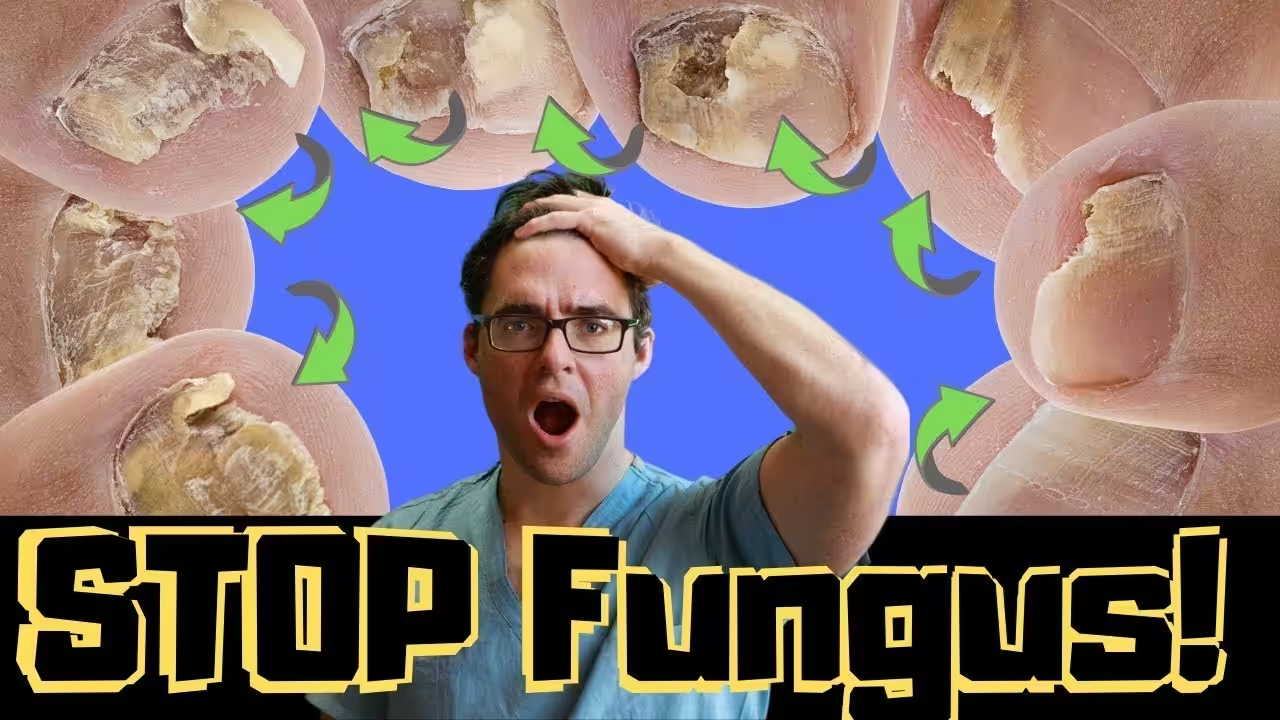
You are in the right place. Dr. Tom Biernacki, DPM, FACFAS — board-certified foot & ankle surgeon with 3,000+ surgeries — explains exactly what how to get rid of toenail fungus fast means and what actually works. Call (810) 206-1402 for a same-day appointment at our Howell or Bloomfield Township office.
The most important clinical decision with How To Get Rid Of Toenail Fungus Fast isn’t which treatment to start with — it’s identifying the correct subtype. That changes everything. Call (810) 206-1402.
Dr. Tom’s Top Toenail Fungus Picks (2026)
Medically reviewed by Dr. Tom Biernacki, DPM
Board-certified podiatric surgeon | Balance Foot & Ankle
Last reviewed: May 2026
Affiliate disclosure: As an Amazon Associate, Balance Foot & Ankle earns from qualifying purchases.
Related Conditions
Quick Answer
How to Get Rid of Toenail Fungus Fast Michigan Guide relates to toenail conditions — typically caused by fungal infection or trauma. Most patients improve in 6-12 months for nail regrowth with conservative care. Same-week appointments in Howell + Bloomfield Township: (810) 206-1402.
Quick Answer
Toenail fungus (onychomycosis) is a dermatophyte infection causing yellow-brown discolouration, thickening, and brittleness. It will not resolve without treatment. OTC options work only for very early cases — established infection needs oral terbinafine or laser therapy.
Watch: Dr. Tom Biernacki, DPM
✅ Medically reviewed by Dr. Tom Biernacki, DPM — Board-Certified Podiatrist · Last updated April 6, 2026
How to Get Rid of Toenail Fungus Fast
Toenail fungus (onychomycosis) affects 10% of the general population and up to 50% of people over 70. The honest truth: there is no truly “fast” cure for toenail fungus — but there are significantly faster options than OTC treatments. Dr. Tom Biernacki DPM at Balance Foot & Ankle in Howell and Bloomfield Township, Michigan explains what actually works and how quickly you can expect results.
How Long Does Toenail Fungus Treatment Actually Take?
This is the critical reality most guides gloss over: toenail fungus treatment isn’t just about killing the fungus — it’s about waiting for a healthy nail to grow out. The big toenail grows approximately 1-1.5mm per month. A full nail replacement takes 12-18 months. That means even if you kill the fungus tomorrow, you won’t see a completely clear nail for over a year. Treatment timelines by method: OTC topicals (ciclopirox, Efinaconazole) — 12-18 months with 5-8% complete cure rate. Oral terbinafine — 3 months of medication, then 6-12 months for nail clearance, 25-40% complete cure. Laser treatment — 3 sessions over 6-12 weeks, then 6-12 months for nail clearance, 75-85% improvement, 30-60% complete clearance.
Step 1: Confirm It’s Actually Toenail Fungus
Only 50% of abnormal-looking toenails actually have fungus. Nail psoriasis, lichen planus, nail trauma, and simple nail dystrophy can look identical to onychomycosis. Treating the wrong condition wastes months. At Balance Foot & Ankle, we perform nail culture or PCR testing before committing to treatment. Signs suggesting toenail fungus (versus other causes): yellow, white, or brown discoloration starting at the nail edge, nail thickening and brittleness, nail separation from the nail bed (onycholysis), and involvement of multiple nails. Nail psoriasis typically shows pitting (small indentations) and salmon-colored oil spots.
Step 2: Debridement (Essential First Step)
Nail debridement — professionally thinning the nail — dramatically improves the effectiveness of every other treatment. A thick fungal nail acts as a physical barrier to both topical medications and laser energy. At Balance Foot & Ankle, we debride all nails before initiating treatment. Home debridement with nail clippers and a nail file can also improve topical penetration, but professional debridement with a drill achieves more effective thinning without nail damage.
Step 3: The Fastest Option — MLS Laser Therapy
The MLS laser treatment for toenail fungus at Balance Foot & Ankle is the fastest and most effective option currently available without oral medication risk. The laser energy passes through the nail, generating heat that destroys the fungal cells and their biofilms. Three sessions over 6-12 weeks. The procedure takes approximately 20-30 minutes for all ten toenails. No pain (brief warmth sensation), no downtime, no drug interactions. Clinical studies show 75-85% improvement rate. The significant advantage over oral terbinafine: no liver toxicity risk, no drug interactions, and it can be used in patients with liver disease or on multiple medications.
Step 4: Oral Antifungal Medication (Fastest Kill Rate, Highest Systemic Risk)
Oral terbinafine (Lamisil) has the highest complete cure rate of any treatment — 38-40% complete nail clearance at 48 weeks. It works faster than topicals but still requires 3 months of daily medication followed by 6-9 months for nail regrowth. Risks: liver toxicity (rare, 1 in 50,000), taste disturbance, drug interactions with antidepressants. Requires baseline liver function testing. Not appropriate for patients with liver disease, certain heart conditions, or those on multiple medications. Itraconazole (pulse dosing) is an alternative with slightly lower cure rates but different safety profile.
Step 5: Prevention to Avoid Recurrence
Toenail fungus recurs in 20-25% of cases within 3 years. Prevent recurrence with: UV shoe sterilizer (kills fungal spores inside shoes), antifungal shoe spray monthly, moisture-wicking socks changed daily, flip flops in communal showers/pools, treating athlete’s foot promptly (athlete’s foot and toenail fungus are caused by the same dermatophytes), and trim nails straight across. Diabetes and peripheral vascular disease increase recurrence risk — these patients benefit from more frequent podiatric monitoring.
Ready to start treatment? Book a toenail fungus consultation at Balance Foot & Ankle. We’ll confirm the diagnosis, assess nail involvement, and recommend the most appropriate treatment protocol. Call (810) 206-1402.
Medical References & Sources
Insurance Accepted
BCBS · Medicare · Aetna · Cigna · United Healthcare · HAP · Priority Health · Humana · View All →
Howell Office
4330 E Grand River Ave
Howell, MI 48843
Get Directions →
Bloomfield Township Office
43494 Woodward Ave, #208
Bloomfield Township, MI 48302
Get Directions →
Your Board-Certified Podiatrists



Ready to Get Back on Your Feet?
Same-week appointments available at both locations.
In-Office Treatment at Balance Foot & Ankle
If home care isn’t resolving your toenail fungus, a visit with a board-certified podiatrist is the fastest path to accurate diagnosis and a personalized plan. At Balance Foot & Ankle Specialists, Dr. Tom Biernacki, Dr. Carl Jay, and Dr. Daria Gutkin offer same-day and next-day appointments at both our Howell and Bloomfield Township offices. We perform on-site diagnostic ultrasound, digital X-ray, conservative care, advanced regenerative treatments, and minimally invasive surgery when indicated.
Call (810) 206-1402 or request an appointment online. Most insurance plans accepted, including Medicare, Blue Cross Blue Shield, Aetna, Cigna, and United Healthcare.
Differential Diagnosis: What Else Could It Be?
Several conditions share symptoms with Toenail Fungus and are commonly misdiagnosed in the first office visit. Considering these alternatives is part of every Balance Foot & Ankle exam:
- Nail psoriasis. Pitting, oil-drop spots, salmon patches — responds to topical steroid, not antifungal.
- Nail trauma (runner’s nail). Subungual hematoma from repetitive impact — shoe fit fix, not antifungal.
- Onychogryphosis. Thickened, ram’s-horn nail of the elderly — debridement, not pills.
If your symptoms don’t fit the textbook pattern, ask your podiatrist which differentials they ruled out — that conversation often shortcuts months of trial-and-error treatment.
In Our Clinic
In our clinic, the toenail fungus patient has usually already tried OTC topical antifungals for months with no improvement. We confirm the diagnosis with a PAS stain or fungal culture — because about 30 % of thickened, discolored nails are actually NOT fungal (they’re trauma, nail psoriasis, or keratin granulation from polish). For true dermatophyte onychomycosis, oral terbinafine (Lamisil) remains the most effective treatment with ~70 % cure rate and manageable safety monitoring. Nail laser and topical efinaconazole are options for patients who can’t take oral medication. The nail grows back clear over 9–12 months, not overnight.
Most Common Mistake We See
The most common mistake we see is: Applying OTC antifungal cream onto a lifted or thickened nail where it can’t penetrate. Fix: oral terbinafine or laser therapy for anything beyond early-stage surface discolouration.
Warning Signs That Need Same-Day Care
Seek immediate evaluation at Balance Foot & Ankle if you experience any of the following:
- Spreading redness or warmth around the nail
- Nail fully lifting from the nail bed
- Diabetes or poor circulation (urgent)
- Odour or purulent discharge
Call (810) 206-1402 — same-day and next-day appointments at our Howell and Bloomfield Township offices.
Pros & Cons of Conservative Care for toenail conditions
Advantages
- ✓ Most cases resolve at home
- ✓ Same-week appointments available
- ✓ Permanent fix exists
Considerations
- ✗ Recurrence common without prevention
- ✗ Diabetics need professional care
In This Article
- Quick Answer
- In-Office Treatment at Balance Foot & Ankle
- Differential Diagnosis: What Else Could It Be?
Several conditions share symptoms with Toenail Fungus and are commonly misdiagnosed in the first office visit. Considering these alternatives is part of every Balance Foot & Ankle exam:Nail psoriasis. Pitting, oil-drop spots, salmon patches — responds to topical steroid, not antifungal.
Nail trauma (runner’s nail). Subungual hematoma from repetitive impact — shoe fit fix, not antifungal.
Onychogryphosis. Thickened, ram’s-horn nail of the elderly — debridement, not pills.If your symptoms don’t fit the textbook pattern, ask your podiatrist which differentials they ruled out — that conversation often shortcuts months of trial-and-error treatment.
In Our Clinic
In our clinic, the toenail fungus patient has usually already tried OTC topical antifungals for months with no improvement. We confirm the diagnosis with a PAS stain or fungal culture — because about 30 % of thickened, discolored nails are actually NOT fungal (they’re trauma, nail psoriasis, or keratin granulation from polish). For true dermatophyte onychomycosis, oral terbinafine (Lamisil) remains the most effective treatment with ~70 % cure rate and manageable safety monitoring. Nail laser and topical efinaconazole are options for patients who can’t take oral medication. The nail grows back clear over 9–12 months, not overnight.Most Common Mistake We See
- Warning Signs That Need Same-Day Care
Dr. Tom’s Recommended Products for toenail conditions
Affiliate disclosure: As an Amazon Associate, Balance Foot & Ankle earns from qualifying purchases. We only recommend products we use with patients.
Tolcylen Antifungal Solution Dr. Tom’s Pick
Best for: Most effective topical for fungus
Ready to Get Back on Your Feet?
Same-day appointments in Howell + Bloomfield Township. Most insurance accepted. Dr. Tom Biernacki, DPM & team.
Book Today — Same-Day Appointments Available
Call Now: (810) 206-1402
About Your Care Team at Balance Foot & Ankle
Dr. Tom Biernacki, DPM · Board-Certified Foot & Ankle Surgeon. Specializes in conservative-first care, minimally invasive bunion surgery, and complex reconstruction.
Dr. Carl Jay, DPM · Accepting new patients. Specializes in sports medicine, athletic injuries, and routine podiatric care.
Dr. Daria Gutkin, DPM, AACFAS · Accepting new patients. Specializes in surgical reconstruction and pediatric podiatry.
Locations: 4330 E Grand River Ave, Howell, MI 48843 · 43494 Woodward Ave Suite 208, Bloomfield Township, MI 48302
Hours: Mon–Fri 8:00 AM – 5:00 PM · (810) 206-1402

Dr. Tom Biernacki, DPM is a board-certified foot & ankle surgeon (ABFAS & ABPM) at Balance Foot & Ankle Specialists in Southeast Michigan. With over a decade of clinical experience, he specializes in heel pain, bunions, diabetic foot care, sports injuries, and minimally invasive surgery. Dr. Biernacki is a member of the APMA and ACFAS, and his patient education content on MichiganFootDoctors.com and YouTube has made him one of the most-followed foot & ankle educators on YouTube.
More questions patients ask
What is the best treatment for toenail fungus?
The most effective treatments combine approaches: oral antifungal medication (terbinafine) has a 70-80% cure rate, while laser therapy and topical treatments can be effective for milder cases. Dr. Biernacki develops individualized treatment plans based on severity, number of nails affected, and patient health history. Treatment typically takes 3-6 months due to slow nail growth. Call 810-206-1402 for evaluation.
Is toenail fungus contagious?
Yes, toenail fungus (onychomycosis) is caused by dermatophyte fungi that spread through direct contact and contaminated surfaces. High-risk environments include public pools, gym showers, and locker rooms. Prevention includes wearing shower shoes in public areas, keeping feet dry, using antifungal powder, and not sharing nail tools.
How do I know if I have toenail fungus?
Signs of toenail fungus include yellowing or whitening of the nail, thickening, crumbling edges, separation from the nail bed, and a foul odor. It can be confused with nail psoriasis, trauma, or other conditions, so professional diagnosis is recommended. Dr. Biernacki can confirm the diagnosis and rule out other conditions during an in-office evaluation.
Still have a question about coverage or cost? Book online and we will check your benefits before your visit: Book in Howell · Book in Bloomfield Township. Prefer to talk it through first? Call (810) 206-1402.