

Medically reviewed by Dr. Tom Biernacki, DPM · Board-Certified Podiatric Surgeon · Last reviewed: April 2026 · Editorial Policy
In This Article
- The Compression Level Guide
- Dr. Tom’s Verdict
- Clinical Foot Care Beyond Products: Michigan’s Balance Foot & Ankle
- Expert Podiatric Care in Michigan: Balance Foot & Ankle
- Your Board-Certified Podiatrists
- More Podiatrist-Recommended Compression Essentials
- Pros & Cons of Conservative Care for foot care
- Dr. Tom’s Recommended Products for foot care
- What is Foot pain?
- Symptoms and warning signs
- Conservative treatment options
- When is surgery considered?
Related Conditions
Medically reviewed by Dr. Tom Biernacki, DPM
Board-certified podiatric surgeon | Balance Foot & Ankle
Last reviewed: May 2026
Medical-Grade Compression Socks vs. Amazon Bestsellers — Worth the Price?
The compression sock market is flooded with options from $8 to $80. Do they all work the same? Absolutely not. Here’s what the difference actually means for your legs and feet.
| Feature | Amazon Bestsellers ($8–$20) | Medical-Grade Compression ($30–$80) |
|---|---|---|
| Compression Accuracy | Often unverified — may say “20-30mmHg” but not validated | Tested and verified by manufacturer |
| Graduated Compression | Sometimes — variable quality | Yes — tighter at ankle, looser at calf (essential) |
| Durability | Loses compression in 2–4 months | Maintains compression for 4–6 months with proper care |
| Sizing Precision | S/M/L/XL — imprecise | Ankle circumference + calf circumference + height measurements |
| FDA Registered | Usually no | Yes for class 1 and class 2 medical devices |
| Best For | Mild fatigue, travel, standing jobs with healthy legs | DVT prevention, lymphedema, venous insufficiency, post-surgical |
| Insurance Covered | No | Sometimes — when prescribed for medical condition |
The Compression Level Guide
- 8–15 mmHg (light): Travel, mild fatigue, prevention during long work shifts. Amazon bestsellers adequate at this level.
- 15–20 mmHg (moderate): Varicose veins prevention, mild swelling, pregnancy. Medical-grade recommended.
- 20–30 mmHg (firm — most common medical grade): Edema, moderate varicose veins, DVT prevention, post-surgical. Medical-grade required.
- 30–40 mmHg (extra firm): Severe lymphedema, severe edema, post-thrombotic syndrome. Prescription and measurement required.
Dr. Tom’s Verdict
For healthy individuals doing light-duty compression (travel, standing shifts) — a quality Amazon brand (CEP, Physix Gear, SB Sox) at $15–$25 is perfectly adequate.
For anyone with diagnosed venous insufficiency, lymphedema, recurrent edema, DVT history, or post-surgical needs — medical-grade compression at 20–30mmHg with proper fitting is essential. The difference in measured compression accuracy matters clinically.
We fit and dispense medical-grade compression at our offices. If you’re unsure what compression level you need, call us for an evaluation: (810) 206-1402
✅ REMY Class IV Laser — FDA-cleared
✅ EPAT Shockwave Therapy — 80%+ success rate
✅ Magnetotransduction (EMTT) — Deep electromagnetic healing
✅ 3D-Scanned Custom Orthotics
✅ Toenail Fungus Laser
✅ In-Office X-Ray & Ultrasound
✅ Diabetic Shoe Program — Medicare-covered
📞 (810) 206-1402 | Howell & Bloomfield Township
When OTC Isn’t Enough — We’re Here
Custom orthotics, advanced treatment, and professional evaluation available today.
📞 (810) 206-1402
Howell: 4330 E Grand River Ave | Bloomfield Township: 43494 Woodward Ave #208
Clinical Foot Care Beyond Products: Michigan’s Balance Foot & Ankle
Michigan patients using foot care products — wound care supplies, topical treatments, foot supplements, compression garments, orthotics, or stretching devices — as part of their foot health routine benefit from occasional clinical evaluation to ensure the products they are using are appropriate for their specific condition and that no developing pathology requires professional intervention. At Balance Foot & Ankle, our clinical evaluation confirms the diagnosis, assesses whether current product-based management is adequate, and identifies cases where professional treatment would produce better outcomes than continued self-management.
For Michigan patients managing chronic conditions — diabetic foot care, neuropathy management, post-surgical recovery, or persistent tendinopathy — regular podiatric check-ins at appropriate intervals ensure that small changes are caught before they become significant complications. The right interval varies by condition and risk level: high-risk diabetic patients benefit from quarterly visits; stable patients using products for minor chronic conditions may need only annual check-ins. At Balance Foot & Ankle, we help patients identify the appropriate visit frequency for their specific situation. Livingston and Oakland County patients can call (810) 206-1402 to schedule at our Howell or Bloomfield Township office.
Patients throughout Livingston and Oakland counties trust Balance Foot & Ankle for both clinical podiatric care and evidence-based guidance on foot health products and self-care strategies. Our two Michigan locations — Howell at 4330 E Grand River and Bloomfield Township at 43494 Woodward Ave #208 — are easily accessible from throughout the region, with ample parking and same-week scheduling for new patients. Whether you need a hands-on exam plus imaging when needed, a product recommendation, or a specific podiatric procedure, our team is ready to help. Call (810) 206-1402 to schedule.
Expert Podiatric Care in Michigan: Balance Foot & Ankle
At Balance Foot & Ankle, Michigan patients receive expert podiatric care backed by clinical training, evidence-based treatment protocols, and a genuine commitment to patient outcomes. Our podiatrists are fellowship-trained in foot and ankle surgery and provide care ranging from routine preventive visits to complex reconstructive procedures. We serve patients throughout Livingston and Oakland counties from our two Michigan locations: Howell at 4330 E Grand River and Bloomfield Township at 43494 Woodward Ave #208.
New patients are welcome at both locations, with same-week scheduling available for most conditions. Our insurance team verifies benefits before every appointment, so there are no financial surprises at check-in. We accept Blue Cross Blue Shield, Aetna, UnitedHealthcare, Cigna, Medicare, most Medicare Advantage plans, and many other Michigan insurance plans. For conditions requiring prior authorization or specialist referrals, our staff handles the coordination so patients can focus on their care rather than insurance paperwork.
Whether you are managing a chronic foot condition, recovering from an injury, seeking preventive care, or exploring your options before considering surgery, Balance Foot & Ankle is your podiatric partner in Michigan. Call (810) 206-1402 to schedule your appointment today.
Related Treatment Guides
- Plantar Fasciitis & Heel Pain Treatment
- Custom 3D Orthotics
- Sports Foot & Ankle Injury Treatment
- Bunion Treatment
Michigan patients experiencing foot or ankle problems can schedule an appointment at Balance Foot & Ankle — with locations in Howell (4330 E Grand River) and Bloomfield Township (43494 Woodward Ave #208). Call (810) 206-1402 for same-week availability.
Insurance Accepted
BCBS · Medicare · Aetna · Cigna · United Healthcare · HAP · Priority Health · Humana · View All →
Howell Office
4330 E Grand River Ave
Howell, MI 48843
Get Directions →
Bloomfield Township Office
43494 Woodward Ave, #208
Bloomfield Township, MI 48302
Get Directions →
Your Board-Certified Podiatrists



Ready to Get Back on Your Feet?
Same-week appointments available at both locations.
More Podiatrist-Recommended Compression Essentials
OS1st FS4 Compression Sock

Graduated compression — reduces swelling and fatigue for heel pain and PF.
Arch-Supportive Insole

PowerStep Pinnacle — works with compression to distribute pressure.
Calf Foam Roller
TriggerPoint foam roller — release calf tension that drives foot compression issues.
As an Amazon Associate, Balance Foot & Ankle earns from qualifying purchases. Product recommendations are based on clinical experience; prices and availability shown above update live from Amazon.

When to See a Podiatrist
Compression stockings only work if they’re the right pressure (15-30 mmHg typically), the right length, and worn consistently. Balance Foot & Ankle measures your legs in-office and prescribes medical-grade compression that fits and actually works. If you’ve been wearing store-bought tights without improvement, we can fix that fast.
Call Balance Foot & Ankle: (810) 206-1402 · Book online · Offices in Howell & Bloomfield Township
Pros & Cons of Conservative Care for foot care
Advantages
- ✓ Conservative care first
- ✓ Same-week appointments
- ✓ Multiple insurance accepted
Considerations
- ✗ Self-treatment can mask issues
- ✗ See a podiatrist if pain >2 weeks
Dr. Tom’s Recommended Products for foot care
Affiliate disclosure: As an Amazon Associate, Balance Foot & Ankle earns from qualifying purchases. We only recommend products we use with patients.
Footnanny Heel Cream Dr. Tom’s Pick
Best for: Daily moisturizer for cracked heels
Ready to Get Back on Your Feet?
Same-week appointments in Howell + Bloomfield Township. Most insurance accepted. Dr. Tom Biernacki, DPM & team.
Book Today — Same-Week Appointments Available
Call Now: (810) 206-1402
About Your Care Team at Balance Foot & Ankle
Dr. Tom Biernacki, DPM · Board-Certified Foot & Ankle Surgeon. Specializes in conservative-first care, minimally invasive bunion surgery, and complex reconstruction.
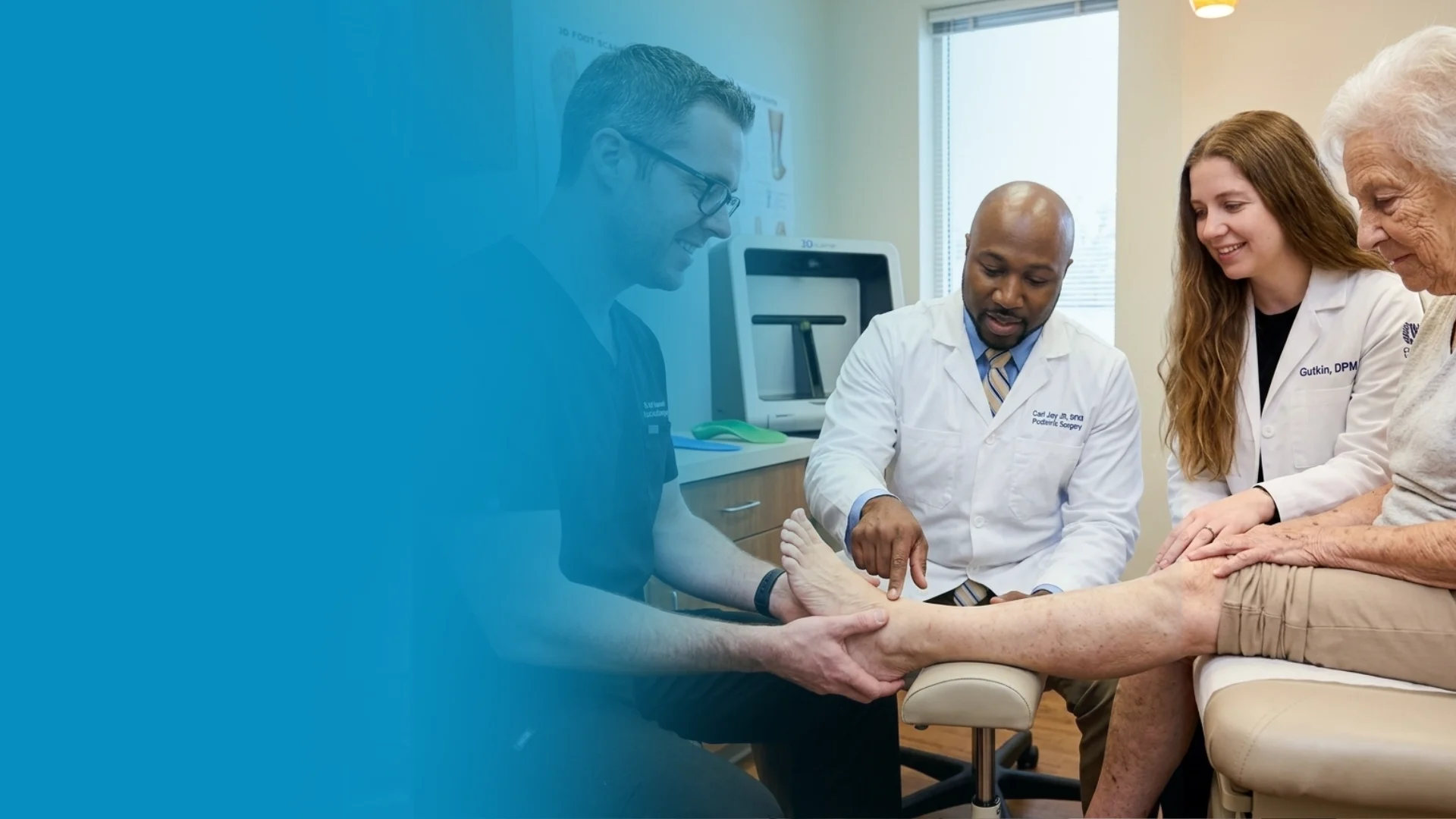
Dr. Carl Jay, DPM · Accepting new patients. Specializes in sports medicine, athletic injuries, and routine podiatric care.
Dr. Daria Gutkin, DPM, AACFAS · Accepting new patients. Specializes in surgical reconstruction and pediatric podiatry.
Locations: 4330 E Grand River Ave, Howell, MI 48843 · 43494 Woodward Ave Suite 208, Bloomfield Township, MI 48302
Hours: Mon–Fri 8:00 AM – 5:00 PM · (810) 206-1402
Affiliate disclosure: As an Amazon Associate and Foundation Wellness partner, Dr. Biernacki may earn a commission on qualifying purchases at no extra cost to you.
Dr. Tom’s Recommended Products for Compression Socks
Products I recommend in clinic to real patients.
1. DASS Medical Compression Socks — ~$28
True graduated compression (15-20 or 20-30 mmHg). Diabetic-friendly knit, real sizes (not just S/M/L). Multiple compression levels. What I recommend when a patient genuinely needs therapeutic compression — most Amazon bestsellers are not truly graduated.
2. Doctor Hoy’s Natural Pain Relief Gel — ~$22
For soreness or heaviness in the lower legs and feet that comes with poor circulation or varicose veins. Apply topically for local comfort alongside compression therapy.
Not improving? Same-week appointments | (810) 206-1402
Dr. Tom’s Verdict: Which Compression to Use
- DASS Medical Compression Socks — Our clinical standard for medical-grade compression: DASS Medical Compression Socks provide true 15-20 mmHg graduated compression with consistent ankle-to-calf pressure differential — not achievable with most Amazon generic brands.
- Doctor Hoy’s Natural Pain Relief Gel — Edema with inflammatory component: arnica + camphor gel applied before compression socks addresses the pain while compression addresses the swelling.
- PowerStep Pinnacle — Compression addresses swelling; arch support addresses the structural overpronation that contributes to venous pooling. Use both together for complete management.
Daily swelling not controlled by compression socks? Pitting edema may indicate venous insufficiency requiring clinical evaluation. Balance Foot & Ankle → (810) 206-1402
What is Foot pain?
Foot pain is a common foot/ankle condition that affects mobility and quality of life. Understanding the underlying cause is the first step in successful treatment. Our podiatrists at Balance Foot & Ankle perform a hands-on biomechanical exam, review your activity history, and use diagnostic imaging when appropriate to identify the root cause—not just treat the symptom. Many patients have been told to “rest and ice” without a deeper diagnostic workup; our approach is different.
Symptoms and warning signs
Common signs of foot pain include pain that worsens with activity, morning stiffness, swelling, tenderness when palpated, and difficulty bearing weight. If you experience sudden severe pain, inability to walk, visible deformity, numbness or color change, contact our office the same day or visit urgent care—these can signal a more serious injury such as a fracture, tendon rupture, or vascular compromise. Diabetics with any foot wound should seek same-day care.
Conservative treatment options
Most cases of foot pain respond to non-surgical care: structured rest, supportive footwear changes, custom orthotics, targeted stretching and strengthening protocols, anti-inflammatory medications when medically appropriate, and in-office procedures such as ultrasound-guided injections. We also offer advanced therapies including laser therapy, EPAT/shockwave, regenerative injections, and image-guided procedures. Treatment is sequenced from least invasive to most invasive, and we explain the rationale at every step.
When is surgery considered?
Surgery is reserved for cases that fail 3-6 months of well-structured conservative care, when there is structural pathology (severe deformity, complete tear, advanced arthritis), or when imaging shows damage that will not heal without intervention. Our surgeons have performed 3,000+ foot and ankle procedures and prioritize minimally-invasive techniques whenever appropriate. We discuss recovery timelines, return-to-activity milestones, and realistic outcome expectations before any procedure is scheduled.
Recovery timeline and prevention
Recovery from foot pain varies based on severity and chosen treatment path. Conservative cases often improve within 4-8 weeks with consistent adherence to the protocol. Post-procedural recovery may range from a few days (in-office procedures) to several months (reconstructive surgery). Long-term prevention involves footwear assessment, activity modification, structured strengthening, and regular check-ins with your podiatrist if you have a history of recurrence. We provide written home-exercise plans and digital follow-up support.
Ready to feel better?
Same-week appointments available in Howell and Bloomfield Township, Michigan.
In-Office Treatment at Balance Foot & Ankle
If home treatment isn’t providing relief for your foot and ankle conditions, our podiatry team at Balance Foot & Ankle can help with same-week evaluations and advanced in-office care.
Same-week appointments available. (810) 206-1402
Related Care at Balance Foot & Ankle
Clinical foot and ankle services at our Howell and Bloomfield Township offices.
Get Expert Care at Balance Foot & Ankle
Same-week appointments at our Howell and Bloomfield Township offices. Board-certified podiatric surgeons. Most insurance accepted.
Same-Week Appointments in Howell & Bloomfield Township
Three board-certified podiatric surgeons. 1,123+ five-star reviews. Most insurance accepted.
Ready for Expert Care?
Same-week appointments in Howell & Bloomfield Township, MI.
4.9★ | 1,123 Reviews | 3,000+ Surgeries
Or call: (810) 206-1402

Dr. Tom Biernacki, DPM is a board-certified foot & ankle surgeon (ABFAS & ABPM) at Balance Foot & Ankle Specialists in Southeast Michigan. With over a decade of clinical experience, he specializes in heel pain, bunions, diabetic foot care, sports injuries, and minimally invasive surgery. Dr. Biernacki is a member of the APMA and ACFAS, and his patient education content on MichiganFootDoctors.com and YouTube has made him one of the most-followed foot & ankle educators on YouTube.
More questions patients ask
Are compression socks from Amazon as good as medical-grade ones?
No — significant quality differences exist. Medical-grade (prescription) compression socks (20-30 mmHg and above): precise graduated compression verified by testing standards (RAL-GZ 387 in Europe, CEAP guidelines); consistent compression that maintains levels throughout the sock's rated lifespan; prescribed for specific medical conditions (venous insufficiency, DVT prevention, lymphedema). Amazon/OTC socks (8-20 mmHg): compression levels are often inaccurate (studies show 30-50% deviation from labeled mmHg); compression gradients are often inconsistent; material quality varies widely. For medical conditions, use measured prescription compression.
What compression level is right for my condition?
Compression sock levels and uses: 8-15 mmHg — mild compression, travel, tired legs, general wellness; 15-20 mmHg — mild swelling, pregnancy, prolonged standing, athletic recovery; 20-30 mmHg — moderate venous insufficiency, varicose veins, post-DVT, moderate lymphedema (prescription recommended); 30-40 mmHg — severe venous insufficiency, severe lymphedema (prescription required); 40-50 mmHg — very severe venous/lymphatic disease (prescription required). For ankle swelling from plantar fasciitis or standing jobs, 15-20 mmHg OTC is usually appropriate. See a podiatrist for medical conditions requiring 20+ mmHg.
When should compression socks be prescribed by a doctor?
Medical prescription compression is recommended for: venous insufficiency (varicose veins, chronic venous disease); post-DVT (blood clot) syndrome; lymphedema (primary or secondary); venous leg ulcers; post-surgical swelling; severe bilateral ankle swelling from cardiac or renal causes; and pregnancy complications. Prescription allows selection of precise graduated compression levels and may be covered by Medicare or insurance with proper documentation. Balance Foot & Ankle can prescribe and fit compression stockings for foot and ankle conditions — call (810) 206-1402.
What compression socks do podiatrists recommend?
Podiatrist-recommended compression sock brands: Sigvaris (high-quality graduated compression, wide size range); Juzo (excellent lymphedema management); Jobst (long-standing medical brand, widely covered by insurance); Medi (European precision manufacturing); and for athletic/OTC use: CEP, 2XU, and Sockwell. For mild conditions and standing jobs, Bombas compression socks and Comrad offer comfortable OTC options. The key is correct sizing (measure ankle and calf circumference) — an incorrectly sized compression sock can cause more harm than benefit.
Are medical-grade compression socks worth the extra cost over Amazon brands?
For mild preventive use (travel, standing), quality Amazon brands offering consistent graduated compression (CEP, 2XU, Sockwell available on Amazon) perform well. For medical conditions — venous insufficiency, post-DVT, lymphedema — medical-grade brands (Sigvaris, Jobst, Juzo, Medi) with certified mmHg accuracy and fabric durability are clearly superior. Dr. Tom Biernacki DPM at Balance Foot & Ankle prescribes medical-grade compression for patients with diagnosed venous conditions and OTC brands for preventive purposes.
How do I know if Amazon compression socks actually provide the advertised mmHg?
Unfortunately, many Amazon compression socks have inaccurate pressure labeling. Studies have found significant variation between labeled and actual pressure in unbranded compression products. Signs of quality compression: the sock should be noticeably difficult to pull on, should feel consistently snug from ankle to calf (not elastic band tight), and should require consistent effort to slide fingers under the topmost cuff. Balance Foot & Ankle recommends sticking to established brands with clinical validation, even when purchasing through Amazon.
What are the best compression sock brands available on Amazon?
Reputable brands available via Amazon with verified compression performance: CEP Compression (German engineered, sports-focused), Sockwell (merino wool, excellent comfort), 2XU Graduated Compression (performance athletes), Physix Gear Compression (budget-friendly with reasonable quality), and Copper Compression Recovery Socks. Avoid anonymous generic brands with no brand history. Balance Foot & Ankle recommends checking brand websites for clinical evidence before purchasing compression products for medical needs.
Does insurance cover prescription compression socks?
Yes — most insurance plans cover medical-grade compression socks (20–30 mmHg or higher) when prescribed by a physician for documented venous insufficiency, lymphedema, post-DVT management, or surgical recovery. Balance Foot & Ankle can prescribe and document medical necessity for compression therapy. When medical-grade compression is prescribed, the cost difference versus Amazon products becomes irrelevant with insurance coverage. Call (810) 206-1402 for a venous assessment.
How long do medical-grade compression socks last compared to Amazon brands?
Certified medical-grade compression socks maintain their therapeutic compression for 150–200 washes (6–12 months of daily use) according to manufacturer testing. Many Amazon brands lose significant compression within weeks to months due to inferior elastic construction. For daily therapeutic use, medical-grade brands provide better long-term value despite higher initial cost. Balance Foot & Ankle recommends tracking compression sock age and replacing when they slide down easily or no longer feel snug.
Still have a question about coverage or cost? Book online and we will check your benefits before your visit: Book in Howell · Book in Bloomfield Township. Prefer to talk it through first? Call (810) 206-1402.