


Night splints and Strassburg socks both treat plantar fasciitis overnight — but they apply tension differently, and the right choice depends on which one your foot actually tolerates for 6+ hours of sleep.
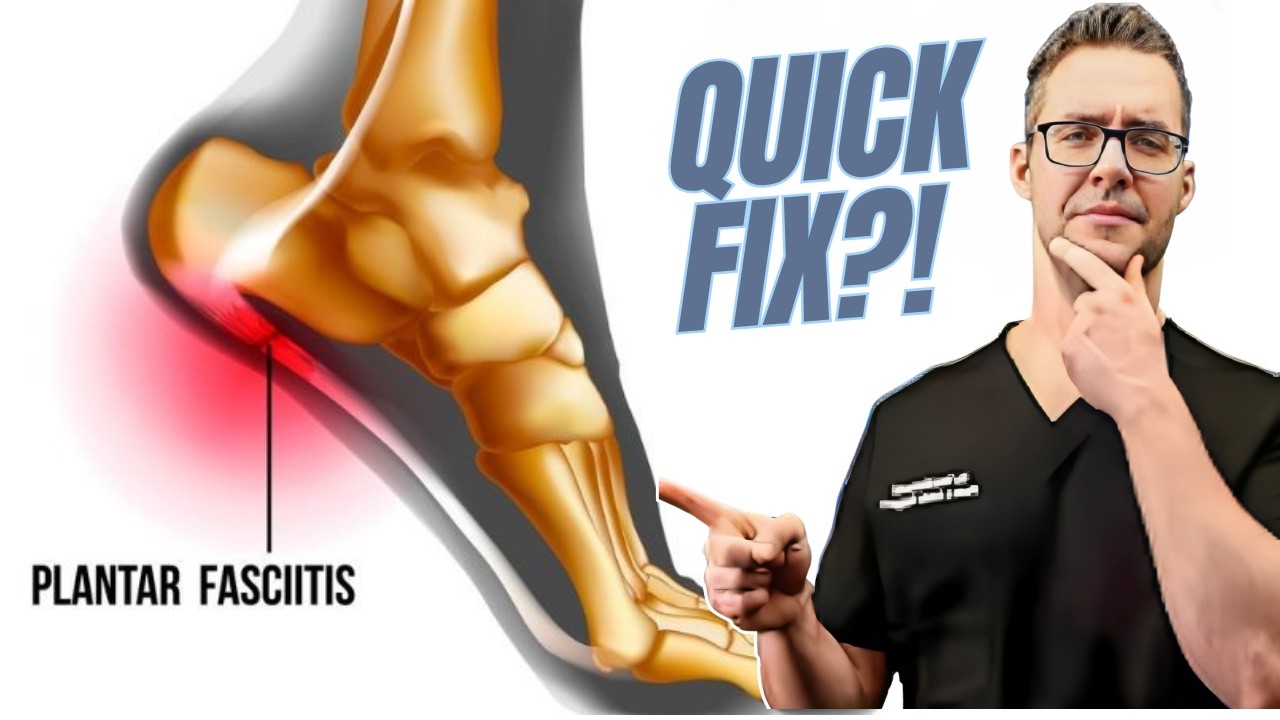
Watch Dr. Tom walk through his complete plantar fasciitis home-treatment system — including how night splints and overnight stretching fit alongside the other treatments in this guide:
Affiliate Disclosure: Dr. Tom recommends products he uses in clinical practice. Some links earn a commission at no extra cost to you — this supports our free educational content. Full disclosure.
Compare the night devices before buying
The two devices discussed below are different products. A second soft night-sock listing is included as an optional comparison.
Affiliate disclosure: We may earn a commission from qualifying purchases through product links, at no extra cost to you.
- Existing adjustable night splint: Read the splint section and check its current listing →
- Original Strassburg Sock: Read the sock section and check its calf-size options →
- PowerStep UltraStretch night sock (B00IBGJKW4): a soft sleeve with an adjustable toe-to-calf strap. This link opens Regular in black. Measure your calf and follow the manufacturer’s size chart and fitting directions; it is not the rigid splint or the original Strassburg Sock. Check UltraStretch sizing and current price →
The UltraStretch description is based on its product listing; we have not bench-tested this model. Read the full comparison and cautions below before choosing a device.
Why Morning Heel Pain Happens
That stabbing pain with your first steps out of bed is one of the most frustrating parts of plantar fasciitis. While you sleep, your foot naturally points downward (plantarflexion), allowing the plantar fascia to shorten and tighten. When you stand, the fascia is forced to stretch rapidly under your full body weight — causing micro-tears and intense pain that typically fades after 10-15 minutes of walking.
In our clinic in Howell and Bloomfield Township, MI, morning heel pain is the number one complaint we hear from plantar fasciitis patients. First-step pain in the morning is the hallmark of plantar fasciitis and the outcome most trials measure — the fascia shortens overnight and is loaded abruptly when you stand. The solution? Keep the fascia gently stretched overnight so it doesn’t shorten and stiffen.
How Overnight Stretching Heals Plantar Fasciitis
Overnight dorsiflexion devices — whether rigid splints or sock-style stretchers — hold your foot at approximately 90 degrees while you sleep. This maintains a gentle, sustained stretch on the plantar fascia and Achilles tendon for 6-8 hours, preventing the overnight shortening cycle that causes morning pain. Night splinting is best understood as a second-line addition rather than a first move: current clinical guidance puts patient education, stretching, taping, insoles and shockwave therapy first, and adds a night splint when those have not produced meaningful improvement.
The key distinction between the two main overnight devices comes down to how they deliver that stretch — and whether you’ll actually wear them consistently. Compliance is the single biggest factor in treatment success, which is why understanding the differences matters before you buy.
Night Splint Deep Dive
A posterior night splint is a rigid L-shaped brace (typically hard plastic with foam padding) that holds your ankle at 90 degrees or slight dorsiflexion. It’s the traditional overnight stretching device and has the most clinical evidence supporting its effectiveness for plantar fasciitis and Achilles tendonitis.
Dr. Tom’s rigid splint pick — an adjustable dorsal design with several thousand Amazon reviews behind it:

- Size Medium Fit: Designed for Men's Shoe Size 7.5 to 10 and Women's 8 to 10.5, with the M sticker indicating Medium size, suitable for both left and right foot
- Gradual Use Recommended: Start with short wearing periods and slowly increase use over time to allow your foot's tendon and ligaments to adjust to the stretching
- Night Time Comfort Support: Helps maintain proper foot positioning during nighttime hours for enhanced comfort and support throughout the night
- Lightweight and Breathable Design: Features a sturdy yet low profile shell construction with breathable materials for comfortable overnight wear
- Secure Adjustable Straps: Three padded straps with buckles ensure proper immobilization and adjustable dorsiflexion for effective stretching of the plantar fascia and Achilles tendon
As an Amazon Associate, Balance Foot and Ankle earns from qualifying purchases. Product links are affiliate links and we may earn a commission at no extra cost to you. This does not influence our clinical recommendations. Last update on 2026-10-24 / Images from Amazon Product Advertising API
Pros of night splints:
- Rigid structure maintains consistent dorsiflexion angle all night
- Adjustable straps let you increase stretch intensity gradually
- Most studied device in PF literature — strong clinical evidence
- Works for both plantar fasciitis and Achilles tendonitis
- Available in dorsal (top-of-foot) designs that are less bulky
Cons of night splints:
- Bulky — disrupts sleep for many patients (30-50% discontinue within 2 weeks)
- Can cause pressure points on the shin and top of foot
- Heavy (1-2 lbs) — uncomfortable for side sleepers
- Not ideal for travel
- Some patients report knee or hip discomfort from altered sleeping position
Not ideal for: Light sleepers, side sleepers, patients who move frequently at night, or anyone who has tried a rigid splint before and couldn’t tolerate it.
Strassburg Sock Deep Dive
The Strassburg Sock is a knee-high tube sock with a single adjustable strap running from the toe to below the knee. Instead of rigid structure, it uses gentle tension to pull the toes toward the shin, maintaining dorsiflexion through soft, sustained force. Originally developed by a physical therapist for his own plantar fasciitis, it’s become the most popular sock-style night stretching device.
The original Strassburg Sock — the exact device reviewed in this article (choose your calf size on the Amazon listing):

- Measure around the widest part of your calf, just below the knee; if close to 16″, we recommend sizing up to Large for best comfort.
- Adjustable Fit for Comfort and Safety – Gently secure straps to hold the foot without over-tightening; straps should feel snug but not restrict circulation.
- Soft, Breathable Material – Made from lightweight, breathable knit fabric that’s comfortable against the skin and designed for all-night wear without irritation
- Recommended Use – Start by wearing the sock for 1–2 hours while relaxing or before bed to get used to the stretch; gradually increase to overnight wear as tolerated to reduce discomfort
- Designed to reach from the foot to just below the kneecap—ensuring consistent nightly stretch along the calf and plantar fascia
As an Amazon Associate, Balance Foot and Ankle earns from qualifying purchases. Product links are affiliate links and we may earn a commission at no extra cost to you. This does not influence our clinical recommendations. Last update on 2026-10-24 / Images from Amazon Product Advertising API
Pros of the Strassburg Sock:
- Lightweight fabric — far less disruptive to sleep than rigid splints
- Higher compliance rates (70-80% of patients continue using it)
- Adjustable strap tension for gradual stretch progression
- Works in any sleeping position — back, side, or stomach
- Easy to pack for travel
- More affordable than most rigid night splints
Cons of the Strassburg Sock:
- Less aggressive stretch than rigid splints — may take longer for severe cases
- Strap can slip during the night if not properly adjusted
- Fabric can feel warm in summer
- Not suitable for Achilles tendonitis (stretch mechanism differs)
Not ideal for: Severe plantar fasciitis that hasn’t responded to conservative treatment for 6+ months, or patients who also need Achilles tendon stretching.
Head-to-Head Comparison
Choosing between a night splint and Strassburg Sock depends on your pain severity, sleep habits, and whether compliance will be an issue. Here’s a direct comparison based on clinical outcomes and patient feedback from our Howell and Bloomfield Township practices.
| Feature | Night Splint | Strassburg Sock |
|---|---|---|
| Stretch mechanism | Rigid dorsiflexion brace | Soft strap tension |
| Stretch intensity | High (fixed angle) | Moderate (adjustable) |
| Weight | 1-2 lbs | 3-4 oz |
| Sleep disruption | Significant | Minimal |
| Compliance rate | 50-60% | 70-80% |
| Morning pain reduction | 40-60% | 35-55% |
| Time to improvement | 3-6 weeks | 4-8 weeks |
| Achilles benefit | Yes | Limited |
| Side sleeper friendly | No | Yes |
| Travel friendly | No | Yes |
| Price range | $25-50 | $20-35 |
| Dr. Tom’s pick | Severe PF / Achilles | Most PF patients ⭐ |
The data tells a clear story: night splints deliver slightly faster and more aggressive results, but the Strassburg Sock’s dramatically higher compliance rate means more patients actually complete their treatment course. In our clinic, we’ve seen patients abandon rigid splints after just 3-4 nights — and an unused device provides zero benefit.
Who Should Choose What
Based on treating thousands of plantar fasciitis patients across our Howell and Bloomfield Township offices, here’s our clinical recommendation framework for choosing between these devices.
Choose the Strassburg Sock if you:
- Have mild to moderate morning heel pain (pain scale 4-6/10)
- Are a side sleeper or move frequently during the night
- Travel regularly and need a portable solution
- Have never tried an overnight stretching device before
- Want the highest probability of actually completing treatment
Choose a rigid night splint if you:
- Have severe morning pain (7-10/10) that hasn’t responded to other conservative measures
- Also have Achilles tendonitis or posterior calf tightness
- Sleep primarily on your back
- Have tried the Strassburg Sock without sufficient improvement
- Are willing to tolerate initial sleep disruption for faster results
PowerStep Pinnacle for Daytime Support
PowerStep Pinnacle insoles are the OTC orthotic we recommend most in our clinic because overnight stretching alone isn’t enough — you need continuous arch support during waking hours to prevent the fascia from re-tightening. PowerStep provides medical-grade arch support and a deep heel cup at a fraction of custom orthotic cost, making it the ideal daytime complement to your nighttime stretching device.
The combination of overnight stretching (splint or sock) plus daytime arch support (PowerStep) addresses plantar fasciitis from both directions — maintaining fascia length at night and reducing strain during the day. One small randomized trial (34 patients) compared custom CAD/CAM foot orthoses plus a night splint against a night splint alone; pain and plantar fascia thickness fell significantly in both groups at one month, and the orthoses group showed the clearer reduction in peak loading force (Nakhaee et al., Prosthetics and Orthotics International, 2023;47(3):241-252).
- PowerStep Pinnacle — Best for most PF patients needing structured arch support
- PowerStep Maxx — Extra stability for flat feet and severe overpronation
- PowerStep Pulse — Running-specific with enhanced forefoot cushioning
Not ideal for: High-arched rigid feet that need cushion over structure, or dress shoes with very limited depth.
Size and shoe-space check: The linked PowerStep Pinnacle listing initially selects men’s 14–15. Choose your size using the manufacturer’s chart and check whether your shoe has a removable factory insole and enough room. If you are comparing insole models, use our insole shopping chooser.
VitaMedica Arnica Gel
VitaMedica Arnica Gel is a homeopathic arnica gel for the heel and arch soreness that comes with plantar fasciitis and Achilles tendonitis. It’s fragrance-free and non-greasy — rub a thin layer into the heel and arch, especially before bed and first thing in the morning.
Using it before you put on your night splint or Strassburg Sock pairs topical relief with overnight stretching and makes that first-morning stretch easier.
Not ideal for: Anyone allergic to arnica or other plants in the daisy family, or those seeking deep tissue relief for severe inflammation (ice therapy may be more appropriate for acute flares). Don’t use it on broken skin.
Dr. Tom’s Complete Morning Pain Kit
Complete Morning Heel Pain Kit — 3 Products, 24-Hour Coverage
Rather than relying on any single device, we recommend a simple 24-hour system:
- Strassburg Sock (overnight) — Gentle dorsiflexion stretch while you sleep
- VitaMedica Arnica Gel (morning + evening) — Topical relief before and after stretching
- PowerStep Pinnacle (all-day) — Medical-grade arch support in everyday shoes
This 3-product system addresses every phase of the PF cycle: nighttime fascia shortening, morning inflammation, and daytime mechanical stress.
Most Common Mistake with Night Splints
Warning Signs You Need Professional Help
- Morning pain hasn’t improved after 6 weeks of consistent night splint or sock use — you may have a structural issue requiring custom orthotics or in-office treatment
- Pain is worsening despite treatment — could indicate a calcaneal stress fracture (especially if you feel pain when squeezing both sides of the heel)
- Numbness, tingling, or burning in the heel or arch — may be Baxter’s neuropathy (nerve entrapment), not plantar fasciitis
- Swelling, redness, or warmth at the heel — possible infection, gout, or inflammatory arthritis requiring different treatment
- Pain that doesn’t decrease with walking — classic PF improves after 10-15 minutes of movement. Constant pain suggests a different diagnosis
- You’re diabetic and have foot pain — diabetes changes everything about foot treatment priorities and requires professional monitoring
Differential diagnosis: Before confirming plantar fasciitis, your podiatrist should rule out Baxter’s neuropathy (nerve entrapment causing similar heel pain), calcaneal stress fracture (positive squeeze test), heel spur syndrome (spur is incidental in 95% of cases — the fascia is the problem), and fat pad atrophy (loss of heel cushioning, common in patients over 50).
In-Office Treatment at Balance Foot & Ankle
When home treatment with night splints, stretching, and supportive insoles isn’t enough, our podiatrists offer advanced in-office therapies that can accelerate recovery. Shockwave therapy (EPAT) stimulates blood flow and tissue healing at the fascia attachment point — most patients see improvement within 3-4 sessions. REMY laser therapy can ease pain and inflammation without medication. And custom 3D-scanned orthotics address the biomechanical root cause that generic insoles can’t correct.
Not improving with home treatment? Learn about our plantar fasciitis treatment options →
Book online 24/7. (810) 206-1402 · Book online →
Frequently Asked Questions
Can I use both a night splint and Strassburg Sock?
You don’t need both simultaneously — they serve the same purpose (maintaining dorsiflexion while you sleep). However, some patients start with the Strassburg Sock and switch to a rigid splint if their PF is particularly stubborn. Others keep both and use the sock for travel and the splint at home. There’s no clinical benefit to wearing both on the same foot at the same time.
How quickly will I notice morning pain improvement?
Most patients notice reduced first-step pain within 1-2 weeks of consistent overnight use. Significant improvement typically takes 4-8 weeks. The key word is “consistent” — wearing the device 5 out of 7 nights won’t produce the same results as nightly use. If you see zero improvement after 6 weeks of nightly wear combined with daytime arch support, schedule a podiatrist evaluation.
Do night splints work for Achilles tendonitis too?
Yes — rigid night splints are effective for both plantar fasciitis and Achilles tendonitis because both conditions benefit from sustained dorsiflexion stretching. The Strassburg Sock is less effective for Achilles because it primarily stretches through toe extension rather than ankle dorsiflexion. If you have both PF and Achilles pain, a rigid dorsal night splint is your best option.
Should I stretch before or after using a night device?
Stretch after removing your night device, not before putting it on. The device provides sustained passive stretching all night — your morning routine should add active stretching (calf raises, towel stretches, plantar fascia specific rolls) while the tissue is still warm and elongated. Apply an arnica gel before stretching for extra relief during your morning routine.
Does insurance cover night splints or the Strassburg Sock?
Most PPO plans cover prescribed night splints when documented as medically necessary for plantar fasciitis or Achilles tendonitis. The Strassburg Sock is typically an out-of-pocket purchase ($20-35) but may be reimbursable through your HSA/FSA account. Custom orthotics prescribed alongside night splinting are covered by most insurance plans including Medicare Part B. Call (810) 206-1402 to verify your specific coverage.
The Bottom Line
For most plantar fasciitis patients dealing with morning heel pain, the Strassburg Sock is our first-line recommendation because its higher compliance rate means more patients actually complete treatment. Pair it with PowerStep Pinnacle insoles during the day and VitaMedica arnica gel for topical relief — and you have a thorough 24-hour fascia management system. Reserve rigid night splints for severe cases, Achilles involvement, or when the Strassburg Sock alone isn’t producing results after 4-6 weeks. If home treatment doesn’t resolve your pain within 6-8 weeks, schedule a podiatrist evaluation — there may be a structural issue that over-the-counter solutions can’t address.
Sources
- Roos E, Engström M, Söderberg B. “Foot orthoses for the treatment of plantar fasciitis.” Foot & Ankle International. 2006;27(8):606-611. PubMed
- Koc TA Jr, Bise CG, Neville C, et al. “Heel Pain—Plantar Fasciitis: Revision 2023.” Journal of Orthopaedic & Sports Physical Therapy. 2023;53(12):CPG1-CPG39. PubMed
- Schuitema D, Greve C, Postema K, et al. “Effectiveness of mechanical treatment for plantar fasciitis: a systematic review.” Journal of Sport Rehabilitation. 2020;29(5):657-674. PubMed
- Schneider HP, Baca JM, Carpenter BB, et al. “American College of Foot and Ankle Surgeons Clinical Consensus Statement: Diagnosis and Treatment of Adult Acquired Infracalcaneal Heel Pain.” Journal of Foot and Ankle Surgery. 2018;57(2):370-381. PubMed
- Babatunde OO, Legha A, Littlewood C, et al. “Comparative effectiveness of treatment options for plantar heel pain: a systematic review with network meta-analysis.” British Journal of Sports Medicine. 2019;53(3):182-194. PubMed
- Nakhaee M, Mohseni-Bandpei M, Mousavi ME, et al. “The effects of a custom foot orthosis on dynamic plantar pressure in patients with chronic plantar fasciitis: a randomized controlled trial.” Prosthetics and Orthotics International. 2023;47(3):241-252. PubMed
Still Dealing with Morning Heel Pain?
Balance Foot & Ankle — 4.9★ from 1,200+ reviews · 3,000+ surgeries
Dr. Tom Biernacki, Dr. Carl Jay & Dr. Daria Gutkin
Howell: 4330 E Grand River Ave, Howell MI 48843
Bloomfield Township: 43494 Woodward Ave #208, Bloomfield Township MI 48302
Related Guides
- Complete Plantar Fasciitis Guide →
- Best Shoes for Plantar Fasciitis 2026 →
- Best Insoles for Plantar Fasciitis →
- Plantar Fasciitis Stretches →
- How to Tape for Plantar Fasciitis →
- Custom Orthotics Guide →
- Shop All Recommended Products →
Insurance Accepted
BCBS · Medicare · Aetna · Cigna · United Healthcare · HAP · Priority Health · Humana · View All →
Howell Office
4330 E Grand River Ave
Howell, MI 48843
Get Directions →
Bloomfield Township Office
43494 Woodward Ave, #208
Bloomfield Township, MI 48302
Get Directions →

Dr. Tom Biernacki, DPM is a board-certified foot & ankle surgeon (ABFAS & ABPM) at Balance Foot & Ankle Specialists in Southeast Michigan. With over a decade of clinical experience, he specializes in heel pain, bunions, diabetic foot care, sports injuries, and minimally invasive surgery. Dr. Biernacki is a member of the APMA and ACFAS, and his patient education content on MichiganFootDoctors.com and YouTube has made him one of the most-followed foot & ankle educators on YouTube.
More questions patients ask
When should I see a podiatrist for morning heel pain?
See a podiatrist if morning pain hasn't improved after 6 weeks of consistent night splint use, if pain is worsening, if you have numbness or tingling, or if you're diabetic. Appointments at Balance Foot & Ankle — (810) 206-1402 — Howell & Bloomfield Township MI.
Does insurance cover night splints for plantar fasciitis?
Most PPO plans cover prescribed night splints when medically necessary. The Strassburg Sock is typically out-of-pocket ($20-35) but may be HSA/FSA eligible. Custom orthotics prescribed alongside are covered by most plans including Medicare Part B. Call (810) 206-1402 to verify coverage.
Night splint vs Strassburg Sock — which is better?
Strassburg Sock wins for comfort (easier to sleep in, lower-profile, less restrictive). Boot night splint wins for aggressive stretch (better for severe plantar fasciitis, more rigid). For most patients, Strassburg Sock works equally well at fraction of size and cost. Choose Strassburg Sock for first-line treatment; upgrade to boot splint only if Sock doesnu0027t resolve symptoms.
Are Strassburg Socks effective?
Yes — Strassburg Socks are highly effective for plantar fasciitis. Studies show 80% improvement in morning pain within 4 weeks. The sock dorsiflexes the foot overnight, keeping the plantar fascia stretched. Most patients find them more comfortable than boot splints. Combine with stretching, supportive shoes, and ice for best outcomes.
Are night splints uncomfortable?
Initial nights with night splints feel awkward but most patients adjust within 1 week. Strassburg Sock is most comfortable. Boot splints are bulkier but more effective. Tips: start with 30 minutes the first night, progressively increase. Adjust strap tension to comfortable stretch (not painful). Some patients prefer wearing only when symptoms flare.
Still have a question about coverage or cost? Book online and we will check your benefits before your visit: Book in Howell · Book in Bloomfield Township. Prefer to talk it through first? Call (810) 206-1402.