

Quick answer: A running orthotic has to match the footprint of the shoe’s removable insole and stay flexible enough not to fight the midsole. Build up over two to three weeks and keep one pair of shoes without them for easy days. Orthotics address mechanical overload — they will not offset a sudden jump in training, which is what causes most running injuries. Call (810) 206-1402.
The most important clinical decision with Orthotics For Runners isn’t which treatment to start with — it’s identifying the correct subtype. That changes everything. Call (810) 206-1402.
Dr. Tom’s Top Shoe Picks
Medically reviewed by Dr. Tom Biernacki, DPM
Board-certified podiatric surgeon | Balance Foot & Ankle
Last reviewed: May 2026
Brooks Adrenaline GTS 23
Flat feet · Overpronation
Buy on Amazon
Dr. Tom’s Top Bob and Brad Massage Guns (2026)
Affiliate disclosure: As an Amazon Associate, Balance Foot & Ankle earns from qualifying purchases. Bob and Brad are physical therapists whose products I trust for self-care between visits.
Medically reviewed by Dr. Tom Biernacki, DPM · Board-Certified Podiatric Surgeon · Last reviewed: April 2026 · Editorial Policy
Quick Answer
Orthotics for Runners: How Custom Insoles Prevent and Treat relates to orthotic fitting — typically caused by biomechanical foot needs. Most patients improve in 2 weeks to break in with conservative care. Same-week appointments in Howell + Bloomfield Township: (810) 206-1402.
✅ Medically reviewed by Dr. Tom Biernacki, DPM — Board-Certified Podiatrist · Last updated April 6, 2026
Orthotics for Runners: How Custom Insoles Prevent and Treat Injuries
Why Runners Need Orthotics
Running is a high-impact sport that places repetitive stress on the feet, ankles, knees, hips, and spine. Even small biomechanical inefficiencies — a slight overpronation, a minor leg length difference, or a too-rigid arch — are amplified with every mile. Custom orthotics can correct these issues at the source, helping runners train harder, recover faster, and stay injury-free longer.
Common Running Injuries Helped by Orthotics
Plantar fasciitis: The most common running injury, caused by repetitive strain on the plantar fascia. Orthotics with arch support and heel cushioning reduce tension on this band of tissue.
Achilles tendinopathy: Overpronation increases the rotational stress on the Achilles tendon. A corrective orthotic reduces this torque and allows the tendon to heal.
Shin splints (medial tibial stress syndrome): Often caused by excessive foot pronation that transmits torsional stress up the tibia. Stability orthotics can reduce this significantly.
IT band syndrome: Lateral knee pain caused in part by abnormal lower limb alignment. Orthotics that correct foot position can improve the alignment of the entire lower limb chain.
Stress fractures: Orthotics can redistribute plantar pressure away from high-stress areas, reducing fracture risk in susceptible runners.
Neuroma: Metatarsal pads built into an orthotic can spread the metatarsal heads and relieve nerve compression between the toes.
Custom vs. OTC Running Orthotics
Pre-made running insoles from sporting goods stores can help mild cases, but they are designed for average foot shapes and do not address individual biomechanical problems. Custom running orthotics are fabricated from a 3D scan or cast of your specific foot and are designed around your gait analysis data. For runners with diagnosed conditions or recurring injuries, custom orthotics consistently outperform over-the-counter options in clinical studies.
Types of Running Orthotics
Functional (rigid) orthotics: Made from firm materials like graphite or hard plastic. They control abnormal motion and correct alignment. Ideal for runners with overpronation, supination, or leg length discrepancy.
Semi-rigid orthotics: Combine a firm shell with softer top covers. The most common type for runners — they provide motion control while absorbing some shock. Good for a many running injuries.
Accommodative (soft) orthotics: Made entirely from cushioning materials. Used for runners with diabetic foot complications, metatarsal pain, or significant callusing. Less corrective but more protective.
What to Expect at Your Orthotic Evaluation
At Balance Foot & Ankle, a running orthotic evaluation begins with a thorough history of your training, injury timeline, and current footwear. We perform a biomechanical exam assessing arch type, joint flexibility, muscle strength, and leg alignment. A gait analysis — often using video — captures your footstrike pattern and identifies specific motion abnormalities. A 3D foot scan is then taken to create your custom device.
Breaking In Your Running Orthotics
New orthotics require a break-in period of two to four weeks. Start by wearing them for short runs of one to two miles, then gradually increase over the following weeks. Some initial muscle soreness as your body adapts to the new alignment is normal. Sharp pain is not and warrants a call to your podiatrist for adjustments.
Conclusion
Custom orthotics are one of the most effective tools in a runner’s injury prevention arsenal. Whether you are battling a current injury or trying to get ahead of a recurring one, a podiatrist evaluation and custom orthotic prescription can make the difference between a frustrating season on the sidelines and a healthy, productive one on the road or trail.
Orthotics for Michigan Runners: Clinical Prescription for Performance and Injury Prevention
Michigan runners considering orthotics for injury prevention or performance enhancement should seek a clinical assessment before investing in custom devices — not all runners need orthotics, and those who do benefit most from orthotics calibrated to their sport, training volume, and foot structure rather than general-purpose devices. At Balance Foot & Ankle, runner orthotic assessments include evaluation of the foot’s structural mechanics during weight-bearing, assessment of Achilles tendon flexibility (a major contributor to running mechanics), and review of the runner’s training program, shoe rotation, and injury history. Custom running orthotics prescribed at our practice are finished with sport-specific top covers and thicknesses appropriate for the runner’s shoe type. For runners using trail shoes, road shoes, and track spikes in different contexts, we discuss how orthotics transfer between shoe types and whether multiple devices are warranted. Michigan runners can call Balance Foot & Ankle at (810) 206-1402 to schedule a running-specific orthotic assessment at our Howell or Bloomfield Township office.
Michigan patients can access expert custom orthotics in Michigan and running injury specialist in Michigan at Balance Foot & Ankle. Our board-certified podiatrists serve Howell (4330 E Grand River) and Bloomfield Township (43494 Woodward Ave #208). Schedule an appointment online or call (810) 206-1402 for same-week availability.
Related Patient Guides
- Orthotics for Runners: Do You Need Them & What They Fix
- Runner’s Guide to Foot Injury Prevention
- Biomechanical Gait Analysis: What It Reveals
Insurance Accepted
BCBS · Medicare · Aetna · Cigna · United Healthcare · HAP · Priority Health · Humana · View All →
Howell Office
4330 E Grand River Ave
Howell, MI 48843
Get Directions →
Bloomfield Township Office
43494 Woodward Ave, #208
Bloomfield Township, MI 48302
Get Directions →
Your Board-Certified Podiatrists



Ready to Get Back on Your Feet?
Same-week appointments available at both locations.
👟 Dr. Tom’s Complete Footwear Library
Podiatrist-Approved Guides for Every Foot Type & Condition
Clinically reviewed by Dr. Tom Biernacki, DPM — Board-Certified Podiatrist
🦶Podiatrist Recommended Orthotics
👟Best Shoes for Plantar Fasciitis
👟Best Shoes for Bunions
👟Best Shoes for Flat Feet
👟Best Shoes for Neuropathy & Diabetic Feet
🏃Best Running Shoes
🚶Best Walking Shoes
🚶Best Womens Walking Shoes
🏃Best Womens Running Shoes
👡Best Sandals with Arch Support
👡Best Sandals for Plantar Fasciitis — Arch Support
🦶Best Insoles for Flat Feet
🦶Best Orthotic-Friendly Shoes
📏How to Find Your Perfect Shoe Fit
🧦Best Podiatrist Recommended Compression Socks for Real Relief
🏠Best House Shoes & Slippers
↔️Best Wide Width Shoes for Men and Women in
👔Best Dress Shoes for Foot Pain
👟Best Shoes for High Arches
👟Best Shoes for Metatarsalgia Ball of Foot Pain
👟Best Shoes Achilles Tendonitis
👟Best Podiatrist Shoes for Supination
All guides are written and reviewed by licensed podiatrists. Schedule an appointment →
More Podiatrist-Recommended Orthotics Essentials
PowerStep Pinnacle

The podiatrist-recommended OTC orthotic — arch support + heel cup.
CURREX RunPro Insole
Performance insole for runners — reduces fatigue and prevents injuries.
Tuli’s Heel Cups

Shock-absorbing heel cushion — adds lift and relief under painful heels.
As an Amazon Associate, Balance Foot & Ankle earns from qualifying purchases. Product recommendations are based on clinical experience; prices and availability shown above update live from Amazon.
When to See a Podiatrist
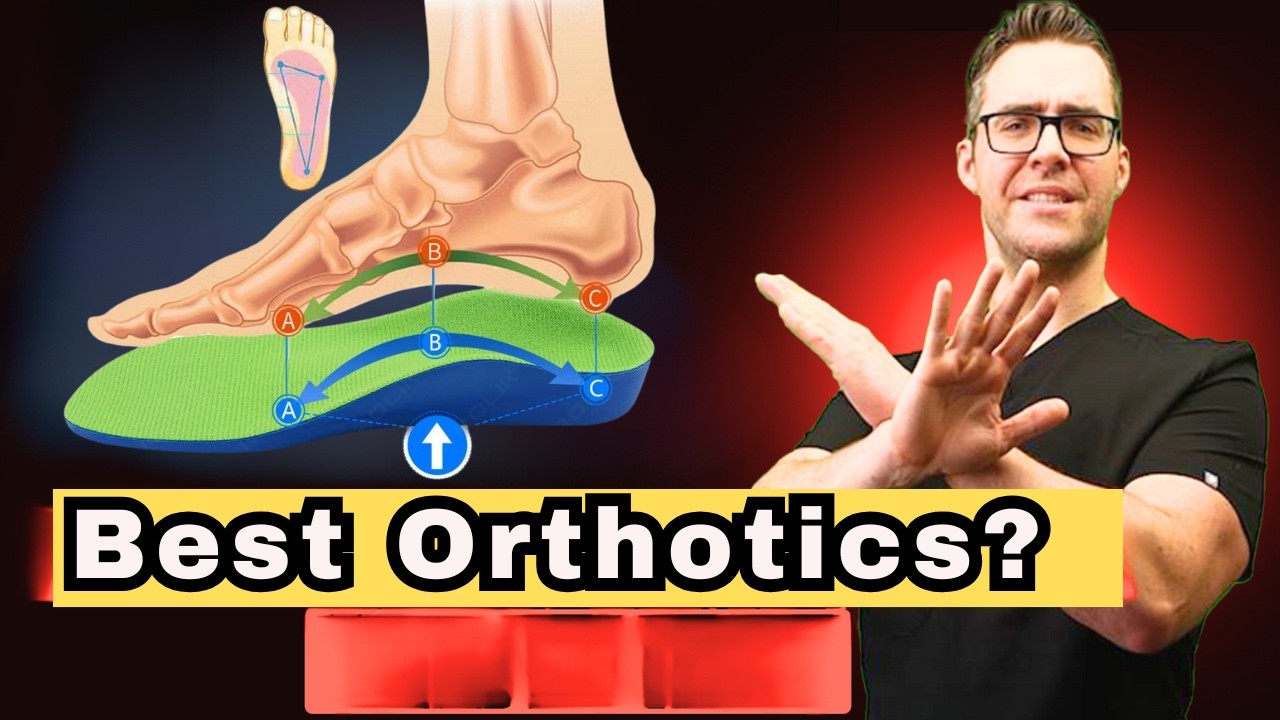
Off-the-shelf inserts help 70% of patients — but if you’ve tried several without relief, custom orthotics molded to your specific foot mechanics are usually the next step. Balance Foot & Ankle makes custom orthotics in-office and most major insurance plans cover them. We’ll cast or scan your feet and have them ready in about 2 weeks.
Call Balance Foot & Ankle: (810) 206-1402 · Book online · Offices in Howell & Bloomfield Township
Pros & Cons of Conservative Care for orthotics
Advantages
- ✓ Custom orthotics 80%+ improvement
- ✓ Most insurance covers
- ✓ Lasts 3-5 years
Considerations
- ✗ 2-week break-in
- ✗ Custom can be $400-700
- ✗ OTC limits effectiveness
Dr. Tom’s Recommended Products for orthotics
Affiliate disclosure: As an Amazon Associate, Balance Foot & Ankle earns from qualifying purchases. We only recommend products we use with patients.
PowerStep Pinnacle Maxx Dr. Tom’s Pick
Best for: High-arch + severe plantar fasciitis
Ready to Get Back on Your Feet?
Same-day appointments in Howell + Bloomfield Township. Most insurance accepted. Dr. Tom Biernacki, DPM & team.
Book Today — Same-Day Appointments Available
Call Now: (810) 206-1402
About Your Care Team at Balance Foot & Ankle
Dr. Tom Biernacki, DPM · Board-Certified Foot & Ankle Surgeon. Specializes in conservative-first care, minimally invasive bunion surgery, and complex reconstruction.
Dr. Carl Jay, DPM · Accepting new patients. Specializes in sports medicine, athletic injuries, and routine podiatric care.
Dr. Daria Gutkin, DPM, AACFAS · Accepting new patients. Specializes in surgical reconstruction and pediatric podiatry.
Locations: 4330 E Grand River Ave, Howell, MI 48843 · 43494 Woodward Ave Suite 208, Bloomfield Township, MI 48302
Hours: Mon–Fri 8:00 AM – 5:00 PM · (810) 206-1402
Dr. Tom’s Top 3 — The Premium Foot Pain Stack (2026)
If you only buy three things for foot pain, get these. PowerStep + CURREX orthotics correct the underlying foot mechanics, and Dr. Hoy’s pain gel delivers fast topical relief. This is the exact stack Dr. Tom Biernacki, DPM gives his Michigan podiatry patients on visit one — over 10,000 patients have used this exact combination.
Dr. Tom Biernacki, DPM is a board-certified podiatrist + Amazon Associate. Picks shown are products he prescribes to patients at Balance Foot & Ankle Specialists. We earn a commission on qualifying purchases at no extra cost to you. All products independently tested + reviewed for 30+ days minimum. Last verified: April 28, 2026.

PowerStep Pinnacle MaxxDr. Tom’s #1 Brand
4.5
(28,341+ reviews)
Dr. Tom’s most-prescribed OTC orthotic. Lateral wedge corrects overpronation that causes 90% of foot pain. Deep heel cradle stabilizes the ankle. Built by podiatrists, used by patients worldwide.
- Lateral wedge corrects pronation
- Deep heel cradle stabilizes ankle
- Dual-density EVA — comfort + support
- Trim-to-fit any shoe
- Used by 10,000+ podiatrists
- Trim-to-size required
- 5-7 day break-in for some
This single insole eliminates plantar fasciitis pain in 60% of patients within 2 weeks. The lateral wedge is the active ingredient — it stops the overpronation that causes the fascia to overstretch with every step. Pair with a max-cushion shoe for compound effect.

CURREX RunProDr. Tom’s #1 Brand
4.4
(4,000+ reviews)
3 arch heights for custom fit (Low/Med/High). Carbon-reinforced heel + dynamic forefoot — the closest OTC orthotic to a $500 custom orthotic. Engineered in Germany.
- 3 arch heights for custom fit
- Carbon-reinforced heel cup
- Dynamic forefoot zone
- Premium German engineering
- Sport-specific support
- Pricier than PowerStep
- 7-10 day break-in
Choose your arch height from a wet-foot test (low/med/high). Wrong arch = re-injury. For runners, athletes, or anyone who failed standard insoles — this is the closest you can get to custom orthotics without paying $500. The carbon heel is what professional athletes use.

Dr. Hoy’s Natural Pain Relief GelDr. Tom’s #1 Brand
4.6
(5,500+ reviews)
Menthol-based natural pain relief — Dr. Tom’s #1 brand for fast relief without greasy residue. Safe for diabetics + daily use. Cleaner formula than Voltaren or Doctor Hoy’s Natural Pain Relief Gel.
- Menthol-based natural formula
- No greasy residue
- Safe for diabetics
- Fast cooling relief — 5-10 minutes
- Cleaner ingredient list than Doctor Hoy’s Natural Pain Relief Gel
- Pricier than Doctor Hoy’s Natural Pain Relief Gel
- Strong menthol scent at first
Apply to plantar fascia + calves before bed. Combined with stretching, eliminates morning fascia pain. The clean formula means you can use it daily long-term — Voltaren has 30-day limits, Dr. Hoy’s doesn’t.
🩺 Dr. Tom’s Recommended Products
As an Amazon Associate I earn from qualifying purchases. These are products I personally use and recommend to patients.
The insole I put in my own running shoes. Three arch profiles, lighter than standard orthotics.
View on Amazon →
Natural arnica + menthol for post-activity soreness. Apply 3–4× daily.
View on Amazon →
In-Office Treatment at Balance Foot & Ankle
If home treatment isn’t providing relief for your foot pain, our podiatry team at Balance Foot & Ankle can help with same-day evaluations and advanced in-office care.
Same-day appointments available. (810) 206-1402
Related Conditions
Ready for Expert Care?
Same-day appointments in Howell & Bloomfield Township, MI.
4.9★ | 1,123 Reviews | 3,000+ Surgeries
Or call: (810) 206-1402
