
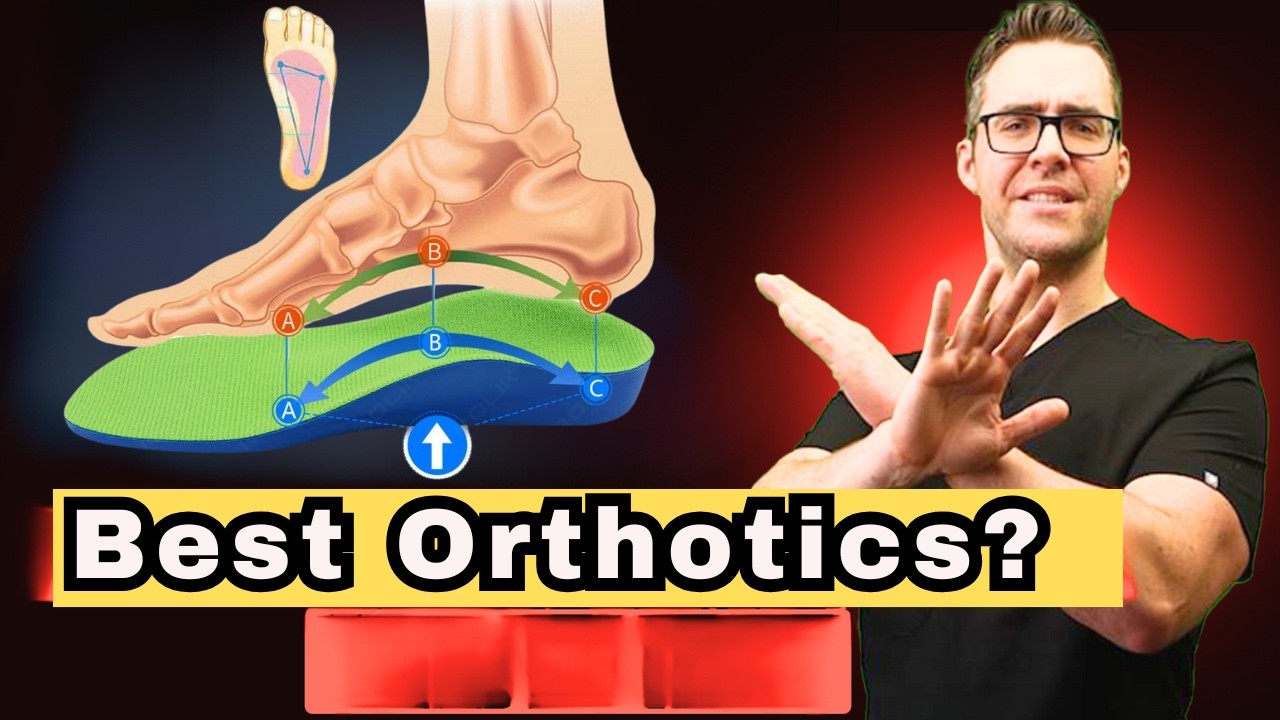
Quick answer: Running orthotics need to be lower-profile and more flexible than dress orthotics, and they have to match the footprint of the shoe’s removable insole. Transition over two to three weeks rather than racing in them on day one. Orthotics help mechanical overload — they do not correct training errors, which cause most running injuries. Call (810) 206-1402.
Dr. Tom’s Top Shoe Picks
Medically reviewed by Dr. Tom Biernacki, DPM
Board-certified podiatric surgeon | Balance Foot & Ankle
Last reviewed: May 2026
Brooks Adrenaline GTS 23
Flat feet · Overpronation
Buy on Amazon
Medically reviewed by Dr. Tom Biernacki, DPM · Board-Certified Podiatric Surgeon · Last reviewed: April 2026 · Editorial Policy
In This Article
Related Conditions
Quick Answer
Orthotics for Runners: Do You Need Them, What They Fix & relates to orthotic fitting — typically caused by biomechanical foot needs. Most patients improve in 2 weeks to break in with conservative care. Appointments in Howell + Bloomfield Township: (810) 206-1402.
✅ Medically reviewed by Dr. Tom Biernacki, DPM — Board-Certified Podiatrist · Last updated April 6, 2026
Running is one of the highest-impact activities your feet will ever endure. Each footstrike generates forces 2-3 times your body weight, repeated 1,500-2,000 times per mile. It’s notable that running works as well as it does — and unsurprising that nearly 70% of runners sustain a significant injury in any given year. For many, the difference between running painfully and running well comes down to what’s inside their shoes.
At Balance Foot & Ankle in Howell and Bloomfield Township, MI, we work with runners from beginning joggers to marathon athletes. Our podiatrists combine biomechanical gait analysis with custom 3D orthotic fabrication to address the biomechanical contributors to running injuries — not just the symptoms.
Do Runners Need Orthotics?
Not every runner needs custom orthotics. Over-the-counter insoles work adequately for runners with neutral foot mechanics and no significant structural issues. Custom orthotics become important when:
- Biomechanical problems are driving injury: Flat feet, overpronation, high arches, leg length discrepancy, and poor tibial alignment create abnormal force patterns that accumulate with mileage
- You’re dealing with a recurring or persistent injury: If plantar fasciitis, stress fractures, shin splints, Achilles tendinopathy, or IT band syndrome keep coming back, an unaddressed biomechanical issue is likely contributing
- Standard footwear recommendations haven’t resolved the problem: Stability shoes and motion-control shoes help some biomechanical issues but don’t address individual variation
- High mileage and training load: At higher mileage, small biomechanical inefficiencies amplify — what doesn’t matter at 15 miles/week may cause injury at 40 miles/week
What Biomechanical Problems Do Running Orthotics Address?
| Biomechanical Issue | Running Injury It Causes | Orthotic Intervention |
|---|---|---|
| Overpronation / flat feet | Plantar fasciitis, posterior tibial tendinopathy, medial shin splints, medial knee pain | Medial arch support, rearfoot valgus wedge to limit excessive pronation |
| High arches / supination | Lateral stress fractures, IT band syndrome, lateral ankle instability, plantar fasciitis | Lateral wedge, extra cushioning, flexible device to allow natural pronation |
| Leg length discrepancy | Hip pain on long side, knee pain, IT band syndrome, low back pain | Heel lift on the short-leg side to equalize leg length |
| Forefoot varus | Excessive compensatory pronation, medial overload | Forefoot valgus post to correct foot alignment at push-off |
| Equinus (limited dorsiflexion) | Plantar fasciitis, Achilles tendinopathy, stress fractures, forefoot overload | Heel lift to reduce Achilles tension; address calf tightness with stretching |
| Metatarsal overload | Stress fractures, metatarsalgia, Morton’s neuroma | Metatarsal pad to redistribute forefoot pressure |
Running Orthotics vs. Walking/Standing Orthotics: Key Differences
Running orthotics are specifically designed for the biomechanical demands of running and must be different from everyday orthotics:
- Thinner profile: Running shoes have less volume than dress shoes — the orthotic must fit without creating pressure. Our 3D-fabricated running orthotics are designed to fit the specific shoe model you run in.
- Appropriate flexibility: A running orthotic must be semi-rigid — firm enough to control motion but flexible enough to work with the dynamic demands of the running gait cycle. A device that’s too rigid for running creates more problems than it solves.
- Dynamic load considerations: Running orthotics account for 2-3x body weight forces and the faster loading rates of the running gait versus walking
- Heel strike pattern: Your personal foot strike pattern (heel, midfoot, or forefoot) affects where forces are distributed and what the orthotic needs to address
The Gait Analysis Process at Balance Foot & Ankle
Effective running orthotics begin with precise understanding of your individual gait mechanics. Our biomechanical gait analysis includes:
- Static foot assessment: Foot type, arch height, heel alignment, forefoot and rearfoot relationship, range of motion
- Dynamic gait analysis: Observation and video analysis of your walking and running mechanics — where your foot lands, how much you pronate, timing of weight transfer
- 3D foot scan: Digital capture of your foot in the corrected position for orthotic fabrication — no plaster casting, no mess
- Shoe evaluation: Assessment of your current running shoes for wear pattern (which reveals your gait pattern), fit, and appropriateness for your foot type
Common Running Injuries Orthotics Help With
- Plantar fasciitis: The most common running injury — orthotics addressing overpronation and providing arch support reduce recurrence rates significantly. Read our plantar fasciitis treatment guide.
- Stress fractures: Metatarsal and navicular stress fractures from biomechanical overload — orthotics address the underlying force distribution problem. See our stress fracture guide.
- Achilles tendinopathy: Overpronation places asymmetric load on the Achilles at ground contact — orthotics reduce this. See our Achilles tendinitis guide.
- Morton’s neuroma: High impact, narrow running shoes, and forefoot overload contribute to neuroma pain — metatarsal pads and wider running shoes often resolve it. See our Morton’s neuroma guide.
- Posterior tibial tendinopathy: Overpronation overloads the posterior tibial tendon — medial arch support is the primary intervention.
Transition to Running With New Orthotics
New orthotics change the biomechanical patterns your muscles, tendons, and bones have adapted to over years of running. A gradual transition prevents new complaints from developing:
- Week 1-2: Wear orthotics for walking and daily activities. Run short distances (25% of normal) to assess.
- Week 3-4: Increase running to 50% of normal mileage. Note any new areas of discomfort — they may indicate an adjustment is needed.
- Week 5-6: Progress to full mileage as tolerated.
- Follow-up: Return at 4-6 weeks for adjustment if needed — fine-tuning is a normal part of the process
More Podiatrist-Recommended Orthotics Essentials
PowerStep Pinnacle


The podiatrist-recommended OTC orthotic — arch support + heel cup.
CURREX RunPro Insole
Performance insole for runners — reduces fatigue and prevents injuries.
Tuli’s Heel Cups

Shock-absorbing heel cushion — adds lift and relief under painful heels.
As an Amazon Associate, Balance Foot & Ankle earns from qualifying purchases. Product recommendations are based on clinical experience; prices and availability shown above update live from Amazon.

When to See a Podiatrist
Off-the-shelf inserts help 70% of patients — but if you’ve tried several without relief, custom orthotics molded to your specific foot mechanics are usually the next step. Balance Foot & Ankle makes custom orthotics in-office and most major insurance plans cover them. We’ll cast or scan your feet and have them ready in about 2 weeks.
Call Balance Foot & Ankle: (810) 206-1402 · Book online · Offices in Howell & Bloomfield Township
Frequently Asked Questions
Q: Will orthotics slow me down?
A: Current research suggests custom orthotics have no meaningful effect on running economy in most runners. In runners whose gait efficiency is impaired by pain or biomechanical dysfunction, correcting the dysfunction may actually improve performance.
Q: Can I use my orthotics in different running shoes?
A: Custom orthotics are fabricated for a specific shoe type (cushioned, stability, etc.). They can typically be used in multiple shoes of the same type. Using them in very different shoe types (e.g., a trail running shoe vs. a road shoe) may require a different pair.
Q: How long do running orthotics last?
A: The shell of a well-made custom orthotic typically lasts 3-5 years for recreational runners. The top cover and cushioning materials may need replacement every 12-24 months depending on mileage. A worn or cracked orthotic should be evaluated for replacement.
Related Patient Guides
- Biomechanical Gait Analysis: What It Reveals About Your Feet
- 3D Custom Orthotics at Balance Foot & Ankle
- Runner’s Guide to Foot Injury Prevention
- Plantar Fasciitis Treatment Guide: What Works
- Achilles Tendinitis: Symptoms & Treatment
- Stress Fracture in the Foot: Symptoms & Recovery
- How to Choose the Right Shoes for Your Foot Type
Insurance Accepted
BCBS · Medicare · Aetna · Cigna · United Healthcare · HAP · Priority Health · Humana · View All →
Howell Office
4330 E Grand River Ave
Howell, MI 48843
Get Directions →
Bloomfield Township Office
43494 Woodward Ave, #208
Bloomfield Township, MI 48302
Get Directions →
Ready to Get Back on Your Feet?
Book online 24/7 at either office.
Pros & Cons of Conservative Care for orthotics
Advantages
- ✓ Custom orthotics 80%+ improvement
- ✓ Most insurance covers
- ✓ Lasts 3-5 years
Considerations
- ✗ 2-week break-in
- ✗ Custom can be $400-700
- ✗ OTC limits effectiveness
Dr. Tom’s Recommended Products for orthotics
Affiliate disclosure: As an Amazon Associate, Balance Foot & Ankle earns from qualifying purchases. We only recommend products we use with patients.
Ready to Get Back on Your Feet?
Appointments in Howell + Bloomfield Township. Most insurance accepted. Dr. Tom Biernacki, DPM & team.
Call Now: (810) 206-1402
In-Office Treatment at Balance Foot & Ankle
If home treatment isn’t providing relief for your foot pain, our podiatry team at Balance Foot & Ankle can help with expert evaluations and advanced in-office care.
Book online 24/7. (810) 206-1402
VitaMedica Arnica Gel
Arnica gel plus 15 plant compounds for sore feet, plantar fasciitis flares and post-activity soreness. Apply a thin layer to the sore area.
Ready for Expert Care?
Appointments in Howell & Bloomfield Township, MI.
4.9★ | 1,200+ Reviews | 3,000+ Surgeries
Or call: (810) 206-1402
