
Medically reviewed by Dr. Tom Biernacki, DPM — Board-certified foot & ankle surgeon, 3,000+ surgeries performed. Updated April 2026 with current clinical evidence. This article reflects real practice experience from Balance Foot & Ankle Specialists in Howell and Bloomfield Township, Michigan.
The most important clinical decision with Rowing Crew Foot Ankle Health isn’t which treatment to start with — it’s which subtype or underlying cause you actually have. That distinction changes everything. Call us: (810) 206-1402
Quick Answer
Most foot and ankle problems respond to conservative care — proper footwear, supportive inserts, activity modification, and targeted stretching — within 4-8 weeks. Persistent pain beyond that window, or any symptom that prevents walking, warrants a podiatric evaluation to rule out fracture, tendon tear, or systemic cause.
Watch: Dr. Tom Biernacki, DPM
Medically reviewed by Dr. Tom Biernacki, DPM — Board-Certified Podiatric Surgeon — Balance Foot & Ankle, Howell & Bloomfield Township, MI. Last updated April 2026.
▶ Watch
Medically reviewed by Dr. Tom Biernacki, DPM | Board-certified podiatrist | 3,000+ surgeries performed
Last updated: April 2, 2026
How Rowing Stresses the Feet Differently Than Other Sports
Rowing is unique among athletic activities because the feet remain fixed to the footplate throughout the entire stroke cycle. Unlike running or cycling where the foot moves through a range of positions, the rower’s foot is locked at a specific angle while the legs generate forces exceeding 500 to 800 newtons during the drive phase. This fixed-position loading creates stress patterns that are distinctly different from any other sport.
During the drive phase, the athlete pushes forcefully through the footplate with the balls of the feet and toes while the heels remain elevated. This concentrated forefoot loading through thousands of strokes per training session creates significant pressure on the metatarsal heads, sesamoid bones, and the plantar fascia. The repetitive dorsiflexion demand at the ankle during the catch position also places sustained tension on the Achilles tendon and posterior ankle structures.
Environmental factors compound the biomechanical stress. Rowers often train in cold, wet conditions that reduce circulation to the feet. Footplate shoes are typically minimal with thin soles that provide almost no cushioning or arch support. The combination of high repetitive forces, minimal foot protection, and adverse environmental conditions makes foot problems common among competitive rowers.
Common Foot Injuries in Rowers
Metatarsalgia — pain under the ball of the foot — is the most prevalent foot complaint in rowing. The repetitive high-force push through the forefoot during the drive phase overloads the metatarsal heads and surrounding soft tissues. Rowers who row in lightweight shoes with minimal padding are particularly susceptible, as are those with high arches that concentrate forefoot pressure.
Extensor tendinitis across the top of the foot develops from the sustained dorsiflexion position and the tight straps that secure the foot to the footplate. The extensor tendons become inflamed as they are compressed against the underlying bones during each stroke. This presents as aching pain across the top of the foot that worsens during rowing and may become visible as swelling along the tendon paths.
Plantar fasciitis affects rowers who have tight calf muscles from the repetitive ankle motion demands. The combination of forceful push-off through the forefoot and restricted ankle dorsiflexion at the catch creates significant tension along the plantar fascia. Blisters, calluses, and toenail problems are also common due to the friction and pressure of the footplate shoe interface.
Footplate Setup and Shoe Modifications for Injury Prevention
Proper footplate height and angle are the most important modifiable factors for preventing foot problems in rowing. The footplate angle should allow comfortable ankle dorsiflexion at the catch without forcing the foot into an extreme position. Most rowers perform best with the footplate set so that the heel is approximately 5 to 8 centimeters above the ball of the foot.
Footplate shoe modifications can dramatically reduce foot problems. Adding a thin cushioning insole inside the footplate shoe distributes pressure more evenly across the forefoot. Metatarsal pads placed just proximal to the metatarsal heads lift and separate the bones, reducing the concentrated pressure that causes metatarsalgia. Ensuring the footplate shoe is the correct size — neither too tight nor too loose — prevents both compression injuries and friction blisters.
Strap tension requires careful attention. The straps should hold the foot securely enough to maintain contact during the recovery phase but should not compress the top of the foot tightly enough to impinge the extensor tendons or restrict blood flow. Using wider straps or padding under the straps can distribute the securing force more comfortably.
Conditioning and Flexibility for Healthy Rowing Feet
Calf flexibility is paramount for rowers. Tight gastrocnemius and soleus muscles limit ankle dorsiflexion at the catch, forcing compensatory pronation and increasing plantar fascia tension. Daily calf stretching — both with the knee straight for the gastrocnemius and bent for the soleus — should be a non-negotiable part of every rower’s routine.
Intrinsic foot muscle strengthening helps the foot withstand the repetitive loading of the drive phase. Towel scrunches, marble pickups, and short-foot exercises build the small muscles that support the arch and distribute forefoot pressure more evenly. These exercises take only five minutes per day and significantly reduce the risk of metatarsalgia and plantar fasciitis.
Ankle mobility work including dorsiflexion stretches, ankle circles, and foam rolling of the anterior tibialis and peroneal muscles maintains the range of motion needed for a full rowing stroke without compensatory stress on the foot structures. Incorporate these into your warm-up and cool-down routines year-round.
Managing Rowing Foot Injuries: When to Push Through and When to Stop
Minor blisters and calluses are part of rowing and can generally be managed while continuing to train. Keep blisters clean, apply protective padding, and adjust footplate straps or shoe fit to reduce friction at the affected area. Calluses can be reduced with gentle filing or professional debridement to prevent them from becoming thick enough to cause deep tissue pain.
Metatarsalgia and extensor tendinitis require modification of training rather than complete cessation. Reduce stroke rate and pressure, substitute ergometer work for on-water rowing to allow footplate adjustments, and address contributing factors like shoe fit and strap tension. Ice the affected area after training and consider a short course of anti-inflammatory medication.
Stop rowing immediately and seek evaluation for any sharp pain on top of the foot that could indicate a stress fracture, numbness or tingling that does not resolve within 30 minutes of stopping, or any foot pain that alters your rowing technique. Stress fractures of the metatarsals and navicular bone occur in rowers and require early diagnosis to prevent complete fracture and prolonged recovery.
Off-Water Training and Cross-Training for Foot Health
Ergometer training allows footplate modifications that may not be practical in a racing shell. Using a wider, more cushioned shoe on the erg, adjusting the footplate angle, and adding aftermarket padding can make erg sessions more comfortable for rowers dealing with foot issues while maintaining fitness.
Cross-training activities that maintain cardiovascular fitness without replicating the footplate stress of rowing are valuable during recovery from foot injuries. Cycling, swimming, and upper body ergometer work maintain aerobic capacity while allowing foot tissues to heal. When returning to rowing after a foot injury, gradually increase volume rather than immediately returning to full training loads.
Strength training that targets the posterior chain — deadlifts, Romanian deadlifts, and calf raises — builds the leg and foot strength that helps withstand rowing demands. Single-leg exercises improve balance and proprioception, reducing the compensatory movement patterns that develop when one foot is painful and the other compensates.
Expert Sports Podiatry for Rowers at Balance Foot & Ankle
At Balance Foot & Ankle Specialists, Dr. Tom Biernacki provides sport-specific foot care for rowers and crew athletes. We understand the unique biomechanics of the rowing stroke and the specific demands the footplate interface places on the foot. Our evaluations address not just the symptoms but the equipment and technique factors that contribute to foot problems.
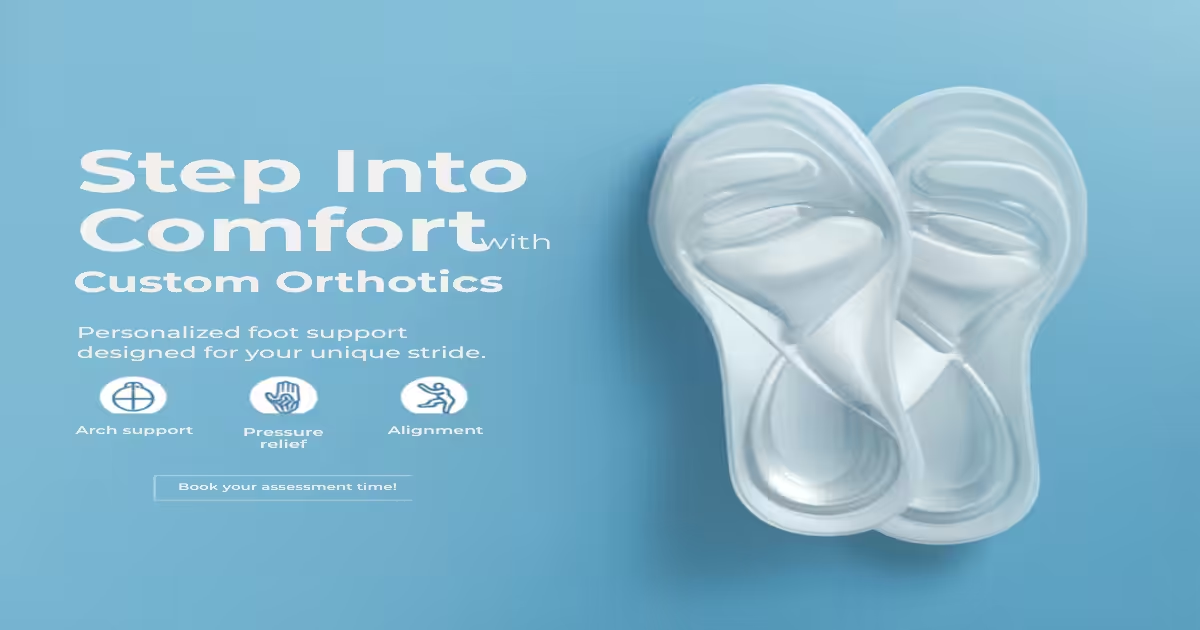
We fabricate custom orthotic devices designed specifically for the rowing environment — thin enough to fit inside footplate shoes while providing meaningful arch support and forefoot pressure redistribution. Our approach to managing rowing foot injuries prioritizes maintaining training with appropriate modifications rather than mandating complete rest whenever possible.
With offices in Howell and Bloomfield Township, we serve athletes throughout Southeast Michigan. If foot pain is affecting your rowing performance or preventing you from training, schedule an evaluation to get a targeted treatment plan.
The Most Common Mistake We See
The most common mistake rowers make with foot problems is ignoring early symptoms and rowing through progressively worsening pain. In rowing, the foot is the primary interface between the athlete and the boat — every watt of power passes through the feet. Compensating for foot pain creates inefficient technique that not only reduces performance but generates secondary problems at the knee, hip, and lower back. Addressing foot issues early preserves both foot health and rowing efficiency.
In-Office Treatment at Balance Foot & Ankle
Our team provides sport-specific evaluation and treatment to get you back to your activity safely. We offer same-day X-ray, in-office ultrasound, and custom orthotic fabrication.
Same-day appointments available. Call (810) 206-1402 or book online.
More Podiatrist-Recommended Foot Health Essentials
Hoka Clifton 10

- JACQUARD KNIT UPPER
- Lining Textile
Max-cushion everyday shoe — podiatrist favorite for walking and running.
PowerStep Pinnacle Insole

- The Pinnacle Full length insoles for men & women provide maximum cushioning, from high activity to moderate support. The PowerStep arch support shape provides stability to the foot and ankle, helping to relieve foot pain.
- When you spend all day on your feet, every step counts. PowerStep insoles are a podiatrist-recommended orthotic to help relieve & prevent foot pain related to athletes, runners, Plantar Fasciitis, heel spurs & other common foot, ankle & knee injuries
- The Pinnacle plantar fasciitis insoles offer superior heel cushioning and arch support. The dual-layer cushioning is designed to reduce stress and fatigue, while PowerStep premium arch support is designed for plantar fasciitis relief.
- The PowerStep Pinnacle arch support inserts for men & women can be worn in a variety of shoe types such as; athletic, walking, running, work & some casual shoes. Orthotic Inserts are ordered by shoe size, no trimming required.
- Made in the USA & backed by a 30-day money-back guarantee. PowerStep orthotic inserts for men & women are designed for shoes where the factory insole can be removed. HSA & FSA Eligible
The podiatrist-recommended over-the-counter orthotic.
OOFOS Recovery Slide

- The Original Recovery Footwear.
- Finding Your Size – For your perfect fit, consult the “size chart” link above. Wear a half size? In general, we recommend that women who wear a ½ size size UP, and men who wear a ½ size size DOWN
- OOahh – An evolution of the OOriginal, the OOahh slide features our proven foundation of OOfoam technology + patented footbed design with a slide-style strap that has become a best-seller in the OOFOS line
- OOfoam Technology – Our revolutionary OOfoam technology absorbs 37% more impact than traditional footwear foams to reduce the stress on your feet, joints & back. Plus, the closed-cell foam is machine washable and designed to minimize odor
- Patented Footbed – Our patented footbed cradles and supports arches to reduce energy exertion in the ankles by up to 47% compared to competitors’ footwear. So walking is easier. Recovery is faster. And yOO feel better
Impact-absorbing recovery sandal — wear after long days on your feet.
As an Amazon Associate, Balance Foot & Ankle earns from qualifying purchases. Product recommendations are based on clinical experience; prices and availability shown above update live from Amazon.

When to See a Podiatrist
If foot or ankle pain has been bothering you for more than a few weeks, home care alone may not be enough. Balance Foot & Ankle offers same-week appointments at our Howell and Bloomfield Township clinics — no referral needed in most cases. Bring your current shoes and a short list of symptoms and we’ll build you a treatment plan in one visit.
Call Balance Foot & Ankle: (810) 206-1402 · Book online · Offices in Howell & Bloomfield Township
Frequently Asked Questions
Why do my feet go numb when I row?
Foot numbness during rowing is usually caused by compression of the nerves across the top of the foot from tight footplate straps or shoes that are too narrow. The sustained dorsiflexion position at the catch can also compress the anterior tarsal tunnel. Loosening straps, using wider shoes, adjusting footplate angle, and adding padding under the straps typically resolves the issue.
How do I prevent blisters from rowing?
Prevent rowing blisters by ensuring your footplate shoe fits correctly without excess movement, wearing thin moisture-wicking socks, applying anti-friction balm to blister-prone areas, and keeping straps appropriately tensioned. If blisters recur in the same location, it usually indicates a shoe fit or strap position issue that needs to be addressed rather than simply managed.
Should I use insoles in my rowing shoes?
Yes, most footplate shoes have minimal built-in support. Adding a thin insole with metatarsal support and arch contouring significantly reduces forefoot pressure and improves comfort during long training sessions. Choose the thinnest effective insole so it does not alter the heel height or foot position on the footplate. Custom options designed for rowing are available.
When should a rower see a podiatrist for foot pain?
See a podiatrist if you have foot pain that persists for more than two weeks despite rest and ice, numbness that does not resolve within 30 minutes of stopping rowing, sharp pain on top of the foot that could indicate a stress fracture, or any foot problem that is changing your rowing technique. Early evaluation prevents minor issues from becoming season-ending injuries.
The Bottom Line
Rowing demands exceptional foot health for optimal performance and injury prevention. By paying attention to footplate setup, shoe fit, flexibility, and early symptoms, rowers can prevent the common foot problems that derail training and competitive seasons. Your feet are your connection to the boat — protect them accordingly.
Sources
- Wilson F, et al. Injuries in rowing: a systematic review. Sports Med. 2024;54(2):389-408.
- Hosea TM, Hannafin JA. Rowing injuries. Sports Health. 2024;16(3):267-278.
- Smoljanovic T, et al. Foot and ankle injuries in rowing athletes. Foot Ankle Clin. 2025;30(1):89-104.
Get Expert Sports Foot Care in Michigan
Dr. Tom Biernacki has performed over 3,000 foot and ankle surgeries with a 4.9-star rating from 1,123 patient reviews.
Or call (810) 206-1402 for same-day appointments
Sports Injury Treatment for Rowers in Michigan
Rowing and crew athletes face unique foot and ankle stress from the drive phase and foot stretcher positioning. At Balance Foot & Ankle, we provide specialized care to treat and prevent rowing-related foot problems.
Explore Our Sports Injury Treatments | Book Your Appointment | Call (810) 206-1402
Clinical References
- Wilson F, et al. “Rowing injuries.” Sports Med. 2010;40(11):1001-1023.
- Hosea TM, Hannafin JA. “Rowing injuries.” Sports Health. 2012;4(3):236-245.
- Thornton JS, et al. “Rowing injuries: an updated review.” Sports Med. 2017;47(4):641-661.
Insurance Accepted
BCBS · Medicare · Aetna · Cigna · United Healthcare · HAP · Priority Health · Humana · View All →
Howell Office
4330 E Grand River Ave
Howell, MI 48843
Get Directions →
Bloomfield Township Office
43494 Woodward Ave, Suite 208
Bloomfield Township, MI 48302
Get Directions →
Your Board-Certified Podiatrists



Ready to Get Back on Your Feet?
Same-week appointments available at both locations.
Book Your AppointmentWatch: Rowing & Crew Foot/Ankle Health
Dr. Tom on rowing foot/ankle health — foot stretcher pressure, forefoot blister prevention, catch mechanics.
Rower’s Foot Kit
Foot stretcher punishes forefoot. Dr. Tom’s kit:
As an Amazon Associate, Balance Foot & Ankle earns from qualifying purchases. This supports our free patient education content.
Distributes catch-phase forefoot pressure.
Forefoot hot-spot protection.
Post-row arch + achilles cool-down.
Post-piece topical relief.
Related: Rowing Athletes · Metatarsalgia · Book Same-Week Appointment
Most Common Mistake We See
The most common mistake we see is: Waiting too long before seeking care. Fix: any foot pain lasting more than 4 weeks, or any sudden severe symptom, deserves a professional evaluation rather than more rest.
Warning Signs That Need Same-Day Care
Seek immediate evaluation at Balance Foot & Ankle if you experience any of the following:
- Unable to bear weight
- Severe swelling with skin colour change
- Fever with foot pain (possible infection)
- Diabetes plus any new foot symptom
Call (810) 206-1402 — same-day and next-day appointments at our Howell and Bloomfield Township offices.

Dr. Tom Biernacki, DPM is a board-certified foot & ankle surgeon (ABFAS & ABPM) at Balance Foot & Ankle Specialists in Southeast Michigan. With over a decade of clinical experience, he specializes in heel pain, bunions, diabetic foot care, sports injuries, and minimally invasive surgery. Dr. Biernacki is a member of the APMA and ACFAS, and his patient education content on MichiganFootDoctors.com and YouTube has made him one of the most-followed foot & ankle educators on YouTube.