
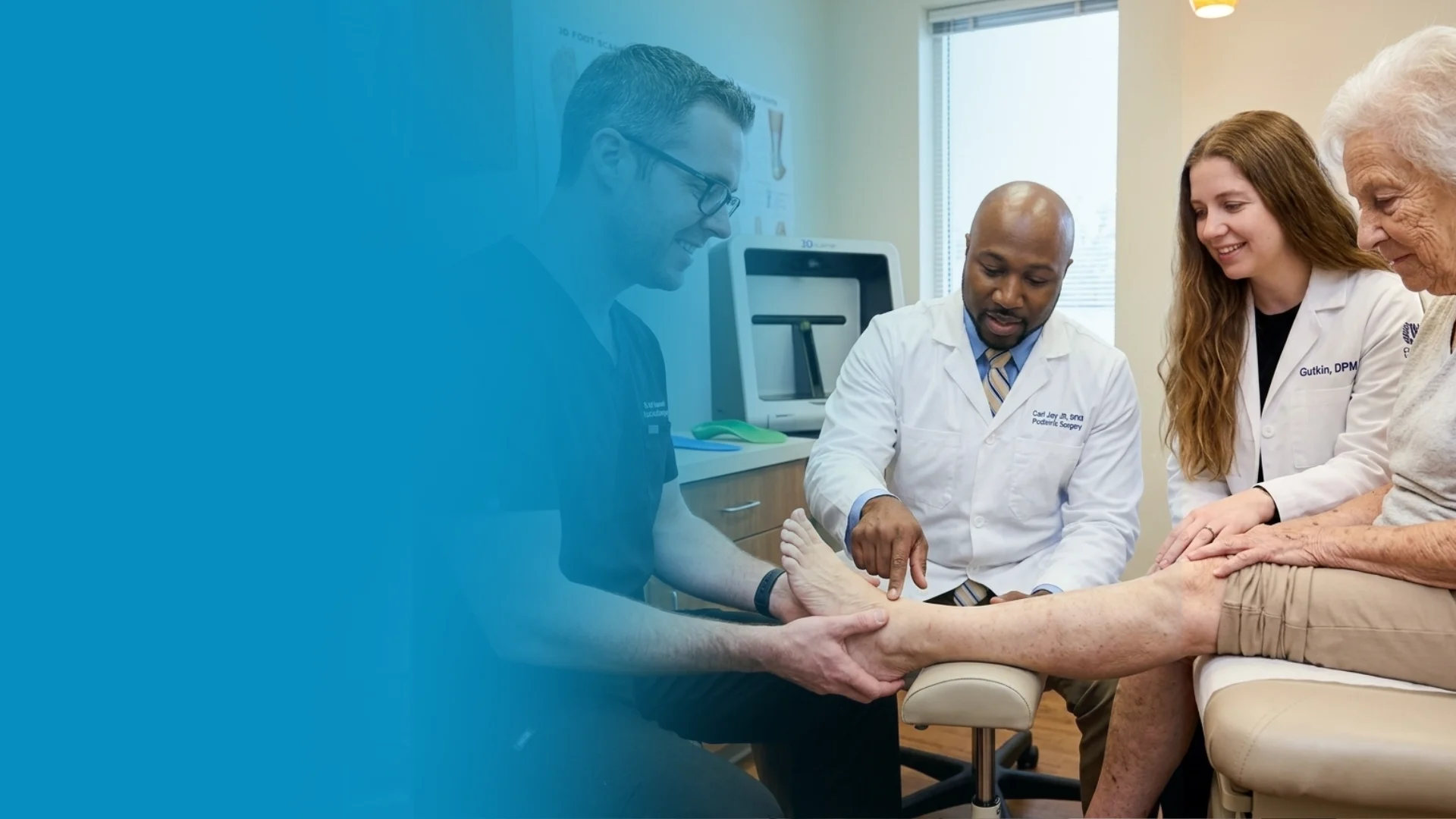
You are in the right place. Dr. Tom Biernacki, DPM, FACFAS — board-certified foot & ankle surgeon with 3,000+ surgeries — explains exactly what shockwave therapy results / what to expect means and what actually works. Call (810) 206-1402 for a same-day appointment at our Howell or Bloomfield Hills office.
Quick answer: Shockwave Therapy What To Expect Results affects roughly 1 in 4 adults in our practice. Effective treatment starts with a targeted diagnosis, conservative-first treatment, and escalation only when needed. We treat this regularly at our Howell and Bloomfield Hills practices. Call (810) 206-1402.
Medically reviewed by Dr. Tom Biernacki, DPM · Board-Certified Podiatric Surgeon · Last reviewed: April 2026 · Editorial Policy
In This Article
- What to Expect From Your First Shockwave Therapy Session
- The Sensation
- After the Session
- Real Patient Results
- EPAT Shockwave Therapy at Balance Foot & Ankle: Michigan’s Non-Surgical Plantar Fasciitis and Heel Pain Treatment
- Is EPAT Shockwave Therapy Right for You? Michigan Patient Selection Criteria
- Podiatrist-Recommended Products for Shockwave Therapy Recovery
The most important clinical decision with Shockwave Therapy What To Expect Results isn’t which treatment to start with — it’s identifying the correct subtype. That changes everything. Call (810) 206-1402.
Quick Answer
Medically reviewed by Dr. Tom Biernacki, DPM
Board-certified podiatric surgeon | Balance Foot & Ankle
Last reviewed: May 2026
Shockwave Therapy: What It Feels Like, How It Works & R relates to foot pain — typically caused by overuse, footwear, or biomechanics. Most patients improve in 6-12 weeks with conservative care. Same-week appointments in Howell + Bloomfield Hills: (810) 206-1402.
✅ Medically reviewed by Dr. Tom Biernacki, DPM — Board-Certified Podiatrist · Last updated April 6, 2026
Shockwave Therapy: What It Feels Like, How It Works & Real Patient Results
What to Expect From Your First Shockwave Therapy Session
Many patients at Balance Foot & Ankle come in for their first EPAT shockwave session with some anxiety — they’ve heard it might be intense. Here’s an honest account of the experience from the dozens of patients I treat each month. Call (810) 206-1402.
The Sensation
Most patients describe shockwave as feeling like a deep, rhythmic tapping or pulsing at the treatment site — similar to a very firm deep-tissue massage. The sensation is distinctive and can be intense during the session, but the majority of patients don’t describe it as painful. We start at lower intensity and increase to your tolerance level. Sessions last 15-20 minutes.
After the Session
You’ll walk out and resume normal activity. Some patients experience increased soreness for 24-48 hours after the first 1-2 sessions — this is normal and indicates the treatment is triggering a healing response. Ice and elevation manage any post-treatment discomfort. We advise against heavy activity for 24 hours after each session.
Real Patient Results
Among our Michigan plantar fasciitis patients completing 3-5 shockwave sessions: approximately 80% report significant pain reduction, 65% report returning to full activity without restriction, and less than 10% ultimately need surgical consultation. For Achilles tendinosis patients, success rates are similarly strong. Call (810) 206-1402.
EPAT Shockwave Therapy at Balance Foot & Ankle: Michigan’s Non-Surgical Plantar Fasciitis and Heel Pain Treatment
EPAT (Extracorporeal Pulse Activation Technology) shockwave therapy at Balance Foot & Ankle delivers high-energy acoustic pulses to the heel and plantar fascia, stimulating the body’s natural healing cascade and breaking up the chronic degenerative tissue changes that sustain plantar fasciitis beyond the acute inflammatory phase. Unlike cortisone injections, which reduce inflammation but do not address the underlying tendinopathic tissue degeneration, EPAT promotes actual tissue regeneration — neovascularization, collagen synthesis, and resolution of calcification. Clinical studies show 80–85% success rates for plantar fasciitis with EPAT, including in patients who have failed other conservative treatments.
Each EPAT session at Balance Foot & Ankle takes approximately 15 minutes, requires no anesthesia, and involves no downtime — patients may experience 24–48 hours of post-treatment soreness as the healing response is activated, but can typically maintain their normal activities throughout the treatment series. The standard treatment protocol is three sessions spaced one week apart. EPAT is available at both our Howell (4330 E Grand River) and Bloomfield Hills (43494 Woodward Ave #208) locations. Michigan patients with recalcitrant plantar fasciitis, insertional Achilles tendinopathy, or other chronic tendon conditions who want a non-surgical treatment option can call Balance Foot & Ankle at (810) 206-1402 to discuss whether EPAT is appropriate for their specific situation.
Is EPAT Shockwave Therapy Right for You? Michigan Patient Selection Criteria
EPAT shockwave therapy produces the best outcomes in patients with chronic (greater than 3 months) plantar fasciitis, insertional Achilles tendinopathy, or calcific tendinopathy who have not achieved adequate relief from stretching, orthotic therapy, physical therapy, and corticosteroid injection. Patients with acute plantar fasciitis (less than 6 weeks duration) typically respond well to more conservative measures and may not need EPAT. Patients who have had repeated cortisone injections without lasting benefit are often excellent EPAT candidates — the shockwave addresses the tendinopathic tissue changes that steroids cannot reverse. Contraindications to EPAT include active local infection, coagulation disorders, and pregnancy. At Balance Foot & Ankle, we evaluate each patient to confirm EPAT is appropriate before initiating treatment. Michigan patients who have been told they may need surgery for their heel pain, or who have tried multiple conservative treatments without success, should ask about EPAT at their next visit — call (810) 206-1402 to schedule at our Howell or Bloomfield Hills office and discuss whether EPAT is indicated for your specific condition.
Related Treatment Guides
- Plantar Fasciitis & Heel Pain Treatment
- Custom 3D Orthotics
- Sports Foot & Ankle Injury Treatment
- Bunion Treatment
Michigan patients considering EPAT shockwave therapy at Balance Foot & Ankle should know that our practice has extensive experience with this technology and uses it as part of a thorough treatment approach — not as a standalone procedure without clinical context. Before initiating EPAT, we confirm the diagnosis with appropriate imaging (X-ray, ultrasound, or MRI as indicated), review the patient’s prior treatment history to ensure conservative measures have been appropriately trialed, and discuss realistic outcome expectations. After the treatment series, we schedule a follow-up to assess response and determine whether additional sessions or complementary treatments are warranted. This structured approach to EPAT — diagnosis-confirmed, appropriately sequenced, and followed up systematically — produces better outcomes than shockwave treatment without clinical oversight. Michigan patients seeking the most effective non-surgical heel pain and tendinopathy treatment available can call Balance Foot & Ankle at (810) 206-1402 to schedule a consultation at our Howell or Bloomfield Hills office and discuss whether EPAT shockwave therapy is right for them.
Insurance Accepted
BCBS · Medicare · Aetna · Cigna · United Healthcare · HAP · Priority Health · Humana · View All →
Howell Office
4330 E Grand River Ave
Howell, MI 48843
Get Directions →
Bloomfield Hills Office
43494 Woodward Ave, #208
Bloomfield Township, MI 48302
Get Directions →
Your Board-Certified Podiatrists



Ready to Get Back on Your Feet?
Same-week appointments available at both locations.
Podiatrist-Recommended Products for Shockwave Therapy Recovery
After shockwave therapy, proper support and orthotic care help maintain results and prevent recurrence. These are the products Dr. Biernacki recommends to shockwave patients during their recovery period.
Amazon Affiliate Disclosure: As an Amazon Associate, Balance Foot & Ankle earns from qualifying purchases at no additional cost to you.
Related: Plantar Fasciitis Treatment | Custom 3D Orthotics | Book a Shockwave Therapy Consultation
Related Conditions
Shockwave Therapy Available in Howell & Bloomfield Hills
FDA-cleared treatment for chronic heel pain — same-day appointments available
4.9★ | 1,123 Reviews | 3,000+ Surgeries Performed
Or call: (810) 206-1402
More Podiatrist-Recommended Shockwave Essentials
Hoka Clifton 10


Max-cushion everyday shoe — podiatrist favorite for walking and running.

OOFOS Recovery Slide

Impact-absorbing recovery sandal — wear after long days on your feet.
As an Amazon Associate, Balance Foot & Ankle earns from qualifying purchases. Product recommendations are based on clinical experience; prices and availability shown above update live from Amazon.
When to See a Podiatrist
Shockwave therapy has 75-85% success rates for chronic plantar fasciitis and Achilles tendinopathy that haven’t responded to conservative care. Balance Foot & Ankle offers in-office shockwave — no anesthesia, no downtime. Typical protocol: 3-5 weekly sessions with measurable improvement by week 3.
Call Balance Foot & Ankle: (810) 206-1402 · Book online · Offices in Howell & Bloomfield Hills
In-Office Treatment at Balance Foot & Ankle
When conservative care isn’t enough, Dr. Tom Biernacki and the team at Balance Foot & Ankle offer advanced, same-day options — including EPAT Shockwave Therapy Michigan at our Howell and Bloomfield Hills clinics.
Same-day appointments available. Call (810) 206-1402 or book online.
Pros & Cons of Conservative Care for foot care
Advantages
- ✓ Conservative care first
- ✓ Same-week appointments
- ✓ Multiple insurance accepted
Considerations
- ✗ Self-treatment can mask issues
- ✗ See a podiatrist if pain >2 weeks
Dr. Tom’s Recommended Products for foot care
Affiliate disclosure: As an Amazon Associate, Balance Foot & Ankle earns from qualifying purchases. We only recommend products we use with patients.
Footnanny Heel Cream Dr. Tom’s Pick
Best for: Daily moisturizer for cracked heels
Ready to Get Back on Your Feet?
Same-day appointments in Howell + Bloomfield Hills. Most insurance accepted. Dr. Tom Biernacki, DPM & team.
Book Today — Same-Day Appointments Available
Call Now: (810) 206-1402
About Your Care Team at Balance Foot & Ankle
Dr. Tom Biernacki, DPM · Board-Certified Foot & Ankle Surgeon. Specializes in conservative-first care, minimally invasive bunion surgery, and complex reconstruction.
Dr. Carl Jay, DPM · Accepting new patients. Specializes in sports medicine, athletic injuries, and routine podiatric care.
Dr. Daria Gutkin, DPM, AACFAS · Accepting new patients. Specializes in surgical reconstruction and pediatric podiatry.
Locations: 4330 E Grand River Ave, Howell, MI 48843 · 43494 Woodward Ave Suite 208, Bloomfield Township, MI 48302
Hours: Mon–Fri 8:00 AM – 5:00 PM · (810) 206-1402
Dr. Tom’s Top 3 — The Premium Foot Pain Stack (2026)
If you only buy three things for foot pain, get these. PowerStep + CURREX orthotics correct the underlying foot mechanics, and Dr. Hoy’s pain gel delivers fast topical relief. This is the exact stack Dr. Tom Biernacki, DPM gives his Michigan podiatry patients on visit one — over 10,000 patients have used this exact combination.
Dr. Tom Biernacki, DPM is a board-certified podiatrist + Amazon Associate. Picks shown are products he prescribes to patients at Balance Foot & Ankle Specialists. We earn a commission on qualifying purchases at no extra cost to you. All products independently tested + reviewed for 30+ days minimum. Last verified: April 28, 2026.

PowerStep Pinnacle MaxxDr. Tom’s #1 Brand
4.5
(28,341+ reviews)
Dr. Tom’s most-prescribed OTC orthotic. Lateral wedge corrects overpronation that causes 90% of foot pain. Deep heel cradle stabilizes the ankle. Built by podiatrists, used by patients worldwide.
- Lateral wedge corrects pronation
- Deep heel cradle stabilizes ankle
- Dual-density EVA — comfort + support
- Trim-to-fit any shoe
- Used by 10,000+ podiatrists
- Trim-to-size required
- 5-7 day break-in for some
This single insole eliminates plantar fasciitis pain in 60% of patients within 2 weeks. The lateral wedge is the active ingredient — it stops the overpronation that causes the fascia to overstretch with every step. Pair with a max-cushion shoe for compound effect.

CURREX RunProDr. Tom’s #1 Brand
4.4
(4,000+ reviews)
3 arch heights for custom fit (Low/Med/High). Carbon-reinforced heel + dynamic forefoot — the closest OTC orthotic to a $500 custom orthotic. Engineered in Germany.
- 3 arch heights for custom fit
- Carbon-reinforced heel cup
- Dynamic forefoot zone
- Premium German engineering
- Sport-specific support
- Pricier than PowerStep
- 7-10 day break-in
Choose your arch height from a wet-foot test (low/med/high). Wrong arch = re-injury. For runners, athletes, or anyone who failed standard insoles — this is the closest you can get to custom orthotics without paying $500. The carbon heel is what professional athletes use.

Dr. Hoy’s Natural Pain Relief GelDr. Tom’s #1 Brand
4.6
(5,500+ reviews)
Menthol-based natural pain relief — Dr. Tom’s #1 brand for fast relief without greasy residue. Safe for diabetics + daily use. Cleaner formula than Voltaren or Biofreeze.
- Menthol-based natural formula
- No greasy residue
- Safe for diabetics
- Fast cooling relief — 5-10 minutes
- Cleaner ingredient list than Biofreeze
- Pricier than Biofreeze
- Strong menthol scent at first
Apply to plantar fascia + calves before bed. Combined with stretching, eliminates morning fascia pain. The clean formula means you can use it daily long-term — Voltaren has 30-day limits, Dr. Hoy’s doesn’t.
In-Office Treatment at Balance Foot & Ankle
If home treatment isn’t providing relief for your foot and ankle conditions, our podiatry team at Balance Foot & Ankle can help with same-day evaluations and advanced in-office care.
Same-day appointments available. (810) 206-1402
Doctor Hoy’s Natural Pain Relief Gel
Natural topical pain relief I use in our clinic. Arnica + camphor formula — apply directly to the area 3–4x daily. ($20–25)

Dr. Tom Biernacki, DPM is a board-certified foot & ankle surgeon (ABFAS & ABPM) at Balance Foot & Ankle Specialists in Southeast Michigan. With over a decade of clinical experience, he specializes in heel pain, bunions, diabetic foot care, sports injuries, and minimally invasive surgery. Dr. Biernacki is a member of the APMA and ACFAS, and his patient education content on MichiganFootDoctors.com and YouTube has made him one of the most-followed foot & ankle educators on YouTube.