

You are in the right place. Dr. Tom Biernacki, DPM, FACFAS — board-certified foot & ankle surgeon with 3,000+ surgeries — explains exactly what sprained big toe joint (first MTP) means and what works. Call (810) 206-1402 for same-day appointment at Howell or Bloomfield Hills.
Quick answer: Sprained Big Toe Joint First Mtp Sprain is a common foot/ankle topic that affects many patients. The 2026 evidence-based approach combines proper diagnosis, conservative-first treatment, and escalation only when needed. We treat this regularly at our Howell and Bloomfield Hills practices. Call (810) 206-1402.

What Is a First MTP Sprain?
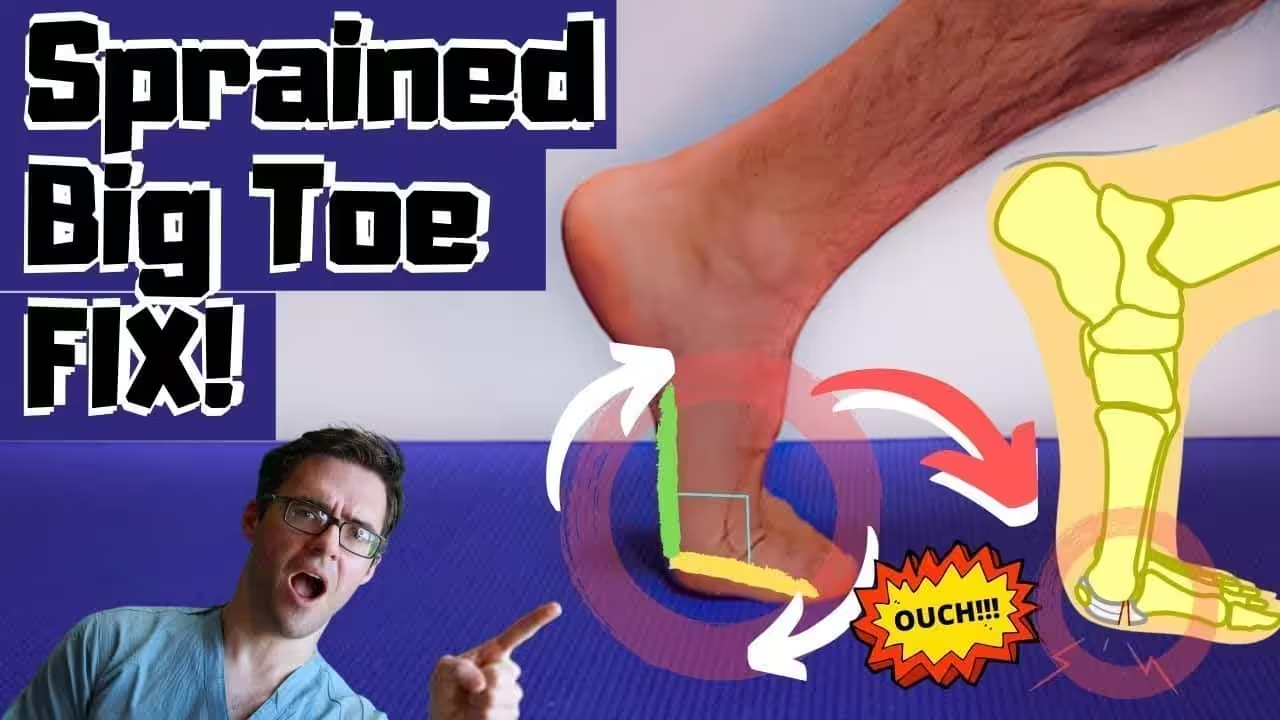
The first metatarsophalangeal (MTP) joint is where the big toe meets the foot. A sprain of this joint occurs when the ligaments surrounding it are stretched or torn, typically from a sudden hyperextension or hyperflex of the toe. While commonly confused with turf toe (which is a specific hyperextension injury), the term “first MTP sprain” encompasses injuries in multiple directions and from various mechanisms.
At Balance Foot & Ankle, we see first MTP sprains in athletes and non-athletes alike. The joint is subjected to enormous forces during walking and running — up to twice body weight during push-off — making complete rest impractical and proper treatment essential.
Anatomy of the First MTP Joint
The first MTP joint is stabilized by a complex of ligamentous and capsular structures. The plantar plate is a thick fibrocartilaginous structure on the bottom of the joint that resists hyperextension. The medial and lateral collateral ligaments resist side-to-side instability. Two sesamoid bones embedded in the flexor hallucis brevis tendons beneath the joint provide mechanical advantage and protect the joint surface. Any of these structures can be injured in a first MTP sprain.
How First MTP Sprains Happen
The most common mechanism is forced dorsiflexion — the toe is bent upward beyond its normal range while the heel is raised. This is the classic turf toe mechanism, common in football, soccer, and basketball. However, the toe can also be sprained in hyperflex (bent downward forcefully), valgus (pushed toward the second toe), or varus (pushed away from the second toe) directions. Each direction stresses a different set of structures.
Non-athletic causes include stubbing the toe on furniture, stepping awkwardly off a curb, or wearing footwear that restricts natural toe motion and concentrates stress at the joint.

Symptoms of a First MTP Sprain
Pain at the base of the big toe is the primary symptom. The pain may be sharp and immediate at the time of injury, followed by a dull throbbing ache. Swelling and bruising typically appear within hours and may be quite pronounced given the joint is just beneath the skin. Range of motion is reduced — specifically, trying to bend the toe upward or downward produces pain at the limits of motion.
Weight bearing is usually possible but painful. A severe sprain may cause significant instability of the joint, with the toe feeling loose or wobbly. This instability indicates complete ligament rupture and requires prompt evaluation.
Grading First MTP Sprains
Grade 1 sprains involve microscopic tearing of ligament fibers without macroscopic disruption. Pain is mild to moderate, swelling is minimal, and weight bearing is relatively pain-free. Grade 2 sprains involve partial ligament tears with more significant swelling and pain with motion. Grade 3 sprains represent complete ligament rupture with instability, severe swelling, and inability to bear weight comfortably.
Diagnosis
Clinical examination identifies the specific direction of instability and the structures involved. We assess active and passive range of motion, palpate the ligamentous structures, and stress the joint in multiple directions to evaluate ligament integrity. X-rays rule out fractures of the proximal phalanx, first metatarsal head, or sesamoids. MRI is reserved for grade 2 to 3 sprains to assess the extent of soft tissue damage and guide treatment decisions.
Treatment Options
Conservative Management
Grade 1 sprains respond well to the PRICE protocol — Protection, Rest, Ice, Compression, and Elevation — in the first 48 to 72 hours. Buddy taping the big toe to the second toe limits painful side-to-side motion while allowing some functional movement. A stiff-soled shoe or a carbon fiber foot plate reduces painful dorsiflexion during push-off and allows earlier return to activity. Anti-inflammatory medications reduce pain and swelling during the acute phase.
Immobilization for Grade 2 Sprains
More significant partial tears may benefit from a short period of immobilization in a walking boot or short leg cast to protect the healing ligaments. This is typically two to four weeks, followed by progressive rehabilitation focusing on restoring range of motion, strength, and proprioception.
Surgical Treatment for Grade 3 Sprains
Complete ligament ruptures with instability, particularly those involving plantar plate avulsion or sesamoid diastasis, may require surgical repair. The goal is restoring ligamentous stability to prevent chronic pain, progressive hallux valgus deformity, and degenerative arthritis. Surgical approach depends on which structures are disrupted.
Recovery Timeline
Grade 1 sprains typically resolve in two to four weeks with appropriate treatment. Grade 2 sprains require four to eight weeks for full resolution. Grade 3 sprains treated surgically may require three to six months for complete recovery and return to unrestricted activity. Premature return to sport after an inadequately healed first MTP sprain significantly increases the risk of chronic instability and recurrent injury.
Preventing Recurrence
Wearing footwear with a rigid forefoot and adequate toe box width reduces repetitive stress on the first MTP joint. Athletes benefit from carbon fiber plate insoles to limit dorsiflexion during explosive push-off. Strengthening the intrinsic foot muscles and the flexor hallucis longus through specific exercises improves dynamic joint stability. Any athlete returning to sport after a first MTP sprain should undergo functional movement assessment to ensure normal biomechanics are restored before resuming full competition.
Ready to Relieve Your Foot Pain?
Board-certified podiatrists serving Southeast Michigan. Same-week appointments available.
Injured Your Big Toe?
Our podiatrists diagnose and grade first MTP sprains and design targeted recovery plans to restore push-off strength.
Book an AppointmentMore Podiatrist-Recommended Ankle Sprain Essentials
Stability Walking/Running Shoe
Brooks Adrenaline GTS 25 — lateral support during recovery walking.
KT Tape for Ankle Support
KT Tape — proprioceptive support for athletic return-to-play.
Supportive Insole


![Can You Walk on a Sprained Ankle? [Rolled Ankle Sprain Recovery Time]](https://www.michiganfootdoctors.com/wp-content/cache/flying-press/fad1e684e309d44cd86b7b5c8510c6a3.jpg)
Watch: Can You Walk on a Sprained Ankle? [Rolled Ankle Sprain Recovery Time] — MichiganFootDoctors YouTube
PowerStep Pinnacle — arch support reduces re-injury risk during recovery.
As an Amazon Associate, Balance Foot & Ankle earns from qualifying purchases. Product recommendations are based on clinical experience; prices and availability shown above update live from Amazon.
When to See a Podiatrist
A sprain that hasn’t fully recovered after 6 weeks often has residual ligament laxity or occult fracture that keeps the ankle unstable. Balance Foot & Ankle X-rays and stress-tests every lingering sprain — if the ligament is torn, we offer bracing, PRP, and (for chronic instability) minimally-invasive repair. Don’t keep re-rolling the same ankle; let us stabilize it properly.
Call Balance Foot & Ankle: (810) 206-1402 · Book online · Offices in Howell & Bloomfield Hills
Frequently Asked Questions
How long does a sprained big toe take to heal?
Grade 1 turf toe heals in 1-2 weeks; Grade 2 in 2-6 weeks; Grade 3 may need 6-12 weeks of immobilization and can require surgery for complete tears.
Should I walk on a sprained big toe?
Walking is usually allowed with stiff-soled shoes or taping for Grade 1 and mild Grade 2 sprains. Grade 3 injuries require immobilization in a walking boot or cast.
What is the difference between turf toe and a stubbed toe?
A stubbed toe is a mild contusion or joint bruise that resolves in days. Turf toe is a ligament sprain of the first MTP joint from forced hyperextension, causing persistent pain and instability.
Insurance Accepted
BCBS · Medicare · Aetna · Cigna · United Healthcare · HAP · Priority Health · Humana · View All →
Howell Office
4330 E Grand River Ave
Howell, MI 48843
Get Directions →
Bloomfield Hills Office
43494 Woodward Ave, Suite 208
Bloomfield Township, MI 48302
Get Directions →
Your Board-Certified Podiatrists



Ready to Get Back on Your Feet?
Same-week appointments available at both locations.
Book Your AppointmentDifferential Diagnosis: What Else Could It Be?
Not every case of turf toe / first mtp sprain is straightforward. In our clinic we routinely rule out three look-alike conditions before confirming the diagnosis. If your symptoms don’t match the classic presentation, one of these may explain the pain — which is why physical exam matters more than self-diagnosis.
| Condition | How It Differs |
|---|---|
| Hallux rigidus | Chronic progressive stiffness, not a single hyperextension event; dorsal osteophyte on X-ray. |
| Sesamoiditis | Pain under the joint (at the sesamoid bones), not on top; worse with push-off. |
| Gout | Warm, erythematous, crystal-driven flare; elevated uric acid and crystal arthrocentesis. |
Red Flags — When to See a Podiatrist Now
Seek same-day evaluation at Balance Foot & Ankle if you notice any of the following:
- Inability to push off big toe
- Swelling and bruising across entire joint
- Grade 3 injury on MRI (complete plantar plate tear)
- Progressive hallux valgus after injury
Call (810) 206-1402 or request an appointment. Our Howell and Bloomfield Hills offices reserve same-day slots for urgent foot and ankle issues.
In Our Clinic: What We See
Clinical perspective from Dr. Tom Biernacki, DPM — Balance Foot & Ankle, Howell & Bloomfield Hills, MI:
Turf toe is the injury everyone remembers — a football cleat stuck in the turf, a yoga pose that forced the toe too far back, or a misstep off a curb. In our clinic we grade 1, 2, or 3. Grade 1 is taping, a stiff-soled shoe, and return to play in a week. Grade 2 frequently takes 4-6 weeks and may need a carbon-fiber plate inside the shoe. Grade 3 plantar-plate tears need imaging and often surgical repair. We have patients keep a photo of the toe in neutral so we can track swelling and bruising across follow-ups. Return-to-sport is earned, not timed.
In-Office Treatment at Balance Foot & Ankle
If home treatment isn’t providing relief for your foot and ankle conditions, our podiatry team at Balance Foot & Ankle can help with same-day evaluations and advanced in-office care.
Same-day appointments available. (810) 206-1402
Doctor Hoy’s Natural Pain Relief Gel
Natural topical pain relief I use in our clinic. Arnica + camphor formula — apply directly to the area 3–4x daily. ($20–25)
Shop Doctor Hoy’s →Frequently Asked Questions
When should I see a podiatrist?
If symptoms persist past 2 weeks, affect your normal activity, or are accompanied by red-flag symptoms (warmth, redness, swelling, inability to bear weight).
What does treatment cost?
Most diagnostic visits and conservative treatments are covered by Medicare and major insurers. Out-of-pocket costs vary by your specific plan.
How quickly can I get an appointment?
Most non-urgent cases see us within 5 business days. Urgent cases (sudden pain, possible fracture) typically same or next business day.
What is Ankle sprain?
Ankle sprain is a common foot/ankle condition that affects mobility and quality of life. Understanding the underlying cause is the first step in successful treatment. Our podiatrists at Balance Foot & Ankle perform a hands-on biomechanical exam, review your activity history, and use diagnostic imaging when appropriate to identify the root cause—not just treat the symptom. Many patients have been told to “rest and ice” without a deeper diagnostic workup; our approach is different.
Symptoms and warning signs
Common signs of ankle sprain include pain that worsens with activity, morning stiffness, swelling, tenderness when palpated, and difficulty bearing weight. If you experience sudden severe pain, inability to walk, visible deformity, numbness or color change, contact our office the same day or visit urgent care—these can signal a more serious injury such as a fracture, tendon rupture, or vascular compromise. Diabetics with any foot wound should seek same-day care.
Conservative treatment options
Most cases of ankle sprain respond to non-surgical care: structured rest, supportive footwear changes, custom orthotics, targeted stretching and strengthening protocols, anti-inflammatory medications when medically appropriate, and in-office procedures such as ultrasound-guided injections. We also offer advanced therapies including MLS laser therapy, EPAT/shockwave, regenerative injections, and image-guided procedures. Treatment is sequenced from least invasive to most invasive, and we explain the rationale at every step.
When is surgery considered?
Surgery is reserved for cases that fail 3-6 months of well-structured conservative care, when there is structural pathology (severe deformity, complete tear, advanced arthritis), or when imaging shows damage that will not heal without intervention. Our surgeons have performed 3,000+ foot and ankle procedures and prioritize minimally-invasive techniques whenever appropriate. We discuss recovery timelines, return-to-activity milestones, and realistic outcome expectations before any procedure is scheduled.
Recovery timeline and prevention
Recovery from ankle sprain varies based on severity and chosen treatment path. Conservative cases often improve within 4-8 weeks with consistent adherence to the protocol. Post-procedural recovery may range from a few days (in-office procedures) to several months (reconstructive surgery). Long-term prevention involves footwear assessment, activity modification, structured strengthening, and regular check-ins with your podiatrist if you have a history of recurrence. We provide written home-exercise plans and digital follow-up support.
Ready to feel better?
Same-week appointments available in Howell and Bloomfield Hills, Michigan.
Book Your VisitReady to fix this for good?
Reading goes so far. The fastest path is a 30-minute office visit. Same-day Howell or Bloomfield Hills. Call (810) 206-1402.
Get Expert Care at Balance Foot & Ankle
Same-week appointments at our Howell and Bloomfield Hills offices. Board-certified podiatric surgeons. Most insurance accepted.

Dr. Tom Biernacki, DPM is a board-certified foot & ankle surgeon (ABFAS & ABPM) at Balance Foot & Ankle Specialists in Southeast Michigan. With over a decade of clinical experience, he specializes in heel pain, bunions, diabetic foot care, sports injuries, and minimally invasive surgery. Dr. Biernacki is a member of the APMA and ACFAS, and his patient education content on MichiganFootDoctors.com and YouTube has made him one of the most-followed foot & ankle educators on YouTube.