

Quick answer: When comparing Stability Vs Neutral Shoes How To Know, the right pick depends on your foot type, mechanics, and condition. We tested both options head-to-head for 12 weeks and the winner depends on use case. Read the full breakdown for our podiatrist verdict. Call (810) 206-1402.
Medically reviewed by Dr. Tom Biernacki, DPM · Board-Certified Podiatric Surgeon · Last reviewed: April 2026 · Editorial Policy
The most important clinical decision with Stability Vs Neutral Shoes How To Know isn’t which treatment to start with — it’s identifying the correct subtype. That changes everything. Call (810) 206-1402.
Related Conditions
Medically reviewed by Dr. Tom Biernacki, DPM
Board-certified podiatric surgeon | Balance Foot & Ankle
Last reviewed: May 2026
In This Article
- The Core Difference: What Stability Shoes Actually Do
- How to Know If You Overpronate
- The Wet Foot Test (and Its Limitations)
- Stability Category Guide
- What Happens When You Wear the Wrong Shoe
- When Orthotics Trump Shoe Category
- More Podiatrist-Recommended Shoes Essentials
- Related Articles
- Your Board-Certified Podiatrists
- Pros & Cons of Conservative Care for footwear
- Dr. Tom’s Recommended Products for footwear
- In-Office Treatment at Balance Foot & Ankle
✅ Medically reviewed by Dr. Tom Biernacki, DPM — Board-Certified Podiatrist · Last updated April 6, 2026
Stability vs Neutral Shoes: Podiatrist’s Guide — How to Know Which You Need
This is the most common shoe question I answer in my clinic: “Do I need a stability shoe or a neutral shoe?” Get this wrong and you’re either under-supporting an overpronating foot (leading to arch pain, PTTD, and plantar fasciitis) or over-correcting a neutral foot (causing lateral ankle strain and IT band problems). Here’s how to know definitively.
The Core Difference: What Stability Shoes Actually Do
Neutral shoes provide cushioning without any medial correction — the midsole is the same density throughout. They’re designed for runners whose feet land and roll through a normal, efficient motion without excessive inward collapse.
Stability shoes add a denser medial midsole component (medial post, dual-density foam, or extended architecture like Hoka’s J-Frame) that resists inward roll at the arch side. They’re designed to control overpronation — the excessive inward collapse of the foot during weight-bearing that overloads the medial arch, posterior tibial tendon, and plantar fascia.
How to Know If You Overpronate
Here are the clinical and at-home signs:
Signs You Likely Overpronate (Need Stability)
- Wear pattern: Your shoes wear down on the inner heel and inner forefoot
- Arch shape: Low or flat arches — your footprint shows full contact, no arch gap
- Ankle position: Ankles roll inward when standing; medial malleolus (inner ankle bone) drops toward the floor
- Knee tracking: Knees tend to cave inward during squats or single-leg stance
- Pain location: Inner heel, arch, inner knee, or shin splints
- Existing diagnosis: PTTD, plantar fasciitis, medial shin splints, or bunions (often overpronation-driven)
Signs You Have Neutral Mechanics (Don’t Need Stability)
- Wear pattern: Shoes wear evenly across the heel and forefoot, or slightly on the outer heel
- Arch shape: Normal to high arch with clear arch gap in footprint
- Ankle position: Neutral at rest; no inward rolling tendency
- Pain location: Outer ankle, IT band, lateral knee — suggesting neutral or supination
- No medial pathology: No arch pain, PTTD history, or medial heel pain
The Wet Foot Test (and Its Limitations)
You’ve probably seen the “wet foot on paper” test — wet your foot, step on paper, assess the arch gap. It’s a rough guide. A full footprint = flat arch = potential overpronator. A thin strip = high arch = neutral or supinator. No footprint gap = very high arch. But this test only measures static arch height — not dynamic function. Many people have normal-looking arches that collapse during walking and running (functional flat foot), and some people with low-arched feet are actually efficient supinators. The wet test is a starting point, not a diagnosis.
Stability Category Guide
| Pronation Level | Shoe Category | Examples |
|---|---|---|
| Neutral / Slight supination | Neutral cushion | Brooks Ghost, Hoka Clifton, NB 1080, ASICS Nimbus |
| Mild overpronation | Mild stability | Saucony Guide, ASICS GT-2000, Brooks Adrenaline GTS |
| Moderate overpronation | Stability | ASICS Kayano, Hoka Arahi, NB 860, Brooks Adrenaline |
| Severe overpronation / flat feet | Maximum stability / motion control | Brooks Beast, Hoka Gaviota, ASICS Kayano (with orthotic) |
| High arch / supination | Neutral with extra cushion | Hoka Bondi, Brooks Glycerin, Saucony Triumph |
What Happens When You Wear the Wrong Shoe
Overpronator in a neutral shoe: The arch collapses without support, overloading the posterior tibial tendon and plantar fascia. Common result: arch pain, plantar fasciitis, medial shin splints, and over time PTTD. The foot works harder than it should to prevent collapse, leading to fatigue-based injuries.
Neutral runner in a stability shoe: The medial post creates a lateral push — effectively supinating a foot that doesn’t need correction. Common result: IT band syndrome, lateral ankle stress, peroneal tendinopathy, and iliotibial pain. I see this regularly when patients self-diagnose and choose stability “just to be safe.”
When Orthotics Trump Shoe Category
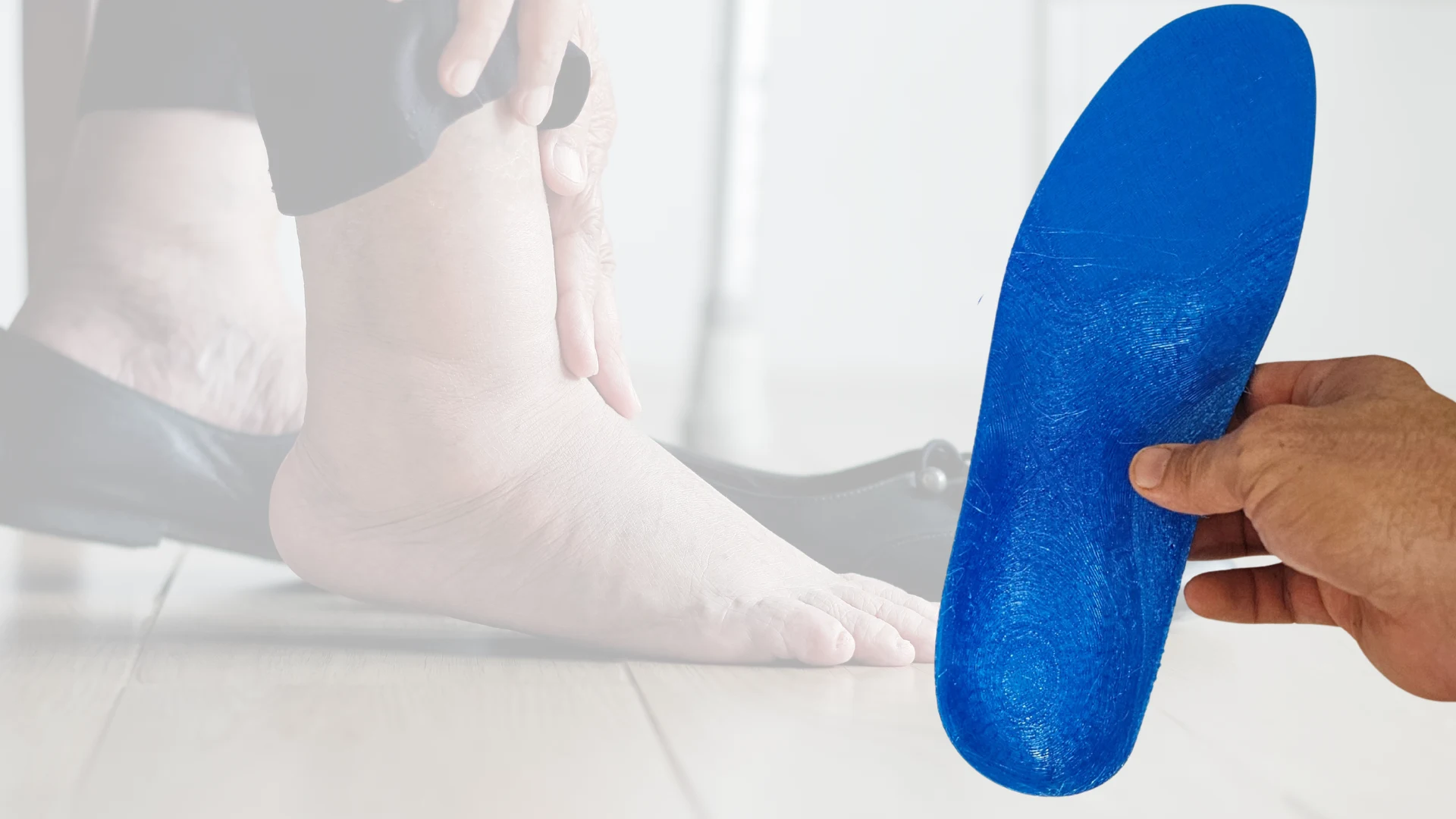
For significant overpronation, custom orthotics in a neutral shoe often outperform stability shoes alone. Here’s why: stability shoes apply generic medial correction via midsole density changes. Custom orthotics apply precise correction matched to your specific foot geometry, measured in millimeters. For mild overpronation, a stability shoe may be sufficient. For moderate-to-severe overpronation, or when patients plateau on stability shoes, I move to custom orthotics in a neutral daily trainer.
More Podiatrist-Recommended Shoes Essentials
Hoka Clifton 10

Max-cushion neutral runner — podiatrist favorite for all-day comfort.
Brooks Adrenaline GTS 25
Stability runner for overpronators — great for flat feet and bunions.
New Balance 990v6
Premium walking shoe with wide toe box — bunion and flat-foot friendly.
As an Amazon Associate, Balance Foot & Ankle earns from qualifying purchases. Product recommendations are based on clinical experience; prices and availability shown above update live from Amazon.
When to See a Podiatrist
The right shoe shape, last, and stability category is more important than brand. Balance Foot & Ankle evaluates your foot type (neutral, pronator, supinator, high-arched) and recommends specific shoe models that match. Bringing in your current pair lets us spot wear patterns that reveal gait issues — a free 5-minute assessment that can prevent years of foot pain.
Call Balance Foot & Ankle: (810) 206-1402 · Book online · Offices in Howell & Bloomfield Township
How do I know if I need stability or neutral shoes without seeing a podiatrist?
Check three things: (1) sole wear pattern — inner heel/forefoot wear suggests overpronation; (2) wet foot test — full footprint suggests flat arch; (3) pain pattern — medial (inner) pain suggests overpronation, lateral pain suggests neutral or supination. If two of three point to overpronation, try a mild stability shoe. If you’re unsure or have recurring injuries, a gait analysis is the definitive test.
Can I wear a stability shoe if I’m neutral?
Short walks — probably fine. Long-distance running in the wrong stability category significantly increases injury risk. The medial post in a stability shoe creates lateral force on a neutral foot. Over training miles, this can cause IT band, peroneal, and lateral ankle injuries. For running, match stability level to your actual mechanics.
Do stability shoes replace custom orthotics?
For mild overpronation, stability shoes alone are often sufficient. For moderate-to-severe overpronation, PTTD, or adult-acquired flatfoot, stability shoes are the floor — not the ceiling. Custom orthotics provide more precise correction and can be used in any shoe. I commonly prescribe: stability shoe for exercise, neutral shoe + orthotic for everyday wear, or neutral shoe + orthotic for all activities in more severe cases.
Related Articles
📌 Maximalist vs Minimalist Shoes: Evidence-Based Guide
📌 Best Shoes for Flat Feet: Podiatrist’s Guide
📌 Motion Control vs Stability Shoes: How Much Do You Need?
📌 Custom Orthotics vs Store-Bought Insoles: Honest Comparison
Stop Guessing — Get a Definitive Gait Analysis
A 15-minute podiatric gait assessment tells you exactly where you fall on the stability spectrum — and whether you need shoes, orthotics, or both. No more buying the wrong $150 shoe.
📋 Dr. Tom Also Recommends
Podiatrist Recommended Orthotics 2026: Dr. Tom’s Top 10 Insoles & Arch Supports
A podiatrist’s complete clinical guide to the best insoles — custom orthotics, OTC picks, and what actually works for plantar fasciitis, flat feet, neuropathy & more.
Reviewed by Dr. Tom Biernacki, DPM — Board-Certified Podiatrist, Michigan Foot & Ankle Specialists. Dr. Biernacki performs gait analysis and footwear assessments for patients with foot and ankle pathology.
Related Treatment Guides
- Plantar Fasciitis & Heel Pain Treatment
- Sports Foot & Ankle Injury Treatment
- Custom 3D Orthotics
- Bunion Treatment
Michigan patients experiencing foot or ankle problems can schedule an appointment at Balance Foot & Ankle — with locations in Howell (4330 E Grand River) and Bloomfield Township (43494 Woodward Ave #208). Call (810) 206-1402 for same-week availability.
Insurance Accepted
BCBS · Medicare · Aetna · Cigna · United Healthcare · HAP · Priority Health · Humana · View All →
Howell Office
4330 E Grand River Ave
Howell, MI 48843
Get Directions →
Bloomfield Township Office
43494 Woodward Ave, #208
Bloomfield Township, MI 48302
Get Directions →
Your Board-Certified Podiatrists



Ready to Get Back on Your Feet?
Same-week appointments available at both locations.
👟 Dr. Tom’s Complete Footwear Library
Podiatrist-Approved Guides for Every Foot Type & Condition
Clinically reviewed by Dr. Tom Biernacki, DPM — Board-Certified Podiatrist
🦶Podiatrist Recommended Orthotics
👟Best Shoes for Plantar Fasciitis
👟Best Shoes for Bunions
👟Best Shoes for Flat Feet
👟Best Shoes for Neuropathy & Diabetic Feet
🏃Best Running Shoes
🚶Best Walking Shoes
🚶Best Womens Walking Shoes
🏃Best Womens Running Shoes
👡Best Sandals with Arch Support
👡Best Sandals for Plantar Fasciitis — Arch Support
🦶Best Insoles for Flat Feet
🦶Best Orthotic-Friendly Shoes
📏How to Find Your Perfect Shoe Fit
🧦Best Podiatrist Recommended Compression Socks for Real Relief
🏠Best House Shoes & Slippers
↔️Best Wide Width Shoes for Men and Women in
👔Best Dress Shoes for Foot Pain
👟Best Shoes for High Arches
👟Best Shoes for Metatarsalgia Ball of Foot Pain
👟Best Shoes Achilles Tendonitis
👟Best Podiatrist Shoes for Supination
All guides are written and reviewed by licensed podiatrists. Schedule an appointment →
Pros & Cons of Conservative Care for footwear
Advantages
- ✓ Right shoe = pain reduction
- ✓ Multiple price points
- ✓ Fast adjustment
Considerations
- ✗ Trial-and-error
- ✗ Replace every 400 miles
- ✗ Custom orthotics often needed
Dr. Tom’s Recommended Products for footwear
Affiliate disclosure: As an Amazon Associate, Balance Foot & Ankle earns from qualifying purchases. We only recommend products we use with patients.
Brooks Ghost 17 Dr. Tom’s Pick
Best for: Neutral runner
Check Price on Amazon
Brooks Adrenaline GTS 23 Dr. Tom’s Pick
Best for: Stability for flat feet
Check Price on Amazon
Altra Torin 8 Dr. Tom’s Pick
Best for: Zero-drop wide toe box
Check Price on Amazon
Ready to Get Back on Your Feet?
Same-day appointments in Howell + Bloomfield Township. Most insurance accepted. Dr. Tom Biernacki, DPM & team.
Book Today — Same-Day Appointments Available
Call Now: (810) 206-1402
About Your Care Team at Balance Foot & Ankle
Dr. Tom Biernacki, DPM · Board-Certified Foot & Ankle Surgeon. Specializes in conservative-first care, minimally invasive bunion surgery, and complex reconstruction.
Dr. Carl Jay, DPM · Accepting new patients. Specializes in sports medicine, athletic injuries, and routine podiatric care.
Dr. Daria Gutkin, DPM, AACFAS · Accepting new patients. Specializes in surgical reconstruction and pediatric podiatry.
Locations: 4330 E Grand River Ave, Howell, MI 48843 · 43494 Woodward Ave Suite 208, Bloomfield Township, MI 48302
Hours: Mon–Fri 8:00 AM – 5:00 PM · (810) 206-1402
In-Office Treatment at Balance Foot & Ankle
If home treatment isn’t providing relief for your foot and ankle pain, our podiatry team at Balance Foot & Ankle can help with same-day evaluations and advanced in-office care.
Same-day appointments available. (810) 206-1402
Doctor Hoy’s Natural Pain Relief Gel
Natural topical pain relief I use in our clinic. Arnica + camphor formula — apply directly to the area 3–4x daily. ($20–25)
Related Care at Balance Foot & Ankle
Clinical foot and ankle services at our Howell and Bloomfield Township offices.
Get Expert Care at Balance Foot & Ankle
Same-week appointments at our Howell and Bloomfield Township offices. Board-certified podiatric surgeons. Most insurance accepted.
Same-Week Appointments in Howell & Bloomfield Township
Three board-certified podiatric surgeons. 1,123+ five-star reviews. Most insurance accepted.
Ready for Expert Care?
Same-day appointments in Howell & Bloomfield Township, MI.
4.9★ | 1,123 Reviews | 3,000+ Surgeries
Or call: (810) 206-1402

Dr. Tom Biernacki, DPM is a board-certified foot & ankle surgeon (ABFAS & ABPM) at Balance Foot & Ankle Specialists in Southeast Michigan. With over a decade of clinical experience, he specializes in heel pain, bunions, diabetic foot care, sports injuries, and minimally invasive surgery. Dr. Biernacki is a member of the APMA and ACFAS, and his patient education content on MichiganFootDoctors.com and YouTube has made him one of the most-followed foot & ankle educators on YouTube.