
You are in the right place. Dr. Tom Biernacki, DPM, FACFAS — board-certified foot & ankle surgeon with 3,000+ surgeries — explains exactly what tarsal tunnel syndrome means and what actually works. Call (810) 206-1402 for a same-week appointment at our Howell or Bloomfield Township office.
Quick answer: Tarsal Tunnel Syndrome Ankle Nerve Entrapment is a clinical condition that responds to evidence-based treatment when caught early. Symptoms include pain, swelling, and altered function. Diagnosis requires clinical exam, often imaging. Treatment ladder: conservative care first (4-6 weeks), then targeted interventions if needed. Call (810) 206-1402.
Medically reviewed by Dr. Tom Biernacki, DPM · Board-Certified Podiatric Surgeon · Last reviewed: April 2026 · Editorial Policy
Quick Answer
Tarsal Tunnel Syndrome: The Ankle Nerve Entrapment Most Doct relates to foot pain — typically caused by overuse, footwear, or biomechanics. Most patients improve in 6-12 weeks with conservative care. Same-week appointments in Howell + Bloomfield Township: (810) 206-1402.

Medically reviewed by Dr. Tom Biernacki, DPM — Board-Certified Podiatric Surgeon — Balance Foot & Ankle, Howell & Bloomfield Township, MI. Last updated April 2026.
▶ Watch
Medically Reviewed by Dr. Tom Biernacki, DPM — Board-Certified Podiatrist, Balance Foot & Ankle Specialists, Michigan. Last updated April 2026.
Tarsal tunnel syndrome (TTS) is a nerve entrapment condition that causes burning, tingling, and numbness in the foot — yet it is frequently misdiagnosed as plantar fasciitis, peripheral neuropathy, or lumbar radiculopathy. Getting the right diagnosis is essential because tarsal tunnel syndrome and plantar fasciitis require entirely different treatments.
What Is Tarsal Tunnel Syndrome?
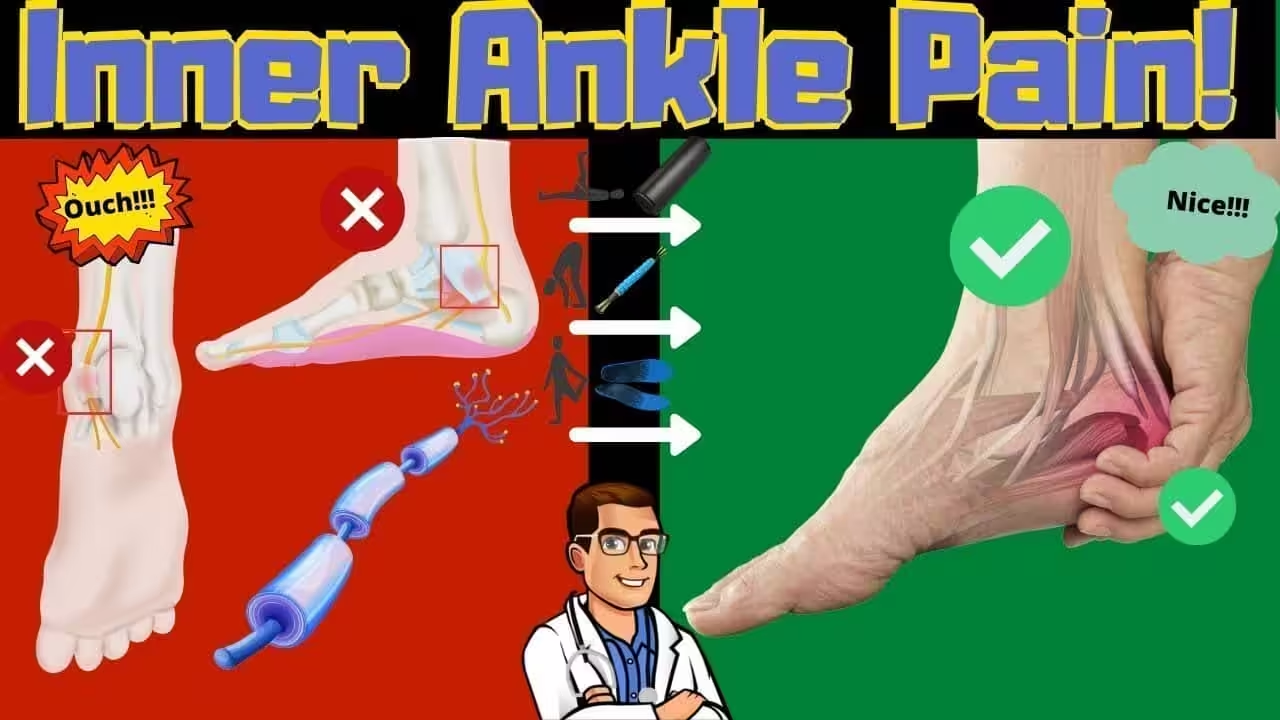
Tarsal tunnel syndrome occurs when the posterior tibial nerve — the main sensory and motor nerve supply to the plantar foot — is compressed within the tarsal tunnel: a fibro-osseous canal on the inner (medial) ankle formed by the ankle bones and the flexor retinaculum (a thick band of connective tissue). This is the foot’s anatomical equivalent of carpal tunnel syndrome in the wrist.
Within the tarsal tunnel, the posterior tibial nerve divides into its terminal branches: the medial plantar nerve (supplying the inner two-thirds of the foot), the lateral plantar nerve (supplying the outer third), and the medial calcaneal branches (supplying the heel). Compression of the posterior tibial nerve before this division — or its individual branches after — produces characteristic patterns of foot pain, numbness, and burning.
Causes of Tarsal Tunnel Syndrome
Tarsal tunnel syndrome can result from any condition that increases pressure within the tarsal tunnel or directly compresses the posterior tibial nerve:
- Space-occupying lesions: Ganglion cysts, lipomas, varicosities, accessory muscles, and tarsal coalitions are among the most common structural causes — and are missed if imaging is not obtained.
- Overpronation (flat feet): Excessive inward rolling of the heel stretches and compresses the posterior tibial nerve against the medial ankle. This is one of the most common biomechanical causes.
- Ankle fractures and trauma: Scar tissue, callus formation, or post-traumatic swelling can constrict the tarsal tunnel after ankle injuries.
- Inflammatory conditions: Rheumatoid arthritis, tenosynovitis of the posterior tibial tendon, and other inflammatory conditions cause soft tissue swelling within the tunnel.
- Systemic conditions: Diabetes, hypothyroidism, and pregnancy all increase the risk of nerve entrapment, including tarsal tunnel syndrome.
Symptoms: How TTS Differs from Plantar Fasciitis
Both conditions cause medial heel and arch pain, but TTS has distinctive neurogenic features:
- Burning, tingling, or electric sensations in the arch, heel, or toes — these neurological symptoms are absent in pure plantar fasciitis
- Numbness or reduced sensation on the plantar surface of the foot
- Positive Tinel’s sign: tapping over the tarsal tunnel (inner ankle) reproduces tingling into the foot — a key clinical sign
- Symptoms that worsen with prolonged standing and walking and may be present at rest or at night — plantar fasciitis characteristically improves during activity
- Radiation of symptoms into specific toe distributions depending on which nerve branch is compressed
Diagnosis
Diagnosis combines clinical examination, nerve conduction studies (NCS), and imaging. NCS/EMG quantifies nerve conduction velocity across the tarsal tunnel and documents the presence and severity of nerve dysfunction. MRI is invaluable for identifying structural causes (ganglion cysts, accessory muscles, varicosities) that require surgical excision. Ultrasound provides dynamic assessment and can detect nerve thickening and compression in real time.
Treatment
Conservative treatment addresses biomechanical and inflammatory drivers:
- Custom orthotics with medial arch support to correct overpronation and reduce posterior tibial nerve traction
- Anti-inflammatory medications and targeted cortisone injection adjacent to the posterior tibial nerve within the tunnel
- Night splinting to maintain neutral ankle position and reduce tunnel pressure
- Activity modification to reduce provocative loading
Surgical tarsal tunnel release is indicated when conservative treatment fails — particularly when there is an identified structural compressive lesion, or when EMG/NCS confirms significant nerve dysfunction. Surgery involves cutting the flexor retinaculum to decompress the nerve and excising any identified lesions. Outcomes are excellent when the compression is structural and the nerve has not undergone irreversible damage.
Burning or Tingling Feet? Get a Nerve Evaluation
Dr. Biernacki evaluates tarsal tunnel syndrome and distinguishes nerve entrapments from other foot pain causes at our Bloomfield Township and Howell offices.
📞 (810) 206-1402 | Book Online →
📍 Located in Michigan?
Our board-certified podiatrists treat this condition at two convenient locations. Most new patients are seen the same week.

Insurance Accepted
BCBS · Medicare · Aetna · Cigna · United Healthcare · HAP · Priority Health · Humana · View All →
Howell Office
4330 E Grand River Ave
Howell, MI 48843
Get Directions →
Bloomfield Township Office
43494 Woodward Ave, #208
Bloomfield Township, MI 48302
Get Directions →
Your Board-Certified Podiatrists



Ready to Get Back on Your Feet?
Same-week appointments available at both locations.
Book Your AppointmentMore Podiatrist-Recommended Foot Health Essentials
Hoka Clifton 10


Max-cushion everyday shoe — podiatrist favorite for walking and running.

OOFOS Recovery Slide

Impact-absorbing recovery sandal — wear after long days on your feet.
As an Amazon Associate, Balance Foot & Ankle earns from qualifying purchases. Product recommendations are based on clinical experience; prices and availability shown above update live from Amazon.

When to See a Podiatrist
If foot or ankle pain has been bothering you for more than a few weeks, home care alone may not be enough. Balance Foot & Ankle offers same-week appointments at our Howell and Bloomfield Township clinics — no referral needed in most cases. Bring your current shoes and a short list of symptoms and we’ll build you a treatment plan in one visit.
Call Balance Foot & Ankle: (810) 206-1402 · Book online · Offices in Howell & Bloomfield Township
Differential Diagnosis: What Else Could It Be?
Not every case of tarsal tunnel syndrome is straightforward. In our clinic we routinely rule out three look-alike conditions before confirming the diagnosis. If your symptoms don’t match the classic presentation, one of these may explain the pain — which is why physical exam matters more than self-diagnosis.
| Condition | How It Differs |
|---|---|
| Plantar fasciitis | Sharp morning heel pain at the medial calcaneal tubercle, NOT numbness or shooting pain into the toes. |
| Diabetic peripheral neuropathy | Bilateral stocking-glove distribution, progressive, affects toes first — NOT reproduced by Tinel’s at medial ankle. |
| S1 radiculopathy | Pain originates in low back, follows S1 dermatome, positive straight-leg raise. |
Red Flags — When to See a Podiatrist Now
Seek same-day evaluation at Balance Foot & Ankle if you notice any of the following:
- Progressive foot weakness
- Muscle atrophy in the foot
- Severe night pain disrupting sleep
- Space-occupying lesion palpable at the medial ankle
Call (810) 206-1402 or request an appointment. Our Howell and Bloomfield Township offices reserve same-day slots for urgent foot and ankle issues.
In Our Clinic: What We See
Clinical perspective from Dr. Tom Biernacki, DPM — Balance Foot & Ankle, Howell & Bloomfield Township, MI:
In our Balance Foot & Ankle clinic, tarsal tunnel patients typically describe burning, tingling, or shock-like pain on the bottom of the foot, often worst at night. Unlike plantar fasciitis (sharp morning pain at the heel), tarsal tunnel causes neuropathic symptoms extending into the arch and toes. The classic exam finding is a positive Tinel’s sign over the posterior tibial nerve at the medial ankle. We assess for space-occupying lesions (ganglion, varicosity, accessory muscle) with ultrasound or MRI. Conservative management with orthotics, anti-inflammatories, and night splints resolves most cases; refractory cases may need surgical release.
In-Office Treatment at Balance Foot & Ankle
When conservative care isn’t enough, Dr. Tom Biernacki and the team at Balance Foot & Ankle offer advanced, same-day options — including Tarsal Tunnel Release Michigan at our Howell and Bloomfield Township clinics.
Same-week appointments available. Call (810) 206-1402 or book online.
Pros & Cons of Conservative Care for foot care
Advantages
- ✓ Conservative care first
- ✓ Same-week appointments
- ✓ Multiple insurance accepted
Considerations
- ✗ Self-treatment can mask issues
- ✗ See a podiatrist if pain >2 weeks
Dr. Tom’s Recommended Products for foot care
Affiliate disclosure: As an Amazon Associate, Balance Foot & Ankle earns from qualifying purchases. We only recommend products we use with patients.
Footnanny Heel Cream Dr. Tom’s Pick
Best for: Daily moisturizer for cracked heels
Ready to Get Back on Your Feet?
Same-week appointments in Howell + Bloomfield Township. Most insurance accepted. Dr. Tom Biernacki, DPM & team.
Book Today — Same-Week Appointments Available
Call Now: (810) 206-1402
About Your Care Team at Balance Foot & Ankle
Dr. Tom Biernacki, DPM · Board-Certified Foot & Ankle Surgeon. Specializes in conservative-first care, minimally invasive bunion surgery, and complex reconstruction.
Dr. Carl Jay, DPM · Accepting new patients. Specializes in sports medicine, athletic injuries, and routine podiatric care.
Dr. Daria Gutkin, DPM, AACFAS · Accepting new patients. Specializes in surgical reconstruction and pediatric podiatry.
Locations: 4330 E Grand River Ave, Howell, MI 48843 · 43494 Woodward Ave Suite 208, Bloomfield Township, MI 48302
Hours: Mon–Fri 8:00 AM – 5:00 PM · (810) 206-1402
In-Office Treatment at Balance Foot & Ankle
If home treatment isn’t providing relief for your foot and ankle conditions, our podiatry team at Balance Foot & Ankle can help with same-week evaluations and advanced in-office care.
Same-week appointments available. (810) 206-1402
Doctor Hoy’s Natural Pain Relief Gel
Natural topical pain relief I use in our clinic. Arnica + camphor formula — apply directly to the area 3–4x daily. ($20–25)
Shop Doctor Hoy’s →Ready for Expert Care?
Same-week appointments in Howell & Bloomfield Township, MI.
4.9★ | 1,123 Reviews | 3,000+ Surgeries
Or call: (810) 206-1402

Dr. Tom Biernacki, DPM is a board-certified foot & ankle surgeon (ABFAS & ABPM) at Balance Foot & Ankle Specialists in Southeast Michigan. With over a decade of clinical experience, he specializes in heel pain, bunions, diabetic foot care, sports injuries, and minimally invasive surgery. Dr. Biernacki is a member of the APMA and ACFAS, and his patient education content on MichiganFootDoctors.com and YouTube has made him one of the most-followed foot & ankle educators on YouTube.