


Quick answer: Treatment for tarsal tunnel syndrome conservative treatment before surgery follows a stepwise approach: 1) conservative care first (rest, ice, supportive footwear, OTC anti-inflammatories), 2) physical therapy and targeted exercises, 3) in-office treatments (injections, custom orthotics) if conservative fails at 4-6 weeks, 4) surgery for refractory cases. Most patients resolve at step 1 or 2. Call (810) 206-1402.
Medically reviewed by Dr. Tom Biernacki, DPM — Board-Certified Podiatric Surgeon — Balance Foot & Ankle, Howell & Bloomfield Township, MI. Last updated April 2026.
Last Updated: March 2026 | Reading Time: 8 min
For informational purposes only. Schedule an appointment.

Tarsal Tunnel Syndrome Overview
Tarsal tunnel syndrome is compression of the posterior tibial nerve as it passes through the tarsal tunnel — a fibrous channel posterior to the medial malleolus bounded by the flexor retinaculum and the medial ankle structures. The posterior tibial nerve and its branches (medial plantar, lateral plantar, and calcaneal nerves) supply sensation to the plantar foot and motor function to the intrinsic foot muscles, and compression produces burning, tingling, and numbness in the plantar foot and heel that is often confused with plantar fasciitis or other heel pain syndromes. The distribution of symptoms — typically plantar and medial — and the reproduction of symptoms by Tinel sign (tapping over the tarsal tunnel posterior to the medial malleolus) help distinguish tarsal tunnel from other heel pain causes.
Conservative Treatment Options
Conservative management of tarsal tunnel syndrome addresses both the mechanical contributors to nerve compression and the nerve pain symptoms directly. Orthotic management — custom orthotics that reduce hindfoot valgus and arch collapse, the most common mechanical contributor to tarsal tunnel compression — is the cornerstone of conservative treatment because the flatfoot position increases the traction and compression on the posterior tibial nerve within the tarsal tunnel with every step. Arch support that maintains neutral hindfoot alignment reduces nerve tension and produces symptom improvement in patients whose tarsal tunnel syndrome is driven by pronation.
Anti-inflammatory management with oral NSAIDs and corticosteroid injection into the tarsal tunnel reduces inflammatory swelling around the nerve and provides symptom relief. The injection is performed with ultrasound guidance to ensure accurate perineural placement without inadvertent intraneural injection. Neuropathic pain medications — gabapentin, pregabalin, duloxetine, and low-dose tricyclic antidepressants — address the neural pain component when mechanical and anti-inflammatory management provide incomplete relief. Physical therapy targeting intrinsic foot strengthening, nerve mobilization techniques, and proprioception training addresses the functional deficits associated with chronic nerve compression.
When to Consider Surgery
Surgical tarsal tunnel release — decompression of the flexor retinaculum to enlarge the tarsal tunnel — is considered after 3 to 6 months of comprehensive conservative management has failed to provide adequate symptom relief. Electrodiagnostic testing (nerve conduction velocity and EMG) before surgical planning confirms the diagnosis and identifies the severity of nerve compression and any axonal loss. Patients with space-occupying lesions within the tarsal tunnel — ganglion cysts, varicose veins, lipomas, or accessory muscles — are particularly good surgical candidates because removing the compressive lesion directly addresses the anatomical cause. At Balance Foot & Ankle, we pursue a thorough conservative trial before recommending surgical release and use electrodiagnostic testing to confirm the diagnosis and optimize patient selection.
Ready to Relieve Your Foot Pain?
Board-certified podiatrists serving Southeast Michigan. Same-week appointments available.
Book Your AppointmentRecommended Products
- PowerStep Pinnacle — OTC orthotic I recommend most.
- Doctor Hoy’s Gel — Natural pain relief.
Related Guides
When to See a Podiatrist for Tarsal Tunnel Syndrome
If you’re experiencing tingling, burning, or numbness on the bottom of your foot or along the inside of your ankle, it may be tarsal tunnel syndrome. At Balance Foot & Ankle, we offer comprehensive nerve evaluations at our Howell and Bloomfield Township offices.
Learn About Our Nerve & Neuropathy Treatment | Book Your Appointment | Call (810) 206-1402
Clinical References
- McSweeney SC, Cichero M. “Tarsal tunnel syndrome: a narrative literature review.” Foot. 2015;25(4):244-250.
- Kinoshita M, Okuda R, Morikawa J, Jotoku T, Abe M. “The dorsiflexion-eversion test for diagnosis of tarsal tunnel syndrome.” Journal of Bone and Joint Surgery (Am). 2001;83(12):1835-1839.
- Franson J, Baravarian B. “Tarsal tunnel syndrome: a compression neuropathy involving four distinct tunnels.” Clinics in Podiatric Medicine and Surgery. 2006;23(3):597-609.
Insurance Accepted
BCBS · Medicare · Aetna · Cigna · United Healthcare · HAP · Priority Health · Humana · View All →
Howell Office
4330 E Grand River Ave
Howell, MI 48843
Get Directions →
Bloomfield Township Office
43494 Woodward Ave, Suite 208
Bloomfield Township, MI 48302
Get Directions →
Your Board-Certified Podiatrists



Ready to Get Back on Your Feet?
Same-week appointments available at both locations.
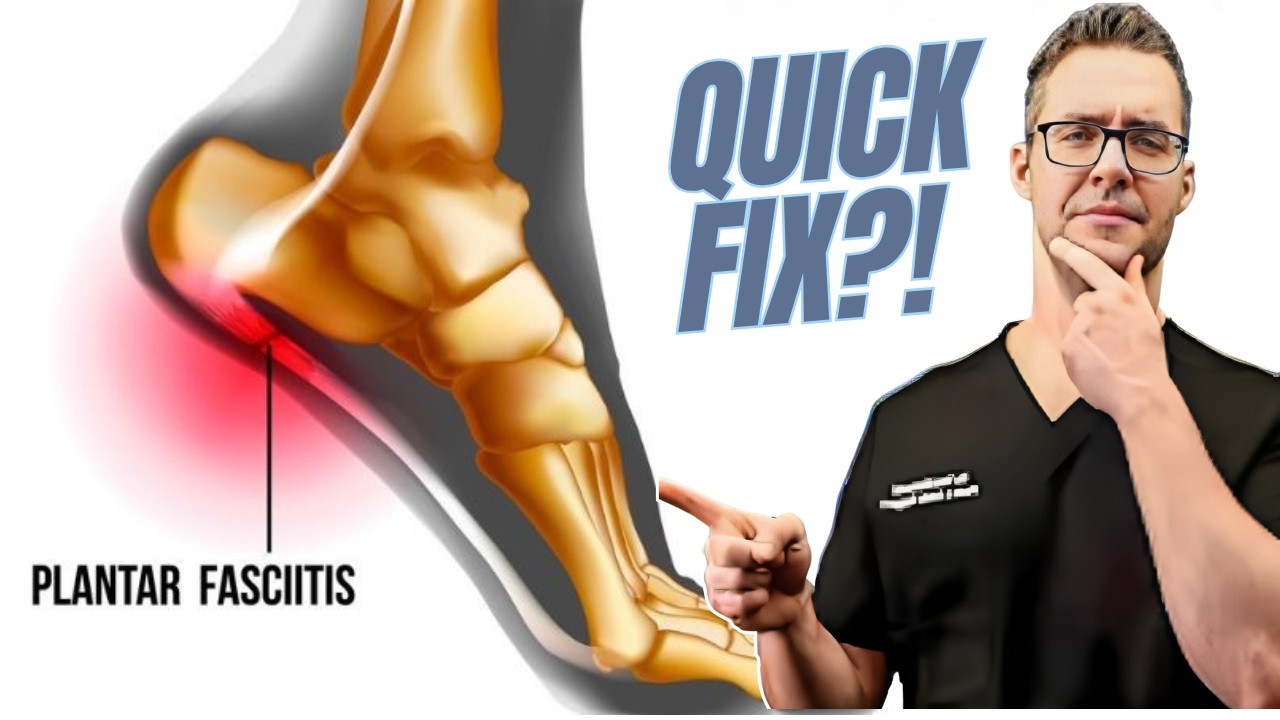
Book Your AppointmentWatch: Tarsal Tunnel: Conservative Care
Dr. Tom on tarsal tunnel syndrome conservative treatment — what to try before surgery.
Tarsal Tunnel Conservative Kit
Tarsal tunnel responds to nerve offloading + arch support + B-vitamins. Dr. Tom’s pre-surgical kit:
As an Amazon Associate, Balance Foot & Ankle earns from qualifying purchases. This supports our free patient education content.
Medial arch support reduces nerve compression.
Supports nerve regeneration.
Offloads tarsal tunnel during flares.
Topical over medial ankle at nerve path.
Related: Neuropathy Treatment · Foot Pain · Book Same-Week Appointment
Differential Diagnosis: What Else Could It Be?
Not every case of tarsal tunnel syndrome is straightforward. In our clinic we routinely rule out three look-alike conditions before confirming the diagnosis. If your symptoms don’t match the classic presentation, one of these may explain the pain — which is why physical exam matters more than self-diagnosis.
| Condition | How It Differs |
|---|---|
| Plantar fasciitis | Sharp morning heel pain at the medial calcaneal tubercle, NOT numbness or shooting pain into the toes. |
| Diabetic peripheral neuropathy | Bilateral stocking-glove distribution, progressive, affects toes first — NOT reproduced by Tinel’s at medial ankle. |
| S1 radiculopathy | Pain originates in low back, follows S1 dermatome, positive straight-leg raise. |
Red Flags — When to See a Podiatrist Now
Seek same-day evaluation at Balance Foot & Ankle if you notice any of the following:
- Progressive foot weakness
- Muscle atrophy in the foot
- Severe night pain disrupting sleep
- Space-occupying lesion palpable at the medial ankle
Call (810) 206-1402 or request an appointment. Our Howell and Bloomfield Township offices reserve same-day slots for urgent foot and ankle issues.
In Our Clinic: What We See
Clinical perspective from Dr. Tom Biernacki, DPM — Balance Foot & Ankle, Howell & Bloomfield Township, MI:
In our Balance Foot & Ankle clinic, tarsal tunnel patients typically describe burning, tingling, or shock-like pain on the bottom of the foot, often worst at night. Unlike plantar fasciitis (sharp morning pain at the heel), tarsal tunnel causes neuropathic symptoms extending into the arch and toes. The classic exam finding is a positive Tinel’s sign over the posterior tibial nerve at the medial ankle. We assess for space-occupying lesions (ganglion, varicosity, accessory muscle) with ultrasound or MRI. Conservative management with orthotics, anti-inflammatories, and night splints resolves most cases; refractory cases may need surgical release.
More Podiatrist-Recommended Surgery Essentials

HOKA Ora 3 Recovery Slide
Max-cushion recovery sandal — comfort for post-surgical swelling.
Hoka Bondi 9
Max-cushion walking shoe — ease into return-to-walking post-surgery.
As an Amazon Associate, Balance Foot & Ankle earns from qualifying purchases. Product recommendations are based on clinical experience; prices and availability shown above update live from Amazon.

When to See a Podiatrist
Foot and ankle surgery in 2026 is dramatically different than a decade ago — most procedures are now minimally-invasive, outpatient, and allow weight-bearing within days. Balance Foot & Ankle surgeons have performed 3,000+ foot/ankle surgeries with modern techniques. If another surgeon has recommended a traditional open procedure, a second opinion may reveal a faster, less-invasive option.
Call Balance Foot & Ankle: (810) 206-1402 · Book online · Offices in Howell & Bloomfield Township
In-Office Treatment at Balance Foot & Ankle
When conservative care isn’t enough, Dr. Tom Biernacki and the team at Balance Foot & Ankle offer advanced, same-day options — including Tarsal Tunnel Release Michigan at our Howell and Bloomfield Township clinics.
Same-day appointments available. Call (810) 206-1402 or book online.
In-Office Treatment at Balance Foot & Ankle
If home treatment isn’t providing relief for your foot and ankle conditions, our podiatry team at Balance Foot & Ankle can help with same-day evaluations and advanced in-office care.
Same-day appointments available. (810) 206-1402
Get Expert Care at Balance Foot & Ankle
Same-week appointments at our Howell and Bloomfield Township offices. Board-certified podiatric surgeons. Most insurance accepted.
Same-Week Appointments in Howell & Bloomfield Township
Three board-certified podiatric surgeons. 1,123+ five-star reviews. Most insurance accepted.

Dr. Tom Biernacki, DPM is a board-certified foot & ankle surgeon (ABFAS & ABPM) at Balance Foot & Ankle Specialists in Southeast Michigan. With over a decade of clinical experience, he specializes in heel pain, bunions, diabetic foot care, sports injuries, and minimally invasive surgery. Dr. Biernacki is a member of the APMA and ACFAS, and his patient education content on MichiganFootDoctors.com and YouTube has made him one of the most-followed foot & ankle educators on YouTube.