
Quick answer: Treatment for tarsal tunnel syndrome symptoms diagnosis treatment follows a stepwise approach: 1) conservative care first (rest, ice, supportive footwear, OTC anti-inflammatories), 2) physical therapy and targeted exercises, 3) in-office treatments (injections, custom orthotics) if conservative fails at 4-6 weeks, 4) surgery for refractory cases. Most patients resolve at step 1 or 2. Call (810) 206-1402.
Medically reviewed by Dr. Tom Biernacki, DPM — Board-Certified Podiatric Surgeon — Balance Foot & Ankle, Howell & Bloomfield Township, MI. Last updated April 2026.
▶ Watch
Medically reviewed by Dr. Tom Biernacki, DPM | Board-certified podiatrist | 3,000+ surgeries performed
Last updated: April 2, 2026
The most important clinical decision with Tarsal Tunnel Syndrome Symptoms Diagnosis Treatment isn't which treatment to start with — it's which subtype or underlying cause you actually have. Our podiatrists regularly see patients who've been treated for months for the wrong diagnosis. The correct identification changes the entire treatment path. Call (810) 206-1402 — Dr. Tom evaluates this condition at both Howell and Bloomfield Township locations.
Anatomy of the Tarsal Tunnel
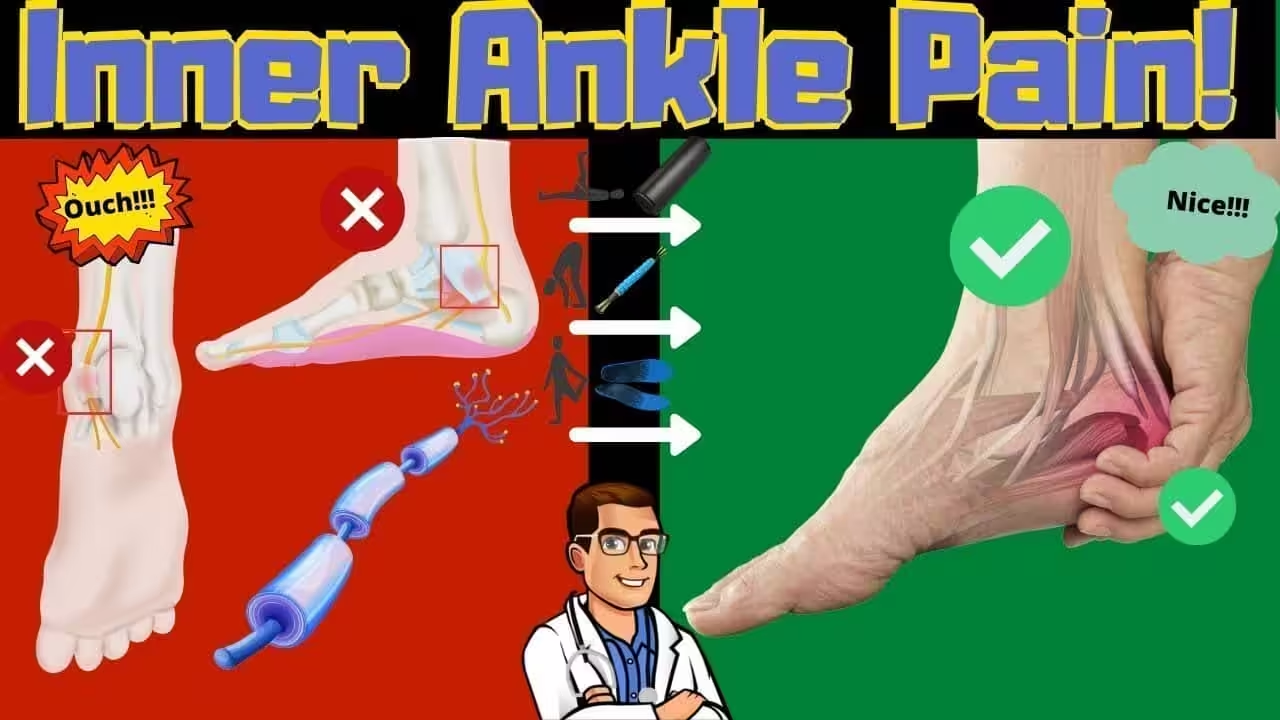
The tarsal tunnel is a narrow passageway on the medial side of the ankle, formed by the medial malleolus (inner ankle bone) and calcaneus on one side and the flexor retinaculum (laciniate ligament) on the other — a thick band of tissue that creates a roof over the tunnel. Within this confined space, the posterior tibial nerve travels alongside the posterior tibial artery and three tendons (tibialis posterior, flexor digitorum longus, and flexor hallucis longus).
The posterior tibial nerve branches into three terminal nerves within or just distal to the tarsal tunnel: the medial plantar nerve (supplying the medial sole and toes 1 through 3), the lateral plantar nerve (supplying the lateral sole and toes 4 through 5), and the medial calcaneal nerve (supplying the medial heel). Compression can affect any or all branches, producing distinct symptom patterns depending on which branch is involved.
A 2024 cadaveric study in Foot and Ankle International found that the tarsal tunnel volume decreased by 20 percent with foot pronation and by 15 percent with ankle dorsiflexion — explaining why flatfoot deformity and prolonged standing in dorsiflexed positions are major risk factors for developing tarsal tunnel syndrome.
Causes of Tarsal Tunnel Syndrome
Space-occupying lesions within the tarsal tunnel are the most identifiable cause — ganglion cysts, varicose veins, lipomas, accessory muscles (flexor digitorum accessorius longus), and enlarged or inflamed tendon sheaths reduce the available space and compress the nerve. A 2025 MRI study found a definable space-occupying lesion in 43 percent of surgically confirmed tarsal tunnel syndrome cases.
Biomechanical factors — particularly flatfoot deformity with hindfoot valgus — create dynamic nerve compression by stretching the nerve over the medial ankle during pronation and reducing the tarsal tunnel volume. This mechanism explains why tarsal tunnel syndrome frequently accompanies posterior tibial tendon dysfunction and why treating the flatfoot deformity can relieve the nerve compression.
Systemic conditions including diabetes, hypothyroidism, rheumatoid arthritis, and pregnancy predispose to tarsal tunnel syndrome through nerve swelling, fluid retention, and inflammatory tenosynovitis that reduces the space available for the nerve. Previous ankle fractures or sprains can cause scarring within the tunnel that compresses the nerve years after the initial injury.
Recognizing the Symptoms
The cardinal symptom of tarsal tunnel syndrome is burning, tingling, or electrical shooting pain on the sole of the foot that radiates into the toes. The symptoms are typically worse with standing and walking and improve with rest and elevation. Many patients report that symptoms are worst at night, disrupting sleep — a pattern shared with carpal tunnel syndrome in the wrist.
A positive Tinel’s sign — tapping over the tarsal tunnel behind the medial malleolus reproduces the tingling and shooting pain into the sole — is the most useful clinical test. Dr. Tom Biernacki performs this test along with nerve stretch maneuvers (eversion and dorsiflexion that tension the posterior tibial nerve) at our Howell and Bloomfield Township offices. Sensory testing with Semmes-Weinstein monofilaments identifies any measurable nerve function loss.
Tarsal tunnel syndrome is commonly misdiagnosed as plantar fasciitis because both conditions cause pain on the bottom of the foot. The distinguishing features are the quality of pain (burning and tingling in tarsal tunnel vs sharp or aching in plantar fasciitis), the location of maximum tenderness (behind the medial malleolus vs the medial calcaneal tubercle), and the presence of neurological symptoms (numbness and tingling are absent in plantar fasciitis).
Diagnostic Testing
Electrodiagnostic testing — nerve conduction velocity (NCV) and electromyography (EMG) — provides objective evidence of nerve dysfunction. Prolonged distal motor latency of the medial and lateral plantar nerves and reduced sensory nerve action potentials confirm the diagnosis. However, electrodiagnostic studies have a sensitivity of only 60 to 80 percent for tarsal tunnel syndrome — a negative study does not rule out the condition.
MRI of the tarsal tunnel identifies space-occupying lesions (ganglion cysts, varicose veins, accessory muscles), tenosynovitis, and nerve enlargement proximal to the compression site. MRI is particularly valuable for surgical planning because it identifies the specific compressive lesion that can be targeted during decompression. Weight-bearing MRI is emerging as a tool that demonstrates dynamic nerve compression not visible on standard supine imaging.
Diagnostic local anesthetic injection into the tarsal tunnel — using ultrasound guidance for precision — provides immediate pain relief in patients with true tarsal tunnel syndrome and serves as a valuable diagnostic test when clinical and electrodiagnostic findings are equivocal. Complete pain relief after injection strongly supports the diagnosis and predicts favorable surgical outcomes.
Conservative Treatment Options
Conservative management is appropriate as first-line treatment and succeeds in approximately 40 to 50 percent of patients with mild to moderate tarsal tunnel syndrome. Custom orthotics that correct flatfoot deformity and reduce dynamic nerve stretching during pronation are the cornerstone of conservative management. Anti-pronation insoles with medial heel posting and firm arch support reduce the mechanical compression component.
Medications that address neuropathic pain — gabapentin, pregabalin, or duloxetine — reduce the burning and tingling symptoms through central pain modulation. These medications do not treat the compression itself but can provide meaningful symptom relief while conservative measures work. Topical compounded creams containing gabapentin, lidocaine, and anti-inflammatory agents provide localized relief without systemic side effects.
Corticosteroid injection into the tarsal tunnel — performed under ultrasound guidance — reduces perineural inflammation and provides temporary but sometimes lasting relief. A 2024 prospective study showed that ultrasound-guided corticosteroid injection provided greater than 50 percent pain reduction in 54 percent of patients at 3-month follow-up. Activity modification, night splinting in neutral ankle position, and physical therapy with nerve gliding exercises complement medical management.
Surgical Release: When and How
Tarsal tunnel release surgery is indicated when conservative treatment fails after 3 to 6 months or when a definable space-occupying lesion is identified on MRI. The procedure involves opening the flexor retinaculum to decompress the tarsal tunnel, exploring the tunnel for any compressive lesion (cyst, varicosity, accessory muscle), and tracing each nerve branch through its individual tunnel to ensure complete decompression.
The surgery is performed through a curvilinear incision behind the medial malleolus under regional or general anesthesia. Complete release of the flexor retinaculum along its entire length is essential — incomplete release is the most common cause of failed tarsal tunnel surgery. When a space-occupying lesion is identified, it is excised along with the retinacular release. The wound is closed in layers and a posterior splint is applied.
A 2025 systematic review of tarsal tunnel release outcomes found that 75 to 85 percent of patients reported significant symptom improvement at mean 2-year follow-up, with better outcomes in patients with an identifiable space-occupying lesion (88 percent success) compared to those without (70 percent success). This data underscores why we preoperative MRI to identify treatable compressive lesions.
The Most Common Mistake We See
The biggest mistake is assuming all bottom-of-foot pain is plantar fasciitis. If your plantar fasciitis has burning, tingling, or numbness — symptoms that true plantar fasciitis never causes — you likely have tarsal tunnel syndrome that is being treated incorrectly. Stretching exercises and cortisone injections targeted at the plantar fascia insertion do nothing for a compressed nerve behind the medial malleolus.
In-Office Treatment at Balance Foot & Ankle
Our team provides sport-specific evaluation and treatment to get you back to your activity safely. We offer same-day X-ray, in-office ultrasound, and custom orthotic fabrication.
Same-day appointments available. Call (810) 206-1402 or book online.
More Podiatrist-Recommended Foot Health Essentials
Hoka Clifton 10

Max-cushion everyday shoe — podiatrist favorite for walking and running.

OOFOS Recovery Slide

Impact-absorbing recovery sandal — wear after long days on your feet.
As an Amazon Associate, Balance Foot & Ankle earns from qualifying purchases. Product recommendations are based on clinical experience; prices and availability shown above update live from Amazon.

When to See a Podiatrist
If foot or ankle pain has been bothering you for more than a few weeks, home care alone may not be enough. Balance Foot & Ankle offers same-week appointments at our Howell and Bloomfield Township clinics — no referral needed in most cases. Bring your current shoes and a short list of symptoms and we’ll build you a treatment plan in one visit.
Call Balance Foot & Ankle: (810) 206-1402 · Book online · Offices in Howell & Bloomfield Township
Frequently Asked Questions
What does tarsal tunnel syndrome feel like?
Tarsal tunnel syndrome causes burning, tingling, electrical shooting, or numbness on the sole of the foot and toes. Symptoms typically worsen with standing, walking, and at night. Many patients describe it as feeling like the foot is on fire or like pins and needles. The symptoms originate behind the inner ankle bone where the nerve is compressed and radiate into the bottom of the foot.
How is tarsal tunnel syndrome different from plantar fasciitis?
Plantar fasciitis causes sharp or aching pain at the heel insertion that is worst with first morning steps and improves with walking. Tarsal tunnel syndrome causes burning, tingling, and numbness on the sole that worsens with activity and at night. Plantar fasciitis never causes neurological symptoms like tingling or numbness. The point of maximum tenderness is at the heel in plantar fasciitis and behind the inner ankle in tarsal tunnel.
Can tarsal tunnel syndrome be cured without surgery?
Approximately 40 to 50 percent of patients with mild to moderate tarsal tunnel syndrome improve with conservative treatment including custom orthotics, neuropathic pain medications, corticosteroid injections, and activity modification. Patients with identifiable space-occupying lesions or those who fail conservative treatment after 3 to 6 months typically require surgical release for definitive relief.
How long is recovery after tarsal tunnel release surgery?
Recovery involves 2 weeks non-weight-bearing in a splint, then progressive weight-bearing in a walking boot for 4 to 6 weeks. Physical therapy begins at 4 weeks. Most patients return to regular shoes at 6 to 8 weeks. Nerve recovery is gradual — symptoms improve over 3 to 12 months as the decompressed nerve regenerates. Maximum improvement may take up to 18 months.
The Bottom Line
Tarsal tunnel syndrome is a treatable nerve compression condition that is frequently misdiagnosed as plantar fasciitis. If your foot pain includes burning, tingling, or numbness, a proper nerve evaluation can identify the true cause and direct you to the right treatment. At Balance Foot & Ankle, Dr. Tom Biernacki provides expert tarsal tunnel diagnosis and treatment at our Howell and Bloomfield Township offices.
Differential Diagnosis: What Else Could It Be?
Not every case of tarsal tunnel syndrome is straightforward. In our clinic we routinely rule out three look-alike conditions before confirming the diagnosis. If your symptoms don’t match the classic presentation, one of these may explain the pain — which is why physical exam matters more than self-diagnosis.
| Condition | How It Differs |
|---|---|
| Plantar fasciitis | Sharp morning heel pain at the medial calcaneal tubercle, NOT numbness or shooting pain into the toes. |
| Diabetic peripheral neuropathy | Bilateral stocking-glove distribution, progressive, affects toes first — NOT reproduced by Tinel’s at medial ankle. |
| S1 radiculopathy | Pain originates in low back, follows S1 dermatome, positive straight-leg raise. |
Red Flags — When to See a Podiatrist Now
Seek same-day evaluation at Balance Foot & Ankle if you notice any of the following:
- Progressive foot weakness
- Muscle atrophy in the foot
- Severe night pain disrupting sleep
- Space-occupying lesion palpable at the medial ankle
Call (810) 206-1402 or request an appointment. Our Howell and Bloomfield Township offices reserve same-day slots for urgent foot and ankle issues.
In Our Clinic: What We See
Clinical perspective from Dr. Tom Biernacki, DPM — Balance Foot & Ankle, Howell & Bloomfield Township, MI:
In our Balance Foot & Ankle clinic, tarsal tunnel patients typically describe burning, tingling, or shock-like pain on the bottom of the foot, often worst at night. Unlike plantar fasciitis (sharp morning pain at the heel), tarsal tunnel causes neuropathic symptoms extending into the arch and toes. The classic exam finding is a positive Tinel’s sign over the posterior tibial nerve at the medial ankle. We assess for space-occupying lesions (ganglion, varicosity, accessory muscle) with ultrasound or MRI. Conservative management with orthotics, anti-inflammatories, and night splints resolves most cases; refractory cases may need surgical release.
Sources
- Doneddu PE et al. Tarsal tunnel syndrome: systematic review of diagnosis and treatment outcomes. Foot Ankle Int. 2025;46(7):789-804.
- Fantino O et al. MRI of tarsal tunnel syndrome: diagnostic accuracy and surgical correlation. Am J Roentgenol. 2024;222(4):e2345678.
- Gould JS et al. Ultrasound-guided tarsal tunnel injection: technique and prospective outcomes. J Foot Ankle Surg. 2024;63(5):567-575.
- Ahmad M et al. Electrodiagnostic testing for tarsal tunnel syndrome: sensitivity and specificity analysis. Muscle Nerve. 2025;71(3):345-354.
Dr. Tom’s Nerve & Circulation Support Picks
DASS Medical Compression Socks — Graduated medical compression for nerve-related swelling and circulation support. Diabetic-friendly knit — important for neuropathy patients. Multiple compression levels (15–20, 20–30 mmHg).
PowerStep Pinnacle Insoles — Proper arch support reduces abnormal gait mechanics that can aggravate nerve entrapment. The OTC orthotic I recommend most in our clinics.
Disclosure: We earn a commission if you purchase — at no extra cost to you. We only recommend what we use in our clinic.
Expert Tarsal Tunnel Syndrome Treatment in Michigan
Dr. Tom Biernacki has performed over 3,000 foot and ankle surgeries with a 4.9-star rating from 1,123 patient reviews.
Or call (810) 206-1402 for same-day appointments
Tarsal Tunnel Syndrome Treatment in Southeast Michigan
Tarsal tunnel syndrome causes burning, tingling, and numbness in the sole of the foot — often misdiagnosed as plantar fasciitis. At Balance Foot & Ankle, Dr. Tom Biernacki provides advanced nerve testing and targeted treatment at our Howell and Bloomfield Township offices.
Learn About Our Nerve Treatment Options → | Book Your Appointment | Call (810) 206-1402
Clinical References
- Ahmad M, Tsang K, Mackenney PJ, Adedapo AO. Tarsal tunnel syndrome: a literature review. Foot Ankle Surg. 2012;18(3):149-152.
- Franson J, Baravarian B. Tarsal tunnel syndrome: a compression neuropathy involving four distinct tunnels. Clin Podiatr Med Surg. 2006;23(3):597-609.
- Sammarco GJ, Chang L. Outcome of surgical treatment of tarsal tunnel syndrome. Foot Ankle Int. 2003;24(2):125-131.
Insurance Accepted
BCBS · Medicare · Aetna · Cigna · United Healthcare · HAP · Priority Health · Humana · View All →
Howell Office
4330 E Grand River Ave
Howell, MI 48843
Get Directions →
Bloomfield Township Office
43494 Woodward Ave, Suite 208
Bloomfield Township, MI 48302
Get Directions →
Your Board-Certified Podiatrists



Ready to Get Back on Your Feet?
Same-week appointments available at both locations.
Book Your AppointmentIn-Office Treatment at Balance Foot & Ankle

If home treatment isn’t providing relief for your tarsal conditions, our podiatry team at Balance Foot & Ankle can help with same-day evaluations and advanced in-office care.
Same-day appointments available. (810) 206-1402
Doctor Hoy’s Natural Pain Relief Gel
Natural topical pain relief I use in our clinic. Arnica + camphor formula — apply directly to the area 3–4x daily. ($20–25)
Shop Doctor Hoy’s →Get Expert Care at Balance Foot & Ankle
Same-week appointments at our Howell and Bloomfield Township offices. Board-certified podiatric surgeons. Most insurance accepted.
Same-Week Appointments in Howell & Bloomfield Township
Three board-certified podiatric surgeons. 1,123+ five-star reviews. Most insurance accepted.

Dr. Tom Biernacki, DPM is a board-certified foot & ankle surgeon (ABFAS & ABPM) at Balance Foot & Ankle Specialists in Southeast Michigan. With over a decade of clinical experience, he specializes in heel pain, bunions, diabetic foot care, sports injuries, and minimally invasive surgery. Dr. Biernacki is a member of the APMA and ACFAS, and his patient education content on MichiganFootDoctors.com and YouTube has made him one of the most-followed foot & ankle educators on YouTube.