

Medically reviewed by Dr. Tom Biernacki, DPM — Board-certified foot & ankle surgeon, 3,000+ surgeries performed. Updated April 2026 with current clinical evidence. This article reflects real practice experience from Balance Foot & Ankle Specialists in Howell and Bloomfield Hills, Michigan.
The most important clinical decision with Tendon Lengthening Transfer Claw Toe Surgery Comparison isn’t which treatment to start with — it’s identifying the correct subtype. That changes everything. Call (810) 206-1402.
Quick Answer
Most foot and ankle problems respond to conservative care — proper footwear, supportive inserts, activity modification, and targeted stretching — within 4-8 weeks. Persistent pain beyond that window, or any symptom that prevents walking, warrants a podiatric evaluation to rule out fracture, tendon tear, or systemic cause.
Watch: Dr. Tom Biernacki, DPM

Medically reviewed by Dr. Tom Biernacki, DPM — Board-Certified Podiatric Surgeon — Balance Foot & Ankle, Howell & Bloomfield Hills, MI. Last updated April 2026.
▶ Watch
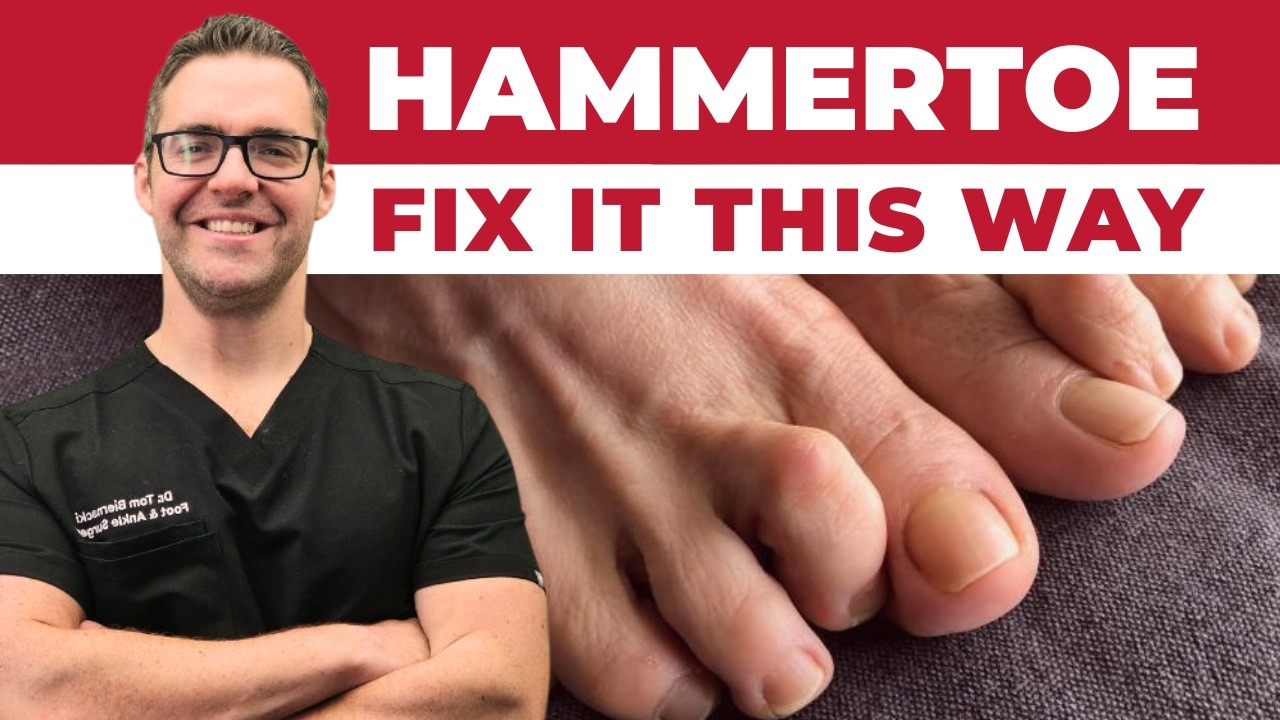
Medically reviewed by Dr. Tom Biernacki, DPM | Board-certified podiatrist | 3,000+ surgeries performed
Last updated: April 2, 2026
Understanding Tendon Surgery: Lengthening vs Transfer
Tendon lengthening reduces the pulling force of an overly tight tendon that contributes to deformity or limited joint motion. The most common example is gastrocnemius recession or Achilles tendon lengthening for equinus contracture — a tight calf that limits ankle dorsiflexion and drives multiple foot pathologies including plantar fasciitis, midfoot arthritis, and diabetic foot ulcers.
Tendon transfer repositions a functioning tendon to replace one that has failed or to rebalance forces around a joint. The classic example is flexor digitorum longus (FDL) transfer for posterior tibial tendon dysfunction, where a healthy toe flexor tendon is rerouted to assume the arch-supporting role of the degenerated posterior tibial tendon.
Both procedures are typically performed as components of larger reconstructive surgeries rather than in isolation. Tendon lengthening addresses the tight structures contributing to deformity, while tendon transfer provides active muscle power to maintain correction. Together, they create a balanced mechanical environment that prevents deformity recurrence.
Gastrocnemius Recession and Achilles Lengthening
Equinus contracture — inability to dorsiflex the ankle beyond neutral (90 degrees) — is present in approximately 80% of patients with foot pathology. This tight calf forces compensatory motion through the midfoot and forefoot during walking, contributing to plantar fasciitis, metatarsalgia, midfoot arthritis, Charcot foot, and diabetic ulcers.
Gastrocnemius recession (Strayer procedure) selectively lengthens the gastrocnemius muscle aponeurosis through a 3-4 cm incision on the posterior calf. This procedure addresses isolated gastrocnemius tightness while preserving soleus muscle strength, maintaining push-off power while gaining the dorsiflexion needed for normal gait mechanics.
Percutaneous Achilles tendon lengthening (TAL) uses three stab incisions to partially divide the tendon at different levels, allowing controlled lengthening when the foot is dorsiflexed. This technique is typically reserved for more severe equinus, particularly in diabetic patients with forefoot ulcers where maximum lengthening is needed to offload the ulcer site.
Endoscopic gastrocnemius recession offers a minimally invasive alternative using two small portals and an endoscopic camera. Recovery is faster than open techniques with less surgical site pain, though the procedure requires specialized instrumentation and surgical experience.
FDL Transfer for Posterior Tibial Tendon Dysfunction
The flexor digitorum longus (FDL) tendon is the preferred donor for posterior tibial tendon (PTT) reconstruction because it follows a similar anatomic path, has adequate strength, and its harvest produces minimal functional deficit — the other toe flexors compensate for its loss.
During FDL transfer, Dr. Biernacki harvests the FDL tendon through a medial ankle incision, routes it through a bone tunnel in the navicular, and secures it with an interference screw or suture anchor. The transferred tendon provides active arch support, replacing the function lost from PTT degeneration.
FDL transfer is almost always combined with other procedures for comprehensive flatfoot reconstruction — typically medializing calcaneal osteotomy (to correct heel alignment) and spring ligament repair (to support the talonavicular joint). This combined approach addresses all components of the flatfoot deformity rather than relying on a single tendon to maintain correction.
Rehabilitation after FDL transfer requires 6-8 weeks of non-weight-bearing to allow the tendon to heal into its new bony attachment. Physical therapy begins with gentle range of motion and progresses to strengthening exercises over 3-6 months. Full recovery takes 6-9 months with gradual return to all activities.
Peroneal Tendon Procedures
The peroneal tendons (peroneus longus and brevis) run along the outer ankle and provide eversion stability. Tears, subluxation, and tendinopathy in these tendons cause lateral ankle pain and instability that affects walking and athletic performance.
Peroneal tendon repair involves suturing longitudinal tears and debriding degenerative tissue through a retromalleolar incision. When the peroneus brevis tendon is severely damaged (greater than 50% cross-sectional involvement), tenodesis to the peroneus longus provides reliable pain relief and functional stability.
Peroneal retinacular repair corrects subluxation — the abnormal snapping of peroneal tendons over the fibular bone. The retinaculum (restraining sheath) is reattached to the fibula with suture anchors, sometimes with a groove-deepening procedure to create a more stable tendon channel.
For complete peroneal tendon loss, the FDL tendon can be transferred to the lateral side of the foot to restore eversion power. This complex transfer is reserved for cases where both peroneal tendons are irreparably damaged.
Tendon Procedures for Hammertoe and Claw Toe Correction
Flexor tendon tenotomy (cutting) releases the tight flexor tendons causing toe contracture in flexible hammertoes. This minimally invasive procedure is performed through a 2-mm stab incision on the bottom of the toe and provides immediate straightening for flexible deformities without bone work.
Extensor tendon lengthening addresses dorsal contracture at the metatarsophalangeal (MTP) joint that causes the toe base to ride up while the middle and end joints curl down. Lengthening the extensor digitorum longus tendon allows the MTP joint to seat properly and restores balanced toe mechanics.
Flexor-to-extensor tendon transfer (Girdlestone-Taylor procedure) reroutes the flexor digitorum longus from the bottom of the toe to the top, converting a deforming force into a corrective one. This dynamic transfer is ideal for flexible hammertoes and provides better long-term correction than static tendon release alone.
These tendon procedures are frequently combined with bony procedures like proximal interphalangeal joint arthroplasty or arthrodesis for more severe or rigid deformities, creating a thorough correction that addresses both the bony and soft tissue components.
Recovery and Rehabilitation After Tendon Surgery
Recovery timelines vary significantly based on the specific procedure and whether it is performed in isolation or as part of a larger reconstruction. Isolated gastrocnemius recession allows weight-bearing in a boot within 1-2 weeks. FDL transfer as part of flatfoot reconstruction requires 6-8 weeks of non-weight-bearing.
Physical therapy is critical after tendon transfer surgery because the brain must learn to activate the transferred muscle in its new function. This motor relearning takes time and specific exercises — patients practicing the new movement pattern daily achieve better functional outcomes than those who rely on passive recovery.
Protective bracing or custom orthotics support the reconstruction during the transition from boot to regular shoes. PowerStep Pinnacle insoles provide immediate arch support while custom devices are fabricated. Long-term orthotic use is recommended after flatfoot reconstruction to protect the repair and optimize biomechanics.
Return to full activity typically takes 4-6 months for isolated tendon procedures and 6-9 months for comprehensive reconstructions. Athletic patients may require up to 12 months for complete recovery and confidence in the repaired structures.
Warning Signs Requiring Urgent Evaluation
- function bold() { [native code] } — undefined
- function bold() { [native code] } — undefined
- function bold() { [native code] } — undefined
- function bold() { [native code] } — undefined
The Most Common Mistake We See
The most common mistake is treating foot deformities with isolated bone procedures while ignoring the tendon imbalances that caused the deformity. A bunion corrected without addressing tight lateral tendons can recur. A flatfoot reconstructed without FDL transfer and gastrocnemius recession may fail under continued muscle imbalance. Comprehensive reconstruction that rebalances both bone alignment and tendon forces produces the most durable corrections.
Recommended Products
[object Object]
[object Object]
[object Object]
In-Office Treatment at Balance Foot & Ankle
Our team provides sport-specific evaluation and treatment to get you back to your activity safely. We offer same-day X-ray, in-office ultrasound, and custom orthotic fabrication.
Same-day appointments available. Call (810) 206-1402 or book online.
More Podiatrist-Recommended Hammertoe Essentials
Extra-Depth Orthopedic Shoe
Orthofeet Sprint — tall toe box prevents hammertoe rubbing and friction.
Wide-Toe-Box Walking Shoe
New Balance 990v6 — accommodates curled toes without pressure.
Supportive Insole


![Heel Bursitis & Achilles Tendon Bursitis [Best HOME Treatment!]](https://www.michiganfootdoctors.com/wp-content/cache/flying-press/f2850da852ba9539b6bf4f72ae5062fe.jpg)
Watch: Heel Bursitis & Achilles Tendon Bursitis [Best HOME Treatment!] — MichiganFootDoctors YouTube
PowerStep Pinnacle — reduces forefoot pressure that drives hammertoe.
As an Amazon Associate, Balance Foot & Ankle earns from qualifying purchases. Product recommendations are based on clinical experience; prices and availability shown above update live from Amazon.
When to See a Podiatrist
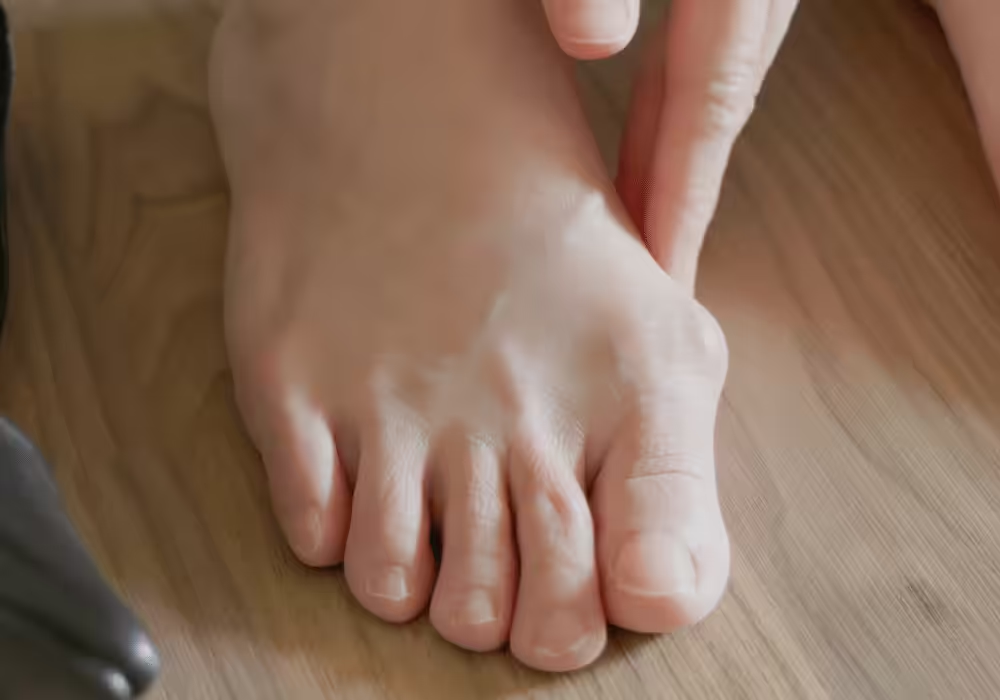
Rigid hammertoes don’t reduce with splinting alone — the tendon and capsule have contracted. If the toe no longer straightens passively, surgical correction restores alignment in one short outpatient visit. Call Balance Foot & Ankle to see whether your deformity is still flexible (and responsive to the conservative tools above) or if it’s time for a 20-minute in-office correction.
Call Balance Foot & Ankle: (810) 206-1402 · Book online · Offices in Howell & Bloomfield Hills
Frequently Asked Questions
What is tendon transfer surgery for the foot?
Tendon transfer repositions a functioning tendon to replace one that has failed. The most common example is FDL transfer for flatfoot reconstruction, where a healthy toe flexor tendon is rerouted to support the arch after posterior tibial tendon failure. The transferred tendon provides active muscle power to maintain surgical correction.
How long is recovery after Achilles lengthening?
Isolated gastrocnemius recession allows weight-bearing in a boot within 1-2 weeks with full recovery in 6-8 weeks. More extensive Achilles tendon lengthening may require 4-6 weeks of protected weight-bearing. Physical therapy focuses on maintaining the lengthening gains while rebuilding calf strength.
Will I lose function after tendon transfer?
Donor site function loss is minimal with properly selected transfers. After FDL harvest for flatfoot reconstruction, the other toe flexors compensate well — most patients notice no meaningful difference in toe grip. The functional gain from restoring arch support far outweighs the minor donor site deficit.
Can tight calf muscles cause foot problems?
Yes. Equinus contracture (tight calf) is implicated in approximately 80% of foot pathology. Limited ankle dorsiflexion forces compensatory motion through the midfoot and forefoot, contributing to plantar fasciitis, metatarsalgia, midfoot arthritis, bunions, and diabetic foot ulcers. Gastrocnemius recession addresses this underlying cause.
The Bottom Line
Tendon lengthening and transfer procedures are essential components of comprehensive foot reconstruction that rebalance muscle forces and prevent deformity recurrence. Dr. Tom Biernacki at Balance Foot & Ankle performs these procedures as part of expert surgical care for patients throughout Howell, Bloomfield Hills, and Southeast Michigan.
Sources
- Foot & Ankle International (2024) — FDL transfer outcomes in stage 2 PTTD reconstruction
- Journal of Foot and Ankle Surgery (2024) — Gastrocnemius recession for equinus-related foot pathology
- Techniques in Foot & Ankle Surgery (2023) — Current concepts in peroneal tendon surgery
- Clinical Orthopaedics and Related Research (2024) — Tendon transfer biomechanics in foot reconstruction
Expert Foot Reconstruction — Restore Balance and Function
Dr. Tom Biernacki has performed over 3,000 foot and ankle surgeries with a 4.9-star rating from 1,123 patient reviews.
Or call (810) 206-1402 for same-day appointments
Claw Toe Surgery at Balance Foot & Ankle
Claw toe deformity affects quality of life and shoe comfort. Dr. Tom Biernacki offers multiple surgical techniques — tendon lengthening, tendon transfer, and joint procedures — tailored to your specific deformity.
Learn About Toe Deformity Treatment → | Book Your Appointment | Call (810) 206-1402
Clinical References
- Myerson MS, Shereff MJ. “The pathological anatomy of claw and hammer toes.” J Bone Joint Surg Am. 1989;71(1):45-49.
- Barbari SG, Brevig K. “Correction of clawtoes by the Girdlestone-Taylor flexor-extensor transfer procedure.” Foot Ankle. 1984;5(2):67-73.
- Coughlin MJ. “Lesser-toe abnormalities.” J Bone Joint Surg Am. 2002;84(8):1446-1469.
Insurance Accepted
BCBS · Medicare · Aetna · Cigna · United Healthcare · HAP · Priority Health · Humana · View All →
Howell Office
4330 E Grand River Ave
Howell, MI 48843
Get Directions →
Bloomfield Hills Office
43494 Woodward Ave, Suite 208
Bloomfield Township, MI 48302
Get Directions →
Your Board-Certified Podiatrists



Ready to Get Back on Your Feet?
Same-week appointments available at both locations.
Book Your AppointmentWatch: Tendon Lengthening vs Transfer for Claw Toe
Dr. Tom compares claw toe surgery — Girdlestone-Taylor transfer vs extensor lengthening, outcomes.
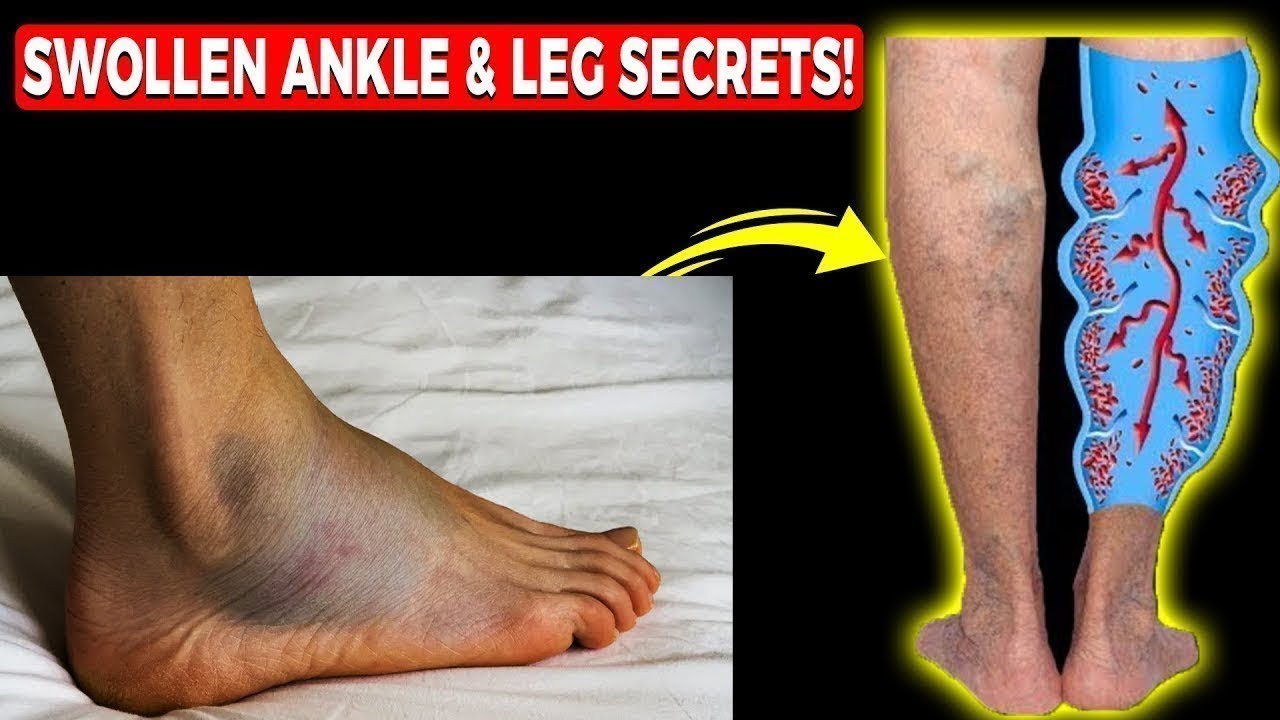
Claw Toe Post-Op Kit
Post-transfer/lengthening rehab. Dr. Tom’s kit:
As an Amazon Associate, Balance Foot & Ankle earns from qualifying purchases. This supports our free patient education content.
PIP/DIP offloading during healing.
Reduces dorsal toe friction.
Post-op swelling.
Topical PIP/DIP relief.
Related: Toe Deformity Guide · Hammertoe Surgery · Book Pre-Op Consultation
Most Common Mistake We See
The most common mistake we see is: Waiting too long before seeking care. Fix: any foot pain lasting more than 4 weeks, or any sudden severe symptom, deserves a professional evaluation rather than more rest.
Warning Signs That Need Same-Day Care
Seek immediate evaluation at Balance Foot & Ankle if you experience any of the following:
- Unable to bear weight
- Severe swelling with skin colour change
- Fever with foot pain (possible infection)
- Diabetes plus any new foot symptom
Call (810) 206-1402 — same-day and next-day appointments at our Howell and Bloomfield Hills offices.
In-Office Treatment at Balance Foot & Ankle
If home treatment isn’t providing relief for your hammertoes, our podiatry team at Balance Foot & Ankle can help with same-day evaluations and advanced in-office care.
Same-day appointments available. (810) 206-1402
Frequently Asked Questions
When should I see a podiatrist?
If symptoms persist past 2 weeks, affect your normal activity, or are accompanied by red-flag symptoms (warmth, redness, swelling, inability to bear weight).
What does treatment cost?
Most diagnostic visits and conservative treatments are covered by Medicare and major insurers. Out-of-pocket costs vary by your specific plan.
How quickly can I get an appointment?
Most non-urgent cases see us within 5 business days. Urgent cases (sudden pain, possible fracture) typically same or next business day.
What is Foot pain?
Foot pain is a common foot/ankle condition that affects mobility and quality of life. Understanding the underlying cause is the first step in successful treatment. Our podiatrists at Balance Foot & Ankle perform a hands-on biomechanical exam, review your activity history, and use diagnostic imaging when appropriate to identify the root cause—not just treat the symptom. Many patients have been told to “rest and ice” without a deeper diagnostic workup; our approach is different.
Symptoms and warning signs
Common signs of foot pain include pain that worsens with activity, morning stiffness, swelling, tenderness when palpated, and difficulty bearing weight. If you experience sudden severe pain, inability to walk, visible deformity, numbness or color change, contact our office the same day or visit urgent care—these can signal a more serious injury such as a fracture, tendon rupture, or vascular compromise. Diabetics with any foot wound should seek same-day care.
Conservative treatment options
Most cases of foot pain respond to non-surgical care: structured rest, supportive footwear changes, custom orthotics, targeted stretching and strengthening protocols, anti-inflammatory medications when medically appropriate, and in-office procedures such as ultrasound-guided injections. We also offer advanced therapies including MLS laser therapy, EPAT/shockwave, regenerative injections, and image-guided procedures. Treatment is sequenced from least invasive to most invasive, and we explain the rationale at every step.
When is surgery considered?
Surgery is reserved for cases that fail 3-6 months of well-structured conservative care, when there is structural pathology (severe deformity, complete tear, advanced arthritis), or when imaging shows damage that will not heal without intervention. Our surgeons have performed 3,000+ foot and ankle procedures and prioritize minimally-invasive techniques whenever appropriate. We discuss recovery timelines, return-to-activity milestones, and realistic outcome expectations before any procedure is scheduled.
Recovery timeline and prevention
Recovery from foot pain varies based on severity and chosen treatment path. Conservative cases often improve within 4-8 weeks with consistent adherence to the protocol. Post-procedural recovery may range from a few days (in-office procedures) to several months (reconstructive surgery). Long-term prevention involves footwear assessment, activity modification, structured strengthening, and regular check-ins with your podiatrist if you have a history of recurrence. We provide written home-exercise plans and digital follow-up support.
Ready to feel better?
Same-week appointments available in Howell and Bloomfield Hills, Michigan.
Book Your Visit
Dr. Tom Biernacki, DPM is a board-certified foot & ankle surgeon (ABFAS & ABPM) at Balance Foot & Ankle Specialists in Southeast Michigan. With over a decade of clinical experience, he specializes in heel pain, bunions, diabetic foot care, sports injuries, and minimally invasive surgery. Dr. Biernacki is a member of the APMA and ACFAS, and his patient education content on MichiganFootDoctors.com and YouTube has made him one of the most-followed foot & ankle educators on YouTube.