
Medically reviewed by Dr. Tom Biernacki, DPM
Board-certified podiatric surgeon | Balance Foot & Ankle, Howell & Bloomfield Township, MI
Last reviewed: May 2026

| Cause | Age / Population | Pain Trigger | Key Finding | Imaging |
|---|---|---|---|---|
| Extensor tendinitis | Runners; cyclists; all ages | Tight laces; hills; overuse | Tenderness along extensor tendons; no bony point | Usually none; ultrasound if chronic |
| Metatarsal stress fracture | Runners; military; dancers | Increasing activity volume | Point tenderness on metatarsal shaft | MRI (early); X-ray at 2–3 weeks |
| Navicular stress fracture | Sprinters; basketball players | Push-off sports | N-spot tender (proximal dorsal navicular) | CT or MRI essential |
| Ganglion cyst | Any age; females > males | Shoe pressure on cyst | Soft, transilluminates; attached to joint/tendon | Ultrasound to confirm fluid |
| Dorsal exostosis (bone spur) | Middle-aged; runners | Shoe tongue pressure | Hard, immobile bony bump | X-ray shows spur |
| Lisfranc injury | Athletes; fall mechanism | Axial load on plantarflexed foot | Plantar ecchymosis; midfoot instability | Weight-bearing X-ray; CT |
| Superficial peroneal nerve entrapment | Athletes; fasciotomy history | Ankle dorsiflexion; exercise | Tinel’s on dorsolateral ankle | EMG/NCS if chronic |
| Onset | Most Likely Cause | Red Flag? |
|---|---|---|
| Gradual; worsens over weeks of running | Extensor tendinitis or metatarsal stress fracture | Yes if point-tender bone |
| After tightening new shoes | Extensor tendinitis / lace bite | No |
| Soft lump appeared on top of foot | Ganglion cyst | No — unless rapidly growing |
| Hard bony bump; pain with shoe pressure | Dorsal exostosis | No |
| After fall or forced plantarflexion | Lisfranc injury | YES — get weight-bearing X-ray |
| Numbness / tingling top of foot with exercise | Nerve entrapment (superficial peroneal) | Moderate — warrants evaluation |
Quick answer: Top Of Foot Pain Causes has multiple potential causes including mechanical, neurological, vascular, and inflammatory. The most common causes we identify are overuse, ill-fitting shoes, and biomechanical imbalance. Red flags requiring urgent evaluation: warmth/redness (infection), inability to bear weight (fracture), and unilateral swelling without injury (DVT). Call (810) 206-1402.
Medically Reviewed | Dr. Tom Biernacki, DPM | Board-Certified Podiatrist | Balance Foot & Ankle, Michigan
![How to Cure Plantar Fasciitis in One Week? [FAST Heel Pain Relief!]](https://www.michiganfootdoctors.com/wp-content/cache/flying-press/b5600c3bfb9845a6095da8266d8b5363.jpg)
Watch: How to Cure Plantar Fasciitis in One Week? [FAST Heel Pain Relief!] — MichiganFootDoctors YouTube
The most important clinical decision with Top Of Foot Pain Causes isn’t which treatment to start with — it’s identifying the correct subtype. That changes everything. Call (810) 206-1402.
Top Of Foot Pain Causes: Quick Answer
Pain on top of the foot has many possible causes – and proper diagnosis is critical because treatment varies dramatically. We diagnose hundreds of top-of-foot pain cases monthly at Balance Foot and Ankle. Here are the 9 most common causes and what each means.
1. Tibialis Anterior Tendinitis
What it is: Inflammation of tendon running down front of shin to top of foot. Symptoms: Pain along front of ankle and top of foot; worse with foot lifting (dorsiflexion); often after sudden running mileage increase. Treatment: Activity modification; ice; NSAIDs; tibialis anterior stretching; custom orthotics if biomechanical issues; eccentric strengthening exercises. Recovery 4-8 weeks.
2. Extensor Tendinitis
What it is: Inflammation of tendons that lift toes (extensor digitorum, extensor hallucis longus). Symptoms: Pain along top of foot in tendon path; worse with toe extension; often from tight shoe lacing. Treatment: Loosen shoe laces; activity modification; ice; NSAIDs; possibly cortisone injection if refractory.
3. Stress Fracture (Most Often Missed)
What it is: Stress fracture of metatarsal (most commonly 2nd or 3rd) presenting as top-of-foot pain. Risk factors: Sudden activity increase; runners; female athlete triad. Symptoms: Localized pinpoint pain on specific metatarsal; sometimes visible swelling; worsens with weight bearing. Diagnosis: X-ray often misses early – MRI gold standard. Treatment: Walking boot 6-8 weeks.
4. Lisfranc Injury
What it is: Sprain or fracture of midfoot Lisfranc joint complex. Symptoms: Top-of-foot pain after twisting injury; swelling on top of foot; BRUISING ON BOTTOM OF FOOT (classic sign); inability to bear weight. Critical to diagnose – often missed and causes chronic problems if untreated. Treatment: Walking boot for stable injuries; surgical fixation for unstable.
5. Hallux Limitus / Top-of-Joint Bump
What it is: Big toe joint arthritis with bony bump on top of joint. Symptoms: Pain on top of big toe joint; reduced motion; visible bump (different from bunion which is on inside). Treatment: Stiff-soled rocker shoes; carbon fiber footplate; custom orthotics with Morton extension; NSAIDs; surgery for severe cases.
6. Tarsal Coalition (Adolescents)
What it is: Abnormal connection between two foot bones; often genetic. Symptoms: Top of midfoot pain in adolescents; rigid flat foot; recurring “ankle sprains.” Diagnosis: X-rays, CT, MRI. Treatment: Casting/boot 4-6 weeks; custom orthotics; surgical resection for severe symptomatic cases.
7. Ganglion Cyst
What it is: Soft fluid-filled bump on top of foot. Symptoms: Visible/palpable soft bump; often painless; sometimes pain with shoe pressure or activity. Treatment: Observation if asymptomatic; aspiration with cortisone injection (50% recurrence); surgical excision (lower recurrence).
8. Top of Foot Bony Bumps (Various)
Various bony prominences: Tarsal boss (osteophyte at midfoot); accessory navicular; old fracture callus; arthritic changes. Symptoms: Visible/palpable bony bump; pain with shoe pressure. Treatment: Wider shoes; padding; lacing modifications; surgical excision for refractory symptomatic cases.
9. Nerve Entrapment (Superficial Peroneal)
What it is: Compression of superficial peroneal nerve at the front of ankle. Symptoms: Burning, tingling, numbness on top of foot; sometimes from tight shoes/boots. Treatment: Loosen footwear; activity modification; gabapentin or pregabalin for nerve pain; nerve release surgery for refractory cases.
When to See a Podiatrist
See us for top-of-foot pain: 1. Persists 2-4 weeks despite rest; 2. Localized pinpoint pain on bone (rule out stress fracture); 3. Followed twisting injury (rule out Lisfranc); 4. Combined with PLANTAR (bottom) bruising (Lisfranc emergency); 5. Visible bony bump development; 6. Burning/tingling pattern (nerve entrapment); 7. Limits walking. Same-week appointments at Balance Foot and Ankle. Schedule online.
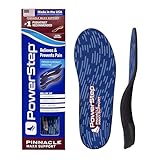
Podiatrist-Recommended Products


Frequently Asked Questions About Top Of Foot Pain Causes
What causes pain on top of foot?
Most common: tibialis anterior tendinitis; extensor tendinitis (often from tight shoes); stress fracture; Lisfranc injury (after trauma); hallux limitus; ganglion cyst; bony prominences.
Could top-of-foot pain be a stress fracture?
Yes – 2nd-3rd metatarsal stress fractures often present as top-of-foot pain. Localized pinpoint pain on bone, worsens with weight bearing, MRI gold standard for diagnosis (X-rays often miss).
What is Lisfranc injury?
Sprain or fracture of midfoot joint complex. Top-of-foot pain after twisting injury with PLANTAR (bottom) bruising is classic sign. Often missed – causes chronic problems if untreated.
Can tight shoe laces cause top-of-foot pain?
Yes – tight laces cause extensor tendinitis (most common) or superficial peroneal nerve compression. Loosen laces; loosen ski/skating boots; reposition tongue.
What is the bump on top of my foot?
Common: ganglion cyst (soft); bony prominence (tarsal boss, accessory navicular, hallux limitus on big toe joint); old fracture callus; arthritic changes. Visit podiatrist for diagnosis.
When should I see a doctor for top-of-foot pain?
Pain persists 2-4 weeks; localized pinpoint pain on bone (stress fracture concern); after twisting injury (Lisfranc concern); combined with plantar bruising (Lisfranc emergency); visible bump development; burning/tingling.
Should I worry about top-of-foot pain after running?
Yes if: localized pinpoint pain on specific bone (stress fracture); persists 2 weeks despite rest; cant bear weight; recurring same-area pain. Stress fractures are commonly missed in runners.
Related Resources from Balance Foot & Ankle
Still Dealing With Top Of Foot Pain Causes?
Same-week appointments at Balance Foot & Ankle in Howell & Bloomfield Township, MI.
Book Your Appointment⚠️ Most Common Mistake: Ignoring persistent foot pain and continuing normal activity without evaluation. Early podiatric care prevents minor foot issues from becoming chronic, difficult-to-treat conditions.
Frequently Asked Questions

In-Office Treatment at Balance Foot & Ankle
If home treatment isn’t providing relief for your foot or ankle condition, our podiatry team at Balance Foot & Ankle can help with same-day evaluations and advanced in-office care.
Same-day appointments available. (810) 206-1402
🏥 Recommended by Dr. Biernacki — Foundation Wellness Products
These are the same products Dr. Biernacki recommends to his patients at Balance Foot & Ankle in Michigan. Available through our trusted partners.
Dr. Tom’s First-Line Pain Relief Kit
The topical I use in our clinic and send patients home with. Arnica + menthol + magnesium — natural, FSA-eligible, no greasy residue. Apply directly 3–4x daily to the painful area.
View on Amazon →
Proper arch support is the #1 mechanical fix for most foot pain. The OTC insole I recommend most — semi-rigid heel cradle, firm arch. Sub-$50 vs $400+ custom orthotics.
View on Amazon →
For swelling, cramping, and post-activity pain. Truly graduated compression. Diabetic-friendly knit, no constricting top band. 15-20 or 20-30 mmHg.
View on Amazon →
As an Amazon Associate and Foundation Wellness affiliate I earn from qualifying purchases at no extra cost to you.
American Academy of Orthopaedic Surgeons: Top of Foot Pain
Ready to Get Relief?
Same-day appointments available in Howell & Bloomfield Township, MI
4.9★ | 1,123 Reviews | 3,000+ Surgeries
Or call: (810) 206-1402

Dr. Tom Biernacki, DPM is a board-certified foot & ankle surgeon (ABFAS & ABPM) at Balance Foot & Ankle Specialists in Southeast Michigan. With over a decade of clinical experience, he specializes in heel pain, bunions, diabetic foot care, sports injuries, and minimally invasive surgery. Dr. Biernacki is a member of the APMA and ACFAS, and his patient education content on MichiganFootDoctors.com and YouTube has made him one of the most-followed foot & ankle educators on YouTube.