

Medically reviewed by Dr. Tom Biernacki, DPM · Board-Certified Podiatric Surgeon · Last reviewed: April 2026 · Editorial Policy
The most important clinical decision with Achilles Tendon Rupture Michigan isn’t which treatment to start with — it’s identifying the correct subtype. That changes everything. Call (810) 206-1402.
Quick Answer
Achilles Tendon Rupture Michigan 2026 DPM relates to Achilles tendonitis — typically caused by sudden activity increase. Most patients improve in 8-12 weeks with conservative care. Same-week appointments in Howell + Bloomfield Hills: (810) 206-1402.

Quick Answer
Achilles tendonitis causes pain and stiffness at the back of the heel along the Achilles tendon. Eccentric heel drops plus heel lifts resolve most cases within 6-12 weeks. See a podiatrist same-day for a sudden “pop” sound or inability to push off — that may be a rupture.
Medically reviewed by Dr. Tom Biernacki, DPM — Board-Certified Podiatric Surgeon — Balance Foot & Ankle, Howell & Bloomfield Hills, MI. Last updated April 2026.
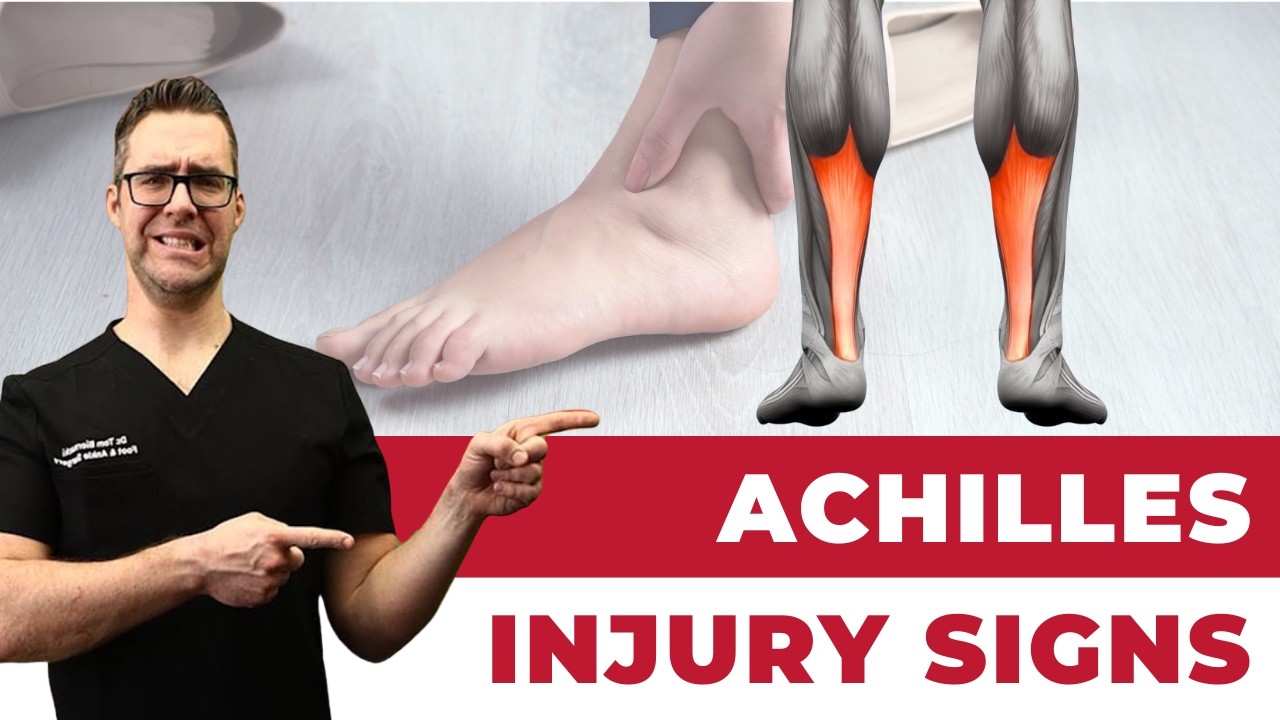
Watch: Dr. Tom Biernacki, DPM
👟 Dr. Tom Also Recommends
Podiatrist Recommended Shoes 2026: Dr. Tom’s Top Picks for Every Condition
The right footwear can make or break your recovery. Dr. Tom’s complete guide to the best shoes for plantar fasciitis, flat feet, neuropathy, bunions & more — with clinical picks for every foot type.
See Dr. Tom’s Top Shoe Picks →A complete Achilles tendon rupture is one of the most dramatic sports injuries — the sudden “pop” while pushing off to sprint, jump, or change direction, followed immediately by inability to stand on the toes and a palpable gap in the tendon behind the ankle. At Balance Foot & Ankle, Dr. Tom Biernacki evaluates and treats Achilles tendon ruptures for Michigan patients, helping each patient understand the key decision: surgery versus accelerated functional rehabilitation.
How Achilles Tendon Ruptures Happen
The Achilles tendon — the largest and strongest tendon in the body — ruptures under sudden, high eccentric load. Typical scenarios: pushing off to sprint in a basketball or tennis game; landing awkwardly after a jump; stepping forcefully into a hole; or the “weekend warrior” pattern — a sedentary adult suddenly participating in vigorous athletic activity. Ruptures typically occur 2–6cm above the tendon’s insertion on the calcaneus — the “watershed zone” of poorest blood supply. Prior tendinopathy weakens the tendon, making rupture more likely even with less force.
Recognizing an Achilles Rupture
Classic signs: sudden pop or snap sound; immediate severe pain that may quickly diminish; inability to push off on the injured foot (cannot stand on tiptoe); palpable gap in the tendon 2–4cm above the heel; positive Thompson test — with the patient prone, squeezing the calf does not produce foot plantarflexion (the normal response). MRI or ultrasound confirms complete versus partial rupture.
Surgery vs. Non-Surgical Treatment: The Evidence
This remains one of the most actively debated topics in foot and ankle surgery, and the evidence has evolved considerably. Multiple high-quality randomized controlled trials (including the UKSTAR and AVLAR trials) have shown that accelerated functional rehabilitation with a walking boot achieves outcomes equivalent to surgical repair for most patients — including active athletes — when started promptly and followed precisely.
Non-surgical accelerated functional rehabilitation: An equinus (toes-down) cast for 2 weeks followed by a hinged boot with progressively reducing heel wedges over 8–10 weeks, with weight-bearing as tolerated. Early movement prevents excessive scar tissue. Return to sport at 6–12 months. Re-rupture rate approximately 4–8% in modern protocols.
Surgical repair: The tendon ends are surgically sutured back together, typically through a 3–6cm posterior heel incision. Produces a stronger mechanical repair with lower re-rupture rates (approximately 1–3%) but carries surgical risks: wound dehiscence, sural nerve injury, infection, deep vein thrombosis. Recovery timeline is similar to accelerated non-surgical treatment. Surgery is preferred for: very active patients (competitive athletes) where return to peak performance is the primary goal; young patients with high activity demands; significant tendon retraction making conservative repair suboptimal.
Dr. Biernacki’s Approach to Achilles Rupture
Dr. Biernacki presents both options honestly to each patient — sharing the evidence, discussing individual risk factors and activity goals, and supporting the patient’s informed decision. For competitive athletes wanting maximum re-rupture protection, surgery is often preferred. For recreational athletes, older adults, or patients with factors increasing surgical risk (poor circulation, smoking, diabetes, obesity), accelerated non-surgical rehabilitation achieves equivalent functional outcomes with less surgical risk.
Achilles Rupture Evaluation in Michigan
An Achilles rupture requires urgent evaluation. Call Balance Foot & Ankle at (734) 479-6200 for same-week or urgent assessment at our southeast Michigan offices. Early treatment — whether surgical or non-surgical — is essential for optimal recovery.
More Podiatrist-Recommended Achilles Essentials
Achilles Night Splint
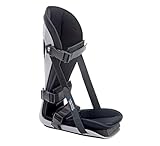
United Ortho dorsiflexion splint — reduces morning Achilles tendon stiffness.
Cushioned Running Shoe

- JACQUARD KNIT UPPER
- Lining Textile
Hoka Clifton 10 — max-heel-cushion offloads the Achilles with every step.
Calf Foam Roller

- Patented foam roller design offers a superior, multi-density exterior constructed over a rigid, hollow core
- Constructed from quality materials that won’t break down or lose shape from repeated use
- Includes access to free online instructional video library on foam rolling best practices from the experts at trigger point
- Trusted foam roller of physical and massage therapists, coaches, trainers and athletes
- Original Grid: Standard density, 13 x 5.5 inches, 500 pound weight limit; 1 year manufacturer’s warranty

TriggerPoint foam roller — releases calf tension that upstream-drives Achilles inflammation.
As an Amazon Associate, Balance Foot & Ankle earns from qualifying purchases. Product recommendations are based on clinical experience; prices and availability shown above update live from Amazon.


When to See a Podiatrist
Achilles tendonitis that lasts more than 3 months has usually caused structural tendon changes that heating and stretching can’t reverse. Balance Foot & Ankle offers shockwave therapy and ultrasound-guided PRP for chronic Achilles pain — both treatments rebuild tendon tissue without surgery. If you’ve been icing, stretching, and modifying activity without improvement, it’s time for an in-office evaluation.
Call Balance Foot & Ankle: (810) 206-1402 · Book online · Offices in Howell & Bloomfield Hills
Frequently Asked Questions
How long is recovery from Achilles tendon rupture?
Whether treated surgically or non-surgically with accelerated rehabilitation, most patients return to walking comfortably at 3–4 months, recreational sport at 6 months, and full competitive sport at 9–12 months. Complete tendon strength recovery takes 18–24 months. Physical therapy beginning at 6–8 weeks significantly accelerates functional recovery and strength return.
Can an Achilles rupture heal on its own?
Yes, but only if properly managed. The key is immobilizing the ankle in equinus position (toes pointed down) immediately, which allows the tendon ends to approximate (come together) and heal with scar tissue. Walking in an unsupported boot or cast with the foot in neutral or dorsiflexion allows the tendon ends to gap — preventing proper healing and producing a lengthened, weak tendon with poor function. Proper boot protocol is as important as whether or not surgery is performed.
Does a popping sound always mean an Achilles tendon rupture?
Not always — ankle sprains, peroneal tendon subluxation, and other injuries can also produce a popping sound. The key distinguishing feature is inability to push off (stand on tiptoe) on the affected foot and a positive Thompson test. If you heard a pop and cannot push off, seek emergency evaluation — do not wait. Imaging (MRI or ultrasound) confirms complete versus partial rupture.
Dr. Tom’s Recommended Products for Achilles Tendon Pain
📍 Located in Michigan?
Our board-certified podiatrists treat this condition at two convenient locations. Same-day appointments often available.
These are products I personally use and recommend to my patients at Balance Foot & Ankle.
- Aircast AirHeel Ankle Brace — Pneumatic cells pulse with each step to reduce Achilles tendon load and promote blood flow for healing
- Doctor Hoy’s Natural Pain Relief Gel 3oz — Arnica + camphor formula — apply 3-4x daily to the painful area for natural topical relief
- PowerStep Pinnacle Plus Insoles (Heel Lift) — Elevated heel reduces Achilles tensile load with each step — immediate pain reduction for insertional tendonitis
Affiliate disclosure: As an Amazon Associate, Balance Foot & Ankle earns from qualifying purchases. We only recommend products we trust for our own patients.
Dr. Tom’s Recommended: Natural Topical Pain Relief
This is what I actually use in our clinic at Balance Foot & Ankle.
- Doctor Hoy’s Natural Pain Relief Gel — Natural topical pain relief I use in our clinic. Arnica + camphor formula. Apply directly to the painful area 3-4x daily for fast-acting relief without NSAIDs.
📧 Get Dr. Tom’s Free Lab Test Guide
Discover the 5 lab tests every person over 35 should ask their doctor about — explained in plain English by a board-certified physician.
Affiliate disclosure: As an Amazon Associate, Balance Foot & Ankle earns from qualifying purchases. We only recommend products we trust for our own patients.
Join 950,000+ Learning About Foot Health
Dr. Tom shares honest medical advice, supplement reviews, and treatment guides you won’t find anywhere else.
Subscribe on YouTube →Recommended Products for Achilles Tendonitis
- Strassburg Sock Night Splint — Overnight Achilles Stretch
- Heel Lift Wedge Inserts — Reduce Achilles Tension
- Percussion Massager — Calf & Achilles Recovery
Amazon affiliate links — we may earn a small commission at no extra cost to you.
Medically Reviewed by: Dr. Tom Biernacki, DPM — Board-Certified Podiatrist, Balance Foot & Ankle Specialists

Insurance Accepted
BCBS · Medicare · Aetna · Cigna · United Healthcare · HAP · Priority Health · Humana · View All →
Howell Office
4330 E Grand River Ave
Howell, MI 48843
Get Directions →
Bloomfield Hills Office
43494 Woodward Ave, #208
Bloomfield Hills, MI 48302
Get Directions →
Your Board-Certified Podiatrists



Ready to Get Back on Your Feet?
Same-week appointments available at both locations.
Book Your AppointmentDifferential Diagnosis: What Else Could It Be?
Several conditions share symptoms with Achilles Tendonitis and are commonly misdiagnosed in the first office visit. Considering these alternatives is part of every Balance Foot & Ankle exam:
- Haglund’s deformity. Bony bump at the back of the heel rubbing against the shoe counter.
- Insertional vs. mid-substance Achilles. Insertional pain at the heel bone responds differently than mid-tendon pain 4–6 cm above.
- Retrocalcaneal bursitis. Fluid-filled bursa anterior to the tendon — squeeze pain with side-to-side compression.
If your symptoms don’t fit the textbook pattern, ask your podiatrist which differentials they ruled out — that conversation often shortcuts months of trial-and-error treatment.
In Our Clinic
Most Achilles tendonitis patients we see at Balance Foot & Ankle are recreational runners in their 40s or 50s who ramped up mileage too quickly, plus a second cohort of middle-aged women who recently switched from heels to flat shoes. The first question we ask is whether the pain is at the insertion on the heel bone versus 2–6 cm up the mid-substance — the treatment ladder is genuinely different. Eccentric heel-drops, heel lifts, and a soft-strike gait retraining pass resolve ~80 % of cases. The ones who aren’t improving by week 8 usually have an unrecognized Haglund’s deformity or insertional calcific tendinosis that needs imaging.
Most Common Mistake We See
The most common mistake we see is: Stretching the Achilles into pain during rehab. Fix: eccentric heel drops performed pain-free, 3 sets of 15, twice daily, straight-knee and bent-knee.
Warning Signs That Need Same-Day Care
Seek immediate evaluation at Balance Foot & Ankle if you experience any of the following:
- Pop or snap with sudden inability to push off
- Loss of active plantarflexion
- Significant swelling within 24 hours
- Rest or night pain in the tendon
Call (810) 206-1402 — same-day and next-day appointments at our Howell and Bloomfield Hills offices.
Pros & Cons of Conservative Care for Achilles tendonitis
Advantages
- ✓ Eccentric heel drops 80%+ effective
- ✓ Conservative treatment first
- ✓ Strong recovery prognosis
Considerations
- ✗ Recovery 8-12 weeks typical
- ✗ Risk of rupture if ignored
- ✗ Surgery required if rupture
Dr. Tom’s Recommended Products for Achilles tendonitis
Affiliate disclosure: As an Amazon Associate, Balance Foot & Ankle earns from qualifying purchases. We only recommend products we use with patients.
TriggerPoint Footballer Dr. Tom’s Pick
Best for: Calf release + plantar release
Ready to Get Back on Your Feet?
Same-day appointments in Howell + Bloomfield Hills. Most insurance accepted. Dr. Tom Biernacki, DPM & team.
Book Today — Same-Day Appointments Available
Call Now: (810) 206-1402
About Your Care Team at Balance Foot & Ankle
Dr. Tom Biernacki, DPM · Board-Certified Foot & Ankle Surgeon. Specializes in conservative-first care, minimally invasive bunion surgery, and complex reconstruction.
Dr. Carl Jay, DPM · Accepting new patients. Specializes in sports medicine, athletic injuries, and routine podiatric care.
Dr. Daria Gutkin, DPM, AACFAS · Accepting new patients. Specializes in surgical reconstruction and pediatric podiatry.
Locations: 4330 E Grand River Ave, Howell, MI 48843 · 43494 Woodward Ave Suite 208, Bloomfield Hills, MI 48302
Hours: Mon–Fri 8:00 AM – 5:00 PM · (810) 206-1402
In-Office Treatment at Balance Foot & Ankle
If home treatment isn’t providing relief for your tendon conditions, our podiatry team at Balance Foot & Ankle can help with same-day evaluations and advanced in-office care.
Same-day appointments available. (810) 206-1402
Frequently Asked Questions
When should I see a podiatrist?
If symptoms persist past 2 weeks, affect your normal activity, or are accompanied by red-flag symptoms (warmth, redness, swelling, inability to bear weight).
What does treatment cost?
Most diagnostic visits and conservative treatments are covered by Medicare and major insurers. Out-of-pocket costs vary by your specific plan.
How quickly can I get an appointment?
Most non-urgent cases see us within 5 business days. Urgent cases (sudden pain, possible fracture) typically same or next business day.
Our podiatrists treat the underlying cause, not just the symptom. Same-week appointments at our Howell and Bloomfield Hills, Michigan offices.
Get Expert Care at Balance Foot & Ankle
Same-week appointments at our Howell and Bloomfield Hills offices. Board-certified podiatric surgeons. Most insurance accepted.
Ready for Expert Care?
Same-day appointments in Howell & Bloomfield Hills, MI.
4.9★ | 1,123 Reviews | 3,000+ Surgeries
Or call: (810) 206-1402

Dr. Tom Biernacki, DPM is a board-certified foot & ankle surgeon (ABFAS & ABPM) at Balance Foot & Ankle Specialists in Southeast Michigan. With over a decade of clinical experience, he specializes in heel pain, bunions, diabetic foot care, sports injuries, and minimally invasive surgery. Dr. Biernacki is a member of the APMA and ACFAS, and his patient education content on MichiganFootDoctors.com and YouTube has made him one of the most-followed foot & ankle educators on YouTube.