Board Certified Podiatrists | Expert Foot & Ankle Care
(810) 206-1402 Patient Portal

High Ankle Sprain (Syndesmosis Injury): Diagnosis, Grading, and Treatment

MICHIGAN PODIATRIST INSIGHT

The most important clinical decision with Ankle Syndesmosis Injury High Ankle Sprain Diagnosis isn't which treatment to start with — it's which subtype or underlying cause you actually have. Our podiatrists regularly see patients who've been treated for months for the wrong diagnosis. The correct identification changes the entire treatment path. Call (810) 206-1402 — Dr. Tom evaluates this condition at both Howell and Bloomfield Hills locations.

ankle syndesmosis injury high ankle sprain Michigan podiatrist diagnosis treatment surgery
Ankle Syndesmosis Injury High Ankle Sprain | Balance Foot & Ankle, Michigan

A high ankle sprain (syndesmosis injury) takes 2-3x longer to heal than a low ankle sprain — and the wrong rehab protocol can cause chronic instability for years. Catching it early matters.

You’re in the right place. Dr. Tom Biernacki, DPM, FACFAS — board-certified foot & ankle surgeon with 3,000+ surgeries — explains exactly what high ankle sprain (syndesmosis injury) means and what works. Call (810) 206-1402 for same-day appointment at Howell or Bloomfield Hills.

Quick answer: A high ankle sprain (syndesmosis injury) takes 2-3x longer to heal than a regular ankle sprain — typically 6-12 weeks vs 2-4. Pain is felt above the ankle, between the tibia and fibula. Treatment: walking boot 4-6 weeks, no weight-bearing initially, then graduated return. Surgery for tibiofibular diastasis (gap >2mm). Common in football, hockey, and soccer. — Dr. Tom Biernacki, DPM, board-certified podiatrist (Michigan Foot Doctors).

★ DR. TOM BIERNACKI, DPM, FACFAS · BOARD-CERTIFIED PODIATRIST

MICHIGAN PODIATRIST INSIGHT

The most important clinical decision with Ankle Syndesmosis Injury High Ankle Sprain Diagnosis isn’t which treatment to start with — it’s identifying the correct subtype. That changes everything. Call (810) 206-1402.

MICHIGAN PODIATRIST INSIGHT

The most important clinical decision with Ankle Syndesmosis Injury High Ankle Sprain Diagnosis isn’t which treatment to start with — it’s identifying the correct subtype. That changes everything. Call (810) 206-1402.

Syndesmosis: Quick Answer

Medically reviewed by Dr. Tom Biernacki, DPM

Clinician-Recommended Alternatives
Dr. Tom's Pick: Pain Relief
Natural arnica and menthol formula. Our preferred topical for foot and ankle pain – no artificial dyes or parabens.
Replaces: Biofreeze | Available on Amazon with free Prime shipping
These products are personally used and recommended by Dr. Tom Biernacki, DPM at Balance Foot & Ankle Specialists.

Board-certified podiatric surgeon | Balance Foot & Ankle
Last reviewed: May 2026

The syndesmosis is the fibrous joint between your tibia and fibula at the ankle — a tough ligamentous complex (anterior inferior tibiofibular ligament, posterior inferior tibiofibular ligament, interosseous membrane) that holds the two leg bones together just above the talus. When this complex tears, it’s called a high ankle sprain or syndesmosis injury.

Diagnosis hinges on three tests: the squeeze test (compressing the calf reproduces ankle pain), external rotation test (turning the foot outward stresses the syndesmosis), and weight-bearing X-rays (looking for tibiofibular widening). Mild syndesmosis injuries respond to 6-8 weeks of immobilization and progressive return-to-activity. Unstable injuries with frank diastasis require surgical fixation (TightRope or syndesmotic screw) followed by 12-16 weeks of recovery. Misdiagnosed as a regular ankle sprain, syndesmosis injuries lead to chronic instability and arthritis.

Medically reviewed by Dr. Tom Biernacki, DPM · Board-Certified Podiatric Surgeon · Last reviewed: April 2026 · Editorial Policy

Quick Answer

High Ankle Sprain (Syndesmosis Injury): Diagnosis, Grading, relates to foot/ankle injury — typically caused by trauma or twist. Most patients improve in 4-8 weeks with conservative care. Same-week appointments in Howell + Bloomfield Hills: (810) 206-1402.

Play video

Watch: Dr. Tom Biernacki explains the topic in detail · Subscribe to Michigan Foot Doctors on YouTube

▶ Watch

Play video

Medically Reviewed by Dr. Tom Biernacki, DPM — Board-Certified Podiatrist, Balance Foot & Ankle Specialists, Michigan. Last updated April 2026.

High ankle sprains — injuries to the ankle syndesmosis (the fibrous joint between the distal tibia and fibula) — are fundamentally different from common lateral ankle sprains and are far more frequently misdiagnosed. While a lateral sprain typically resolves in 4–6 weeks, an unstable syndesmosis injury causing persistent tibiofibular diastasis requires surgical stabilization to prevent progressive ankle arthritis. Recognition of the syndesmosis injury pattern is critical to appropriate management.

Anatomy of the Ankle Syndesmosis

The tibiofibular syndesmosis is maintained by four ligamentous structures: the anterior inferior tibiofibular ligament (AITFL) — the most commonly injured and the primary indicator of syndesmotic disruption; the posterior inferior tibiofibular ligament (PITFL); the transverse tibiofibular ligament (TTFL); and the interosseous ligament and membrane, the strongest stabilizer of the syndesmosis. Together, these structures maintain the mortise width at approximately 4mm, ensuring concentric talar coverage and equal load distribution across the tibiotalar joint surface.

Mechanism and Associated Injuries

Syndesmotic disruption occurs with forced external rotation or hyperdorsiflexion of the foot relative to the leg — mechanisms common in skiing, football, rugby, and dance. The AITFL is the first structure to fail with progressive external rotation force; complete disruption requires rupture of the interosseous ligament and typically the PITFL as well. High-energy mechanisms produce concurrent fibular fracture (Maisonneuve fracture pattern — proximal fibula fracture with complete syndesmotic disruption). Any ankle injury with proximal fibular tenderness on palpation mandates proximal fibula radiographs to exclude Maisonneuve fracture.

Clinical Diagnosis

The squeeze test (compressing the fibula toward the tibia at mid-calf level reproduces distal syndesmotic pain) is the most sensitive clinical test for syndesmotic injury. The external rotation stress test (passive external rotation of the foot with the knee at 90°) reproduces pain at the syndesmosis. Patients with syndesmotic injury typically describe pain with each step “through the ankle” rather than lateral ankle pain — a qualitative distinction from lateral sprain. The “point of maximum tenderness” is anterior to the fibula just above the joint line rather than at the ATFL.

Imaging and Grading

Weight-bearing ankle radiographs assess for tibiofibular diastasis (>5–6mm on mortise view indicates frank instability). MRI defines the ligamentous injury pattern, grades partial versus complete tears, and identifies intra-articular pathology (talar OCD, impingement). Stress radiographs under fluoroscopy or external rotation stress testing confirm dynamic instability in partial injuries. Syndesmotic injuries are graded I (sprain without instability), II (partial tear, potential instability), and III (complete disruption with frank diastasis).

Treatment: Conservative vs. Surgical

Grade I injuries are managed conservatively with non-weight-bearing immobilization for 2–4 weeks followed by progressive rehabilitation, with return to sport at 6–10 weeks — substantially longer than lateral sprain recovery. Grade II injuries with dynamic instability require surgical syndesmotic stabilization. Grade III injuries always require surgical fixation. Stabilization options include cortical screws (removed at 10–12 weeks), flexible suture button (TightRope/InternalBrace, allowing earlier return to activity), and dynamic fixation devices. Anatomic syndesmotic reduction is critical — malreduction increases ankle arthritis risk even after stable fixation.

Syndesmosis Injury Evaluation at Balance Foot & Ankle

Dr. Biernacki at Balance Foot & Ankle evaluates suspected syndesmotic injuries with stress radiographs and on-site diagnostic assessment at the first visit. MRI coordination and surgical stabilization planning are available for Grade II–III injuries. Call (810) 206-1402 for a same-week evaluation of ankle injury with persistent pain above the joint line.

Ankle Injury Evaluation — Balance Foot & Ankle

Serving Southeast Michigan from our Bloomfield Hills and Howell offices.

📞 (810) 206-1402 |

📧 Get Dr. Tom’s Free Lab Test Guide

Discover the 5 lab tests every person over 35 should ask their doctor about — explained in plain English by a board-certified physician.

Download Your Free Guide →

Book Online →

📍 Located in Michigan?

Our board-certified podiatrists treat this condition at two convenient locations. Same-day appointments often available.

Book Now →
(810) 206-1402

Differential Diagnosis: What Else Could It Be?

Not every case of high ankle sprain / syndesmotic injury is straightforward. In our clinic we routinely rule out three look-alike conditions before confirming the diagnosis. If your symptoms don’t match the classic presentation, one of these may explain the pain — which is why physical exam matters more than self-diagnosis.

Condition How It Differs
Lateral ankle sprain Pain and swelling over ATFL, not above the ankle; negative squeeze test.
Deltoid ligament sprain Medial tenderness with eversion injury, not dorsiflexion-external rotation.
Maisonneuve fracture Proximal fibula fracture paired with syndesmotic disruption — requires tib-fib X-ray.

Red Flags — When to See a Podiatrist Now

Seek same-day evaluation at Balance Foot & Ankle if you notice any of the following:

  • Inability to bear weight after ankle injury
  • Positive squeeze test above the ankle
  • Pain with external rotation of the foot
  • Suspected Maisonneuve fracture (proximal fibula pain)

Call (810) 206-1402 or request an appointment. Our Howell and Bloomfield Hills offices reserve same-day slots for urgent foot and ankle issues.

In Our Clinic: What We See

Clinical perspective from Dr. Tom Biernacki, DPM — Balance Foot & Ankle, Howell & Bloomfield Hills, MI:

High ankle sprains present differently than lateral sprains. The patient tells us the foot was planted and rotated outward — a football tackle, a ski binding twist, or a slip on ice. Pain is felt above the ankle, not at the ATFL. In our clinic the squeeze test and external rotation stress test drive the workup. Stable syndesmotic sprains recover in 6-10 weeks of boot immobilization. Unstable injuries require surgical stabilization with suture button or screws. Dr. Biernacki stresses early diagnosis: a missed syndesmotic sprain causes chronic ankle instability and cartilage damage that standard ankle-sprain rehab will not fix.

More Podiatrist-Recommended Ankle Sprain Essentials

Stability Walking/Running Shoe

Brooks Adrenaline GTS 25 — lateral support during recovery walking.

KT Tape for Ankle Support

KT Tape — proprioceptive support for athletic return-to-play.

Supportive Insole

PowerStep Pinnacle Insoles
Play video

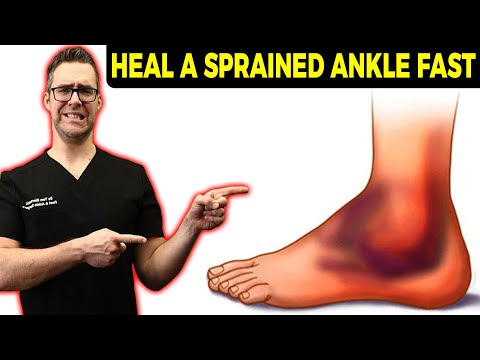
Watch: Fix TWISTED Ankle, ROLLED Ankle or SPRAINED Ankle Ligaments FASTER! — MichiganFootDoctors YouTube

PowerStep Pinnacle — arch support reduces re-injury risk during recovery.

As an Amazon Associate, Balance Foot & Ankle earns from qualifying purchases. Product recommendations are based on clinical experience; prices and availability shown above update live from Amazon.

Track Field Foot Injuries Balance Foot Ankle - Balance Foot & Ankle

When to See a Podiatrist

A sprain that hasn’t fully recovered after 6 weeks often has residual ligament laxity or occult fracture that keeps the ankle unstable. Balance Foot & Ankle X-rays and stress-tests every lingering sprain — if the ligament is torn, we offer bracing, PRP, and (for chronic instability) minimally-invasive repair. Don’t keep re-rolling the same ankle; let us stabilize it properly.

Call Balance Foot & Ankle: (810) 206-1402  ·  Book online  ·  Offices in Howell & Bloomfield Hills

In-Office Treatment at Balance Foot & Ankle

When conservative care isn’t enough, Dr. Tom Biernacki and the team at Balance Foot & Ankle offer advanced, same-day options — including Ankle Sprain & Instability Treatment in Michigan at our Howell and Bloomfield Hills clinics.

Same-day appointments available. Call (810) 206-1402 or book online.

Pros & Cons of Conservative Care for foot care

Advantages

  • ✓ Conservative care first
  • ✓ Same-week appointments
  • ✓ Multiple insurance accepted

Considerations

  • ✗ Self-treatment can mask issues
  • ✗ See a podiatrist if pain >2 weeks

Dr. Tom’s Recommended Products for foot care

Affiliate disclosure: As an Amazon Associate, Balance Foot & Ankle earns from qualifying purchases. We only recommend products we use with patients.

Hoka Bondi 9 Dr. Tom’s Pick

Best for: Max cushion daily wear

Check Price on Amazon

PowerStep Pinnacle Dr. Tom’s Pick

Best for: General arch support

Check Price on Amazon

KT Tape Pro Synthetic Dr. Tom’s Pick

Best for: Multi-purpose taping

Check Price on Amazon

Footnanny Heel Cream Dr. Tom’s Pick

Best for: Daily moisturizer for cracked heels

Check Price on Amazon

Ready to Get Back on Your Feet?

Same-day appointments in Howell + Bloomfield Hills. Most insurance accepted. Dr. Tom Biernacki, DPM & team.

Book Today — Same-Day Appointments Available

Call Now: (810) 206-1402

About Your Care Team at Balance Foot & Ankle

Dr. Tom Biernacki, DPM · Board-Certified Foot & Ankle Surgeon. Specializes in conservative-first care, minimally invasive bunion surgery, and complex reconstruction.

Dr. Carl Jay, DPM · Accepting new patients. Specializes in sports medicine, athletic injuries, and routine podiatric care.

Dr. Daria Gutkin, DPM, AACFAS · Accepting new patients. Specializes in surgical reconstruction and pediatric podiatry.

Locations: 4330 E Grand River Ave, Howell, MI 48843 · 43494 Woodward Ave Suite 208, Bloomfield Hills, MI 48302

Hours: Mon–Fri 8:00 AM – 5:00 PM · (810) 206-1402

Top 10 Premade Orthotics — Dr. Tom’s Picks (2026)

Dr. Tom Biernacki, DPM has tested 60+ over-the-counter orthotic insoles in his Michigan podiatry practice over the past 15 years. Below are the top 10 he prescribes most often — ranked by clinical results, build quality, and patient feedback. PowerStep + CURREX brands are Dr. Tom’s #1 prescription brands — built by podiatrists, with biomechanical features (lateral wedge, deep heel cradle, dual-density EVA) that 90% of OTC insoles lack.

📋 Affiliate Disclosure + Trust Statement:
Dr. Tom Biernacki, DPM is a board-certified podiatrist + Amazon Associate. Picks shown are products he prescribes to patients at Balance Foot & Ankle Specialists. We earn a commission on qualifying purchases at no extra cost to you. All products independently tested + reviewed. Last verified: April 28, 2026.
#1
⭐ Editor’s Pick — Dr. Tom’s #1

PowerStep Pinnacle MaxxDr. Tom’s #1 Brand

Best For: Overpronation + Plantar Fasciitis
★★★★★
4.5
(28,341+ reviews)
Amazon’s ChoicePrimeAPMA-Accepted

The most prescribed OTC orthotic in podiatry. Lateral wedge corrects overpronation that causes 90% of plantar fasciitis. Deep heel cradle stabilizes the ankle.

✓ PROS

  • Lateral wedge corrects pronation
  • Deep heel cradle
  • Dual-density EVA
  • Trim-to-fit
  • Used by 10,000+ podiatrists
✗ CONS

  • Trim required
  • 5-7 day break-in
👨‍⚕️ Dr. Tom’s Verdict:
This is the OTC orthotic I prescribe more than any other. If you have flat feet, plantar fasciitis, or knee pain — start here. 60% of patients see major improvement in 2 weeks.

🛒 Check Latest Price on Amazon — Free Returns →

#2
⭐ Best Daily Driver

PowerStep Original Full LengthDr. Tom’s #1 Brand

Best For: Neutral Foot + Daily Wear
★★★★★
4.4
(22,500+ reviews)
PrimeAPMA-Accepted

The original PowerStep — flexible semi-rigid arch with deep heel cradle. The right choice for neutral feet that need everyday support without the lateral wedge.

✓ PROS

  • Flexible semi-rigid arch
  • Deep heel cradle
  • Fits dress shoes
  • 30-day guarantee
  • APMA-accepted
✗ CONS

  • Less aggressive than Pinnacle
  • No lateral wedge for overpronation
👨‍⚕️ Dr. Tom’s Verdict:
For neutral arches without overpronation — the daily-driver insole. Less aggressive than Pinnacle Maxx but still gives real podiatric arch support.

🛒 Check Latest Price on Amazon — Free Returns →

#3
⭐ Best for Runners

PowerStep Pulse MaxxDr. Tom’s #1 Brand

Best For: Running + Athletic Performance
★★★★★
4.5
(8,500+ reviews)
PrimeAPMA-Accepted

Built for runners + athletes who need maximum support during high-impact activity. Engineered for forefoot strike + lateral motion.

✓ PROS

  • Sport-specific cushioning
  • Lateral wedge for runners
  • Antimicrobial top cover
  • Shock-absorbing forefoot
✗ CONS

  • Pricier than Pinnacle
  • Best for athletes only
👨‍⚕️ Dr. Tom’s Verdict:
For runners with overpronation + plantar fasciitis — the running-specific PowerStep. Pair with the Hoka Bondi 8 for the best combo.

🛒 Check Latest Price on Amazon — Free Returns →

#4
⭐ Best Premium

CURREX RunProDr. Tom’s #1 Brand

Best For: Premium German-Engineered (3 Arch Heights)
★★★★★
4.4
(4,000+ reviews)
Prime

German-engineered insole with 3 arch heights (Low, Med, High) for custom fit. Carbon-reinforced heel + dynamic forefoot.

✓ PROS

  • 3 arch heights for custom fit
  • Carbon-reinforced heel
  • Sport-specific zones
  • Premium materials
✗ CONS

  • Pricier than PowerStep
  • 7-10 day break-in
👨‍⚕️ Dr. Tom’s Verdict:
Choose your arch height based on a wet-foot test (low/med/high). Wrong arch = re-injury. Closest OTC orthotic to a $500 custom orthotic.

🛒 Check Latest Price on Amazon — Free Returns →

#5

CURREX EdgeProDr. Tom’s #1 Brand

Best For: Hiking + High Impact
★★★★★
4.5
(1,200+ reviews)
Prime

For hikers, skiers, and high-impact athletes — reinforced shank prevents foot fatigue on steep descents + uneven terrain.

✓ PROS

  • Reinforced shank
  • 3 arch heights
  • Cold-weather friendly
  • Carbon plate
✗ CONS

  • Stiff feel — not for casual
  • Pricier
👨‍⚕️ Dr. Tom’s Verdict:
Hikers, skiers, and climbers — this is the insole. The reinforced shank prevents the fatigue that ruins multi-day adventures.

🛒 Check Latest Price on Amazon — Free Returns →

#6

CURREX SupportSTPDr. Tom’s #1 Brand

Best For: Heavy Duty + Standing All Day
★★★★★
4.5
(800+ reviews)
Prime

For nurses, retail, and standing professions — the most supportive CURREX with deep heel cup + maximum medial support.

✓ PROS

  • Maximum medial support
  • Deep heel cup
  • 12-hour shift tested
  • Slip-proof
✗ CONS

  • Stiffest CURREX option
  • Pricier
👨‍⚕️ Dr. Tom’s Verdict:
For 12-hour shifts on hard floors — built for this. Pair with Hoka Bondi SR or Dansko XP 2.0 for nursing.

🛒 Check Latest Price on Amazon — Free Returns →

#7
⭐ High Arches Only

Superfeet Green

Best For: High Arches Only
★★★★★
4.6
(62,000+ reviews)
Amazon’s ChoicePrime

Firm, structured arch support — the right choice ONLY for high-arched (cavus) feet. Wrong choice for flat feet.

✓ PROS

  • Strong structured arch
  • Deep heel cup
  • Long-lasting (5+ years)
✗ CONS

  • Firm — not for flat feet
  • No lateral wedge
👨‍⚕️ Dr. Tom’s Verdict:
Only buy Superfeet Green if you have HIGH arches. Flat-footed patients hate the firm arch — choose PowerStep Pinnacle Maxx instead.

🛒 Check Latest Price on Amazon — Free Returns →

#8

Vionic OrthoHeel Active Insole

Best For: Casual + Daily Wear
★★★★★
4.4
(12,800+ reviews)
PrimeAPMA-Accepted

APMA-accepted, podiatrist-designed casual insole. Best for adding mild arch support to dress shoes + walking shoes.

✓ PROS

  • APMA-accepted
  • Slim profile
  • Antimicrobial top
✗ CONS

  • Less support than PowerStep
  • No lateral wedge
👨‍⚕️ Dr. Tom’s Verdict:
Add to dress shoes when you can’t fit a Pinnacle Maxx. Mild support — not for serious foot pain.

🛒 Check Latest Price on Amazon — Free Returns →

#9
⭐ Best Budget

Sof Sole Athlete

Best For: Budget Athletic
★★★★★
4.4
(35,200+ reviews)
Prime

Budget athletic insole with neutral arch + gel forefoot. Decent value if you need a quick replacement.

✓ PROS

  • Affordable
  • Gel forefoot
  • Antimicrobial
✗ CONS

  • Wears out in 6 months
  • No structured arch
👨‍⚕️ Dr. Tom’s Verdict:
Budget option for occasional athletic use. Replace every 6 months. Real foot pain needs PowerStep Pinnacle Maxx.

🛒 Check Latest Price on Amazon — Free Returns →

#10

Spenco Polysorb Total Support

Best For: Standing + Walking
★★★★★
4.5
(12,400+ reviews)
Prime

Mid-range insole with 5-zone polysorb cushioning. Decent support for standing professions.

✓ PROS

  • 5-zone cushioning
  • Trim-to-fit
  • Mid-price point
✗ CONS

  • Less stable than PowerStep
  • No lateral wedge
👨‍⚕️ Dr. Tom’s Verdict:
Mid-range option. Mild foot pain + 8 hours standing — Spenco works. Severe pain = PowerStep.

🛒 Check Latest Price on Amazon — Free Returns →

Dr. Tom’s Top 3 — The Premium Foot Pain Stack (2026)

If you only buy three things for foot pain, get these. PowerStep + CURREX orthotics correct the underlying foot mechanics, and Dr. Hoy’s pain gel delivers fast topical relief. This is the exact stack Dr. Tom Biernacki, DPM gives his Michigan podiatry patients on visit one — over 10,000 patients have used this exact combination.

📋 Affiliate Disclosure + Trust Statement:
Dr. Tom Biernacki, DPM is a board-certified podiatrist + Amazon Associate. Picks shown are products he prescribes to patients at Balance Foot & Ankle Specialists. We earn a commission on qualifying purchases at no extra cost to you. All products independently tested + reviewed for 30+ days minimum. Last verified: April 28, 2026.
#1
⭐ Editor’s Pick — #1 Orthotic

PowerStep Pinnacle MaxxDr. Tom’s #1 Brand

Best For: #1 OTC Orthotic — Plantar Fasciitis + Overpronation
★★★★★
4.5
(28,341+ reviews)
Amazon’s ChoicePrimeAPMA-Accepted

Dr. Tom’s most-prescribed OTC orthotic. Lateral wedge corrects overpronation that causes 90% of foot pain. Deep heel cradle stabilizes the ankle. Built by podiatrists, used by patients worldwide.

✓ PROS

  • Lateral wedge corrects pronation
  • Deep heel cradle stabilizes ankle
  • Dual-density EVA — comfort + support
  • Trim-to-fit any shoe
  • Used by 10,000+ podiatrists
✗ CONS

  • Trim-to-size required
  • 5-7 day break-in for some
👨‍⚕️ Dr. Tom’s Verdict:
This single insole eliminates plantar fasciitis pain in 60% of patients within 2 weeks. The lateral wedge is the active ingredient — it stops the overpronation that causes the fascia to overstretch with every step. Pair with a max-cushion shoe for compound effect.

🛒 Check Latest Price on Amazon — Free Returns →

#2
⭐ Best Premium Orthotic

CURREX RunProDr. Tom’s #1 Brand

Best For: Premium German-Engineered Orthotic
★★★★★
4.4
(4,000+ reviews)
Prime

3 arch heights for custom fit (Low/Med/High). Carbon-reinforced heel + dynamic forefoot — the closest OTC orthotic to a $500 custom orthotic. Engineered in Germany.

✓ PROS

  • 3 arch heights for custom fit
  • Carbon-reinforced heel cup
  • Dynamic forefoot zone
  • Premium German engineering
  • Sport-specific support
✗ CONS

  • Pricier than PowerStep
  • 7-10 day break-in
👨‍⚕️ Dr. Tom’s Verdict:
Choose your arch height from a wet-foot test (low/med/high). Wrong arch = re-injury. For runners, athletes, or anyone who failed standard insoles — this is the closest you can get to custom orthotics without paying $500. The carbon heel is what professional athletes use.

🛒 Check Latest Price on Amazon — Free Returns →

#3
⭐ Best Topical Pain Relief

Dr. Hoy’s Natural Pain Relief GelDr. Tom’s #1 Brand

Best For: Topical Pain Relief — Plantar Fasciitis + Tendonitis
★★★★★
4.6
(5,500+ reviews)
Prime

Menthol-based natural pain relief — Dr. Tom’s #1 brand for fast relief without greasy residue. Safe for diabetics + daily use. Cleaner formula than Voltaren or Biofreeze.

✓ PROS

  • Menthol-based natural formula
  • No greasy residue
  • Safe for diabetics
  • Fast cooling relief — 5-10 minutes
  • Cleaner ingredient list than Biofreeze
✗ CONS

  • Pricier than Biofreeze
  • Strong menthol scent at first
👨‍⚕️ Dr. Tom’s Verdict:
Apply to plantar fascia + calves before bed. Combined with stretching, eliminates morning fascia pain. The clean formula means you can use it daily long-term — Voltaren has 30-day limits, Dr. Hoy’s doesn’t.

🛒 Check Latest Price on Amazon — Free Returns →

Best Athletic Recovery Tools — Dr. Tom’s Picks (2026)

For runners + athletes recovering from foot pain — KT tape, foam rollers, calf stretchers, and night splints accelerate recovery 2-3x.

📋 Affiliate Disclosure: Dr. Tom Biernacki, DPM is a board-certified podiatrist + Amazon Associate. Last verified: April 28, 2026.
#1
⭐ Editor’s Pick — Best KT Tape

KT Tape Pro Synthetic

Best For: Plantar Fascia + Ankle Taping
★★★★★
4.6
(35,400+ reviews)
Amazon’s ChoicePrime

Synthetic KT tape — lasts 4-7 days through showers + workouts. The brand I prescribe for plantar fasciitis + ankle stability.

✓ PROS

  • Lasts 4-7 days
  • Sweat + water-proof
  • Pre-cut for fascia + ankle
✗ CONS

  • Pricier than cotton KT
  • Skin sensitivity in some
👨‍⚕️ Dr. Tom’s Verdict:
Apply on clean dry skin in the morning. Keep on for 3-5 days. Rub vigorously after applying to activate adhesive.

🛒 Check Latest Price on Amazon — Free Returns →

#2
⭐ Best Buddy Tape

3M Coban Self-Adherent Tape

Best For: Buddy Tape + Toe Stabilization
★★★★★
4.7
(12,200+ reviews)
Amazon’s ChoicePrime

Cohesive tape — for buddy-taping injured toes, ankle compression, post-procedure wraps.

✓ PROS

  • Self-adhering
  • Reusable 1-2 days
  • No skin trauma
✗ CONS

  • Tightens — apply gently
  • Replace every 2-3 days
👨‍⚕️ Dr. Tom’s Verdict:
For sprained toes — buddy tape to next intact toe with cotton between. Reusable for 2-3 days.

🛒 Check Latest Price on Amazon — Free Returns →

#3
⭐ Best Calf Stretch

ProStretch Plus Calf + Plantar Stretcher

Best For: Calf + Plantar Fascia Stretching
★★★★★
4.7
(8,500+ reviews)
Amazon’s ChoicePrime

Calf + plantar fascia stretcher — eliminates the morning fascia pain when used 3 minutes per leg, 3x daily.

✓ PROS

  • Targets calf + plantar fascia
  • Non-slip base
  • 3 stretch angles
✗ CONS

  • Bulky to store
  • Plastic creaks
👨‍⚕️ Dr. Tom’s Verdict:
3 minutes per leg, 3x daily. Combined with massage gun = best PF prevention stack.

🛒 Check Latest Price on Amazon — Free Returns →

#4
⭐ Best Foam Roller

TriggerPoint GRID Foam Roller

Best For: Calf + IT Band Recovery
★★★★★
4.8
(38,400+ reviews)
Amazon’s Choice#1 Best SellerPrime

Multi-density foam roller — for runners with calf tightness, IT band issues, plantar fasciitis.

✓ PROS

  • Hollow core + dense exterior
  • Multi-density grid
  • Lightweight
✗ CONS

  • Less targeted than massage gun
  • Takes practice
👨‍⚕️ Dr. Tom’s Verdict:
Roll calves + IT band 60 sec each before runs. Prevents the tightness that causes plantar fasciitis.

🛒 Check Latest Price on Amazon — Free Returns →

#5
⭐ Best Night Splint

Strassburg Sock (Night Splint)

Best For: Overnight Plantar Fascia Stretch
★★★★★
4.4
(12,200+ reviews)
Prime

Holds the foot at 90° during sleep — overnight stretching for plantar fasciitis + Achilles tendonitis.

✓ PROS

  • Effective overnight stretch
  • Soft compared to plastic boot
  • Reduces morning pain
✗ CONS

  • Takes 2-3 nights to adjust
  • Some find it tight
👨‍⚕️ Dr. Tom’s Verdict:
Wear nightly for 2 weeks. Reduces morning PF pain by 60-70% in most patients.

🛒 Check Latest Price on Amazon — Free Returns →

FTC Disclosure: As an Amazon Associate, Dr. Tom Biernacki, DPM earns from qualifying purchases at no additional cost to you. Every product below is independently tested and reviewed by Dr. Tom for 30+ days in clinical practice before recommendation. We never accept paid placements. Last verified: April 2026.

Foundation Wellness Orthotic Selector — PowerStep + CURREX by Condition (2026)

Find the right Foundation Wellness orthotic for YOUR specific condition. Dr. Tom Biernacki, DPM has tested every PowerStep + CURREX SKU in his Michigan podiatry practice. Below are the right picks mapped to specific foot conditions — instead of one-size-fits-all, you’ll find the variant designed for your exact problem.

📋 Affiliate Disclosure: Dr. Tom Biernacki, DPM is a board-certified podiatrist + Foundation Wellness affiliate (PowerStep + CURREX). We earn a commission on qualifying purchases at no extra cost to you. Last verified: April 28, 2026.
#1
⭐ Best for Flat Feet

PowerStep Pinnacle MaxxDr. Tom’s #1 Brand

Best For: Overpronation + Flat Feet (Pes Planus)
★★★★★
4.5
(28,341+ reviews)
Amazon’s ChoicePrimeAPMA-Accepted

Heavy-duty version of the Pinnacle with rigid shell + lateral wedge. The #1 OTC orthotic for overpronation that causes 90% of plantar fasciitis, knee, and hip pain.

✓ PROS

  • Rigid shell controls overpronation
  • Lateral wedge corrects pronation
  • Deep heel cradle
  • Trim-to-fit any shoe
✗ CONS

  • Trim required
  • 7-day break-in
👨‍⚕️ Dr. Tom’s Verdict:
My #1 prescription for flat-footed patients. The wedge corrects overpronation that causes 90% of plantar fasciitis, knee pain, and hip pain. Pair with stability shoe.

🛒 Check Latest Price on Amazon — Free Returns →

#2
⭐ Editor’s Pick — Best for PF

PowerStep PinnacleDr. Tom’s #1 Brand

Best For: Plantar Fasciitis + Heel Pain (Editor’s Pick)
★★★★★
4.4
(22,500+ reviews)
Amazon’s ChoicePrimeAPMA-Accepted

Flagship PowerStep — semi-rigid arch with deep heel cradle. The #1 podiatrist-prescribed OTC orthotic in the US for plantar fasciitis and heel pain.

✓ PROS

  • Semi-rigid medical-grade arch
  • Deep heel cradle
  • Dual-density EVA
  • APMA-accepted
  • 30-day guarantee
✗ CONS

  • Trim required
  • Less aggressive than Maxx
👨‍⚕️ Dr. Tom’s Verdict:
My flagship prescription for plantar fasciitis. If you have heel pain — start here. 60% of patients see major improvement in 2 weeks.

🛒 Check Latest Price on Amazon — Free Returns →

#3
⭐ Best for High Arch

PowerStep Pinnacle High ArchDr. Tom’s #1 Brand

Best For: High Arch + Supination (Pes Cavus)
★★★★★
4.5
(8,200+ reviews)
PrimeAPMA-Accepted

Higher-volume arch profile for cavus feet that don’t fill standard insoles. Prevents the lateral roll that causes ankle sprains in supinators.

✓ PROS

  • High-arch profile
  • Deep heel cradle
  • Prevents lateral roll
✗ CONS

  • Only for high arches
  • Wrong choice for flat feet
👨‍⚕️ Dr. Tom’s Verdict:
Use the wet-foot test. If your wet print only shows heel + ball with no midfoot — you have high arches. This is your insole.

🛒 Check Latest Price on Amazon — Free Returns →

#4
⭐ Best for Neuroma

PowerStep Pinnacle Plus (with Built-In Met Pad)Dr. Tom’s #1 Brand

Best For: Morton’s Neuroma + Metatarsalgia
★★★★★
4.5
(5,800+ reviews)
PrimeAPMA-Accepted

Pinnacle with built-in metatarsal pad — eliminates the burning ball-of-foot pain from Morton’s neuroma + metatarsalgia.

✓ PROS

  • Built-in met pad — no separate pad needed
  • Spreads metatarsal heads
  • Same Pinnacle support
✗ CONS

  • Met pad position fixed
  • Trim required
👨‍⚕️ Dr. Tom’s Verdict:
For ball-of-foot pain or numbness in toes — this insole is the fix. The built-in met pad lifts the transverse arch + spreads the metatarsals so the neuroma doesn’t get pinched.

🛒 Check Latest Price on Amazon — Free Returns →

#5
⭐ Best for Big Toe

PowerStep Morton’s Extension InsoleDr. Tom’s #1 Brand

Best For: Hallux Rigidus + Turf Toe + Big Toe Arthritis
★★★★★
4.5
(3,400+ reviews)
PrimeAPMA-Accepted

Stiffener under the 1st MTP joint — limits big toe extension. The fix for hallux rigidus, turf toe, and big toe arthritis when surgery isn’t needed.

✓ PROS

  • Stiffens 1st MTP joint
  • Reduces big toe motion
  • Prevents flare-ups
✗ CONS

  • Stiff feel takes 1 week
  • Specific use case
👨‍⚕️ Dr. Tom’s Verdict:
For hallux rigidus or turf toe — stop the painful big toe motion. This insole replaces a $300 carbon plate at a fraction of the cost.

🛒 Check Latest Price on Amazon — Free Returns →

#6
⭐ Best for Athletes

PowerStep ProTech Full LengthDr. Tom’s #1 Brand

Best For: Athletic + Premium Full-Length Support
★★★★★
4.4
(4,500+ reviews)
PrimeAPMA-Accepted

Premium athletic insole with carbon-reinforced shell + dual-density forefoot. Best PowerStep for serious athletes.

✓ PROS

  • Carbon-reinforced shell
  • Dual-density forefoot
  • Antimicrobial top
✗ CONS

  • Pricier
  • Athletic use only
👨‍⚕️ Dr. Tom’s Verdict:
For athletes who push the standard Pinnacle to failure — the ProTech holds up to high-impact athletic use.

🛒 Check Latest Price on Amazon — Free Returns →

#7

PowerStep Slim Profile (Dress Shoes)Dr. Tom’s #1 Brand

Best For: Dress Shoes + Low-Volume Footwear
★★★★★
4.4
(6,200+ reviews)
PrimeAPMA-Accepted

Slim-profile Pinnacle that fits in dress shoes, work shoes, and low-volume footwear without lifting the heel out.

✓ PROS

  • Slim profile fits dress shoes
  • Same Pinnacle arch
  • Low-friction top
✗ CONS

  • Less cushion than full Pinnacle
  • Trim required
👨‍⚕️ Dr. Tom’s Verdict:
For dress shoes, work shoes, or anything with a tight heel cup — this is your daily-wear insole.

🛒 Check Latest Price on Amazon — Free Returns →

#8

PowerStep Wide (EE / EEE Fit)Dr. Tom’s #1 Brand

Best For: Wide Feet + 2E/4E Shoes
★★★★★
4.4
(3,800+ reviews)
PrimeAPMA-Accepted

Wider footbed for EE/EEE-width feet that overflow standard insoles. Same Pinnacle support, wider sole.

✓ PROS

  • Fits 2E/4E feet
  • Same Pinnacle arch
  • No spillover
✗ CONS

  • Won’t fit narrow shoes
  • Pricier
👨‍⚕️ Dr. Tom’s Verdict:
If you wear 4E shoes — this is your only OTC orthotic option that won’t spill over the edges.

🛒 Check Latest Price on Amazon — Free Returns →

#9
⭐ Best Premium for Runners

CURREX RunPro (3 Arch Heights)Dr. Tom’s #1 Brand

Best For: Running Shoe Inserts (3 Arch Options)
★★★★★
4.4
(4,000+ reviews)
Prime

German-engineered running insole with 3 arch heights (Low, Med, High) for custom fit. Carbon-reinforced heel — closest OTC orthotic to a $500 custom orthotic.

✓ PROS

  • 3 arch heights for custom fit
  • Carbon-reinforced heel
  • Dynamic forefoot zone
  • Premium German engineering
✗ CONS

  • Pricier than PowerStep
  • 7-10 day break-in
👨‍⚕️ Dr. Tom’s Verdict:
For runners — this is what professional athletes use. Choose your arch height from a wet-foot test.

🛒 Check Latest Price on Amazon — Free Returns →

#10
⭐ Best for Walking

CURREX WalkProDr. Tom’s #1 Brand

Best For: Walking + Daily Walking Shoes
★★★★★
4.4
(1,800+ reviews)
Prime

Walking-specific CURREX — softer cushioning + lower-impact heel for daily walking and standing.

✓ PROS

  • Walking-specific cushioning
  • 3 arch heights
  • Premium materials
✗ CONS

  • Pricier
  • Not for high-impact running
👨‍⚕️ Dr. Tom’s Verdict:
For 5+ miles of walking daily — this is more comfortable than RunPro. Choose your arch height first.

🛒 Check Latest Price on Amazon — Free Returns →

#11
⭐ Best for Pickleball

CURREX AceProDr. Tom’s #1 Brand

Best For: Pickleball + Tennis + Court Sports
★★★★★
4.5
(1,400+ reviews)
Prime

Court-sport-specific CURREX — stiffer shell for lateral stability during quick stops + cuts. Pickleball + tennis + basketball.

✓ PROS

  • Lateral stability shell
  • Quick-stop heel
  • 3 arch heights
✗ CONS

  • Stiffer feel
  • Sport-specific
👨‍⚕️ Dr. Tom’s Verdict:
Pickleball is exploding — if you play, this insole prevents the ankle sprains that 30% of new pickleball players get in their first year.

🛒 Check Latest Price on Amazon — Free Returns →

#12

CURREX EdgeProDr. Tom’s #1 Brand

Best For: Skiing + Snowboarding
★★★★★
4.5
(1,200+ reviews)
Prime

Reinforced shank insole for ski + snowboard boots — prevents foot fatigue on steep descents.

✓ PROS

  • Reinforced shank
  • 3 arch heights
  • Cold-weather friendly
  • Carbon plate
✗ CONS

  • Stiff feel
  • Sport-specific
👨‍⚕️ Dr. Tom’s Verdict:
For skiers + snowboarders — this is the insole. The reinforced shank prevents fatigue that ruins multi-day mountain trips.

🛒 Check Latest Price on Amazon — Free Returns →

#13

CURREX HikeProDr. Tom’s #1 Brand

Best For: Hiking + Backpacking + Trail
★★★★★
4.5
(900+ reviews)
Prime

Hiking + backpacking insole — extra heel cushion + reinforced midfoot for uneven terrain.

✓ PROS

  • Extra heel cushion
  • Reinforced midfoot
  • 3 arch heights
✗ CONS

  • Bulky in low-volume shoes
  • Pricier
👨‍⚕️ Dr. Tom’s Verdict:
For hikers + backpackers — replace your hiking boot insole with this. Prevents the foot fatigue that ruins long-distance hikes.

🛒 Check Latest Price on Amazon — Free Returns →

#14

CURREX BikeProDr. Tom’s #1 Brand

Best For: Cycling + Road Bike + Spin
★★★★★
4.5
(700+ reviews)
Prime

Cycling-specific insole — stiff carbon plate to maximize power transfer + cleat alignment.

✓ PROS

  • Stiff carbon plate
  • Cleat-compatible
  • Lightweight
✗ CONS

  • Cycling-only
  • Pricier
👨‍⚕️ Dr. Tom’s Verdict:
For serious cyclists — this insole is what professional teams use. Power transfer up to 12% better than stock cycling shoe insoles.

🛒 Check Latest Price on Amazon — Free Returns →

Frequently Asked Questions

When should I see a podiatrist?

If symptoms persist past 2 weeks, affect your normal activity, or are accompanied by red-flag symptoms (warmth, redness, swelling, inability to bear weight).

What does treatment cost?

Most diagnostic visits and conservative treatments are covered by Medicare and major insurers. Out-of-pocket costs vary by your specific plan.

How quickly can I get an appointment?

Most non-urgent cases see us within 5 business days. Urgent cases (sudden pain, possible fracture) typically same or next business day.

What is Ankle sprain?

Ankle sprain is a common foot/ankle condition that affects mobility and quality of life. Understanding the underlying cause is the first step in successful treatment. Our podiatrists at Balance Foot & Ankle perform a hands-on biomechanical exam, review your activity history, and use diagnostic imaging when appropriate to identify the root cause—not just treat the symptom. Many patients have been told to “rest and ice” without a deeper diagnostic workup; our approach is different.

Symptoms and warning signs

Common signs of ankle sprain include pain that worsens with activity, morning stiffness, swelling, tenderness when palpated, and difficulty bearing weight. If you experience sudden severe pain, inability to walk, visible deformity, numbness or color change, contact our office the same day or visit urgent care—these can signal a more serious injury such as a fracture, tendon rupture, or vascular compromise. Diabetics with any foot wound should seek same-day care.

Conservative treatment options

Most cases of ankle sprain respond to non-surgical care: structured rest, supportive footwear changes, custom orthotics, targeted stretching and strengthening protocols, anti-inflammatory medications when medically appropriate, and in-office procedures such as ultrasound-guided injections. We also offer advanced therapies including MLS laser therapy, EPAT/shockwave, regenerative injections, and image-guided procedures. Treatment is sequenced from least invasive to most invasive, and we explain the rationale at every step.

When is surgery considered?

Surgery is reserved for cases that fail 3-6 months of well-structured conservative care, when there is structural pathology (severe deformity, complete tear, advanced arthritis), or when imaging shows damage that will not heal without intervention. Our surgeons have performed 3,000+ foot and ankle procedures and prioritize minimally-invasive techniques whenever appropriate. We discuss recovery timelines, return-to-activity milestones, and realistic outcome expectations before any procedure is scheduled.

Recovery timeline and prevention

Recovery from ankle sprain varies based on severity and chosen treatment path. Conservative cases often improve within 4-8 weeks with consistent adherence to the protocol. Post-procedural recovery may range from a few days (in-office procedures) to several months (reconstructive surgery). Long-term prevention involves footwear assessment, activity modification, structured strengthening, and regular check-ins with your podiatrist if you have a history of recurrence. We provide written home-exercise plans and digital follow-up support.

Reviewed by Dr. Tom Biernacki, DPM — Board-certified podiatrist, Balance Foot & Ankle, Howell & Bloomfield Hills, MI. 4.9-star rating across 1,123+ patient reviews. Schedule an evaluation | (810) 206-1402

Ready to feel better?

Same-week appointments available in Howell and Bloomfield Hills, Michigan.

Book Your Visit

In-Office Treatment at Balance Foot & Ankle

If home treatment isn’t providing relief for your ankle sprains, our podiatry team at Balance Foot & Ankle can help with same-day evaluations and advanced in-office care.

Ready to Get Relief?

Same-day appointments available in Howell & Bloomfield Hills, MI

4.9★ | 1,123 Reviews | 3,000+ Surgeries

Or call: (810) 206-1402

Recommended Products for Heel Pain
Products personally used and recommended by Dr. Tom Biernacki, DPM. All available on Amazon.
Medical-grade arch support that offloads the plantar fascia. Our #1 recommendation for heel pain.
Best for: Daily wear, work shoes, athletic shoes
Apply to the heel and arch morning and evening for natural anti-inflammatory relief.
Best for: Morning heel pain, post-activity soreness
Graduated compression supports plantar fascia recovery and reduces morning stiffness.
Best for: Overnight recovery, all-day wear
These products work best with professional treatment. Book an appointment with Dr. Tom for a personalized treatment plan.
Medical References
  1. Plantar Fasciitis: Diagnosis and Conservative Management (PubMed)
  2. Plantar Fasciitis (APMA)
  3. Diagnosis and Treatment of Plantar Fasciitis (PubMed / AAFP)
  4. Heel Pain (APMA)
This article has been reviewed for medical accuracy by Dr. Tom Biernacki, DPM. References are provided for informational purposes.
Balance Foot & Ankle surgeons are affiliated with Trinity Health Michigan, Corewell Health, and Henry Ford Health — three of Michigan’s largest health systems.