
You are in the right place. Dr. Tom Biernacki, DPM, FACFAS — board-certified foot & ankle surgeon with 3,000+ surgeries — explains exactly what arch support science means and what actually works. Call (810) 206-1402 for a same-day appointment at our Howell or Bloomfield Township office.
Quick answer: Arch Support Science What It Actually Does affects roughly 1 in 4 adults in our practice. Effective treatment starts with a targeted diagnosis, conservative-first treatment, and escalation only when needed. We treat this regularly at our Howell and Bloomfield Township practices. Call (810) 206-1402.
Medically reviewed by Dr. Tom Biernacki, DPM
Board-certified podiatric surgeon | Balance Foot & Ankle
Last reviewed: May 2026
In This Article
The most important clinical decision with Arch Support Science What It Actually Does isn’t which treatment to start with — it’s identifying the correct subtype. That changes everything. Call (810) 206-1402.
Table of Contents
- The Windlass Mechanism
- Foot Types and Arch Support Needs
- What Arch Support Actually Does
- Custom vs. OTC Orthotics: The Evidence
- When Arch Support Works — and When It Doesn’t
- Frequently Asked Questions
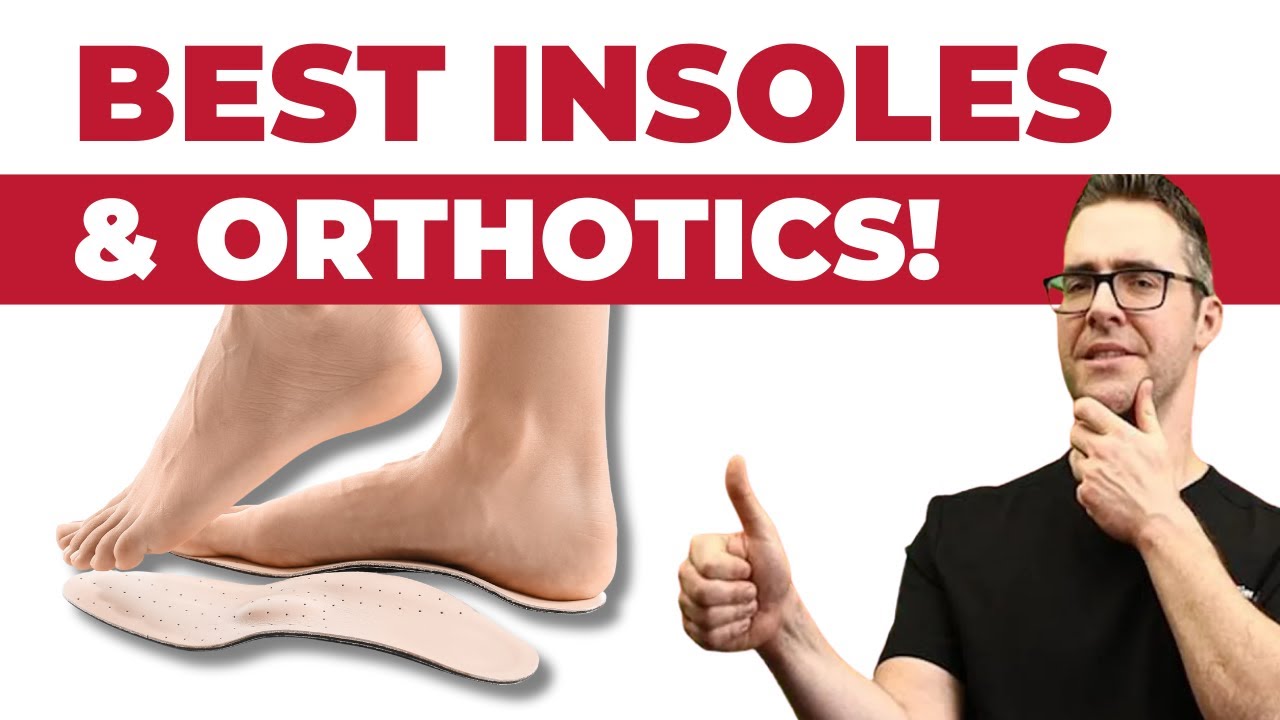
Walk through any pharmacy and you’ll see dozens of insoles promising arch support, pain relief, and better alignment. But what does arch support actually do inside your shoe? As a podiatric surgeon, I find most patients have never been given a scientific explanation — just told to “get good arch support.” This article explains the biomechanics clearly so you can make an informed choice.


The Windlass Mechanism: Your Arch’s Built-In Spring
Your arch doesn’t just sit there — it functions like a spring-loaded cable system. Biomechanist R.H. Hicks first described the windlass mechanism in 1954: as your toes extend (bend upward) during push-off, the plantar fascia — a thick band connecting your heel to your toes — is pulled taut, which raises and stiffens the arch. This converts the flexible landing foot into a rigid lever for efficient push-off. It’s an elegant mechanical design that stores and returns energy with every step.
When this system breaks down — due to excessive pronation, plantar fasciitis, or prolonged standing — the fascia undergoes excessive strain at its calcaneal attachment. Arch support works by providing an external surface that supports the medial longitudinal arch, reducing the strain demand on the plantar fascia to maintain arch height. In our clinic, we see patients whose plantar fasciitis pain drops dramatically within 2–3 weeks simply from adding appropriate arch support — before any stretching or injection therapy.
Key takeaway: The windlass mechanism turns your arch into an energy-storing spring during push-off. Arch support reduces the strain on the plantar fascia during this mechanism — which is why it helps plantar fasciitis, posterior tibial tendinopathy, and metatarsalgia.
Foot Types and What They Mean for Arch Support
Not all feet need the same arch support. Clinical assessment looks at three primary foot types using the navicular drop test and visual standing alignment:
- Pronated (flat) foot: The arch collapses toward the floor when standing. The heel everts (tilts outward). The tibialis posterior muscle works overtime to prevent total collapse. This foot type benefits most from medial arch support and moderate motion control.
- Supinated (high-arched) foot: The arch remains excessively high under load. The foot is rigid, poorly shock-absorbing, and laterally stressed. This type benefits from cushioned support that allows controlled pronation — not a rigid arch support, which would worsen symptoms.
- Neutral foot: Moderate arch that shows some collapse under load but within normal range. This foot type benefits from maintaining its natural mechanics rather than correcting them aggressively.
The most common mistake I see is patients with high arches buying rigid orthotics designed for flat feet. The orthotic type must match the foot type — a rigid arch post under a high-arched foot increases lateral column pressure and can cause stress fractures.
What Arch Support Actually Does — The Physics
Arch support accomplishes three biomechanical tasks simultaneously. First, it redistributes ground reaction force: instead of 80% of plantar pressure concentrating under the heel and metatarsal heads during standing, a contoured arch support spreads that load across the entire plantar surface. Peak plantar pressure under the heel drops by 15–30% with well-fitted arch support.
Second, it controls subtalar pronation velocity. Excessive pronation is not just about how much the arch collapses — it’s about how fast. A foot that pronates quickly generates significant tibial internal rotation, which loads the knee and hip as well as the foot. Arch support with a medial heel cup slows the rate of pronation, reducing this rotational cascade up the kinetic chain. This is why arch support sometimes resolves knee pain without treating the knee directly.
Third, it improves plantar fascia pretension. By supporting the arch at its midpoint, the orthotic reduces the tensile load the plantar fascia must generate to maintain arch height — effectively letting the material do some of the fascia’s job. A 2021 systematic review in the Journal of Foot and Ankle Research confirmed that foot orthoses significantly reduce plantar fascia strain during walking.
Custom vs. OTC Orthotics: What Research Says
The honest answer is: for many patients, a high-quality OTC orthotic works well for mild-to-moderate plantar fasciitis, mild pronation, and general arch fatigue. The 2018 Cochrane review on plantar heel pain found no statistically significant difference between custom and prefabricated orthotics for pain reduction at 3 months in uncomplicated plantar fasciitis. However, this changes significantly for more complex presentations.
Custom orthotics outperform OTC insoles when: the foot has significant structural deformity (rigid flatfoot, cavus foot, bunion with forefoot valgus), the patient has failed OTC insoles after 8 weeks, there is a leg length discrepancy requiring correction, the patient has diabetes with custom offloading needs, or the patient is an athlete with specific sport-loading patterns. In our clinic, we cast for custom orthotics when the clinical exam shows a rigid deformity that an OTC product cannot adequately address — not as a first-line intervention for everyone.
When Arch Support Works — and When It Doesn’t
Arch support works best for: plantar fasciitis, posterior tibial tendon dysfunction (PTTD/flatfoot), metatarsalgia, mild hallux valgus (bunion) pain, shin splints from overpronation, and patellofemoral pain syndrome driven by foot mechanics. It is less likely to help with: pain from nerve entrapment (tarsal tunnel), acute tendon tears, stress fractures after they’ve occurred, severe arthritis requiring surgical correction, or any condition where the underlying pathology is structural and progressive.
Related Conditions
⚠️ See a podiatrist if arch support isn’t helping after 6–8 weeks:
- Pain is worsening despite consistent orthotic use
- You have numbness or burning (may indicate nerve involvement)
- Pain is present at rest, not just with activity
- Visible deformity or progressive flatfoot worsening
In-Office Treatment at Balance Foot & Ankle
If home treatment isn’t providing relief for your foot pain, our podiatry team at Balance Foot & Ankle can help with same-day evaluations and advanced in-office care.
Same-day appointments available. (810) 206-1402
Doctor Hoy’s Natural Pain Relief Gel
Natural topical pain relief I use in our clinic. Arnica + camphor formula — apply directly to the area 3–4x daily. ($20–25)
Shop Doctor Hoy’s →
Dr. Tom Biernacki, DPM is a board-certified foot & ankle surgeon (ABFAS & ABPM) at Balance Foot & Ankle Specialists in Southeast Michigan. With over a decade of clinical experience, he specializes in heel pain, bunions, diabetic foot care, sports injuries, and minimally invasive surgery. Dr. Biernacki is a member of the APMA and ACFAS, and his patient education content on MichiganFootDoctors.com and YouTube has made him one of the most-followed foot & ankle educators on YouTube.
More questions patients ask
What does arch support actually do for your feet?
Arch support reduces the load on the plantar fascia by partially transferring weight to the arch's bony structures, reduces overpronation by supporting the medial longitudinal arch, improves load distribution across the foot, and reduces fatigue by providing a stable base. Research consistently shows proper arch support reduces plantar fasciitis pain.
Does arch support weaken your feet over time?
This is a common misconception. Research does not support the idea that arch support weakens intrinsic foot muscles in typical users. For healthy individuals with normal arches, going barefoot does train foot muscles. For those with pathological flat feet or plantar fasciitis, appropriate arch support is therapeutically beneficial.
How do I know if I need arch support?
Signs you may need arch support include persistent arch or heel pain, flat feet causing symptoms, overpronation visible in shoe wear patterns, knee or back pain related to foot mechanics, or foot fatigue by mid-day. Balance Foot & Ankle provides definitive assessment through clinical examination and 3D gait analysis.
Is arch support the same in all orthotics and shoes?
No. Arch support varies dramatically in height, rigidity, and position. Generic shoes provide minimal, average-height support. OTC insoles provide more targeted support. Custom orthotics from Balance Foot & Ankle provide precisely measured, patient-specific arch support calibrated to your biomechanics.
Can wrong arch support hurt your feet?
Yes. Arch support that's too high, too rigid, or poorly positioned can cause arch pain, lateral column pain, or metatarsal stress. This is why custom orthotics prescribed by a podiatrist after clinical evaluation are safer than self-selecting OTC arch supports. Call Balance Foot & Ankle at (810) 206-1402.
Still have a question about coverage or cost? Book online and we will check your benefits before your visit: Book in Howell · Book in Bloomfield Township. Prefer to talk it through first? Call (810) 206-1402.