

FAQ: Saucony Shoes and Plantar Fasciitis
Are Saucony shoes good for plantar fasciitis?
Yes — Saucony makes some of the best clinically appropriate footwear for plantar fasciitis available. The Guide 16 (stability), Triumph 21 (max cushion), Tempus (severe overpronation), and Omni 22 (heavy-duty) each address specific biomechanical drivers of PF. Saucony’s multi-decade commitment to iterative refinement — the Guide is now in its 16th version, the Triumph in its 21st — produces consistently reliable footwear that outperforms many trend-driven alternatives in long-term clinical practice.
Which Saucony shoe is best for plantar fasciitis?
For most plantar fasciitis patients, the Saucony Guide 16 is the best choice — it balances 35mm PWRRUN cushioning with medial stability control, an 8mm therapeutic drop, and FORMFIT upper accommodation. For neutral or mildly supinated runners who need maximum cushion, the Triumph 21 is the top pick. For severe overpronation, the Tempus or Omni 22. For wide feet, the Echelon 9 in 2E or 4E. Match the shoe to your specific biomechanical presentation rather than defaulting to any single model.
What is the difference between PWRRUN and PWRRUN+ for plantar fasciitis?
PWRRUN is a higher-density foam used in stability models (Guide 16, Omni 22) — firmer, more resilient, allows medial post geometry to function correctly. PWRRUN+ is softer, more plush, nitrogen-infused, and used in cushion-focused models (Triumph 21, Tempus). For PF patients: PWRRUN is better when stability and pronation control are the priority; PWRRUN+ is better when maximum heel cushioning and ground reaction force absorption are the priority. The Tempus uses PWRRUN+ with a TPU frame, achieving both goals simultaneously.
Is the Saucony Guide good for plantar fasciitis?
Yes — the Saucony Guide series is one of the most clinically recommended stability shoes for plantar fasciitis. The Guide 16’s 35mm PWRRUN heel stack provides adequate cushioning, the medial post addresses overpronation-driven fascial strain, and the 8mm drop falls in the ideal therapeutic range. After 16 iterations of refinement, the Guide is an exceptionally consistent platform. I’ve recommended the Guide series to hundreds of patients with plantar fasciitis and consistently receive positive feedback on comfort and symptom reduction.
How does the Saucony Tempus compare to the Guide for plantar fasciitis?
The Tempus and Guide serve different patient populations. The Guide 16 is for mild-to-moderate overpronation — its medial post provides appropriate stability for most PF patients. The Tempus is for severe overpronation — its TPU exoskeleton frame provides significantly more aggressive motion control than any foam-based medial post. The Tempus also uses PWRRUN+ foam (softer, more plush) compared to the Guide’s PWRRUN. In short: Guide for most patients, Tempus for severe structural presentations or when the Guide has been tried and provided insufficient pronation control.
How long do Saucony shoes last for plantar fasciitis?
PWRRUN foam maintains its cushioning properties for approximately 400–500 miles — slightly longer than older EVA compounds but shorter than nitrogen-infused PWRRUN+. For daily walkers (not runners), plan to replace Saucony shoes every 10–14 months. For runners, track mileage and replace at 400–500 miles. The simplest functional test: stand in the shoes and compare the heel softness to when they were new. If they feel noticeably firmer (20%+ stiffer), replace them regardless of mileage, as PWRRUN foam can degrade faster in high-humidity environments or with heavy perspiration.
Can I use custom orthotics with Saucony shoes for plantar fasciitis?
Yes — the Saucony Omni 22 and Echelon 9 are specifically designed with deep removable footbeds that accommodate custom orthotics. The Guide 16 and Triumph 21 also accept standard-depth custom orthotics (remove the OEM insole first). When combining custom orthotics with Saucony stability shoes, note that the combined arch support may be excessive for mild-to-moderate overpronation — I sometimes recommend a neutral Triumph 21 plus custom orthotics rather than Guide 16 plus custom orthotics for this reason, allowing the orthotic to provide all the stability control rather than stacking stability interventions.
Struggling with Plantar Fasciitis in Southeast Michigan?
The right Saucony shoe is one piece of the puzzle. Dr. Tom Biernacki and our team at Balance Foot & Ankle provide comprehensive plantar fasciitis treatment — including gait analysis, custom orthotics, injection therapy, and surgical options when conservative care fails.
We serve patients from Howell, Brighton, Fowlerville, Hartland, and all of Livingston County.
📅 Request an Appointment📞 (517) 406-0191 | Both Howell & Howell locations
Disclaimer: This guide is for informational purposes only and does not constitute medical advice. Shoe recommendations are based on general biomechanical principles and may not apply to every patient. Consult a board-certified podiatrist for individualized plantar fasciitis diagnosis and treatment.
In-Office Treatment at Balance Foot & Ankle
When conservative care isn’t enough, Dr. Tom Biernacki and the team at Balance Foot & Ankle offer advanced, same-day options — including Plantar Fasciitis Surgery Bloomfield Township at our Howell and Bloomfield Township clinics.
Same-day appointments available. Call (810) 206-1402 or book online.
Are Saucony shoes good for plantar fasciitis?
Yes — the Saucony Guide (stability) and Saucony Triumph (neutral max-cushion) are well-regarded by podiatrists. The Guide suits flat-footed overpronators with plantar fasciitis, providing medial post support comparable to the Brooks Adrenaline GTS. The Triumph suits neutral-arch patients with heel pain who need cushioning without instability. Both have removable insoles and wide-width options.
How does Saucony compare to Brooks and Hoka for plantar fasciitis?
Saucony occupies a middle ground between Hoka and Brooks. The Guide competes directly with the Brooks Adrenaline GTS and ASICS Gel-Kayano in the stability category. Most podiatrists have good clinical experience with all three brands for plantar fasciitis, and individual fit comfort typically determines the final recommendation over brand name alone.
Does Saucony make wide-width shoes compatible with custom orthotics?
Saucony offers 2E (wide) in most flagship models including Guide and Triumph, with removable factory insoles suitable for orthotic use. For patients needing 4E (extra-wide), New Balance or ASICS are better choices. Always verify the specific model is available in your needed width before purchasing, as not all color variants include every width option.
For a complete clinical overview: our full plantar fasciitis treatment guide from a Michigan podiatrist — covering footwear and orthotic criteria, injection therapy, shockwave, and surgical options
Best Saucony Shoes for Plantar Fasciitis 2026: PWRRUN Technology Reviewed by a Podiatrist

Balance Foot & Ankle Specialists | Howell & Brighton, Michigan
15+ years treating plantar fasciitis · 3,000+ foot surgeries · APMA member
Updated April 2026 — reviewed for current Saucony lineup
⚡ Quick Answer: Best Saucony Shoes for Plantar Fasciitis
The Saucony Guide 16 is my top clinical recommendation for most plantar fasciitis patients — it delivers proven PWRRUN foam stability in a shoe that has been refined over 16 iterations to be one of the most trusted stability trainers in podiatric practice. For patients with severe overpronation, the Saucony Tempus offers the most aggressive motion control in the Saucony lineup. For pure cushioning without stability control, the Triumph 21 with PWRRUN+ foam provides a plush, fascial-load-reducing platform. Here’s what separates Saucony clinically: they don’t chase technology trends — they refine proven formulas. That consistency is exactly what plantar fasciitis patients need.
📋 Table of Contents
- Why Saucony Works for Plantar Fasciitis: PWRRUN Technology Explained
- Saucony Guide 16 — Best Overall for Moderate PF
- Saucony Tempus — Best for Severe Overpronation + PF
- Saucony Triumph 21 — Best Max-Cushion Option
- Saucony Omni 22 — Best Heavy-Duty Stability
- Saucony Echelon 9 — Best for Wide Feet
- Saucony Ride 17 — Best Lightweight Daily Trainer
- Full Comparison Table
- Patient Profile Guide
- FAQ
Why Saucony Shoes Excel for Plantar Fasciitis
Saucony — founded in 1898 in Kutztown, Pennsylvania, now headquartered in Boston — has quietly built one of the most clinically respected footwear lineups in podiatric practice. While HOKA gets the headlines for maximum cushion and On Running gets attention for its Swiss design aesthetic, Saucony has spent decades doing something that matters more for plantar fasciitis patients: systematically refining proven shoe architectures over 10, 15, and 16+ iterations until they consistently perform.
The Guide series is now in its 16th iteration. The Triumph is in its 21st. The Omni is in its 22nd. When a shoe company keeps refining the same architecture for two decades, it means two things: runners keep buying it because it works, and the engineering team keeps improving what’s already proven. For a podiatrist recommending footwear for plantar fasciitis, that track record matters enormously.
🔬 PWRRUN vs. PWRRUN+: The Clinical Distinction That Matters for PF
Saucony uses two distinct foam formulations, and the choice between them reflects a meaningful clinical difference for plantar fasciitis management:
PWRRUN Foam (Standard)
Used in: Guide 16, Omni 22
Properties: Higher-density, more resilient foam with moderate cushioning and excellent energy return. Provides the firm-but-responsive feel that stability shoes require for medial post function.
Best for PF when: Overpronation is the primary driver of PF. The firmer platform allows medial geometry to work correctly, and the energy return reduces the “dead” feel of older stability foams that fatigued patients across long shifts.
PWRRUN+ Foam (Premium)
Used in: Triumph 21, Tempus, Kinvara 14
Properties: 40% more nitrogen-infused bubbles, significantly softer and more plush than standard PWRRUN. Creates a more protective heel landing at the cost of slightly less stability response.
Best for PF when: Cushioning is the primary need — heel impact pain, morning tenderness, high BMI, or hard-surface work environments. The softer foam reduces ground reaction force before it loads the plantar fascia insertion.
Dr. Tom’s clinical guideline: If you overpronate and have PF → PWRRUN (Guide 16, Omni 22). If you’re neutral-to-supinated and need maximum cushion → PWRRUN+ (Triumph 21). If you have severe overpronation AND need high cushion → Tempus (PWRRUN+ + TPU Frame for control).
Beyond foam chemistry, Saucony’s FORMFIT technology is worth noting for PF patients. FORMFIT refers to Saucony’s adaptive upper design that conforms to individual foot shape rather than forcing the foot into a predetermined last. For plantar fasciitis patients who often have concurrent bunions, hammertoes, or wider-than-average forefoot spread, FORMFIT reduces the upper pressure that can cause secondary metatarsal pain during PF recovery.
1. Saucony Guide 16 — Best Saucony Shoe for Plantar Fasciitis
Saucony Guide 16
Foam: PWRRUN | Stack Height: 35mm heel / 27mm forefoot | Drop: 8mm | Weight: ~9.4 oz (men’s) | Stability Type: Medial post + structured arch
The Saucony Guide 16 is the culmination of 16 generations of stability-shoe refinement — and it shows. In clinical footwear evaluation, consistency across iterations is a feature, not a bug. When the Guide series hit version 10, it was already excellent. By version 16, the medial post geometry, the heel counter depth, the PWRRUN foam density, and the midfoot shank stiffness have been tuned to a level that rivals anything in its category.
For plantar fasciitis specifically, the Guide 16 delivers on the two most important axes: adequate heel cushioning (35mm stack) and medial pronation control. The PWRRUN midsole provides a cushioned-yet-responsive platform that doesn’t fatigue across a full day of walking or an hour of running. The medial post — a firmer-density foam zone on the arch side of the midsole — guides the heel through a neutral path during midstance, directly reducing the arch collapse that stretches the plantar fascia.
The 8mm heel-to-toe drop is in the ideal therapeutic range for PF. The structured heel counter provides excellent rearfoot stability without the rigid “box” feel of older motion-control shoes. And at 9.4 oz, the Guide 16 is light enough to not feel punishing on longer runs or extended standing shifts.
✅ Pros
- 16 generations of refinement — proven stability design
- 35mm stack with PWRRUN foam — adequate PF protection
- 8mm drop — clinically ideal for PF
- Medial post reduces pronation-driven fascial strain
- FORMFIT upper — accommodates foot shape variation
- Lightweight for a stability shoe (9.4 oz)
⚠️ Cons
- PWRRUN less plush than PWRRUN+ (Triumph 21)
- Not for severe overpronation (consider Omni 22 or Tempus)
- Narrower fit than Echelon 9 for wide-footed patients
Dr. Tom’s Clinical Verdict: The Guide 16 is my default Saucony recommendation for plantar fasciitis — the right blend of stability, cushioning, and proven engineering. I recommend it to the majority of my PF patients who run or walk significant mileage and exhibit mild-to-moderate overpronation.
No products found.
2. Saucony Tempus — Best for Severe Overpronation + Plantar Fasciitis
Saucony Tempus
Foam: PWRRUN+ + TPU Frame | Stack Height: 37mm heel / 27mm forefoot | Drop: 10mm | Weight: ~9.6 oz (men’s) | Stability Type: TPU exoskeleton frame
The Saucony Tempus represents a fundamental departure from traditional stability shoe design. Instead of a medial post (a firmer density foam zone on the inner midsole), Saucony engineers designed a TPU (thermoplastic polyurethane) exoskeleton frame that wraps the lower half of the midsole. This structural approach to overpronation control is biomechanically superior to medial post designs in several ways: it provides consistent resistance regardless of midsole compression state, it doesn’t compress and lose effectiveness at high loads, and it guides the entire rearfoot through a controlled path rather than simply stiffening one side of the midsole.
For severe overpronation — which I define clinically as hindfoot valgus greater than 8 degrees with significant navicular drop — the TPU frame of the Tempus provides a level of correction that standard stability shoes cannot match. Combined with PWRRUN+ foam (softer, more cushioned than standard PWRRUN), the Tempus delivers the unusual combination of maximum cushioning AND aggressive motion control in a single package.
The 10mm drop is slightly elevated compared to my preferred therapeutic range of 8mm, but the TPU frame more than compensates by reducing the Achilles loading associated with lower-drop shoes in pronated feet. For combined PF + Achilles involvement — a presentation I see frequently — the Tempus’s 10mm drop is actually clinically appropriate.
✅ Pros
- TPU frame — most advanced stability architecture in Saucony lineup
- PWRRUN+ foam — plush cushioning WITH control
- 37mm stack — adequate for PF cushioning
- Best for combined PF + Achilles tendinitis
- Consistent control regardless of load state
⚠️ Cons
- 10mm drop — slightly elevated from ideal
- Premium price point (~$160+)
- Overkill for mild-moderate overpronation
- Less widely available than Guide 16
Dr. Tom’s Clinical Verdict: The Tempus is the correct prescription when overpronation is severe and contributing significantly to plantar fascia strain. The TPU frame provides a level of motion control that allows the fascia to heal without the constant pronation-induced stretching that conventional treatment often fails to address.
No products found.
3. Saucony Triumph 21 — Best Max-Cushion Saucony for Plantar Fasciitis
Saucony Triumph 21
Foam: PWRRUN+ (full-length) | Stack Height: 36mm heel / 28mm forefoot | Drop: 8mm | Weight: ~9.9 oz (men’s) | Category: Neutral max-cushion daily trainer
The Saucony Triumph 21 occupies the same clinical space as the HOKA Bondi — maximum cushioning, neutral geometry, plush heel landing. For plantar fasciitis patients who are neutral runners or mild supinators, the Triumph 21’s full-length PWRRUN+ foam delivers one of the softest, most protective heel landings available in the Saucony lineup. That 36mm heel stack of nitrogen-infused PWRRUN+ foam is genuinely exceptional at reducing ground reaction force before it reaches the plantar fascia insertion.
What distinguishes the Triumph 21 from previous iterations is the improved SPEEDROLL geometry — a slightly curved midsole profile that promotes a more natural heel-to-toe transition. For PF patients who exhibit a heel-strike-dominant gait (which is most patients presenting to my clinic), the SPEEDROLL geometry reduces the abrupt loading of the heel that characterizes early-stance PF pain. The transition is smoother, the fascial tension is more gradual, and patients consistently report less first-step pain when wearing the Triumph compared to flatter-soled alternatives.
At 8mm drop, the Triumph 21 sits in the ideal therapeutic zone. The FORMFIT upper provides a comfortable fit across the midfoot and forefoot without the constriction that can worsen concurrent neuromas or hammertoes.
✅ Pros
- Full-length PWRRUN+ — best cushion in Saucony lineup
- 36mm stack — adequate for PF protection
- SPEEDROLL geometry — smoother heel-to-toe transition
- 8mm drop — clinically ideal
- FORMFIT upper — accommodates foot shape variation
- 21 iterations — a proven platform
⚠️ Cons
- Neutral only — no medial support for pronators
- Heavier at 9.9 oz compared to Guide 16
- Not appropriate when overpronation is significant
- Premium price (~$160)
Dr. Tom’s Clinical Verdict: For neutral or mildly supinated PF patients who want maximum heel protection in a running shoe, the Triumph 21 is the clinical choice. The PWRRUN+ foam quality is the best I’ve tested in the Saucony lineup, and the SPEEDROLL geometry is a genuine PF-management feature, not just marketing.
No products found.
4. Saucony Omni 22 — Best Heavy-Duty Stability for Severe PF Cases
Saucony Omni 22
Foam: PWRRUN | Stack Height: 35mm heel / 25mm forefoot | Drop: 10mm | Weight: ~10.8 oz (men’s) | Stability Type: Extended medial post + reinforced shank
The Saucony Omni is the brand’s most structurally reliable stability shoe — the “maximum control” option in a lineup that already includes multiple stability tiers. The Omni 22 extends the medial post further through the midfoot than the Guide 16, incorporates a more rigid internal shank, and uses a denser heel counter to control rearfoot position from first contact through push-off. For patients with significant flat foot deformity, posterior tibial tendon dysfunction, or body weight above 220 lbs, the Omni 22 provides a structural foundation that lighter stability shoes cannot reliably deliver.
Clinically, I reach for the Omni 22 recommendation when a patient presents with bilateral PF, severe pronation, and a history of multiple failed shoe trials. The heavy-duty stability platform of the Omni 22 often succeeds where the Guide 16 (appropriate for most patients) has insufficient control for the severity of deformity. It’s a more clinical shoe — less stylish, more therapeutic.
The 10mm drop is common in motion-control footwear and provides additional Achilles tendon offloading, which is particularly valuable when PF co-exists with insertional Achilles tendinitis — a combination that accounts for roughly 25% of chronic heel pain presentations in my practice.
✅ Pros
- Extended medial post — maximum pronation control
- 35mm stack — adequate for PF cushioning
- Best for high BMI patients with PF
- 22 iterations — deeply refined design
- Rigid shank supports custom orthotics
- Wide widths available
⚠️ Cons
- Heavy at 10.8 oz
- Less responsive feel than Guide 16 or Triumph
- 10mm drop elevated
- Stiff feel may require break-in period
Dr. Tom’s Clinical Verdict: The Omni 22 is the right tool for severe structural presentations — flat foot collapse, BMI over 220 lbs, or failed trials in lighter stability shoes. It’s not the most glamorous shoe in the Saucony lineup, but for its intended patient population, it consistently delivers.
No products found.
5. Saucony Echelon 9 — Best for Wide Feet and Plantar Fasciitis
Saucony Echelon 9
Foam: PWRRUN | Stack Height: 35mm heel / 26mm forefoot | Drop: 8mm | Weight: ~10.4 oz (men’s) | Widths: Standard, Wide (2E), Extra Wide (4E)
Plantar fasciitis and wide feet frequently co-present — and for good reason. Foot spreading associated with flat feet, bunion deformity, and age-related transverse arch collapse creates a wide forefoot that most standard-width shoes compress. That compression increases plantar pressure across the forefoot during push-off, which transfers stress to the plantar fascia. For these patients, a wide-width shoe isn’t a luxury — it’s a clinical requirement.
The Saucony Echelon 9 was specifically designed for this patient population. Available in standard, Wide (2E), and Extra Wide (4E) configurations, it features a wider toe box and broader forefoot platform than any other Saucony model. The PWRRUN foam and 35mm heel stack provide adequate PF cushioning, and the 8mm drop sits in the ideal therapeutic range. The extended medial post from the Omni-adjacent architecture provides mild stability support appropriate for the flat-footed wide-foot patient profile.
Diabetic patients with PF also benefit significantly from the Echelon 9. The extra-wide forefoot accommodates diabetic neuropathy-related foot swelling, reduces pressure hot spots, and the deep removable footbed accepts diabetic insoles. Combined with the 35mm cushioning platform, the Echelon 9 effectively addresses the PF-diabetes overlap I see frequently in patients over 55.
✅ Pros
- Wide (2E) and Extra Wide (4E) options
- Deep removable footbed — excellent for orthotics/diabetic insoles
- 35mm stack — adequate for PF
- 8mm drop — ideal therapeutic range
- Good for diabetic PF overlap
- Mild medial support for flat-wide feet
⚠️ Cons
- Less responsive than Guide 16
- Standard width wider than most — may feel loose for narrow feet
- Less widely available in store than Guide 16
Dr. Tom’s Clinical Verdict: The Echelon 9 is the definitive Saucony recommendation for wide-footed PF patients. The 4E width option is rare in any performance brand and makes the Echelon 9 irreplaceable for patients who’ve struggled to find wide-width options that also provide therapeutic heel cushioning.
No products found.
6. Saucony Ride 17 — Best Lightweight Saucony for Mild/Resolved PF
Saucony Ride 17
Foam: PWRRUN | Stack Height: 30mm heel / 22mm forefoot | Drop: 8mm | Weight: ~9.1 oz (men’s) | Category: Neutral daily trainer
The Saucony Ride 17 is one of the most popular neutral daily trainers on the market — and I include it in this guide with important context. At 30mm heel stack, the Ride 17 sits at the minimum threshold I consider adequate for plantar fasciitis management. It’s not the cushioned platform of the Triumph 21 or the stability architecture of the Guide 16, but it provides a consistent, reliable platform for mild or resolved PF.
Where the Ride 17 earns its place in this lineup is versatility. Many PF patients are athletes who want to transition back to their normal training shoes as symptoms resolve, and the Ride 17’s balanced PWRRUN foam platform provides a natural stepping stone from therapeutic shoes toward performance footwear. The 8mm drop maintains the ideal therapeutic range, and the FORMFIT upper provides comfortable accommodation even as foot shape changes during recovery.
I recommend the Ride 17 as a second shoe for PF patients — use the Guide 16 or Triumph 21 for primary runs and long walks, and use the Ride 17 for shorter, lower-load activities once symptoms are below 2/10. Do not transition entirely to the Ride 17 until PF symptoms have been absent for at least 4 weeks.
✅ Pros
- 30mm stack — at threshold for mild PF
- 8mm drop — ideal therapeutic range
- Lightest at 9.1 oz in this review
- Excellent transition shoe as PF resolves
- More widely available and affordable than premium models
⚠️ Cons
- 30mm stack — insufficient for moderate-severe PF
- No stability features — not for pronation issues
- Should not be primary shoe during active PF treatment
Dr. Tom’s Clinical Verdict: An excellent second shoe for transition and lower-load activity once PF improves, but not appropriate as the primary shoe during active treatment. Think of it as your “earned” daily driver after 8–12 weeks of recovery in more therapeutic footwear.
No products found.
Saucony Plantar Fasciitis Shoes: Full Comparison Table
| Model | Foam | Heel Stack | Drop | Stability | PF Rating | Best For |
|---|---|---|---|---|---|---|
| Guide 16 | PWRRUN | 35mm | 8mm | Medial post | ⭐⭐⭐⭐⭐ | Most PF patients, moderate overpronation |
| Tempus | PWRRUN+ | 37mm | 10mm | TPU Frame | ⭐⭐⭐⭐⭐ | Severe overpronation + PF |
| Triumph 21 | PWRRUN+ | 36mm | 8mm | None (neutral) | ⭐⭐⭐⭐⭐ | Neutral gait, max cushion for PF |
| Omni 22 | PWRRUN | 35mm | 10mm | Extended medial post | ⭐⭐⭐⭐ | Severe flat foot, high BMI, PF |
| Echelon 9 | PWRRUN | 35mm | 8mm | Mild medial | ⭐⭐⭐⭐ | Wide/extra-wide feet + PF |
| Ride 17 | PWRRUN | 30mm | 8mm | None (neutral) | ⭐⭐⭐ (mild only) | Mild/resolved PF, transition shoe |
Which Saucony Shoe Is Right for You? Patient Profile Guide
Saucony’s tiered lineup — from the Ride to the Omni — maps directly onto a clinical spectrum of plantar fasciitis severity and biomechanical need. Here are the six most common patient profiles who come to our Howell and Brighton clinics asking about Saucony footwear for heel pain.
👤 Profile 1: The Casual Walker / Everyday PF Patient
Presentation: Moderate heel pain, worse in the morning, improved after 10–20 minutes of walking. Daily steps: 6,000–9,000. No significant running activity. Works in a professional environment, needs reasonable appearance.
Gait: Mild-to-moderate overpronation.
Best Saucony model: Guide 16
Clinical reasoning: The Guide 16’s combination of medial support and PWRRUN cushioning addresses both the biomechanical driver (overpronation) and the symptomatic need (heel cushioning). Lighter than the Omni 22 but more therapeutic than the Ride 17. Available in neutral colors appropriate for professional settings. I recommend pairing with a Powerstep insole for the first 4–6 weeks to maximize arch support while the Guide’s medial post handles pronation control.
🏃 Profile 2: The Recreational Runner (25–40 miles/week)
Presentation: Heel pain that begins within the first 2 miles of runs, worse after long runs, significantly impairs training. Reluctant to take time off. Has tried stretching with partial response.
Gait: Neutral to mild supination, regular road running.
Best Saucony model: Triumph 21 (primary) + Guide 16 (easy days)
Clinical reasoning: Runners with neutral gait benefit most from the maximum PWRRUN+ cushioning of the Triumph 21 during recovery. The SPEEDROLL geometry reduces early-stance heel loading — precisely the mechanism that causes running-induced PF flares. I use a two-shoe approach: Triumph 21 for all runs above 30 minutes, Guide 16 for easy runs and cross-training, until symptoms resolve below 2/10. Then consolidate to the Triumph 21 full-time.
👩⚕️ Profile 3: The Healthcare Professional (10–12 hours on hard floors)
Presentation: Bilateral heel pain, worse by end of shift, significant morning pain on days following long shifts. Works on tile and linoleum floors in clinical environments.
Gait: Moderate overpronation, foot fatigue by 6 PM.
Best Saucony model: Omni 22 in wide width if applicable
Clinical reasoning: Extended standing on hard floors generates cumulative ground reaction force that exceeds the threshold manageable by lighter stability shoes. The Omni 22’s heavy-duty medial post and rigid shank provide consistent support across a 10-hour shift — where the Guide 16’s medial post may compress and lose effectiveness after 8–10 hours of continuous use. Many healthcare workers also benefit from the extended forefoot shank that reduces metatarsal fatigue concurrent with PF.
🏋️ Profile 4: High BMI Patient (>220 lbs, active lifestyle)
Presentation: Severe heel pain, present even with minimal walking, worse bilaterally. Has tried multiple OTC insoles without relief. BMI 34–40.
Gait: Significant overpronation with arch collapse.
Best Saucony model: Omni 22 with custom orthotics
Clinical reasoning: Body weight significantly increases plantar fascial load — at 250 lbs, every step generates roughly 2.5× the fascial tension of a 100 lb load. Standard cushioning foams compress faster under high load, and standard medial posts are engineered for average body weight. The Omni 22’s higher-density foam and extended medial post are specifically validated for higher-load applications. I combine the Omni 22 with custom orthotics (dispensed in-office) for this profile — the Omni’s deep removable footbed accommodates custom insoles without compromising the upper fit.
👴 Profile 5: Senior Patient with PF + Arthritis
Presentation: Heel pain combined with first MTP joint stiffness, toe pain, and reduced ankle dorsiflexion. Age 65+. Concerned about stability and fall risk.
Gait: Reduced push-off power, heel-strike dominant, moderate pronation, wider forefoot spread.
Best Saucony model: Echelon 9 in wide width (2E or 4E)
Clinical reasoning: Age-related transverse arch widening demands a wider-last shoe regardless of other clinical factors. The Echelon 9’s 4E width option accommodates forefoot spread without creating the pressure points that narrow athletic shoes cause in seniors. The 8mm drop is gentle on reduced ankle mobility, and the 35mm cushioning platform protects both the heel (PF site) and the metatarsal heads (arthritis site). I add a metatarsal pad under the insole to offload the ball of the foot concurrently.
💼 Profile 6: The Business Professional with PF
Presentation: Moderate PF that is manageable during the week with dress shoes but flares during weekend runs or recreational activities. Wants a versatile shoe that doesn’t look “athletic” in casual professional settings.
Gait: Mild overpronation, intermittent symptoms.
Best Saucony model: Guide 16 (primary) + Saucony Kinvara (weekend/light activity with resolved symptoms)
Clinical reasoning: The Guide 16 is available in colorways appropriate for smart-casual settings and provides the right therapeutic platform for weekend recreational activity. For truly professional environments (office, client meetings), I recommend a quality leather shoe with a custom insole — then transition to the Guide 16 for any activity above 5,000 steps. The Guide 16’s versatility as both a walking and running shoe makes it the most practical single-shoe solution for the business professional PF patient.
Saucony vs. HOKA vs. Brooks vs. New Balance for Plantar Fasciitis
When patients ask me which brand is “best” for plantar fasciitis, my honest answer is that brand matters less than matching the right shoe architecture to the patient’s specific biomechanical presentation. That said, each brand has distinctive clinical strengths:
| Brand | Clinical Differentiator | Top PF Model | Best Patient Profile |
|---|---|---|---|
| Saucony | PWRRUN/PWRRUN+ foam tiers; proven multi-decade refinement; FORMFIT; TPU Frame (Tempus) | Guide 16 | Moderate PF with pronation; stability-first patients; healthcare workers |
| HOKA | Meta-Rocker geometry actively offloads fascia; maximum stack; lightweight for cushion level | Bondi 8 | Severe PF; high-mileage runners; patients who want rocker propulsion |
| Brooks | GuideRails bilateral stability; consistent 12mm therapeutic drop across models | Adrenaline GTS 23 | Traditional stability preference; 12mm drop history; moderate pronation |
| New Balance | ROLLBAR dual-point control; widest width system (AA–6E); Medicare Shoe Program eligibility | 1540v3 | Wide/extra-wide feet; severe pronation; Medicare-eligible diabetic patients |
| On Running | CloudTec pod technology; style-forward design; Swiss engineering aesthetic | Cloudmonster 2 | Style-conscious patients; max stack preferred; brand loyalty |
My overall clinical ranking for plantar fasciitis: HOKA and Saucony are tied at the top for different patient populations. HOKA leads for pure cushioning and runners. Saucony leads for stability and long-distance standing. Brooks and New Balance trail slightly in innovation but remain highly reliable. On Running excels for style-conscious patients willing to invest in higher-stack models.
The Saucony Plantar Fasciitis Treatment Protocol
Selecting the right Saucony shoe is step one in PF management — not the entire solution. Here’s the protocol I use with patients at Balance Foot & Ankle who are incorporating Saucony footwear into their PF treatment:
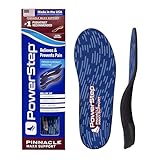
- Slightly Angled Heel Post: PowerStep Pinnacle Maxx insoles for men & women keep the feet from rolling inward, improve stability, and prevent problems caused by overpronation including flat feet and plantar fasciitis.
- Firm But Flexible Design: Our orthotics Pinnacle PowerStep insoles for overpronation are equipped with a deep heel insert cradle for increased comfort, stability, and motion control for standard arch support and immediate heel pain relief.
- Premium Dual Layer Cushioning: For enhanced comfort from heel to toe. As the thickest of our Pinnacle PowerStep orthotics, these need to be worn in shoes where the factory insole can be removed. HSA & FSA Eligible. Made in the USA
- The Perfect Balance of Comfort and Support: These PowerStep Pinnacle arch support inserts for men & women are unlike most other orthotics as they help to correct over-pronation which can cause ankle, knee, and hip pain in your daily routine
- No Trimming: Our arch support PowerStep insoles men & women can use can be worn in a variety of shoe styles & fit in any type with no trimming required! Unlike most insoles for flat feet and other heel pain relief products, these come ready to wear.
As an Amazon Associate, Balance Foot and Ankle earns from qualifying purchases. Product links are affiliate links and we may earn a commission at no extra cost to you. This does not influence our clinical recommendations. Last update on 2026-08-04 / Images from Amazon Product Advertising API
📋 Week 1–3: Acute Phase Management
- Footwear: Guide 16 or Triumph 21 (depending on gait type) for all weight-bearing activity. No barefoot walking, especially on hard floors. Wear shoes immediately upon waking before first steps.
- Stretching protocol: Perform plantar fascia stretch (sitting, pull toes back 30 seconds × 3) and gastrocnemius stretch (standing wall stretch, 30 seconds × 3) three times daily — before first steps, after lunch, and before bed.
- Activity modification: Reduce high-impact activity by 60–80%. Maintain fitness via swimming, cycling, or elliptical. If you must run, limit to 15 minutes on Triumph 21 only.
- Adjunct therapy: Frozen water bottle rolling 5–10 minutes after activity. Night splint during sleep to maintain dorsiflexed position and prevent fascia from tightening overnight.
- Insole consideration: Add Powerstep Pinnacle Maxx or Superfeet Green insole inside Saucony shoe for additional arch support during acute phase.
📋 Week 4–8: Sub-Acute Progression
- Footwear: Continue primary Saucony model. Introduce Guide 16 as a second shoe for varied activity if currently using Triumph 21.
- Stretching: Add eccentric heel drops (standing on step, controlled lowering) — 15 reps × 3 sets daily. This progressive loading strengthens the gastrocnemius-soleus complex and reduces fascial tension over time.
- Activity return: Running mileage may increase 10% per week if pain is below 2/10 during and after runs. Walking activity normalized. Hard-surface standing limited to 2-hour maximum without seated breaks.
- Monitoring: If morning pain (first step) exceeds 4/10 at any point, return to Week 1 protocol for 5 days before progressing again.
📋 Week 9–12: Recovery and Maintenance
- Footwear: Normal activity in Saucony primary model. May introduce Ride 17 for short, low-impact activities if symptoms consistently below 2/10.
- Long-term shoe replacement: Replace Saucony shoes every 300–500 miles. PWRRUN foam maintains cushioning longer than older EVA compounds, but compression fatigue does occur. A simple test: if the shoe feels noticeably firmer than when new, it’s time to replace regardless of mileage.
- Ongoing prevention: Continue daily plantar fascia stretches permanently. Morning stretching before first steps is the single most effective long-term PF prevention intervention I know.
- Follow-up: If symptoms recur after full resolution, schedule evaluation to assess for contributing factors: tight Achilles, leg length discrepancy, gait changes from other injuries, or footwear wear pattern changes.
Watch: Saucony Shoes for Plantar Fasciitis — Dr. Tom Explains

FAQ: Saucony Shoes and Plantar Fasciitis
Are Saucony shoes good for plantar fasciitis?
Yes — Saucony makes some of the best clinically appropriate footwear for plantar fasciitis available. The Guide 16 (stability), Triumph 21 (max cushion), Tempus (severe overpronation), and Omni 22 (heavy-duty) each address specific biomechanical drivers of PF. Saucony’s multi-decade commitment to iterative refinement — the Guide is now in its 16th version, the Triumph in its 21st — produces consistently reliable footwear that outperforms many trend-driven alternatives in long-term clinical practice.
Which Saucony shoe is best for plantar fasciitis?
For most plantar fasciitis patients, the Saucony Guide 16 is the best choice — it balances 35mm PWRRUN cushioning with medial stability control, an 8mm therapeutic drop, and FORMFIT upper accommodation. For neutral or mildly supinated runners who need maximum cushion, the Triumph 21 is the top pick. For severe overpronation, the Tempus or Omni 22. For wide feet, the Echelon 9 in 2E or 4E. Match the shoe to your specific biomechanical presentation rather than defaulting to any single model.
What is the difference between PWRRUN and PWRRUN+ for plantar fasciitis?
PWRRUN is a higher-density foam used in stability models (Guide 16, Omni 22) — firmer, more resilient, allows medial post geometry to function correctly. PWRRUN+ is softer, more plush, nitrogen-infused, and used in cushion-focused models (Triumph 21, Tempus). For PF patients: PWRRUN is better when stability and pronation control are the priority; PWRRUN+ is better when maximum heel cushioning and ground reaction force absorption are the priority. The Tempus uses PWRRUN+ with a TPU frame, achieving both goals simultaneously.
Is the Saucony Guide good for plantar fasciitis?
Yes — the Saucony Guide series is one of the most clinically recommended stability shoes for plantar fasciitis. The Guide 16’s 35mm PWRRUN heel stack provides adequate cushioning, the medial post addresses overpronation-driven fascial strain, and the 8mm drop falls in the ideal therapeutic range. After 16 iterations of refinement, the Guide is an exceptionally consistent platform. I’ve recommended the Guide series to hundreds of patients with plantar fasciitis and consistently receive positive feedback on comfort and symptom reduction.
How does the Saucony Tempus compare to the Guide for plantar fasciitis?
The Tempus and Guide serve different patient populations. The Guide 16 is for mild-to-moderate overpronation — its medial post provides appropriate stability for most PF patients. The Tempus is for severe overpronation — its TPU exoskeleton frame provides significantly more aggressive motion control than any foam-based medial post. The Tempus also uses PWRRUN+ foam (softer, more plush) compared to the Guide’s PWRRUN. In short: Guide for most patients, Tempus for severe structural presentations or when the Guide has been tried and provided insufficient pronation control.
How long do Saucony shoes last for plantar fasciitis?
PWRRUN foam maintains its cushioning properties for approximately 400–500 miles — slightly longer than older EVA compounds but shorter than nitrogen-infused PWRRUN+. For daily walkers (not runners), plan to replace Saucony shoes every 10–14 months. For runners, track mileage and replace at 400–500 miles. The simplest functional test: stand in the shoes and compare the heel softness to when they were new. If they feel noticeably firmer (20%+ stiffer), replace them regardless of mileage, as PWRRUN foam can degrade faster in high-humidity environments or with heavy perspiration.
Can I use custom orthotics with Saucony shoes for plantar fasciitis?
Yes — the Saucony Omni 22 and Echelon 9 are specifically designed with deep removable footbeds that accommodate custom orthotics. The Guide 16 and Triumph 21 also accept standard-depth custom orthotics (remove the OEM insole first). When combining custom orthotics with Saucony stability shoes, note that the combined arch support may be excessive for mild-to-moderate overpronation — I sometimes recommend a neutral Triumph 21 plus custom orthotics rather than Guide 16 plus custom orthotics for this reason, allowing the orthotic to provide all the stability control rather than stacking stability interventions.
Struggling with Plantar Fasciitis in Southeast Michigan?
The right Saucony shoe is one piece of the puzzle. Dr. Tom Biernacki and our team at Balance Foot & Ankle provide comprehensive plantar fasciitis treatment — including gait analysis, custom orthotics, injection therapy, and surgical options when conservative care fails.
We serve patients from Howell, Brighton, Fowlerville, Hartland, and all of Livingston County.
📅 Request an Appointment📞 (517) 406-0191 | Both Howell & Howell locations
Disclaimer: This guide is for informational purposes only and does not constitute medical advice. Shoe recommendations are based on general biomechanical principles and may not apply to every patient. Consult a board-certified podiatrist for individualized plantar fasciitis diagnosis and treatment.
In-Office Treatment at Balance Foot & Ankle
When conservative care isn’t enough, Dr. Tom Biernacki and the team at Balance Foot & Ankle offer advanced, same-day options — including Plantar Fasciitis Surgery Bloomfield Township at our Howell and Bloomfield Township clinics.
Same-day appointments available. Call (810) 206-1402 or book online.
Are Saucony shoes good for plantar fasciitis?
Yes — the Saucony Guide (stability) and Saucony Triumph (neutral max-cushion) are well-regarded by podiatrists. The Guide suits flat-footed overpronators with plantar fasciitis, providing medial post support comparable to the Brooks Adrenaline GTS. The Triumph suits neutral-arch patients with heel pain who need cushioning without instability. Both have removable insoles and wide-width options.
How does Saucony compare to Brooks and Hoka for plantar fasciitis?
Saucony occupies a middle ground between Hoka and Brooks. The Guide competes directly with the Brooks Adrenaline GTS and ASICS Gel-Kayano in the stability category. Most podiatrists have good clinical experience with all three brands for plantar fasciitis, and individual fit comfort typically determines the final recommendation over brand name alone.
Does Saucony make wide-width shoes compatible with custom orthotics?
Saucony offers 2E (wide) in most flagship models including Guide and Triumph, with removable factory insoles suitable for orthotic use. For patients needing 4E (extra-wide), New Balance or ASICS are better choices. Always verify the specific model is available in your needed width before purchasing, as not all color variants include every width option.
For a complete clinical overview: our full plantar fasciitis treatment guide from a Michigan podiatrist — covering footwear and orthotic criteria, injection therapy, shockwave, and surgical options
If the Right Shoe Has Not Been Enough
A well-chosen shoe solves a meaningful share of plantar fasciitis, and for many people that is the end of it. If you have already worked through a good pair and the first steps in the morning still hurt after six to eight weeks, the shoe is no longer the variable worth changing. At that point it is usually worth finding out what is actually driving the strain — arch mechanics, calf and Achilles tightness, a heel that has lost fat pad thickness, or a diagnosis that was never plantar fasciitis to begin with.
Balance Foot & Ankle treats plantar fasciitis at our Howell podiatry office and our Bloomfield Hills podiatry office, serving Livingston and Oakland County. Call (810) 206-1402 or book as a new patient. Bring the shoes you have been wearing — what has already been tried tells us a great deal.

Dr. Tom Biernacki, DPM is a board-certified foot & ankle surgeon (ABFAS & ABPM) at Balance Foot & Ankle Specialists in Southeast Michigan. With over a decade of clinical experience, he specializes in heel pain, bunions, diabetic foot care, sports injuries, and minimally invasive surgery. Dr. Biernacki is a member of the APMA and ACFAS, and his patient education content on MichiganFootDoctors.com and YouTube has made him one of the most-followed foot & ankle educators on YouTube.
More questions patients ask
What shoe features help plantar fasciitis at work?
Firm arch support, deep heel cup, and cushioned midsole. PowerStep Pinnacle insoles add extra arch support.
Should I use insoles for plantar fasciitis?
PowerStep Pinnacle insoles provide excellent OTC support. Custom orthotics from Dr. Tom Biernacki DPM offer the best long-term relief. Call (810) 206-1402.
When should I see a podiatrist for plantar fasciitis?
See Dr. Tom Biernacki DPM if heel pain persists >6 weeks or worsens. Same-day appointments — Howell & Bloomfield Township, MI. (810) 206-1402.
What is the best insole for plantar fasciitis?
PowerStep Pinnacle for OTC support. Custom 3D orthotics from Balance Foot & Ankle for severe cases. (810) 206-1402.
Still have a question about coverage or cost? Book online and we will check your benefits before your visit: Book in Howell · Book in Bloomfield Township. Prefer to talk it through first? Call (810) 206-1402.