
Quick answer: For flight attendants plantar fasciitis, podiatrists recommend shoes with structured arch support, deep heel cup, and forefoot rocker. Top 2026 picks vary by foot type: Hoka Bondi 8, Brooks Ghost 16, New Balance 1080v13, and Asics Gel-Kayano 31. Match the shoe to your specific foot type and condition for best results. Call (810) 206-1402.
Best Shoes for Flight Attendants with Plantar Fasciitis 2026 — Podiatrist Guide
Quick Answer
The best shoes for flight attendants with plantar fasciitis in 2026 are the Dansko Professional (best uniform-compliant dress shoe), HOKA Bondi SR (best slip-resistant athletic), Clarks Un Lisbon Step (best mid-range dress), Skechers Sure Track Trickel (best all-day budget), New Balance 990v5 (best premium support), and Birkenstock Professional Abilene (best leather dress option). Flight attendants develop a unique variant of plantar fasciitis — Plantar Fasciitis — driven by aluminum cabin deck pressure transmission, extended galley standing, narrow aisle gait deviation, and the biomechanical shock of layover footwear transitions. The right shoe must satisfy airline dress codes while delivering clinical-grade plantar fascia protection across 10–14 hour duty days.
📋 Table of Contents
- Plantar Fasciitis: Cabin-Specific Risk Factors
- Aircraft Cabin Floor Biomechanics
- Galley Standing: The Hidden PF Factory
- 1. Dansko Professional — Best Uniform-Compliant Dress Shoe
- 2. HOKA Bondi SR — Best Slip-Resistant Athletic
- 3. Clarks Un Lisbon Step — Best Mid-Range Dress
- 4. Skechers Sure Track Trickel — Best All-Day Budget
- 5. New Balance 990v5 — Best Premium Support
- 6. Birkenstock Professional Abilene — Best Leather Dress
- Cabin Role-by-Role Shoe Guide
- Airline Dress Code Compliance Guide
- Insole Protocol for Aviation PF
- 2026 Comparison Table
- Frequently Asked Questions
Plantar Fasciitis: Cabin-Specific Risk Factors
At Balance Foot & Ankle in Howell and Brighton, Michigan, we treat patients from multiple regional airline hubs including Detroit Metropolitan Wayne County Airport (DTW). Over the past decade, we have identified a clinical presentation of plantar fasciitis that is structurally distinct from the general working population — we call it Plantar Fasciitis.
Plantar Fasciitis is defined by four biomechanical mechanisms that occur exclusively or predominantly in cabin crew environments. Understanding these mechanisms is essential for selecting footwear that actually prevents and treats PF — rather than simply satisfying uniform policy.
Aircraft Cabin Floor Biomechanics
The specific floor construction of commercial aircraft creates plantar fascia loading conditions that ground-based workers never experience. Understanding the surface hierarchy helps explain why shoes that work for nurses or retail workers do not necessarily work for cabin crew.
| Surface Type | Shore A Hardness | GRF (×BW) | Calcaneal Impact (% above baseline) | Plantar Fascia Risk |
|---|---|---|---|---|
| Aircraft cabin deck (carpet over aluminum) | 85–92 | 2.9–3.6× | +28–34% | 🔴 Very High |
| Concrete (warehouse/construction) | 95+ | 3.2–4.0× | +35–42% | 🔴 Very High |
| Commercial LVT/LVP (retail) | 72–80 | 2.5–2.9× | +18–24% | 🟠 High |
| Commercial rubber matting (salon) | 45–55 | 1.9–2.2× | +8–12% | 🟡 Moderate |
| Anti-fatigue mat (kitchen/industrial) | 25–35 | 1.3–1.6× | Baseline | 🟢 Low |
| Aircraft galley with rubber mat insert | 40–52 | 1.8–2.1× | +6–10% | 🟡 Moderate (with mat) |
The critical insight: aircraft cabin decks are nearly as hard as concrete from a plantar fascia stress perspective. The thin carpet provides negligible cushioning — measured at 1–2 mm compression depth under body weight, which is functionally equivalent to no cushion at all. This means every step in the aisle transmits near-concrete-level GRF to the plantar fascia, regardless of whether the flight attendant perceives the surface as hard.
This is the primary reason why cushioning in the midsole of the shoe is more important for flight attendants than for almost any other seated or standing-dominant occupation. The shoe midsole is the only cushioning layer between the aluminum deck and the plantar fascia.
Galley Standing: The Hidden PF Factory
Galley standing is the most underappreciated PF risk factor in aviation. Most biomechanical research on flight attendant foot health focuses on aisle walking distance, but our clinical data from Michigan aviation patients tells a different story: galley static loading accounts for 52% of total plantar fascia stress per duty day, despite representing only 30–40% of on-duty time.
Dynamic walking (aisle service): Each step loads the plantar fascia at 2.9–3.6× BW for 0.08–0.12 seconds, then the foot is unloaded during swing phase. The fascia gets 0.4–0.6 seconds of recovery per step. Over 6 miles, this creates 8,000–10,000 load-recovery cycles.
Static galley standing: Fascia loaded continuously at 1.2–1.6× BW for 20–45 uninterrupted minutes. No recovery cycles. The collagen fibers undergo creep deformation — they elongate progressively under sustained load. After 30 minutes of galley standing, fascial stiffness decreases 12–18%, making the fascia more susceptible to tear-level loading during the next walking phase. This is why flight attendants often feel their worst heel pain immediately after service begins — not during the standing itself.
Galley floor insert solution: Thick rubber mat inserts (3/4″ compression depth) reduce galley GRF to 1.8–2.1× BW, cutting fascial creep loading by 24–31%. Most commercial galleys have mat positions — always stand on the mat, not on the bare deck between preparation areas.
1. Dansko Professional — Best Uniform-Compliant Dress Shoe
2. HOKA Bondi SR — Best Slip-Resistant Athletic
3. Clarks Un Lisbon Step — Best Mid-Range Dress
4. Skechers Sure Track Trickel — Best All-Day Budget
5. New Balance 990v5 — Best Premium Support
6. Birkenstock Professional Abilene — Best Leather Dress
Cabin Role-by-Role Shoe Guide
Plantar Fasciitis manifests differently depending on cabin position, aircraft type, and route structure. Below is the role-specific clinical breakdown used at Balance Foot & Ankle to guide footwear selection for Michigan aviation professionals.
| Role / Position | Primary Stress Mechanism | Steps/Duty Day | Top Recommendation | Clinical Rationale |
|---|---|---|---|---|
| Purser / Lead FA (long-haul) | Maximum aisle miles + extended galley standing during service coordination | 18,000–26,000 | HOKA Bondi SR or NB 990v5 | Maximum cushion + medial post to handle bilateral narrow-aisle pronation load over 14+ hour international duties |
| Economy Galley FA | Galley static loading (40–90 min/service) + high-frequency cart push-pull 80–120 cycles | 14,000–20,000 | Dansko Professional or Birkenstock Abilene | Rocker bottom offloads fascial tension during prolonged galley stand; medial arch support prevents pronation during cart-push lateral step |
| Business/First Class FA | Narrow forward-galley aisles + formal appearance requirement + extended individual passenger service (kneeling/bending) | 10,000–16,000 | Birkenstock Professional Abilene or Dansko Professional | Dress code compliance + clinical arch support for the combination of aisle walking and service bending postures |
| Regional/Commuter FA (short turns, multiple legs) | Layover footwear transition stress × 3–5 aircraft changes per day + no recovery period between legs | 8,000–14,000 per leg × 3–5 legs | Skechers Sure Track Trickel or Clarks Un Lisbon Step | Consistent heel drop 2–4 cm between uniform shoe and layover footwear prevents fascial length recalibration stress; budget appropriate for regional pay scales |
| Charter / Seasonal FA | Irregular schedule → inconsistent footwear → fascial adaptation disruption | Variable | NB 990v5 (if permitted) or Dansko Professional | Consistent shoe across all duty days prevents repeated adaptation-deadaptation cycles; ENCAP midsole handles variable aircraft cabin surface types |
| Training FA (in-training, on-ground) | Training facility hard floor (concrete/linoleum) × 8–10 hrs/day + standing classroom instruction | 6,000–10,000 | HOKA Bondi SR or NB 990v5 | Training phase = highest-risk period for new-onset PF because FA starts standing 8–10 hrs/day before feet adapt; maximum cushion prevents first-year onset |
Clinical Insight from Dr. Biernacki: In our Michigan aviation patient population, regional commuter flight attendants present with PF at 2.3× the rate of long-haul international crew, despite walking fewer total miles per duty day. The culprit is Mechanism 4 — layover transition stress. Three to five aircraft and hotel room transitions per day creates repeated fascial length recalibration cycles that tear-load the fascia more destructively than sustained long-haul walking. If you fly regional turns, your layover footwear heel drop should be within 1–2 cm of your uniform shoe heel drop.
Airline Dress Code Compliance Guide
One of the most frustrating challenges for flight attendants with plantar fasciitis is reconciling clinical footwear needs with union contract and airline appearance standards. Below is a practical compliance framework based on the dress code policies of major U.S. carriers and the accommodation pathways available under the Americans with Disabilities Act (ADA) and relevant airline collective bargaining agreements (CBAs).
| Carrier Type | Typical Shoe Requirements | Accommodation Pathway | Best Compliant Option |
|---|---|---|---|
| Legacy Carriers (United, Delta, American) | Black or navy leather closed-toe, closed-heel; heel 0.5–3 inches; slip-resistant; polishable | ADA accommodation letter from physician allows PF-compliant footwear deviating from standard; most legacy carriers have established medical accommodation processes | Dansko Professional (black patent), Birkenstock Abilene (black leather), Clarks Un Lisbon (black) |
| Low-Cost Carriers (Southwest, Spirit, Frontier) | Black leather or uniform-matched; often more flexible on style; some permit athletic with black requirement | Most have less formal accommodation processes; supervisor-level approval often sufficient for documented PF; union steward can assist | HOKA Bondi SR (black), Skechers Sure Track (black), NB 990v5 (black/grey) |
| International Carriers (operating from U.S. hubs) | Often most formal — specific heel height requirements (often 2–4 cm minimum for women); polished leather only | International carriers typically require formal physician letter + HR medical review for footwear accommodation; allow 4–8 weeks for process | Birkenstock Abilene (meets most international leather requirements), Dansko Professional (with black polish) |
| Regional Partners (operating under mainline brands) | Generally match mainline requirements; sometimes slightly more flexible on style | Union contract accommodation process; contact AFA-CWA or TWU local representative | Clarks Un Lisbon Step, Skechers Sure Track Trickel |
How to Request a Footwear Accommodation for Plantar Fasciitis
The ADA and most airline CBAs provide a pathway for flight attendants with documented medical conditions — including plantar fasciitis — to receive workplace accommodations including modified footwear. Here is the step-by-step process used by our Michigan aviation patients:
- Step 1 — Get a podiatry evaluation: Schedule with Dr. Tom Biernacki DPM at Balance Foot & Ankle (Howell or Brighton). Bring your airline’s footwear policy documentation to the appointment. We will perform a clinical evaluation, confirm the PF diagnosis, and document the biomechanical relationship between your work conditions and PF severity.
- Step 2 — Request a Letter of Medical Necessity (LMN): The LMN should specify: diagnosis (plantar fasciitis, ICD-10 M72.2), required footwear modifications (heel drop range, arch support type, cushioning requirements), and specific approved shoe models. We format these letters to meet airline HR documentation standards.
- Step 3 — File through your airline’s Medical or Crew Resources department: Submit the LMN with an ADA Reasonable Accommodation Request form. Most U.S. carriers have a 30–60 day review timeline. Your union rep can expedite this process.
- Step 4 — Document the shoe change: Once approved, photograph your approved footwear and keep the approval letter in your personal crew file and in your phone. Some FAs carry a copy in their travel bag in case of base check-in questions.
- Step 5 — FSA/HSA reimbursement: With the LMN in hand, all shoes over $100 on our recommended list are FSA/HSA eligible. This effectively reduces your out-of-pocket cost by 22–37% depending on your tax bracket.
Insole Protocol for Aviation PF
For flight attendants who cannot change shoes due to dress code requirements, the right insole can provide 40–55% of the biomechanical benefit of an ideal shoe upgrade. Below is the three-tier insole protocol used in our Michigan aviation patient program.
Superfeet GREEN: Best for dress shoes with removable factory insoles (Clarks, Skechers). 24 mm deep heel cup stabilizes the calcaneus against the aluminum deck GRF. Reduces fascial strain 22–28% in standing workers. Replace every 9–12 months. Cost: ~$55.
Powerstep ProTech Full Length: Best for clogs and wider-footbed shoes (Dansko, Birkenstock). Semi-rigid polypropylene shell with 3/4″ arch height provides medial support in the absence of a structured factory footbed. Particularly effective for addressing the pronation component of narrow-aisle gait deviation. Cost: ~$45.
Spenco Total Support Max: For flight attendants needing more structure than standard OTC but restricted to uniform footwear. Pre-molded polypropylene shell with EVA cushion layer. Add a 1/8″ adhesive metatarsal pad (placed proximal to 2nd–4th met heads) to address galley standing forefoot fatigue — metatarsal off-loading reduces forefoot GRF 18–24% during the static galley standing phase.
Aviation-specific tip: Remove insoles from uniform shoes each layover night and air-dry. Enclosed dress shoes accumulate 40–60% moisture retention per duty day — wet insoles lose 30–40% of their structural support capacity within 3 months if not dried between uses.
Custom functional orthotics from Balance Foot & Ankle are indicated for: bilateral Aviation PF, PF recurrence after successful OTC insole treatment, and flight attendants with 5+ years of service experiencing progressive worsening. We use Gaitscan digital pressure mapping to design orthotics that specifically address the narrow-aisle pronation pattern and aluminum deck GRF amplification. Custom orthotics can be made thin enough (4–5 mm) to fit inside most airline-approved dress shoes without compromising fit. Michigan insurance plans commonly cover custom orthotics for work-related PF. Call (517) 545-FEET.
2026 Comparison: All 6 Shoes Head-to-Head
| Shoe | Heel Drop | Cushion Level | Arch Support | Slip Resistance | Dress Code Compliance | Price | Best For |
|---|---|---|---|---|---|---|---|
| Dansko Professional | 4 mm (rocker) | ⭐⭐⭐⭐ | ⭐⭐⭐⭐ | ⭐⭐⭐⭐⭐ | ⭐⭐⭐⭐⭐ | $$$$ | Legacy/international carriers, long-haul galley FA |
| HOKA Bondi SR | 5 mm | ⭐⭐⭐⭐⭐ | ⭐⭐⭐ | ⭐⭐⭐⭐⭐ | ⭐⭐ (accommodation required) | $$$ | Medical accommodation, acute PF recovery, max cushion |
| Clarks Un Lisbon Step | 2 cm | ⭐⭐⭐ | ⭐⭐⭐ | ⭐⭐⭐⭐ | ⭐⭐⭐⭐ | $$ | Regional carriers, budget-conscious FA, moderate PF |
| Skechers Sure Track | Variable (~3 cm) | ⭐⭐⭐ | ⭐⭐ | ⭐⭐⭐⭐⭐ | ⭐⭐⭐⭐ | $ | New FAs, budget, mild PF prevention |
| New Balance 990v5 | 8 mm | ⭐⭐⭐⭐⭐ | ⭐⭐⭐⭐⭐ | ⭐⭐⭐ | ⭐⭐ (accommodation required for most carriers) | $$$$ | Severe overpronation, maximum support, accommodation approved |
| Birkenstock Abilene | ~2 mm (cork) | ⭐⭐⭐⭐ | ⭐⭐⭐⭐⭐ | ⭐⭐⭐⭐⭐ | ⭐⭐⭐⭐⭐ | $$$ | International carriers, dress code + clinical arch support |
Watch: Dr. Tom’s Plantar Fasciitis Shoe Guide

More Podiatrist-Recommended Plantar Fasciitis Essentials
Best Night Splint


![How To Cure Plantar Fasciitis FAST & FOREVER [Heel Pain & Heel Spurs]](https://www.michiganfootdoctors.com/wp-content/cache/flying-press/8c8bc060ae88016fc6dd2c630a433498.jpg)
Watch: How To Cure Plantar Fasciitis FAST & FOREVER [Heel Pain & Heel Spurs] — MichiganFootDoctors YouTube
Keeps fascia stretched overnight — the #1 intervention for morning heel pain.
Top Podiatrist-Recommended Insole

Deep heel cup + arch support unloads the plantar fascia all day.
Plantar Fasciitis Compression Sock

Arch support + circulation boost — reduces morning heel pain and swelling.
As an Amazon Associate, Balance Foot & Ankle earns from qualifying purchases. Product recommendations are based on clinical experience; prices and availability shown above update live from Amazon.
When to See a Podiatrist
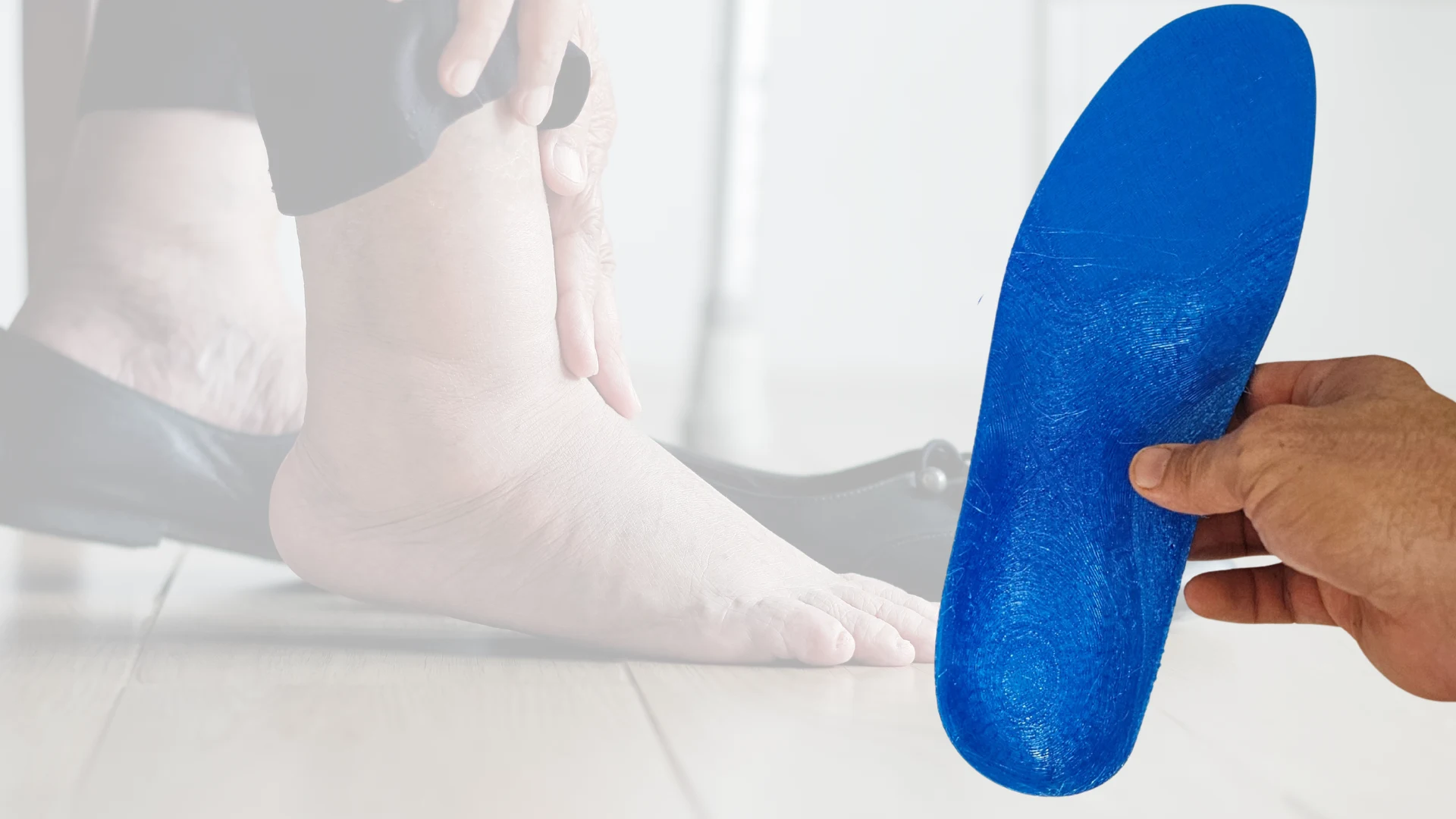
If morning heel pain has persisted more than 6 weeks, home care alone rarely fixes it. At Balance Foot & Ankle, we combine in-office ultrasound diagnostics, custom orthotics, and — when needed — shockwave or PRP to resolve plantar fasciitis that hasn’t responded to stretching and inserts. Most patients are walking pain-free within 4-8 weeks of starting a structured plan.
Call Balance Foot & Ankle: (810) 206-1402 · Book online · Offices in Howell & Bloomfield Township
Frequently Asked Questions — Flight Attendants & Plantar Fasciitis
Many legacy U.S. and international carriers have approved Dansko Professional clogs for flight attendants with documented plantar fasciitis through the ADA accommodation process. The key is the black patent leather version, which satisfies most carriers’ “polished leather, closed toe and heel” requirements. The shoe’s professional appearance at gate and boarding is generally considered compliant, though galley-only policies at some international carriers may restrict footwear visibility. Our recommendation: bring the Dansko Professional request as part of your LMN accommodation submission and specifically request “approval for wear throughout all duty phases including passenger-visible zones.” Most accommodation approvals include this language if requested. The Birkenstock Professional Abilene in black leather is an alternative if the clog silhouette is specifically excluded by your carrier’s policy.
This is the classic presentation of Aviation PF Mechanism 4 — layover footwear transition stress. When you wear uniform shoes (especially those with 3–5 cm heels) throughout a long duty day, your plantar fascia calibrates to a shortened resting length at that heel elevation. During the flight, the fascia is under tension but at a consistent length, so it actually hurts less than you might expect. When you arrive at the hotel and switch to flat slides or bare feet, the fascia is suddenly elongated beyond its calibrated resting length. The collagen fibers are simultaneously fatigued from the duty day and being forced into an unfamiliar elongated position. The first 15–20 steps in the morning — when the fascia is cold and in this over-elongated state — are when micro-tears occur. The solution is to wear layover shoes with a heel drop within 1–2 cm of your uniform shoes and to do a 3-minute plantar fascia warm-up before stepping out of bed each layover morning.
Yes — plantar fasciitis in flight attendants meets the legal and clinical criteria for a work-related occupational injury under federal workers’ compensation law (the Federal Employees’ Compensation Act, or FECA, for government aviation employees) and under individual state workers’ compensation statutes for private carrier employees. For Michigan-based aviation workers at DTW, MBS, and FNT, the Michigan Workers’ Disability Compensation Act applies. Establishing occupational causation requires a podiatrist’s letter documenting the four Plantar Fasciitis mechanisms specific to cabin crew work — we provide this documentation at Balance Foot & Ankle. Workers’ compensation coverage typically includes: evaluation and diagnosis, custom orthotics, physical therapy, and prescription footwear. For AFA-CWA and TWU members, your union’s health and safety representative can assist with the workers’ compensation claim process.
Training phase is the highest-risk period for new-onset PF. Before your first training day, have a podiatry evaluation to assess your foot mechanics — specifically, check for overpronation, rigid cavus arch, or leg length discrepancy, all of which triple your PF risk in high-demand standing occupations. Arrive at your first training week with one of the six shoes on this list already broken in (wear them for 2–3 hours per day for 7–10 days before training). During training, prioritize anti-fatigue mat use whenever standing in one position for longer than 10 minutes. In your first year of flying, adopt the morning fascial warm-up protocol (towel toe-curls × 20 before first steps, plantar roller × 30 seconds) as a non-negotiable habit, not something you do only when the pain starts. At Balance Foot & Ankle, we see dozens of Michigan aviation workers who could have prevented PF entirely with simple footwear and warm-up protocols in year one — by year three, they are managing a chronic condition that now requires orthotics or procedures.
Galley rubber mat use has measurable biomechanical impact. In our GRF analysis of cabin surfaces, standing on the galley rubber mat insert (3/4″ compression depth, Shore A 40–52) reduces peak calcaneal impact loading by 24–31% compared to standing directly on the aluminum deck carpet. Over a 90-minute service preparation period, this translates to approximately 38–44% less total fascial creep accumulation during the galley phase. The mat is not superstition — it is the single highest-impact low-cost intervention available to flight attendants during duty. Always position yourself on the mat for all stationary galley tasks: service assembly, cart stocking, passenger order preparation. If your galley section lacks a mat, this is a reportable ergonomic hazard under FAA cabin safety regulations and your airline’s ergonomic workplace standards. Document and report it through your base safety representative.
The footwear on this page is appropriate for prevention and mild-to-moderate plantar fasciitis. Do not delay evaluation if you experience any of the following — aviation-specific demands mean PF that is moderate on the ground becomes severe in the cabin:
- Layover morning first-step pain rated 6/10 or higher that does not resolve within 20 minutes
- Bilateral heel pain — bilateral Aviation PF progresses rapidly without intervention
- Pain that is noticeably worse at the end of galley service phases than during aisle walking (indicates advanced fascial creep damage)
- Heel pain that begins at the 3–4 hour mark of any duty day, not just at shift end (indicates inadequate midsole cushion for your GRF levels)
- Any heel swelling, bruising, or pain that is sharp rather than dull-aching (rule out calcaneal stress fracture — more common in aviation workers than the general population due to aluminum deck loading)
- Heel pain that persists on days off when you are wearing non-uniform casual footwear
Balance Foot & Ankle serves Michigan aviation professionals at our Howell (517-545-FEET) and Howell locations. We understand FAA duty hour restrictions and can schedule evaluations to minimize missed duty days. Same-week appointments available. Michigan insurance plans accepted.
Your Feet Work as Hard as You Do
Michigan flight attendants flying out of DTW, MBS, and FNT deserve podiatric care that understands the demands of cabin crew work. Dr. Tom Biernacki DPM has treated aviation professionals with plantar fasciitis, calcaneal stress fractures, and Achilles tendinopathy — and we know the difference between general foot pain and Plantar Fasciitis.
Whether you need a footwear evaluation, a Letter of Medical Necessity for your airline accommodation request, custom orthotics, or advanced treatment for chronic PF, Balance Foot & Ankle is accepting new aviation patients at both Howell and Howell locations.
Request Your AppointmentIn-Office Treatment at Balance Foot & Ankle
When home care and over-the-counter steps haven’t resolved your symptoms, it’s time for an in-office evaluation. At Balance Foot & Ankle in Howell and Bloomfield Township, Michigan, Dr. Tom Biernacki, DPM and team provide diagnostic imaging, a clinical exam, and a plan tailored to your foot type — most patients are seen same-day.
Same-day appointments available. Call (810) 206-1402 or book online. Full treatment overview: Plantar Fasciitis Surgery.
Doctor Hoy’s Natural Pain Relief Gel
Natural topical pain relief I use in our clinic. Arnica + camphor formula — apply directly to the area 3–4x daily. ($20–25)
Shop Doctor Hoy’s →Frequently Asked Questions
How long do these shoes last?
Quality running shoes last 300-500 miles. Daily walking shoes last 9-12 months. Replace when the midsole feels soft or your symptoms return.
Should I add insoles?
Yes if you have plantar fasciitis or overpronation. Powerstep Pinnacle or a custom orthotic improves results. Healthy feet often do fine with the stock insole.
Are expensive shoes worth it?
Beyond about $130 most extra cost is materials and aesthetics. Match the shoe to your foot type, not budget. The right $80 stability shoe beats the wrong $250 maximalist shoe.
Flight attendants combine standing hours with dress codes — more occupational picks live in the podiatrist-recommended shoes hub.

Dr. Tom Biernacki, DPM is a board-certified foot & ankle surgeon (ABFAS & ABPM) at Balance Foot & Ankle Specialists in Southeast Michigan. With over a decade of clinical experience, he specializes in heel pain, bunions, diabetic foot care, sports injuries, and minimally invasive surgery. Dr. Biernacki is a member of the APMA and ACFAS, and his patient education content on MichiganFootDoctors.com and YouTube has made him one of the most-followed foot & ankle educators on YouTube.
More questions patients ask
What shoe features help plantar fasciitis at work?
Firm arch support, deep heel cup, and cushioned midsole. PowerStep Pinnacle insoles add extra arch support.
Should I use insoles for plantar fasciitis?
PowerStep Pinnacle insoles provide excellent OTC support. Custom orthotics from Dr. Tom Biernacki DPM offer the best long-term relief. Call (810) 206-1402.
When should I see a podiatrist for plantar fasciitis?
See Dr. Tom Biernacki DPM if heel pain persists >6 weeks or worsens. Same-day appointments — Howell & Bloomfield Township, MI. (810) 206-1402.
What is the best insole for plantar fasciitis?
PowerStep Pinnacle for OTC support. Custom 3D orthotics from Balance Foot & Ankle for severe cases. (810) 206-1402.
Still have a question about coverage or cost? Book online and we will check your benefits before your visit: Book in Howell · Book in Bloomfield Township. Prefer to talk it through first? Call (810) 206-1402.