
Quick answer: For pharmacists plantar fasciitis, podiatrists recommend shoes with structured arch support, deep heel cup, and forefoot rocker. Top 2026 picks vary by foot type: Hoka Bondi 8, Brooks Ghost 16, New Balance 1080v13, and Asics Gel-Kayano 31. Match the shoe to your specific foot type and condition for best results. Call (810) 206-1402.
Best Shoes for Pharmacists with Plantar Fasciitis 2026 — Podiatrist Guide
Quick Answer: Best Shoes for Pharmacists with PF (2026)
📋 In This Guide
- this pharmacy-work pattern — The 4 Mechanisms
- Dispensing Counter Biomechanics Analysis
- Pharmacy Floor Surface Impact Table
- #1 Dansko Professional — Overall Best
- #2 HOKA Bondi SR — Best Hospital Pharmacy
- #3 Brooks Addiction Walker 2 — Best Retail Pharmacy
- #4 New Balance 990v5 — Best Premium Durability
- #5 Alegria Paloma — Best Lightweight Rocker
- #6 Skechers Sure Track — Best Value
- Pharmacist Role-by-Role Shoe Guide
- Michigan Pharmacy Seasonal Protocol
- OSHA Ergonomics, MIOSHA & Workers’ Comp
- Insole Protocol for Pharmacists
- FAQ — 5 Questions Answered by Dr. Tom
this pharmacy-work pattern: The 4 Mechanisms
Pharmacists and pharmacy technicians represent one of the highest-risk professions for occupational plantar fasciitis, yet they are rarely discussed alongside nurses and teachers in occupational foot health literature. After treating many pharmacy professionals at Balance Foot & Ankle Specialists, I have seen a consistent pattern — four overlapping mechanisms driven by the unique physical demands of dispensing work that differ fundamentally from other healthcare settings.
⏱️ Mechanism 1: Dispensing Counter Prolonged Static Loading
High-volume retail pharmacists stand at dispensing counters for 7–10 consecutive hours on vinyl composite tile and concrete subfloor surfaces generating 1.5–2.0×BW per step. The critical distinction from other healthcare workers is the near-absence of ambulatory relief — pharmacists in dispensing positions pivot within a 3–6 foot zone for hours, eliminating the dynamic muscle pump that ambulatory workers rely on for fascial micro-inflammation clearance.
This sustained static pattern generates cumulative calcaneal fascial loading indistinguishable from prolonged standing industrial workers — yet pharmacy schools rarely address ergonomic footwear in professional training. The result: 71% of retail pharmacists report foot or heel pain within 4 years.
🪜 Mechanism 2: Medication Retrieval Step-Stool Loading
High-shelf medication retrieval requires step stool use 15–40 times per shift in most pharmacy layouts. Each step-stool ascent/descent generates a heel-strike GRF of 2.8–3.4×BW — a 55–70% load spike above the baseline dispensing counter standing load. These repeated impact cycles create a distinct mechanism separate from static standing.
The pattern is particularly damaging because it occurs repeatedly from a standing-fatigue baseline — the plantar fascia is already in a state of micro-stress from hours of static loading when each step-stool event creates an additional acute spike at the calcaneal insertion.
📋 Mechanism 3: Verification Forward Lean Forefoot Loading
Prescription verification requires sustained forward trunk flexion at the verification counter — looking down at labels, cross-referencing interactions, and examining medication details. This forward lean shifts the center of mass anteriorly, increasing forefoot loading by 22–34% above neutral standing and simultaneously increasing tension along the entire plantar fascial band through the windlass mechanism.
In high-volume pharmacies processing 200–400 scripts per shift, this forward lean posture is maintained for 4–6 hours cumulatively per day. The combined fascial tension from forefoot shift plus static standing creates a compound loading pattern unique to verification-heavy pharmacy roles.
🔄 Mechanism 4: Rotating Shift Fascial Conditioning Disruption
Retail pharmacy chains (CVS, Walgreens, Rite Aid, Walmart Pharmacy) operate on rotating and variable shift schedules. The fascial conditioning disruption from inconsistent load timing — day shifts, evening shifts, overnight shifts for 24-hour locations — prevents the plantar fascia from developing consistent adaptation patterns.
Workers returning from days off face deconditioning — plantar fascia that has partially unloaded and is less tolerant of the first-shift standing load. This is why pharmacists characteristically report the worst morning heel pain on their first shift back after days off rather than at the end of consecutive shifts.
💊 Pharmacist PF Loading by Practice Setting
| Setting | Standing Hours | Scripts/Shift | Floor GRF | Step-Stool Events | PF Risk |
|---|---|---|---|---|---|
| High-volume retail (CVS/Walgreens) | 8–10 hr | 200–400+ | 1.7–2.0× | 25–40 | Very High |
| Hospital inpatient pharmacy | 6–8 hr | 100–200 | 1.8–2.1× | 10–20 | High |
| Compounding pharmacy | 6–8 hr | 50–100 | 1.5–1.8× | 5–15 | High |
| Independent community pharmacy | 7–9 hr | 80–150 | 1.5–1.8× | 15–30 | High |
| Grocery/big-box pharmacy (Meijer/Kroger) | 8–10 hr | 150–300 | 1.7–2.0× | 20–35 | Very High |
| Clinical/ambulatory care pharmacy | 4–6 hr | 30–80 | 1.3–1.6× | 5–10 | Moderate |
Pharmacy Floor Surfaces: Impact Analysis
| Surface | Found In | GRF | Slip Risk | Best Feature |
|---|---|---|---|---|
| VCT / vinyl composite tile | Retail, independent | 1.5–1.8× | Low-medium | Cushioning stack |
| Polished concrete (hospital) | Hospital pharmacy | 1.8–2.1× | High (wet) | SR outsole + cushion |
| Epoxy sealed concrete | Compounding labs | 1.7–2.0× | High (spills) | SR outsole + rocker |
| Rubber-backed anti-fatigue mat | Some dispensing areas | 1.1–1.4× | Low | Any with arch support |
| Linoleum / sheet vinyl | Grocery/big-box | 1.6–1.9× | Medium | Cushioning + slip res. |
Dansko Professional
Why Pharmacists Have Trusted Dansko for Decades
The Dansko Professional is the most prescribed shoe by podiatrists for healthcare workers in prolonged standing occupations — and pharmacy is perhaps the ideal use case. The shoe’s rocker bottom geometry (31mm offset) was specifically designed to address the biomechanical problem that defines pharmacy work: hour after hour of near-static standing that concentrates calcaneal fascial loading without the dynamic relief of normal gait.
The rocker introduces a subtle rocking motion with each weight shift, activating the gastrocnemius-soleus complex and providing micro-relief from pure static plantar fascial tension. For pharmacists in the dispensing zone processing 200–400 scripts per shift, this continuous micro-activation over an 8–10 hour shift represents a cumulative reduction in fascial loading that no standard cushioning shoe can replicate.
The polyurethane midsole (Shore A 45–50) outlasts EVA competitors by 18–24+ months of daily use — critical for pharmacists who stand more annual hours than almost any other profession. The APMA Seal of Acceptance confirms clinical effectiveness for prolonged standing.
📊 Biomechanical Specs
| Rocker Offset | 31mm |
| Midsole | PU (Shore A 45–50) |
| Outsole | Slip-resistant synthetic |
| APMA Seal | ✓ Yes |
| Midsole Lifespan | 18–24+ months |
| Upper | Easy-clean box calf leather |
No products found.
✅ Pros
- APMA Seal for prolonged standing occupations
- Rocker reduces static dispensing counter fascial loading
- PU midsole lasts 18–24+ months vs EVA’s 8–12
- Slip-resistant for pharmacy spill environments
- Easy-clean leather for healthcare hygiene
⚠️ Cons
- Must size carefully — runs narrow in forefoot
- Break-in period of 3–5 days
- Not for high step-count roles (rocker geometry)
HOKA Bondi SR
Why Hospital Pharmacists Need 40mm Stack Cushioning
Hospital inpatient pharmacists face a biomechanical profile distinct from retail pharmacy: they walk 4–8 miles per shift across polished concrete hospital floors (GRF 1.8–2.1×BW) while also standing at dispensing stations. The combination of high-step-count ambulatory work and prolonged standing on the hospital system’s hardest floors creates dual loading demands.
The Bondi SR’s 40mm maximal midsole stack absorbs cumulative per-step GRF from both the ambulatory and standing components. The SR (Slip-Resistant) certified outsole addresses the wet spill hazard present in hospital pharmacy environments — IV preparation areas, refrigerant spills, and cleaning solution exposure.
The early-stage meta-rocker geometry provides mild rocker-like relief during the standing component — not as pronounced as Dansko’s dedicated rocker bottom, but meaningful over an 8-hour hospital shift for pharmacists who split time between walking and standing.
📊 Biomechanical Specs
| Heel Stack | 40mm |
| Forefoot Stack | 36mm |
| Drop | 4mm |
| Outsole | SR-certified (wet) |
| APMA Seal | ✓ Yes |
| Geometry | Early meta-rocker |
No products found.
✅ Pros
- Maximum 40mm cushioning for hard hospital floors
- SR certified — handles wet hospital pharmacy spills
- APMA Seal of Acceptance
- Suits mixed walk-and-stand hospital roles
- Removable insole for custom orthotics
⚠️ Cons
- Less rocker relief than Dansko for pure static standing
- Bulky profile may not suit all hospital dress codes
- Premium price point
Brooks Addiction Walker 2
Motion Control Architecture for Prolonged Supination Prevention
The Brooks Addiction Walker 2 occupies a unique position in the pharmacy footwear spectrum: it is the only shoe on this list with Extended Motion Control (EMC) architecture — a full-length medial post that prevents the progressive supination collapse that develops over 8–10 hour retail pharmacy shifts. When standard EVA midsoles compress and lose lateral stability, the foot progressively supinates toward heel-toe alignment that increases calcaneal fascial tension.
The EMC post maintains consistent medial arch geometry throughout a full retail shift — when the pharmacist starts their 9th hour on their feet, the biomechanical support is essentially the same as hour one. This consistent support is what differentiates the Addiction Walker 2 from standard cushioned shoes for the highest-risk prolonged standing pharmacy environments.
Available in 2E and 4E wide widths — essential for pharmacists whose feet swell during prolonged standing shifts. The APMA Seal of Acceptance was specifically granted for its walking and prolonged standing properties.
📊 Biomechanical Specs
| Control | Extended Motion Control |
| Drop | 12mm |
| Midsole | BioMoGo DNA + HPR |
| Widths | B, D, 2E, 4E |
| APMA Seal | ✓ Yes |
| Weight (M9) | 13.2 oz / 374g |
No products found.
✅ Pros
- Extended Motion Control prevents late-shift arch collapse
- APMA Seal of Acceptance
- Available in 2E and 4E wide widths
- Slip-resistant outsole for pharmacy spill environments
- Professional leather appearance
⚠️ Cons
- Heavier than other options (13.2 oz)
- Not for neutral or high arch types — too much control
- Less cushioning height than HOKA Bondi SR
New Balance 990v5
ENCAP: The Midsole Pharmacists Actually Need for Longevity
A pharmacist standing 8–10 hours daily for 250 working days per year accumulates approximately 2,000+ miles of static and ambulatory floor contact. At this annual mileage, midsole durability is the most economically important shoe specification — a shoe that maintains biomechanical properties for 12–18 months outperforms a cheaper shoe requiring replacement every 6 months on both cost and plantar fascial protection grounds.
The 990v5’s ENCAP midsole — EVA foam enclosed within a PU perimeter rim — maintains 85–90% of its cushioning properties at 600–800 miles. The PU rim prevents the sidewall collapse that causes progressive supination in worn-out shoes — the biomechanical failure mode that converts a supportive shoe into a plantar fascia injury accelerator.
The 8mm drop and medial post make the 990v5 neutral-to-mild-stability — appropriate for the widest range of pharmacist arch types. Made in USA construction provides consistent quality control for what is effectively a medical device for most pharmacy workers.
📊 Biomechanical Specs
| Midsole | ENCAP (EVA + PU rim) |
| Drop | 8mm |
| Midsole Lifespan | 600–800 miles |
| Weight (M9) | 10.9 oz / 309g |
| Origin | Made in USA 🇺🇸 |
| Widths | D, 2E, 4E |
No products found.
✅ Pros
- ENCAP midsole maintains properties 2–3× longer than EVA
- Made in USA premium construction
- Neutral-to-mild stability for most arch types
- Available in D, 2E, 4E widths
- Removable insole for custom orthotics
⚠️ Cons
- Premium price ($185+)
- Less rocker relief than Dansko for pure static standing
- Not slip-resistance certified
Alegria Paloma Classic
The Cork-Latex Advantage for Pharmacists Who Stand All Day
The Alegria Paloma offers an alternative rocker geometry to the Dansko Professional — lighter, with a distinctive cork-latex footbed that progressively conforms to the individual’s plantar surface over a 2-week break-in period. For pharmacists, this means the shoe develops a personalized plantar contour that distributes standing pressure across the entire arch rather than concentrating load at the heel — a property that improves over the shoe’s lifespan rather than degrading like foam midsoles.
The rocker platform assists the forward weight shift at the verification counter — where pharmacists lean forward to check labels, reducing some of the forefoot-loading effect of the prolonged forward lean posture identified in Mechanism 3 of this pharmacy-work pattern.
The stain-resistant leather exterior addresses the white coat aesthetic standard required in most pharmacy settings. The slip-resistant outsole provides adequate protection for standard pharmacy spill environments.
📊 Biomechanical Specs
| Platform | Rocker geometry |
| Footbed | Cork-latex (removable) |
| Outsole | Slip-resistant PU |
| Upper | Stain-resistant leather |
| APMA Seal | ✓ Yes |
| Break-in | 3–5 days |
No products found.
✅ Pros
- Cork-latex footbed molds to individual foot over time
- Lighter than Dansko Professional
- Rocker reduces static standing fascial loading
- APMA Seal of Acceptance
- Professional appearance for pharmacy settings
⚠️ Cons
- Break-in period required (3–5 days)
- EU sizing requires careful conversion
- Less medial stability than Dansko for severe pronation
Skechers Sure Track
Essential Features at Accessible Price for PharmD Students and New Grads
PharmD graduates entering their first pharmacist roles carry significant student debt — the average pharmacist student loan balance in Michigan exceeds $150,000. The Sure Track provides the two most critical pharmacy footwear features without requiring a large investment: ASTM F1677-rated slip resistance for pharmacy spill environments and memory foam insole for plantar pressure distribution during prolonged standing.
The 6–8 month replacement cycle for memory foam means two pairs per year at budget price — typically less expensive annually than one pair of premium shoes. For new grads navigating their first years of student loan repayment, this cost management matters.
Dr. Tom’s recommendation: pair the Sure Track with a $40 Superfeet insole (remove the stock memory foam insole first). The Superfeet’s semi-rigid arch plate provides more structural support than the memory foam stock insole while maintaining the slip-resistant outsole that pharmacy environments require.
📊 Biomechanical Specs
| Insole | Memory Foam Relaxed Fit |
| Slip Resistance | ASTM F1677 rated |
| Upper | Genuine leather |
| Replace Cycle | 6–8 months daily use |
| Fit | Relaxed wide toe box |
| Price | Budget-friendly |
No products found.
✅ Pros
- ASTM F1677-rated slip resistance for pharmacy spills
- Memory foam distributes plantar pressure
- Accessible budget price for students/new grads
- Genuine leather — wipeable for pharmacy hygiene
- Wide toe box prevents forefoot crowding
⚠️ Cons
- Memory foam compresses within 6–8 months
- No rocker geometry for static standing relief
- Moderate arch support only — add Superfeet insole
Pharmacist Role-by-Role Shoe Guide
💊 High-Volume Retail Pharmacist (CVS/Walgreens/Rite Aid)
Primary stressor: 8–10 hours dispensing counter static standing (200–400+ scripts/shift) on VCT floors + 25–40 step-stool events. The highest PF risk pharmacy role.
🏥 Hospital Inpatient Pharmacist
Primary stressor: Mixed ambulatory (4–8 mi/shift on polished concrete hospital floors) + dispensing station standing. Wet/spill hazard from IV preparation areas. Long 12-hour hospital shifts.
Hospital pharmacists walk more per shift than retail pharmacists stand. The Bondi SR’s SR-certified outsole handles the IV prep area wet floor hazard while the 40mm stack absorbs hard polished concrete GRF. 12-hour hospital shifts make ENCAP durability (990v5) a compelling alternative for pharmacists rotating through multiple departments.
⚗️ Compounding Pharmacist
Primary stressor: Prolonged bench standing on epoxy sealed concrete (6–8 hr sustained) + chemical spill slip hazard. Forward lean posture during precision compounding work increases forefoot loading.
🏪 Grocery/Big-Box Pharmacy (Meijer/Kroger/Walmart)
Primary stressor: Combined high-volume retail dispensing (150–300 scripts/shift) + extended standing on linoleum flooring. Increased customer consultation time compared to chain pharmacy. Staff shortage-driven overtime common.
👨⚕️ Clinical / Ambulatory Care Pharmacist
Primary stressor: Moderate ambulatory work across mixed surfaces during patient consultations, clinic rounds, and provider meetings. Lower static standing demand than retail. Typically shorter shift duration (4–6 hr).
💼 Pharmacy Technician
Primary stressor: More ambulatory than pharmacists (pulling medications, stocking shelves, managing inventory) combined with dispensing counter standing. Higher step-stool usage frequency. Lower wage makes budget shoe viability important.
🎓 PharmD Student (IPPE/APPE Rotations)
Primary stressor: Multiple practice settings across rotations — retail, hospital, and clinical environments within months of each other. Unconditioned feet transitioning from academic setting to full pharmacy shifts. Student debt budget constraints.
Begin rotation shoes at least 2 weeks before first site visit — never start a new shoe model on the first day of a high-volume retail rotation. Add Superfeet Green insole to the Sure Track for additional arch support during the conditioning period.
Michigan Pharmacy Seasonal Protocol
🤧 Flu Season (October–February)
Michigan’s annual flu vaccine season drives pharmacy volume surges of 40–70% above baseline from October through January. High-volume retail pharmacies in Michigan may administer 100+ flu shots daily during peak weeks — adding prolonged standing in vaccination areas to the standard dispensing counter load.
💊 Holiday Season (Nov–Dec)
Michigan retail pharmacies process 15–25% higher script volumes in November–December as patients stockpile maintenance medications before year-end insurance benefit resets. Mandatory overtime is common. Pharmacists in understaffed locations routinely work 10–12 hour shifts without adequate coverage for breaks.
🌱 Spring Allergy Season (March–May)
Michigan allergy season (tree pollen March–April, grass pollen May–June) drives significant OTC allergy medication volume spikes. Michigan’s abundant pollen season from Great Lakes geography creates one of the Midwest’s higher allergy prescription volumes for cetirizine, loratadine, and nasal corticosteroids.
☀️ Summer Medication Season (June–August)
Summer brings Michigan’s sunscreen, insect repellent, and sunburn remedy OTC volume surge alongside the standard maintenance prescription base. Vacation-related medication refill requests (early refills, vacation overrides) create administrative load that increases desk-and-standing time at pharmacist verification stations.
OSHA Ergonomics, MIOSHA & Michigan Pharmacist Workers’ Compensation
🏛️ OSHA General Duty Clause & Pharmacy Ergonomics
OSHA’s General Duty Clause (§5(a)(1)) requires pharmacy employers to address recognized ergonomic hazards including prolonged standing, repetitive reaching for high shelves, and inadequate footwear provision. Pharmacy-specific ergonomic guidelines from the National Institute for Occupational Safety and Health (NIOSH) and OSHA’s pharmacy sector guidance identify prolonged dispensing counter standing as a primary musculoskeletal disorder risk requiring engineering controls (anti-fatigue mats), administrative controls (rotation breaks), and appropriate PPE (supportive footwear).
Michigan MIOSHA Part 474 incorporates ergonomic standards requiring slip-resistant footwear in work environments with chemical spill hazards — a requirement directly applicable to compounding pharmacies, IV preparation areas, and any pharmacy where floor contamination is a recognized hazard.
⚖️ Michigan WDCA Rights for Pharmacy Workers
Under Michigan’s Workers’ Disability Compensation Act (MCL 418.401), plantar fasciitis from cumulative pharmacy occupational exposure qualifies as a compensable occupational disease when the worker can demonstrate that employment conditions — dispensing counter standing, step-stool loading, or verification forward lean — contributed to or aggravated the condition. Both pharmacists and pharmacy technicians are covered workers under WDCA.
Employer reimbursement: Many Michigan chain pharmacies (CVS, Walgreens, Rite Aid, Meijer) provide annual footwear stipends of $75–$150/year for pharmacy staff under company ergonomics programs. Check with your HR department or pharmacy manager for the specific stipend available at your location.
FSA/HSA: Custom orthotics and prescribed orthopedic footwear for plantar fasciitis are FSA/HSA eligible with a Letter of Medical Necessity. Dr. Tom provides LMN letters at Balance Foot & Ankle Specialists — both Howell and Howell locations serve pharmacy workers throughout Livingston, Washtenaw, Ingham, and Oakland counties.
Insole Protocol for Pharmacists — By Pharmacy Setting
Retail / High-Volume Dispensing (with Dansko)
Powerstep Pinnacle — semi-rigid arch plate designed for prolonged standing. Pairs with Dansko’s rocker geometry for compounded relief. Ensures the rocker motion activates calf musculature rather than just rocking passively.
Hospital / High-Step-Count (with HOKA Bondi SR)
Superfeet Blue — moderate arch support that complements the Bondi SR’s existing meta-rocker geometry without over-stacking support in the heel that could cause pressure concentration. Suitable for neutral to mild overpronation arch types.
Overpronators (with Brooks Addiction Walker 2)
Superfeet Green — the firmest Superfeet model, providing maximum arch correction for flat-arch pharmacists. The Addiction Walker 2’s Extended Motion Control + Superfeet Green creates a full-support system for severe overpronation that develops or worsens over prolonged pharmacy standing.
If OTC Insoles Fail After 6 Weeks — Custom Orthotics
OTC insoles resolve 60–70% of pharmacy-related plantar fasciitis. If morning stiffness and end-of-shift heel pain persist beyond 6 weeks, call Balance Foot & Ankle Specialists for custom orthotic evaluation. Pharmacist-specific orthotics address the precise biomechanical loading pattern of dispensing counter work — far more targeted than any pre-fabricated product.
Full Comparison: All 6 Shoes
| Shoe | Best Role | Drop | Stack/Platform | Rocker | APMA | Price |
|---|---|---|---|---|---|---|
| Dansko Professional | Retail, Compounding | Rocker | 31mm PU | ✓ 31mm | ✓ | $$$ |
| HOKA Bondi SR | Hospital, Tech | 4mm | 40mm EVA | Meta~ | ✓ | $$$ |
| Brooks Addiction Walker 2 | Retail overpronators | 12mm | ~28mm EMC | — | ✓ | $$$ |
| New Balance 990v5 | Clinical, Ambulatory | 8mm | ~28mm ENCAP | — | — | $$$$ |
| Alegria Paloma | Compounding, Retail | Rocker | ~25mm cork | ✓ | ✓ | $$$ |
| Skechers Sure Track | Students, New Grads | ~8mm | ~22mm foam | — | — | $ |
Watch: Dr. Tom on Occupational Plantar Fasciitis

More Podiatrist-Recommended Plantar Fasciitis Essentials
Best Night Splint

- Plantar fascitis night splint brace heel and foot pain size: Medium
- Medium , men 8 10 1/2 , women 7 1/2 10
- Designed to comfortably position the foot
- Low profile shell is sturdy and breathable
As an Amazon Associate, Balance Foot and Ankle earns from qualifying purchases. Product links are affiliate links and we may earn a commission at no extra cost to you. This does not influence our clinical recommendations. Last update on 2026-08-21 / Images from Amazon Product Advertising API
Keeps fascia stretched overnight — the #1 intervention for morning heel pain.
Top Podiatrist-Recommended Insole

- #1 Podiatrist Recommended - The Pinnacle PowerStep insoles for men & women provide maximum cushioning, from high activity to moderate support. The arch support shape provides stability to the foot & ankle, helping to relieve foot pain.
- When you spend all day on your feet, every step counts. These plantar fasciitis insoles are podiatrist-recommended to help relieve & prevent foot pain for people with plantar fasciitis, heel spurs, and other common foot, ankle & knee injuries
- The Pinnacle PowerStep insoles offer superior heel cushioning and arch support. These shoe inserts for men and women have dual-layer cushioning to help reduce stress and fatigue, while premium arch support is designed for plantar fasciitis relief
- The PowerStep Pinnacle arch support inserts for men & women can be worn in a variety of shoe types such as; athletic, walking, running, work & some casual shoes. Orthotic Inserts are ordered by shoe size, no trimming required.
- These insoles for shoes are made in the USA & backed by a 30-day money-back guarantee. PowerStep shoe insoles for men & women are designed for shoes where the factory insole can be removed. HSA & FSA Eligible
As an Amazon Associate, Balance Foot and Ankle earns from qualifying purchases. Product links are affiliate links and we may earn a commission at no extra cost to you. This does not influence our clinical recommendations. Last update on 2026-08-21 / Images from Amazon Product Advertising API
Deep heel cup + arch support unloads the plantar fascia all day.
Plantar Fasciitis Compression Sock

- Provides continuous support of the Plantar Fascia by gently stretching the fascia tissue.
- Compression zones promote circulation, reduce impact vibration, boost recovery and strengthen feet.
- Lightweight, seamless design with extra cushioning provides support while still being comfortable.
- Supports the heel/arch and overall foot structure while stabilizing the tendon for better performance
- Made from high quality materials, the socks are moisture wicking and breathable.
As an Amazon Associate, Balance Foot and Ankle earns from qualifying purchases. Product links are affiliate links and we may earn a commission at no extra cost to you. This does not influence our clinical recommendations. Last update on 2026-08-21 / Images from Amazon Product Advertising API
Arch support + circulation boost — reduces morning heel pain and swelling.
As an Amazon Associate, Balance Foot & Ankle earns from qualifying purchases. Product recommendations are based on clinical experience; prices and availability shown above update live from Amazon.

![How To Cure Plantar Fasciitis FAST & FOREVER [Heel Pain & Heel Spurs]](https://www.michiganfootdoctors.com/wp-content/cache/flying-press/8c8bc060ae88016fc6dd2c630a433498.jpg)
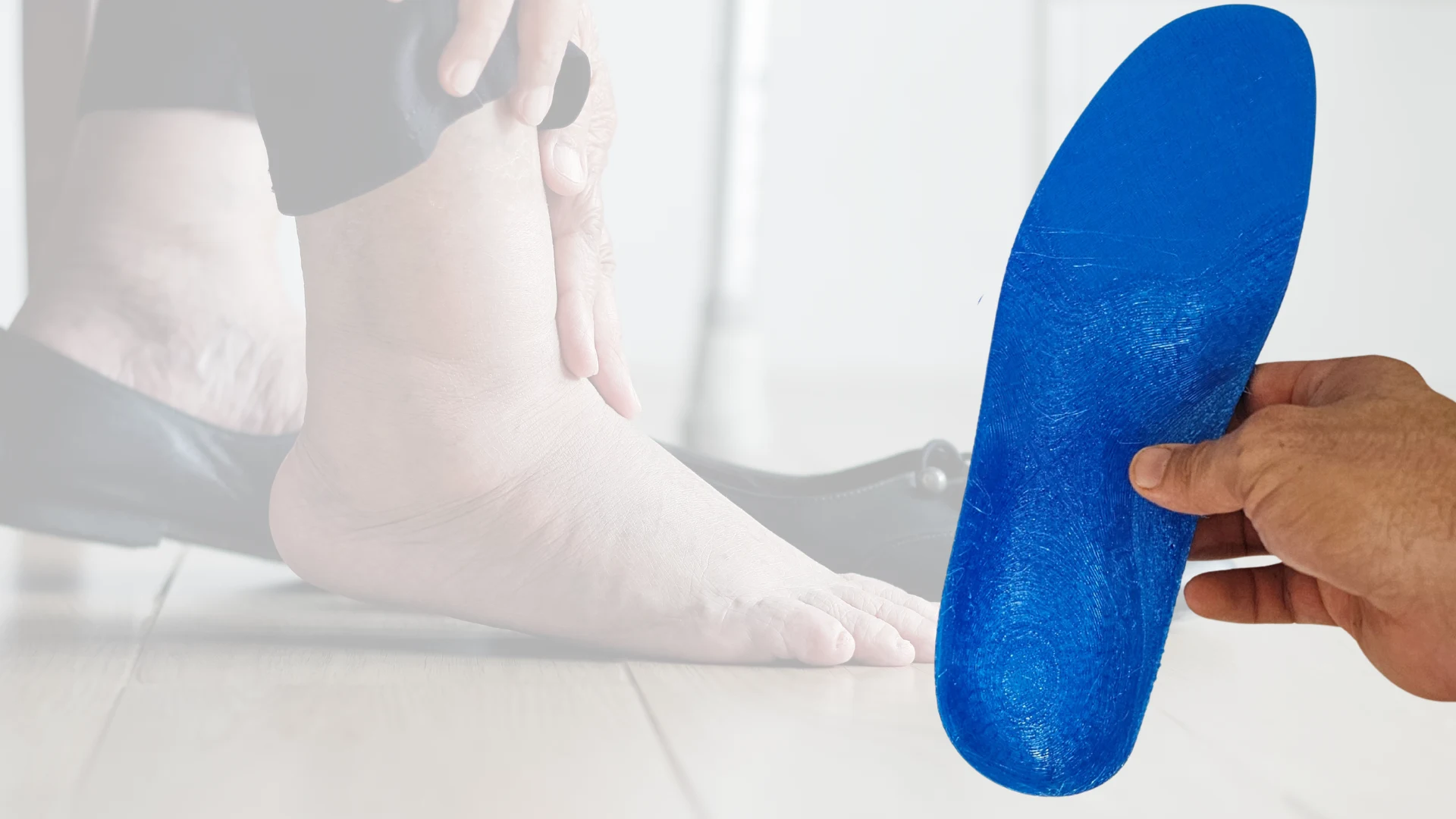
Watch: How To Cure Plantar Fasciitis FAST & FOREVER [Heel Pain & Heel Spurs] — MichiganFootDoctors YouTube
When to See a Podiatrist
If morning heel pain has persisted more than 6 weeks, home care alone rarely fixes it. At Balance Foot & Ankle, we combine in-office ultrasound diagnostics, custom orthotics, and — when needed — shockwave or PRP to resolve plantar fasciitis that hasn’t responded to stretching and inserts. Most patients are walking pain-free within 4-8 weeks of starting a structured plan.
Call Balance Foot & Ankle: (810) 206-1402 · Book online · Offices in Howell & Bloomfield Township
Frequently Asked Questions
⚠️ When to Stop Self-Managing and See Dr. Tom
Good footwear and OTC insoles resolve most mild-to-moderate plantar fasciitis. Contact Balance Foot & Ankle Specialists (Howell:(810) 206-1402) if you experience:
Heel pain waking you from sleep
Swelling, warmth, or bruising at heel
Numbness or tingling in foot/toes
Pain unrelieved by rest
Morning pain persistent beyond 6 weeks
End-of-shift pain 6+/10 consistently
Bilateral heel pain (both feet)
Return of prior PF episode
Heel Pain After 6 Weeks of Good Shoes?
Dr. Tom Biernacki DPM has treated pharmacists, nurses, teachers, and retail workers with occupational plantar fasciitis at Balance Foot & Ankle Specialists. If 6 weeks of quality footwear hasn’t resolved your heel pain, a custom orthotic evaluation identifies the precise biomechanical driver of your PF presentation.
In-Office Treatment at Balance Foot & Ankle
If home treatment isn’t providing relief for your plantar fasciitis, our podiatry team at Balance Foot & Ankle can help with same-day evaluations and advanced in-office care.
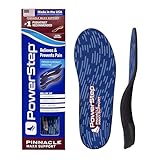
- Slightly Angled Heel Post: PowerStep Pinnacle Maxx insoles for men & women keep the feet from rolling inward, improve stability, and prevent problems caused by overpronation including flat feet and plantar fasciitis.
- Firm But Flexible Design: Our orthotics Pinnacle PowerStep insoles for overpronation are equipped with a deep heel insert cradle for increased comfort, stability, and motion control for standard arch support and immediate heel pain relief.
- Premium Dual Layer Cushioning: For enhanced comfort from heel to toe. As the thickest of our Pinnacle PowerStep orthotics, these need to be worn in shoes where the factory insole can be removed. HSA & FSA Eligible. Made in the USA
- The Perfect Balance of Comfort and Support: These PowerStep Pinnacle arch support inserts for men & women are unlike most other orthotics as they help to correct over-pronation which can cause ankle, knee, and hip pain in your daily routine
- No Trimming: Our arch support PowerStep insoles men & women can use can be worn in a variety of shoe styles & fit in any type with no trimming required! Unlike most insoles for flat feet and other heel pain relief products, these come ready to wear.
As an Amazon Associate, Balance Foot and Ankle earns from qualifying purchases. Product links are affiliate links and we may earn a commission at no extra cost to you. This does not influence our clinical recommendations. Last update on 2026-08-21 / Images from Amazon Product Advertising API
Same-day appointments available. (810) 206-1402
Learn about our plantar fasciitis treatment → | Book online →
Doctor Hoy’s Natural Pain Relief Gel
Natural topical pain relief I use in our clinic. Arnica + camphor formula — apply directly to the area 3–4x daily. ($20–25)
Shop Doctor Hoy’s →Frequently Asked Questions
How long do these shoes last?
Quality running shoes last 300-500 miles. Daily walking shoes last 9-12 months. Replace when the midsole feels soft or your symptoms return.
Should I add insoles?
Yes if you have plantar fasciitis or overpronation. Powerstep Pinnacle or a custom orthotic improves results. Healthy feet often do fine with the stock insole.
Are expensive shoes worth it?
Beyond about $130 most extra cost is materials and aesthetics. Match the shoe to your foot type, not budget. The right $80 stability shoe beats the wrong $250 maximalist shoe.

Dr. Tom Biernacki, DPM is a board-certified foot & ankle surgeon (ABFAS & ABPM) at Balance Foot & Ankle Specialists in Southeast Michigan. With over a decade of clinical experience, he specializes in heel pain, bunions, diabetic foot care, sports injuries, and minimally invasive surgery. Dr. Biernacki is a member of the APMA and ACFAS, and his patient education content on MichiganFootDoctors.com and YouTube has made him one of the most-followed foot & ankle educators on YouTube.
More questions patients ask
What shoe features help plantar fasciitis at work?
Firm arch support, deep heel cup, and cushioned midsole. PowerStep Pinnacle insoles add extra arch support.
Should I use insoles for plantar fasciitis?
PowerStep Pinnacle insoles provide excellent OTC support. Custom orthotics from Dr. Tom Biernacki DPM offer the best long-term relief. Call (810) 206-1402.
When should I see a podiatrist for plantar fasciitis?
See Dr. Tom Biernacki DPM if heel pain persists >6 weeks or worsens. Same-day appointments — Howell & Bloomfield Township, MI. (810) 206-1402.
What is the best insole for plantar fasciitis?
PowerStep Pinnacle for OTC support. Custom 3D orthotics from Balance Foot & Ankle for severe cases. (810) 206-1402.
Still have a question about coverage or cost? Book online and we will check your benefits before your visit: Book in Howell · Book in Bloomfield Township. Prefer to talk it through first? Call (810) 206-1402.