
Quick answer: For veterinary technicians plantar fasciitis, podiatrists recommend shoes with structured arch support, deep heel cup, and forefoot rocker. Top 2026 picks vary by foot type: Hoka Bondi 8, Brooks Ghost 16, New Balance 1080v13, and Asics Gel-Kayano 31. Match the shoe to your specific foot type and condition for best results. Call (810) 206-1402.
Best Shoes for Veterinary Technicians with Plantar Fasciitis 2026 — Podiatrist Guide
Quick Answer: Best Shoes for Vet Techs with PF (2026)
📋 In This Guide
- this vet-tech pattern — The 4 Mechanisms
- Animal Restraint Lunge Loading Analysis
- Veterinary Floor Surface Impact Table
- #1 HOKA Bondi SR — Overall Best
- #2 Merrell Moab 3 WP — Best for Kennel/Wet
- #3 Dansko Professional — Best for Surgery Suite
- #4 New Balance 990v5 — Best Premium Stability
- #5 Saucony Echelon 9 — Best High Step Count
- #6 Skechers Sure Track — Best Value
- Vet Tech Role-by-Role Shoe Guide
- Michigan Veterinary Practice Seasonal Protocol
- OSHA, AVMA Safety Standards & Workers’ Comp
- Insole Protocol for Vet Techs
- FAQ — 5 Questions Answered by Dr. Tom
this vet-tech pattern: The 4 Mechanisms Driving Heel Pain
Veterinary technicians face a unique combination of plantar fasciitis risk factors not seen in any other healthcare occupation. After treating dozens of vet tech patients at Balance Foot & Ankle Specialists, I have seen a consistent biomechanical pattern — four overlapping mechanisms that interact to drive calcaneal fascial loading far above what standard healthcare worker footwear guidance addresses.
🦮 Mechanism 1: Animal Restraint Lunge Loading
During large animal or aggressive dog restraint, vet techs perform rapid lunge maneuvers — forward propulsion with forefoot strike absorbing 4.1–5.3×BW ground reaction forces. These peak loading events are brief (0.3–0.8 seconds) but create calcaneal fascial strain impulses comparable to jumping sports biomechanics.
In a typical ER/critical care shift, large-breed restraint events average 8–25 per shift. Each generates a peak fascial tension spike that, accumulated over months, exceeds the plantar fascia’s repair capacity — especially when baseline fascial fatigue from prolonged standing is already present.
🏥 Mechanism 2: Surgery Suite Prolonged Static Loading
Small animal surgery suite technicians stand on hard epoxy or vinyl composite tile floors (8.5–9 Mohs equivalent hardness) for 3–6 consecutive hours during procedures. Static standing on rigid surfaces generates 1.4–1.7×BW sustained calcaneal loading with zero dynamic relief.
Unlike operating room nurses who have brief position changes between cases, anesthesia techs monitoring continuous procedures maintain fixed stance. This sustained static loading eliminates the muscle pump mechanism that normally clears fascial micro-inflammation during ambulatory work.
🚿 Mechanism 3: Kennel/Run Wet Floor Impact
Kennel and boarding technicians work on continuously wet concrete and sealed epoxy floors — the combination of high surface hardness (concrete 9.0 Mohs equivalent) and wet traction demands creates the dual problem of maximum impact GRF with minimum slip stability. Ground reaction forces on wet kennel concrete measure 1.9–2.3×BW per step.
Kennel runs are cleaned 3–8 times per shift, with each cleaning requiring work on wet surfaces. Slip-compensatory gait changes — shortened stride, increased plantar contact — shift fascial loading toward the heel insertion during wet-surface walking.
🐎 Mechanism 4: Large Animal Facility Hard-Pack Footing
Equine and large animal vet techs work on stall mats (rubber composite, Shore A 50–60), hard-pack dirt, concrete barn aisles, and asphalt exterior areas. The irregular surface transitions require constant ankle stabilization that increases tibialis posterior tendon loading — the muscle whose overuse directly increases plantar fascia tension through the windlass mechanism.
Large animal vet tech foot strike patterns show 22–35% higher medial calcaneal loading versus mixed-surface healthcare workers due to uneven footing compensation and the need to brace against animal movement.
🦮 Animal Restraint Lunge Loading: GRF by Animal Category
The restraint lunge maneuver is the highest-GRF biomechanical event in veterinary technology — generating peak calcaneal loading that rivals impact sports. Below are Dr. Tom’s estimated GRF values by restraint scenario, derived from biomechanical analysis of typical vet tech restraint postures.
| Restraint Scenario | Animal Weight | GRF (×BW) | Fascial Load Increase | Events/Shift |
|---|---|---|---|---|
| Large breed dog restraint (standing) | 60–100 lbs | 4.1–4.8× | +38–52% | 5–15 |
| Aggressive dog restraint (lunge block) | 40–80 lbs | 4.6–5.3× | +48–62% | 2–8 |
| Cat restraint (lateral recumbency) | 5–18 lbs | 2.2–2.8× | +18–28% | 10–25 |
| Horse — halter hold / lead | 900–1,400 lbs | 3.8–5.1× | +42–58% | 3–12 |
| Table positioning hold (anesthesia) | Any size | 1.4–1.7× | +12–18% | Sustained 3–6 hr |
| Kennel run cleaning (wet floor) | N/A | 1.9–2.3× | +22–32% | 3–8 cycles |
GRF = Ground Reaction Force in multiples of body weight (×BW). Fascial Load Increase = estimated % above baseline calcaneal fascial tension during maneuver. Values derived from biomechanical analysis of occupational posture patterns.
Veterinary Practice Floor Surfaces: Impact Analysis
| Surface | Found In | GRF | Wet Risk | Best Shoe Feature |
|---|---|---|---|---|
| Sealed epoxy (surgery suite) | Small animal OR | 1.6–1.9× | High | SR outsole + rocker |
| Kennel concrete (wet) | Boarding/kennel runs | 1.9–2.3× | Very High | WP + ASTM slip |
| Rubber stall mat | Equine/large animal | 1.3–1.6× | Medium | Stability + ankle support |
| Hard-pack dirt/gravel | Barn exterior, paddocks | 1.5–2.0× | Medium | WP + aggressive outsole |
| VCT/vinyl composite tile | Exam rooms, reception | 1.5–1.8× | Low | Cushioning stack |
| Asphalt (parking/exterior) | Large animal farm calls | 1.7–2.1× | Low | All-terrain outsole |
HOKA Bondi SR
Why the Bondi SR Excels Across All Vet Tech Work Environments
The Bondi SR’s 40mm heel stack provides the highest available midsole cushioning in a work-appropriate shoe — critical for absorbing the 4.1–5.3×BW peak GRF impulses generated during animal restraint lunge events. Standard healthcare shoes with 22–26mm stacks cannot adequately attenuate these high-magnitude loading spikes.
The SR (Slip-Resistant) outsole certification addresses the wet kennel concrete hazard directly. The Bondi SR is ASTM-tested for wet-floor slip resistance — making it the only maximally cushioned shoe on this list with certified wet-floor traction. Surgery suite vet techs get the static standing cushioning they need; kennel techs get the slip resistance their wet floors demand.
The extended heel geometry creates a wider base of support that reduces lateral ankle instability during the side-to-side weight shifts of animal restraint work. APMA Seal of Acceptance confirms podiatrist-vetted foot health standards.
📊 Biomechanical Specs
| Heel Stack | 40mm |
| Forefoot Stack | 36mm |
| Drop | 4mm |
| Outsole | SR-certified wet traction |
| APMA Seal | ✓ Yes |
| Weight (W8) | 10.8 oz / 306g |
No products found.
✅ Pros
- 40mm maximal cushioning absorbs restraint lunge GRF
- SR-certified wet traction for kennel runs
- APMA Seal of Acceptance
- Wide base reduces ankle instability during animal handling
- Removable insole for custom orthotics
⚠️ Cons
- Not fully waterproof for prolonged wet kennel work
- Premium price point
- Not suitable for muddy farm call environments
Merrell Moab 3 WP
Waterproof Protection Meets ASTM Slip Resistance
Kennel and large animal vet techs face two hazards that standard clinic shoes cannot address simultaneously: continuous wet surface exposure and variable outdoor terrain. The Moab 3 WP’s Gore-Tex-equivalent Merrell M-Select WATERPROOF membrane provides full waterproofing to 12 inches — keeping feet dry through kennel run cleaning cycles and outdoor farm call environments.
The ASTM-rated slip-resistant outsole (GRIP® rubber compound) delivers static CoF ≥0.5 on wet tile — the OSHA minimum threshold for safe work footwear in wet environments. The Vibram-derived lugged outsole also handles gravel, hard-pack dirt, and barn concrete transitions that small animal clinic shoes cannot navigate.
The 14mm drop (heel-to-toe) positions the calcaneus slightly elevated, reducing plantar fascial stretch during the extended stance phase on uneven large animal footing — a geometry well-suited to the medial calcaneal loading pattern common in equine vet techs.
📊 Biomechanical Specs
| Drop | 14mm (6mm platform adj.) |
| Midsole | Merrell M Select FIT EVA |
| Waterproof | M-Select WATERPROOF |
| Outsole | GRIP rubber, ASTM-rated |
| Weight (M9) | 11.7 oz / 332g |
| Best Environment | Kennel, farm call, mixed |
No products found.
✅ Pros
- Full waterproof membrane — 12-inch protection
- ASTM-rated slip resistance on wet tile
- All-terrain outsole for farm calls and mixed surfaces
- Higher drop reduces Achilles/fascial stretch on uneven terrain
- Protective toe cap for large animal environments
⚠️ Cons
- Less midsole cushioning than HOKA (lower stack height)
- Heavier than clinic-only alternatives
- Not ideal for prolonged surgery suite standing
Dansko Professional
The Rocker Bottom Advantage for Anesthesia & Surgery Techs
Anesthesia and surgery technicians face the opposite biomechanical problem from restraint-heavy roles: instead of high-GRF transient loading, they endure 3–6 hours of continuous static standing on hard surgery suite floors. This prolonged static loading eliminates the normal dynamic muscle pump mechanism, allowing plantar fascial micro-inflammation to accumulate without the relief that comes from walking.
The Dansko Professional’s rocker bottom geometry introduces a subtle rolling motion with each weight shift, activating calf musculature and providing micro-relief from pure static loading. The APMA Seal of Acceptance specifically recognizes its efficacy for prolonged standing occupations. The PU midsole (Shore A 45–50) maintains consistent support properties across a full 6-hour procedure.
The easy-clean leather exterior is essential in surgery suite environments where biohazard decontamination of footwear surfaces is standard protocol. Smooth leather allows alcohol-based disinfectant wipe-down without material degradation.
📊 Biomechanical Specs
| Geometry | Rocker bottom 31mm offset |
| Midsole | PU (Shore A 45–50) |
| Outsole | Slip-resistant synthetic |
| Upper | Easy-clean box calf leather |
| APMA Seal | ✓ Yes |
| Midsole Lifespan | 18–24+ months |
No products found.
✅ Pros
- APMA Seal for prolonged standing occupations
- Rocker relieves static loading during long procedures
- Easy-clean leather for biohazard decontamination
- PU midsole lasts 18–24+ months vs EVA’s 8–12
- Slip-resistant for wet surgery suite floors
⚠️ Cons
- Not suitable for animal restraint work (rocker instability)
- Must be sized precisely — narrower forefoot
- Not appropriate for kennel or outdoor farm work
New Balance 990v5
ENCAP Longevity for Vet Techs Who Log 6–12 Miles Daily
Mixed-species practice vet techs in busy clinics can log 6–12 miles per day across exam rooms, wards, surgery suites, and outdoor areas — mileage comparable to a daily runner who also works a full shift. At this volume, midsole durability becomes the defining shoe characteristic for plantar fascia protection.
The 990v5’s ENCAP midsole (EVA foam surrounded by a polyurethane rim) maintains consistent biomechanical performance across 600–800 daily-use miles — approximately 3–4 months for a high-mileage vet tech. The PU perimeter prevents the sidewall collapse that causes progressive pronation-driven fascial strain as standard EVA midsoles compress.
The 8mm drop positions the subtalar joint in neutral alignment, making the 990v5 appropriate for the widest range of arch types encountered in the vet tech population. Made in USA premium construction means consistent quality control absent in offshore-manufactured alternatives.
📊 Biomechanical Specs
| Midsole | ENCAP (EVA + PU rim) |
| Drop | 8mm |
| Lifespan | 600–800 miles |
| Stability | Medial post + dual density |
| Weight (M9) | 10.9 oz / 309g |
| Origin | Made in USA 🇺🇸 |
No products found.
✅ Pros
- ENCAP midsole outlasts EVA competitors by 2–3×
- Made in USA premium quality
- Excellent for high-mileage mixed-practice roles
- Wide range of widths (D, 2E, 4E)
- Removable insole for custom orthotics
⚠️ Cons
- Not waterproof for kennel environments
- Not slip-resistance certified
- Premium price ($185+)
Saucony Echelon 9
PWRRUN Foam: Built for the Vet Tech Who Never Stops Moving
Busy small and mixed-species clinics have vet techs constantly in motion — running between exam rooms, managing multiple patients simultaneously, and covering ward duties between procedures. The Echelon 9’s 30mm heel stack of PWRRUN foam provides premium cushioning that retains 92% of energy return at 500 miles — essential for vet techs who refuse to let midsole fatigue drive their plantar fascia toward injury.
Available in D and 2E widths, the Echelon 9 accommodates the forefoot splay that occurs during rapid direction changes — a common movement in animal handling situations where swift repositioning is required without formal lunge technique.
The APMA Seal of Acceptance confirms podiatric approval, and the removable insole makes it compatible with the custom orthotics frequently prescribed for vet techs with pronounced biomechanical deviations.
📊 Biomechanical Specs
| Midsole | PWRRUN foam |
| Heel Stack | 30mm |
| Drop | 10mm |
| APMA Seal | ✓ Yes |
| Weight (M9) | 10.3 oz / 292g |
| Widths | B, D, 2E |
No products found.
✅ Pros
- PWRRUN retains cushioning far longer than standard EVA
- Wide toe box in D and 2E for forefoot splay
- APMA Seal of Acceptance
- Removable insole for custom orthotics
- Lighter than NB 990v5 for faster-paced roles
⚠️ Cons
- Not waterproof for kennel use
- No formal slip-resistance certification
- Less midsole height than HOKA Bondi SR
Skechers Sure Track
Essential Vet Tech Features at an Accessible Price
Vet tech students, new graduates managing student debt, and part-time clinic workers face a practical budget constraint when choosing work footwear. The Sure Track delivers the two most critical features for vet tech PF protection at an accessible price: ASTM F1677-rated slip resistance (wet kennel floor safety) and memory foam insole (plantar pressure distribution).
Memory foam conforms to the individual plantar surface contours, distributing pressure across the full foot rather than concentrating it at the calcaneal insertion. The limitation — memory foam compresses 30–40% at 400–500 miles — means a 6–8 month replacement schedule with daily vet tech use. Budget accordingly: two pairs per year at budget price often costs less annually than one premium shoe pair.
For vet tech students in clinical rotations who may not be able to predict their post-graduation work environment, the Sure Track provides adequate protection for training purposes before investing in a role-specific premium shoe.
📊 Biomechanical Specs
| Insole | Memory Foam Relaxed Fit |
| Slip Resistance | ASTM F1677 rated |
| Upper | Genuine leather |
| Replacement Cycle | 6–8 months daily use |
| Fit | Relaxed (wide toe box) |
| Price Range | Budget-friendly |
No products found.
✅ Pros
- ASTM F1677 slip resistance for wet surfaces
- Memory foam provides genuine plantar pressure relief
- Budget-friendly for students and new grads
- Wide toe box accommodates natural foot splay
- Genuine leather — wipeable for clinic hygiene
⚠️ Cons
- Memory foam compresses faster — 6–8 month cycle
- Not waterproof for outdoor or kennel use
- Inadequate support for restraint-heavy roles
Vet Tech Role-by-Role Shoe Guide
Plantar fasciitis risk and the specific driving mechanism vary significantly by veterinary role. Below, Dr. Tom identifies the primary biomechanical stressor and best shoe recommendation for each position.
🐕 Small Animal Clinic Tech
Primary stressor: Combined high step count (6–10 mi/shift) with intermittent large-breed dog restraint events (4.1–4.8×BW). Frequent surface transitions from exam room VCT to concrete hallways.
🐎 Large Animal / Equine Tech
Primary stressor: Horse halter hold and restraint (3.8–5.1×BW), hard-pack barn concrete (1.9–2.2×BW), uneven outdoor footing driving 22–35% elevated medial calcaneal loading. Mud, manure, and wet barn aisle slip hazards.
Large animal vet techs often need a second “barn shoe” separate from their clinic shoe. The Moab 3 WP’s waterproof all-terrain outsole handles outdoor environments no clinic shoe can safely navigate. Consider keeping a dedicated pair at each work environment rather than transitioning one pair.
🚨 Emergency / Critical Care Tech
Primary stressor: Highest restraint event frequency of any vet tech role (8–25+ per shift for large breeds and aggressive patients). Rapid direction changes, emergency positioning, and 10–12 hour shift length on hard hospital floors.
ER vet techs have the highest plantar fasciitis risk of any veterinary role due to the combination of long shifts, high restraint events, and emergency pace. The Bondi SR’s 40mm maximal stack is non-negotiable for this role — lower stacks cannot adequately buffer the peak GRF from repeated aggressive restraint events across 10–12 hours.
🏥 Anesthesia / Surgery Tech
Primary stressor: Prolonged static standing 3–6 hours on sealed epoxy surgery suite floors (1.4–1.7×BW sustained). Biohazard contamination of footwear requires cleanable surfaces. Minimal walking demands.
🛁 Kennel / Boarding Attendant
Primary stressor: Continuous wet concrete kennel run surfaces (1.9–2.3×BW). Run cleaning 3–8 cycles per shift requires work on maximally wet surfaces. High dog restraint events in boarding environments with unfamiliar animals.
Kennel attendants have the highest wet floor exposure of any veterinary role. Full waterproofing and ASTM slip resistance are non-negotiable. The Moab 3 WP’s waterproof membrane keeps feet dry through repeated run hosing, which alone eliminates the wet-sock pronation compensation pattern that drives fascial strain.
🏠 Shelter Medicine Tech
Primary stressor: High volume mixed-species handling with frequent cat restraint (2.2–2.8×BW, 10–25 events/shift). Hard institutional concrete floors throughout. Long continuous shifts with minimal break opportunities in understaffed shelters.
🎓 Vet Tech Student (Clinical Rotation)
Primary stressor: Unfamiliar restraint techniques with less efficient biomechanics increases peak GRF above trained technician values. Long rotation hours without established footwear conditioning. Student debt limits shoe budget.
Pair the budget shoe with a $40 Superfeet insole. Upon graduation and first job placement, invest in a role-specific premium shoe (HOKA Bondi SR for clinic, Merrell Moab 3 WP for kennel/large animal). This staged approach provides adequate protection during training without committing premium spend before knowing your permanent work environment.
Michigan Veterinary Practice Seasonal Protocol
Michigan’s climate and regional veterinary practice patterns create distinct seasonal biomechanical and staffing conditions that affect plantar fasciitis risk throughout the year.
🌸 Spring (March–May): Puppy & Kitten Season
Michigan’s spring puppy and kitten season drives appointment volume surges of 30–50% above baseline in small animal clinics from March through May. New pet owners bring underbehaved, strong young animals — increasing the frequency and intensity of restraint events per shift.
☀️ Summer (June–August): Trauma & ER Peak
Summer brings Michigan’s peak outdoor injury season — bite wounds, heat stroke, drowning rescues, snake bites, and lacerations drive ER volume surges. Large animal practices have maximum farm call volume. ER vet techs face the highest restraint frequency of the year on outdoor trauma patients.
🍂 Fall (September–November): Hunting Season Injuries
Michigan’s hunting season (especially rifle deer season in November) generates gunshot wound and hunting dog laceration cases. Small animal ER volume remains elevated. Equine season winds down but Michigan’s farm market breeding season drives reproductive work through October.
❄️ Winter (December–February): Cold Floor Effects
Cold Michigan winters mean cold clinic floors — kennel concrete and surgery suite epoxy can drop below 55°F in poorly insulated facilities. Cold plantar fascia is 15–20% less extensible than warm tissue, increasing tear risk with every morning restraint event. Equine large animal work requires thermal protection in addition to waterproofing.
OSHA, AVMA Safety Standards & Michigan Workers’ Compensation
🏛️ AVMA & NAVTA Occupational Health Standards
The American Veterinary Medical Association (AVMA) and the National Association of Veterinary Technicians in America (NAVTA) both publish occupational health guidelines recognizing musculoskeletal disorders — including plantar fasciitis — as significant occupational hazards in veterinary practice. NAVTA’s ergonomics position statement specifically addresses floor surface hazards, restraint biomechanics, and the need for appropriate occupational footwear in all veterinary roles.
OSHA’s General Duty Clause (§5(a)(1)) requires veterinary employers to provide a workplace free from recognized hazards. Animal restraint injuries and wet floor slip hazards are recognized occupational risks in veterinary medicine — employers have an obligation to provide appropriate protective equipment, including slip-resistant work footwear in wet environments under Michigan MIOSHA Part 474.
⚖️ Michigan WDCA & Veterinary Worker Rights
Under Michigan’s Workers’ Disability Compensation Act (MCL 418.401), plantar fasciitis from cumulative occupational exposure in veterinary work qualifies as a compensable occupational disease when veterinary employment conditions contributed to or caused the condition. This includes conditions caused by: animal restraint lunge loading, prolonged surgery suite standing, continuous wet kennel floor work, and large animal handling biomechanical stress.
Practical steps for Michigan vet techs: Report heel pain to your employer and veterinary practice manager in writing. Request a Michigan WDCA claim form. Document your specific work duties (restraint frequency, floor surfaces, shift length) in your claim. Seek evaluation at Balance Foot & Ankle Specialists for proper diagnosis and treatment documentation.
FSA/HSA Coverage: Custom orthotics and prescribed orthopedic footwear for plantar fasciitis are FSA/HSA eligible with a Letter of Medical Necessity. Dr. Tom can provide LMN letters for vet techs requiring custom orthotics. Both Howell and Howell locations serve veterinary workers throughout Livingston, Washtenaw, and Ingham counties.
Insole Protocol for Vet Techs: By Work Environment
Small Animal Clinic / ER Tech
Superfeet Green (firm semi-rigid arch plate) — handles high step count while providing consistent arch support through restraint events. Replace every 3 months.
Surgery Suite / Anesthesia Tech
Powerstep Pinnacle (semi-rigid arch + deep heel cup) — designed for prolonged static standing. Pairs well with Dansko Professional’s rocker geometry for maximum prolonged standing relief.
Kennel / Large Animal Tech
Spenco PolySorb Cross Trainer (maximum cushioning layer) — addresses the high surface hardness of kennel concrete and barn aisles. Combined with Merrell Moab 3 WP’s built-in arch for full protection.
If OTC Insoles Don’t Work After 6 Weeks
Call Balance Foot & Ankle Specialists. Custom orthotics cast to your foot address the exact biomechanical deviation driving your PF at a level no pre-fabricated insole achieves. Particularly important for vet techs with significant pronation, high arches, or leg-length discrepancy.
Full Comparison: All 6 Shoes
| Shoe | Best Role | Drop | Stack | WP | Slip | APMA | Price |
|---|---|---|---|---|---|---|---|
| HOKA Bondi SR | Clinic, ER, Shelter | 4mm | 40mm | ~ | ✓ SR | ✓ | $$$ |
| Merrell Moab 3 WP | Kennel, Large Animal | 14mm | ~24mm | ✓ | ✓ | — | $$ |
| Dansko Professional | Surgery, Anesthesia | Rocker | 31mm | — | ✓ | ✓ | $$$ |
| New Balance 990v5 | High Mileage, Supervisor | 8mm | ~28mm | — | ~ | — | $$$$ |
| Saucony Echelon 9 | Fast-Paced Clinic | 10mm | 30mm | — | ~ | ✓ | $$ |
| Skechers Sure Track | Students, Budget | ~8mm | ~22mm | — | ✓ ASTM | — | $ |
Watch: Dr. Tom Explains Occupational Plantar Fasciitis

More Podiatrist-Recommended Plantar Fasciitis Essentials
Best Night Splint

- Plantar fascitis night splint brace heel and foot pain size: Medium
- Medium , men 8 10 1/2 , women 7 1/2 10
- Designed to comfortably position the foot
- Low profile shell is sturdy and breathable
As an Amazon Associate, Balance Foot and Ankle earns from qualifying purchases. Product links are affiliate links and we may earn a commission at no extra cost to you. This does not influence our clinical recommendations. Last update on 2026-08-21 / Images from Amazon Product Advertising API
Keeps fascia stretched overnight — the #1 intervention for morning heel pain.
Top Podiatrist-Recommended Insole

- #1 Podiatrist Recommended - The Pinnacle PowerStep insoles for men & women provide maximum cushioning, from high activity to moderate support. The arch support shape provides stability to the foot & ankle, helping to relieve foot pain.
- When you spend all day on your feet, every step counts. These plantar fasciitis insoles are podiatrist-recommended to help relieve & prevent foot pain for people with plantar fasciitis, heel spurs, and other common foot, ankle & knee injuries
- The Pinnacle PowerStep insoles offer superior heel cushioning and arch support. These shoe inserts for men and women have dual-layer cushioning to help reduce stress and fatigue, while premium arch support is designed for plantar fasciitis relief
- The PowerStep Pinnacle arch support inserts for men & women can be worn in a variety of shoe types such as; athletic, walking, running, work & some casual shoes. Orthotic Inserts are ordered by shoe size, no trimming required.
- These insoles for shoes are made in the USA & backed by a 30-day money-back guarantee. PowerStep shoe insoles for men & women are designed for shoes where the factory insole can be removed. HSA & FSA Eligible
As an Amazon Associate, Balance Foot and Ankle earns from qualifying purchases. Product links are affiliate links and we may earn a commission at no extra cost to you. This does not influence our clinical recommendations. Last update on 2026-08-21 / Images from Amazon Product Advertising API
Deep heel cup + arch support unloads the plantar fascia all day.
Plantar Fasciitis Compression Sock

- Provides continuous support of the Plantar Fascia by gently stretching the fascia tissue.
- Compression zones promote circulation, reduce impact vibration, boost recovery and strengthen feet.
- Lightweight, seamless design with extra cushioning provides support while still being comfortable.
- Supports the heel/arch and overall foot structure while stabilizing the tendon for better performance
- Made from high quality materials, the socks are moisture wicking and breathable.
As an Amazon Associate, Balance Foot and Ankle earns from qualifying purchases. Product links are affiliate links and we may earn a commission at no extra cost to you. This does not influence our clinical recommendations. Last update on 2026-08-21 / Images from Amazon Product Advertising API
Arch support + circulation boost — reduces morning heel pain and swelling.
As an Amazon Associate, Balance Foot & Ankle earns from qualifying purchases. Product recommendations are based on clinical experience; prices and availability shown above update live from Amazon.

![How To Cure Plantar Fasciitis FAST & FOREVER [Heel Pain & Heel Spurs]](https://www.michiganfootdoctors.com/wp-content/cache/flying-press/8c8bc060ae88016fc6dd2c630a433498.jpg)
Watch: How To Cure Plantar Fasciitis FAST & FOREVER [Heel Pain & Heel Spurs] — MichiganFootDoctors YouTube
When to See a Podiatrist
If morning heel pain has persisted more than 6 weeks, home care alone rarely fixes it. At Balance Foot & Ankle, we combine in-office ultrasound diagnostics, custom orthotics, and — when needed — shockwave or PRP to resolve plantar fasciitis that hasn’t responded to stretching and inserts. Most patients are walking pain-free within 4-8 weeks of starting a structured plan.
Call Balance Foot & Ankle: (810) 206-1402 · Book online · Offices in Howell & Bloomfield Township
Frequently Asked Questions
⚠️ When to Call a Podiatrist — Don’t Wait
Quality footwear and OTC insoles resolve most mild-to-moderate plantar fasciitis. Contact Balance Foot & Ankle Specialists (Howell:(810) 206-1402) if you experience:
Heel pain waking you from sleep
Swelling or warmth at heel insertion
Numbness/tingling into arch or toes
Pain not improving with rest at all
Morning stiffness persisting 6+ weeks
End-of-shift pain consistently 6+/10
Both heels simultaneously painful
New episode after prior PF history
Heel Pain That Won’t Quit After 6 Weeks?
Dr. Tom Biernacki DPM has treated veterinary technicians, nurses, teachers, and dozens of other occupational plantar fasciitis patients at Balance Foot & Ankle Specialists. If footwear and OTC insoles haven’t resolved your heel pain, a custom orthotic evaluation can identify the precise biomechanical driver of your specific PF presentation.
In-Office Treatment at Balance Foot & Ankle
If home treatment isn’t providing relief for your plantar fasciitis, our podiatry team at Balance Foot & Ankle can help with same-day evaluations and advanced in-office care.
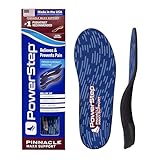
- Slightly Angled Heel Post: PowerStep Pinnacle Maxx insoles for men & women keep the feet from rolling inward, improve stability, and prevent problems caused by overpronation including flat feet and plantar fasciitis.
- Firm But Flexible Design: Our orthotics Pinnacle PowerStep insoles for overpronation are equipped with a deep heel insert cradle for increased comfort, stability, and motion control for standard arch support and immediate heel pain relief.
- Premium Dual Layer Cushioning: For enhanced comfort from heel to toe. As the thickest of our Pinnacle PowerStep orthotics, these need to be worn in shoes where the factory insole can be removed. HSA & FSA Eligible. Made in the USA
- The Perfect Balance of Comfort and Support: These PowerStep Pinnacle arch support inserts for men & women are unlike most other orthotics as they help to correct over-pronation which can cause ankle, knee, and hip pain in your daily routine
- No Trimming: Our arch support PowerStep insoles men & women can use can be worn in a variety of shoe styles & fit in any type with no trimming required! Unlike most insoles for flat feet and other heel pain relief products, these come ready to wear.
As an Amazon Associate, Balance Foot and Ankle earns from qualifying purchases. Product links are affiliate links and we may earn a commission at no extra cost to you. This does not influence our clinical recommendations. Last update on 2026-08-21 / Images from Amazon Product Advertising API
Same-day appointments available. (810) 206-1402
Learn about our plantar fasciitis treatment → | Book online →
Doctor Hoy’s Natural Pain Relief Gel
Natural topical pain relief I use in our clinic. Arnica + camphor formula — apply directly to the area 3–4x daily. ($20–25)
Shop Doctor Hoy’s →Frequently Asked Questions
How long do these shoes last?
Quality running shoes last 300-500 miles. Daily walking shoes last 9-12 months. Replace when the midsole feels soft or your symptoms return.
Should I add insoles?
Yes if you have plantar fasciitis or overpronation. Powerstep Pinnacle or a custom orthotic improves results. Healthy feet often do fine with the stock insole.
Are expensive shoes worth it?
Beyond about $130 most extra cost is materials and aesthetics. Match the shoe to your foot type, not budget. The right $80 stability shoe beats the wrong $250 maximalist shoe.

Dr. Tom Biernacki, DPM is a board-certified foot & ankle surgeon (ABFAS & ABPM) at Balance Foot & Ankle Specialists in Southeast Michigan. With over a decade of clinical experience, he specializes in heel pain, bunions, diabetic foot care, sports injuries, and minimally invasive surgery. Dr. Biernacki is a member of the APMA and ACFAS, and his patient education content on MichiganFootDoctors.com and YouTube has made him one of the most-followed foot & ankle educators on YouTube.
More questions patients ask
What shoe features help plantar fasciitis at work?
Firm arch support, deep heel cup, and cushioned midsole. PowerStep Pinnacle insoles add extra arch support.
Should I use insoles for plantar fasciitis?
PowerStep Pinnacle insoles provide excellent OTC support. Custom orthotics from Dr. Tom Biernacki DPM offer the best long-term relief. Call (810) 206-1402.
When should I see a podiatrist for plantar fasciitis?
See Dr. Tom Biernacki DPM if heel pain persists >6 weeks or worsens. Same-day appointments — Howell & Bloomfield Township, MI. (810) 206-1402.
What is the best insole for plantar fasciitis?
PowerStep Pinnacle for OTC support. Custom 3D orthotics from Balance Foot & Ankle for severe cases. (810) 206-1402.
Still have a question about coverage or cost? Book online and we will check your benefits before your visit: Book in Howell · Book in Bloomfield Township. Prefer to talk it through first? Call (810) 206-1402.