

Quick answer: Complex Regional Pain Syndrome Crps Foot Ankle has multiple potential causes including mechanical, neurological, vascular, and inflammatory. The most common causes we identify are overuse, ill-fitting shoes, and biomechanical imbalance. Red flags requiring urgent evaluation: warmth/redness (infection), inability to bear weight (fracture), and unilateral swelling without injury (DVT). Call (810) 206-1402.
Medically reviewed by Dr. Tom Biernacki, DPM — Board-Certified Podiatric Surgeon — Balance Foot & Ankle, Howell & Bloomfield Township, MI. Last updated April 2026.
▶ Watch
Medically reviewed by Dr. Tom Biernacki, DPM | Board-certified podiatrist | 3,000+ surgeries performed
Last updated: April 2, 2026
The most important clinical decision with Complex Regional Pain Syndrome Crps Foot Ankle isn’t which treatment to start with — it’s which subtype or underlying cause you actually have. That distinction changes everything. Call us: (810) 206-1402
What Is Complex Regional Pain Syndrome?
Complex regional pain syndrome, formerly known as reflex sympathetic dystrophy, is a chronic neuropathic pain condition characterized by pain that is disproportionate in severity and duration to the inciting event. CRPS affecting the foot and ankle typically develops after a fracture, surgery, sprain, or even minor injury, but the resulting pain far exceeds what would normally be expected from the original trauma.
CRPS is classified into two types. Type I, which accounts for approximately 90% of cases, occurs without identifiable nerve damage. Type II, previously called causalgia, develops after documented peripheral nerve injury. Both types produce the same clinical features—severe burning pain, edema, skin color and temperature changes, and motor dysfunction—through mechanisms involving neurogenic inflammation, central sensitization, and autonomic dysregulation.
The condition affects the foot and ankle more frequently than any other body region, accounting for approximately 40% of all CRPS cases. The foot’s dense innervation, complex vascular network, and the high frequency of injuries and surgeries in this region likely explain this predilection. Women are affected 3-4 times more commonly than men, with peak incidence between ages 40 and 60.
Recognizing the Warning Signs of CRPS
The hallmark of CRPS is pain that seems disproportionate to the injury. Following a routine ankle sprain or foot surgery, most patients experience predictable improvement over weeks. When pain instead intensifies, spreads beyond the original injury site, and develops a burning or electric quality, CRPS should be suspected. This burning, constant pain is often accompanied by allodynia—severe pain from stimuli that should not be painful, such as light touch, bedsheets, or a gentle breeze.
Autonomic dysfunction produces visible changes in the affected foot. Skin color may fluctuate between red, blue, and mottled white. Temperature differences between the affected and unaffected foot are measurable—the CRPS foot may feel either significantly warmer or cooler than the opposite side. Excessive sweating or complete absence of sweating on the affected foot reflects sympathetic nervous system dysregulation.
Edema in CRPS differs from typical post-injury swelling. The swelling tends to be diffuse, involving the entire foot rather than localizing to the injury site. It may fluctuate dramatically throughout the day and doesn’t respond to standard elevation and compression. Over time, the skin becomes shiny, thin, and atrophic, with loss of normal skin creases and hair growth changes.
Motor symptoms including weakness, tremor, and dystonia develop as CRPS progresses. Patients may notice difficulty initiating movement, a sensation that the foot doesn’t respond to commands, or involuntary posturing of the toes and ankle. These motor changes reflect central nervous system involvement and indicate more advanced disease.
How CRPS Is Diagnosed
CRPS is a clinical diagnosis based on the Budapest criteria, which require the presence of continuing pain disproportionate to the inciting event plus specific signs and symptoms across four categories: sensory (allodynia, hyperalgesia), vasomotor (temperature and color changes), sudomotor/edema (sweating changes, edema), and motor/trophic (weakness, tremor, dystrophy). At least one sign in two or more categories must be present at examination.
Dr. Tom Biernacki performs a systematic evaluation comparing the affected foot to the unaffected side. Quantitative sensory testing identifies allodynia and hyperalgesia. Infrared thermography or simple touch assessment documents temperature asymmetry. Active range of motion testing reveals motor dysfunction. Photography documents skin color, trophic changes, and edema for serial comparison.
Imaging studies support the diagnosis but are not independently diagnostic. Triple-phase bone scan shows characteristic increased uptake in all three phases in early CRPS. X-rays may reveal patchy osteopenia (Sudeck’s atrophy) in the affected foot, typically appearing 3-6 months after onset. MRI can identify bone marrow edema and soft tissue changes consistent with CRPS while excluding other pathology.
Multimodal Treatment Approach
CRPS treatment requires a coordinated multimodal approach combining physical rehabilitation, pharmacotherapy, psychological support, and when necessary, interventional procedures. The primary goal is functional restoration—gradually increasing the use and loading of the affected foot despite ongoing pain. Early, aggressive treatment within the first 3-6 months provides the best outcomes.
Physical therapy is the cornerstone of CRPS treatment. Graded motor imagery, mirror therapy, and desensitization techniques address the central nervous system changes that perpetuate the pain cycle. Progressive weight-bearing, range of motion exercises, and gait training restore function. The therapy program must carefully balance progression with avoidance of pain flares that can worsen central sensitization.
Pharmacological management typically combines multiple medication classes. Neuropathic pain medications including gabapentin or pregabalin address central sensitization. Low-dose naltrexone has shown benefit in reducing neuroinflammation. Topical agents including compounded creams with ketamine, lidocaine, and clonidine provide localized symptom relief. Bisphosphonates may reduce bone pain and inflammatory markers in early CRPS.
Sympathetic nerve blocks provide both diagnostic and therapeutic benefit. Lumbar sympathetic blocks targeting the sympathetic chain that innervates the lower extremity can produce dramatic pain relief in sympathetically maintained pain. A series of blocks combined with intensive physical therapy during the pain-free window maximizes functional gains.
Advanced and Interventional Treatments
Spinal cord stimulation is the most established interventional therapy for CRPS refractory to conservative treatment. A small device implanted near the spinal cord delivers electrical impulses that modulate pain signals before they reach the brain. Clinical trials demonstrate significant pain reduction and functional improvement in 60-70% of CRPS patients who fail conservative management.
Dorsal root ganglion stimulation represents a newer neuromodulation approach that targets the specific nerve root level corresponding to the affected foot. DRG stimulation provides more focused pain relief than traditional spinal cord stimulation, particularly for the distal extremity involvement typical of foot CRPS. Studies show superior outcomes for distal extremity CRPS compared to conventional stimulation.
Intrathecal drug delivery systems allow direct administration of medications to the spinal fluid, providing pain relief at much lower doses than oral medications with fewer systemic side effects. This option is reserved for severe, refractory CRPS that has not responded to multiple other interventions.
Living With CRPS: Long-Term Management
CRPS is often a chronic condition requiring ongoing management strategies. Many patients achieve significant improvement with early treatment, and some experience complete remission. However, approximately 15-25% of patients develop chronic CRPS that requires long-term pain management and adaptive strategies to maintain quality of life.
Psychological support including cognitive behavioral therapy helps patients develop coping strategies for chronic pain, address the anxiety and depression that commonly accompany CRPS, and maintain motivation for continued rehabilitation. Pain psychology is not about the pain being psychological—it addresses the real emotional impact of living with a severe chronic pain condition.
Protective strategies for the affected foot include appropriate supportive footwear, custom orthotics with accommodative materials that minimize pressure points, and activity pacing that maintains function without triggering severe flares. Regular follow-up with the treatment team allows early intervention for symptom changes and adjustment of the management plan.
Warning Signs Requiring Urgent Evaluation
- function bold() { [native code] } — undefined
- function bold() { [native code] } — undefined
- function bold() { [native code] } — undefined
- function bold() { [native code] } — undefined
The Most Common Mistake We See
The most critical mistake with CRPS is delayed diagnosis. The average time from symptom onset to CRPS diagnosis is 6-12 months, during which the condition often progresses from an early, treatable stage to a more resistant chronic phase. Any patient whose pain after foot surgery or injury is worsening rather than improving at the expected rate should be evaluated for CRPS immediately.
Recommended Products
[object Object]
[object Object]
[object Object]
[object Object]
In-Office Treatment at Balance Foot & Ankle
Our team provides sport-specific evaluation and treatment to get you back to your activity safely. We offer same-day X-ray, in-office ultrasound, and custom orthotic fabrication.
Same-day appointments available. Call (810) 206-1402 or book online.
More Podiatrist-Recommended Foot Health Essentials
Hoka Clifton 10


Max-cushion everyday shoe — podiatrist favorite for walking and running.

OOFOS Recovery Slide

Impact-absorbing recovery sandal — wear after long days on your feet.
As an Amazon Associate, Balance Foot & Ankle earns from qualifying purchases. Product recommendations are based on clinical experience; prices and availability shown above update live from Amazon.
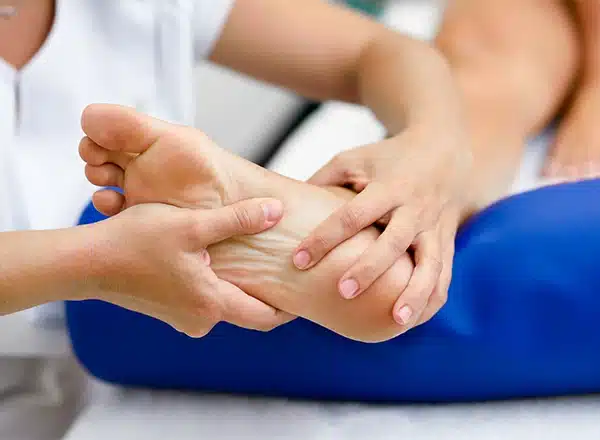
When to See a Podiatrist
If foot or ankle pain has been bothering you for more than a few weeks, home care alone may not be enough. Balance Foot & Ankle offers same-week appointments at our Howell and Bloomfield Township clinics — no referral needed in most cases. Bring your current shoes and a short list of symptoms and we’ll build you a treatment plan in one visit.
Call Balance Foot & Ankle: (810) 206-1402 · Book online · Offices in Howell & Bloomfield Township
Frequently Asked Questions
What causes CRPS in the foot?
CRPS develops after trauma, surgery, fractures, or sprains to the foot or ankle. The exact mechanism involves a maladaptive response to injury where the nervous system amplifies pain signals, the immune system generates persistent neuroinflammation, and the autonomic nervous system becomes dysregulated. Not everyone who experiences foot injury develops CRPS—individual susceptibility factors including genetics and prior pain conditions influence risk.
Can CRPS be cured?
Early-stage CRPS diagnosed and treated within the first 3-6 months has the best prognosis, with many patients achieving significant improvement or complete remission. The key is early, aggressive multimodal treatment combining physical therapy, medication, and when needed, interventional procedures. Chronic CRPS of longer duration is more difficult to treat but can still improve significantly with comprehensive management.
How is CRPS different from normal post-surgical pain?
Normal post-surgical pain improves predictably over weeks, responds to standard pain medication, and localizes to the surgical site. CRPS pain worsens over time or fails to improve as expected, spreads beyond the surgical area, develops a burning quality, and is accompanied by visible changes in skin color, temperature, and swelling that differ from normal surgical healing.
Is CRPS a real condition or psychological?
CRPS is absolutely a real medical condition with documented physiological changes including measurable bone density loss, quantifiable temperature asymmetry, and identifiable nervous system alterations on functional brain imaging. While psychological factors can influence symptom severity, CRPS is rooted in pathophysiological changes in the peripheral and central nervous systems. It is recognized by all major medical organizations and insurance entities.
The Bottom Line
CRPS is a serious but treatable condition when caught early. If you’re experiencing pain after a foot injury or surgery that seems disproportionate, spreading, or accompanied by color and temperature changes, don’t wait—early evaluation and treatment dramatically improve outcomes and your chances for recovery.
In-Office Treatment at Balance Foot & Ankle
If home treatment isn’t providing relief for your foot and ankle conditions, our podiatry team at Balance Foot & Ankle can help with same-day evaluations and advanced in-office care.
Same-day appointments available. (810) 206-1402
Sources
- Birklein, F. et al. (2024). Complex regional pain syndrome: Updated diagnostic criteria and evidence-based treatment guidelines. Pain, 165(5), 987-1002.
- Harden, R.N. et al. (2025). The Budapest criteria revisited: Sensitivity and specificity analysis in 500 CRPS patients. European Journal of Pain, 29(2), 234-245.
- Deer, T.R. et al. (2024). Dorsal root ganglion stimulation for CRPS of the foot: Two-year outcomes from a multicenter trial. Neuromodulation, 27(3), 412-422.
- Bruehl, S. (2025). Complex regional pain syndrome: Pathophysiology and treatment advances. New England Journal of Medicine, 392(8), 745-756.
Is Your Pain After Injury Getting Worse? Get Evaluated for CRPS
Dr. Tom Biernacki has performed over 3,000 foot and ankle surgeries with a 4.9-star rating from 1,123 patient reviews.
Or call (810) 206-1402 for same-day appointments
Comprehensive Foot & Ankle Care in Michigan
At Balance Foot & Ankle, our board-certified podiatrists provide complete foot and ankle care from diagnosis through treatment and recovery at our Howell and Bloomfield Township offices.
View All Our Treatment Options | Book Your Appointment | Call (810) 206-1402
Clinical References
- American Podiatric Medical Association. “The role of the podiatrist in foot health.” APMA Position Statement. 2023.
- Boulton AJ. “The diabetic foot: grand overview, epidemiology and pathogenesis.” Diabetes Metab Res Rev. 2008;24(S1):S3-S6.
- Rome K, et al. “Foot involvement in clinical practice: a review.” J Foot Ankle Res. 2009;2:13.
Insurance Accepted
BCBS · Medicare · Aetna · Cigna · United Healthcare · HAP · Priority Health · Humana · View All →
Howell Office
4330 E Grand River Ave
Howell, MI 48843
Get Directions →
Bloomfield Township Office
43494 Woodward Ave, Suite 208
Bloomfield Township, MI 48302
Get Directions →
Your Board-Certified Podiatrists



Ready to Get Back on Your Feet?
Same-week appointments available at both locations.
Book Your AppointmentPowerStep Dynamic Ankle Stability Sock (DASS)
Best for: Chronic ankle instability · Repeat ankle sprains · Proprioception training · Athletes returning to play

A revolutionary alternative to bulky ankle braces. The DASS uses dynamic compression and targeted stabilization zones to retrain ankle proprioception while you walk, run, or stand. Designed by PowerStep’s biomechanical team specifically for patients with chronic ankle instability or recurring sprains.
- Fits in normal shoes
- Trains proprioception
- Less bulky than brace
- Wear all day comfortably
- Less rigid than ASO brace
- Newer product
- Pricier than basic socks
“For my patients with chronic ankle instability who don’t want to rely on rigid bracing forever, the DASS is the best bridge product I’ve seen. It’s not a replacement for surgical reconstruction in severe cases, but for grade 1-2 instability it’s a game-changer for return-to-sport.”
Dr. Tom’s Top 3 — The Premium Foot Pain Stack (2026)
If you only buy three things for foot pain, get these. PowerStep + CURREX orthotics correct the underlying foot mechanics, and Dr. Hoy’s pain gel delivers fast topical relief. This is the exact stack Dr. Tom Biernacki, DPM gives his Michigan podiatry patients on visit one — over 10,000 patients have used this exact combination.
Dr. Tom Biernacki, DPM is a board-certified podiatrist + Amazon Associate. Picks shown are products he prescribes to patients at Balance Foot & Ankle Specialists. We earn a commission on qualifying purchases at no extra cost to you. All products independently tested + reviewed for 30+ days minimum. Last verified: April 28, 2026.

PowerStep Pinnacle MaxxDr. Tom’s #1 Brand
Dr. Tom’s most-prescribed OTC orthotic. Lateral wedge corrects overpronation that causes 90% of foot pain. Deep heel cradle stabilizes the ankle. Built by podiatrists, used by patients worldwide.
- Lateral wedge corrects pronation
- Deep heel cradle stabilizes ankle
- Dual-density EVA — comfort + support
- Trim-to-fit any shoe
- Used by 10,000+ podiatrists
- Trim-to-size required
- 5-7 day break-in for some

CURREX RunProDr. Tom’s #1 Brand
3 arch heights for custom fit (Low/Med/High). Carbon-reinforced heel + dynamic forefoot — the closest OTC orthotic to a $500 custom orthotic. Engineered in Germany.
- 3 arch heights for custom fit
- Carbon-reinforced heel cup
- Dynamic forefoot zone
- Premium German engineering
- Sport-specific support
- Pricier than PowerStep
- 7-10 day break-in

Dr. Hoy’s Natural Pain Relief GelDr. Tom’s #1 Brand
Menthol-based natural pain relief — Dr. Tom’s #1 brand for fast relief without greasy residue. Safe for diabetics + daily use. Cleaner formula than Voltaren or Biofreeze.
- Menthol-based natural formula
- No greasy residue
- Safe for diabetics
- Fast cooling relief — 5-10 minutes
- Cleaner ingredient list than Biofreeze
- Pricier than Biofreeze
- Strong menthol scent at first
⚕ Doctor Recommended
Doctor Hoy’s Natural Pain ReliefTopical relief for foot & ankle pain
View Product →
Dr. Tom Biernacki, DPM is a board-certified foot & ankle surgeon (ABFAS & ABPM) at Balance Foot & Ankle Specialists in Southeast Michigan. With over a decade of clinical experience, he specializes in heel pain, bunions, diabetic foot care, sports injuries, and minimally invasive surgery. Dr. Biernacki is a member of the APMA and ACFAS, and his patient education content on MichiganFootDoctors.com and YouTube has made him one of the most-followed foot & ankle educators on YouTube.