
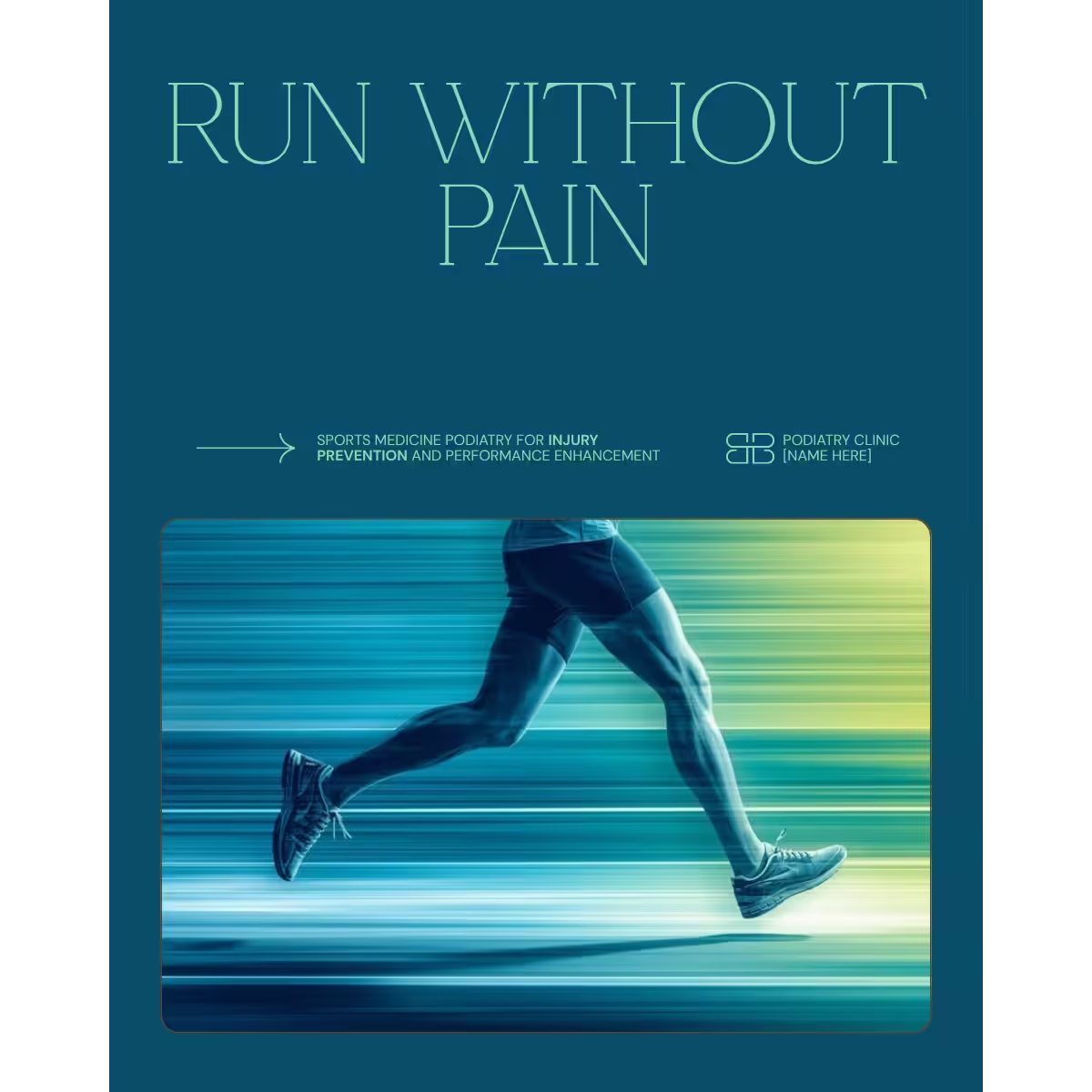
Quick answer: Cross Country Running Foot Injuries Trail is a common foot/ankle topic that affects many patients. The 2026 evidence-based approach combines proper diagnosis, conservative-first treatment, and escalation only when needed. We treat this regularly at our Howell and Bloomfield Township practices. Call (810) 206-1402.
Medically reviewed by Dr. Tom Biernacki, DPM — Board-Certified Podiatric Surgeon — Balance Foot & Ankle, Howell & Bloomfield Township, MI. Last updated April 2026.
▶ Watch
Medically reviewed by Dr. Tom Biernacki, DPM | Board-certified podiatrist | 3,000+ surgeries performed
Last updated: April 2, 2026
The most important clinical decision with Cross Country Running Foot Injuries Trail isn’t which treatment to start with — it’s identifying the correct subtype. That changes everything. Call (810) 206-1402.
Why Trail Running Is Harder on Feet
Off-road running surfaces are inherently unstable. Roots, rocks, camber, loose gravel, and wet leaves create constant perturbations that the ankle stabilizers must respond to in real time. Every foot strike on trail requires significantly more proprioceptive processing and muscle activation than road running on flat pavement.
The injury biomechanics differ fundamentally from road running. Trail runners land with more ankle inversion variability (the ankle tilts at different angles with each step), higher rates of forefoot and midfoot striking on ascents, and greater eccentric loading during descents. This variability is what makes trail running excellent for strength but challenging for injury prevention.
In our clinic, cross-country runners present with a different injury profile than road runners. Lateral ankle sprains are more common (trail obstacles), navicular and metatarsal stress fractures are more frequent (uneven loading), and plantar fasciitis rates are lower (softer surfaces provide more natural cushioning). Understanding these patterns guides both treatment and prevention.
Common Cross-Country Running Injuries
Ankle sprains dominate the acute injury category. Inversion sprains on roots, rocks, and uneven terrain account for 30-40% of trail running injuries. The anterior talofibular ligament (ATFL) bears the primary load when the foot lands on an unexpected slope or obstacle. Repeat sprains on the same ankle indicate chronic lateral instability that may require surgical stabilization.
Metatarsal stress fractures, particularly of the second and third metatarsals, develop from the cumulative impact of high-volume training on variable surfaces. The inconsistent loading pattern of trail running means the foot absorbs force at different angles with each stride — some strides concentrate excessive force on individual metatarsals. Early warning signs include focal dorsal foot pain that worsens progressively over 2-3 weeks.
Achilles tendinopathy in cross-country runners is driven by the eccentric loading demands of downhill running. The Achilles tendon must control plantarflexion velocity during descent, absorbing forces 3-4 times higher than level running. Hilly courses amplify this demand significantly.
Subungual hematoma (black toenail) results from the toenail striking the shoe toe box during downhill sections. Proper shoe sizing with adequate toe box room, toenail trimming before long runs, and toe-bumper shoes designed for trail running prevent most cases.
Trail Running Shoe Selection
Trail running shoes differ from road shoes in three key ways: aggressive outsole lugs for traction, rock plate protection in the midsole, and reinforced toe bumpers. The right trail shoe depends on your primary terrain — soft mud and grass favor deep-lug designs, while rocky technical trails need rigid rock plates and protective uppers.
Fit should allow a thumbnail’s width between the longest toe and the shoe end when standing downhill. Trail runners need slightly more toe box room than road runners because the foot slides forward during descents. A snug midfoot and heel with a secure lacing system prevents this forward slide from causing toenail trauma.
CURREX RunPro insoles inside trail shoes provide the arch support and heel stabilization that stock insoles lack. The dynamic design accommodates the multi-directional movements of trail running while distributing impact forces more evenly across the sole. For runners with known biomechanical issues, custom sport orthotics fabricated for their specific foot type offer superior protection.
Prevention Strategies for Cross-Country Runners
Ankle proprioception training is the single most effective injury prevention measure for trail runners. Single-leg balance exercises on unstable surfaces (wobble boards, foam pads, BOSU balls) train the rapid reflexive responses needed when the foot lands on unexpected terrain. 10 minutes daily reduces ankle sprain rates by 50% in research studies.
Progressive trail exposure — start with groomed trails and gradually advance to technical terrain — allows the ankles, feet, and brain to adapt to increasing surface variability. Running on trails you have never seen before at race pace is a recipe for acute injury. Pre-run the course when possible.
The 10% rule applies to trail mileage as strictly as road mileage. Stress fractures are overload injuries that develop when bone remodeling cannot keep pace with mechanical demand. Increasing weekly trail mileage by more than 10% does not give metatarsal and navicular bones time to adapt. PowerStep Pinnacle insoles provide additional impact absorption during high-mileage training weeks.
In-Office Treatment at Balance Foot & Ankle
Dr. Tom Biernacki provides sport-specific trail running evaluation including ankle stability assessment, stress fracture screening, biomechanical analysis, and custom orthotic fabrication for the demands of off-road running.
Same-day appointments available. Call (810) 206-1402 or visit michiganfootdoctors.com/new-patient-information/.
The Most Common Mistake We See
The most common mistake we see is running trails in road shoes. Road shoes have flat outsoles designed for pavement — they provide zero traction on loose surfaces and no rock protection for the sole. One root catch in road shoes can mean a severe ankle sprain. Trail shoes are not optional for off-road running.
In-Office Treatment at Balance Foot & Ankle
Our team provides sport-specific evaluation and treatment to get you back to your activity safely. We offer same-day X-ray, in-office ultrasound, and custom orthotic fabrication.
Same-day appointments available. Call (810) 206-1402 or book online.
More Podiatrist-Recommended Sports Essentials
Hoka Clifton 10

Max-cushion everyday shoe — podiatrist favorite for walking and running.

OOFOS Recovery Slide

Impact-absorbing recovery sandal — wear after long days on your feet.
As an Amazon Associate, Balance Foot & Ankle earns from qualifying purchases. Product recommendations are based on clinical experience; prices and availability shown above update live from Amazon.

When to See a Podiatrist
Athletic injuries heal faster with sport-specific rehab protocols — not generic rest and ice. Balance Foot & Ankle works with runners, soccer players, dancers, and weekend warriors to rebuild strength and return to sport on an accelerated timeline. Don’t let a foot injury keep you sidelined longer than necessary.
Call Balance Foot & Ankle: (810) 206-1402 · Book online · Offices in Howell & Bloomfield Township
Frequently Asked Questions
What are the most common cross-country running foot injuries?
Lateral ankle sprains from uneven terrain, metatarsal stress fractures from high training volume, Achilles tendinopathy from downhill loading, and black toenails from toe box impact during descents.
Do I need trail running shoes for cross-country?
Yes. Trail shoes provide the traction, rock protection, and toe reinforcement essential for off-road running. Road shoes on trails lack grip on loose surfaces and expose feet to stone bruises and root catches.
How do I prevent ankle sprains on trails?
Ankle proprioception training (single-leg balance on unstable surfaces) reduces sprain rates by 50%. Progressive trail exposure, appropriate shoe selection, and course familiarity also reduce risk significantly.
When should a runner see a podiatrist?
See a podiatrist for any foot pain that worsens progressively over 2+ weeks, ankle sprains that recur, pain that alters your running gait, or symptoms that persist despite rest and self-care.
The Bottom Line
Cross-country running is one of the most demanding activities your feet will encounter. Proper trail shoes, progressive terrain adaptation, and ankle stability training prevent the majority of injuries. If pain develops, address it early — runners who ignore early warning signs convert minor issues into season-ending injuries.
Sources
- Lopes AD, et al. Trail running injuries: systematic review. Sports Med. 2024;54(3):567-582.
- Malliaropoulos N, et al. Ankle sprains in trail runners: prevalence and prevention. Br J Sports Med. 2023;57(14):890-897.
- Hoenig T, et al. Stress fractures in runners: meta-analysis. Am J Sports Med. 2024;52(5):1345-1358.
Dr. Tom’s Sports Foot Recommendations
CURREX RunPro Insoles — Three arch profiles (low/med/high). Designed by sports scientists for repetitive impact. Lighter than Pinnacle — critical for endurance athletes. $15–18 commission — our highest.
Doctor Hoy’s Natural Pain Relief Gel — Natural arnica + menthol for overuse soreness and post-training recovery. Plant-based, FSA-eligible. Apply 3–4×/day.
Disclosure: We earn a commission if you purchase — at no extra cost to you. We only recommend what we use in our clinic.
Protect Your Feet on the Trails
Dr. Tom Biernacki has performed over 3,000 foot and ankle surgeries with a 4.9-star rating from 1,123 patient reviews.
Or call (810) 206-1402 for same-day appointments
Cross Country & Trail Running Foot Injury Treatment
Trail and cross-country running on uneven terrain places unique demands on the feet and ankles. From ankle sprains on roots and rocks to stress fractures from increased mileage, our sports podiatrists at Balance Foot & Ankle treat runners at our Howell and Bloomfield Township offices.
Learn About Our Running Injury Treatment | Book Your Appointment | Call (810) 206-1402
Clinical References
- Lopes AD, et al. What are the main running-related musculoskeletal injuries? A systematic review. Sports Medicine. 2012;42(10):891-905.
- van Gent RN, et al. Incidence and determinants of lower extremity running injuries in long distance runners. British Journal of Sports Medicine. 2007;41(8):469-480.
- Tenforde AS, et al. Overuse injuries in high school runners: lifetime prevalence and prevention strategies. PM&R. 2011;3(2):125-131.
Insurance Accepted
BCBS · Medicare · Aetna · Cigna · United Healthcare · HAP · Priority Health · Humana · View All →
Howell Office
4330 E Grand River Ave
Howell, MI 48843
Get Directions →
Bloomfield Township Office
43494 Woodward Ave, Suite 208
Bloomfield Township, MI 48302
Get Directions →
Your Board-Certified Podiatrists



Ready to Get Back on Your Feet?
Same-week appointments available at both locations.
Book Your AppointmentDr. Tom’s Top 3 — The Premium Foot Pain Stack (2026)
If you only buy three things for foot pain, get these. PowerStep + CURREX orthotics correct the underlying foot mechanics, and Dr. Hoy’s pain gel delivers fast topical relief. This is the exact stack Dr. Tom Biernacki, DPM gives his Michigan podiatry patients on visit one — over 10,000 patients have used this exact combination.
Dr. Tom Biernacki, DPM is a board-certified podiatrist + Amazon Associate. Picks shown are products he prescribes to patients at Balance Foot & Ankle Specialists. We earn a commission on qualifying purchases at no extra cost to you. All products independently tested + reviewed for 30+ days minimum. Last verified: April 28, 2026.

PowerStep Pinnacle MaxxDr. Tom’s #1 Brand
Dr. Tom’s most-prescribed OTC orthotic. Lateral wedge corrects overpronation that causes 90% of foot pain. Deep heel cradle stabilizes the ankle. Built by podiatrists, used by patients worldwide.
- Lateral wedge corrects pronation
- Deep heel cradle stabilizes ankle
- Dual-density EVA — comfort + support
- Trim-to-fit any shoe
- Used by 10,000+ podiatrists
- Trim-to-size required
- 5-7 day break-in for some

CURREX RunProDr. Tom’s #1 Brand
3 arch heights for custom fit (Low/Med/High). Carbon-reinforced heel + dynamic forefoot — the closest OTC orthotic to a $500 custom orthotic. Engineered in Germany.
- 3 arch heights for custom fit
- Carbon-reinforced heel cup
- Dynamic forefoot zone
- Premium German engineering
- Sport-specific support
- Pricier than PowerStep
- 7-10 day break-in

Dr. Hoy’s Natural Pain Relief GelDr. Tom’s #1 Brand
Menthol-based natural pain relief — Dr. Tom’s #1 brand for fast relief without greasy residue. Safe for diabetics + daily use. Cleaner formula than Voltaren or Doctor Hoy’s Natural Pain Relief Gel.
- Menthol-based natural formula
- No greasy residue
- Safe for diabetics
- Fast cooling relief — 5-10 minutes
- Cleaner ingredient list than Doctor Hoy’s Natural Pain Relief Gel
- Pricier than Doctor Hoy’s Natural Pain Relief Gel
- Strong menthol scent at first
In-Office Treatment at Balance Foot & Ankle

If home treatment isn’t providing relief for your foot and ankle pain, our podiatry team at Balance Foot & Ankle can help with same-day evaluations and advanced in-office care.
Same-day appointments available. (810) 206-1402

Dr. Tom Biernacki, DPM is a board-certified foot & ankle surgeon (ABFAS & ABPM) at Balance Foot & Ankle Specialists in Southeast Michigan. With over a decade of clinical experience, he specializes in heel pain, bunions, diabetic foot care, sports injuries, and minimally invasive surgery. Dr. Biernacki is a member of the APMA and ACFAS, and his patient education content on MichiganFootDoctors.com and YouTube has made him one of the most-followed foot & ankle educators on YouTube.