
Quick answer: Foot Pain Nurses Healthcare Workers Causes Solutions has multiple potential causes including mechanical, neurological, vascular, and inflammatory. The most common causes we identify are overuse, ill-fitting shoes, and biomechanical imbalance. Red flags requiring urgent evaluation: warmth/redness (infection), inability to bear weight (fracture), and unilateral swelling without injury (DVT). Call (810) 206-1402.
![How to Cure Plantar Fasciitis in One Week? [FAST Heel Pain Relief!]](https://www.michiganfootdoctors.com/wp-content/cache/flying-press/b5600c3bfb9845a6095da8266d8b5363.jpg)
Watch: How to Cure Plantar Fasciitis in One Week? [FAST Heel Pain Relief!] — MichiganFootDoctors YouTube

Medically Reviewed by Dr. Tom Biernacki, DPM, FACFAS — Board-certified podiatrist & foot surgeon | Balance Foot & Ankle | Last updated: May 2026
⚡ Quick Answer: Why Do Nurses and Healthcare Workers Get So Much Foot Pain?
Nurses, doctors, surgical techs, and healthcare workers average 10,000–20,000 steps per day on hard hospital floors, often in inadequate footwear, with minimal rest breaks. The three most common foot conditions in healthcare workers are plantar fasciitis, metatarsalgia (ball-of-foot pain), and venous insufficiency / leg swelling. Most cases are preventable or significantly reducible with the right shoe, a custom orthotic, and—when needed—a podiatric evaluation. You don’t have to accept foot pain as an occupational hazard.
The Healthcare Worker Foot Problem: What the Data Shows
Studies of hospital staff consistently show that foot and lower limb pain is among the top three occupational health complaints in this population. One systematic review found that 83% of nurses reported foot pain during or after shifts, and 47% reported it interfering with job performance. The problem is not just discomfort—chronic foot pain in healthcare workers correlates with increased sick days, reduced productivity, and earlier career attrition in an already strained workforce.
The physical demands are extreme: 12-hour shifts, continuous walking and standing on concrete or vinyl-over-concrete floors, frequent rapid transitions from walking to standing, carrying equipment, and performing procedures that require sustained static posture. This combination is uniquely destructive to the plantar fascia, Achilles tendon, metatarsals, and venous system.
The Most Common Foot Conditions in Healthcare Workers
| Condition | Prevalence in Healthcare | Key Trigger | First Fix |
|---|---|---|---|
| Plantar fasciitis | ~40–50% of those with foot pain | Hard floors, inadequate arch support, high step count | Arch-supportive shoe + calf stretching |
| Metatarsalgia | ~25–35% | Thin-soled clogs, hard floors, forefoot pressure | Cushioned shoe + metatarsal pad |
| Venous insufficiency / swelling | ~30–40% of shift workers | Prolonged standing, valve fatigue | Compression socks (15–20 mmHg) |
| Achilles tendinopathy | ~15–20% | Zero-drop/flat clogs, high mileage without recovery | Heel lift + eccentric exercises |
| Stress fractures | Higher than general population | Repetitive loading on hard floors without adequate cushion | Immediate podiatric evaluation; boot if confirmed |
Shoes for Healthcare Workers: What Actually Works
The footwear decision is the highest-use intervention for most healthcare workers. The wrong shoe amplifies every foot pathology; the right shoe reduces it dramatically.
| Shoe Feature | Why It Matters for Healthcare | What to Look For |
|---|---|---|
| Cushioning (midsole) | Absorbs impact on hard hospital floors | EVA or polyurethane midsole; replace every 400–500 miles |
| Arch support | Prevents plantar fascia overload | Firm medial arch; motion control for flat feet |
| Heel height (2–4cm) | Reduces Achilles tension vs. zero-drop | Avoid flat clogs unless wearing a heel lift inside |
| Slip resistance | Wet hospital floors; OSHA safety requirement | ASTM F2913 or equivalent slip-resistance rating |
| Wide toe box | Prevents toe crowding over long shifts | Look for D/2E width options; avoid pointy or narrow toes |
On Crocs and clogs: Popular in hospitals for slip-on convenience, but most Crocs and clogs have minimal arch support and zero heel drop. They are among the most common footwear contributors to plantar fasciitis in healthcare workers in our practice. If you prefer clogs, choose a model with a footbed that provides arch support (Dansko Professional is a reasonable option) and add a custom or high-quality OTC orthotic.
Compression Socks for Healthcare Workers
Compression hosiery is one of the most evidence-based, underused interventions for healthcare worker foot and leg fatigue. Prolonged standing causes venous pooling in the lower legs—blood accumulates in the veins because the calf-muscle pump cannot overcome gravity during static standing. This causes the characteristic end-of-shift ankle swelling, leg heaviness, and aching that many nurses accept as normal. Graduated compression socks (15–20 mmHg for preventive use; 20–30 mmHg if significant venous disease or spider veins are present) reduce this pooling by supporting vein walls throughout the shift. Most healthcare workers who adopt compression socks report significantly less leg fatigue and swelling within the first 2–3 shifts.
The 10-Minute End-of-Shift Recovery Routine
A brief recovery protocol after each shift reduces the cumulative damage of repeated high-step-count days:
- Elevation (5 minutes): Legs elevated above heart level, resting on a wall or chair back. Dramatically accelerates venous drainage and reduces swelling.
- Plantar fascia stretch (2 minutes): Seated, pull toes toward shin and hold 30 seconds × 3 per foot. Addresses the tight, contracted fascia accumulated during the shift.
- Calf stretch — straight and bent knee (2 minutes): 30 seconds each position, 2 per leg. Maintains gastrocnemius and soleus flexibility critical for plantar fascia health.
- Intrinsic foot exercises (1 minute): Towel scrunches or marble pickups 10× per foot. Strengthens small foot muscles that fatigue during long shifts.
⚠️ Most Common Mistake: Powering Through Foot Pain Because “It’s Just the Job”
The most self-defeating pattern in healthcare worker foot care is accepting chronic pain as an occupational inevitability. We regularly see nurses who have had daily plantar fasciitis pain for 2–3 years, assumed it was permanent, and never sought treatment. In most cases, the problem resolves in 4–8 weeks with the right shoe, calf stretching program, and—when needed—a custom orthotic or cortisone injection. Untreated, the condition worsens progressively; with treatment, the vast majority of healthcare workers return to pain-free function. One podiatric visit can change years of daily foot pain.
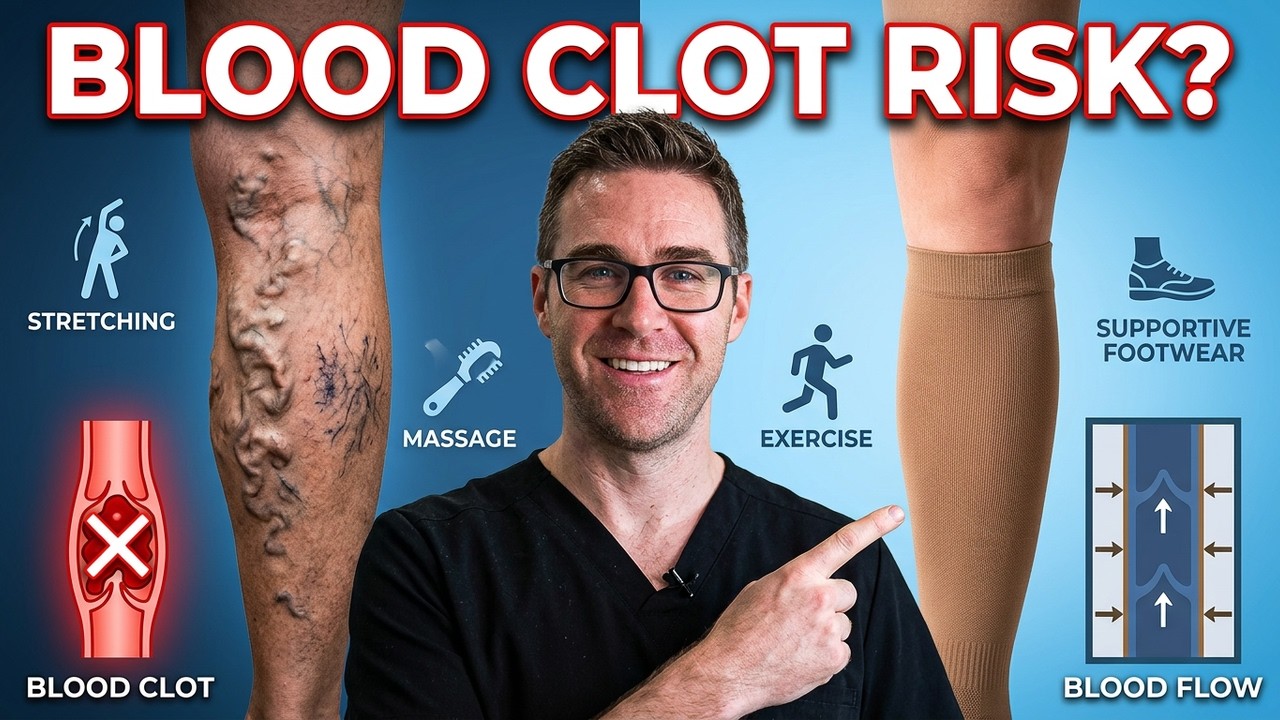
Watch: Varicose Veins and Leg Pain from Standing — Causes and Treatment
Dr. Tom covers venous insufficiency and varicose vein management relevant to healthcare workers who stand for long periods:
Book a healthcare worker foot evaluation → · (810) 206-1402
Frequently Asked Questions
What is the best shoe for nurses with plantar fasciitis?
The ideal nurse shoe for plantar fasciitis has: firm arch support (not just soft cushion), a heel height of 1.5–3cm to reduce Achilles tension, a moderately stiff sole to limit plantar fascia stretch, a roomy toe box, and a slip-resistant outsole. Models that consistently perform well in our clinical experience include the Brooks Adrenaline GTS (in a 2E width for broader feet), New Balance 990 series, Hoka Bondi (excellent cushion, slight heel-to-toe drop), and Dansko Professional (for clog preference). The best shoe, however, is the one that fits your specific foot type—an overpronator needs different support than a supinator.
Should nurses use custom orthotics?
Custom orthotics are strongly recommended for healthcare workers with plantar fasciitis, flat feet, metatarsalgia, or any foot condition that hasn’t responded to over-the-counter insoles within 4–6 weeks. Given the high daily step counts in healthcare, the ROI on custom orthotics is exceptional—a device that lasts 3–5 years and eliminates daily foot pain during 12-hour shifts is one of the highest-value medical investments a healthcare worker can make. Many insurance plans cover custom orthotics with appropriate diagnosis documentation.
How do I prevent foot pain on 12-hour nursing shifts?
Prevention protocol: (1) Replace your work shoes every 6–8 months or 400 miles, whichever comes first—worn-out midsoles look fine but provide minimal cushion. (2) Wear graduated compression socks (15–20 mmHg) from the start of every shift. (3) Stretch your calves for 2 minutes before starting your shift. (4) Alternate shoes between shifts if possible—rotating two pairs allows each to decompress fully. (5) Use anti-fatigue mats in areas where you stand statically (nursing stations, medication prep areas). (6) If any foot pain persists beyond 2–3 weeks despite shoe changes, see a podiatrist before it becomes a chronic problem.
Can a podiatrist write a note for work accommodations related to foot pain?
Yes. If your foot condition significantly impacts your ability to perform job functions, a podiatrist can provide medical documentation supporting workplace accommodations—such as anti-fatigue mat use, reduced standing time, modified duty, or schedule adjustments during acute flares. These accommodations may be available under FMLA or ADA provisions depending on your employer and condition severity. Call Balance Foot & Ankle at (810) 206-1402 to schedule an evaluation that includes a thorough documentation of your functional limitations if needed.
I’m a surgeon and stand for 4–6 hours in the OR — what do I do about foot pain?
Surgical staff face a specific challenge: static standing for extended periods (different from the dynamic walking that most nurses do), often in restrictive footwear, on hard OR floors with anti-fatigue mats of variable quality. Custom orthotics that fit within surgical clogs or Crocs are often the highest-impact intervention. Compression socks under surgical attire significantly reduce post-case leg fatigue. For surgeons with plantar fasciitis, a brief calf stretch and plantar fascia stretch between cases (2 minutes) dramatically reduces symptom accumulation over a long OR day. Book a same-day appointment at (810) 206-1402—we see many surgical staff from Howell and Oakland County hospitals.
Healthcare Workers Deserve Pain-Free Feet
Dr. Tom Biernacki treats nurses, physicians, and healthcare workers at both Howell and Bloomfield Township locations. Early morning and weekend appointments available.
Howell: 4330 E Grand River Ave · Bloomfield Township: 43494 Woodward Ave #208
Related Articles
- Plantar Fasciitis Treatment Options
- Custom Orthotics in Michigan
- Podiatrist-Recommended Shoes
- Foot Pain After Walking Long Distances
- Foot & Ankle Pain When Climbing Stairs
In-Office Treatment at Balance Foot & Ankle
If home treatment isn’t providing relief for your foot and ankle conditions, our podiatry team at Balance Foot & Ankle can help with same-day evaluations and advanced in-office care.
Same-day appointments available. (810) 206-1402
Doctor Hoy’s Natural Pain Relief Gel
Natural topical pain relief I use in our clinic. Arnica + camphor formula — apply directly to the area 3–4x daily. ($20–25)
Shop Doctor Hoy’s →Frequently Asked Questions

When should I see a doctor?
See a podiatrist if pain persists past 2 weeks, prevents normal activity, or is accompanied by red-flag symptoms (warmth, swelling, numbness, inability to bear weight).
Can I treat this at home?
Mild cases respond to RICE protocol (rest, ice, compression, elevation), supportive shoes, and OTC anti-inflammatories. Persistent symptoms need professional evaluation.
How long does it take to heal?
Most soft tissue injuries resolve in 2-6 weeks with appropriate care. Bone injuries take 6-12 weeks. Chronic conditions need longer-term management.
What is Foot pain?
Foot pain is a common foot/ankle condition that affects mobility and quality of life. Understanding the underlying cause is the first step in successful treatment. Our podiatrists at Balance Foot & Ankle perform a hands-on biomechanical exam, review your activity history, and use diagnostic imaging when appropriate to identify the root cause—not just treat the symptom. Many patients have been told to “rest and ice” without a deeper diagnostic workup; our approach is different.
Symptoms and warning signs
Common signs of foot pain include pain that worsens with activity, morning stiffness, swelling, tenderness when palpated, and difficulty bearing weight. If you experience sudden severe pain, inability to walk, visible deformity, numbness or color change, contact our office the same day or visit urgent care—these can signal a more serious injury such as a fracture, tendon rupture, or vascular compromise. Diabetics with any foot wound should seek same-day care.
Conservative treatment options
Most cases of foot pain respond to non-surgical care: structured rest, supportive footwear changes, custom orthotics, targeted stretching and strengthening protocols, anti-inflammatory medications when medically appropriate, and in-office procedures such as ultrasound-guided injections. We also offer advanced therapies including MLS laser therapy, EPAT/shockwave, regenerative injections, and image-guided procedures. Treatment is sequenced from least invasive to most invasive, and we explain the rationale at every step.
When is surgery considered?
Surgery is reserved for cases that fail 3-6 months of well-structured conservative care, when there is structural pathology (severe deformity, complete tear, advanced arthritis), or when imaging shows damage that will not heal without intervention. Our surgeons have performed 3,000+ foot and ankle procedures and prioritize minimally-invasive techniques whenever appropriate. We discuss recovery timelines, return-to-activity milestones, and realistic outcome expectations before any procedure is scheduled.
Recovery timeline and prevention
Recovery from foot pain varies based on severity and chosen treatment path. Conservative cases often improve within 4-8 weeks with consistent adherence to the protocol. Post-procedural recovery may range from a few days (in-office procedures) to several months (reconstructive surgery). Long-term prevention involves footwear assessment, activity modification, structured strengthening, and regular check-ins with your podiatrist if you have a history of recurrence. We provide written home-exercise plans and digital follow-up support.
Ready to feel better?
Same-week appointments available in Howell and Bloomfield Township, Michigan.
Book Your Visit
Dr. Tom Biernacki, DPM is a board-certified foot & ankle surgeon (ABFAS & ABPM) at Balance Foot & Ankle Specialists in Southeast Michigan. With over a decade of clinical experience, he specializes in heel pain, bunions, diabetic foot care, sports injuries, and minimally invasive surgery. Dr. Biernacki is a member of the APMA and ACFAS, and his patient education content on MichiganFootDoctors.com and YouTube has made him one of the most-followed foot & ankle educators on YouTube.