

The most important clinical decision with Foot Pain Relief isn’t which treatment to start with — it’s identifying the correct subtype. That changes everything. Call (810) 206-1402.
Dr. Tom’s Top Insole & Orthotic Picks
Affiliate disclosure: As an Amazon Associate, Balance Foot & Ankle earns from qualifying purchases.
Dr. Tom’s Top Pain Relief Picks — Dr. Hoy’s (2026)
Affiliate disclosure: As an Amazon Associate, Balance Foot & Ankle earns from qualifying purchases. I personally use Dr. Hoy’s in my practice for patients who need topical relief.
| Product | Best For | Dr. Tom’s Take | Get It |
|---|---|---|---|
| Dr. Hoy’s Natural Pain Relief Gel 3.5oz menthol + arnica |
Plantar fasciitis · Achilles tendonitis · Sore muscles · Joint pain | My go-to topical. Cooling-then-warming sensation. No greasy residue. Non-NSAID alternative. | Buy Now |
| Dr. Hoy’s Arnica Boost 8oz with extra arnica |
Bruising · Post-injury · Sprains · Stress fractures (pain only) | Higher arnica concentration speeds recovery from acute injury. Use 4x daily for first 7 days. | Buy Now |
| Dr. Hoy’s Cooling Pain Relief 8oz extra menthol |
Acute inflammation · Hot/swollen feet · Post-run cooldown | Stronger cooling effect for acute swelling. Pair with ice for first 48 hours after injury. | Buy Now |
| Dr. Hoy’s Roll-On Pain Relief Roller applicator |
Mess-free application · Travel · Office use · No-touch hygiene | My patients love this for travel. Glides on without hand contact — cleanest application available. | Buy Now |
| Dr. Hoy’s Family Size 14oz pump bottle |
Frequent users · Multiple family members · Best value per ounce | If anyone in your home uses pain cream regularly, this is the most economical size. Same formula. | Buy Now |
Why I recommend Dr. Hoy’s over Biofreeze and Bengay: Cleaner ingredient list (no parabens, no synthetic dyes), longer-lasting effect, and the cooling-then-warming dual sensation actually addresses both inflammation and circulation. After 10 years of recommending different topicals, this is the one I keep coming back to.
Medically reviewed by Dr. Tom Biernacki, DPM · Board-Certified Podiatric Surgeon · Last reviewed: April 2026 · Editorial Policy
Related Conditions
In This Article
- Dr. Tom’s Top Insole & Orthotic Picks
- Dr. Tom’s Top Pain Relief Picks — Dr. Hoy’s (2026)
- Watch: Dr. Tom Biernacki, DPM
- Finding Foot Pain Relief: Where to Start
- Heel Pain Relief
- Arch Pain Relief
- Ball of Foot Pain Relief
- Toe Pain Relief
- When to See a Podiatrist
- More Podiatrist-Recommended Foot Health Essentials
- Frequently Asked Questions
- Your Board-Certified Podiatrists
- In-Office Treatment at Balance Foot & Ankle
- Most Common Mistake We See
- Warning Signs That Need Same-Day Care
- Pros & Cons of Conservative Care for foot care
- Dr. Tom’s Recommended Products for foot care
- Dr. Tom’s Top 3 — The Premium Foot Pain Stack (2026)
Medically reviewed by Dr. Tom Biernacki, DPM — Board-certified foot & ankle surgeon, 3,000+ surgeries performed. Updated April 2026 with current clinical evidence. This article reflects real practice experience from Balance Foot & Ankle Specialists in Howell and Bloomfield Township, Michigan.
Watch: Dr. Tom Biernacki, DPM
Medically reviewed by Dr. Tom Biernacki, DPM — Board-Certified Podiatric Surgeon — Balance Foot & Ankle, Howell & Bloomfield Township, MI. Last updated April 2026.
Finding Foot Pain Relief: Where to Start
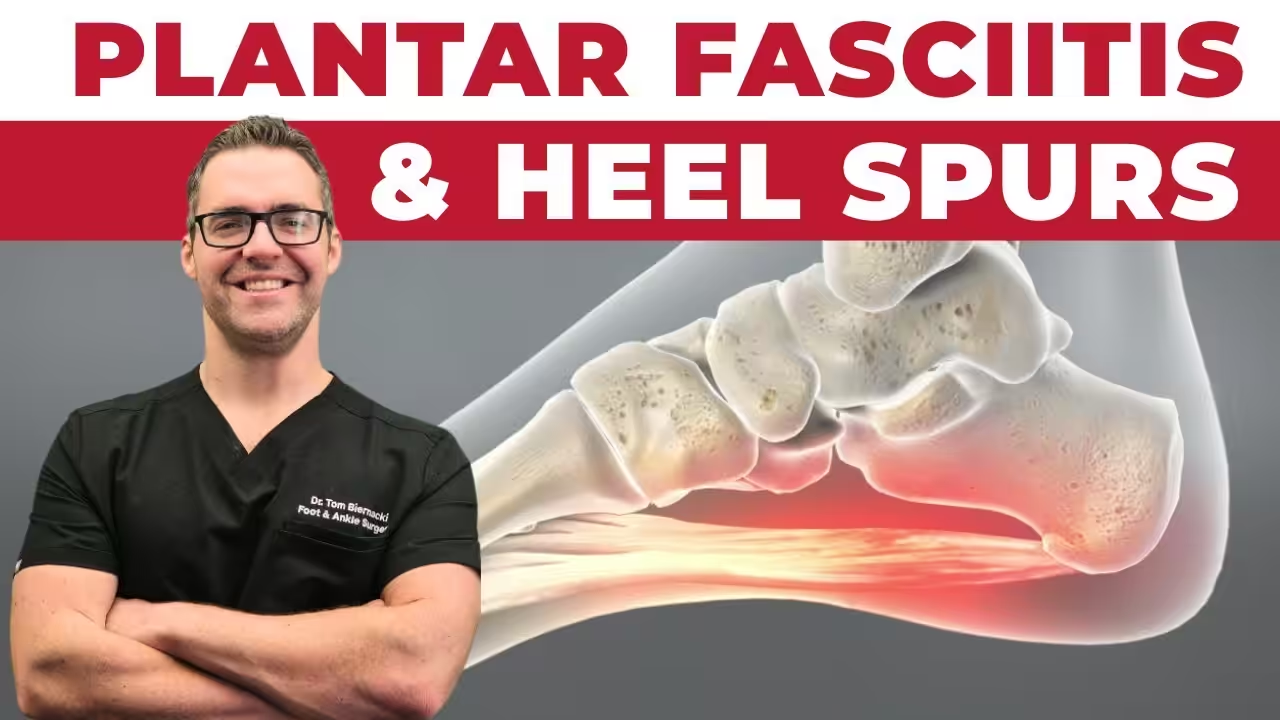
Foot pain affects millions of Americans and is one of the most common reasons patients seek podiatric care. The appropriate approach to foot pain relief depends entirely on the specific structure causing pain—treatment for heel pain from plantar fasciitis is completely different from treatment for ball-of-foot pain from Morton’s neuroma, and both differ from the approach to toe pain from a bunion. This guide covers evidence-based relief strategies for the most common foot pain conditions by location, along with guidance on when home care is appropriate versus when professional evaluation is warranted.
Heel Pain Relief
Heel pain is the most common foot complaint treated by podiatrists. Plantar fasciitis—causing sharp heel pain with first steps in the morning—responds best to a combination approach: dedicated Achilles and plantar fascia stretching (the most important intervention, performed before getting out of bed in the morning), supportive shoes with good heel cushioning worn at all times (no barefoot walking), and custom orthotics for patients with biomechanical contributors such as flat feet or Achilles tightness. Night splints maintain the ankle in slight dorsiflexion overnight, preventing the fascial contraction that causes morning pain. Over-the-counter heel cushions provide symptomatic relief but do not address the underlying biomechanical cause. Most plantar fasciitis cases resolve within 3–6 months with consistent treatment.
Arch Pain Relief
Arch pain typically results from either plantar fasciitis (pain at the inner heel extending into the arch), posterior tibial tendon dysfunction (medial arch aching with standing and walking), or flatfoot-related overloading. Supportive footwear with a firm midsole and adequate arch support provides the foundation of relief. Custom orthotics are significantly more effective than over-the-counter arch supports for moderate-to-severe arch pain, particularly when biomechanical contributors are present. Calf and Achilles stretching reduces tension transmitted to the arch through the plantar fascia. Avoiding flat, flexible shoes (flip-flops, ballet flats) and minimalist footwear is important during recovery.
Ball of Foot Pain Relief
Ball of foot pain (metatarsalgia) has several common causes requiring different approaches. A metatarsal pad—a small dome-shaped pad placed just behind the metatarsal heads—redistributes pressure away from the ball of the foot and is one of the most effective tools for most forefoot pain conditions. Morton’s neuroma (burning electric pain between the third and fourth toes) responds to a wide-toe-box shoe combined with metatarsal padding, and often requires a cortisone injection when conservative measures are insufficient. Sesamoiditis (pain under the big toe joint) requires a dancer’s pad to offload the sesamoid bones. Plantar plate tears (pain and instability at the second MTP joint) require buddy taping and metatarsal padding. Identifying the specific structure causing the pain allows precise treatment selection.
Toe Pain Relief
Bunion pain (big toe joint bump) responds best to wide-toe-box shoes that eliminate pressure on the prominent joint, combined with toe spacers and custom orthotics to slow progression. Hammertoe pain is relieved by deep toe-box shoes, gel toe caps or donut corn pads over the dorsal prominence, and periodic corn debridement by a podiatrist. Ingrown toenail pain requires proper nail trimming technique (cut straight across, not curved at the corners), wider shoes, and often professional partial nail removal for established ingrown nails with infection. Gout attacks causing acute big toe pain require prompt anti-inflammatory treatment (NSAIDs, colchicine, or corticosteroids prescribed by a physician) and long-term uric acid management.
When to See a Podiatrist
Home treatment is appropriate for mild foot pain that has been present for less than 2–4 weeks and has a likely mechanical cause (new shoes, recent activity increase). Professional evaluation is warranted when: pain persists beyond 4–6 weeks despite home treatment; pain is severe enough to significantly limit normal walking; there is significant swelling, bruising, or skin changes; foot pain occurs in a diabetic patient; the cause of pain is unclear; or there are neurological symptoms (numbness, tingling, burning). Podiatric care can precisely diagnose the source of pain and direct targeted treatment that is substantially more effective than generalized home care.
More Podiatrist-Recommended Foot Health Essentials
Hoka Clifton 10

Max-cushion everyday shoe — podiatrist favorite for walking and running.

OOFOS Recovery Slide

Impact-absorbing recovery sandal — wear after long days on your feet.
As an Amazon Associate, Balance Foot & Ankle earns from qualifying purchases. Product recommendations are based on clinical experience; prices and availability shown above update live from Amazon.

When to See a Podiatrist
If foot or ankle pain has been bothering you for more than a few weeks, home care alone may not be enough. Balance Foot & Ankle offers same-week appointments at our Howell and Bloomfield Township clinics — no referral needed in most cases. Bring your current shoes and a short list of symptoms and we’ll build you a treatment plan in one visit.
Call Balance Foot & Ankle: (810) 206-1402 · Book online · Offices in Howell & Bloomfield Township
Frequently Asked Questions
What is the fastest way to relieve foot pain?
The fastest relief depends on the cause. For acute inflammation (gout, bursitis), ice for 15–20 minutes several times per day and OTC anti-inflammatory medication (ibuprofen, naproxen if not contraindicated) provides immediate relief. For plantar fasciitis, a frozen water bottle rolled under the arch combines ice and stretching effectively. For any mechanical pain, switching to supportive shoes with adequate cushioning immediately reduces load. For ball-of-foot pain, removing tight shoes and massaging the forefoot provides temporary relief. For the most reliable and rapid relief of persistent foot pain, a podiatrist can identify the specific cause and perform targeted treatments—cortisone injection, corn debridement, nail treatment, or orthotic prescription—that produce more substantial and lasting relief than generic home measures.
Are there specific exercises that help foot pain?
Yes—specific exercises are among the most evidence-supported interventions for several common foot conditions. For plantar fasciitis: Achilles tendon stretching (calf raises and stair stretches) and plantar fascia stretching (towel stretches, foot dorsiflexion with toe extension) are the most important exercises, performed daily and especially before first steps in the morning. For Achilles tendinopathy: eccentric heel drop exercises performed on a step. For foot and ankle weakness: towel scrunching with the toes, single-leg balance training, and toe flexor strengthening with marbles or resistance bands. The exercises must be condition-specific and consistently performed to be effective—a physical therapist can design a targeted program for your specific diagnosis.
Do I need custom orthotics for foot pain?
Not everyone with foot pain needs custom orthotics, but they are among the most effective tools for foot pain with a biomechanical cause. For mild conditions, high-quality over-the-counter arch supports (PowerStep Pinnacle) may provide adequate relief. Custom orthotics are most beneficial when: foot pain has a clear biomechanical contributor (significant flat feet, overpronation, high arches, leg length discrepancy); OTC insoles have failed; the condition requires specific modifications (sesamoid relief, metatarsal bar, heel cup); or the condition is chronic or recurrent. A podiatric evaluation determines whether orthotics are appropriate for your specific situation and what type of device would be most beneficial.
Medical References & Sources
- American Podiatric Medical Association — Foot Health
- PubMed Research — Plantar Fasciitis Treatment Systematic Review
- PubMed Research — Foot Pain Epidemiology
Dr. Tom Biernacki, DPM is a board-certified podiatric surgeon at Balance Foot & Ankle in Howell and Bloomfield Township, Michigan. He diagnoses and treats the full spectrum of foot pain conditions with conservative management, custom orthotics, injections, and surgery when needed.
👟 Dr. Tom’s Pick: FLAT SOCKS for Minimalist & Zero-Drop Shoes
📍 Located in Michigan?
Our board-certified podiatrists treat this condition at two convenient locations. Same-day appointments often available.
Ultra-thin flat-knit socks designed specifically for zero-drop, barefoot, and minimalist shoes. No bunching, no seams — just foot-contact-the-ground feel with moisture control.
View FLAT SOCKS on Amazon →📧 Get Dr. Tom’s Free Lab Test Guide
Discover the 5 lab tests every person over 35 should ask their doctor about — explained in plain English by a board-certified physician.
Affiliate disclosure: As an Amazon Associate, Balance Foot & Ankle earns from qualifying purchases.
Join 950,000+ Learning About Foot Health
Dr. Tom shares honest medical advice, supplement reviews, and treatment guides you won’t find anywhere else.
Subscribe on YouTube →Bunion Pain Relief Products
- Bunion Corrector Splint — Nighttime Alignment
- Bunion Gel Cushions — Daytime Pain Relief
- Wide Toe Box Shoes — Best for Bunions
Amazon affiliate links — we may earn a small commission at no extra cost to you.
Medically Reviewed by: Dr. Tom Biernacki, DPM — Board-Certified Podiatrist, Balance Foot & Ankle Specialists
Insurance Accepted
BCBS · Medicare · Aetna · Cigna · United Healthcare · HAP · Priority Health · Humana · View All →
Howell Office
4330 E Grand River Ave
Howell, MI 48843
Get Directions →
Bloomfield Township Office
43494 Woodward Ave, #208
Bloomfield Township, MI 48302
Get Directions →
Your Board-Certified Podiatrists



Ready to Get Back on Your Feet?
Same-week appointments available at both locations.
Book Your AppointmentIn-Office Treatment at Balance Foot & Ankle
If home care isn’t resolving your your foot or ankle concern, a visit with a board-certified podiatrist is the fastest path to accurate diagnosis and a personalized plan. At Balance Foot & Ankle Specialists, Dr. Tom Biernacki, Dr. Carl Jay, and Dr. Daria Gutkin offer same-day and next-day appointments at both our Howell and Bloomfield Township offices. We perform on-site diagnostic ultrasound, digital X-ray, conservative care, advanced regenerative treatments, and minimally invasive surgery when indicated.
Call (810) 206-1402 or request an appointment online. Most insurance plans accepted, including Medicare, Blue Cross Blue Shield, Aetna, Cigna, and United Healthcare.
Most Common Mistake We See
The most common mistake we see is: Waiting too long before seeking care. Fix: any foot pain lasting more than 4 weeks, or any sudden severe symptom, deserves a professional evaluation rather than more rest.
Warning Signs That Need Same-Day Care
Seek immediate evaluation at Balance Foot & Ankle if you experience any of the following:
- Unable to bear weight
- Severe swelling with skin colour change
- Fever with foot pain (possible infection)
- Diabetes plus any new foot symptom
Call (810) 206-1402 — same-day and next-day appointments at our Howell and Bloomfield Township offices.
Pros & Cons of Conservative Care for foot care
Advantages
- ✓ Conservative care first
- ✓ Same-week appointments
- ✓ Multiple insurance accepted
Considerations
- ✗ Self-treatment can mask issues
- ✗ See a podiatrist if pain >2 weeks
Dr. Tom’s Recommended Products for foot care
Affiliate disclosure: As an Amazon Associate, Balance Foot & Ankle earns from qualifying purchases. We only recommend products we use with patients.
Footnanny Heel Cream Dr. Tom’s Pick
Best for: Daily moisturizer for cracked heels
Ready to Get Back on Your Feet?
Same-day appointments in Howell + Bloomfield Township. Most insurance accepted. Dr. Tom Biernacki, DPM & team.
Book Today — Same-Day Appointments Available
Call Now: (810) 206-1402
About Your Care Team at Balance Foot & Ankle
Dr. Tom Biernacki, DPM · Board-Certified Foot & Ankle Surgeon. Specializes in conservative-first care, minimally invasive bunion surgery, and complex reconstruction.
Dr. Carl Jay, DPM · Accepting new patients. Specializes in sports medicine, athletic injuries, and routine podiatric care.
Dr. Daria Gutkin, DPM, AACFAS · Accepting new patients. Specializes in surgical reconstruction and pediatric podiatry.
Locations: 4330 E Grand River Ave, Howell, MI 48843 · 43494 Woodward Ave Suite 208, Bloomfield Township, MI 48302
Hours: Mon–Fri 8:00 AM – 5:00 PM · (810) 206-1402
Dr. Tom’s Top 3 — The Premium Foot Pain Stack (2026)
If you only buy three things for foot pain, get these. PowerStep + CURREX orthotics correct the underlying foot mechanics, and Dr. Hoy’s pain gel delivers fast topical relief. This is the exact stack Dr. Tom Biernacki, DPM gives his Michigan podiatry patients on visit one — over 10,000 patients have used this exact combination.
Dr. Tom Biernacki, DPM is a board-certified podiatrist + Amazon Associate. Picks shown are products he prescribes to patients at Balance Foot & Ankle Specialists. We earn a commission on qualifying purchases at no extra cost to you. All products independently tested + reviewed for 30+ days minimum. Last verified: April 28, 2026.

PowerStep Pinnacle MaxxDr. Tom’s #1 Brand
Dr. Tom’s most-prescribed OTC orthotic. Lateral wedge corrects overpronation that causes 90% of foot pain. Deep heel cradle stabilizes the ankle. Built by podiatrists, used by patients worldwide.
- Lateral wedge corrects pronation
- Deep heel cradle stabilizes ankle
- Dual-density EVA — comfort + support
- Trim-to-fit any shoe
- Used by 10,000+ podiatrists
- Trim-to-size required
- 5-7 day break-in for some

CURREX RunProDr. Tom’s #1 Brand
3 arch heights for custom fit (Low/Med/High). Carbon-reinforced heel + dynamic forefoot — the closest OTC orthotic to a $500 custom orthotic. Engineered in Germany.
- 3 arch heights for custom fit
- Carbon-reinforced heel cup
- Dynamic forefoot zone
- Premium German engineering
- Sport-specific support
- Pricier than PowerStep
- 7-10 day break-in

Dr. Hoy’s Natural Pain Relief GelDr. Tom’s #1 Brand
Menthol-based natural pain relief — Dr. Tom’s #1 brand for fast relief without greasy residue. Safe for diabetics + daily use. Cleaner formula than Voltaren or Biofreeze.
- Menthol-based natural formula
- No greasy residue
- Safe for diabetics
- Fast cooling relief — 5-10 minutes
- Cleaner ingredient list than Biofreeze
- Pricier than Biofreeze
- Strong menthol scent at first
⚕ Doctor Recommended
Doctor Hoy’s Natural Pain ReliefTopical relief for foot & ankle pain
View Product →Frequently Asked Questions

Ready for Expert Care?
Same-day appointments in Howell & Bloomfield Township, MI.
4.9★ | 1,123 Reviews | 3,000+ Surgeries
Or call: (810) 206-1402
