

Quick answer: Golf Foot Ankle Injuries Podiatrist Guide is a common foot/ankle topic that affects many patients. Effective treatment starts with a targeted diagnosis, conservative-first treatment, and escalation only when needed. We treat this regularly at our Howell and Bloomfield Township practices. Book online, or call (810) 206-1402.
Medically reviewed by Dr. Tom Biernacki, DPM · Board-Certified Podiatric Surgeon · Last reviewed: April 2026 · Editorial Policy
The most important clinical decision with Golf Foot Ankle Injuries Podiatrist Guide isn’t which treatment to start with — it’s identifying the correct subtype. That changes everything. Call (810) 206-1402.
Quick Answer
Golf Foot & Ankle Injuries: Common Problems & Podi relates to foot pain — typically caused by overuse, footwear, or biomechanics. Most patients improve in 6-12 weeks with conservative care. Same-week appointments in Howell + Bloomfield Township: (810) 206-1402.
Medically reviewed by Dr. Tom Biernacki, DPM — Board-Certified Podiatric Surgeon — Balance Foot & Ankle, Howell & Bloomfield Township, MI. Last updated April 2026.
▶ Watch
Medically Reviewed by Dr. Tom Biernacki, DPM — Board-Certified Podiatrist, Balance Foot & Ankle Specialists, Michigan. Last updated April 2026.
Golf is frequently perceived as a low-impact sport, but the rotational forces generated through the feet and ankles during the golf swing — combined with miles of walking over uneven terrain per round — produce a specific pattern of foot and ankle injuries that podiatrists see regularly. The golf swing requires the feet to serve as the foundation of every shot, transmitting tremendous rotational and compressive forces from the ground up. When foot mechanics are disrupted by pain or dysfunction, both performance and long-term joint health suffer.
The Golf Swing and the Foot
The mechanics of the golf swing place unique demands on both feet simultaneously but asymmetrically. During the backswing, the lead foot (left foot for right-handed golfers) pronates and absorbs torsional load, while the trail foot supinates and serves as the rotational anchor. At impact and follow-through, the lead foot dorsiflexes aggressively and absorbs the majority of body weight, while the trail foot plantarflexes and rolls onto the fifth metatarsal border. This repetitive pattern, multiplied over thousands of practice swings per season, creates predictable overuse injury patterns.
Most Common Foot and Ankle Golf Injuries
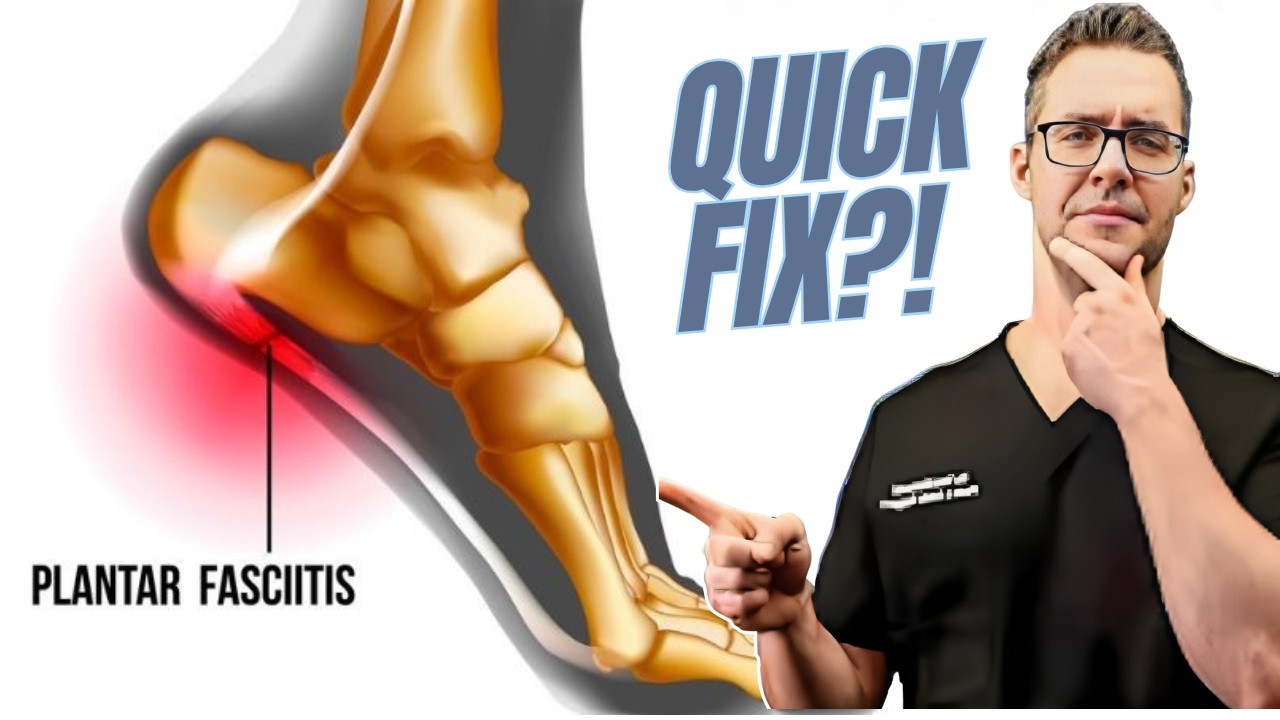
Plantar Fasciitis
The most common foot complaint in golfers. The combination of prolonged walking on firm fairways and the repetitive arch loading of the swing produces plantar fascia microtearing — particularly in golfers with flat arches who lack adequate arch support in their golf shoes. Proper golf shoe selection (stable sole, lateral motion control) and custom orthotics significantly reduce plantar fasciitis risk and improve resolution when it occurs.
Achilles Tendinopathy
The aggressive lead foot dorsiflexion at impact places high eccentric load on the Achilles tendon. Golfers with limited ankle dorsiflexion compensate by pronating excessively, which overloads the Achilles medially. Early morning Achilles stiffness that worsens with the first holes and then partially improves is the classic presentation.
Ankle Sprains
Walking on uneven terrain — bunkers, slopes, rough — predisposes golfers to lateral ankle sprains. Golfers with a history of ankle instability from previous sprains are at significantly elevated risk and benefit from ankle bracing during rounds and proprioceptive rehabilitation programs.
Fifth Metatarsal Stress Fractures
The trail foot’s roll onto its lateral border through impact and follow-through places repetitive stress on the proximal fifth metatarsal. Stress fractures at the proximal fifth metatarsal (the “Jones fracture zone”) in golfers typically present as outer foot pain that worsens with each swing. X-ray is required to confirm and proper treatment (boot immobilization or surgery for displacement) is essential.
Big Toe Joint Pain (Hallux Rigidus / Turf Toe)
The lead foot big toe dorsiflexes approximately 60–70° during the follow-through of a full swing. Golfers with hallux rigidus (first MTP arthritis) experience pain with every full swing at impact; a carbon fiber insole plate limiting MTP dorsiflexion allows continued play during treatment and after cheilectomy surgery.
Bunion Progression
The standard golf shoe with a relatively narrow toe box combined with the valgus pressure of the swing on the lead foot accelerates bunion progression in susceptible individuals. Wide-toe-box golf shoes and custom orthotics slow progression.
Golf Shoe Selection and Custom Orthotics
Golf shoe selection matters more than most golfers realize. Key features for injury prevention:
- Stable, non-torsional sole — the ability to twist the sole end-to-end indicates inadequate stability for golf; a stiff sole transmits ground force more efficiently and reduces arch fatigue
- Adequate width — extra-wide golf shoes prevent forefoot compression through the swing
- Cushioning — adequate midsole cushioning for golfers who walk 18 holes (4–5 miles)
- Cleats or spike configuration — soft spikes rather than metal spikes reduce torque on the lower extremity joints during rotation
Custom orthotics fitted to golf shoes provide the most effective biomechanical support — they are thinner than standard orthotics and designed to fit within the golf shoe’s removable insole slot. Dr. Biernacki fabricates golf-specific custom orthotics at Balance Foot & Ankle.
Returning to Golf After Foot Surgery
Most elective foot surgeries require a 3–6 month recovery before returning to golf. Procedures with shorter returns include ingrown toenail removal (1 week), hallux rigidus cheilectomy (6–8 weeks), and cortisone injections (immediate with activity modification). Bunion surgery, ankle stabilization, and Achilles tendon repair require 4–6 months before returning to full swing mechanics.
Golf Foot Pain Evaluation and Custom Golf Orthotics
Dr. Biernacki at Balance Foot & Ankle evaluates golf-related foot and ankle injuries and fabricates custom orthotics for golf shoes. Same-week appointments at Bloomfield Township and Howell.
📞 (810) 206-1402 |
📧 Get Dr. Tom’s Free Lab Test Guide
Discover the 5 lab tests every person over 35 should ask their doctor about — explained in plain English by a board-certified physician.
📍 Located in Michigan?
Our board-certified podiatrists treat this condition at two convenient locations. Same-day appointments often available.

Insurance Accepted
BCBS · Medicare · Aetna · Cigna · United Healthcare · HAP · Priority Health · Humana · View All →
Howell Office
4330 E Grand River Ave
Howell, MI 48843
Get Directions →
Bloomfield Township Office
43494 Woodward Ave, #208
Bloomfield Township, MI 48302
Get Directions →
Your Board-Certified Podiatrists



Ready to Get Back on Your Feet?
Same-week appointments available at both locations.
Book Your AppointmentMore Podiatrist-Recommended Sports Essentials
Hoka Clifton 10


Max-cushion everyday shoe — podiatrist favorite for walking and running.

OOFOS Recovery Slide

Impact-absorbing recovery sandal — wear after long days on your feet.
As an Amazon Associate, Balance Foot & Ankle earns from qualifying purchases. Product recommendations are based on clinical experience; prices and availability shown above update live from Amazon.

When to See a Podiatrist
Athletic injuries heal faster with sport-specific rehab protocols — not generic rest and ice. Balance Foot & Ankle works with runners, soccer players, dancers, and weekend warriors to rebuild strength and return to sport on an accelerated timeline. Don’t let a foot injury keep you sidelined longer than necessary.
Call Balance Foot & Ankle: (810) 206-1402 · Book online · Offices in Howell & Bloomfield Township
Watch: Dr. Tom explains
Podiatrist-recommended products
As an Amazon Associate, Dr. Tom earns from qualifying purchases.
Stable rotational base for golf swing.
View on Amazon →Dynamic support for 18-hole rounds.
View on Amazon →Reduces heel impact on cart paths.
View on Amazon →Topical relief post-round.
View on Amazon →Related resources
Ready to solve this? Book today.
Same-week appointments · Howell & Bloomfield Township · 4.9★ (1,123+ reviews)
☎ (810) 206-1402Book Online →Pros & Cons of Conservative Care for foot care
Advantages
- ✓ Conservative care first
- ✓ Same-week appointments
- ✓ Multiple insurance accepted
Considerations
- ✗ Self-treatment can mask issues
- ✗ See a podiatrist if pain >2 weeks
Dr. Tom’s Recommended Products for foot care
Affiliate disclosure: As an Amazon Associate, Balance Foot & Ankle earns from qualifying purchases. We only recommend products we use with patients.
Footnanny Heel Cream Dr. Tom’s Pick
Best for: Daily moisturizer for cracked heels
Ready to Get Back on Your Feet?
Same-day appointments in Howell + Bloomfield Township. Most insurance accepted. Dr. Tom Biernacki, DPM & team.
Book Today — Same-Day Appointments Available
Call Now: (810) 206-1402
About Your Care Team at Balance Foot & Ankle
Dr. Tom Biernacki, DPM · Board-Certified Foot & Ankle Surgeon. Specializes in conservative-first care, minimally invasive bunion surgery, and complex reconstruction.
Dr. Carl Jay, DPM · Accepting new patients. Specializes in sports medicine, athletic injuries, and routine podiatric care.
Dr. Daria Gutkin, DPM, AACFAS · Accepting new patients. Specializes in surgical reconstruction and pediatric podiatry.
Locations: 4330 E Grand River Ave, Howell, MI 48843 · 43494 Woodward Ave Suite 208, Bloomfield Township, MI 48302
Hours: Mon–Fri 8:00 AM – 5:00 PM · (810) 206-1402
In-Office Treatment at Balance Foot & Ankle
If home treatment isn’t providing relief for your foot and ankle injuries, our podiatry team at Balance Foot & Ankle can help with same-day evaluations and advanced in-office care.
Same-day appointments available. (810) 206-1402
Ready for Expert Care?
Same-day appointments in Howell & Bloomfield Township, MI.
4.9★ | 1,123 Reviews | 3,000+ Surgeries
Or call: (810) 206-1402

Dr. Tom Biernacki, DPM is a board-certified foot & ankle surgeon (ABFAS & ABPM) at Balance Foot & Ankle Specialists in Southeast Michigan. With over a decade of clinical experience, he specializes in heel pain, bunions, diabetic foot care, sports injuries, and minimally invasive surgery. Dr. Biernacki is a member of the APMA and ACFAS, and his patient education content on MichiganFootDoctors.com and YouTube has made him one of the most-followed foot & ankle educators on YouTube.
More questions patients ask
How long does an ankle sprain take to heal?
Recovery time depends on severity: Grade 1 (mild stretching) typically heals in 1-3 weeks, Grade 2 (partial tear) in 3-6 weeks, and Grade 3 (complete tear) in 6-12 weeks or longer. Proper rehabilitation is critical to prevent chronic ankle instability, which affects up to 40% of patients who don't receive adequate treatment. Dr. Biernacki creates customized recovery plans.
When should I see a doctor for a sprained ankle?
Seek professional evaluation if you can't bear weight, notice significant swelling or bruising, hear a pop at the time of injury, have numbness, or if pain hasn't improved after 5-7 days of RICE treatment. X-rays or MRI may be needed to rule out fractures. Dr. Biernacki offers same-day urgent evaluations at 810-206-1402.
Can a sprained ankle heal without treatment?
While mild sprains may heal with rest and home care, undiagnosed ligament tears and improperly rehabilitated sprains frequently lead to chronic ankle instability, recurrent sprains, and early-onset arthritis. A proper evaluation ensures appropriate treatment and reduces your risk of long-term complications significantly.
Still have a question about coverage or cost? Book online and we will check your benefits before your visit: Book in Howell · Book in Bloomfield Township. Prefer to talk it through first? Call (810) 206-1402.