

Medically reviewed by Dr. Tom Biernacki, DPM — Board-certified foot & ankle surgeon, 3,000+ surgeries performed. Updated April 2026 with current clinical evidence. This article reflects real practice experience from Balance Foot & Ankle Specialists in Howell and Bloomfield Hills, Michigan.
Quick Answer
Plantar fasciitis is inflammation where the plantar fascia attaches to the heel, causing sharp morning heel pain that eases after 10-15 minutes of walking. Most cases respond to stretching plus arch support within 6-12 weeks. See a podiatrist if pain persists beyond 6 weeks, worsens, or prevents walking.
Watch: Dr. Tom Biernacki, DPM

Medically reviewed by Dr. Tom Biernacki, DPM — Board-Certified Podiatric Surgeon — Balance Foot & Ankle, Howell & Bloomfield Hills, MI. Last updated April 2026.
Treatment at Balance Foot & Ankle: EPAT Shockwave for Heel Pain →
▶ Watch

📋 Dr. Tom Also Recommends
Podiatrist Recommended Orthotics 2026: Dr. Tom’s Top 10 Insoles & Arch Supports
A podiatrist’s complete clinical guide to the best insoles — custom orthotics, OTC picks, and what actually works for plantar fasciitis, flat feet, neuropathy & more.
Read the Full Guide →
Medically Reviewed by Dr. Tom Biernacki, DPM — Board-Certified Podiatrist, Balance Foot & Ankle Specialists, Michigan. Last updated April 2026.
Why Women Get More Heel Pain Than Men
Plantar fasciitis and heel pain conditions occur in women at approximately 2–3 times the rate seen in men, particularly between ages 40–70. This isn’t coincidence — several biological and behavioral factors specific to women create a higher-risk environment for plantar fascia stress. Understanding these factors helps explain why treatment for women sometimes needs to be approached differently.
At Balance Foot & Ankle in Howell and Bloomfield Township, Michigan, Dr. Daria Gutkin and our full team are particularly experienced in the foot health needs of women across all life stages.
1. Footwear Choices
The most directly modifiable factor. High heels — worn daily by millions of professional women — create a cascade of mechanical problems:
- Sustained plantarflexion shortens the gastrocnemius and soleus muscles and the Achilles tendon
- When women remove heels at home, the suddenly lengthened Achilles tendon puts the plantar fascia under increased traction
- Narrow toe boxes in many women’s shoes compress the forefoot, contributing to bunions, neuromas, and hammertoes
- The shift from heels to flat shoes creates a daily cycle of Achilles shortening and forced stretching that chronically stresses the fascia
Ballet flats and thin-soled shoes present the opposite problem — zero arch support and minimal cushioning on hard floors. Neither extreme is ideal.
2. Hormonal Changes
Estrogen plays a significant role in collagen structure and ligament laxity throughout the body. Three hormonal transitions particularly affect foot and ankle mechanics:
Pregnancy
Relaxin — produced during pregnancy — causes systemic ligament laxity. In the feet, this allows the arch ligaments to stretch, often producing arch collapse and increased foot length (many women go up a full shoe size during pregnancy that is permanent). The combination of weight gain, gait changes, and ligament laxity makes pregnancy a high-risk period for plantar fasciitis.
Perimenopause and Menopause
Declining estrogen reduces collagen quality and density in tendons, ligaments, and fascia. Postmenopausal women have measurably reduced plantar fascia compliance — making it less able to tolerate repetitive loading without injury. This coincides with the peak incidence of plantar fasciitis in women (ages 45–64).
Hormonal Fluctuations Through the Cycle
Ligament laxity increases during the preovulatory phase of the menstrual cycle due to estrogen peaks. Some women notice cyclical changes in ankle stability and foot pain patterns that correspond to their cycle — not imagined.
3. Anatomical Differences
- Q-angle: Women have a wider pelvis relative to femur length, creating a larger Q-angle (the angle between the hip and knee). This causes increased valgus stress at the knee and increased pronation at the foot — greater inward rolling that stresses the medial arch and plantar fascia.
- Lower bone density: Women have lower peak bone mass and are at greater risk for osteoporosis — increasing stress fracture risk, particularly during peri- and postmenopause.
- Body composition: Higher body fat percentage distributed differently — combined with the effects above — can alter gait mechanics.
4. Osteoporosis and Stress Fractures
Postmenopausal women are significantly more likely to develop stress fractures from training loads that younger women or men handle without injury. Metatarsal, navicular, and calcaneal stress fractures all increase in frequency after menopause. Women with osteoporosis or low bone density need lower training thresholds and often benefit from vitamin D, calcium, and bone density-specific management alongside podiatric care.
Treatment Considerations Specific to Women
- Footwear counseling: Transitioning from high heels must be graduated — switching abruptly to flat shoes while the Achilles is shortened causes pain. Heel height should be reduced gradually over 2–4 weeks with concurrent calf stretching.
- Bone density evaluation: Women over 50 with foot pain, particularly stress fractures, should have a bone density (DEXA) scan if not recently completed.
- Arch support during and after pregnancy: Arch-supportive insoles during pregnancy reduce foot elongation, postpartum foot pain, and plantar fasciitis risk. Women who develop a new shoe size during pregnancy benefit from evaluation for PTTD (posterior tibial tendon dysfunction).
- Hormonal history: A thorough history of reproductive hormonal status (current estrogen levels, HRT use, menopause status) is relevant to foot pain evaluation in women — and our team takes this history as part of every evaluation.
Expert Women’s Foot Care at Balance Foot & Ankle
Our practice recognizes that women’s foot health involves unique factors that go beyond the standard plantar fasciitis protocol. Whether you’re managing pregnancy-related arch changes, perimenopausal heel pain, or the consequences of decades of professional footwear — we provide targeted, evidence-based care that accounts for the full picture of your health. Schedule an appointment at our Howell or Bloomfield Township location to get started.
Foot or Ankle Pain? We Can Help.
Balance Foot & Ankle — Howell & Bloomfield Township, MI
📅 Book Online
📞 (810) 206-1402
When to See a Podiatrist for Heel Pain
Women experience heel pain at higher rates than men due to a combination of hormonal factors, footwear choices, and anatomical differences. Dr. Tom Biernacki at Balance Foot & Ankle understands these unique factors and provides targeted treatment for women with heel pain.
Learn About Our Heel Pain Treatment Options | Book Your Appointment | Call (810) 206-1402
Clinical References
- Riddle DL, et al. “Risk factors for plantar fasciitis: a matched case-control study.” Journal of Bone and Joint Surgery. 2003;85(5):872-877.
- Irving DB, et al. “Factors associated with chronic plantar heel pain: a systematic review.” Journal of Science and Medicine in Sport. 2006;9(1-2):11-22.
- Rome K, et al. “Risk factors associated with the development of plantar heel pain in athletes.” Foot. 2001;11(3):119-125.
Insurance Accepted
BCBS · Medicare · Aetna · Cigna · United Healthcare · HAP · Priority Health · Humana · View All →
Howell Office
3980 E Grand River Ave, Suite 140
Howell, MI 48843
Get Directions →
Bloomfield Hills Office
43700 Woodward Ave, Suite 207
Bloomfield Hills, MI 48302
Get Directions →
Your Board-Certified Podiatrists



Ready to Get Back on Your Feet?
Same-week appointments available at both locations.
Book Your Appointment👟 Dr. Tom’s Complete Footwear Library
Podiatrist-Approved Guides for Every Foot Type & Condition
Clinically reviewed by Dr. Tom Biernacki, DPM — Board-Certified Podiatrist
All guides are written and reviewed by licensed podiatrists. Schedule an appointment →
In-Office Treatment at Balance Foot & Ankle
If home care isn’t resolving your heel pain, a visit with a board-certified podiatrist is the fastest path to accurate diagnosis and a personalized plan. At Balance Foot & Ankle Specialists, Dr. Tom Biernacki, Dr. Carl Jay, and Dr. Daria Gutkin offer same-day and next-day appointments at both our Howell and Bloomfield Hills offices. We perform on-site diagnostic ultrasound, digital X-ray, conservative care, advanced regenerative treatments, and minimally invasive surgery when indicated.
Call (810) 206-1402 or request an appointment online. Most insurance plans accepted, including Medicare, Blue Cross Blue Shield, Aetna, Cigna, and United Healthcare.
Differential Diagnosis: What Else Could It Be?
Several conditions share symptoms with Plantar Fasciitis and are commonly misdiagnosed in the first office visit. Considering these alternatives is part of every Balance Foot & Ankle exam:
- Baxter’s neuropathy. Compressed first branch of lateral plantar nerve — burning medial heel pain rather than first-step sharpness.
- Calcaneal stress fracture. Squeeze test of the heel reproduces pain anywhere; PF is reproduced only at the medial-plantar attachment.
- Heel spur (incidental). Spurs show on X-ray but rarely cause pain on their own — treat the fascia, not the spur.
If your symptoms don’t fit the textbook pattern, ask your podiatrist which differentials they ruled out — that conversation often shortcuts months of trial-and-error treatment.
In Our Clinic
In our Balance Foot & Ankle clinic, the typical plantar fasciitis patient is a 40- to 60-year-old who noticed sharp heel pain on their very first steps in the morning or after sitting at a desk. Many arrive having already tried cheap shoe-store inserts and a week of ice without relief. On exam, we palpate the medial calcaneal tubercle, check for a positive windlass test, and rule out Baxter’s neuropathy and calcaneal stress fractures. Most of our plantar fasciitis patients respond to a custom orthotic + eccentric calf loading + night splinting protocol within 6–12 weeks — without injections or surgery.
Most Common Mistake We See
The most common mistake we see is: Stretching aggressively before the fascia warms up. Fix: apply heat or move the foot through gentle circles for 3-5 minutes before your first morning steps, then stretch.
Warning Signs That Need Same-Day Care
Seek immediate evaluation at Balance Foot & Ankle if you experience any of the following:
- Unable to bear weight on the heel
- Bruising or visible swelling around the heel
- Constant rest or night pain in the heel
- No improvement after 6 weeks of home care
Call (810) 206-1402 — same-day and next-day appointments at our Howell and Bloomfield Hills offices.
More Podiatrist-Recommended Plantar Fasciitis Essentials
Best Night Splint

Keeps fascia stretched overnight — the #1 intervention for morning heel pain.
Top Podiatrist-Recommended Insole

Deep heel cup + arch support unloads the plantar fascia all day.
Plantar Fasciitis Compression Sock

Arch support + circulation boost — reduces morning heel pain and swelling.
As an Amazon Associate, Balance Foot & Ankle earns from qualifying purchases. Product recommendations are based on clinical experience; prices and availability shown above update live from Amazon.
When to See a Podiatrist
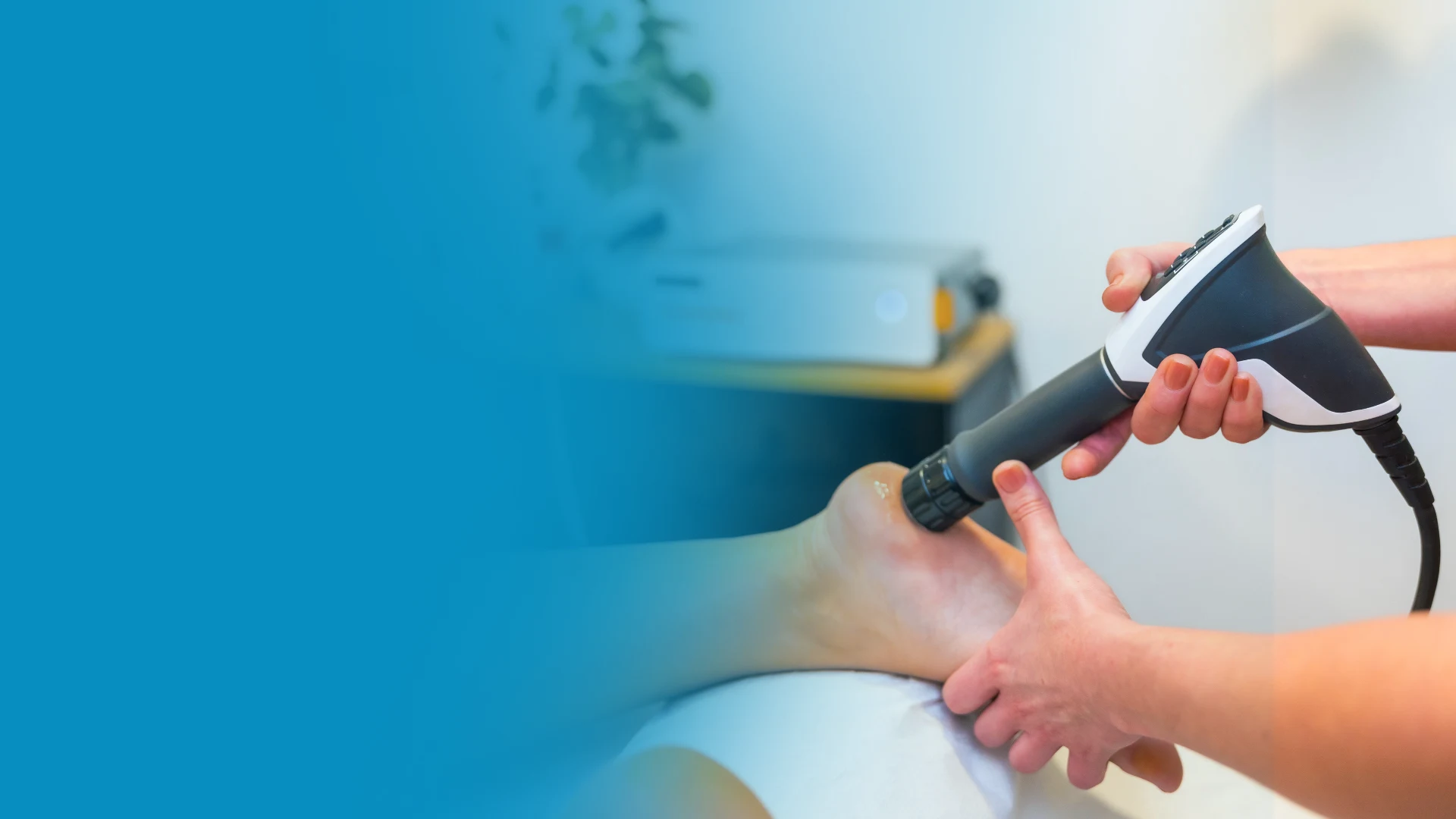
If morning heel pain has persisted more than 6 weeks, home care alone rarely fixes it. At Balance Foot & Ankle, we combine in-office ultrasound diagnostics, custom orthotics, and — when needed — shockwave or PRP to resolve plantar fasciitis that hasn’t responded to stretching and inserts. Most patients are walking pain-free within 4-8 weeks of starting a structured plan.
Call Balance Foot & Ankle: (810) 206-1402 · Book online · Offices in Howell & Bloomfield Hills

Dr. Tom Biernacki, DPM is a double board-certified podiatrist and foot & ankle surgeon at Balance Foot & Ankle Specialists in Southeast Michigan. With over a decade of clinical experience, he specializes in heel pain, bunions, diabetic foot care, sports injuries, and minimally invasive surgery. Dr. Biernacki is a member of the APMA and ACFAS, and his patient education content on MichiganFootDoctors.com and YouTube has reached over one million views.
Frequently Asked Questions
Can I see a podiatrist for heel pain without a referral?
How long does plantar fasciitis take to heal?
Should I walk on my heel if it hurts?
What does a podiatrist do for heel pain?
- Plantar Fasciitis: Diagnosis and Conservative Management (PubMed)
- Plantar Fasciitis (APMA)
- Diagnosis and Treatment of Plantar Fasciitis (PubMed / AAFP)
- Heel Pain (APMA)
Recommended Products from Dr. Tom