
Medically reviewed by Dr. Tom Biernacki, DPM
Board-certified podiatric surgeon | Balance Foot & Ankle, Howell & Bloomfield Township, MI
Last reviewed: May 2026
Balance Foot & Ankle offers same-day appointments for urgent foot and ankle conditions across Southeast Michigan — but the most important factor in outcomes isn’t getting seen quickly. Our podiatrists explain what to do in the first 24-48 hours before your appointment that most patients skip entirely. Call (810) 206-1402 — expert podiatric care across Michigan.

A Lisfranc sprain — injury to the tarsometatarsal joint — is one of the most-missed foot injuries. Catching it within 1-2 weeks of the injury changes everything about treatment options.
You’re in the right place. Dr. Tom Biernacki, DPM, FACFAS — board-certified foot & ankle surgeon with 3,000+ surgeries — explains exactly what Lisfranc sprain means and what works. Call (810) 206-1402 for same-day appointment at Howell or Bloomfield Township.

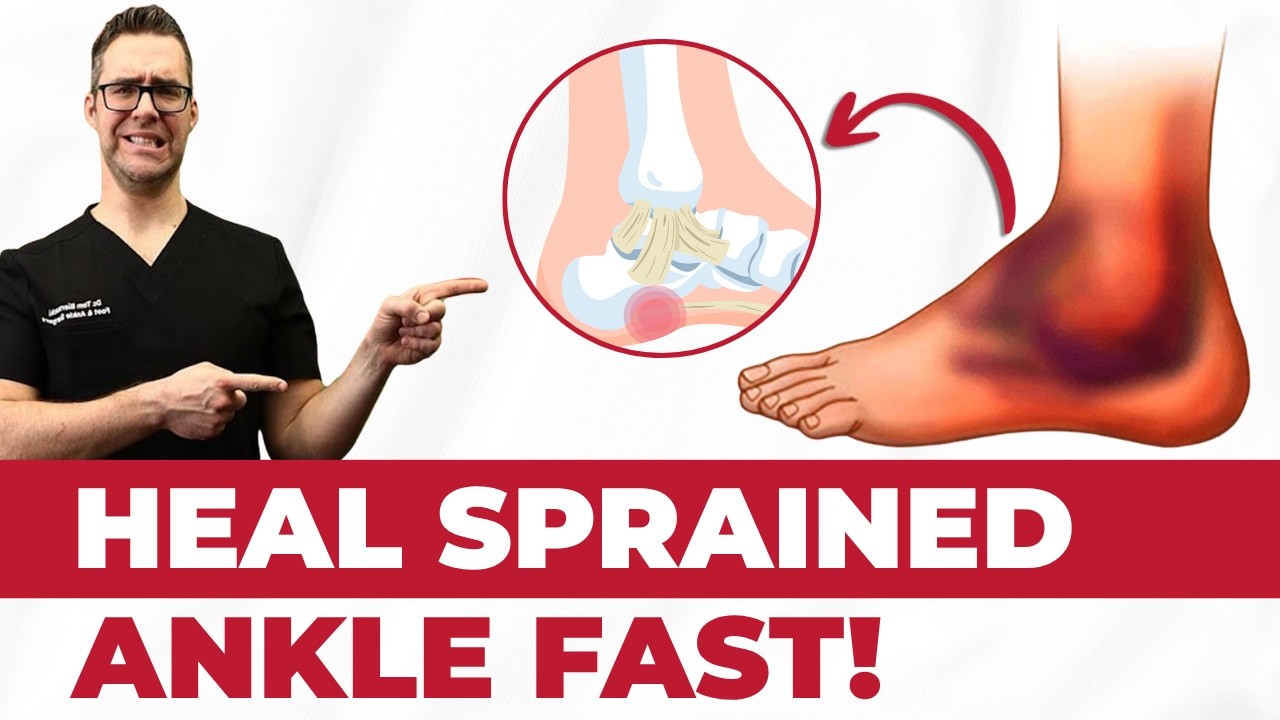
Watch: Fix TWISTED Ankle, ROLLED Ankle or SPRAINED Ankle Ligaments FASTER! — MichiganFootDoctors YouTube
Medically Reviewed | Dr. Tom Biernacki, DPM | Board-Certified Podiatric Surgeon | Balance Foot & Ankle, Michigan

What Is a Lisfranc Injury?
The Lisfranc joint complex is the articulation between the midfoot bones (cuneiforms and cuboid) and the bases of the five metatarsals. The Lisfranc ligament — named after Jacques Lisfranc, a French surgeon who described amputations through this joint in the Napoleonic era — is the primary stabilizer connecting the first cuneiform to the second metatarsal base. This ligament is the keystone of the midfoot’s transverse arch: when it tears, the second metatarsal loses its medial anchor and the midfoot splays apart under loading.
Lisfranc injuries range from pure ligamentous sprains (Lisfranc ligament tear without fracture, most common in athletes) through fracture-sprains (small avulsion fractures at the ligament attachments) to complete fracture-dislocations (high-energy injuries that diverge all five metatarsals from the tarsus). The mechanism is typically a twisting force with the foot fixed and plantarflexed — common in football, soccer, dance, and horse-riding falls. The hallmark of a missed Lisfranc injury is a patient who “rolled their ankle” and continues to have significant midfoot pain weeks later.
Why Lisfranc Injuries Are Missed
Approximately 20–40% of Lisfranc injuries are initially misdiagnosed. The reasons are multiple: non-weight-bearing X-rays taken in the emergency setting often appear normal; the initial X-ray findings (1–2 mm of midfoot diastasis) are subtle and can be overlooked; and the presentation mimics a benign foot sprain. The critical diagnostic test is a standing (weight-bearing) anteroposterior foot X-ray — which opens the midfoot gap and reveals the instability. Dr. Biernacki specifically requests weight-bearing films when Lisfranc injury is clinically suspected, and advances to MRI or CT when X-rays are equivocal.
Conservative Treatment
Stable Lisfranc sprains (without diastasis on weight-bearing X-ray) are managed with non-weight-bearing cast immobilization for 6 weeks, followed by progressive weight-bearing in a controlled ankle motion (CAM) boot, followed by custom orthotics and a 12–16 week return to sport protocol. Even “stable” Lisfranc sprains must be completely non-weight-bearing initially — premature loading displaces the midfoot and converts a stable injury to an unstable one. The risk of post-traumatic midfoot OA exists even with optimal conservative management of ligamentous Lisfranc sprains.
Surgical Treatment
Unstable Lisfranc injuries — those with more than 2 mm of tarsometatarsal diastasis on weight-bearing X-ray — require surgical stabilization. Open reduction and internal fixation (ORIF) with screws or plates restores midfoot alignment and provides stable fixation for healing. For purely ligamentous injuries in athletes, primary Lisfranc arthrodesis (fusion of the medial three tarsometatarsal joints) is increasingly favored over ORIF — with emerging data showing faster return to sport and lower revision surgery rates. Return to cutting and pivoting sport after Lisfranc surgery typically occurs at 12–18 months.
Dr. Tom's Product Recommendations

DonJoy Velocity Ankle Brace (Midfoot Support)
⭐ Highly Rated
Semi-rigid ankle brace providing medial-lateral and midfoot stability — used during the later rehabilitation phases of Lisfranc recovery when protective support is needed during progressive weight-bearing activities.
Dr. Tom says: “My podiatrist approved the DonJoy brace during my late Lisfranc rehabilitation — provided the midfoot confidence I needed for my walk-to-run progression.”
Late-phase Lisfranc rehabilitation, return to activity midfoot support, post-surgical protection
Acute Lisfranc injury requiring non-weight-bearing cast or boot immobilization — bracing is inappropriate in the initial phase
Disclosure: We earn a commission at no extra cost to you.

HOKA Bondi 8 Maximum Cushion Rocker Shoe
⭐ Highly Rated
Maximum cushion rocker-bottom shoe reducing midfoot joint loading during push-off — the most appropriate footwear during the late conservative management and post-surgical return to daily activity phases of Lisfranc rehabilitation.
Dr. Tom says: “My podiatrist prescribed the Hoka Bondi for my return to walking after my Lisfranc surgery — the rocker eliminated the midfoot push-off pain completely.”
Late Lisfranc rehabilitation footwear, post-surgical return to walking, midfoot OA management
Acute or subacute Lisfranc injury — rocker shoes are not appropriate during the initial non-weight-bearing phase
Disclosure: We earn a commission at no extra cost to you.

Zamst A2-DX Sport Ankle Brace (Lace-Up)
⭐ Highly Rated
Advanced sport ankle brace with strapping system providing ATFL, CFL, and midfoot support — appropriate for athletes returning to cutting sports after Lisfranc rehabilitation with residual midfoot instability concerns.
Dr. Tom says: “My foot doctor cleared me for basketball with the Zamst brace after my Lisfranc surgery — provided the midfoot security I needed for lateral movements.”
Return to sport after Lisfranc injury, lateral and midfoot support, cutting and pivoting sports
Athletes who have fully completed rehabilitation without residual instability symptoms
Disclosure: We earn a commission at no extra cost to you.
✅ Pros / Benefits
- Accurate diagnosis distinguishes stable from unstable Lisfranc injuries — preventing missed injuries from progressing to deformity
- Complete non-weight-bearing immobilization of stable sprains prevents conversion to unstable injuries
- Primary Lisfranc arthrodesis provides reliable return-to-sport outcomes for athletically active patients
- Post-surgical custom orthotics with rigid midfoot support reduce post-traumatic OA symptom progression
❌ Cons / Risks
- Even optimally managed Lisfranc sprains carry risk of post-traumatic midfoot OA
- Return to cutting sports after Lisfranc surgery takes 12–18 months — significantly longer than most ankle sprains
- Missed Lisfranc injuries that are weight-bearing early may develop chronic midfoot instability requiring more complex surgical reconstruction
- Lisfranc arthrodesis eliminates some midfoot motion — patients must be appropriately counseled about functional expectations
Dr. Tom Biernacki’s Recommendation
Lisfranc injuries are the most important missed diagnosis I see — and I see the downstream consequences regularly. A patient who ‘sprained their foot’ four months ago and still can’t run, has chronic midfoot swelling, and has been told to rest and wait. We get the weight-bearing X-ray, see the diastasis, get the MRI, and find the complete Lisfranc tear that should have been immobilized immediately. Now we’re looking at surgery where conservative management might have worked. If a patient has midfoot pain after a twisting injury and can’t single-leg stand, that’s a Lisfranc until proven otherwise.
— Dr. Tom Biernacki, DPM | Board-Certified Podiatric Surgeon | Balance Foot & Ankle
Frequently Asked Questions
How serious is a Lisfranc sprain?
Lisfranc sprains range from significant but manageable (stable, without diastasis) to potentially career-ending (complete fracture-dislocation). Even stable Lisfranc sprains require strict non-weight-bearing immobilization for 6 weeks — premature loading can convert a stable sprain to an unstable injury requiring surgery. Unstable Lisfranc injuries require surgical fixation. All Lisfranc injuries carry risk of post-traumatic midfoot osteoarthritis.
How is a Lisfranc injury different from a regular foot sprain?
A regular foot sprain affects the ligaments supporting the ankle or individual foot joints without disrupting the midfoot’s stability. A Lisfranc injury tears the primary ligament stabilizing the tarsometatarsal joints — allowing the midfoot to splay under load. The clinical distinction: inability to single-leg stand on the affected foot, midfoot pain (not ankle), and pain with passive forefoot abduction distinguish Lisfranc injury from routine ankle ligament sprains. Weight-bearing X-rays reveal the midfoot diastasis.
Do all Lisfranc sprains require surgery?
No. Stable Lisfranc sprains (without diastasis on standing X-ray) are treated with non-weight-bearing cast immobilization for 6 weeks, followed by progressive return to activity over 12–16 weeks. Unstable Lisfranc injuries (more than 2 mm of tarsometatarsal diastasis) require surgical fixation. Dr. Biernacki makes this determination using weight-bearing X-rays, CT scan, and MRI as clinically indicated.
How long does Lisfranc recovery take?
Conservative Lisfranc management: 6 weeks non-weight-bearing, 6 weeks progressive weight-bearing in boot, 4–8 weeks return to activity — approximately 4–6 months total. Surgical Lisfranc management: 8–12 weeks non-weight-bearing, 12 months to full return to cutting sport. Post-traumatic midfoot OA can develop years after Lisfranc injury regardless of treatment — long-term monitoring is recommended.
Michigan Foot Pain? See Dr. Biernacki In Person
4.9★ rated | 1,123 Reviews | 3,000+ Surgeries
Same-week appointments · Howell & Bloomfield Township
📞 (810) 206-1402 Book Online →What does treatment cost?
Most diagnostic visits and conservative treatments are covered by Medicare and major insurers. Out-of-pocket costs vary by your specific plan.
How quickly can I get an appointment?
Most non-urgent cases see us within 5 business days. Urgent cases (sudden pain, possible fracture) typically same or next business day.
Related Conditions
In-Office Treatment at Balance Foot & Ankle
If home treatment isn’t providing relief for your foot issues, our podiatry team at Balance Foot & Ankle can help with same-day evaluations and advanced in-office care.
Ready to get relief? Book an appointment at Balance Foot & Ankle or call (810) 206-1402. Same-day appointments available in Howell & Bloomfield Township, MI.
OrthoInfo – AAOS: Lisfranc Midfoot Injury
Ready to Get Relief?
Same-day appointments available in Howell & Bloomfield Township, MI
4.9★ | 1,123 Reviews | 3,000+ Surgeries
Or call: (810) 206-1402
📋 Dr. Tom Biernacki, DPM, FACFAS answers:
A Lisfranc sprain without instability is treated with strict non-weight-bearing in a CAM boot for 6 to 8 weeks, followed by gradual return to activity with a stiff custom orthotic. Even a mild sprain requires proper immobilization — walking on an unstable Lisfranc joint converts a sprain into a diastasis requiring surgery. We confirm stability with stress X-rays before allowing weight bearing. Return to sport typically takes 3 to 6 months. Any persistent midfoot pain or instability after conservative care warrants surgical evaluation. Our board-certified podiatrist has extensive experience with Lisfranc injuries at all grades.
Seen at both offices — Howell and Bloomfield Township.

Dr. Tom Biernacki, DPM is a board-certified foot & ankle surgeon (ABFAS & ABPM) at Balance Foot & Ankle Specialists in Southeast Michigan. With over a decade of clinical experience, he specializes in heel pain, bunions, diabetic foot care, sports injuries, and minimally invasive surgery. Dr. Biernacki is a member of the APMA and ACFAS, and his patient education content on MichiganFootDoctors.com and YouTube has made him one of the most-followed foot & ankle educators on YouTube.