
| Pad Type | Shape | Material | Best Condition | Placement Zone | Durability |
|---|---|---|---|---|---|
| Standard Metatarsal Pad (dome) | Dome / teardrop | Felt or EVA foam | General metatarsalgia, 2nd–4th MTH pain | Proximal to MTH 2–4 | 2–4 weeks felt; 3–6 months EVA |
| J-Pad (1st ray offload) | J-shaped cutout | Felt | Sesamoiditis, hallux rigidus | Surrounds 1st MTH, unloads it | 2–3 weeks felt |
| Metatarsal Bar (external) | Full-width bar across sole | Leather or rubber rocker | Severe diffuse metatarsalgia | Outsole — proximal to all MTH | Permanent (built into shoe) |
| Neuroma Pad (splaying) | Teardrop with toe-spreader | Gel or foam | Morton’s neuroma (3rd web space) | Proximal to 3rd–4th interspace | 3–6 months gel |
| Full-Length Insole with Met Dome | Insole + integrated dome | EVA/orthotic grade | Multiple MTH pain, long arch issue | Built into insole at met shaft level | 6–18 months |
| Custom Orthotic (metatarsal accommodation) | Full custom shell | Polypropylene + padding | Chronic metatarsalgia, deformity | Prescribed per pressure mapping | 3–5 years |
| Condition | Primary Pain Location | Recommended Pad | Placement Modification | Adjunct Treatment |
|---|---|---|---|---|
| General Metatarsalgia | Ball of foot, 2nd–4th MTH | Standard dome pad | Proximal to MTH 2–4 | Rocker sole shoe |
| Morton’s Neuroma (3rd interspace) | Between 3rd–4th toes, burning | Neuroma splaying pad | Proximal to 3rd–4th web space | Wide toe box, cortisone injection |
| Sesamoiditis | Under big toe joint (plantar) | J-pad (1st ray offload) | Surrounds 1st MTH, cuts out under sesamoids | Carbon fiber plate, stiff-soled shoe |
| 2nd Metatarsal Stress Fracture | Dorsal 2nd MTH shaft ache | Dancer’s pad (felt offload) | Proximal to 2nd MTH only | Boot or rigid shoe + activity restriction |
| Hammertoe Forefoot Pressure | Plantar 2nd–3rd MTH, corn on toe | Dome pad + toe sleeve | Proximal to affected MTH | Toe crest, shoe with high toe box |
| Rheumatoid Forefoot (RA) | Multiple MTH, lateral drift | Full metatarsal bar or insole dome | Across all 5 MTH proximal | Extra-depth shoes, custom orthotics |
Quick answer:Metatarsal pads placed just behind the 2nd-3rd metatarsal heads reduce forefoot loading by redistributing pressure proximally. They’re effective for metatarsalgia, Morton’s neuroma, sesamoiditis, and hammer toe discomfort. Self-adhesive pads (Dr. Jill’s, Hapad) work well in most shoes. Placement 3-5mm proximal to the metatarsal head callus is the key technique. Call (810) 206-1402.
Foot pain isn't resolving?
Same-week appointments at Howell & Bloomfield Hills
Medically Reviewed | Dr. Tom Biernacki, DPM | Board-Certified Podiatric Surgeon | Balance Foot & Ankle, Michigan


![Metatarsalgia Treatment [BEST Ball of Foot Pain RELIEF 2024]](https://www.michiganfootdoctors.com/wp-content/cache/flying-press/d7857672675f2bf191a8e896b2f7208b.jpg)
Watch: Metatarsalgia Treatment [BEST Ball of Foot Pain RELIEF 2024] — MichiganFootDoctors YouTube
The Metatarsal Heads: Where Ball-of-Foot Pain Lives
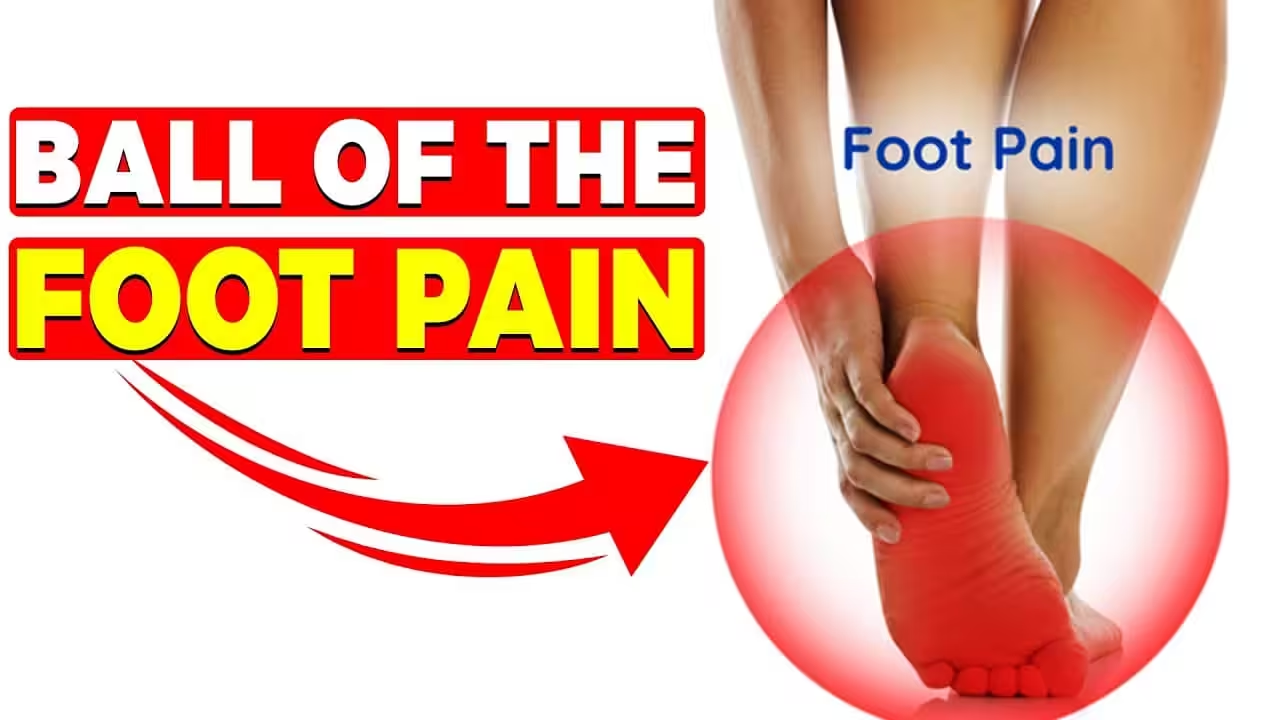
The five metatarsal heads — the prominences at the base of the toes on the bottom of the foot — bear substantial load during walking and running. The 2nd, 3rd, and 4th metatarsal heads are particularly vulnerable to overloading, especially in high-heeled footwear, with forefoot-heavy gait patterns, and after neighboring metatarsal problems create load transfer. Pressure concentration here causes metatarsalgia — a broad term for metatarsal head pain — as well as aggravating Morton’s neuroma, sesamoiditis, and plantar plate tears.
How Metatarsal Pads Work
A metatarsal pad or dome, placed correctly behind (proximal to) the metatarsal heads, elevates and splays the metatarsals — changing their angle relative to the ground and distributing load more evenly across all five heads rather than concentrating it on the most prominent ones. This is fundamentally different from placing padding directly under the ball of the foot, which actually increases pressure at the metatarsal heads. The correct placement is critical — improperly placed metatarsal pads (which is very common in retail settings) make the condition worse.
Conditions Treated with Metatarsal Modifications
Dr. Biernacki incorporates metatarsal pads and domes into custom orthotics for metatarsalgia (general forefoot pain), Morton’s neuroma (interdigital nerve entrapment), sesamoiditis (first metatarsal head area), plantar plate tears, and transfer metatarsalgia after bunion surgery — where correcting the first metatarsal position shifts load excessively to the lesser metatarsals. The specific pad size, placement, and material are selected based on which metatarsals are symptomatic and the patient’s footwear requirements.
OTC Pads vs. Custom Orthotic Modifications
Adhesive gel metatarsal pads from the drugstore provide some patients with meaningful temporary relief. For persistent or severe metatarsalgia, custom orthotic metatarsal modifications provide more precise placement, more durable materials, and integration with rearfoot control that OTC pads cannot achieve. Dr. Biernacki starts many patients with OTC pads during the evaluation period before incorporating the modification into a custom device when warranted.
Dr. Tom's Product Recommendations

Pedag Metatarsal Button Self-Adhesive Pad
⭐ Highly Rated
Firm felt metatarsal button pad that provides correct behind-the-heads elevation when placed properly. Dr. Biernacki recommends as the best OTC metatarsal pad for placement accuracy and durability.
Dr. Tom says: “Dr. Biernacki showed me exactly where to place these. After years of placing pads in the wrong spot, proper placement made an immediate difference in my ball-of-foot pain.”
Metatarsalgia, Morton’s neuroma, ball-of-foot pain — proper proximal placement
Direct under-the-ball padding (incorrect — worsens metatarsal head pressure)
Disclosure: We earn a commission at no extra cost to you.

Hoka Bondi 8 Maximum Cushion Shoe
⭐ Highly Rated
Maximum cushion rocker-bottom shoe that reduces forefoot loading with every step. The rocker geometry rolls the foot forward without loading the metatarsal heads maximally — a significant benefit for metatarsalgia patients.
Dr. Tom says: “Dr. Biernacki recommended Hokas for my metatarsalgia. The rocker bottom reduced my ball-of-foot pain on long walks dramatically.”
Metatarsalgia, Morton’s neuroma, forefoot pain, transfer metatarsalgia
Motion control needs — different shoe category required
Disclosure: We earn a commission at no extra cost to you.
✅ Pros / Benefits
- Precise metatarsal pad placement based on pressure mapping and examination findings
- Custom orthotic modifications include full range: dome, pad, bar, cut-out
- OTC pad education included — patients learn proper proximal placement
- Transfer metatarsalgia evaluation post-bunion surgery — addresses root cause
❌ Cons / Risks
- OTC pads require instruction for correct placement — most retail instructions are inadequate
- Severe metatarsal stress fractures require immobilization before orthotic modifications can be added
Dr. Tom Biernacki’s Recommendation
Metatarsal pads are simple in concept but commonly done wrong. The single most important thing is placement — behind the metatarsal heads, not under them. I’ve had patients who were wearing pads for years and feeling worse because nobody taught them to place them correctly. First visit, we fix that.
— Dr. Tom Biernacki, DPM | Board-Certified Podiatric Surgeon | Balance Foot & Ankle
Frequently Asked Questions
Where exactly should a metatarsal pad be placed?
Directly behind (proximal to) the metatarsal heads — in the arch of the forefoot, not under the ball of the foot itself. A good landmark: the pad should end where the skin crease is at the base of the toes.
Can metatarsal pads help Morton’s neuroma?
Yes — metatarsal pads that splay the metatarsals reduce compression on the interdigital nerve, providing significant relief for many neuroma patients. They’re often prescribed as conservative treatment before cortisone injection is considered.
How long do metatarsal pads last?
Adhesive gel or foam pads last 1–6 weeks depending on activity and shoe type. Custom orthotic metatarsal modifications last for the life of the orthotic — typically 3–5 years.
Do I need custom orthotics or will OTC pads work?
For mild to moderate metatarsalgia with no concurrent arch or rearfoot problem, OTC pads placed correctly often provide adequate relief. For complex cases, severe pain, or coexisting arch problems, custom orthotics with metatarsal modifications are indicated.
Michigan Foot Pain? See Dr. Biernacki In Person
4.9★ rated | 1,123 Reviews | 3,000+ Surgeries
Same-week appointments · Howell & Bloomfield Hills
📞 (810) 206-1402 Book Online →Frequently Asked Questions
When should I see a podiatrist?
If symptoms persist past 2 weeks, affect your normal activity, or are accompanied by red-flag symptoms (warmth, redness, swelling, inability to bear weight).
What does treatment cost?
Most diagnostic visits and conservative treatments are covered by Medicare and major insurers. Out-of-pocket costs vary by your specific plan.
How quickly can I get an appointment?
Most non-urgent cases see us within 5 business days. Urgent cases (sudden pain, possible fracture) typically same or next business day.
What is Metatarsalgia?
Metatarsalgia is a common foot/ankle condition that affects mobility and quality of life. Understanding the underlying cause is the first step in successful treatment. Our podiatrists at Balance Foot & Ankle perform a hands-on biomechanical exam, review your activity history, and use diagnostic imaging when appropriate to identify the root cause—not just treat the symptom. Many patients have been told to “rest and ice” without a deeper diagnostic workup; our approach is different.
Symptoms and warning signs
Common signs of metatarsalgia include pain that worsens with activity, morning stiffness, swelling, tenderness when palpated, and difficulty bearing weight. If you experience sudden severe pain, inability to walk, visible deformity, numbness or color change, contact our office the same day or visit urgent care—these can signal a more serious injury such as a fracture, tendon rupture, or vascular compromise. Diabetics with any foot wound should seek same-day care.
Conservative treatment options
Most cases of metatarsalgia respond to non-surgical care: structured rest, supportive footwear changes, custom orthotics, targeted stretching and strengthening protocols, anti-inflammatory medications when medically appropriate, and in-office procedures such as ultrasound-guided injections. We also offer advanced therapies including MLS laser therapy, EPAT/shockwave, regenerative injections, and image-guided procedures. Treatment is sequenced from least invasive to most invasive, and we explain the rationale at every step.
When is surgery considered?
Surgery is reserved for cases that fail 3-6 months of well-structured conservative care, when there is structural pathology (severe deformity, complete tear, advanced arthritis), or when imaging shows damage that will not heal without intervention. Our surgeons have performed 3,000+ foot and ankle procedures and prioritize minimally-invasive techniques whenever appropriate. We discuss recovery timelines, return-to-activity milestones, and realistic outcome expectations before any procedure is scheduled.
Recovery timeline and prevention
Recovery from metatarsalgia varies based on severity and chosen treatment path. Conservative cases often improve within 4-8 weeks with consistent adherence to the protocol. Post-procedural recovery may range from a few days (in-office procedures) to several months (reconstructive surgery). Long-term prevention involves footwear assessment, activity modification, structured strengthening, and regular check-ins with your podiatrist if you have a history of recurrence. We provide written home-exercise plans and digital follow-up support.
Ready to feel better?
Same-week appointments available in Howell and Bloomfield Hills, Michigan.
Book Your VisitDoctor Hoy’s Natural Pain Relief Gel
Natural topical pain relief I use in our clinic. Arnica + camphor formula — apply directly to the area 3–4x daily. ($20–25)
Shop Doctor Hoy’s →PowerStep Pinnacle Insoles
Medical-grade arch support. The OTC insole I recommend most in our clinic. Reduces stress on the foot with every step. ($25–35)
Shop PowerStep →American Academy of Orthopaedic Surgeons: Metatarsalgia
In-Office Treatment at Balance Foot & Ankle
If home treatment isn’t providing relief for your foot and ankle issues, our podiatry team at Balance Foot & Ankle can help with same-day evaluations and advanced in-office care.
Same-day appointments available. (810) 206-1402
Learn about our podiatry appointment booking → | Book online →
Our podiatrists treat the underlying cause, not just the symptom. Same-week appointments at our Howell and Bloomfield Hills, Michigan offices.
Same-Week Appointments in Howell & Bloomfield Hills
Three board-certified podiatric surgeons. 1,123+ five-star reviews. Most insurance accepted.

Dr. Tom Biernacki, DPM is a board-certified foot & ankle surgeon (ABFAS & ABPM) at Balance Foot & Ankle Specialists in Southeast Michigan. With over a decade of clinical experience, he specializes in heel pain, bunions, diabetic foot care, sports injuries, and minimally invasive surgery. Dr. Biernacki is a member of the APMA and ACFAS, and his patient education content on MichiganFootDoctors.com and YouTube has made him one of the most-followed foot & ankle educators on YouTube.