

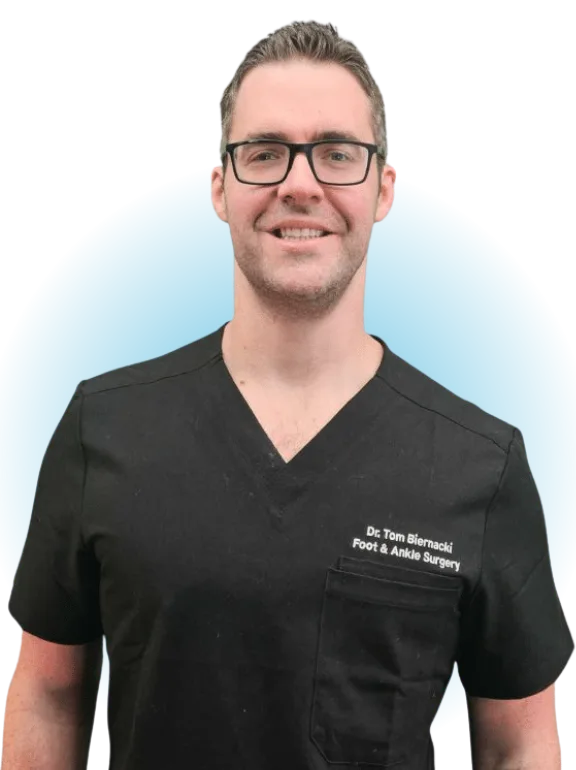
Medically Reviewed by Dr. Tom Biernacki, DPM, FACFAS — Board-certified podiatrist & foot surgeon | Balance Foot & Ankle | Last updated: May 2026
Quick Answer: How Should Michigan Residents Protect Their Feet in Winter?
Michigan winters demand proactive foot care: insulated, waterproof boots with at least 200g Thinsulate for temps below 20°F; moisture-wicking wool or synthetic socks (never cotton in cold); daily foot inspection for numbness, color changes, or pressure sores; and moisturizing heels and soles to prevent winter fissuring. For diabetic patients, these practices are non-negotiable — cold and poor circulation dramatically increase amputation risk. Cold feet that persist indoors, bluish or white color changes, or open cracks warrant same-day podiatry evaluation.
Why Michigan Winters Are Uniquely Hard on Feet
Michigan’s climate creates specific foot challenges that warmer states don’t face: prolonged below-freezing temperatures (Livingston and Oakland counties average 26 days below 20°F annually), significant snow and ice requiring heavy boots, repeated freeze-thaw cycles that make sidewalks treacherous, and months of indoor heating that dessicates skin. The combination of constricting cold-weather footwear, reduced circulation from cold exposure, and dry heated indoor air creates the perfect environment for heel fissures, ingrown toenails, pressure injuries, and circulatory problems.
In my practice in Howell and Bloomfield Township, I see distinct seasonal patterns: heel fissures and cracking peak in January–February, frostbite presentations spike after outdoor events like hunting season and winter sports, and ingrown toenails worsen in patients who jam feet into boots all season. The good news is nearly all of these are preventable with the right winter footwear and foot care routine.
Michigan Winter Boot Selection: What Podiatrists Recommend
| Temperature Range | Minimum Insulation | Key Features | Avoid |
|---|---|---|---|
| Above 32°F | Uninsulated waterproof | Waterproofing, non-slip sole | Canvas, mesh uppers |
| 15–32°F | 200g Thinsulate | Insulation + waterproof + deep lug sole | Tight toe box, fashion boots |
| 0–15°F | 400–600g Thinsulate | High shaft, vapor barrier option | Low-cut boots, thin insoles |
| Below 0°F | 800g+ or pac boot system | Removable liner, large toe box for thick socks | Any boot without removable liner |
Critical fit rule for winter boots: Winter boots should be fitted with your thickest intended sock. A boot that fits perfectly with a thin sock will be too tight with heavyweight wool, compressing circulation and accelerating cold-related injury. Always bring your winter socks when buying winter boots.
The Right Winter Sock: Why Cotton Is Dangerous
Cotton absorbs moisture and holds it against skin — a property that’s a liability in cold conditions. A soaked cotton sock accelerates heat loss dramatically compared to dry insulation. In cold Michigan conditions, wet cotton socks can drop foot temperature fast enough to contribute to frostbite in people with compromised circulation. For winter foot protection, wool (particularly merino) and synthetic moisture-wicking fabrics are the correct choice. Wool insulates even when wet, wicks moisture away from the skin, and doesn’t develop odor as quickly as synthetics. A standard winter recommendation: wool liner sock (thin) plus heavyweight wool outer sock for temps below 20°F.
Winter Foot Problems Specific to Michigan
Heel Fissures (Cracked Heels)
Michigan’s heated indoor air drops relative humidity to 20–30% in winter, dramatically drying skin. When dry, thickened heel callus cracks under body weight, fissures can deepen to the dermis and bleed. Treatment: daily urea cream (20–40%) or ammonium lactate applied after showering while skin is still slightly damp, covered with cotton socks overnight. Severe fissures may need professional debridement and prescription-strength barrier creams. Prevention: keep humidity at 40–50% indoors and moisturize daily throughout winter.
Raynaud’s Phenomenon in Michigan Winters
Raynaud’s phenomenon — episodic color changes (white → blue → red) in response to cold — affects an estimated 3–5% of Michigan’s population and is significantly exacerbated by our winters. The feet (and hands) temporarily restrict blood flow dramatically in response to cold exposure. Triggers include cold air, cold water, and even reaching into a freezer. Management: heated insoles, chemical hand warmers in boots for extended outdoor exposure, calcium channel blockers (prescribed by your physician), and keeping core temperature warm (cold core triggers peripheral vasoconstriction even in warm feet).
Most Common Mistake: Wearing Tight Boots Without Thick Socks to “Stay Warm”
⚠️ The winter boot mistake I see every year: Patients lace boots as tight as possible thinking it keeps heat in and prevents slipping on ice. The opposite happens — tight lacing compresses the dorsal foot vessels, reduces circulation to the toes, and dramatically increases frostbite risk. Compression is the enemy in cold weather. Your toes need room to wiggle; movement generates heat. A slightly loose boot allows air pockets that insulate; a boot cinched tight cuts off the very circulation that delivers warm blood to your feet. Same principle applies to thick wool socks: if you need to force the sock on or the boot feels snug, you’ve just created a tourniquet. In cold weather, comfort = circulation = warmth. Wear the right boot size for your sock thickness.
Watch: Why Are My Feet Always Cold? — Dr. Tom Explains

Dr. Tom Biernacki, DPM explains the causes of chronically cold feet, from Raynaud’s to vascular disease, and what Michigan winters mean for foot circulation.
Winter Foot Care FAQ
How do I know if I have frostbite on my feet?
Frostnip (the early, reversible stage) presents as red, cold, numb skin that returns to normal with rewarming — no tissue damage occurs. Superficial frostbite: white or yellowish, waxy skin that feels hard on the surface but soft underneath; blisters may form within 24 hours. Deep frostbite: hard, frozen tissue that may appear white, mottled, or blue — the foot feels wooden. For anything beyond mild frostnip, seek medical care immediately. Do not rub frostbitten tissue, walk on frostbitten feet, or rewarm in water above 104°F unless you’re certain refreezing won’t occur — refreezing causes far more damage than staying frozen until you reach medical care.
Should diabetic patients do anything special in winter?
Absolutely — diabetic foot care in Michigan winters is a medical priority. Peripheral neuropathy means diabetic patients may not feel frostbite or pressure sores developing, and peripheral vascular disease means healing is compromised. The winter protocol: inspect feet every single day (use a mirror for the sole); wear properly fitted insulated boots with extra depth for custom orthotics; never use heating pads, hot water bottles, or electric blankets on feet (you can burn without feeling it); moisturize soles and heels daily but never between toes. Any break in skin, blister, discoloration, or wound should be evaluated within 24 hours — diabetic foot infections progress rapidly in winter when healing is slowed.
Can I wear my running shoes on ice?
Standard running shoes on ice or packed snow significantly increase fall risk — road running shoe outsoles are designed for dry pavement and have minimal ice traction. Options: add slip-on Yaktrax or microspike traction devices over your running shoes for icy roads; switch to trail running shoes with aggressive lugs for snowpack; or move workouts indoors during ice events. Winter running falls are a frequent cause of ankle sprains, stress fractures, and hip fractures I see in active Michigan patients. If you do run on winter roads, shorten your stride, keep your center of gravity over your feet, and run during daylight on plowed surfaces only.
What causes ingrown toenails to get worse in winter?
Tight winter boots compress the forefoot and create lateral pressure on toenails, especially the hallux. Combined with less frequent nail trimming (it’s cold, you’re in socks all day), nails grow longer and curve into the nail fold. Moisture from sweaty winter boots softens the skin, making it easier for the nail edge to penetrate. Prevention: trim nails straight across, never rounded, to the end of the toe — not shorter; use a boot with adequate toe box width; and if you’re prone to ingrown nails, see your podiatrist before boots season starts to address them proactively. A 15-minute in-office procedure in October prevents months of pain through the winter.
My elderly parent has cold, numb feet in winter — is this normal?
Cold, numb feet in older adults are never simply “normal aging” and warrant medical evaluation. The differential includes peripheral arterial disease (PAD), peripheral neuropathy (diabetic or idiopathic), venous insufficiency, and Raynaud’s phenomenon — all of which are significantly more common and more serious in elderly patients. PAD in particular dramatically increases winter amputation risk when combined with cold exposure and constrictive footwear. If an elderly family member reports feet that stay cold indoors, go numb without cold exposure, develop sores that won’t heal, or show skin color changes, arrange a vascular and podiatric evaluation — ideally before winter deepens. In Livingston and Oakland counties, we see this presentation frequently and have appointments available.
Winter Foot Problem? Don’t Wait Until Spring
Dr. Tom Biernacki treats frostbite, heel fissures, Raynaud’s, diabetic winter foot wounds, and all cold-weather foot conditions at Balance Foot & Ankle in Howell and Bloomfield Township, MI.
Book an Appointment Call (810) 206-1402Related Resources
- Diabetic Foot Care Guide
- Custom Orthotics for Winter Footwear
- Heel Pain in the Morning
- Podiatrist-Recommended Shoes
- About Dr. Tom Biernacki, DPM FACFAS
Dr. Tom’s Michigan Winter Foot Essentials
PowerStep Pinnacle Insoles — Semi-rigid arch support that fits inside winter boots. Better than factory insoles for support and warmth distribution. Holds shape longer than PowerStep Pinnacle.
DASS Medical Compression Socks — Graduated compression for circulation in cold weather. Diabetic-friendly knit — important when Michigan temperatures drop and circulation is compromised.
Disclosure: We earn a commission if you purchase — at no extra cost to you. We only recommend what we use in our clinic.
Visit Balance Foot & Ankle — Online Booking 24/7
Our podiatry team serves patients throughout Michigan including Howell, Brighton, and Bloomfield Township. If you’re dealing with heel pain, ingrown toenails, or a foot injury, you can book online 24/7.
Book online 24/7. (810) 206-1402
VitaMedica Arnica Gel
Arnica gel plus 15 plant compounds for sore feet, plantar fasciitis flares and post-activity soreness. Apply a thin layer to the sore area.
Shop VitaMedica Arnica Gel →Seen at both offices — Howell and Bloomfield Township.

Dr. Tom Biernacki, DPM is a board-certified foot & ankle surgeon (ABFAS & ABPM) at Balance Foot & Ankle Specialists in Southeast Michigan. With over a decade of clinical experience, he specializes in heel pain, bunions, diabetic foot care, sports injuries, and minimally invasive surgery. Dr. Biernacki is a member of the APMA and ACFAS, and his patient education content on MichiganFootDoctors.com and YouTube has made him one of the most-followed foot & ankle educators on YouTube.