
Medically reviewed by Dr. Tom Biernacki, DPM
Board-certified podiatric surgeon | Balance Foot & Ankle
Last reviewed: May 2026
You are in the right place. Dr. Tom Biernacki, DPM, FACFAS — board-certified foot & ankle surgeon with 3,000+ surgeries — explains exactly what painnd toe while walking means and what works. Call (810) 206-1402 for same-day appointment at Howell or Bloomfield Hills.
Quick answer: Pain 2nd Toe While Walking has multiple potential causes including mechanical, neurological, vascular, and inflammatory. The patterns we see most often are overuse, poorly-fitted shoes, and biomechanical imbalance. Red flags requiring urgent evaluation: warmth/redness (infection), inability to bear weight (fracture), and unilateral swelling without injury (DVT). Call (810) 206-1402.
✅ Medically reviewed by Dr. Tom Biernacki, DPM — Board-Certified Podiatrist · Last updated April 7, 2026
![Side & Lateral Foot Pain FIX! [The BEST At-Home Relief Methods]](https://www.michiganfootdoctors.com/wp-content/cache/flying-press/3769d57b59f1c9a9223f614b88574d3e.jpg)
The most important clinical decision with Pain 2Nd Toe While Walking isn’t which treatment to start with — it’s identifying the correct subtype. That changes everything. Call (810) 206-1402.
Pain in the 2nd Toe While Walking
Causes, Symptoms & Best Treatment for Pain in the 2nd Toe
Pain in the 2nd Toe While Walking: Make 100% sure you stop living in pain. This guide will show the most common causes and the BEST Treatment options for Pain in the 2nd Toe! Look:
2nd toe joint pain can be improved with a few simple treatment changes.
We are foot doctors & we see this problem get better almost every day. We’ve treated many patients experiencing Pain in the 2nd Toe. The goal is to solve this problem without medication or surgery if at all possible.
So, let’s GO!
Schedule Your Consultation Today
Why Do I Have Second Toe Pain While Walking? Treatment Video
Understanding the causes of Pain in the 2nd Toe can be crucial for effective treatment.
Pain in the Second Toe When Walking Causes
Pain in the 2nd Toe While Walking Overview
There are three common reasons you can have a second toe pain while walking.
Many patients report experiencing Pain in the 2nd Toe, and it is essential to identify these issues early.
- You could have toenail problems with the second toe because it is the longest toe.
- You could actually have a problem with the second toe itself.
- And you could be having pain from where the second toe attaches to the ball of the foot.
- We have included these three causes below, with possible treatments.
- Remember to see your podiatrist if you’re having any problems.
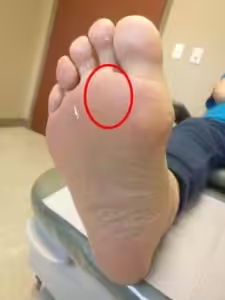
Most Common Causes of Pain in the 2nd Toe While Walking
Identifying the causes of Pain in the 2nd Toe is vital for effective treatment.
-
- Second toe pain is extremely common because the second toe is usually the longest in the foot, and as we push off, it absorbs almost all of the body weight, especially when we are running!
- These are the most common causes of pain in the 2nd toe while walking:
- The most common cause of second toe pain is hammertoes, callus pain, calluses, swollen toes that may be broken and predislocation syndrome.
Patients often complain of Pain in the 2nd Toe as a result of various foot conditions.
- These are the most common causes of second toe pain in descending order:
Hammer Toes
Hammertoes can lead to significant Pain in the 2nd Toe and should be treated promptly.
- If your toes are crooked and painful, they are called hammertoes.
- This will usually lead to calluses on the tip, bottom, and top of the toes. Learn how to treat them!
- This is due to the tightening of your second toe joint. It can also happen in your other toe joints.
This is a side view of the hammertoes. You can see the proximal inter-phalangeal joint is dislocating here.
Black Spot or Bleeding under the Toenail
-
- There are many causes of black toenails, but blood buildup under your toenails is the most common cause.
Being aware of Pain in the 2nd Toe and its causes can help prevent further complications.
- This is especially common if you have started running or wearing new shoes recently.
- These can be known as joggers. Don’t worry. The toe can grow back to normal in most cases.
- Learn how to treat them!
Toenail fungus is making this nail fall off by digging into the corner. This then swells, and the toenail slowly breaks and rips off. This doesn’t always cause pain. It can happen gradually and lead to a sore toe. Notice here the 2nd toe is the longest.
Swollen Painful Toe
Swelling can lead to Pain in the 2nd Toe, which may indicate a more serious issue.
- The toe could be swollen for many reasons, including trauma. Learn how to treat them!
- If it is just 1 foot, this may mean an injury, but if it is both feet, this may mean you have swelling throughout your whole body or that you are damaging both equally.
- The swollen toe can potentially be dangerous, so make sure to see your podiatrist if this is a long-term problem for you.
Foot Corn
Foot corns may exacerbate Pain in the 2nd Toe, making treatment crucial.
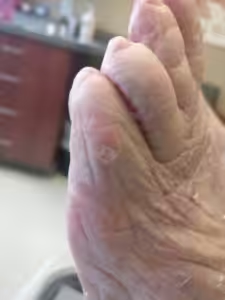
- A corn is a hard pebble-like callus that forms on the tip, on top, and in between the toes. Learn how to treat them!
- This is like a more concentrated and focused callus that digs into your skin.
Callus Foot Pain
- A callus is usually associated with corns and hammertoes on your toes. Learn how to treat them!
- If there is a hard spot in the middle, this can be a corn.
- These develop in the most pressure-packed regions of your foot.
Predislocation Syndrome
-
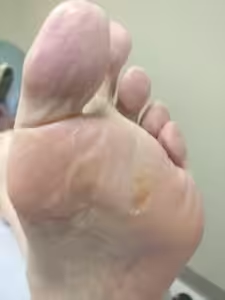
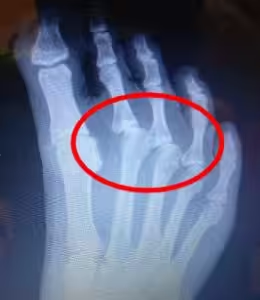
- This usually occurs in the second toe, especially if it feels loose or starts to cross over.
The predislocation syndrome can be a cause of Pain in the 2nd Toe that requires attention.
- This is also known as a plantar plate injury. This is most common in the second toe.
- This can be like a sprained ankle ligament, except this time it is in your toe.
Toes Crossing Over
-
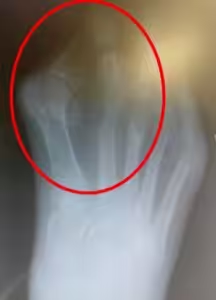
- Crossing over the toe is usually related to a bunion.
- The second toe usually crosses over the big toe joint, and the big toe joint crosses under the second toe.
Crossing toes may lead to Pain in the 2nd Toe and should be evaluated by a podiatrist.
- Please think of this as a pre-dislocation of the big toe joint, and it pushes the second toe joint up and above it.
2nd Toenail Pain
Second toe pain is also very commonly caused as a result of nail injuries that you can learn about here, such as thick nails that won’t get thinner and ingrown toenails:
Nail Diseases of the Second Toe
-
- We usually see second toenail problems because the second hole is the longest toe in most people.
Understanding how nail problems affect Pain in the 2nd Toe is essential for prevention and treatment.
- While standing all day and working, your second toe can be rubbing up against the front of your shoe, causing numerous problems.
- Most toenail problems are not dangerous, but they can lead to bleeding pain and potentially even fungus in the future.
Ball of the Foot Pain
-
- Pain in the ball the foot is one of the most common types of foot pain.
Ball of the foot pain can also lead to Pain in the 2nd Toe, indicating a need for comprehensive assessment.
- Common types of ball of the foot second toe pain are capsulitis, second metatarsal overload syndrome, metatarsal out the, and plantar plate injuries.
- We have attempted to show pictures of each of these conditions with a rough description.
- Make sure to see your podiatrist if you think any of these conditions may be happening for you!
Metatarsalgia
-
- Metatarsalgia is the generalized ball of foot pain.
- This means that there is too much pressure on the front of your foot.
- The bones, the tendons the nerves in the tissue surrounding the site could all get bruised up.
Patients suffering from Metatarsalgia may experience Pain in the 2nd Toe as well.
- This is one of the most common causes of ball of the foot pain that we see.
- Click on the link to see how to take care of this common problem!
Metatarsalgia means pressure across the ball of your foot. This can lead to middle toe soreness and pain.
Morton’s Neuroma
- A Morton’s neuroma is the irritation of nerves in the ball of the foot.
- This can result in sharp, shooting, and tingling pain.
- This is also a very common condition. It can feel as though if your foot is clicking and popping by the third and fourth toe.
- You can also feel like you have a bunched-up sock and the ball of the foot.

Capsulitis
Capsulitis around the second toe can cause persistent Pain in the 2nd Toe, requiring prompt attention.
- Capsulitis in the ball the foot is due to the ligaments and tendons getting irritated in the foot.
- This is very common around the second and the third toe joints.
- These are the longest metatarsal bones in your foot, and if there is tightness through the ankle and increase pressure on the foot, these tendons can very easily get agitated.
- Click on the above link to find out how to treat this prevalent condition.
Middle toe pain can be caused by hammertoes, plantar plate tears, capsulitis, Mortons neuroma pain, stress fractures, and metatarsalgia.
Understanding the connection between middle toe pain and Pain in the 2nd Toe can guide treatment.
Ball of the Foot Bruising
- Ball of the foot pressure can frequently result in bruising.
- This can result in calluses, corns, and pressure buildup.
- This is a very common injury. Click on the above link to see how to take care of this very important problem.

Plantar Plate Injury
-
- The plantar plate is a ligament that holds the metatarsal phalangeal joints together.
Injuries to the plantar plate can lead to significant Pain in the 2nd Toe, warranting immediate care.
- This is an important ligament as it has to support your body weight to prevent your toes from coming apart.
- If this starts to tear, become inflamed, or injured, it can cause you significant pain.
- This is a very common problem with solutions available.
Patients often experience Pain in the 2nd Toe as a result of untreated conditions.
Capsulitis of the Second Toe Taping: Plantar Plate Tear Treatment
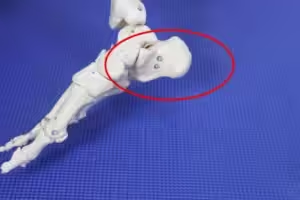
Calcaneus Heel Pain Causes
Most Common Calcaneus Heel Pain Causes:
The number one source of heel pain is plantar fasciitis. This is most likely felt at the bottom of the heel.
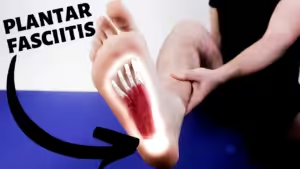
The second most common cause of heel pain is Achilles tendinitis insertional pain, this is felt most commonly at the back of the heel.

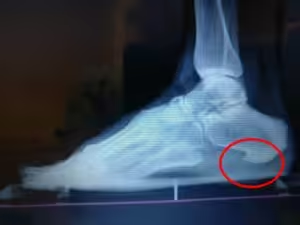
A calcaneal stress fracture is also very common, and this is most common when you squeeze the bone from side to side and there is radiating pain.

- These are three less common heel pain causes, but nonetheless they should be taken seriously!
- The treatment guide is included below.
Less common causes:
- Below are included the next most common causes of calcaneal heel pain.
- We strongly recommend looking at the three links above as these are the three most common causes.
- Nonetheless all six common causes are well treated by the guide below.
1. Calcaneus Pain due to Nerve Pain:
What to look for:
- Radiation of pain.
- Sensory problems.
- Numbness, burning or tingling.
- Pain is worst at night.
Overview:
- Neurologic heel pain is usually due to an irritated or an entrapped nerve through a region that is prone to constriction and tightness such as the ankle joint or in the back where the nerve exits the spine. This type of pain may easily mimic plantar fasciitis (painful bottom of the heel) or back of the heel pain (Achilles tendinopathy) or inside of the ankle pain.
- This type of pain usually manifests itself as numbness, tingling or burning pain rather than the aching sore pain that is experienced with muscle soreness.
- The type of nerve pain originating around the ankle joint is referred to as tarsal tunnel syndrome which is essential the equivalent of carpal tunnel syndrome that is found in the wrist.
- Nerve pain can also occur much earlier and closer to the spine and can be associated with back pain or injury. If you have recently injured your back or have had back pain, a slipped disc or anything like that, then you should suspect what is known as radiculopathy (nerve pain originating from the nerve root in the spine)
- It is also possible to have the nerve irritated in both the back and in the ankle.
- Nerves may also be irritated due to obesity, venous problems (swollen varicose veins), trauma, and space occupying masses.
- Nerve pain can also occur due to systemic disease such as diabetes, nutritional or vitamin deficiencies or alcoholism.
- Tests for neurologic nerve pain include electromyography, nerve conduction velocity, MRI and pressure specified sensory device testing which can be done by your podiatrist.
Nerve Pain Treatment:
- Release of the nerve entrapment either at the back or around the ankle and plantar fascia.
- Nerve release of the tarsal tunnel to prevent tarsal tunnel syndrome.
- Medical treatment of peripheral neuropathy through medications.
2. Inflammatory Arthritis Calcaneus Pain:
What to look for:
- History of being diagnosed with arthritis.
- Many other joints are painful and swollen.
- Obvious previous joint pain.
Overview:
- Almost all cases of heel pain are at least partially mechanically related and will respond to the following recommended therapy, even if inflammatory arthritis is present, but it is good know if any additional modifications can be made to the treatment regimen.
- Keep in mind the possibility of:
- Serognegative arthritides like psoriatic arthritis, ankylosing spondylitis, Reiter’s disease, diffuse idiopathic skeletal hyperostosis, rheumatoid arthritis, fibromyalgia and previous cases of gout.
- Evaluation for these arthritides would require x-ray and laboratory testing by your podiatrist.
Inflammatory Arthritis Treatment:
-Consult with a rheumatological specialist
3. Traumatic Calcaneus Pain:
What to look for:
- History of trauma
- Severe pain with compression
- Pain that gets worse with activity
- Rather than better with activity
Overview:
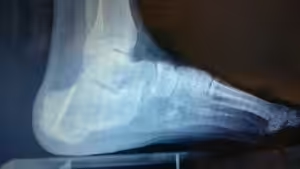
- While biomechanical damage over time is the most common form of soft tissue injury to the plantar fascia and the Achilles tendon around the heel, a traumatic injury to the heel bone itself is the most common cause of a bone injury in the heel region.
- The main thing is recognizing that a high impact fall can translate into the ankle or the mid-foot as spread out pain that is not localized, or it could even have injured your back and compressed nerves that are leading down to your foot and ankle.
- It is important to diagnose this type of pain because over time as you think that it will get better, the small little fragments will develop into arthritis and inhibit joint motion permanently.
Traumatic Calcaneus Pain Treatment.
- Get it diagnosed properly with history and X-rays
- Immobilization will likely be needed to prevent the development of arthritis
- Surgery may be necessary to excise broken bone fragments or re-attach pieces if they are large enough or serious enough
Consult Balance Foot & Ankle Specialist in Howell and Bloomfield.
Our skilled podiatric team specializes in diagnosing and treating pain in the 2nd toe with precision, advanced techniques, and compassionate care. At Balance Foot & Ankle Specialist in Southeast Michigan, we provide current-generation facilities, innovative treatment options, and personalized patient education to ensure the best outcomes. Our commitment is to ease your discomfort, restore proper function, and help you return to walking comfortably and confidently again.
Our team is here to help alleviate your Pain in the 2nd Toe with tailored treatment plans.
Book Your Podiatrist Visit Now
In-Office Treatment at Balance Foot & Ankle
If home treatment isn’t providing relief for your foot pain, our podiatry team at Balance Foot & Ankle can help with same-day evaluations and advanced in-office care.
⚠️ When to see a podiatrist:
- Second toe crossing over the big toe (crossover deformity)
- Clicking or dislocation sensation at the second toe joint
- Pain at rest or with minimal weight-bearing
- Numbness or burning between the 2nd and 3rd toes
- Pain lasting more than 3 weeks despite rest and footwear changes
⭐ 4.4★ · 8,000+ Reviews
Second toe pain while walking is most often capsulitis or a crossover toe. Metatarsal padding offloads the second metatarsophalangeal joint, reducing pain with every step.
PowerStep Pinnacle Arch Support
⭐ 4.5★ · 45,000+ Reviews
Second toe capsulitis is driven by first ray insufficiency — the arch collapses and overloads the second toe. These insoles correct the root mechanical cause.
Frequently Asked Questions
When should I see a doctor?
See a podiatrist if pain persists past 2 weeks, prevents normal activity, or is accompanied by red-flag symptoms (warmth, swelling, numbness, inability to bear weight).
Can I treat this at home?
Mild cases respond to RICE protocol (rest, ice, compression, elevation), supportive shoes, and OTC anti-inflammatories. Persistent symptoms need professional evaluation.
How long does it take to heal?
Most soft tissue injuries resolve in 2-6 weeks with appropriate care. Bone injuries take 6-12 weeks. Chronic conditions need longer-term management.
What is Foot pain?
Foot pain is a common foot/ankle condition that affects mobility and quality of life. Understanding the underlying cause is the first step in successful treatment. Our podiatrists at Balance Foot & Ankle perform a hands-on biomechanical exam, review your activity history, and use diagnostic imaging when appropriate to identify the root cause—not just treat the symptom. Many patients have been told to “rest and ice” without a deeper diagnostic workup; our approach is different.
Symptoms and warning signs
Common signs of foot pain include pain that worsens with activity, morning stiffness, swelling, tenderness when palpated, and difficulty bearing weight. If you experience sudden severe pain, inability to walk, visible deformity, numbness or color change, contact our office the same day or visit urgent care—these can signal a more serious injury such as a fracture, tendon rupture, or vascular compromise. Diabetics with any foot wound should seek same-day care.
Conservative treatment options
Most cases of foot pain respond to non-surgical care: structured rest, supportive footwear changes, custom orthotics, targeted stretching and strengthening protocols, anti-inflammatory medications when medically appropriate, and in-office procedures such as ultrasound-guided injections. We also offer advanced therapies including MLS laser therapy, EPAT/shockwave, regenerative injections, and image-guided procedures. Treatment is sequenced from least invasive to most invasive, and we explain the rationale at every step.
When is surgery considered?
Surgery is reserved for cases that fail 3-6 months of well-structured conservative care, when there is structural pathology (severe deformity, complete tear, advanced arthritis), or when imaging shows damage that will not heal without intervention. Our surgeons have performed 3,000+ foot and ankle procedures and prioritize minimally-invasive techniques whenever appropriate. We discuss recovery timelines, return-to-activity milestones, and realistic outcome expectations before any procedure is scheduled.
Recovery timeline and prevention
Recovery from foot pain varies based on severity and chosen treatment path. Conservative cases often improve within 4-8 weeks with consistent adherence to the protocol. Post-procedural recovery may range from a few days (in-office procedures) to several months (reconstructive surgery). Long-term prevention involves footwear assessment, activity modification, structured strengthening, and regular check-ins with your podiatrist if you have a history of recurrence. We provide written home-exercise plans and digital follow-up support.
Ready to fix this for good?
Reading goes so far. The fastest path is a 30-minute office visit. Same-day Howell or Bloomfield Hills. Call (810) 206-1402.
Ready to Get Relief?
Same-day appointments available in Howell & Bloomfield Hills, MI
4.9★ | 1,123 Reviews | 3,000+ Surgeries
Or call: (810) 206-1402

Dr. Tom Biernacki, DPM is a board-certified foot & ankle surgeon (ABFAS & ABPM) at Balance Foot & Ankle Specialists in Southeast Michigan. With over a decade of clinical experience, he specializes in heel pain, bunions, diabetic foot care, sports injuries, and minimally invasive surgery. Dr. Biernacki is a member of the APMA and ACFAS, and his patient education content on MichiganFootDoctors.com and YouTube has made him one of the most-followed foot & ankle educators on YouTube.