


Quick answer: Ball Foot Pain has multiple potential causes including mechanical, neurological, vascular, and inflammatory. The patterns we see most often are overuse, poorly-fitted shoes, and biomechanical imbalance. Red flags requiring urgent evaluation: warmth/redness (infection), inability to bear weight (fracture), and unilateral swelling without injury (DVT). Call (810) 206-1402.
Foot or ankle pain that isn’t getting better? A podiatrist can diagnose it in one visit — pick a real appointment time online, 24/7: Howell or Bloomfield Township. Takes about a minute, 24/7.
Ball of Foot Pain? Get Fast Relief from Michigan Foot Specialists
Pain in the ball of your foot can make walking, standing, or exercising uncomfortable and frustrating. Our Michigan podiatrists specialize in diagnosing the cause and providing personalized treatment to relieve pain, prevent long-term damage, and restore comfort.
Schedule a Toenail Consultation- Serving patients across Michigan
- Same-week appointments available


What Causes Ball of Foot Pain?
Ball of foot pain most commonly develops from conditions affecting the metatarsal bones and surrounding soft tissues — including capsulitis, Morton’s neuroma, and metatarsal stress fractures. Overuse, poor footwear, and biomechanical abnormalities like flat feet or high arches place excessive pressure on the forefoot, causing inflammation, nerve irritation, or structural damage over time.
Ball of foot pain, also known as metatarsalgia, occurs when the front part of your foot experiences excess pressure or inflammation. Common contributing factors include:
- High-impact activities – Running, jumping, or sports
- Improper footwear – Tight shoes, high heels, or unsupportive soles
- Foot structure issues – Flat feet, high arches, or bunions
- Medical conditions – Arthritis, diabetes, or nerve disorders
- Age-related changes – Fat pad thinning or ligament strain
Symptoms may include sharp, aching, or burning pain in the forefoot, numbness, tingling, or a feeling of walking on pebbles.
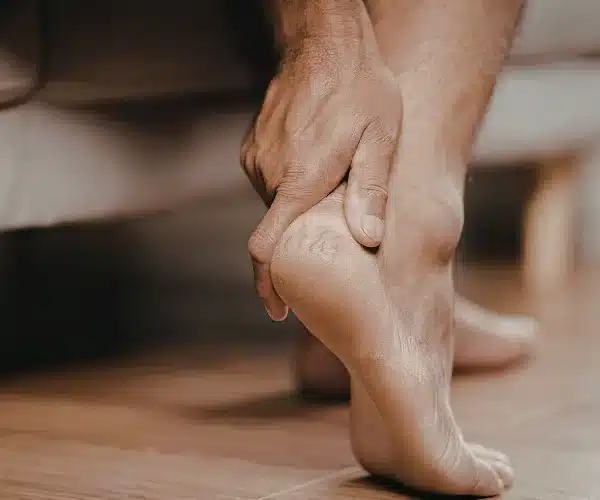
Causes of Ball of Foot Pain
The most frequent causes of ball of foot pain include metatarsalgia, Morton’s neuroma, capsulitis, and plantar plate tears. These conditions share a common mechanism — excessive mechanical load on the forefoot — triggered by tight footwear, repetitive impact activities, or foot deformities such as bunions and hammertoes. Identifying the exact cause guides the most effective treatment plan.
Ball of foot pain, also known as metatarsalgia, can result from several common factors:
- High-Impact Activities – Running, jumping, or prolonged standing can place excessive stress on the forefoot.
- Improper Footwear – Tight shoes, high heels, or unsupportive soles increase pressure on the ball of the foot.
- Foot Structure Issues – Flat feet, high arches, bunions, or toe deformities can alter pressure distribution.
- Medical Conditions – Arthritis, diabetes, nerve disorders, or inflammation may contribute to pain.
- Age-Related Changes – Fat pad thinning over the metatarsal heads can reduce cushioning and lead to discomfort.
A podiatric evaluation is the best way to identify the exact cause and rule out serious issues.
Treatment Options
Effective treatment for ball of foot pain typically starts conservatively with orthotics, shoe modifications, and anti-inflammatory measures. Metatarsal pads redistribute pressure away from painful areas, while physical therapy addresses the biomechanical imbalances driving the condition. Most patients experience significant improvement within four to eight weeks when treatment is accurately matched to the underlying diagnosis.
Most cases of ball of foot pain are managed conservatively with:
- Rest and Activity Modification – Avoid high-impact activities or prolonged standing.
- Footwear Adjustments – Supportive shoes or cushioned insoles relieve pressure.
- Custom Orthotics – Correct alignment and reduce forefoot stress.
- Pain management and wound care
- Medication & Therapy – Anti-inflammatory medications, ice, and stretching exercises help manage pain and inflammation.
- Padding & Taping – Metatarsal pads or taping techniques relieve pressure and protect sensitive areas.
Surgery (If Necessary)
Surgery for ball of foot pain is reserved for cases where conservative care has failed after three to six months. Common procedures include metatarsal osteotomy to correct bone alignment, neuroma excision for Morton’s neuroma, and plantar plate repair for joint instability. Recovery typically takes six to twelve weeks, with excellent outcomes when the correct procedure is matched to the underlying pathology.
Surgery is considered when conservative measures fail to relieve pain or if structural problems require correction. Common procedures include:
- Metatarsal Shortening or Realignment – To reduce pressure on the forefoot.
- Bunion or Toe Deformity Correction – Realigns toes to relieve pain in the ball of the foot.
- Nerve Decompression or Removal (Morton’s Neuroma Surgery) – For nerve-related forefoot pain.
All procedures are performed safely in-office or at an accredited surgical facility by our board-certified podiatrists.
Recovery & What to Expect
Recovery from ball of foot pain treatment varies by condition severity and intervention type. Conservative measures like orthotics and rest typically show improvement within four to six weeks. Surgical recovery requires offloading the foot for two to six weeks post-procedure, followed by a gradual return to normal footwear and activity, guided closely by your podiatrist.
Recovery depends on the treatment method:
- Rest and Activity Modification – Avoid high-impact activities or prolonged standing.
- Footwear Adjustments – Supportive shoes or cushioned insoles relieve pressure.
- Medication & Therapy – Anti-inflammatory medications, ice, and stretching exercises help manage pain and inflammation.
- Padding & Taping – Metatarsal pads or taping techniques relieve pressure and protect sensitive areas.
Our Michigan podiatry team guides you through every step, from diagnosis to long-term relief, ensuring a safe and effective recovery.
Recommended Product
The most beneficial products for ball of foot pain include metatarsal pads, cushioning insoles, and wide-toe-box footwear that reduces forefoot compression. Medical-grade orthotics from a podiatrist offer the highest level of correction by addressing biomechanical contributors directly. Over-the-counter metatarsal cushions provide immediate relief for mild cases while awaiting a professional fitting.
Custom Orthotics & Supportive Footwear for Ball of Foot Pain
If you’re dealing with ball of foot pain, the right support can make all the difference. At Balance Foot & Ankle Specialist, we recommend custom orthotics and supportive footwear to reduce pressure, improve alignment, and protect your forefoot.
Benefits include:
- Reduced pressure on the ball of the foot to relieve pain and inflammation
- Corrected foot alignment to prevent recurring pain or deformities
- Improved comfort and stability while walking, running, or standing
- Long-term prevention of forefoot injuries and nerve irritation

Our podiatrists in Michigan evaluate your gait, foot structure, and activity level to design personalized orthotics that work with your lifestyle. Pairing them with proper shoes maximizes relief and supports healthy foot function.
- Even patients undergoing surgical correction or conservative therapy benefit from custom orthotics to speed recovery and prevent future discomfort.
Ball Of Foot Pain (Causes, Symptoms, Diagnosis & Best Home Treatment!)
Ball of foot pain, clinically called metatarsalgia, refers to pain and inflammation in the metatarsal heads at the base of the toes. Symptoms range from burning and aching to sharp, stabbing pain that worsens with standing and walking. Accurate diagnosis requires identifying whether the cause is structural, neurological, or inflammatory, since each responds to distinctly different treatments.
Ball Of Foot Pain causes are
- Metatarsalgia
- Morton’s Neuroma
- Hammer Toes
- Plantar Plate Tears
- Fat Pad Atrophy
- Ball of the foot pain is one of the most common foot problems we see!
- It is too much pressure on the front of your foot, in it can lead to over five common problems.
- We have seen over 10,000+ cases of this. Let us help.
Pain in Ball of Foot and Big Toe Treatment Video:
Pain at the ball of the foot combined with big toe discomfort often signals sesamoiditis, hallux rigidus, or first metatarsophalangeal joint pathology. The sesamoid bones beneath the big toe joint absorb significant impact forces during push-off and can become inflamed or fractured with overuse. Treatment focuses on offloading the joint with orthotic accommodations and reducing inflammation before structural changes become permanent.
https://youtu.be/tqOzHZ8rUqsWhy Does The Ball Of My Foot Hurt?
The ball of your foot hurts because the metatarsal heads — the five bones just behind your toes — bear enormous pressure with every step. When this load becomes excessive due to improper footwear, weight gain, or prolonged standing, the surrounding tissues become inflamed and painful. The specific location and nature of pain help identify whether the cause is nerve, joint, tendon, or bone related.
- The ball of the foot usually hurts due to too much pressure on the front of the foot.
- As listed above, this can lead to numerous conditions, but they are all made worse by more pressure.
- Usually, about 1/3rd of each step should be during push-off, but if the calf and hamstring are tight, this could be higher.
- So more time spent on the ball of the foot will cause more ball of the foot pain!.
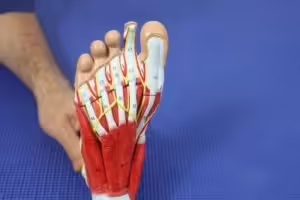
Ball Of Foot Pain Running:
Running dramatically increases forefoot loading — the metatarsal heads absorb up to three times body weight per stride. This repetitive impact commonly causes metatarsal stress fractures, capsulitis, and Morton’s neuroma in runners, particularly those who increase mileage rapidly or transition to minimalist footwear. Addressing running mechanics, footwear selection, and training load modifications resolves most running-related forefoot pain without surgery.
- Like above, running also increases the time spent on the ball of foot push-off.
- Each step leads to an impact of 3-4x of your body weight!
- The problems listed below will be magnified while running.
- This magnified pain is made even worse if the hamstrings, calves, and plantar fascia are tight.
- The pain isn’t just during running but maybe a warning of a deeper cause.

This is most common in people who have very tight hamstrings. Calf muscles are putting much more pressure on the ball the foot. This can lead to neuroma, metatarsal, or even stress fracture pain.
Ball Of Foot Pain Running:
- Like above, running also increases the time spent on the ball of foot push-off.
- Each step leads to an impact of 3-4x of your body weight!
- The problems listed below will be magnified while running.
- This magnified pain is made even worse if the hamstrings, calves, and plantar fascia are tight.
- The pain isn’t just during running but maybe a warning of a deeper cause.
This is most common in people who have very tight hamstrings. Calf muscles are putting much more pressure on the ball the foot. This can lead to neuroma, metatarsal, or even stress fracture pain.
Pain In The Ball Of The Foot Problems
Multiple distinct conditions can cause pain in the ball of the foot, and distinguishing between them is essential for effective treatment. Neurological causes like Morton’s neuroma produce burning sensations between toes, while structural problems like capsulitis cause localized joint tenderness and swelling. A thorough podiatric examination — including gait analysis and imaging — correctly identifies the problem and prevents years of unnecessary discomfort.
There are numerous causes of the ball of foot pain:
1. Metatarsal-phalangeal Joint Pain
Metatarsophalangeal joint pain occurs where the long metatarsal bones meet the base of the toes, a high-load area vulnerable to capsulitis, plantar plate tears, and arthritis. The second MTP joint is most frequently affected, producing swelling, stiffness, and pain during push-off. Conservative treatment includes metatarsal pads, buddy taping, and anti-inflammatory medications, with surgery reserved for cases involving irreversible joint instability.
- Don’t let the huge name scare you!
- This is just generalized pain located in the ball of the foot.
- Sometimes the only real cause is increased pressure.

Big toe joint arthritis may cause ball of the foot pain. This is the 1st metatarsal phalangeal joint with end-stage arthritis.
Metatarsal-phalangeal Join Pain Treatment:
- This focuses on offloading the ball of the foot.
- It also focuses on stretching out the posterior muscle groups.
- This leads to a decrease in the ball of foot pressure.
2. Morton’s Neuroma
Morton’s neuroma is a thickening of nerve tissue between the third and fourth metatarsal heads, causing sharp, burning pain or the sensation of standing on a pebble. It develops from chronic irritation due to tight footwear or abnormal foot mechanics compressing the interdigital nerves. Treatment ranges from wide-toe-box shoes and corticosteroid injections to radiofrequency ablation or surgical neuroma excision for persistent cases.
- This can cause numbness, burning, and tingling.
- This is usually around the 3rd and 4th toes.
- You may even feel an itchy ball of your foot.
- There may be a clicking noise often associated with this.

This is Morton’s neuroma. It is most common in between the 3rd and the 4th metatarsals.
Morton’s Neuroma Home Treatment:
- This guide explains home treatment options.
- Control and cushioning of the ball of the foot are needed.
- It is also necessary to stretch and re-train the posterior muscle groups.
- If these methods do not work, invasive treatment may be necessary.
3. Capsulitis
Capsulitis is inflammation of the joint capsule surrounding the metatarsophalangeal joint, most commonly affecting the second toe. It produces localized forefoot pain that worsens with activity and may cause the toe to gradually drift and cross over its neighbor. Early treatment with taping, orthotics, and activity modification is effective — delaying care increases the risk of permanent joint instability requiring surgical repair.
- This is pain at the base of the toes.
- If you try and bend the smaller toes back or up, you will feel pain.
- This is inflammation of the flexor tendons that bend the toes down.
- This can be very common in the running.

Capsulitis of the Second Toe Taping: Plantar Plate Tear Treatment 2020
- Decrease inflammation.
- Decrease ball of foot pressure through stretching.
4. Metatarsal Stress Fracture:
Metatarsal stress fractures are hairline cracks caused by repetitive mechanical loading that exceeds the bone’s remodeling capacity. Runners, dancers, and military personnel are at highest risk, with the second and third metatarsals most commonly affected. Symptoms include focal tenderness and swelling that worsen with activity. Treatment involves offloading in a boot, with return to activity guided by imaging confirmation of bone healing.
- This is a gradual onsetting pain over a few days or weeks.
- It eventually becomes too painful to walk or run.
- This is most common in weekend warriors who start training very hard.
- Usually in people start running many miles right away.
Metatarsalgia or ball of the foot pain is the pain in the front of the foot.
This is most common in people who have very tight hamstrings; calf muscles are putting much more pressure on the ball the foot. This can lead to neuroma, metatarsal, or even stress fracture pain.
Metatarsal Stress Fracture Home Treatment:
- Treatment is based on proper diagnosing.
- Imaging and X-rays may be needed to confirm the stress fracture.
- Off-loading will be necessary to let the fracture heal.
5. Painful Callus On Ball Of Foot
Painful calluses under the ball of the foot form when abnormal pressure concentrates repetitively over the metatarsal heads, triggering excessive skin thickening as a protective response. While the skin itself is not harmful, the hard core of a callus compresses underlying structures and causes deep, localized pain with each step. Treatment involves professional debridement, custom orthotics to redistribute pressure, and footwear modifications to prevent recurrence.
- A callus on the ball of the foot is very common.
- This is a sign of too much pressure on the ball of the foot.
- Calluses develop in relation to the amount of pressure placed on them.
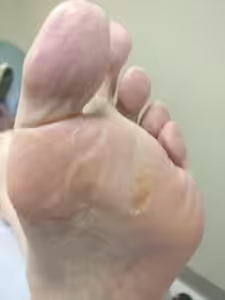
Corns and calluses are the most common over the ball of the foot and between the toes. Acorn is essentially a plugged sweat gland that goes deep down like a spike, whereas a callus is a flat buildup of hard skin in a pressure area of the foot. Both are similar, and corn is more narrow and spiky underneath.
Painful Callus On Ball Of Foot Treatment:
- Soften up the callus through home remedies.
- Remove it after it is softened.
- Take precautions to remove the cause of the callus on the ball of the foot!
6. Blister On Ball Of Foot
Blisters on the ball of the foot form when friction or heat causes the outer skin layers to separate and fill with fluid, most commonly from new or ill-fitting footwear. Proper treatment involves keeping the blister intact when possible, using blister-specific bandaging, and addressing the underlying friction source. Diabetic patients should seek professional care immediately for any foot blisters to prevent serious wound complications.
- A blister will form from shear forces on the ball of the foot.
- They can have both blood or serous fluid.
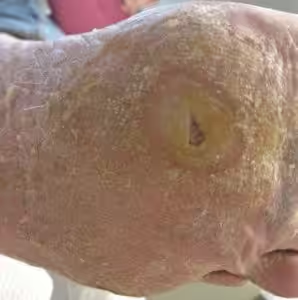
This stone bruise on the bottom of the ball of the foot caused a blister and the wound.
As you get older, you have a lot less fat pad on the ball of your foot in your heel. This can cause you to blister and bruise underneath.
It is important to keep pressure off this site, especially as you begin to lose sensation in the bottom of your foot.
Blister On Ball Of Foot Treatment:
- Learn whether to pop the blister or not.
- Then learn how to cover your blister on the ball of the foot.
- Then how to keep the ball of the foot blister from coming back!
7. Second Toe Longer Than Big Toe:
When the second toe is longer than the big toe — known as Morton’s toe — it shifts disproportionate weight onto the second metatarsal head during push-off, increasing the risk of calluses, stress fractures, and capsulitis. This anatomical variant affects an estimated 10 to 30 percent of the population. Custom orthotics with a first metatarsal extension effectively redistribute loading forces and relieve related forefoot pain.
- This will cause all the pain to be concentrated at the base of the 2nd toe.
- This is perhaps the most common cause of metatarsalgia (generalized ball of foot pain.).
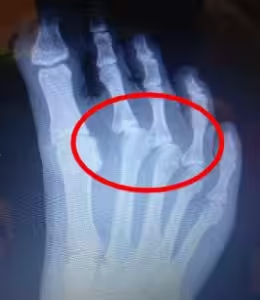
This is an example of a plantar plate rupture of the second, third toes. This started as second toe capsulitis and plantar plate pain, but eventually, it led to a full plantar plate rupture. This can cause hammertoes, toe dislocation, and crossover toes. If these toes were stabilized with taping, this could have prevented this dislocation.
Second Toe Longer Than Big Toe Treatment:
- This is done by controlling pressure on the forefoot.
- The only way to correct the length permanently is through surgery.
- But this is rarely needed.
8. Corn On Ball Of Foot
Corns on the ball of the foot are dense, cone-shaped skin lesions that develop in response to focused pressure, pointing inward and pressing on sensitive nerve fibers with each step. Unlike calluses, corns have a distinct central core that causes sharp, stabbing pain. A podiatrist safely removes the corn through debridement and addresses the underlying pressure point with padding or orthotics to prevent immediate recurrence.
- A foot corn on a ball of the foot can cause deep pinpoint pain.
- A corn is different than a callus, and it is thinner and deeper.
- It can feel like a needle digging deep in through the skin.
- It is thought to be a thickened and scarred sweat duct.
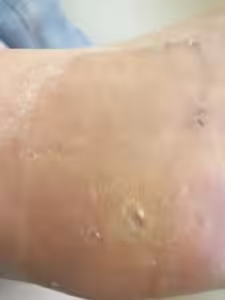
This is heloma durum, and this is another name for a hard corn.
Corn On Ball Of Foot Treatment:
- Treatment of foot corn on the ball of the foot is usually done by sharp steel!
- Since the corn is very deep, moisturizing does not work as well as for a callus.
- You can always try the skin removal techniques shown for a callus on the ball of the foot.
- But the results will not be as impressive.
9. Hard Skin On Ball Of Foot
Hard, thickened skin on the ball of the foot is the body’s response to chronic mechanical pressure, most often from prominent metatarsal heads, flat feet, or footwear that concentrates load on specific forefoot areas. While hyperkeratotic skin itself is not dangerous, it can conceal underlying pathology and cause significant discomfort when walking. Regular debridement combined with pressure-redistributing orthotics and appropriate footwear provides lasting relief.
- Hard skin on the ball of the foot is essentially a callus on the ball of the foot.
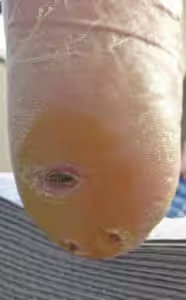
Hard skin can develop in pressure areas of the foot. This can lead to an ulcer with cracks and fissures.
Hard Skin On Ball Of Foot Treatment:
- Treatment can be done almost completely at home!
- There are several home remedies that can soften the skin.
- The skin can then be safely and easily removed.
10. Stone Bruise On Ball Of Foot
A stone bruise is deep tissue bruising beneath a metatarsal head, typically caused by stepping forcefully on a hard, sharp object such as a stone or acorn. The impact compresses and damages the fat pad and underlying soft tissues, causing persistent, tender pain localized to a specific point on the forefoot. Treatment involves rest, cushioning with metatarsal pads, and time for healing, usually within two to four weeks.
- A stone bruise on the ball of the foot is simply a deep contusion.
- It gets its name from stepping on a stone.
- This can penetrate through the protective fat pad.
- The deep tissue can take numerous weeks to get better!

The stone bruise on the heel can take about 5 to 7 days for the initial bruising to go away.
If you really bruise the bone underneath, it can take even up to 6 to 8 weeks. You will feel a lot better quicker if you wear good orthotics and good shoes.
Stone Bruise On Ball Of Foot Treatment:
- Treatment is based on rest, ice, compression, and elevation.
- Ball of foot cushion through padding and gel inserts is most important.
- The first few days are usually the most painful; then, it gets better very quickly!
11. Cyst On Ball Of Foot
Cysts on the ball of the foot include ganglion cysts and adventitial bursae, which form when synovial fluid accumulates in response to joint stress or repetitive friction. They present as soft, fluid-filled lumps that may be asymptomatic or cause focal pressure pain. Small cysts often resolve with activity modification and padding, while persistent or enlarging cysts warrant aspiration or surgical excision when they interfere with footwear or daily function.
- A cyst on the ball of the foot is almost always a ganglion cyst.
- This is a pouching of joint fluid.
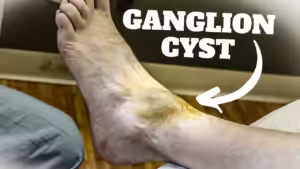
A hard cyst can develop in the foot and ankle. This is most commonly non-dangerous fluid called a ganglion cyst.
Cyst On Ball Of Foot Treatment:
- This is usually treated by aspirating with a needle.
- Surgical removal can provide more long-term results.
12. Hard Lump On Ball Of Foot
A hard lump on the ball of the foot can represent a plantar fibroma, bony prominence, intractable plantar keratosis, or in rare cases, a soft tissue tumor. Plantar fibromas are firm nodules embedded in the plantar fascia that gradually enlarge and cause pain with walking. Accurate diagnosis through physical examination and ultrasound imaging is essential, as treatment ranges from orthotics and stretching to surgical removal depending on the underlying cause.
- This is most likely a foot corn on the ball of the foot.
- It can also be a plantar fibroma.
- A plantar fibroma feels like a pebble underneath the skin, but the skin is normal.

A plantar fibroma can form anywhere along with the structures the bottom of the foot here. There is a layer of tissue called the plantar fascia, with muscles underneath it.
We like to think of a plantar fibroma, almost like pair with scar tissue throughout the plantar fascia. The more you keep walking on it, the more swollen and agitated it gets. It fills up with more fluid and causes more pain.
Hard Lump On Ball Of Foot Treatment:
- Ball of foot cushion is the primary conservative treatment to achieve relief!
- Surgery may be necessary to remove the knot on the ball of the foot.
13. Plantar Plate Injury
The plantar plate is a thick fibrocartilaginous ligament on the undersurface of each metatarsophalangeal joint that stabilizes the toe and prevents upward drifting. Tears — usually affecting the second MTP joint — cause forefoot pain, swelling, and progressive toe deformity. Conservative care with buddy taping, supportive orthotics, and anti-inflammatory treatment effectively manages mild cases, while surgical repair is necessary for complete tears with significant joint instability.
- Plantar plate injury can occur when the ligament holding the second metatarsal theology joins together start to become injured.
- This is one of the most common causes of second toe pain in the bulk of the foot.
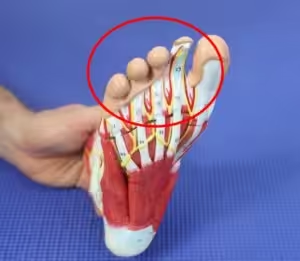
Middle toe pain can be caused by hammertoes, plantar plate tears, capsulitis, Mortons neuroma pain, stress fractures, and metatarsalgia.
Cyst On Ball Of Foot Treatment:
- This is usually treated by aspirating with a needle.
- Surgical removal can provide more long-term results.
Pain In Ball Of Foot Under Big Toe:
Pain specifically beneath the big toe joint typically involves the sesamoid bones — two small bones embedded in the flexor hallucis brevis tendon that act as a pulley for big toe push-off. Sesamoiditis occurs when these bones become inflamed from repetitive loading, causing sharp or aching forefoot pain that worsens during walking. Treatment includes offloading pads, activity modification, and orthotics to reduce sesamoid pressure, with surgical removal rarely needed.
The most common causes of pain in the ball of the foot under the big toe are:
1. Sesamoiditis:
- This is inflammation of the ligaments and soft tissue directly under the big toe joint.
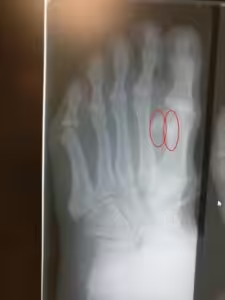
2. Bunion:
- This is a big bump on the inside of the big toe joint.

3. Bone Spurs Ball Of Foot:
- This is when you have decreased motion in the big toe.
- There is usually a bone bump on top of the big toe joint.
4. Turf Toe:
- This is when the big toe gets jammed back or bent back.
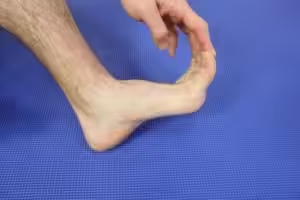
5. Gout Ball Of Foot:
- Ball of foot gout is almost always at the big toe joint.
- A gout is a form of crystals that can cause arthritis.
- This is most common in dehydration states, high protein intake, and after alcohol consumption.

6. Bone Spurs Ball Of Foot:
- Bone spurs at the ball of the foot usually form at the big toe joint.
- This is a condition called hallux rigidus.
7. Pain In Ball Of Foot When Walking:
- Pain in the ball of the foot when walking can be any of the above.
- Just like running, walking puts increased pressure on the ball of your foot.
- Each step is 1-2x your body weight.
- This can be a magnification of a further problem that is already there.
- If it does not seem like any other problems above, assume metatarsalgia.

Why Michigan Patients Trust Us for Black Toenail Treatment
Patients throughout Michigan trust Balance Foot & Ankle Specialist because we combine advanced podiatric care with a compassionate, patient-focused approach.
Our doctors are highly trained in diagnosing and treating complex foot conditions, from everyday pain to advanced surgical needs.
Book a Consultation NowFor Same Day Visit Call: (810) 206-1402
Our board-certified podiatrists specialize in foot and ankle care.
Expert Podiatric Care You Can Trust
Balance Foot & Ankle Specialists provides comprehensive podiatric care for all ball of foot pain conditions, from conservative management with custom orthotics and targeted injections to advanced surgical correction when needed. Our board-certified podiatrists use the latest diagnostic tools and evidence-based treatment protocols to deliver accurate diagnoses and effective outcomes. Patients across Howell, Brighton, and Southeast Michigan trust our practice for even the most challenging foot and ankle problems.

Dr. Tom Biernacki, DPM
Dr. Tom Biernacki is a board-certified podiatrist and founder of Balance Foot & Ankle Specialists, recognized as one of Michigan’s leading foot and ankle physicians. He specializes in complex reconstructive surgery, sports medicine, and biomechanical correction, combining minimally invasive techniques with deep clinical expertise to achieve outstanding patient outcomes. Dr. Biernacki’s commitment to conservative-first care has earned him a five-star reputation throughout Southeast Michigan.
Is a board-certified foot and ankle specialist with extensive experience in treating conditions such as ball of foot pain, bunions, nerve disorders, and sports-related injuries.
Book Now
Dr. Carl Jay,
DPM
Dr. Carl Jay is a fellowship-trained podiatrist at Balance Foot & Ankle Specialists with extensive expertise in forefoot pathology, sports injuries, and reconstructive foot surgery. He brings advanced training in diagnosing and treating conditions affecting the ball of the foot, including complex metatarsal procedures and joint reconstruction. Dr. Jay’s patient-centered approach prioritizes the least invasive effective treatment, with surgery reserved only when conservative care has been exhausted.
Specializes in both conservative and surgical treatments for a many foot and ankle conditions.
Book Now
Dr. Daria Gutkin, DPM
Dr. Daria Gutkin is a podiatrist at Balance Foot & Ankle Specialists with a strong focus on biomechanical assessment, custom orthotics, and conservative foot care. She has particular expertise treating forefoot pain conditions including metatarsalgia, Morton’s neuroma, and capsulitis through evidence-based, minimally invasive protocols. Dr. Gutkin takes a thorough, systematic approach to diagnosis, ensuring each patient receives a treatment plan precisely tailored to their anatomy and lifestyle.
Provides comprehensive foot and ankle care with a focus on nail conditions, sports injuries, and diabetic foot health.
Book NowMore Podiatrist-Recommended Foot Health Essentials
Hoka Clifton 10

Max-cushion everyday shoe — podiatrist favorite for walking and running.

OOFOS Recovery Slide

Impact-absorbing recovery sandal — wear after long days on your feet.
As an Amazon Associate, Balance Foot & Ankle earns from qualifying purchases. Product recommendations are based on clinical experience; prices and availability shown above update live from Amazon.
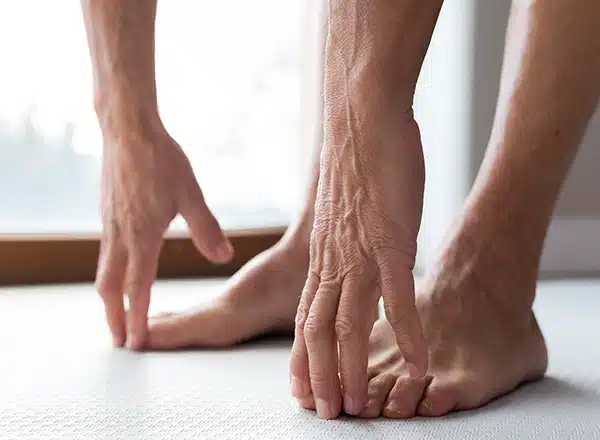
When to See a Podiatrist
If foot or ankle pain has been bothering you for more than a few weeks, home care alone may not be enough. Balance Foot & Ankle offers same-week appointments at our Howell and Bloomfield Township clinics — no referral needed in most cases. Bring your current shoes and a short list of symptoms and we’ll build you a treatment plan in one visit.
Call Balance Foot & Ankle: (810) 206-1402 · Book online · Offices in Howell & Bloomfield Township
FAQ: Ball of Foot Pain
These frequently asked questions address the most common concerns about ball of foot pain — from identifying the cause of your symptoms to understanding when to see a podiatrist. Ball of foot pain is one of the most common reasons patients visit our practice, and most cases respond well to conservative treatment when identified early. If your specific question is not answered here, our team is available for same-day consultations.
 Why are my toenails turning black and falling?
That’s a really common — and understandably scary — question. Toenails usually turn black and fall off because something is damaging the nail or the tissue underneath it. Here are the most likely reasons, from most common to more serious.
What causes toenails to turn black and falling?Toenails usually turn black and fall off because the nail or the tissue underneath it has been damaged. The discoloration is often a sign of bleeding, pressure, infection, or poor blood flow. Here are the most common causes, explained simply.
Why do toenails turn black and fall off?Toenails usually turn black and fall off because something damages the nail or the tissue underneath it. The dark color is often trapped blood, infection, or loss of blood supply. Here are the most common reasons.
Don’t Let Ball of Foot Pain Slow You Down
Ball of foot pain is highly treatable — most patients achieve full relief within weeks when working with an experienced podiatrist to identify and address the root cause. Whether your pain stems from a structural issue, nerve irritation, or overuse injury, Balance Foot & Ankle Specialists has the expertise to get you back to the activities you love. Call today to schedule a hands-on exam plus imaging when needed and take the first step toward pain-free living.
Ball of foot pain can make walking, standing, and daily activities uncomfortable. Get professional evaluation and relief from Michigan’s trusted podiatry specialists. relief.
Schedule Your Appointment TodayCaregiver appointments welcome. Same-week appointments may be available.
Related Treatment Guides
Ball of Foot Pain Making Walking Difficult?
Pain in the ball of the foot (metatarsalgia) can result from Morton’s neuroma, capsulitis, sesamoiditis, metatarsal stress fractures, or fat pad atrophy. Our podiatrists identify the exact cause and provide targeted treatment.
References
- Espinosa N, et al. Metatarsalgia. J Am Acad Orthop Surg. 2010;18(8):474-485.
- Pace A, et al. Morton’s interdigital neuroma: current concepts review. EFORT Open Rev. 2021;6(1):14-22.
- Nery C, et al. Lesser metatarsophalangeal joint instability. Foot Ankle Int. 2012;33(4):301-311.
Insurance Accepted
BCBS · Medicare · Aetna · Cigna · United Healthcare · HAP · Priority Health · Humana · View All →
👟 Dr. Tom Also Recommends
Podiatrist Recommended Shoes 2026: Dr. Tom’s Top Picks for Every Condition
The right footwear can make or break your recovery. Dr. Tom’s complete guide to the best shoes for plantar fasciitis, flat feet, neuropathy, bunions & more — with clinical picks for every foot type.
See Dr. Tom’s Top Shoe Picks →Howell Office
4330 E Grand River Ave
Howell, MI 48843
Get Directions →
Bloomfield Township Office
43494 Woodward Ave, #208
Bloomfield Township, MI 48302
Get Directions →
Your Board-Certified Podiatrists



Ready to Get Back on Your Feet?
Same-week appointments available at both locations.
Book Your AppointmentPodiatrist-Recommended Ball of Foot Pain Tools
Metatarsalgia responds to three interventions: a metatarsal pad placed PROXIMAL to (behind) the painful heads, a cushioned insole that offloads the forefoot, and a rocker-sole shoe that unloads push-off.
PowerStep Pinnacle Maxx Orthotic Insoles
Built-in metatarsal dome placed exactly where we tell patients to position it.
Check Amazon Price →Pedag T-Form Metatarsal Pads
Adhesive met pads for shoes without a built-in dome. Place BEHIND the sore spot.
Check Amazon Price →Hapad Metatarsal Cookies
Wool-felt met cookies — adjustable height to dial in pressure relief.
Check Amazon Price →Affiliate disclosure: Amazon links are affiliate links — we earn a small commission if you buy through them, at no cost to you. We only recommend products we actually prescribe to patients at Balance Foot & Ankle.
Related from Balance Foot & Ankle
Watch Dr. Tom on Running Injuries
Dr. Tom’s top running injury prevention protocols — footwear, orthotics, gait analysis, and the 10% rule that prevents most overuse injuries.
Dr. Tom’s Ball of Foot Pain Protocol
- Foot Petals Tip Toes — Metatarsal head pain and forefoot loading: Foot Petals Tip Toes metatarsal cushion redistributes pressure away from the 2nd-4th metatarsal heads — the primary OTC mechanical intervention for metatarsalgia and capsulitis.
- Doctor Hoy’s Natural Pain Relief Gel — Forefoot inflammation and MTP joint soreness: arnica + camphor gel applied to the ball of the foot 3-4x daily reduces the synovial and periosteal inflammation regardless of whether the cause is Morton’s neuroma, capsulitis, or stress fracture.
- PowerStep Pinnacle — Ball of foot pain from arch collapse overloading the metatarsals: PowerStep Pinnacle’s metatarsal dome reduces the ground reaction force at the forefoot during push-off — addressing the mechanical cause of most chronic metatarsalgia.
Ball of foot pain not improving after 4 weeks of cushioning and arch support? Morton’s neuroma, plantar plate tear, and stress fractures require clinical evaluation. Balance Foot & Ankle → (810) 206-1402
In-Office Treatment at Balance Foot & Ankle
If home treatment isn’t providing relief for your foot and ankle conditions, our podiatry team at Balance Foot & Ankle can help with same-day evaluations and advanced in-office care.
Frequently Asked Questions
When should I see a doctor?
See a podiatrist if pain persists past 2 weeks, prevents normal activity, or is accompanied by red-flag symptoms (warmth, swelling, numbness, inability to bear weight).
Can I treat this at home?
Mild cases respond to RICE protocol (rest, ice, compression, elevation), supportive shoes, and OTC anti-inflammatories. Persistent symptoms need professional evaluation.
How long does it take to heal?
Most soft tissue injuries resolve in 2-6 weeks with appropriate care. Bone injuries take 6-12 weeks. Chronic conditions need longer-term management.
What is Foot pain?
Foot pain is a common foot/ankle condition that affects mobility and quality of life. Understanding the underlying cause is the first step in successful treatment. Our podiatrists at Balance Foot & Ankle perform a hands-on biomechanical exam, review your activity history, and use diagnostic imaging when appropriate to identify the root cause—not just treat the symptom. Many patients have been told to “rest and ice” without a deeper diagnostic workup; our approach is different.
Symptoms and warning signs
Common signs of foot pain include pain that worsens with activity, morning stiffness, swelling, tenderness when palpated, and difficulty bearing weight. If you experience sudden severe pain, inability to walk, visible deformity, numbness or color change, contact our office the same day or visit urgent care—these can signal a more serious injury such as a fracture, tendon rupture, or vascular compromise. Diabetics with any foot wound should seek same-day care.
Conservative treatment options
Most cases of foot pain respond to non-surgical care: structured rest, supportive footwear changes, custom orthotics, targeted stretching and strengthening protocols, anti-inflammatory medications when medically appropriate, and in-office procedures such as ultrasound-guided injections. We also offer advanced therapies including MLS laser therapy, EPAT/shockwave, regenerative injections, and image-guided procedures. Treatment is sequenced from least invasive to most invasive, and we explain the rationale at every step.
When is surgery considered?
Surgery is reserved for cases that fail 3-6 months of well-structured conservative care, when there is structural pathology (severe deformity, complete tear, advanced arthritis), or when imaging shows damage that will not heal without intervention. Our surgeons have performed 3,000+ foot and ankle procedures and prioritize minimally-invasive techniques whenever appropriate. We discuss recovery timelines, return-to-activity milestones, and realistic outcome expectations before any procedure is scheduled.
Recovery timeline and prevention
Recovery from foot pain varies based on severity and chosen treatment path. Conservative cases often improve within 4-8 weeks with consistent adherence to the protocol. Post-procedural recovery may range from a few days (in-office procedures) to several months (reconstructive surgery). Long-term prevention involves footwear assessment, activity modification, structured strengthening, and regular check-ins with your podiatrist if you have a history of recurrence. We provide written home-exercise plans and digital follow-up support.
Ready to feel better?
Same-week appointments available in Howell and Bloomfield Township, Michigan.
Book Your VisitGet Expert Care at Balance Foot & Ankle
Same-week appointments at our Howell and Bloomfield Township offices. Board-certified podiatric surgeons. Most insurance accepted.

Dr. Tom Biernacki, DPM is a board-certified foot & ankle surgeon (ABFAS & ABPM) at Balance Foot & Ankle Specialists in Southeast Michigan. With over a decade of clinical experience, he specializes in heel pain, bunions, diabetic foot care, sports injuries, and minimally invasive surgery. Dr. Biernacki is a member of the APMA and ACFAS, and his patient education content on MichiganFootDoctors.com and YouTube has made him one of the most-followed foot & ankle educators on YouTube.