
Medically reviewed by Dr. Tom Biernacki, DPM
Board-certified podiatric surgeon | Balance Foot & Ankle
Last reviewed: May 2026

A second toe that hurts and looks bent could be capsulitis, plantar plate tear, or hammer toe — we tell them apart.
You are in the right place. Dr. Tom Biernacki, DPM, FACFAS — board-certified foot & ankle surgeon with 3,000+ surgeries — explains exactly what second toe pain — hammer toe means and what works. Call (810) 206-1402 for same-week appointment at Howell or Bloomfield Township.
Quick answer: Second Toe Pain Hammer Toe has multiple potential causes including mechanical, neurological, vascular, and inflammatory. The patterns we see most often are overuse, poorly-fitted shoes, and biomechanical imbalance. Red flags requiring urgent evaluation: warmth/redness (infection), inability to bear weight (fracture), and unilateral swelling without injury (DVT). Call (810) 206-1402.
✅ Medically reviewed by Dr. Tom Biernacki, DPM — Board-Certified Podiatrist · Last updated April 7, 2026
>
Second Toe Pain Due to a Hammer Toe
(Causes & Best Home Treatment)
Do you have second toe pain caused by a hammer toe, claw toe, or mallet toe? These common toe deformities can make it difficult to walk, wear shoes comfortably, or stay active. At Michigan Foot Doctors, we specialize in diagnosing and treating all types of toe pain and foot deformities with both non-surgical and surgical solutions. Whether your condition is mild or severe, our podiatry team in Metro Detroit and Southeast Michigan offers advanced treatment options to relieve pain and restore function. Don’t wait until your toe pain worsens—schedule an appointment today with Michigan’s trusted hammer toe specialists and take the first step toward healthy, pain-free feet.
Consult Us Today
Second Toe Pain due to a Hammer Toe (Causes, Symptoms & Best Treatment) Overview
- Hammer Toe, Claw Toe and Mallet Toe deformities are extremely common causes of second, third and fourth toe pain in that order.
- In most cases the condition can be linked to flat foot, poor biomechanics and poor choice in foot wear.
- This guide will help you understand how the claw, hammer and mallet toe deformities develop.
- We will go over what kinds of problems these conditions may cause and the treatment options that are available.
How Does the Deformity Cause Toe Pain?
- The base of the toe starts at what is called the metatarsophalangeal joint (MTPJ) for each toe and then each toe is individually made up of 3 bones called the phalanges (the proximal, intermediate and distal phalange- from the closest to furthest).
- The MTPJs are the ball of the foot, the inter-phalangeal joints (PIPJs and DIPJs) make up the digits themselves; each of these joints are held together by the joint capsule.
- Muscles insert at the far aspect of the toes from the top and bottom and can make the toes flex and extend when the muscles are put into action.
- In the Hammer toe, Claw Toe and Mallet Toe deformities there is an uneven balance between the muscles at the top of the foot and the bottom of the foot due to previous injuries like flat foot, the shoes you have been wearing and likely due to improper walking as a results to other injuries problems over the years.
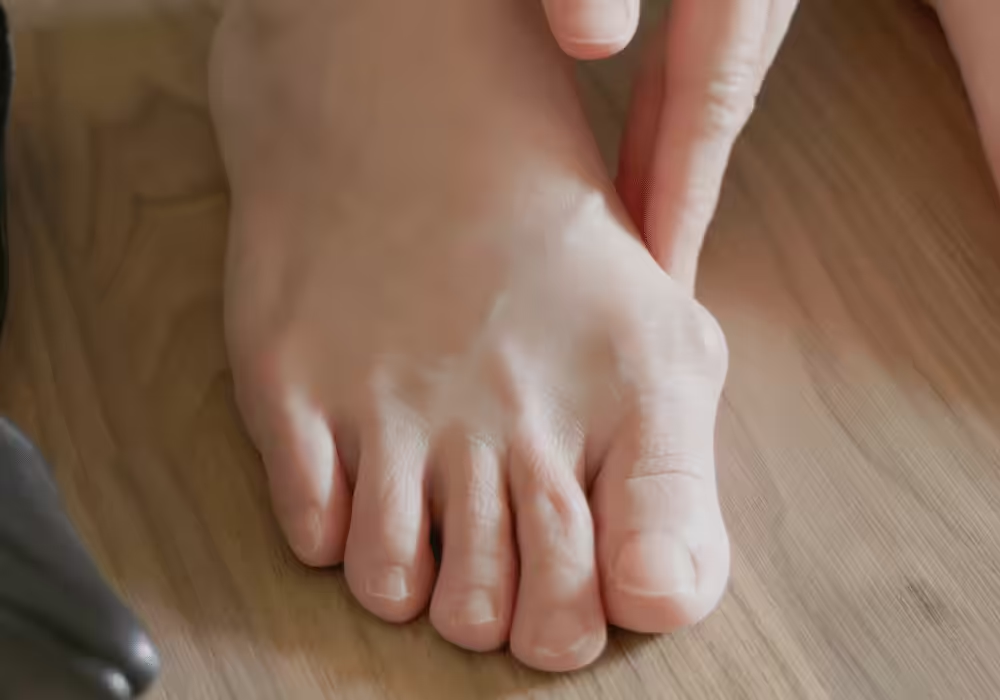
- The difference between a hammer toe, claw toe and mallet toe is simply which of the joints are bent, but to you it likely does not matter because the treatments are the same for all of these problems.
There are three types of hammertoe deformity: a hammer toe, the claw toe, and a mallet toe.
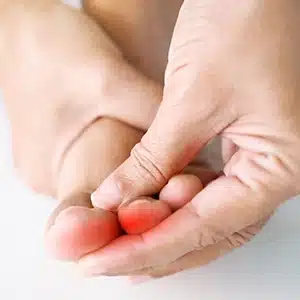
Symptoms of a Painful Second Hammer Toe:
- Crooked second toe
- Pain on top of the second toe
- Pain at the Bottom of the second toe
- Pain at the end of the second toe
Causes of a Painful Second Hammer Toe:
- The number one cause of hammer toes is the development of a flat foot and the second biggest cause is improper footwear.
- These are both preventable and treatable conditions as long as the hammer toe is still bendable.
- If the hammer toe is rigid, then a surgical consult with your podiatrist may be recommended.
Specific Causes
1. Flat foot:
- Flat feet are caused by many factors including injury, obesity and improper footwear, follow our guide on how to prevent and treat flat feet.
- A flat foot alters the direction and pull of the muscles and tendons leading to the toe.
2. Improper footwear:
- Tight shoes and high heels can compress the second toe.
- This can cause the toe to bunch up and over time there is increased slack in the tendons and muscles that connect to the toes.
- These tendons do not stretch back to normal after the shoe is removed without some serious effort.
3. Poor flexibility:
- If you have poor flexibility through your ankle joint knee and hamstring, this will cause your foot to turn outward.
- This puts extensive pressure on the tendons below and above your small toes.
- This can cause hammer toes to develop.
4. Arthritis and other joints:
- If you have tightness and immobility and other joints, skin can lead to hammertoe.
- We frequently see patients develop hammer toes if they have knee, back or hip arthritis as well.
3 Types of Hammer Toe
Why Choose Balance Foot & Ankle Specialist in Howell and Bloomfield Township for Second Toe Pain due to a Hammer Toe?
At Balance Foot & Ankle Specialists, we go beyond simply treating hammer toe pain—we take the time to understand your lifestyle, your goals, and the underlying causes of your second toe discomfort. Our expert podiatrists in Howell and Bloomfield Township offer advanced diagnostics, customized treatment plans, and both non-surgical and surgical options to help you get lasting relief. With a reputation for excellence in Southeast Michigan, we are committed to delivering compassionate, comprehensive care so you can walk, move, and live with confidence again.
Book Your Podiatrist Visit Now
More Podiatrist-Recommended Hammertoe Essentials
Extra-Depth Orthopedic Shoe
Orthofeet Sprint — tall toe box prevents hammertoe rubbing and friction.
Wide-Toe-Box Walking Shoe
New Balance 990v6 — accommodates curled toes without pressure.
Supportive Insole

PowerStep Pinnacle — reduces forefoot pressure that drives hammertoe.
As an Amazon Associate, Balance Foot & Ankle earns from qualifying purchases. Product recommendations are based on clinical experience; prices and availability shown above update live from Amazon.
When to See a Podiatrist
Rigid hammertoes don’t reduce with splinting alone — the tendon and capsule have contracted. If the toe no longer straightens passively, surgical correction restores alignment in one short outpatient visit. Call Balance Foot & Ankle to see whether your deformity is still flexible (and responsive to the conservative tools above) or if it’s time for a 20-minute in-office correction.
Call Balance Foot & Ankle: (810) 206-1402 · Book online · Offices in Howell & Bloomfield Township
Frequently Asked Questions: Second Toe Pain due to a Hammer Toe
What causes second toe pain from a hammer toe?
Second toe pain is often caused by an imbalance in the muscles, tendons, or ligaments that normally keep the toe straight. This can result from genetics, foot structure, arthritis, trauma, or wearing tight shoes.
How can I tell if my second toe pain is from a hammer toe?
Hammer toe symptoms include a bent or curled second toe, pain while wearing shoes, corns or calluses on top of the toe joint, and stiffness that worsens over time.
Are there different types of toe deformities besides hammer toe?
Yes, there are three common deformities: hammer toe, claw toe, and mallet toe. Each affects the toe joints differently but all can cause second toe pain if untreated.
Can a hammer toe go away on its own?
Unfortunately, a hammer toe does not correct itself. Without treatment, it may worsen over time, leading to more stiffness, corns, and chronic pain.
What non-surgical treatments are available for hammer toe pain?
Conservative treatments include wearing wider shoes, custom orthotics, splints, padding, toe exercises, and anti-inflammatory medications. These methods help relieve pain but may not fully correct the deformity.
When is surgery needed for second toe hammer toe pain?
Surgery is typically recommended when non-surgical options fail and the deformity is rigid, causing severe pain or difficulty walking. Our foot specialists can evaluate your condition and recommend the best treatment.
How long is recovery after hammer toe surgery?
Recovery varies depending on the type of procedure, but most patients can expect to return to normal activities in 6–8 weeks with proper post-operative care.
Where can I get treatment for second toe hammer toe pain in Michigan?
You can visit Balance Foot & Ankle at either of our convenient locations:
-
Howell Office: 4330 E Grand River Ave, Howell, MI 48843, United States
-
Bloomfield Township Office: 43494 Woodward Ave #208, Bloomfield Township, MI 48302, United States
Call us today to schedule an appointment with a hammer toe specialist near you.
Is hammer toe treatment covered by insurance?
Most insurance plans cover hammer toe treatment, especially if it is medically necessary due to pain, difficulty walking, or secondary problems like corns and calluses.
How soon should I see a doctor for second toe hammer toe pain?
It’s best to schedule an appointment as soon as you notice persistent pain, toe deformity, or difficulty walking. Early treatment can help prevent the condition from worsening.
Related Treatment Guides
- Toe Deformity Treatment
- Plantar Fasciitis & Heel Pain Treatment
- Custom 3D Orthotics
- Sports Foot & Ankle Injury Treatment
📍 Located in Michigan?
Our board-certified podiatrists treat this condition at two convenient locations. Most new patients are seen the same week.
Experiencing Second Toe Pain From Hammertoe?
Second toe hammertoe is one of the most common forefoot deformities. Our podiatrists provide comprehensive treatment from toe splinting to minimally invasive surgical correction.
📞 Or call us directly: (810) 206-1402
Clinical References
- Coughlin MJ. Lesser-toe abnormalities. Journal of Bone and Joint Surgery. 2002;84(8):1446-1469.
- Myerson MS, Shereff MJ. The pathological anatomy of claw and hammer toes. Journal of Bone and Joint Surgery American Volume. 1989;71(1):45-49.
- Kramer WC, Parman M, Marks RM. Hammertoe correction with K-wire fixation. Foot and Ankle International. 2015;36(5):494-502.
In-Office Treatment at Balance Foot & Ankle
When conservative care isn’t enough, Dr. Tom Biernacki and the team at Balance Foot & Ankle offer advanced, same-day options — including Hammertoe Treatment Michigan at our Howell and Bloomfield Township clinics.
Same-week appointments available. Call (810) 206-1402 or book online.
In-Office Treatment at Balance Foot & Ankle
If home treatment isn’t providing relief for your hammertoes, our podiatry team at Balance Foot & Ankle can help with same-week evaluations and advanced in-office care.
Frequently Asked Questions
When should I see a doctor?
See a podiatrist if pain persists past 2 weeks, prevents normal activity, or is accompanied by red-flag symptoms (warmth, swelling, numbness, inability to bear weight).
Can I treat this at home?
Mild cases respond to RICE protocol (rest, ice, compression, elevation), supportive shoes, and OTC anti-inflammatories. Persistent symptoms need professional evaluation.
How long does it take to heal?
Most soft tissue injuries resolve in 2-6 weeks with appropriate care. Bone injuries take 6-12 weeks. Chronic conditions need longer-term management.
Ready to Get Relief?
Same-week appointments available in Howell & Bloomfield Township, MI
4.9★ | 1,123 Reviews | 3,000+ Surgeries
Or call: (810) 206-1402

Dr. Tom Biernacki, DPM is a board-certified foot & ankle surgeon (ABFAS & ABPM) at Balance Foot & Ankle Specialists in Southeast Michigan. With over a decade of clinical experience, he specializes in heel pain, bunions, diabetic foot care, sports injuries, and minimally invasive surgery. Dr. Biernacki is a member of the APMA and ACFAS, and his patient education content on MichiganFootDoctors.com and YouTube has made him one of the most-followed foot & ankle educators on YouTube.