

Medically reviewed by Dr. Tom Biernacki, DPM — Board-certified foot & ankle surgeon, 3,000+ surgeries performed. Updated April 2026 with current clinical evidence. This article reflects real practice experience from Balance Foot & Ankle Specialists in Howell and Bloomfield Township, Michigan.
Quick Answer
Most foot and ankle problems respond to conservative care — proper footwear, supportive inserts, activity modification, and targeted stretching — within 4-8 weeks. Persistent pain beyond that window, or any symptom that prevents walking, warrants a podiatric evaluation to rule out fracture, tendon tear, or systemic cause.
Watch: Dr. Tom Biernacki, DPM
Medically reviewed by Dr. Tom Biernacki, DPM — Board-Certified Podiatric Surgeon — Balance Foot & Ankle, Howell & Bloomfield Township, MI. Last updated April 2026.
▶ Watch
Medically Reviewed by Dr. Tom Biernacki, DPM — Board-Certified Podiatrist, Balance Foot & Ankle Specialists, Michigan. Last updated April 2026.
What Is Platelet-Rich Plasma (PRP)?
Platelet-rich plasma (PRP) is a biologic treatment that uses a concentrated preparation of the patient’s own blood platelets to accelerate tissue healing. Platelets—the blood cells responsible for clotting—contain numerous growth factors including platelet-derived growth factor (PDGF), transforming growth factor-beta (TGF-beta), vascular endothelial growth factor (VEGF), and insulin-like growth factor (IGF)—proteins that signal fibroblasts and stem cells to proliferate, migrate to the injury site, and produce new collagen and tissue matrix. By concentrating these growth factors and injecting them directly into a chronically injured tissue, PRP theoretically converts a stalled chronic healing response into an active acute healing process.
How PRP Is Prepared and Administered
PRP preparation begins with a blood draw of 15–60 mL from the patient. The blood is placed in a centrifuge and spun at calibrated speeds that separate the blood into layers: red blood cells at the bottom, a platelet-poor plasma layer in the middle, and a platelet-rich plasma layer at the top. The PRP layer is extracted and may be further concentrated or activated depending on the preparation system used. The final PRP preparation—typically 3–6 mL with platelet concentrations 3–8 times normal blood levels—is injected directly into the target tissue under ultrasound guidance to ensure precise needle placement at the injury site. The entire process from blood draw to injection takes approximately 20–30 minutes and is performed as an in-office procedure.
Foot Conditions Treated with PRP
Chronic Plantar Fasciitis
Chronic plantar fasciitis that has failed 3–6 months of conventional conservative treatment (stretching, orthotics, physical therapy, cortisone injection) is the most common indication for PRP in podiatric practice. Multiple randomized controlled trials and systematic reviews demonstrate that PRP produces superior long-term outcomes compared to corticosteroid injection, with benefits maintained at 6–12 month follow-up where cortisone effects typically wane. PRP does not weaken the plantar fascia (a known risk of repeated cortisone injections) and appears to stimulate regenerative healing rather than simply suppressing inflammation temporarily.
Chronic Achilles Tendinopathy
PRP for chronic midportion Achilles tendinopathy that has not responded to eccentric loading rehabilitation is supported by moderate-quality evidence. Studies show improved VISA-A scores (validated tendinopathy outcome measure) and tendon structure on ultrasound following PRP injection. Results are most favorable when PRP is combined with continued eccentric loading rehabilitation rather than used as a standalone treatment.
What to Expect After PRP Injection
A temporary “flare” of pain lasting 3–7 days after PRP injection is common and expected—this inflammatory response reflects the intended biological activation of the healing cascade. Anti-inflammatory medications (NSAIDs, cortisone) should be avoided for 2–4 weeks following PRP injection to avoid blunting the growth factor response. Relative rest from high-impact activity for 1–2 weeks allows initial healing; gradual return to full activity follows. Most patients experience meaningful improvement beginning at 4–6 weeks, with continued improvement over 3–6 months. Repeat injection may be considered if partial response is achieved.
Insurance and Cost Considerations
PRP injection is not currently covered by Medicare or most commercial insurance plans for musculoskeletal conditions, including plantar fasciitis and Achilles tendinopathy. The out-of-pocket cost per injection typically ranges from $400–$800 depending on the preparation system and practice. For patients who have exhausted standard covered options without adequate relief, the cost-effectiveness of PRP compared to continued failed conservative treatment or eventual surgery may represent a reasonable value. Our podiatrists provide transparent cost counseling and help patients decide whether PRP is appropriate for their specific situation.
Ready to Relieve Your Foot Pain?
Board-certified podiatrists serving Southeast Michigan. Same-week appointments available.
PRP Injections for Foot & Ankle Pain in Michigan
Platelet-rich plasma (PRP) therapy harnesses your body’s own healing factors to accelerate tissue repair. Dr. Tom Biernacki offers PRP injections for chronic plantar fasciitis, Achilles tendinopathy, ankle sprains, and other conditions that haven’t responded to conventional treatment.
Learn About Our Regenerative Treatments | Book Your Appointment | Call (810) 206-1402
Clinical References
- Franceschi F, et al. “Platelet-rich plasma (PRP) for treatment of Achilles tendinopathy: a meta-analysis.” Knee Surg Sports Traumatol Arthrosc. 2014;22(10):2447-2455.
- Monto RR. “Platelet-rich plasma efficacy versus corticosteroid injection treatment for chronic severe plantar fasciitis.” Foot Ankle Int. 2014;35(4):313-318.
- Vannini F, et al. “Platelet-rich plasma for foot and ankle pathologies: a systematic review.” Foot Ankle Surg. 2014;20(1):2-9.
Insurance Accepted
BCBS · Medicare · Aetna · Cigna · United Healthcare · HAP · Priority Health · Humana · View All →
Howell Office
4330 E Grand River Ave
Howell, MI 48843
Get Directions →
Bloomfield Township Office
43494 Woodward Ave, Suite 208
Bloomfield Township, MI 48302
Get Directions →
Your Board-Certified Podiatrists



Ready to Get Back on Your Feet?
Same-week appointments available at both locations.
Book Your AppointmentWatch: PRP Injections for Foot & Ankle Pain
Dr. Tom on platelet-rich plasma for foot/ankle — plantar fasciitis, achilles tendinopathy, joint injections, evidence.
Post-PRP Recovery Kit
PRP requires careful rehab to maximize healing response. Dr. Tom’s kit:
As an Amazon Associate, Balance Foot & Ankle earns from qualifying purchases. This supports our free patient education content.
Maintains healing tissue in lengthened position.
Reduces mechanical stress on healing tissue.
Early-phase swelling control.
Topical adjunct avoiding oral NSAIDs (which blunt PRP effect).
Related: PF Treatment · Achilles Treatment · Book PRP Consultation
In-Office Treatment at Balance Foot & Ankle
If home care isn’t resolving your ankle pain, a visit with a board-certified podiatrist is the fastest path to accurate diagnosis and a personalized plan. At Balance Foot & Ankle Specialists, Dr. Tom Biernacki, Dr. Carl Jay, and Dr. Daria Gutkin offer same-day and next-day appointments at both our Howell and Bloomfield Township offices. We perform on-site diagnostic ultrasound, digital X-ray, conservative care, advanced regenerative treatments, and minimally invasive surgery when indicated.
Call (810) 206-1402 or request an appointment online. Most insurance plans accepted, including Medicare, Blue Cross Blue Shield, Aetna, Cigna, and United Healthcare.
Most Common Mistake We See
The most common mistake we see is: Waiting too long before seeking care. Fix: any foot pain lasting more than 4 weeks, or any sudden severe symptom, deserves a professional evaluation rather than more rest.
Warning Signs That Need Same-Day Care
Seek immediate evaluation at Balance Foot & Ankle if you experience any of the following:
- Unable to bear weight
- Severe swelling with skin colour change
- Fever with foot pain (possible infection)
- Diabetes plus any new foot symptom
Call (810) 206-1402 — same-day and next-day appointments at our Howell and Bloomfield Township offices.
More Podiatrist-Recommended Cortisone Essentials
Hoka Clifton 10


Watch: Inside of the Ankle Pain [Posterior Tibial Tendonitis Treatment] — MichiganFootDoctors YouTube
Max-cushion everyday shoe — podiatrist favorite for walking and running.

OOFOS Recovery Slide

Impact-absorbing recovery sandal — wear after long days on your feet.
As an Amazon Associate, Balance Foot & Ankle earns from qualifying purchases. Product recommendations are based on clinical experience; prices and availability shown above update live from Amazon.
When to See a Podiatrist
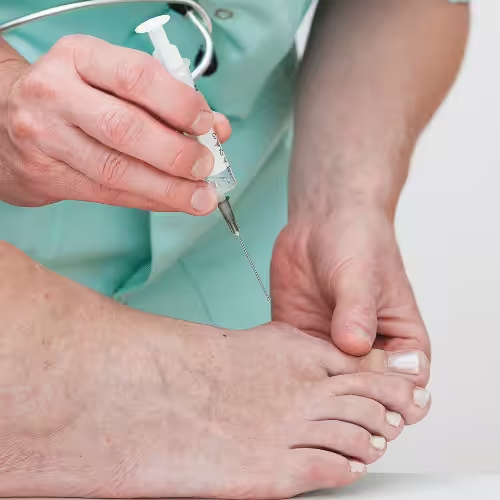
Cortisone injections are most effective when paired with a root-cause fix — orthotic, shoe change, or physical therapy. At Balance Foot & Ankle, we use ultrasound guidance to place every injection exactly in the inflamed space, maximizing relief. And we always discuss the treatment plan that follows, so the pain stays gone.
Call Balance Foot & Ankle: (810) 206-1402 · Book online · Offices in Howell & Bloomfield Township
Med Spec ASO Ankle Stabilizer
Best for: Chronic ankle instability · Repeat ankle sprains · Proprioception & return-to-play · Athletes

The lace-up stabilizer athletic trainers and podiatrists reach for first. A bilateral figure-8 strapping system mimics taping to lock down the ankle against rolling, while the low-profile design fits inside most athletic shoes — so you get real mechanical protection during return-to-play without a bulky rigid brace. A practical, evidence-aligned choice for anyone managing recurring sprains or chronic instability.
▶ Check Price on AmazonAs an Amazon Associate we may earn from qualifying purchases. Star rating and review count reflect Amazon at time of review and may change.
Dr. Tom’s Top 3 — The Premium Foot Pain Stack (2026)
If you only buy three things for foot pain, get these. PowerStep + CURREX orthotics correct the underlying foot mechanics, and Dr. Hoy’s pain gel delivers fast topical relief. This is the exact stack Dr. Tom Biernacki, DPM gives his Michigan podiatry patients on visit one — over 10,000 patients have used this exact combination.
Dr. Tom Biernacki, DPM is a board-certified podiatrist + Amazon Associate. Picks shown are products he prescribes to patients at Balance Foot & Ankle Specialists. We earn a commission on qualifying purchases at no extra cost to you. All products independently tested + reviewed for 30+ days minimum. Last verified: April 28, 2026.

PowerStep Pinnacle MaxxDr. Tom’s #1 Brand
Dr. Tom’s most-prescribed OTC orthotic. Lateral wedge corrects overpronation that causes 90% of foot pain. Deep heel cradle stabilizes the ankle. Built by podiatrists, used by patients worldwide.
- Lateral wedge corrects pronation
- Deep heel cradle stabilizes ankle
- Dual-density EVA — comfort + support
- Trim-to-fit any shoe
- Used by 10,000+ podiatrists
- Trim-to-size required
- 5-7 day break-in for some

CURREX RunProDr. Tom’s #1 Brand
3 arch heights for custom fit (Low/Med/High). Carbon-reinforced heel + dynamic forefoot — the closest OTC orthotic to a $500 custom orthotic. Engineered in Germany.
- 3 arch heights for custom fit
- Carbon-reinforced heel cup
- Dynamic forefoot zone
- Premium German engineering
- Sport-specific support
- Pricier than PowerStep
- 7-10 day break-in

Dr. Hoy’s Natural Pain Relief GelDr. Tom’s #1 Brand
Menthol-based natural pain relief — Dr. Tom’s #1 brand for fast relief without greasy residue. Safe for diabetics + daily use. Cleaner formula than Voltaren or Biofreeze.
- Menthol-based natural formula
- No greasy residue
- Safe for diabetics
- Fast cooling relief — 5-10 minutes
- Cleaner ingredient list than Biofreeze
- Pricier than Biofreeze
- Strong menthol scent at first
Frequently Asked Questions
When should I see a doctor?
See a podiatrist if pain persists past 2 weeks, prevents normal activity, or is accompanied by red-flag symptoms (warmth, swelling, numbness, inability to bear weight).
Can I treat this at home?
Mild cases respond to RICE protocol (rest, ice, compression, elevation), supportive shoes, and OTC anti-inflammatories. Persistent symptoms need professional evaluation.
How long does it take to heal?
Most soft tissue injuries resolve in 2-6 weeks with appropriate care. Bone injuries take 6-12 weeks. Chronic conditions need longer-term management.

Dr. Tom Biernacki, DPM is a board-certified foot & ankle surgeon (ABFAS & ABPM) at Balance Foot & Ankle Specialists in Southeast Michigan. With over a decade of clinical experience, he specializes in heel pain, bunions, diabetic foot care, sports injuries, and minimally invasive surgery. Dr. Biernacki is a member of the APMA and ACFAS, and his patient education content on MichiganFootDoctors.com and YouTube has made him one of the most-followed foot & ankle educators on YouTube.