

Medically reviewed by Dr. Tom Biernacki, DPM — Board-certified foot & ankle surgeon, 3,000+ surgeries performed. Updated April 2026 with current clinical evidence. This article reflects real practice experience from Balance Foot & Ankle Specialists in Howell and Bloomfield Township, Michigan.
Foot or ankle pain that isn’t getting better? A podiatrist can diagnose it in one visit — pick a real appointment time online, 24/7: Howell or Bloomfield Township. Takes about a minute, 24/7.
Quick Answer
Most foot and ankle problems respond to conservative care — proper footwear, supportive inserts, activity modification, and targeted stretching — within 4-8 weeks. Persistent pain beyond that window, or any symptom that prevents walking, warrants a podiatric evaluation to rule out fracture, tendon tear, or systemic cause.
Watch: Dr. Tom Biernacki, DPM

Medically reviewed by Dr. Daria Gutkin, DPM
Board-certified podiatrist | Balance Foot & Ankle
Last reviewed: April 2026
![What To Do For A Broken Pinky Toe [How To Tape & Little Toe Treatment]](https://www.michiganfootdoctors.com/wp-content/cache/flying-press/08133f113eb3dbf0e967f9614a62dcf7.jpg)
Pain in your middle toes — particularly the second and third toes — is surprisingly common and can make walking, standing, and wearing shoes genuinely uncomfortable. Whether it feels like a bruise under the ball of your foot, a sharp shooting pain between your toes, or a persistent ache in the toe joint itself, there’s a specific reason for your discomfort. At Balance Foot & Ankle, we see these conditions daily and can identify the cause with a focused examination.
What Causes Middle Toe Pain?
The middle toes (especially the second toe) bear a disproportionate amount of force during walking and running. When the big toe or first metatarsal doesn’t function properly — due to a bunion, hallux rigidus, or hypermobility — force transfers laterally to the second and third metatarsophalangeal (MTP) joints. This overloading creates a cascade of problems including capsulitis, neuroma formation, and eventually structural deformity.
Women are affected more often than men, partly due to shoe choices (narrow toe boxes, high heels) and partly due to ligamentous laxity. Understanding the specific structure that’s causing your pain is critical because each condition has a different treatment path.
Capsulitis of the Second Toe
Capsulitis is inflammation of the ligaments (joint capsule) surrounding the second MTP joint — the joint where your second toe meets the ball of your foot. It’s the most common cause of pain specifically in the second toe and feels like you’re walking on a marble or a rolled-up sock under the ball of your foot.
Early capsulitis causes pain and swelling at the base of the second toe, especially when walking barefoot or in thin-soled shoes. As the ligaments weaken, the toe may begin drifting toward the big toe (crossover toe deformity). In advanced stages, the second toe literally crosses over the big toe — a deformity that typically requires surgical correction. Early treatment with proper taping techniques and metatarsal pads can prevent this progression.
Key symptoms: pain at the ball of the foot (not between the toes), feeling of a marble underfoot, swelling at the base of the second toe, toe drifting or crossing over, pain worsens with barefoot walking.
Morton’s Neuroma
Morton’s neuroma is a thickening of the interdigital nerve, most commonly between the third and fourth toes (but also between the second and third). It produces a burning, tingling, or electric-shock sensation that radiates into the affected toes. Many patients describe feeling like they’re standing on a pebble or a fold in their sock.
Tight shoes compress the metatarsal heads together, irritating the nerve. High heels increase forefoot pressure. Activities involving repetitive toe push-off (running, tennis, dancing) aggravate the condition. A 2025 study in Foot & Ankle International found that 80% of neuromas respond to conservative treatment including wider shoes, metatarsal pads, and corticosteroid injections. Surgery (neurectomy) is reserved for refractory cases. Learn more about Morton’s neuroma diagnosis and treatment.
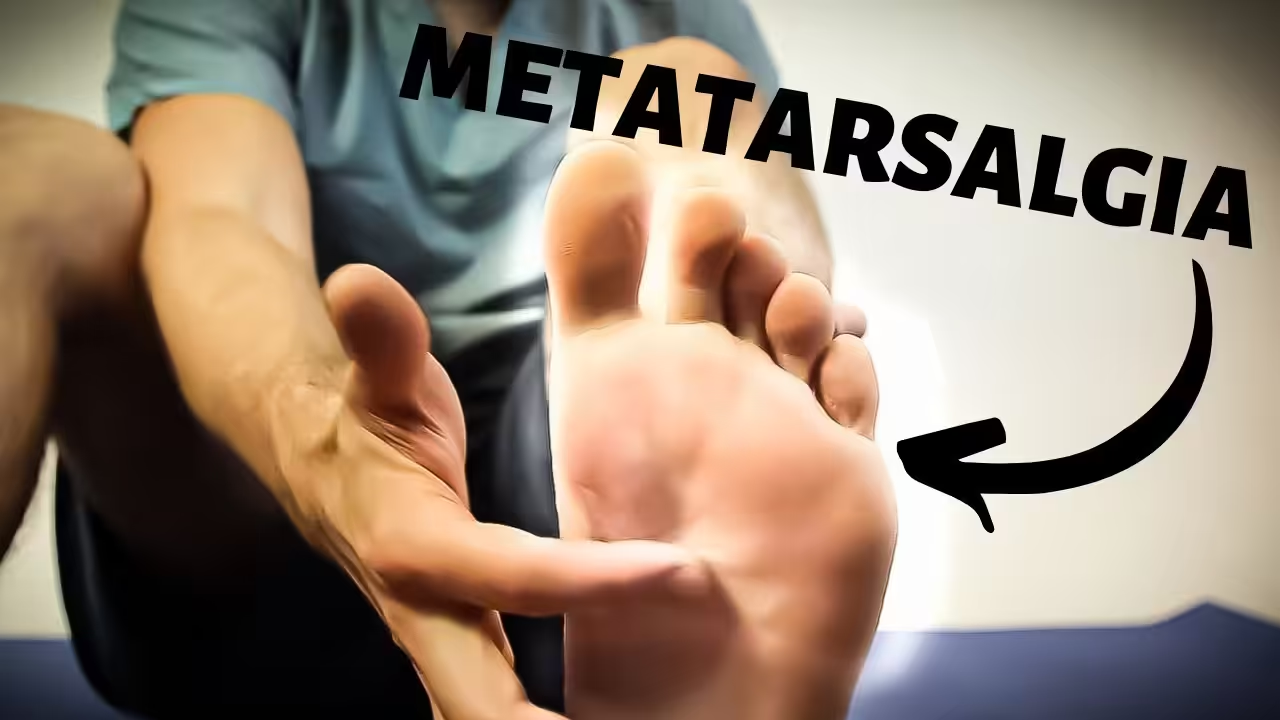
Metatarsalgia
Metatarsalgia is a general term for pain and inflammation in the ball of the foot — specifically around the metatarsal heads. It produces a deep, aching pain that worsens with standing, walking, and especially with push-off during gait. It’s particularly common in people with high arches (which concentrate pressure on the metatarsal heads), those who wear high heels or thin-soled shoes, and athletes in high-impact sports.
Contributing factors include excess body weight, a long second metatarsal bone, tight calf muscles (which increase forefoot loading), and conditions like bunions that shift weight distribution. Treatment focuses on offloading the affected metatarsal heads with cushioned footwear, metatarsal pads, and custom orthotics that redistribute pressure evenly across the forefoot.
hammertoe“>Hammertoe Deformity
A hammertoe is a contracture (bending) of one or both joints in the second, third, fourth, or fifth toes, creating a hammer-like shape. The bent joint rubs against the top of your shoe, forming painful corns, while the tip of the toe presses into the sole, creating calluses. The second toe is most commonly affected, especially when a bunion crowds it.
In early stages, the toe remains flexible — it can still be straightened manually. This is the ideal time to intervene with spacers, splints, and properly fitted shoes. Once the joint becomes rigid (fixed hammertoe), conservative options become limited and surgical correction may be necessary. Hammertoes don’t resolve on their own and tend to worsen progressively over years.
Metatarsal Stress Fracture
A stress fracture of the second or third metatarsal is a hairline crack in the bone caused by repetitive overload. These “march fractures” (named because they’re common in military recruits) produce a localized, progressive pain that worsens with activity and improves with rest. You may notice swelling on the top of the foot, and the pain point is usually very specific — you can pinpoint it with one finger.
Risk factors include sudden increases in activity, transitioning to minimalist shoes too quickly, low bone density, vitamin D deficiency, and the female athlete triad. X-rays may be negative in the first 2–3 weeks; MRI provides the earliest and most accurate diagnosis. Treatment requires 4–8 weeks of reduced activity in a stiff-soled shoe or walking boot. Learn about other causes of pain on top of the foot.
⚠️ Warning Signs — See a Podiatrist Promptly
- Second toe drifting toward or crossing over the big toe
- Numbness or tingling radiating into the toes
- Pain that worsens despite 2 weeks of wider shoes and rest
- Visible swelling or bruising on top of the foot
- Inability to flex or straighten the affected toe
- Discoloration (blue, white, or dusky color) of the toe
How We Diagnose Middle Toe Pain
At Balance Foot & Ankle, we use a combination of clinical examination and imaging to pinpoint the cause of your middle toe pain. The physical exam includes Mulder’s click test (compression of the metatarsal heads to check for neuroma), drawer test of the MTP joint (assessing capsular integrity for capsulitis), and palpation of individual structures to reproduce your symptoms.
In-office X-rays evaluate bone alignment, joint spacing, metatarsal length patterns, and rule out fractures or arthritis. Diagnostic ultrasound can visualize neuromas, joint effusions, and plantar plate tears in real time. For complex cases, MRI provides detailed soft tissue evaluation. Most patients receive a clear diagnosis and begin treatment at their first visit.
Treatment Options
Wider, properly fitted shoes: The single most impactful change for middle toe pain. A shoe with a wide toe box that allows your toes to spread naturally reduces compression on nerves, joints, and tendons. Avoid pointed-toe shoes and high heels, which concentrate force on the forefoot. Check our podiatrist-recommended shoe guide for specific brands.
Metatarsal pads: These small adhesive pads placed just behind the metatarsal heads lift and spread the bones, reducing nerve compression and offloading inflamed joints. When positioned correctly, they can provide dramatic relief for both capsulitis and Morton’s neuroma. Our podiatrists can show you exact placement during your visit.
Custom orthotics: For structural causes (long second metatarsal, bunion-related force transfer, high arches), custom-molded orthotics with a built-in metatarsal raise redistribute pressure across the entire forefoot. They address the underlying biomechanical cause rather than just managing symptoms.
Corticosteroid injections: For acute capsulitis or Morton’s neuroma that hasn’t responded to conservative measures, a guided corticosteroid injection can reduce inflammation and provide weeks to months of relief. We use ultrasound guidance for precise needle placement.
Taping and splinting: Capsulitis-specific taping techniques hold the second toe in proper alignment, allowing inflamed ligaments to heal. Toe spacers and crest pads can also reposition hammertoes and reduce friction. Our capsulitis taping guide walks you through the technique.
Surgery: When conservative treatment fails after 3–6 months, surgical options include neurectomy (nerve removal for Morton’s neuroma), Weil osteotomy (shortening the metatarsal for capsulitis/metatarsalgia), hammertoe correction, and plantar plate repair. Our surgeons use minimally invasive techniques when possible, with most patients returning to regular shoes within 4–6 weeks.
Home Care & Self-Treatment
- Switch to wide toe box shoes immediately — brands like Altra, New Balance (wide), and Hoka offer roomy forefoot designs
- Apply a metatarsal pad just behind (not under) the ball of the foot to spread the metatarsal heads
- Ice the area for 15–20 minutes after activity to reduce inflammation
- Avoid going barefoot on hard surfaces — use cushioned house shoes or sandals with arch support
- Calf stretching: Tight calves increase forefoot pressure — stretch calves against a wall, 30 seconds × 3 reps, 3 times daily
- Toe exercises: Towel scrunches, marble pickups, and toe spreading exercises strengthen intrinsic foot muscles and improve toe alignment
- NSAIDs: Ibuprofen or naproxen can help manage acute inflammation (follow package directions, consult your doctor if you have contraindications)
Podiatrist-Recommended Products
These products are recommended by our podiatrists at Balance Foot & Ankle based on clinical experience.
- PowerStep Pinnacle Insoles — Built-in metatarsal support with moderate arch for everyday shoes
- Metatarsal Pads (Felt) — Adhesive pads that spread the metatarsal heads to relieve neuroma and capsulitis pressure
- Correct Toes Toe Spacers — Medical-grade silicone spacers that restore natural toe alignment
Affiliate disclosure: We may earn a commission at no extra cost to you. Every product listed is tested or recommended in our clinic.
If home care isn’t resolving your your foot or ankle concern, a visit with a board-certified podiatrist is the fastest path to accurate diagnosis and a personalized plan. At Balance Foot & Ankle Specialists, Dr. Tom Biernacki, Dr. Carl Jay, and Dr. Daria Gutkin offer appointments at both our Howell and Bloomfield Township offices. We perform on-site diagnostic ultrasound, digital X-ray, conservative care, advanced regenerative treatments, and minimally invasive surgery when indicated.
Call (810) 206-1402 or request an appointment online. Most insurance plans accepted, including Medicare, Blue Cross Blue Shield, Aetna, Cigna, and United Healthcare.
More Podiatrist-Recommended Foot Health Essentials
Hoka Clifton 10

Max-cushion everyday shoe — podiatrist favorite for walking and running.

OOFOS Recovery Slide

Impact-absorbing recovery sandal — wear after long days on your feet.
As an Amazon Associate, Balance Foot & Ankle earns from qualifying purchases. Product recommendations are based on clinical experience; prices and availability shown above update live from Amazon.
When to See a Podiatrist
If foot or ankle pain has been bothering you for more than a few weeks, home care alone may not be enough. Balance Foot & Ankle offers online booking 24/7 at our Howell and Bloomfield Township clinics — no referral needed in most cases. Bring your current shoes and a short list of symptoms and we’ll build you a treatment plan in one visit.
Call Balance Foot & Ankle: (810) 206-1402 · Book online · Offices in Howell & Bloomfield Township
Frequently Asked Questions
Why does my second toe hurt for no reason?
Pain in the second toe that seems to come on “for no reason” is most commonly capsulitis — inflammation of the joint ligaments caused by chronic overloading. This often develops gradually from years of wearing narrow shoes or from biomechanical factors like a bunion or long second metatarsal. It may feel sudden, but the underlying ligament weakening has likely been developing for months.
What does it mean when your middle toe hurts when you walk?
Pain in the middle toe during walking typically indicates a problem at the metatarsophalangeal joint (where the toe meets the ball of the foot). The most common causes are capsulitis, metatarsalgia, or Morton’s neuroma. Walking increases the force through these structures — the ball of the foot bears approximately 60% of your body weight during the push-off phase of gait.
Can middle toe pain be caused by shoes?
Absolutely. Narrow toe boxes, high heels, and shoes without adequate cushioning are the leading modifiable risk factor for most causes of middle toe pain. High heels shift 70–80% of body weight to the forefoot, while narrow toe boxes compress the metatarsal heads together (aggravating neuromas) and crowd the toes (contributing to hammertoes). Switching to properly fitted shoes with a wide toe box is often the single most effective treatment.
How do I know if my toe pain is a stress fracture?
Metatarsal stress fractures produce very localized pain — you can usually point to the exact spot with one finger on the top of your foot. The pain worsens progressively with weight-bearing activity and improves with rest. Swelling on the top of the foot is common, and pressing on the specific spot reproduces sharp pain. If you recently increased your activity level, switched to different shoes, or started a new exercise program, a stress fracture should be considered.
The Bottom Line
Middle toe pain has several treatable causes, and most respond well to conservative measures when addressed early. The key is identifying the specific structure involved — capsulitis, neuroma, metatarsalgia, hammertoe, or stress fracture — because each requires a targeted approach. Don’t ignore progressive symptoms like toe drifting or numbness, as early intervention prevents deformities that may eventually need surgery. Our board-certified podiatrists at Balance Foot & Ankle can diagnose and begin treating your middle toe pain at your first visit.
Get Relief for Middle Toe Pain
Appointments in Howell & Bloomfield Township, MI. Three board-certified podiatrists.
4.9★ | 1,200+ Reviews | 3,000+ Surgeries
Or call: (810) 206-1402
Dealing With Persistent Middle Toe Pain?
Middle toe pain that will not go away often indicates a structural or nerve problem that needs professional evaluation. Our podiatrists identify the root cause and provide treatments ranging from orthotics to minimally invasive procedures.
References
- Nery C, et al. Lesser metatarsophalangeal joint instability: prospective evaluation. Foot Ankle Int. 2012;33(4):301-311.
- Espinosa N, et al. Metatarsalgia. J Am Acad Orthop Surg. 2010;18(8):474-485.
- Coughlin MJ, et al. Lesser toe deformities. J Bone Joint Surg Am. 2002;84(8):1446-1469.
Insurance Accepted
BCBS · Medicare · Aetna · Cigna · United Healthcare · HAP · Priority Health · Humana · View All →

Howell Office
4330 E Grand River Ave
Howell, MI 48843
Get Directions →
Bloomfield Township Office
43494 Woodward Ave, #208
Bloomfield Township, MI 48302
Get Directions →
🛒 DR. TOM’S RECOMMENDED PRODUCTS
As an Amazon Associate, Balance Foot & Ankle earns from qualifying purchases.
Most Common Mistake We See
The most common mistake we see is: Waiting too long before seeking care. Fix: any foot pain lasting more than 4 weeks, or any sudden severe symptom, deserves a professional evaluation rather than more rest.
Warning Signs That Need Same-Day Care
Seek immediate evaluation at Balance Foot & Ankle if you experience any of the following:
- Unable to bear weight
- Severe swelling with skin colour change
- Fever with foot pain (possible infection)
- Diabetes plus any new foot symptom
Call (810) 206-1402 — appointments at our Howell and Bloomfield Township offices.
Dr. Tom’s Middle Toe Pain Relief Protocol
- PowerStep Pinnacle — Metatarsal arch support reduces capsulitis and interdigital nerve pressure on the 2nd and 3rd toes.
- Doctor Hoy’s Natural Pain Relief Gel — Localized middle toe pain and joint inflammation: arnica gel applied to the ball of foot and toe base 3-4x daily.
- Foot Petals Tip Toes — For women in heels: Foot Petals Tip Toes cushion reduces forefoot pressure specifically at the 2nd and 3rd MTP joints.
2nd toe capsulitis or crossover toe deformity worsening? Our hammertoe and toe deformity clinic provides early intervention. (810) 206-1402
When should I see a doctor?
See a podiatrist if pain persists past 2 weeks, prevents normal activity, or is accompanied by red-flag symptoms (warmth, swelling, numbness, inability to bear weight).
Can I treat this at home?
Mild cases respond to RICE protocol (rest, ice, compression, elevation), supportive shoes, and OTC anti-inflammatories. Persistent symptoms need professional evaluation.
How long does it take to heal?
Most soft tissue injuries resolve in 2-6 weeks with appropriate care. Bone injuries take 6-12 weeks. Chronic conditions need longer-term management.

Dr. Tom Biernacki, DPM is a board-certified foot & ankle surgeon (ABFAS & ABPM) at Balance Foot & Ankle Specialists in Southeast Michigan. With over a decade of clinical experience, he specializes in heel pain, bunions, diabetic foot care, sports injuries, and minimally invasive surgery. Dr. Biernacki is a member of the APMA and ACFAS, and his patient education content on MichiganFootDoctors.com and YouTube has made him one of the most-followed foot & ankle educators on YouTube.