
Medically reviewed by Dr. Tom Biernacki, DPM
Board-certified podiatric surgeon | Balance Foot & Ankle
Last reviewed: May 2026

Quick answer: Pain At Base Middle Toes has multiple potential causes including mechanical, neurological, vascular, and inflammatory. The patterns we see most often are overuse, poorly-fitted shoes, and biomechanical imbalance. Red flags requiring urgent evaluation: warmth/redness (infection), inability to bear weight (fracture), and unilateral swelling without injury (DVT). Call (810) 206-1402.
The most important clinical decision with Pain At Base Middle Toes isn’t which treatment to start with — it’s identifying the correct subtype. That changes everything. Call (810) 206-1402.
Pain at the Base of the Middle Toes: [Causes & Best Home Treatment!]
The Pain at the Base of the Middle Toes can either be from your #1) big toe, #2) the big toe joint, #3)the lesser toes or #4)the lesser toe joints. FIX IT!
Look:
- Ball of the foot joint pain can be improved with a few simple treatment changes.
- We are foot doctors & we see this problem get better almost every day.
- The goal is to solve this problem without medication or surgery if at all possible.
So, let’s GO!
Middle toe pain when walking causes & treatment video:
![Metatarsalgia Treatment [BEST Ball of Foot Pain RELIEF 2024]](https://www.michiganfootdoctors.com/wp-content/cache/flying-press/f931fff802726990ed4269b5f4991f2c.jpg)
Pain in foot behind middle toe causes:
Pain at the base of the Middle Toes Overview:
- This joint is called your metatarsal phalangeal joint.
- This can also be related to the ball of the foot pain! This is a condition called metatarsalgia.
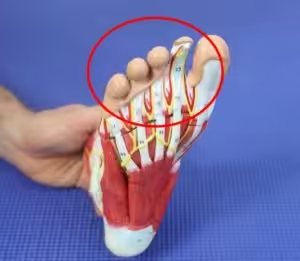
What is pain at the base of the middle toes?
- The pain at the base of the middle toes is generally referred to as your metatarsal-phalangeal joints.
- This is where the large bones of your foot connect to the smaller bones of your toes.
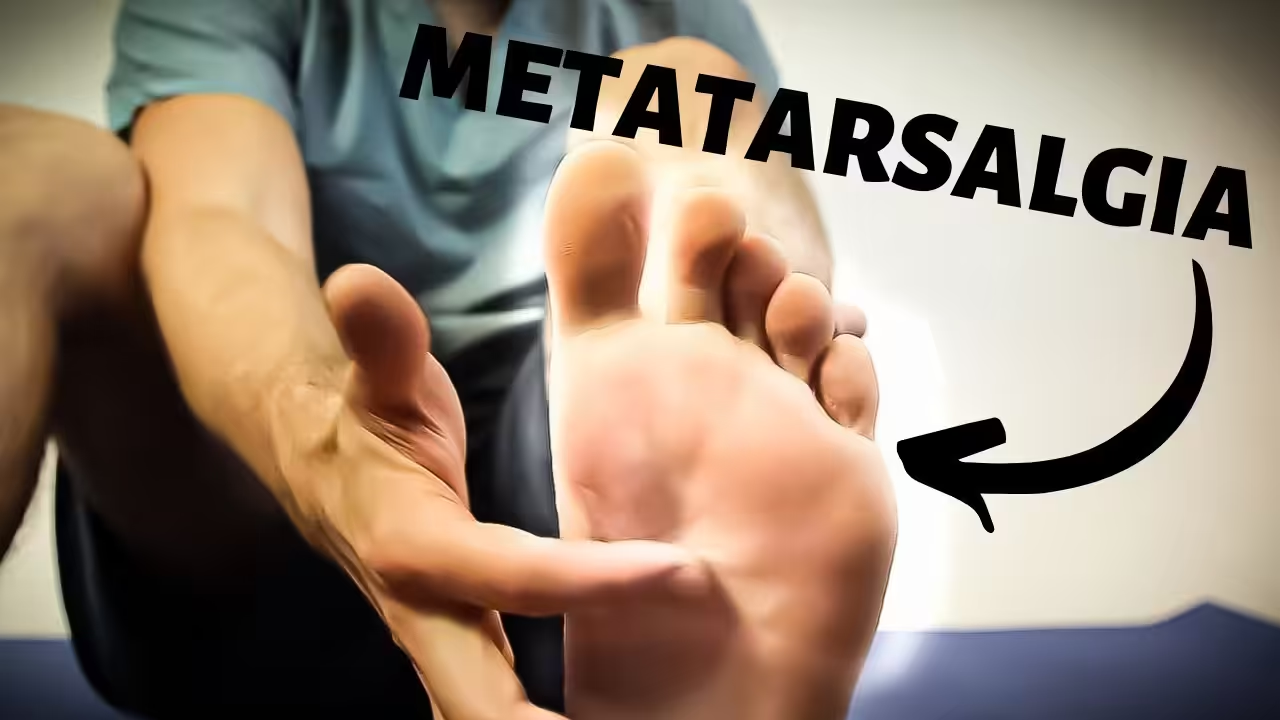
- Generally, the pain throughout this area is referred to as metatarsalgia.

Is it an injury?
- Most of the time, it’s not an injury that happens with one bad step. It is generally a chronic injury or chronic condition caused by placing too much pressure on these joints and not enough on your big toe or your heel. Sometimes pain cost here can radiate throughout the toes or through the nerves up your foot.

Anatomy:
- The middle toes, including the second, third, and fourth toes, are called your metatarsal phalangeal joint. The larger bones in your foot are called metatarsals, whereas the three bones that make up each toe are called the phalanges.
- The joint that holds the two bones together is called the plantar plate at the bottom and capsule surrounding the joint. It is possible to damage all these structures.
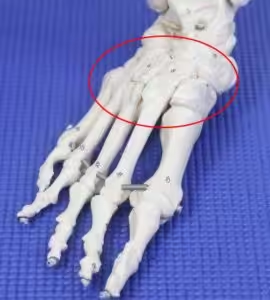
Symptoms:
- Most commonly, you will feel pain at the ball of the foot.
- The pain will worsen while walking barefoot.
- Swelling can appear at the base of the toes, especially the second or the third toe, which are the longest toes.
- You can have trouble putting on or wearing narrow shoes and the front of your foot.
- What are the most common causes associated with pain in this area?
- A bunion that can lead to pressure against the second and the third told, including potential crossover.
- A second toe that’s longer than the big toe.
- A tight calf muscle.
- An unstable arch.
- Pressure on the front of your foot.
Causes of 2nd, 3rd, and 4th Toe Pain:
Ball of the Foot Pain Causes:
Pain in the joint originating from the ball of the foot rather than the second toe.
- If the pain is more at the base of the joint of the toe (where the toe comes out of your foot), then you must consider the possibility of the ball of the problems rather than just the toe itself.
- It is probably difficult to diagnose this by yourself, but try and feet around at the bottom of your foot to see if the pain is coming more from this region than the actual toe.
- Second toe pain is one of the most common sites of foot pain because, anatomically, this is the site of the longest and most rigid bone in the forefoot.
- It is the most common site for the ball of the foot pain because as you can see in the X-ray.
- The 2ndmetatarsal is the longest of the metatarsals, and as you lean forward on your forefoot, most of the weight will be absorbed into the second toe joint leading to pain.
- Thus, the second toe joint is the most likely spot for the ball of the foot pain, stress fractures, corns, calluses, pre-dislocation syndrome, and crossing toes.
Metatarsalgia:
- Metatarsalgia is the generalized ball of foot pain.
- This means that there is too much pressure on the front of your foot.
- The bones, the tendons the nerves in the tissue surrounding the site could all get bruised up.
- This is one of the most common causes of the ball of the foot pain that we see.
- Click on the link to see how to take care of this common problem!
Morton’s neuroma:
- A Morton’s neuroma is the irritation of nerves in the ball of the foot.
- This can result in sharp, shooting, and tingling pain.
- This is also a prevalent condition. It can feel as though if your foot is clicking and popping by the third and fourth toe.
- You can also feel like you have a bunched-up sock and the ball of the foot.

Capsulitis:
- Capsulitis in the ball the foot is due to the ligaments and tendons getting irritated in the foot.
- This is very common around the second and the third toe joints.
- These are the longest metatarsal bones in your foot, and if there is tightness through the ankle and increase pressure on the foot, these tendons can very easily get agitated.
- Click on the above link to find out how to treat this prevalent condition.
Ball of the foot bruising:
- Ball of the foot pressure can frequently result in bruising.
- This can result in calluses, corns, and pressure buildup.
- This is a widespread injury. Click on the above link to see how to take care of this significant problem.
Plantar plate injury:
- The plantar plate is a ligament that holds the metatarsal phalangeal joints together.
- This is an important ligament as it has to support your body weight to prevent your toes from coming apart.
- If this starts to tear, become inflamed, or injured, it can cause you significant pain.
- This is a widespread problem with solutions available.

Other lesser causes:
- Capsulitis
- Metatarsophalangeal Joint Pain
- Morton’s Neuroma
- Metatarsal stress fracture
- Sesamoiditis
- Predislocation Syndrome
- Turf Toe
- Dislocated Toe
Pain at the Base of your Big Toe:
If the pain you are experiencing is at the base of your big toe, then you may have the following conditions, which I will list from most common to least common:
Big Toe Joint Pain Causes:
- Bunion
- Gout
- Hallux limitus
- Hallux rigidus
- Pseudogout
- Sesamoiditis
- Turf toe
- Broken Toe
- Swollen Toe
- Abductor Hallucis Strain
- Dislocated Toe
- Hallux Varus
Pain At The Base Of Your 5th Toe:
- This can be called a tailor’s bunion.
Causes of 5th toe pain:
- The #1 cause of fifth toe pain is your foot compressing in the corner of your shoe.
- These causes can include hammertoe’s, corns, and calluses.
For 5th Toe Pain Get Gel Pads:
- These gel pads will take a ton of pressure off your 5th toe.
📍 Located in Michigan?
Our board-certified podiatrists treat this condition at two convenient locations. Same-day appointments often available.
Best 5th Toe & Tailor’s Bunion Products:
Best Overall Gel Pad For 5th Toe Pain
Best Low Profile Tailor’s Bunion Gel Pad.
Best Low Profile Option For 4-5th Corn/Interspace Pain.
Best Non-Walking Stretching Option.
Best Tailor’s Bunion(Bunionette) Sock!
Price:
$9.99
Price not available
$5.99
$36.95
Price not available
Overview:
Best Overall Gel Pad: For 5th Toe and Tailor’s Bunion Pain
Good Tailor’s Bunion Gel Pad
Great Option For 4th-5th Toe Webspace Corns.
Great Heavy Duty Toe Separator (Not For Walking)
Price Range: $12+, Good value. Great reviews at 30+ reviews at 4.4/5
Pros:
Helps the 3rd, 4th and 5th toes. Heavy duty. Helps the entire area.
Lower profile, less bulky.
Slim and effective option for rubbing between the 4th and 5th toes.
Excellent reviews, great for stretching while resting.
They can be combined with gel pads as well as shoes and the sock. Another great layer of protection.
Cons:
These are more bulky. Can take up too much room in very slim shoes. These are not a splint! They are for pain relief.
Does not help the 3rd or 4th toe from pinching.
Zero benefit for tailor’s bunions and 5th metatarsal joint pain.
Can’t wear these while walking. Won’t work if you have osteoarthritis. (If your toes don’t bend).
Not perfect and by themselves may not fix your bunionette(tailor’s bunion) pain. They can break down over time.
Affiliate Link (Buying through these links will connect you to Amazon):
Buy on Amazon
Buy on Amazon
Buy on Amazon
Buy on Amazon
Buy on Amazon
Best 5th Toe & Tailor’s Bunion Products:
Best Overall Gel Pad For 5th Toe Pain
Price:
$9.99
Overview:
Best Overall Gel Pad: For 5th Toe and Tailor’s Bunion Pain
Pros:
Helps the 3rd, 4th and 5th toes. Heavy duty. Helps the entire area.
Cons:
These are more bulky. Can take up too much room in very slim shoes. These are not a splint! They are for pain relief.
Affiliate Link (Buying through these links will connect you to Amazon):
Buy on Amazon
Best 5th Toe & Tailor’s Bunion Products:
Best Low Profile Tailor’s Bunion Gel Pad.
Price:
Price not available
Overview:
Good Tailor’s Bunion Gel Pad
Pros:
Lower profile, less bulky.
Cons:
Does not help the 3rd or 4th toe from pinching.
Affiliate Link (Buying through these links will connect you to Amazon):
Buy on Amazon
Best 5th Toe & Tailor’s Bunion Products:
Best Low Profile Option For 4-5th Corn/Interspace Pain.
Price:
$5.99
Overview:
Great Option For 4th-5th Toe Webspace Corns.
Pros:
Slim and effective option for rubbing between the 4th and 5th toes.
Cons:
Zero benefit for tailor’s bunions and 5th metatarsal joint pain.
Affiliate Link (Buying through these links will connect you to Amazon):
Buy on Amazon
Best 5th Toe & Tailor’s Bunion Products:
Best Non-Walking Stretching Option.
Price:
$36.95
Overview:
Great Heavy Duty Toe Separator (Not For Walking)
Pros:
Excellent reviews, great for stretching while resting.
Cons:
Can’t wear these while walking. Won’t work if you have osteoarthritis. (If your toes don’t bend).
Affiliate Link (Buying through these links will connect you to Amazon):
Buy on Amazon
Best 5th Toe & Tailor’s Bunion Products:
Best Tailor’s Bunion(Bunionette) Sock!
Price:
Price not available
Overview:
Price Range: $12+, Good value. Great reviews at 30+ reviews at 4.4/5
Pros:
They can be combined with gel pads as well as shoes and the sock. Another great layer of protection.
Cons:
Not perfect and by themselves may not fix your bunionette(tailor’s bunion) pain. They can break down over time.
Affiliate Link (Buying through these links will connect you to Amazon):
Buy on Amazon
Related Treatment Guides
- Plantar Fasciitis & Heel Pain Treatment
- Custom 3D Orthotics
- Sports Foot & Ankle Injury Treatment
- Bunion Treatment
📧 Get Dr. Tom’s Free Lab Test Guide
Discover the 5 lab tests every person over 35 should ask their doctor about — explained in plain English by a board-certified physician.
Experiencing Pain at the Base of Your Middle Toes?
Pain at the base of the middle toes often indicates metatarsalgia, capsulitis, or Morton’s neuroma. Our podiatrists specialize in forefoot conditions and provide targeted treatment for lasting relief.
📞 Or call us directly: (810) 206-1402
Clinical References
- Espinosa N, Brodsky JW, Maceira E. Metatarsalgia. Journal of the American Academy of Orthopaedic Surgeons. 2010;18(8):474-485.
- Besse JL. Metatarsalgia. Orthopaedics and Traumatology: Surgery and Research. 2017;103(1S):S29-S39.
- Nery C, Coughlin MJ, Baumfeld D, et al. Prospective evaluation of protocol for surgical treatment of lesser MTP joint plantar plate tears. Foot and Ankle International. 2014;35(9):876-885.
More Podiatrist-Recommended Foot Health Essentials
Hoka Clifton 10

Max-cushion everyday shoe — podiatrist favorite for walking and running.

OOFOS Recovery Slide

Impact-absorbing recovery sandal — wear after long days on your feet.
As an Amazon Associate, Balance Foot & Ankle earns from qualifying purchases. Product recommendations are based on clinical experience; prices and availability shown above update live from Amazon.
When to See a Podiatrist
If foot or ankle pain has been bothering you for more than a few weeks, home care alone may not be enough. Balance Foot & Ankle offers same-week appointments at our Howell and Bloomfield Hills clinics — no referral needed in most cases. Bring your current shoes and a short list of symptoms and we’ll build you a treatment plan in one visit.
Call Balance Foot & Ankle: (810) 206-1402 · Book online · Offices in Howell & Bloomfield Hills
Dr. Hoy’s Complete Pain Relief Line — Dr. Tom’s Picks (2026)
Dr. Hoy’s Natural Pain Relief is Dr. Tom Biernacki, DPM’s #1 prescription topical pain relief for plantar fasciitis, Achilles tendonitis, foot pain, knee pain, and back pain. Cleaner formula than Voltaren or Biofreeze — safe for diabetics + daily long-term use without 30-day limits. Below is the complete Dr. Hoy’s product line, organized by use case.

Dr. Hoy’s Natural Pain Relief Gel (4oz Tube)Dr. Tom’s #1 Brand
The flagship Dr. Hoy’s — menthol-based natural pain relief gel. The bottle Dr. Tom hands every plantar fasciitis patient on visit one. Cleaner formula than Voltaren or Biofreeze.
- Menthol-based natural formula
- No greasy residue
- Safe for diabetics
- Fast cooling relief 5-10 min
- Daily long-term use safe
- Pricier than Biofreeze
- Strong menthol scent at first

Dr. Hoy’s Natural Pain Relief Gel (8oz Pump Bottle)Dr. Tom’s #1 Brand
8oz pump bottle — same formula as the 4oz tube but 2x the value. Best for athletes, families, or chronic pain patients who use it daily.
- 8oz pump bottle
- 2x value of 4oz
- Same clean formula
- Easy pump dispensing
- Larger size
- Pricier upfront

Dr. Hoy’s Arnica Boost Pain ReliefDr. Tom’s #1 Brand
Dr. Hoy’s + arnica boost — for bruising, swelling, post-injury inflammation. Adds arnica’s anti-inflammatory power to the standard menthol formula.
- Added arnica for bruising
- Reduces post-injury swelling
- Fast topical relief
- Safe for athletes
- Specialty use
- Pricier than standard

Dr. Hoy’s Natural Pain Relief Roll-OnDr. Tom’s #1 Brand
Same Dr. Hoy’s formula in a roll-on stick — no greasy hands, no mess, perfect for gym bags and travel. TSA-friendly.
- No greasy hands
- TSA-friendly
- Travel-sized
- Same Dr. Hoy’s formula
- Less product per use
- Pricier per oz

Dr. Hoy’s Pain Relief Gel — 3-Pack BundleDr. Tom’s #1 Brand
3-pack of Dr. Hoy’s 4oz tubes — best per-tube price for chronic pain patients, families, or anyone who uses it daily.
- 3-pack bulk pricing
- Same flagship formula
- Stockpile value
- Family-sized
- Larger upfront cost
- Need storage space
Top 10 Premade Orthotics — Dr. Tom’s Picks (2026)
Dr. Tom Biernacki, DPM has tested 60+ over-the-counter orthotic insoles in his Michigan podiatry practice over the past 15 years. Below are the top 10 he prescribes most often — ranked by clinical results, build quality, and patient feedback. PowerStep + CURREX brands are Dr. Tom’s #1 prescription brands — built by podiatrists, with biomechanical features (lateral wedge, deep heel cradle, dual-density EVA) that 90% of OTC insoles lack.
Dr. Tom Biernacki, DPM is a board-certified podiatrist + Amazon Associate. Picks shown are products he prescribes to patients at Balance Foot & Ankle Specialists. We earn a commission on qualifying purchases at no extra cost to you. All products independently tested + reviewed. Last verified: April 28, 2026.

PowerStep Pinnacle MaxxDr. Tom’s #1 Brand
The most prescribed OTC orthotic in podiatry. Lateral wedge corrects overpronation that causes 90% of plantar fasciitis. Deep heel cradle stabilizes the ankle.
- Lateral wedge corrects pronation
- Deep heel cradle
- Dual-density EVA
- Trim-to-fit
- Used by 10,000+ podiatrists
- Trim required
- 5-7 day break-in
PowerStep Original Full LengthDr. Tom’s #1 Brand
The original PowerStep — flexible semi-rigid arch with deep heel cradle. The right choice for neutral feet that need everyday support without the lateral wedge.
- Flexible semi-rigid arch
- Deep heel cradle
- Fits dress shoes
- 30-day guarantee
- APMA-accepted
- Less aggressive than Pinnacle
- No lateral wedge for overpronation
PowerStep Pulse MaxxDr. Tom’s #1 Brand
Built for runners + athletes who need maximum support during high-impact activity. Engineered for forefoot strike + lateral motion.
- Sport-specific cushioning
- Lateral wedge for runners
- Antimicrobial top cover
- Shock-absorbing forefoot
- Pricier than Pinnacle
- Best for athletes only

CURREX RunProDr. Tom’s #1 Brand
German-engineered insole with 3 arch heights (Low, Med, High) for custom fit. Carbon-reinforced heel + dynamic forefoot.
- 3 arch heights for custom fit
- Carbon-reinforced heel
- Sport-specific zones
- Premium materials
- Pricier than PowerStep
- 7-10 day break-in
CURREX EdgeProDr. Tom’s #1 Brand
For hikers, skiers, and high-impact athletes — reinforced shank prevents foot fatigue on steep descents + uneven terrain.
- Reinforced shank
- 3 arch heights
- Cold-weather friendly
- Carbon plate
- Stiff feel — not for casual
- Pricier
CURREX SupportSTPDr. Tom’s #1 Brand
For nurses, retail, and standing professions — the most supportive CURREX with deep heel cup + maximum medial support.
- Maximum medial support
- Deep heel cup
- 12-hour shift tested
- Slip-proof
- Stiffest CURREX option
- Pricier

Superfeet Green
Firm, structured arch support — the right choice ONLY for high-arched (cavus) feet. Wrong choice for flat feet.
- Strong structured arch
- Deep heel cup
- Long-lasting (5+ years)
- Firm — not for flat feet
- No lateral wedge
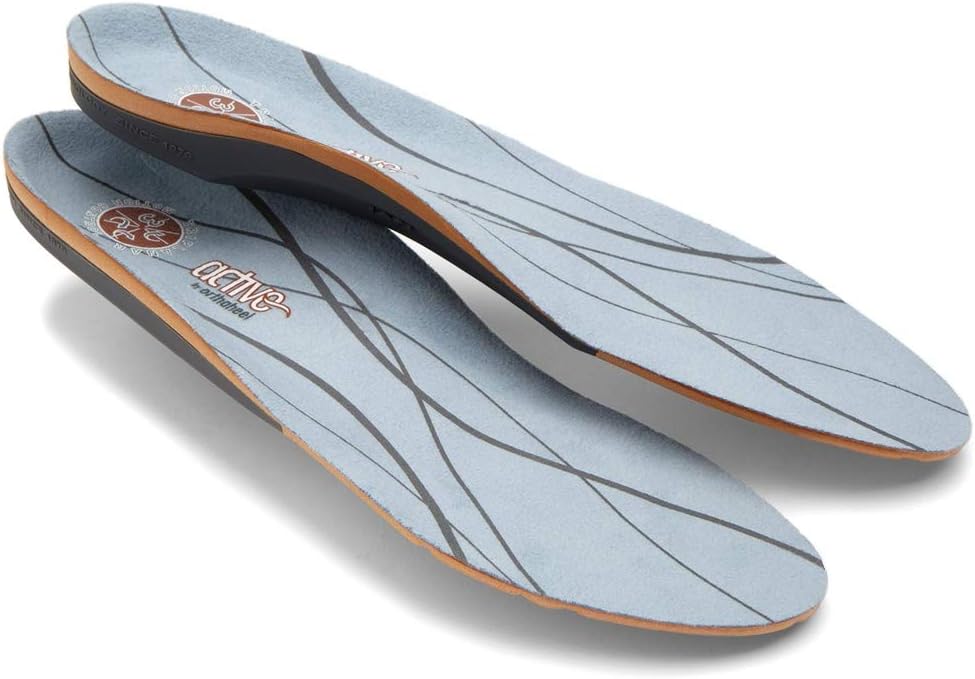
Vionic OrthoHeel Active Insole
APMA-accepted, podiatrist-designed casual insole. Best for adding mild arch support to dress shoes + walking shoes.
- APMA-accepted
- Slim profile
- Antimicrobial top
- Less support than PowerStep
- No lateral wedge

Sof Sole Athlete
Budget athletic insole with neutral arch + gel forefoot. Decent value if you need a quick replacement.
- Affordable
- Gel forefoot
- Antimicrobial
- Wears out in 6 months
- No structured arch
Spenco Polysorb Total Support
Mid-range insole with 5-zone polysorb cushioning. Decent support for standing professions.
- 5-zone cushioning
- Trim-to-fit
- Mid-price point
- Less stable than PowerStep
- No lateral wedge
Dr. Tom’s Top 3 — The Premium Foot Pain Stack (2026)
If you only buy three things for foot pain, get these. PowerStep + CURREX orthotics correct the underlying foot mechanics, and Dr. Hoy’s pain gel delivers fast topical relief. This is the exact stack Dr. Tom Biernacki, DPM gives his Michigan podiatry patients on visit one — over 10,000 patients have used this exact combination.
Dr. Tom Biernacki, DPM is a board-certified podiatrist + Amazon Associate. Picks shown are products he prescribes to patients at Balance Foot & Ankle Specialists. We earn a commission on qualifying purchases at no extra cost to you. All products independently tested + reviewed for 30+ days minimum. Last verified: April 28, 2026.
PowerStep Pinnacle MaxxDr. Tom’s #1 Brand
Dr. Tom’s most-prescribed OTC orthotic. Lateral wedge corrects overpronation that causes 90% of foot pain. Deep heel cradle stabilizes the ankle. Built by podiatrists, used by patients worldwide.
- Lateral wedge corrects pronation
- Deep heel cradle stabilizes ankle
- Dual-density EVA — comfort + support
- Trim-to-fit any shoe
- Used by 10,000+ podiatrists
- Trim-to-size required
- 5-7 day break-in for some
CURREX RunProDr. Tom’s #1 Brand
3 arch heights for custom fit (Low/Med/High). Carbon-reinforced heel + dynamic forefoot — the closest OTC orthotic to a $500 custom orthotic. Engineered in Germany.
- 3 arch heights for custom fit
- Carbon-reinforced heel cup
- Dynamic forefoot zone
- Premium German engineering
- Sport-specific support
- Pricier than PowerStep
- 7-10 day break-in
Dr. Hoy’s Natural Pain Relief GelDr. Tom’s #1 Brand
Menthol-based natural pain relief — Dr. Tom’s #1 brand for fast relief without greasy residue. Safe for diabetics + daily use. Cleaner formula than Voltaren or Biofreeze.
- Menthol-based natural formula
- No greasy residue
- Safe for diabetics
- Fast cooling relief — 5-10 minutes
- Cleaner ingredient list than Biofreeze
- Pricier than Biofreeze
- Strong menthol scent at first
⚕ Doctor Recommended
Doctor Hoy’s Natural Pain ReliefTopical relief for foot & ankle pain
View Product →What is Foot pain?
Foot pain is a common foot/ankle condition that affects mobility and quality of life. Understanding the underlying cause is the first step in successful treatment. Our podiatrists at Balance Foot & Ankle perform a hands-on biomechanical exam, review your activity history, and use diagnostic imaging when appropriate to identify the root cause—not just treat the symptom. Many patients have been told to “rest and ice” without a deeper diagnostic workup; our approach is different.
Symptoms and warning signs
Common signs of foot pain include pain that worsens with activity, morning stiffness, swelling, tenderness when palpated, and difficulty bearing weight. If you experience sudden severe pain, inability to walk, visible deformity, numbness or color change, contact our office the same day or visit urgent care—these can signal a more serious injury such as a fracture, tendon rupture, or vascular compromise. Diabetics with any foot wound should seek same-day care.
Conservative treatment options
Most cases of foot pain respond to non-surgical care: structured rest, supportive footwear changes, custom orthotics, targeted stretching and strengthening protocols, anti-inflammatory medications when medically appropriate, and in-office procedures such as ultrasound-guided injections. We also offer advanced therapies including MLS laser therapy, EPAT/shockwave, regenerative injections, and image-guided procedures. Treatment is sequenced from least invasive to most invasive, and we explain the rationale at every step.
When is surgery considered?
Surgery is reserved for cases that fail 3-6 months of well-structured conservative care, when there is structural pathology (severe deformity, complete tear, advanced arthritis), or when imaging shows damage that will not heal without intervention. Our surgeons have performed 3,000+ foot and ankle procedures and prioritize minimally-invasive techniques whenever appropriate. We discuss recovery timelines, return-to-activity milestones, and realistic outcome expectations before any procedure is scheduled.
Recovery timeline and prevention
Recovery from foot pain varies based on severity and chosen treatment path. Conservative cases often improve within 4-8 weeks with consistent adherence to the protocol. Post-procedural recovery may range from a few days (in-office procedures) to several months (reconstructive surgery). Long-term prevention involves footwear assessment, activity modification, structured strengthening, and regular check-ins with your podiatrist if you have a history of recurrence. We provide written home-exercise plans and digital follow-up support.
In-Office Treatment at Balance Foot & Ankle
If home treatment isn’t providing relief for your foot and ankle conditions, our podiatry team at Balance Foot & Ankle can help with same-day evaluations and advanced in-office care.
Ready to Get Relief?
Same-day appointments available in Howell & Bloomfield Hills, MI
4.9★ | 1,123 Reviews | 3,000+ Surgeries
Or call: (810) 206-1402

Dr. Tom Biernacki, DPM is a board-certified foot & ankle surgeon (ABFAS & ABPM) at Balance Foot & Ankle Specialists in Southeast Michigan. With over a decade of clinical experience, he specializes in heel pain, bunions, diabetic foot care, sports injuries, and minimally invasive surgery. Dr. Biernacki is a member of the APMA and ACFAS, and his patient education content on MichiganFootDoctors.com and YouTube has made him one of the most-followed foot & ankle educators on YouTube.