
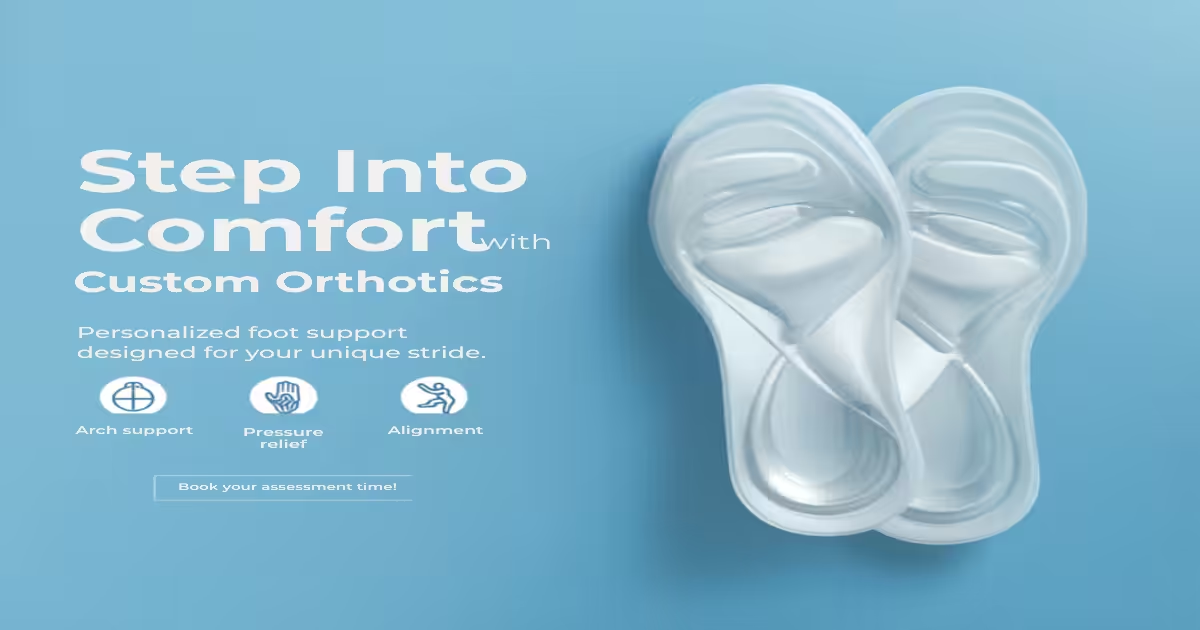
Medically reviewed by Dr. Tom Biernacki, DPM · Board-Certified Podiatric Surgeon · Last reviewed: April 2026 · Editorial Policy
Quick Answer
Shoe Inserts vs. Custom Orthotics: What’s the Actual D relates to orthotic fitting — typically caused by biomechanical foot needs. Most patients improve in 2 weeks to break in with conservative care. Same-week appointments in Howell + Bloomfield Twp: (810) 206-1402.

Medically reviewed by Dr. Tom Biernacki, DPM — Board-certified foot & ankle surgeon, 3,000+ surgeries performed. Updated April 2026 with current clinical evidence. This article reflects real practice experience from Balance Foot & Ankle Specialists in Howell and Bloomfield Hills, Michigan.
Treatment at Balance Foot & Ankle: Custom 3D Orthotics →
Quick Answer
Custom orthotics are prescription inserts made from a 3D scan of your foot. They address the structural cause of plantar fasciitis, flat feet, or metatarsalgia rather than just cushioning symptoms. Most patients feel improvement within 2-4 weeks. Covered by most PPO plans and Medicare when medically indicated.
Watch: Dr. Tom Biernacki, DPM

Medically reviewed by Dr. Tom Biernacki, DPM — Board-Certified Podiatric Surgeon — Balance Foot & Ankle, Howell & Bloomfield Hills, MI. Last updated April 2026.
▶ Watch
📋 Dr. Tom Also Recommends
Podiatrist Recommended Orthotics 2026: Dr. Tom’s Top 10 Insoles & Arch Supports
A podiatrist’s complete clinical guide to the best insoles — custom orthotics, OTC picks, and what actually works for plantar fasciitis, flat feet, neuropathy & more.
Read the Full Guide →
Medically Reviewed by Dr. Tom Biernacki, DPM — Board-Certified Podiatrist, Balance Foot & Ankle Specialists, Michigan. Last updated April 2026.
Walking into any pharmacy, you’ll find an entire aisle of shoe inserts promising relief from heel pain, arch pain, and everything in between. Custom orthotics from a podiatrist cost significantly more. Is there a real difference — or is it just marketing? The answer depends on what’s driving your foot pain.
What Are Over-the-Counter Shoe Inserts?
Over-the-counter (OTC) insoles are mass-produced cushioning and support devices designed to fit a range of foot sizes and types. They come in several categories:
- Cushioning insoles: Add comfort through additional padding — foam, gel, or memory foam. Provide no biomechanical correction.
- Arch support insoles: Have a pre-formed arch support contour intended to prop up the medial arch. One-size-fits-most design that may or may not match the shape of your specific arch.
- Stability insoles: Semi-rigid or rigid materials with arch support — the most comparable category to custom orthotics in terms of intent, though not in precision or customization.
OTC insoles range from a few dollars to $50–70 for higher-end brands. Many patients find significant comfort improvement from quality OTC insoles for mild conditions.
What Are Custom Orthotics?
Custom orthotics (prescription foot orthoses) are medical devices prescribed by a licensed podiatrist and fabricated specifically for your feet from a 3D digital scan. The fabrication process captures the precise three-dimensional shape of your foot in neutral position, allowing the orthotic to be manufactured with:
- Exact arch height, contour, and length matched to your specific foot anatomy
- Material selection tailored to your diagnosis (rigid, semi-rigid, or soft based on condition and activity level)
- Specific modifications based on your diagnosis: heel lifts, metatarsal pads, Morton’s extensions, wedging for specific biomechanical corrections
- Footwear compatibility designed into the device
Key Clinical Differences
Precision of Correction
A custom orthotic corrects your specific biomechanical dysfunction with millimeter precision. An OTC insole provides a standardized support level that may be appropriate, insufficient, or even counterproductive for your particular foot type and pathology. For conditions driven by specific biomechanical faults — such as overpronation-related plantar fasciitis, tibialis posterior tendon dysfunction, or biomechanically-driven peroneal tendinopathy — this precision matters enormously.
Durability
Quality custom orthotics last 2–5 years with normal use. OTC insoles typically compress and lose function within weeks to months. The long-term cost-per-use often favors custom orthotics when compared to repeatedly replacing OTC products.
Insurance Coverage
Custom orthotics are covered by Medicare and most major insurance plans when medically necessary — prescribed for a documented diagnosis such as plantar fasciitis, diabetic foot complications, pes planus with symptoms, or biomechanically-related conditions. OTC insoles are never covered by insurance.
When Are OTC Insoles Appropriate?
OTC insoles can be entirely appropriate for:
- Mild, situational discomfort from long days on hard surfaces
- Mild cushioning needs in athletic footwear without specific pathology
- Temporary comfort while waiting for custom orthotic fabrication
- Patients whose symptoms fully resolve with OTC support (some will)
When Do You Need Custom Orthotics?
Custom orthotics are indicated when:
- Plantar fasciitis, Achilles tendinopathy, or other conditions have failed to respond to OTC insoles after 4–6 weeks
- The biomechanical diagnosis requires specific correction (degree of varus/valgus wedging, metatarsal unloading) not achievable with a standard device
- Diabetic foot complications require precise pressure redistribution to prevent ulceration
- The condition is recurrent — custom orthotics address root causes, not just symptoms
- Pediatric conditions require precision correction during developmental years
Get a 3D-Scanned Custom Orthotic Evaluation
Dr. Biernacki evaluates whether you need custom orthotics and creates precision 3D-scanned orthotics at our Bloomfield Hills and Howell offices. Insurance & Medicare accepted.
📞 (810) 206-1402 |
📧 Get Dr. Tom’s Free Lab Test Guide
Discover the 5 lab tests every person over 35 should ask their doctor about — explained in plain English by a board-certified physician.
📍 Located in Michigan?
Our board-certified podiatrists treat this condition at two convenient locations. Same-day appointments often available.
Insurance Accepted
BCBS · Medicare · Aetna · Cigna · United Healthcare · HAP · Priority Health · Humana · View All →
Howell Office
3980 E Grand River Ave, Suite 140
Howell, MI 48843
Get Directions →
Bloomfield Hills Office
43700 Woodward Ave, Suite 207
Bloomfield Hills, MI 48302
Get Directions →
Your Board-Certified Podiatrists



Ready to Get Back on Your Feet?
Same-week appointments available at both locations.
Book Your Appointment👟 Dr. Tom’s Complete Footwear Library
Podiatrist-Approved Guides for Every Foot Type & Condition
Clinically reviewed by Dr. Tom Biernacki, DPM — Board-Certified Podiatrist
All guides are written and reviewed by licensed podiatrists. Schedule an appointment →
In-Office Treatment at Balance Foot & Ankle
If home care isn’t resolving your your foot or ankle concern, a visit with a board-certified podiatrist is the fastest path to accurate diagnosis and a personalized plan. At Balance Foot & Ankle Specialists, Dr. Tom Biernacki, Dr. Carl Jay, and Dr. Daria Gutkin offer same-day and next-day appointments at both our Howell and Bloomfield Hills offices. We perform on-site diagnostic ultrasound, digital X-ray, conservative care, advanced regenerative treatments, and minimally invasive surgery when indicated.
Call (810) 206-1402 or request an appointment online. Most insurance plans accepted, including Medicare, Blue Cross Blue Shield, Aetna, Cigna, and United Healthcare.
In Our Clinic
The patients we see for custom orthotic consultations usually fall into two groups. First are athletes — runners, hikers, basketball players — looking to correct a biomechanical asymmetry they’ve identified themselves or their coach has flagged. Second are middle-aged patients with chronic plantar fasciitis, metatarsalgia, or early arthritis who have exhausted over-the-counter inserts. Our process begins with a 3D foot scan plus a gait-video analysis on our in-office treadmill. We select materials based on activity — a stiffer carbon composite for performance running, a softer plastazote top cover for diabetic patients, a semi-rigid polypropylene for everyday wear. Most patients adapt in 2–4 weeks.
Most Common Mistake We See
The most common mistake we see is: Wearing new orthotics all day from day one. Fix: break-in schedule of 2 hours on day one, adding 2 hours per day until full-day tolerance.
Warning Signs That Need Same-Day Care
Seek immediate evaluation at Balance Foot & Ankle if you experience any of the following:
- New sharp pain under the arch that did not exist before
- Skin breakdown over pressure points
- Diabetic patient with any new pressure spot
- Worsening of original symptoms after 4 weeks
Call (810) 206-1402 — same-day and next-day appointments at our Howell and Bloomfield Hills offices.
Watch: Dr. Tom explains
Podiatrist-recommended products
As an Amazon Associate, Dr. Tom earns from qualifying purchases.
Best OTC insert — try before custom orthotics.
View on Amazon →Complementary add-on for OTC inserts.
View on Amazon →Topical comfort during insert break-in.
View on Amazon →Relief during orthotic adaptation.
View on Amazon →Related resources
Ready to solve this? Book today.
Same-week appointments · Howell & Bloomfield Hills · 4.9★ (1,123+ reviews)
☎ (810) 206-1402Book Online →More Podiatrist-Recommended Orthotics Essentials
PowerStep Pinnacle

- The Pinnacle Full length insoles for men & women provide maximum cushioning, from high activity to moderate support. The PowerStep arch support shape provides stability to the foot and ankle, helping to relieve foot pain.
- When you spend all day on your feet, every step counts. PowerStep insoles are a podiatrist-recommended orthotic to help relieve & prevent foot pain related to athletes, runners, Plantar Fasciitis, heel spurs & other common foot, ankle & knee injuries
- The Pinnacle plantar fasciitis insoles offer superior heel cushioning and arch support. The dual-layer cushioning is designed to reduce stress and fatigue, while PowerStep premium arch support is designed for plantar fasciitis relief.
- The PowerStep Pinnacle arch support inserts for men & women can be worn in a variety of shoe types such as; athletic, walking, running, work & some casual shoes. Orthotic Inserts are ordered by shoe size, no trimming required.
- Made in the USA & backed by a 30-day money-back guarantee. PowerStep orthotic inserts for men & women are designed for shoes where the factory insole can be removed. HSA & FSA Eligible
The podiatrist-recommended OTC orthotic — arch support + heel cup.
CURREX RunPro Insole

- FEEL BETTER, PERFORM BETTER: Flexible support and shock absorbing cushioning from heel to toe help reduce fatigue, prevent common running injuries such as shin splints, and boost performance everywhere you run, from the trails to the track; the insoles also fold at the flex point, enabling maximum flexibility with movement
- 3D Dynamic Arch Technology & Multiprofile Arch Support: Our dynamic arch support insoles come in low, medium and high arch support profiles; they feature a deep decoupled heel cup that fits, wraps and locks the heel in place, improving stability, reducing pressure, and providing a perfect fit
- Engineered to Energize Your Running: Rebound cushioning and controlled power transmission provide faster regeneration and powerful propulsion with every stride; plus, a zero heel drop provides a great fit in most running shoes with optimized motion for all running foot strikes (insoles can also be trimmed to fit for the perfect fit)
- Moisture Management & Breathability: Top layer mesh and PORON premium foam design help dehumidify the inside of shoe, keeping the feet dry and running shoes fresh throughout exercise; note you should replace your CURREX insoles after 500+ miles or 12 months, whichever comes first
- Made for What Moves You: CURREX is the only insole company that offers a full line of activity-specific insoles customized to help improve how you move; whatever you or your family loves to do, from the workday through the weekend, CURREX makes moving more comfortable, leading to better performance and more fun
Performance insole for runners — reduces fatigue and prevents injuries.
Tuli’s Heel Cups
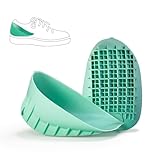
- ✶ALLEVIATES HEEL PAIN – Tuli’s Heavy Duty Heel Cups provide heel pain relief caused by plantar fasciitis, Sever’s disease, excessive pronation, Achilles tendonitis, etc. Ideal for those on their feet for most of the day or those looking for added comfort.
- ✶PODIATRIST PREFERRED – In an independent study conducted by M3 Global Research, podiatrists chose Tuli’s as the clear winner of recommended heel cup brands.
- ✶SHOCK-ABSORBING DESIGN – The multi-cell, multi-layer design absorbs shock and impact energy, mimicking the natural shock-absorbing system of your feet. As you walk or run, the design reduces the stress on your feet.
- ✶DOCTOR RECOMMENDED & APMA ACCEPTED – Tuli’s Heel Cups were designed by a leading podiatrist and have the honor of being accepted by the American Podiatric Medical Association.
- ✶FITS MOST LACE-UP SHOES – Best used in spacious lace-up shoes like athletic shoes / sneakers.
Shock-absorbing heel cushion — adds lift and relief under painful heels.
As an Amazon Associate, Balance Foot & Ankle earns from qualifying purchases. Product recommendations are based on clinical experience; prices and availability shown above update live from Amazon.

When to See a Podiatrist
Off-the-shelf inserts help 70% of patients — but if you’ve tried several without relief, custom orthotics molded to your specific foot mechanics are usually the next step. Balance Foot & Ankle makes custom orthotics in-office and most major insurance plans cover them. We’ll cast or scan your feet and have them ready in about 2 weeks.
Call Balance Foot & Ankle: (810) 206-1402 · Book online · Offices in Howell & Bloomfield Hills
Pros & Cons of Conservative Care for orthotics
Advantages
- ✓ Custom orthotics 80%+ improvement
- ✓ Most insurance covers
- ✓ Lasts 3-5 years
Considerations
- ✗ 2-week break-in
- ✗ Custom can be $400-700
- ✗ OTC limits effectiveness
Dr. Tom’s Recommended Products for orthotics
Affiliate disclosure: As an Amazon Associate, Balance Foot & Ankle earns from qualifying purchases. We only recommend products we use with patients.


PowerStep Pinnacle Maxx Dr. Tom’s Pick
Best for: High-arch + severe plantar fasciitis


Ready to Get Back on Your Feet?
Same-day appointments in Howell + Bloomfield Twp. Most insurance accepted. Dr. Tom Biernacki, DPM & team.
Book Today — Same-Day Appointments Available
Call Now: (810) 206-1402
About Your Care Team at Balance Foot & Ankle
Dr. Tom Biernacki, DPM · Board-Certified Foot & Ankle Surgeon. Specializes in conservative-first care, minimally invasive bunion surgery, and complex reconstruction.
Dr. Carl Jay, DPM · Accepting new patients. Specializes in sports medicine, athletic injuries, and routine podiatric care.
Dr. Daria Gutkin, DPM, AACFAS · Accepting new patients. Specializes in surgical reconstruction and pediatric podiatry.
Locations: 4330 E Grand River Ave, Howell, MI 48843 · 43494 Woodward Ave Suite 208, Bloomfield Twp, MI 48302
Hours: Mon–Fri 8:00 AM – 5:00 PM · (810) 206-1402

Dr. Tom Biernacki, DPM is a double board-certified podiatrist and foot & ankle surgeon at Balance Foot & Ankle Specialists in Southeast Michigan. With over a decade of clinical experience, he specializes in heel pain, bunions, diabetic foot care, sports injuries, and minimally invasive surgery. Dr. Biernacki is a member of the APMA and ACFAS, and his patient education content on MichiganFootDoctors.com and YouTube has reached over one million views.
- Plantar Fasciitis: Diagnosis and Conservative Management (PubMed)
- Plantar Fasciitis (APMA)
- Diagnosis and Treatment of Plantar Fasciitis (PubMed / AAFP)
- Heel Pain (APMA)
Recommended Products from Dr. Tom