
Medically Reviewed by Dr. Tom Biernacki, DPM
Board-Certified Podiatric Surgeon | Balance Foot & Ankle
Last reviewed: May 2026
You’ve been buying shoes your whole life, yet most people are wearing the wrong size right now. In our clinic at Balance Foot & Ankle, we routinely measure patients’ feet and find that more than 70% of adults are wearing shoes that are at least a half size too small — and nearly a third are wearing the wrong width. The consequences aren’t just discomfort: ill-fitting shoes cause blisters, bunions, hammertoes, ingrown toenails, and plantar fasciitis. This guide gives you the exact measurement protocol we use with our patients.
>How to Measure Your Foot Size at Home
Measure at home with the same style of tool shoe stores use — a Brannock-type device (4.7 stars; a niche tool, so ~750 reviews — the best-rated available):
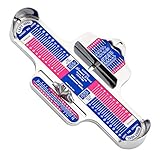
- Picture may be different from product-ask if your not sure
- The Brannock Device Company BDC01 Brannock Device Comb Ea
As an Amazon Associate, Balance Foot and Ankle earns from qualifying purchases. Product links are affiliate links and we may earn a commission at no extra cost to you. This does not influence our clinical recommendations. Last update on 2026-10-25 / Images from Amazon Product Advertising API
The Brannock Device — that metal foot-measuring tool you step on at shoe stores — is the gold standard, but you can get an accurate measurement at home with a piece of paper, a pen, and a ruler. Here is the exact protocol we teach our patients.
Step-by-Step Foot Measurement Protocol
- Measure in the afternoon or evening. Feet swell throughout the day due to gravity and activity. Shoes sized in the morning may feel tight by dinnertime. We always measure patients toward the end of the day for the most accurate fit.
- Stand, don’t sit. Foot length increases by 4–8mm when you bear weight. Always measure while standing with your full weight on the foot being measured.
- Wear the socks you plan to wear with the shoes. Athletic socks add volume; thin dress socks don’t. Size accordingly.
- Tape a sheet of paper to a hard floor. Carpet compresses and skews measurements. Hardwood or tile is ideal.
- Trace your foot. Stand on the paper and trace around your entire foot with a pen held perpendicular to the floor (not angled inward, which underestimates size).
- Measure length. Draw a straight line from the back of the heel to the tip of the longest toe (which may be the second toe, not the big toe). Measure this distance in millimeters.
- Measure width. Find the widest part of the forefoot (usually across the ball of the foot) and measure across in millimeters.
- Measure both feet. Most people have one foot slightly larger than the other. Always size for the larger foot.
- Add 12mm (½ inch) to your length measurement. This gives you the minimum toe box clearance needed. Your toes need room to extend during push-off; a shoe that ends at your longest toe will cause nail trauma with every step.
Shoe Size Charts
Once you have your foot length in millimeters, use the tables below to find your size. Note that shoe sizing is not standardized across brands — these represent average conversions. Always check the specific brand’s size chart when ordering online.
Women’s Shoe Size Chart
| Foot Length (mm) | US Size | UK Size | EU Size |
|---|---|---|---|
| 206–210 | 5 | 3 | 35–36 |
| 211–215 | 5.5 | 3.5 | 36 |
| 216–220 | 6 | 4 | 36–37 |
| 221–225 | 6.5 | 4.5 | 37 |
| 226–230 | 7 | 5 | 37–38 |
| 231–235 | 7.5 | 5.5 | 38 |
| 236–240 | 8 | 6 | 38–39 |
| 241–245 | 8.5 | 6.5 | 39 |
| 246–250 | 9 | 7 | 39–40 |
| 251–255 | 9.5 | 7.5 | 40 |
| 256–260 | 10 | 8 | 40–41 |
| 261–265 | 10.5 | 8.5 | 41 |
| 266–270 | 11 | 9 | 41–42 |
Men’s Shoe Size Chart
| Foot Length (mm) | US Size | UK Size | EU Size |
|---|---|---|---|
| 241–245 | 7 | 6 | 39–40 |
| 246–250 | 7.5 | 6.5 | 40 |
| 251–255 | 8 | 7 | 41 |
| 256–260 | 8.5 | 7.5 | 41–42 |
| 261–265 | 9 | 8 | 42 |
| 266–270 | 9.5 | 8.5 | 43 |
| 271–275 | 10 | 9 | 43–44 |
| 276–280 | 10.5 | 9.5 | 44 |
| 281–285 | 11 | 10 | 44–45 |
| 286–290 | 11.5 | 10.5 | 45 |
| 291–295 | 12 | 11 | 46 |
| 296–300 | 13 | 12 | 47 |
| 301–310 | 14 | 13 | 48 |
Shoe Width Sizing Explained
Width is the most overlooked dimension in shoe fitting. In our clinic, we see more foot problems caused by narrow shoes than by any other fit issue. A shoe that’s the right length but too narrow will compress the forefoot, accelerate bunion formation, cause blisters on the lateral toes, and restrict the natural toe splay needed for balance and push-off power.
Standard Width Designations
| Width Code | Description | Who Needs It |
|---|---|---|
| AA / 2A (Women’s) | Extra Narrow | Very slender feet; rare |
| B (Women’s Standard) | Narrow-to-Medium | Most women’s shoes default to B |
| D (Women’s Wide) | Wide | Bunions, wide forefoot, edema |
| 2E (Women’s XW) | Extra Wide | Significant bunions, swelling, orthotics |
| D (Men’s Standard) | Medium | Most men’s shoes default to D |
| E / 2E | Wide | Wide forefoot, Morton’s neuroma, orthotics |
| 4E | Extra Wide | Significant bunions, diabetic foot, edema |
| 6E | Ultra Wide | Custom orthotic accommodation, severe deformity |
How to Measure Foot Width
Using the tracing you made during length measurement, find the widest point across the ball of the foot and measure straight across in millimeters. Compare to the chart for your shoe size. A general rule: the ball of your foot should sit at the widest part of the shoe’s last (the internal foot-shaped form the shoe is built on), with no pinching and no lateral overhang.
Wide-Width Shoe Recommendations
If you need wide or extra-wide sizing, these brands consistently deliver true-to-width construction. New Balance offers the broadest width range of any major athletic brand — 2A through 6E in many models. Brooks and Hoka both offer wide (2E) and extra-wide (4E) in key models. For dress shoes, Ecco and Dunham are our clinical go-tos for patients with bunions or wide forefeet.
5 Common Shoe Sizing Mistakes (and What They Cost You)
After fitting thousands of patients over 15+ years and performing more than 3,000 foot and ankle surgeries, the patterns are clear. These five mistakes account for the majority of preventable foot problems we treat.
Mistake #1: Trusting Your “Usual Size”
Shoe sizing varies significantly between brands, countries, and even within the same brand across different models. A size 9 in one brand may fit like an 8.5 or 9.5 in another. Adult feet also continue to change — most adults’ feet lengthen and widen throughout their 30s, 40s, and 50s due to ligament laxity and soft tissue changes. We recommend measuring both feet annually if you’re under 50, and every 6 months after 50. Never assume last year’s size is still correct.
Mistake #2: Sizing for Length Only, Ignoring Width
The most common fit error we see. A shoe can be the right length and still be a full width size too narrow. This is particularly consequential in the forefoot: compression of the metatarsal heads (the bones at the ball of your foot) causes Morton’s neuroma, metatarsalgia, and accelerated bunion progression. If a shoe feels right at the heel but tight across the ball, you need a wider size — not a longer one.
Mistake #3: Shopping in the Morning
Feet swell 4–8% in volume over the course of a day. A shoe purchased at 9 a.m. that fits perfectly may be uncomfortably tight by 5 p.m. Measure and shop in the afternoon or evening, especially if you’re buying shoes for work or extended walking.
Mistake #4: Not Leaving Enough Toe Box Space
The clinical standard is a thumb’s width (approximately 12mm) between your longest toe and the end of the shoe. Less than this and your toes hit the toe box during push-off and downhill walking, causing subungual hematoma (black toenail), ingrown toenails, and toe contractures. This is why we almost always recommend going up a half size from your measured foot length. The shoe should feel slightly generous at the toe — that space disappears when you’re actually moving.
Mistake #5: Breaking In Shoes That Don’t Fit
A common myth: “I just need to break them in.” High-quality shoes should feel comfortable from the first wear, not after weeks of blisters. “Breaking in” is really just the process of deforming the shoe to match a foot it wasn’t designed for. If a shoe doesn’t fit well in the store, it won’t fit well after breaking in — it will just be slightly less bad. The shoe should do the accommodating from day one.
The In-Store (or In-Box) Fit Test
Use this 5-point fit checklist every time you try on a new shoe, whether in a store or after ordering online:
- Heel security. Stand and walk 10 steps. Your heel should not slip more than 2–3mm. Heel slipping increases Achilles tendon load and causes blisters. If slipping persists, try a half-size smaller or a narrower heel last.
- Toe box clearance. Press your thumb behind your longest toe — you should feel 10–12mm of space. Wiggle all five toes freely. If any toe feels compressed laterally, you need a wider shoe.
- Midfoot snugness. The midfoot should feel secure, like a handshake — firm contact, not squeezing. Laces or straps should hold the foot without pressure points.
- The pinch test. Pinch the material over your little toe (fifth metatarsal). You should be able to grasp a small amount of material. If you can’t, the shoe is too narrow. If you can grasp more than ½ inch, it may be too wide.
- Walk on a hard surface. Shoes always feel better on carpet. Walk on a hard floor and listen for any rubbing or feel for any pressure points. A shoe that passes the standing test but fails the walking test is a no.
Children’s Shoe Sizing Guide
Children’s feet grow approximately two sizes per year between ages 3 and 7, then roughly one size per year until growth plates close in the mid-to-late teens. Ill-fitting children’s shoes cause long-term structural consequences because developing bones respond to mechanical pressure. The most common mistakes we see in pediatric patients: shoes that are too small (parents waiting too long between sizes) and shoes that are too stiff (inhibiting natural foot muscle development).
Children’s Size Conversion Chart
| Age (Approx.) | US Size | EU Size | Foot Length (mm) |
|---|---|---|---|
| 0–3 months | 0–1 | 15–16 | 90–105 |
| 3–6 months | 1–2 | 16–17 | 105–115 |
| 6–12 months | 2–4 | 17–19 | 115–130 |
| 1–2 years | 4–6 | 20–22 | 130–145 |
| 2–3 years | 6–8 | 22–24 | 145–158 |
| 3–4 years | 8–9 | 24–26 | 158–168 |
| 4–5 years | 9–11 | 26–27 | 168–178 |
| 5–7 years | 11–13 | 29–31 | 178–198 |
| 7–10 years | 1–3 (Big Kid) | 32–35 | 198–222 |
| 10–13 years | 3–6 (Big Kid) | 35–38 | 222–245 |
Pediatric Sizing Rules
Measure children’s feet every 2–3 months under age 5, and every 3–4 months between ages 5 and 10. Leave 12–15mm (slightly more than adults) of toe space — children’s feet grow fast and they often can’t articulate discomfort accurately. Choose shoes with flexible soles that bend at the ball of the foot, not at the arch. Stiff-soled shoes restrict normal foot muscle activation and slow proprioceptive development. Avoid hand-me-down shoes for toddlers and young children — used shoes have already molded to a different foot.
⚠ When to See a Podiatrist About Shoe Fit
- Persistent corns or calluses that return despite changing shoes — these signal chronic pressure that shoe modifications alone won’t resolve; structural evaluation is needed.
- Toenails that repeatedly bruise or fall off — this indicates mechanical trauma that proper sizing usually prevents, but may also reflect nail bed or gait pathology.
- One foot significantly larger than the other — a difference of more than one full size can indicate leg length discrepancy, which contributes to hip, knee, and back pain and warrants clinical evaluation.
- Children walking on tiptoes or complaining of foot pain — any foot or leg pain in a child is worth evaluating; it is not normal for a child’s feet to hurt.
- Numbness, tingling, or burning while wearing properly fitted shoes — these symptoms suggest nerve compression (Morton’s neuroma, tarsal tunnel syndrome) or systemic conditions (diabetes, peripheral neuropathy) requiring medical evaluation.
When Sizing Problems Signal a Medical Issue
In our clinic, a shoe fitting evaluation is often the first step in identifying underlying structural problems. Feet that consistently feel too wide for standard shoes may have flexible flatfoot deformity. Feet that require increasingly larger sizes in middle age may have progressive posterior tibial tendon dysfunction (adult-acquired flatfoot). Feet that cause pain regardless of shoe size may have neurological or vascular conditions that no amount of sizing optimization will address.
The most commonly missed diagnoses in patients who come in complaining about shoes not fitting: Morton’s neuroma (interdigital nerve compression causing burning and numbness between the third and fourth toes), metatarsalgia (diffuse forefoot pain from metatarsal overloading), and hallux rigidus (big toe joint arthritis causing pain and stiffness that makes push-off impossible in any shoe with a significant heel-to-toe drop).
If you have tried multiple shoe sizes and widths and still cannot find comfortable footwear, the problem is likely not the shoe — it is your foot. That is exactly what we are here to evaluate and treat.
Frequently Asked Questions
Do feet get bigger as you age?
Yes. Adult feet typically increase in length and width throughout the 30s, 40s, and 50s due to gradual ligament laxity and soft tissue changes. Most adults gain one full shoe size between ages 30 and 60. Pregnancy can also cause permanent foot enlargement due to relaxin-induced ligament changes. We recommend measuring your feet annually rather than relying on a size you’ve worn for years.
Why is one foot bigger than the other?
Having one foot larger than the other is normal — studies suggest that 60–70% of people have feet that differ by at least a half size. This is usually due to dominant-side muscle development, minor leg length differences, or natural anatomical variation. Always buy for the larger foot and use an insole or thick sock on the smaller foot if needed. A difference of more than one full size may warrant evaluation for leg length discrepancy.
Should I size up for running shoes?
Yes. For running shoes specifically, we recommend going up a full size (not just a half size) from your measured foot length. During running, your foot slides forward on impact and your toes spread laterally. The extra space prevents the subungual hematoma (black toenail) and blisters that runners commonly develop. Many experienced runners wear running shoes 1–1.5 sizes larger than their dress shoes.
How does EU sizing work?
European sizes are based on the Paris Point system, where one point equals 2/3 of a centimeter. EU size 42, for example, corresponds to a foot length of approximately 42 × 2/3 cm = 28 cm = 280mm. Unlike US sizing, EU sizing is not gender-specific — a women’s US 8 and a men’s US 6 are both approximately EU 38–39. When shopping European brands, always check the brand’s specific conversion chart, as sizing can vary by 1–2 EU units depending on the manufacturer’s last.
Can orthotics change my shoe size?
Custom orthotics typically add 3–5mm of volume to a shoe, which may require going up a half size or choosing a shoe with a removable insole to accommodate the device. At Balance Foot & Ankle, we always ask patients to bring the shoes they intend to wear with their orthotics to the final fitting appointment. Over-the-counter insoles like Powerstep Pinnacle or PowerStep Pinnacle Green usually require replacing the sock liner and may also necessitate a half-size increase.
Is Your Foot Pain a Sizing Problem — or Something More?
Our podiatric team in Howell and Bloomfield Township, MI performs comprehensive foot evaluations including gait analysis, digital foot measurement, and orthotic assessment. 4.9★ | 1,200+ Reviews | 3,000+ Surgeries
Schedule Your Evaluation: (810) 206-1402The Bottom Line
Correct shoe sizing is one of the highest-impact, lowest-cost interventions in foot health. Measure both feet while standing in the afternoon, leave a thumb’s width of toe box space, size for your larger foot, and never assume last year’s size is still correct. Width matters as much as length — a shoe that fits in length but compresses the forefoot will cause progressive structural damage regardless of how comfortable it initially feels. If you consistently struggle to find shoes that fit, or if properly sized shoes still cause pain, that is the signal that something beyond shoe selection is at play.
Sources
- Menz HB, Morris ME. “Footwear characteristics and foot problems in older people.” Gerontology. 2005;51(5):346–351. PubMed
- Barisch-Fritz B, Schmeltzpfenning T, Plank C, Hesse F, Grau S. “Foot deformation during walking: differences between static and dynamic 3D foot morphology in developing feet.” Ergonomics. 2014;57(6):921–933.
- Chantelau E, Gede A. “Foot dimensions of elderly people with and without diabetes mellitus — a data basis for shoe design.” Gerontology. 2002;48(4):241–244.
- Frey C, Thompson F, Smith J, Sanders M, Gruber H. “American Orthopaedic Foot and Ankle Society women’s shoe survey.” Foot Ankle. 1993;14(2):78–81.
- American Podiatric Medical Association. “Proper Shoe Fit.” APMA.org. Accessed May 2026.
- Mickle KJ, Munro BJ, Lord SR, Menz HB, Steele JR. “Foot pain, plantar pressures, and falls in older people.” J Am Geriatr Soc. 2010;58(10):1936–1940.
📋 Dr. Tom Biernacki, DPM, FACFAS answers:
The most consistent shoe fit mistake I see is people wearing the same size they wore at age 25, even though their feet have changed significantly. Feet flatten and widen with age, weight gain, and pregnancy, but most people never re-measure. I routinely find patients with bunion pain, hammertoe progression, and neuromas who are wearing shoes that are a full size too small in length or a full width too narrow. Simply getting properly fitted resolves a surprising amount of forefoot pain without any other intervention.
The second most common mistake is not measuring both feet. Roughly 70% of people have one foot measurably larger than the other. Fitting for the smaller foot creates compression on the larger side that causes nail problems, blisters, and nerve pain. Always fit for the larger foot and use an insole or thicker sock to snug up the smaller side if needed. When in doubt about half sizes, go up — a shoe with a small amount of extra length is always more forgiving than one that is too short.
Width is the half of sizing most people skip. Our review site’s shoe width chart sets out what D, 2E and 4E mean for men and women — and how few millimetres each letter actually adds, which is less than most people expect.

Dr. Tom Biernacki, DPM is a board-certified foot & ankle surgeon (ABFAS & ABPM) at Balance Foot & Ankle Specialists in Southeast Michigan. With over a decade of clinical experience, he specializes in heel pain, bunions, diabetic foot care, sports injuries, and minimally invasive surgery. Dr. Biernacki is a member of the APMA and ACFAS, and his patient education content on MichiganFootDoctors.com and YouTube has made him one of the most-followed foot & ankle educators on YouTube.