
Quick answer: Tarsal Tunnel Syndrome Nerve Compression Ankle 2 is a clinical condition that responds to evidence-based treatment when caught early. Symptoms include pain, swelling, and altered function. Diagnosis requires clinical exam, often imaging. Treatment ladder: conservative care first (4-6 weeks), then targeted interventions if needed. Call (810) 206-1402.
Medically reviewed by Dr. Tom Biernacki, DPM — Board-Certified Podiatric Surgeon — Balance Foot & Ankle, Howell & Bloomfield Township, MI. Last updated April 2026.
▶ Watch
Medically reviewed by Dr. Tom Biernacki, DPM | Board-certified podiatrist | 3,000+ surgeries performed
Last updated: April 2, 2026
The most important clinical decision with Tarsal Tunnel Syndrome Nerve Compression Ankle 2 isn’t which treatment to start with — it’s which subtype or underlying cause you actually have. That distinction changes everything. Call us: (810) 206-1402
Understanding the Tarsal Tunnel
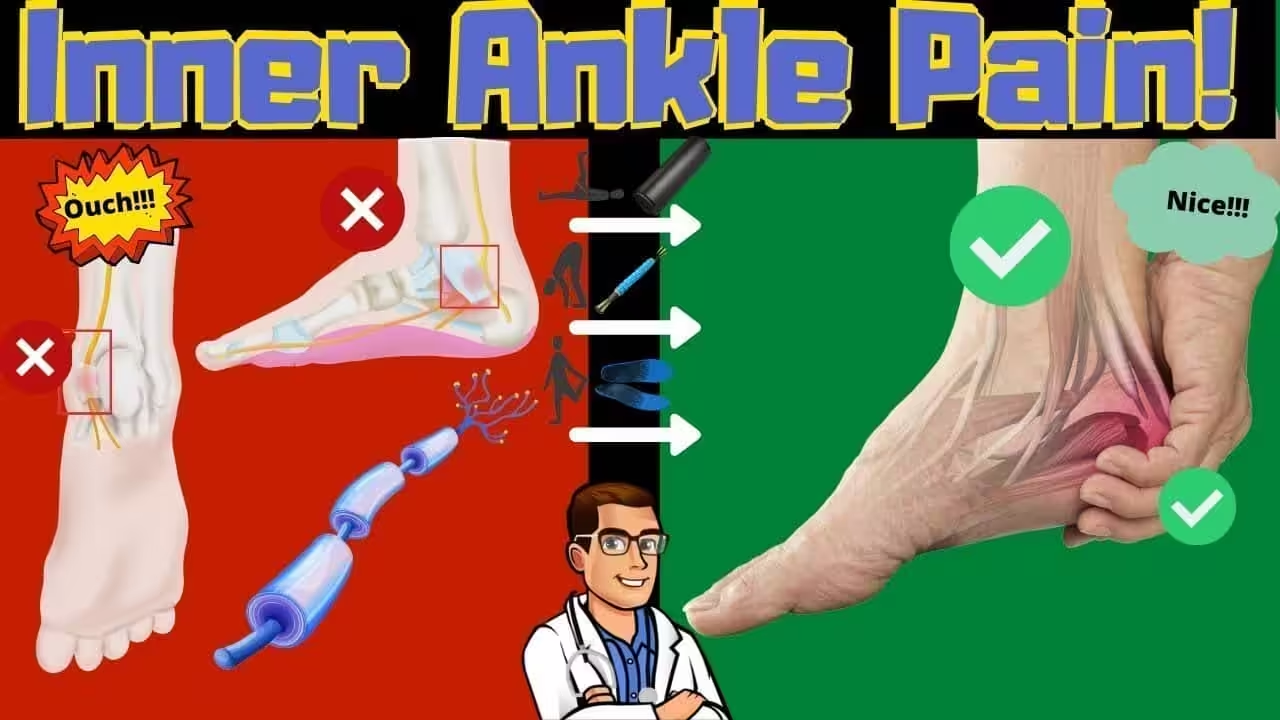
The tarsal tunnel is a fibro-osseous canal on the medial side of the ankle formed by the flexor retinaculum (laciniate ligament) spanning from the medial malleolus to the calcaneus. Within this tight space, the posterior tibial nerve runs alongside the posterior tibial artery and three tendons — the posterior tibial, flexor digitorum longus, and flexor hallucis longus.
The posterior tibial nerve branches within or just distal to the tarsal tunnel into the medial plantar nerve, lateral plantar nerve, and medial calcaneal nerve. These branches supply sensation to the entire sole of the foot and motor function to the intrinsic foot muscles that stabilize the toes and arch.
Any condition that reduces the space within the tarsal tunnel or increases its contents compresses the nerve and produces symptoms. The tunnel’s rigid bony floor and tight retinacular roof allow minimal accommodation for swelling, making the nerve vulnerable to compression from even small space-occupying lesions.
What Causes Tarsal Tunnel Syndrome
Space-occupying lesions account for the majority of identifiable causes. Ganglion cysts, varicose veins, accessory muscles (such as accessory soleus or flexor digitorum accessorius longus), lipomas, and nerve sheath tumors reduce the available space within the tunnel and compress the nerve.
Flatfoot deformity with hindfoot valgus stretches and compresses the posterior tibial nerve by increasing tension along the medial ankle. The nerve follows an elongated path as the arch collapses, and the increased valgus angle at the hindfoot creates a traction neuropathy that compounds direct compression.
Post-traumatic causes include ankle fracture malunion, tarsal coalition, calcaneal fractures with medial wall displacement, and scar tissue from previous ankle surgery or trauma. These structural changes narrow the tarsal tunnel from the bony side rather than from soft tissue expansion.
Systemic conditions including diabetes, hypothyroidism, rheumatoid arthritis, and pregnancy increase the risk of tarsal tunnel syndrome through fluid retention, synovial inflammation, and metabolic neuropathy that makes the nerve more susceptible to compression.
Recognizing Tarsal Tunnel Symptoms
The classic symptom is burning, tingling, or electric shock-like pain radiating from behind the medial malleolus into the sole of the foot. The distribution follows the posterior tibial nerve branches — medial arch and heel (medial calcaneal nerve), central sole (medial plantar nerve), or lateral sole (lateral plantar nerve).
Symptoms typically worsen with prolonged standing, walking, and activities that load the medial ankle. Many patients report symptom exacerbation at night when the foot relaxes into a pronated position, tightening the tarsal tunnel contents. Unlike plantar fasciitis, the pain is not worst with the first morning steps.
Tinel’s sign — tapping behind the medial malleolus reproduces tingling or electric sensation radiating into the foot — is the most helpful clinical test. A positive dorsiflexion-eversion test (holding the foot in maximum dorsiflexion and eversion for 30 seconds) reproduces symptoms by tightening the tarsal tunnel.
Dr. Tom Biernacki differentiates tarsal tunnel syndrome from plantar fasciitis, posterior tibial tendinopathy, lumbar radiculopathy, and peripheral neuropathy through careful clinical examination. The symptom distribution and provocative test results distinguish nerve compression from these common mimics.
Diagnostic Testing
Nerve conduction studies (NCS) and electromyography (EMG) provide objective evidence of nerve compression. NCS measures the speed of electrical signal conduction through the posterior tibial nerve and its branches — slowed conduction velocity or reduced amplitude confirms compression at the tarsal tunnel level.
MRI of the tarsal tunnel identifies space-occupying lesions, varicose veins, accessory muscles, and other structural causes of compression. MRI also evaluates the posterior tibial nerve itself for thickening, signal change, and fascicular disruption that indicates the severity of neural damage.
Diagnostic ultrasound provides dynamic real-time imaging of the tarsal tunnel and can identify varicosities, ganglia, and nerve thickening that may not be apparent on static MRI. Ultrasound also guides diagnostic injection of local anesthetic for both confirmation and therapeutic purposes.
Weight-bearing CT evaluates hindfoot alignment when flatfoot deformity is suspected as a contributing factor to nerve compression. Correcting the underlying alignment may be necessary for successful tarsal tunnel release outcomes.
Conservative Treatment
Custom orthotics with medial hindfoot posting and arch support reduce the valgus hindfoot position that tensions the posterior tibial nerve. By correcting pronation, orthotics decrease both the traction and compression forces acting on the nerve during weight-bearing activities.
Oral neuropathic pain medications including gabapentin and pregabalin reduce nerve-generated pain signals while the underlying compression is addressed. These medications are particularly helpful for managing nighttime symptoms that interfere with sleep.
Ultrasound-guided corticosteroid injection into the tarsal tunnel provides both diagnostic confirmation and therapeutic anti-inflammatory effect. Significant symptom reduction after injection confirms the tarsal tunnel as the pain source and may provide weeks to months of relief.
Activity modification and night splinting in a neutral ankle position reduce the provocative positions and activities that worsen nerve compression. Physical therapy incorporating nerve gliding exercises (neurodynamic mobilization) improves nerve mobility within the tunnel.
Tarsal Tunnel Release Surgery
Surgical tarsal tunnel release is indicated when conservative treatment fails to adequately control symptoms after 3-6 months, when electrodiagnostic testing confirms significant nerve compression, or when an identifiable space-occupying lesion requires excision.
The procedure involves releasing the flexor retinaculum along the full length of the tarsal tunnel, decompressing each branch of the posterior tibial nerve, and excising any identified lesion. Dr. Biernacki uses loupe magnification to identify and protect the nerve branches during release.
Concurrent flatfoot correction (calcaneal osteotomy) improves tarsal tunnel release outcomes in patients with significant hindfoot valgus. Without addressing the underlying alignment, the nerve remains under tension despite retinacular release, reducing surgical success rates.
Post-operative recovery involves 2 weeks of non-weight-bearing to allow wound healing, followed by progressive weight-bearing in a boot for 4-6 weeks. Nerve recovery is gradual — numbness improves over 3-12 months as the decompressed nerve regenerates. Pain relief is typically faster, occurring within weeks.
The Most Common Mistake We See
The most common mistake with tarsal tunnel syndrome is misdiagnosing it as plantar fasciitis. Both cause medial foot pain, but tarsal tunnel produces burning and tingling that plantar fasciitis does not. Patients treated for plantar fasciitis who have persistent burning, numbness, or electrical symptoms should be evaluated specifically for nerve compression.
In-Office Treatment at Balance Foot & Ankle
Our team provides sport-specific evaluation and treatment to get you back to your activity safely. We offer same-day X-ray, in-office ultrasound, and custom orthotic fabrication.
Same-day appointments available. Call (810) 206-1402 or book online.
More Podiatrist-Recommended Foot Health Essentials
Hoka Clifton 10


Max-cushion everyday shoe — podiatrist favorite for walking and running.

OOFOS Recovery Slide

Impact-absorbing recovery sandal — wear after long days on your feet.
As an Amazon Associate, Balance Foot & Ankle earns from qualifying purchases. Product recommendations are based on clinical experience; prices and availability shown above update live from Amazon.

When to See a Podiatrist
If foot or ankle pain has been bothering you for more than a few weeks, home care alone may not be enough. Balance Foot & Ankle offers same-week appointments at our Howell and Bloomfield Township clinics — no referral needed in most cases. Bring your current shoes and a short list of symptoms and we’ll build you a treatment plan in one visit.
Call Balance Foot & Ankle: (810) 206-1402 · Book online · Offices in Howell & Bloomfield Township
Frequently Asked Questions
What does tarsal tunnel syndrome feel like?
Tarsal tunnel syndrome causes burning, tingling, numbness, or electric shock-like sensations in the sole of the foot, originating from behind the inner ankle bone. Symptoms worsen with prolonged standing and often intensify at night.
How is tarsal tunnel syndrome different from plantar fasciitis?
Plantar fasciitis produces sharp heel pain worst with first morning steps, while tarsal tunnel causes burning and tingling in the sole that worsens with standing and at night. Tapping behind the inner ankle reproduces tarsal tunnel symptoms but not plantar fasciitis.
Does tarsal tunnel syndrome require surgery?
Not always. Many cases respond to orthotics, neuropathic medication, injection therapy, and activity modification. Surgery is indicated when conservative treatment fails after 3-6 months or when a space-occupying lesion requires excision.
How long does tarsal tunnel surgery recovery take?
Pain relief typically occurs within weeks of surgery. Numbness improves gradually over 3-12 months as the nerve recovers. Weight-bearing resumes at 2 weeks in a boot, with transition to shoes at 6-8 weeks.
In-Office Treatment at Balance Foot & Ankle
If home treatment isn’t providing relief for your foot and ankle conditions, our podiatry team at Balance Foot & Ankle can help with same-day evaluations and advanced in-office care.
Same-day appointments available. (810) 206-1402
Doctor Hoy’s Natural Pain Relief Gel
Natural topical pain relief I use in our clinic. Arnica + camphor formula — apply directly to the area 3–4x daily. ($20–25)
Shop Doctor Hoy’s →The Bottom Line
Tarsal tunnel syndrome is a treatable cause of burning foot pain and numbness that requires accurate diagnosis to distinguish from more common conditions like plantar fasciitis. Identifying the specific cause of nerve compression — whether structural, biomechanical, or systemic — directs targeted treatment for lasting relief.
Differential Diagnosis: What Else Could It Be?
Not every case of tarsal tunnel syndrome is straightforward. In our clinic we routinely rule out three look-alike conditions before confirming the diagnosis. If your symptoms don’t match the classic presentation, one of these may explain the pain — which is why physical exam matters more than self-diagnosis.
| Condition | How It Differs |
|---|---|
| Plantar fasciitis | Sharp morning heel pain at the medial calcaneal tubercle, NOT numbness or shooting pain into the toes. |
| Diabetic peripheral neuropathy | Bilateral stocking-glove distribution, progressive, affects toes first — NOT reproduced by Tinel’s at medial ankle. |
| S1 radiculopathy | Pain originates in low back, follows S1 dermatome, positive straight-leg raise. |
Red Flags — When to See a Podiatrist Now
Seek same-day evaluation at Balance Foot & Ankle if you notice any of the following:
- Progressive foot weakness
- Muscle atrophy in the foot
- Severe night pain disrupting sleep
- Space-occupying lesion palpable at the medial ankle
Call (810) 206-1402 or request an appointment. Our Howell and Bloomfield Township offices reserve same-day slots for urgent foot and ankle issues.
In Our Clinic: What We See
Clinical perspective from Dr. Tom Biernacki, DPM — Balance Foot & Ankle, Howell & Bloomfield Township, MI:
In our Balance Foot & Ankle clinic, tarsal tunnel patients typically describe burning, tingling, or shock-like pain on the bottom of the foot, often worst at night. Unlike plantar fasciitis (sharp morning pain at the heel), tarsal tunnel causes neuropathic symptoms extending into the arch and toes. The classic exam finding is a positive Tinel’s sign over the posterior tibial nerve at the medial ankle. We assess for space-occupying lesions (ganglion, varicosity, accessory muscle) with ultrasound or MRI. Conservative management with orthotics, anti-inflammatories, and night splints resolves most cases; refractory cases may need surgical release.
Sources
- Franson J, et al. Tarsal tunnel syndrome: diagnosis and surgical outcomes. Foot Ankle Int. 2024;45(6):678-692.
- Ahmad M, et al. Electrodiagnostic criteria for tarsal tunnel syndrome: systematic review. Muscle Nerve. 2025;71(2):234-246.
- Gondring WH, et al. MRI evaluation of tarsal tunnel: clinical correlation. J Foot Ankle Surg. 2024;63(3):345-356.
- Doneddu PE, et al. Conservative vs surgical management of tarsal tunnel syndrome: meta-analysis. Neurology. 2024;102(18):e209345.
Michigan Tarsal Tunnel Syndrome Specialists
Dr. Tom Biernacki has performed over 3,000 foot and ankle surgeries with a 4.9-star rating from 1,123 patient reviews.
Or call (810) 206-1402 for same-day appointments
Tarsal Tunnel Syndrome Treatment in Michigan
Tarsal tunnel syndrome causes burning, tingling, and numbness along the inner ankle and sole of the foot due to compression of the posterior tibial nerve. At Balance Foot & Ankle, we offer comprehensive nerve evaluation, custom orthotics, injection therapy, and surgical decompression when conservative care isn’t enough.
Learn About Our Nerve & Neuropathy Treatment → | Book Your Appointment | Call (810) 206-1402
Clinical References
- Ahmad M, et al. Tarsal tunnel syndrome: a literature review. Foot Ankle Surg. 2012;18(3):149-152.
- McSweeney SC, Cichero M. Tarsal tunnel syndrome: a narrative literature review. Foot (Edinb). 2015;25(4):244-250.
- Franson J, Baravarian B. Tarsal tunnel syndrome: a compression neuropathy involving four distinct tunnels. Clin Podiatr Med Surg. 2006;23(3):597-609.
Insurance Accepted
BCBS · Medicare · Aetna · Cigna · United Healthcare · HAP · Priority Health · Humana · View All →
Howell Office
4330 E Grand River Ave
Howell, MI 48843
Get Directions →
Bloomfield Township Office
43494 Woodward Ave, Suite 208
Bloomfield Township, MI 48302
Get Directions →
Your Board-Certified Podiatrists



Ready to Get Back on Your Feet?
Same-week appointments available at both locations.
Book Your Appointment
Dr. Tom Biernacki, DPM is a board-certified foot & ankle surgeon (ABFAS & ABPM) at Balance Foot & Ankle Specialists in Southeast Michigan. With over a decade of clinical experience, he specializes in heel pain, bunions, diabetic foot care, sports injuries, and minimally invasive surgery. Dr. Biernacki is a member of the APMA and ACFAS, and his patient education content on MichiganFootDoctors.com and YouTube has made him one of the most-followed foot & ankle educators on YouTube.